

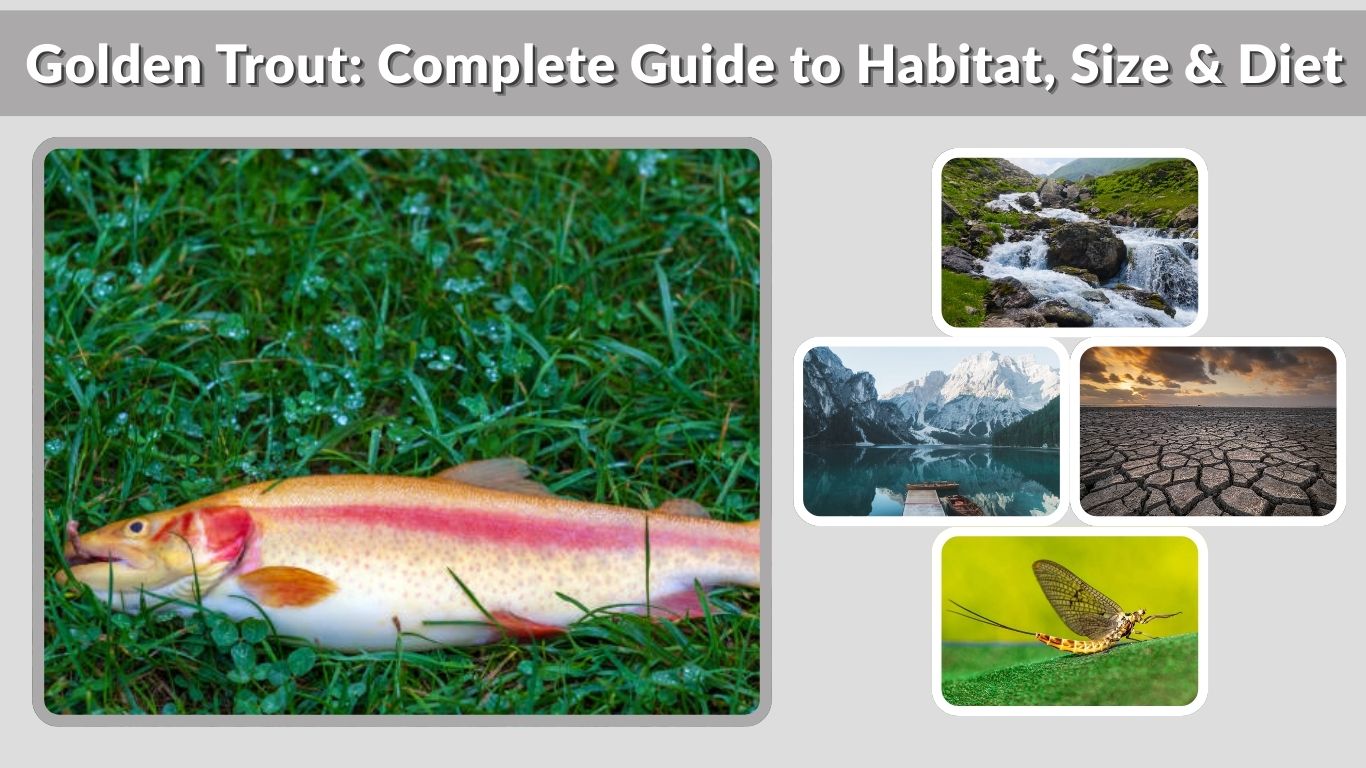
Golden trout are often considered one of the most beautiful freshwater fish in North America. Known for their bright golden coloration and vivid red stripe, the golden trout fish is highly prized by anglers and conservationists alike. Native to the high elevations of California’s Sierra Nevada, this rare and stunning trout species thrives in cold, clear mountain waters. In this guide, you’ll learn essential golden trout facts, including identification, habitat, size, and feeding behavior.
What Is a Golden Trout?
The golden trout (Oncorhynchus mykiss aguabonita) is a subspecies of rainbow trout and belongs to the Salmonidae family. Despite its close relation to rainbow trout, golden trout have developed distinct physical traits due to their isolated high-elevation habitat.
Golden trout are the official state fish of California and are native to a relatively small geographic area, primarily the Kern River drainage in the Sierra Nevada mountains.
Identifying Features
Golden trout are famous for their brilliant coloration. Their bodies display a bright golden-yellow or orange tone, especially along the belly. A bold red or pink lateral stripe runs along their sides, similar to rainbow trout but often more vivid against the golden background.
The golden trout pattern includes small black spots concentrated mostly on the back and tail. Compared to rainbow trout, they generally have fewer and smaller spots.
The golden trout head is small and slightly rounded, with a mouth adapted for feeding on insects and small aquatic organisms. Their jaw structure is similar to rainbow trout but proportionally smaller.
The golden trout tail is slightly forked and usually marked with small dark spots. The bright coloration of their fins, often with white or orange highlights, adds to their striking appearance.
Golden Trout Habitat
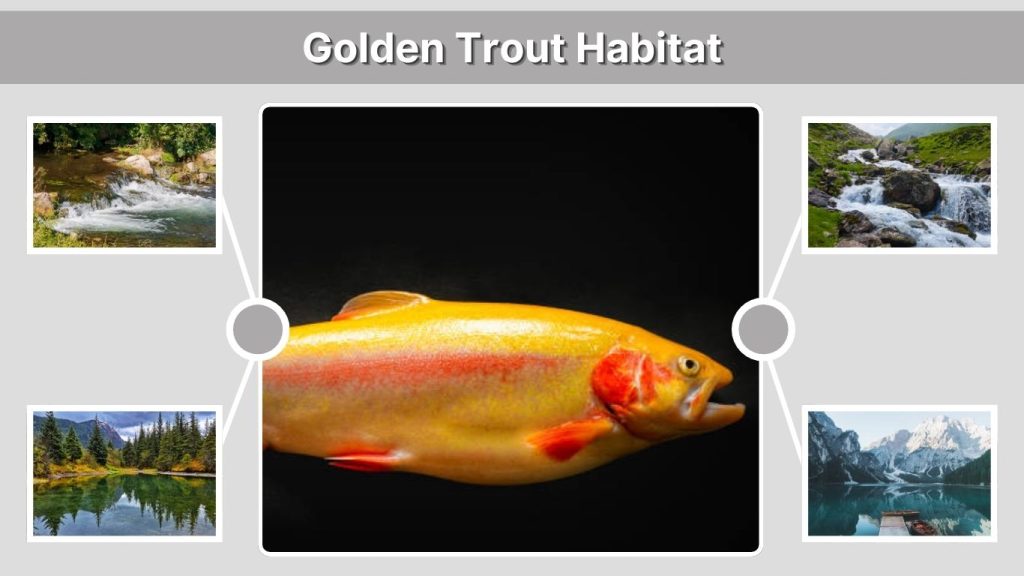
Golden trout habitat is closely tied to high-elevation, cold-water environments. They are highly sensitive to environmental changes and require clean, oxygen-rich water to survive.
Natural Habitat
Golden trout thrive in:
- High-elevation mountain streams
- Alpine lakes
- Cold, spring-fed creeks
- Remote wilderness waters
They are most commonly found at elevations above 6,000 feet (1,800 meters). These environments typically feature clear water, rocky bottoms, and limited human disturbance.
Water Requirements
Golden trout require cold water temperatures, typically between 45°F and 60°F (7°C–15°C). Because they inhabit high mountain regions, the water remains cool even during summer months.
Clean gravel beds are essential for spawning, and high oxygen levels are necessary for healthy egg development. Due to their limited range and strict habitat requirements, golden trout are more vulnerable to environmental stress than many other trout species.
Geographic Distribution
Golden trout are native to:
- California’s Sierra Nevada
- The Kern River watershed
- High alpine lakes in surrounding mountain regions
They have been introduced to some other western states, but their native populations remain concentrated in California.
Golden Trout Size and Weight
Golden trout size is generally smaller compared to other trout species, largely due to the harsh conditions of high-elevation habitats.
Golden Trout Average Size
The golden trout average size in mountain streams typically ranges from:
- Length: 6–12 inches
- Weight: Less than 1 pound
Short growing seasons and limited food supply in alpine environments often restrict their growth.
Maximum Size
In alpine lakes with more abundant food, golden trout weight can exceed 2–3 pounds, though this is less common. Lake populations tend to grow larger than stream-dwelling fish.
Growth depends on:
- Elevation
- Water temperature
- Food availability
- Length of the growing season
Because mountain environments have shorter warm periods, golden trout grow more slowly than trout in lower elevations.
What Do Golden Trout Eat?
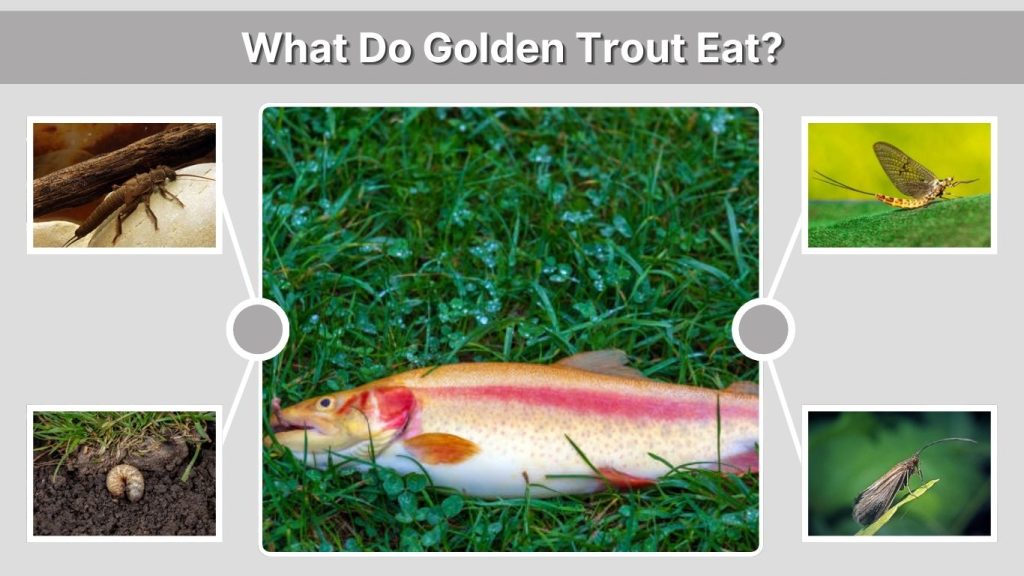
If you’re wondering what do golden trout eat, their diet mainly consists of small aquatic and terrestrial insects.
Natural Diet
Golden trout commonly feed on:
- Mayflies
- Caddisflies
- Stoneflies
- Insect larvae
- Small crustaceans
- Terrestrial insects blown into the water
Young golden trout baby fish, known as fry, begin feeding on plankton and tiny invertebrates before transitioning to larger insects as they grow.
Feeding Behavior
Golden trout are opportunistic feeders. During insect hatches, they often rise to the surface to feed. In smaller streams, they may hold behind rocks or in gentle currents, waiting for food to drift past.
Because they inhabit clear mountain waters, golden trout can be cautious and easily spooked, especially in shallow streams.
Golden Trout Lifespan and Life Cycle
The golden trout lifespan is influenced by the harsh, high-elevation environments in which they live. Cold water and short growing seasons affect both growth rate and longevity.
Golden Trout Lifespan
Golden trout typically live between 4 and 6 years in the wild. In protected alpine lakes with stable conditions and fewer predators, some individuals may live slightly longer. However, compared to lake trout or brown trout, golden trout have a relatively shorter lifespan.
Environmental factors such as drought, rising water temperatures, and habitat disturbance can significantly impact survival rates.
Spawning and Golden Trout Eggs
Golden trout usually spawn in late spring to early summer, once snowmelt increases stream flow and water temperatures rise.
Females select shallow gravel areas in streams to create nests called redds. They deposit hundreds to a few thousand golden trout eggs, depending on their size. Males fertilize the eggs externally.
The eggs develop within the gravel, where cold, oxygen-rich water flows over them. Clean spawning habitat is essential for egg survival.
Golden Trout Baby (Fry Stage)
A golden trout baby, or fry, emerges from the egg carrying a yolk sac that provides nutrients during its first days of life. Once the yolk sac is absorbed, the fry begin feeding on small aquatic insects and plankton.
Juvenile golden trout develop faint parr marks for camouflage. As they mature, their vibrant golden coloration becomes more pronounced.
Golden Trout vs Rainbow Trout
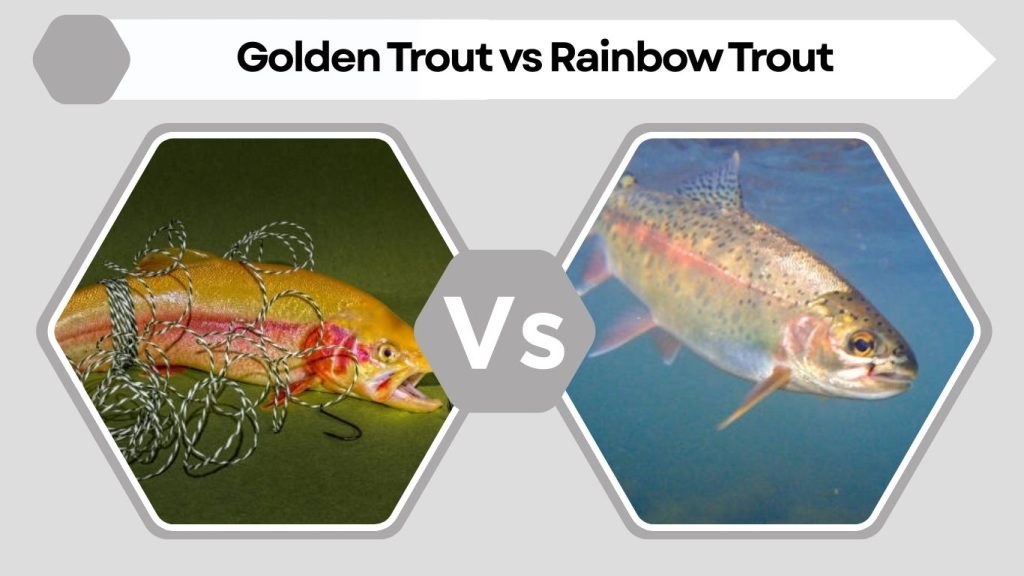
The golden trout vs rainbow trout comparison is common because golden trout are a subspecies of rainbow trout.
Physical Differences
- Coloration: Golden trout have a bright golden-yellow body, while rainbow trout are typically silver with a pink lateral stripe.
- Spots: Golden trout pattern includes fewer and smaller black spots, mostly near the back and tail. Rainbow trout have more evenly distributed spots.
- Size: Golden trout are generally smaller due to their high-elevation habitat.
Habitat Differences
Golden trout prefer remote, high-altitude streams and lakes. Rainbow trout are more adaptable and can thrive in a wider range of environments, including rivers, lakes, and even some coastal waters.
Hybridization Concerns
In some areas, golden trout have hybridized with rainbow trout. This can threaten the genetic purity of native golden trout populations, making conservation efforts especially important.
Golden Trout Fishing Guide
Golden trout fishing is a unique experience, often requiring travel into remote wilderness areas.
Best Time to Catch Golden Trout
- Summer months after snowmelt
- During insect hatches
- Early morning and late afternoon
Because they live in high elevations, fishing seasons are often shorter than in lower-altitude waters.
Best Flies and Lures
Effective choices include:
- Dry flies (mayfly and caddisfly patterns)
- Small nymphs
- Lightweight spinners
- Small spoons
Golden trout are known to rise readily to dry flies, making fly fishing especially popular.
Where to Find Them
Look for golden trout in:
- Alpine streams
- Clear mountain lakes
- Gravel-bottomed creeks
- Areas with gentle current and insect activity
Understanding golden trout habitat and seasonal behavior greatly increases fishing success.
Golden Trout Conservation
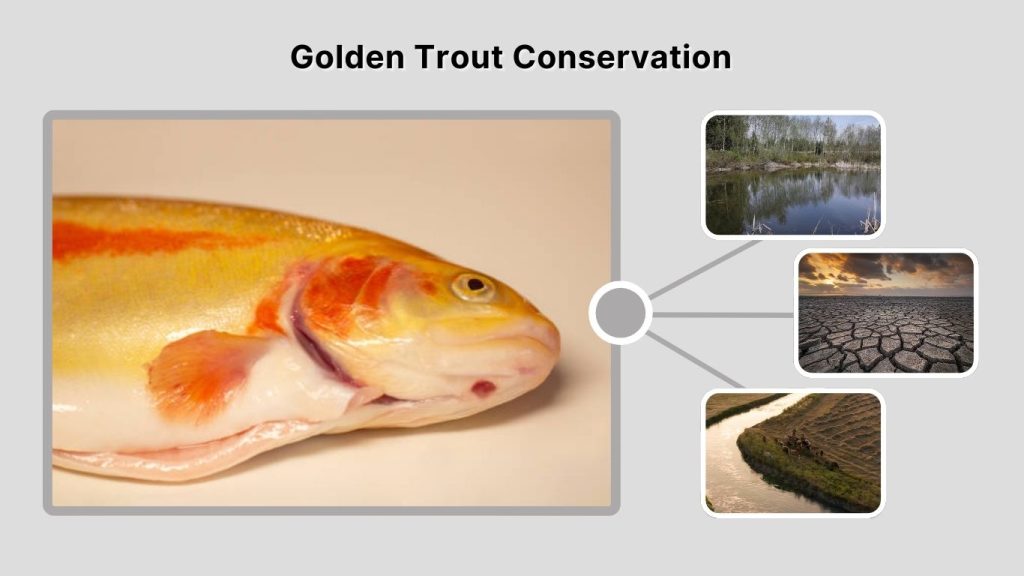
Golden trout conservation is a major focus due to the species’ limited native range.
Threats
Golden trout face several challenges:
- Habitat loss
- Drought and climate change
- Hybridization with non-native trout
- Overgrazing in some watershed areas
Because they are native to a small region, environmental changes can have significant impacts.
Protection Efforts
Conservation efforts include:
- Habitat restoration projects
- Removal of non-native species
- Fishing regulations and catch limits
- Monitoring genetic purity of populations
Protecting high-elevation waters is critical for the survival of native golden trout.
Golden Trout Nutrition and Benefits
Golden trout are valued not only for their beauty but also for their nutritional profile.
Golden Trout Nutrition
Golden trout provide:
- High-quality protein
- Omega-3 fatty acids
- Vitamin B12
- Vitamin D
- Essential minerals
Their lean flesh makes them a nutritious seafood option.
Golden Trout Benefits
Key golden trout benefits include:
- Supporting heart health
- Promoting brain function
- Helping maintain muscle mass
- Providing essential nutrients with moderate fat content
As with all wild fish, sustainability and responsible harvesting are important.
Interesting Golden Trout Facts
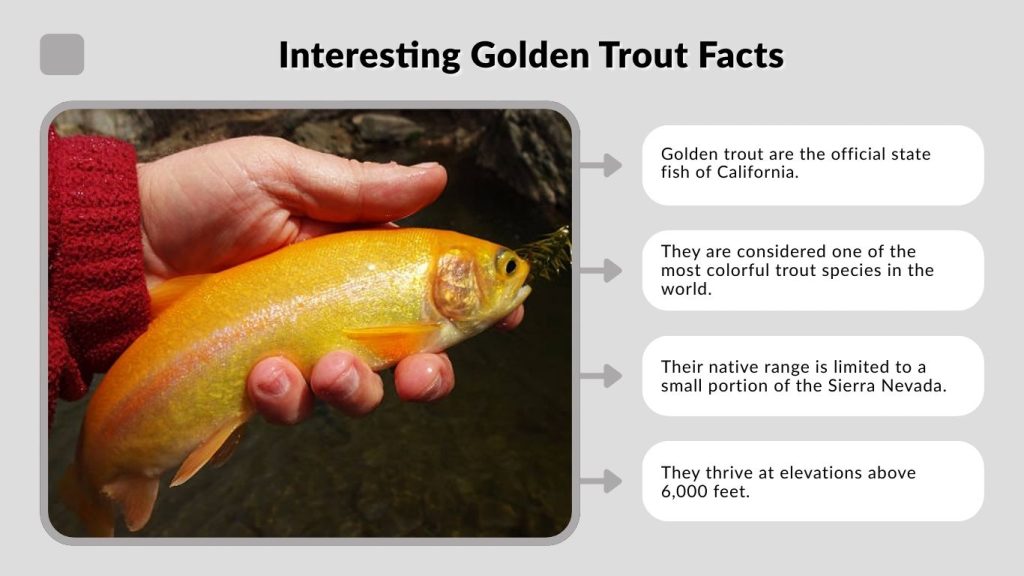
Here are some notable golden trout facts:
- Golden trout are the official state fish of California.
- They are considered one of the most colorful trout species in the world.
- Their native range is limited to a small portion of the Sierra Nevada.
- They thrive at elevations above 6,000 feet.
- Many anglers consider catching a golden trout a bucket-list achievement.
FAQs
What is the average size of a golden trout?
The golden trout average size typically ranges from 6 to 12 inches in mountain streams. In alpine lakes with more food, they may grow slightly larger, sometimes exceeding 2 pounds.
How long do golden trout live?
The golden trout lifespan generally ranges from 4 to 6 years. Environmental conditions such as water quality and food availability influence longevity.
What do golden trout eat?
If you’re wondering what do golden trout eat, they primarily feed on aquatic insects, larvae, and terrestrial insects that fall into the water. Larger individuals may also eat small invertebrates.
Where are golden trout found?
Golden trout are native to California’s Sierra Nevada mountains, especially the Kern River watershed. They inhabit high-elevation streams and alpine lakes.
What is the difference between golden trout and rainbow trout?
In the golden trout vs rainbow trout comparison, golden trout have brighter golden coloration and fewer spots, while rainbow trout are more silver with a pink stripe and broader habitat range.