




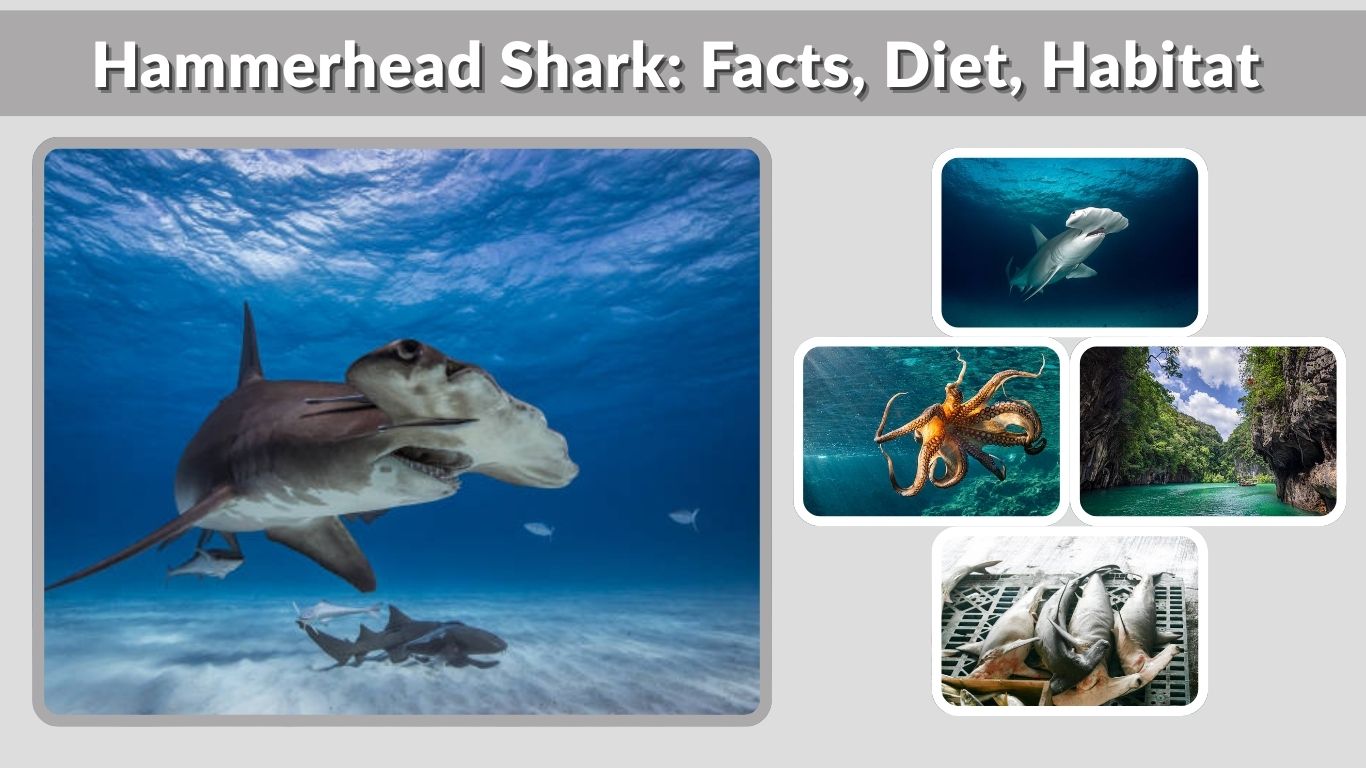
The hammerhead shark is one of the most recognizable and fascinating creatures in the ocean. Known for its unusual hammer-shaped head, this shark stands out among more than 500 shark species worldwide. Found in warm coastal waters and open oceans, hammerhead sharks are skilled predators with highly advanced senses. In this guide, you’ll discover essential hammerhead shark facts, their diet, habitat, behavior, and why they play an important role in maintaining healthy marine ecosystems.
What Is a Hammerhead Shark?
Hammerhead sharks belong to the family Sphyrnidae, a group of sharks characterized by their wide, flattened heads known as a cephalofoil. There are around 9 to 10 recognized species of hammerhead sharks, each varying in size and distribution.
Some of the most well-known species include:
- Great Hammerhead (Sphyrna mokarran)
- Scalloped Hammerhead (Sphyrna lewini)
- Smooth Hammerhead (Sphyrna zygaena)
- Bonnethead Shark (Sphyrna tiburo)
Scientific Classification
Hammerhead sharks are cartilaginous fish, meaning their skeletons are made of cartilage instead of bone. They belong to:
- Class: Chondrichthyes
- Order: Carcharhiniformes
- Family: Sphyrnidae
Like other sharks, they have multiple rows of sharp teeth and constantly replace lost ones throughout their lives.
Why Do Hammerhead Sharks Have a Hammer-Shaped Head?
The hammer-shaped head is not just unusual—it provides several evolutionary advantages.
First, the wide spacing of their eyes gives them enhanced binocular vision and improved depth perception. This allows hammerhead sharks to see above and below them more effectively than many other shark species.
Second, their head contains a high concentration of sensory receptors called ampullae of Lorenzini, which detect electrical signals emitted by prey. This makes it easier for them to locate animals hidden under sand, especially stingrays.
Finally, the broad head improves maneuverability, helping them make sharp turns while hunting.
Hammerhead Shark Habitat
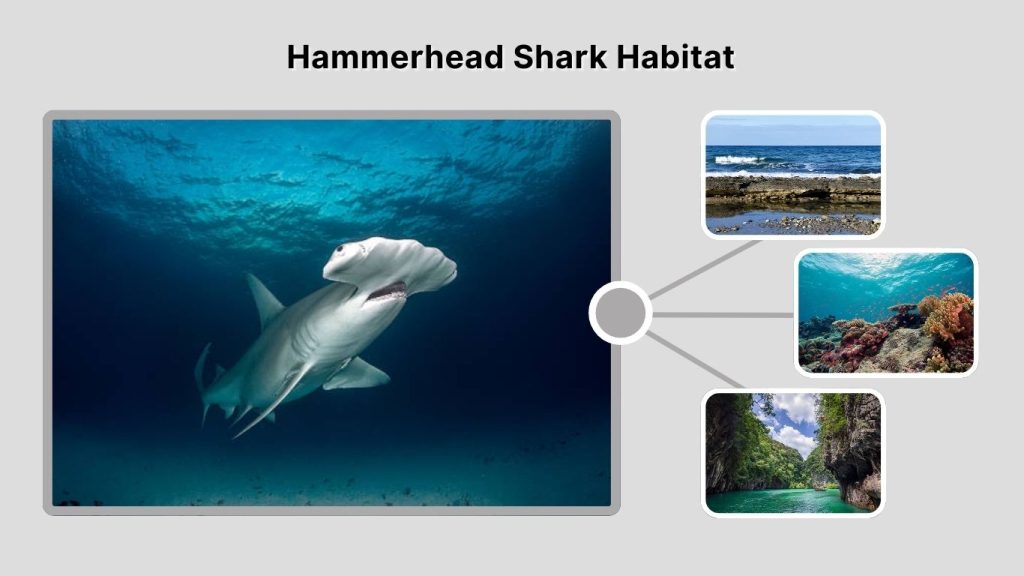
Hammerhead shark habitat ranges across tropical and temperate oceans worldwide. They are commonly found in the Atlantic, Pacific, and Indian Oceans.
Where Do Hammerhead Sharks Live?
Most hammerhead species prefer warm coastal waters. They are often seen near:
- Continental shelves
- Coral reefs
- Lagoons
- Island coastlines
Juvenile hammerheads are usually found in shallow coastal nurseries, where they are safer from larger predators.
Adults, however, may venture into deeper offshore waters. Some species migrate long distances between feeding and breeding grounds, especially in response to seasonal temperature changes.
Hammerhead Shark Diet
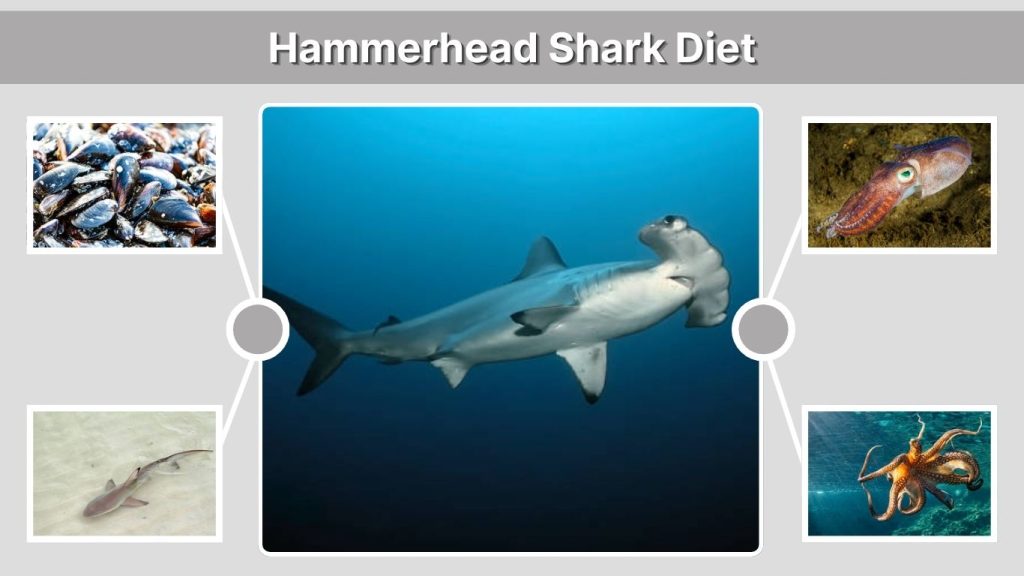
The hammerhead shark diet mainly consists of carnivorous prey. They are opportunistic predators, meaning they eat what is available in their environment.
What Do Hammerhead Sharks Eat?
Stingrays are one of their favorite foods. In fact, hammerhead sharks are particularly skilled at hunting stingrays because they can detect the electric signals produced by the rays’ muscles.
Other common prey includes:
- Bony fish
- Squid
- Octopus
- Crustaceans
- Smaller sharks
The great hammerhead has even been observed eating other shark species, showing its dominance within the marine food chain.
How Do Hammerhead Sharks Hunt?
Hammerhead sharks use a combination of vision, smell, and electroreception to find prey. When hunting stingrays, they often pin the ray down using their hammer-shaped head before delivering a powerful bite.
Their wide-set eyes allow them to scan large areas of the ocean floor. Meanwhile, their electroreceptors help them detect hidden prey buried beneath sand.
Some species hunt alone, while others may cooperate in groups during certain feeding events. This adaptability makes them highly efficient predators.
Hammerhead Shark Facts
Hammerhead sharks vary greatly in size depending on the species. The smallest species, the bonnethead, grows to about 3 to 5 feet long. In contrast, the great hammerhead can reach lengths of up to 20 feet and weigh more than 1,000 pounds.
Here are some fascinating hammerhead shark facts:
- They can swim at impressive speeds when hunting.
- Some species form schools of hundreds during the day.
- They migrate seasonally to follow warm currents.
- They are considered apex or near-apex predators.
- Their unique head shape gives them nearly 360-degree vision.
Interestingly, scalloped hammerheads are known for forming large schools near seamounts and islands. However, many hammerhead species become solitary hunters at night.
Their streamlined bodies and tall dorsal fins make them powerful swimmers capable of traveling long distances across oceans.
Are Hammerhead Sharks Dangerous?
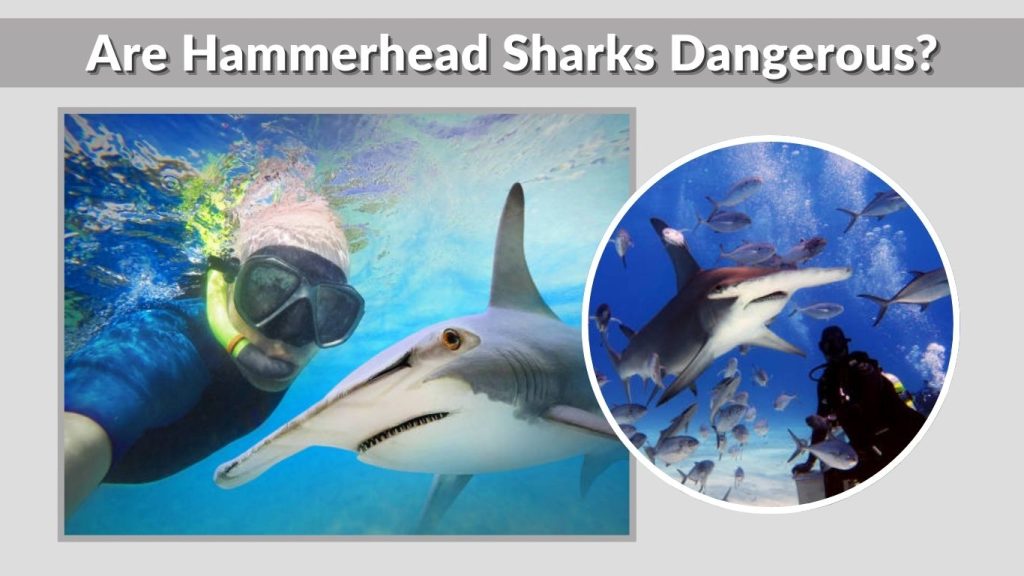
Many people wonder, are hammerhead sharks dangerous to humans? Despite their intimidating appearance, hammerhead sharks are generally not considered highly dangerous.
Are Hammerhead Sharks Dangerous to Humans?
Shark attacks involving hammerheads are rare. While there have been a small number of recorded incidents, they are far less aggressive compared to species like great white sharks or tiger sharks. Most hammerheads are shy and avoid human contact.
The great hammerhead, due to its large size, has the potential to be dangerous. However, documented attacks remain extremely uncommon. In most cases, these sharks are more curious than aggressive.
What Happens During Encounters?
Hammerhead sharks may approach divers out of curiosity but typically swim away quickly. Encounters are more likely to occur in areas where people swim or dive in coastal waters.
Like all wild animals, hammerheads may become defensive if provoked or cornered. To reduce risk, swimmers and divers should:
- Avoid wearing shiny objects that resemble fish scales
- Stay in groups
- Avoid swimming at dawn or dusk
- Refrain from disturbing marine wildlife
Overall, hammerhead sharks pose a very low risk to humans.
Are Hammerhead Sharks Endangered?
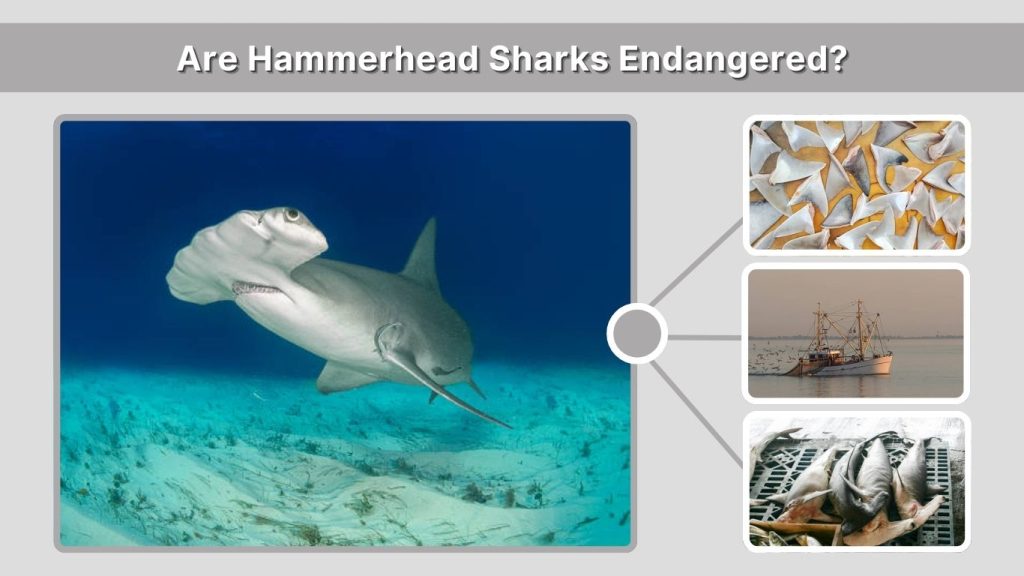
A growing concern among marine scientists is the conservation status of hammerhead sharks. So, are hammerhead sharks endangered? Unfortunately, several species are at serious risk.
Current Conservation Status
According to global conservation assessments, the scalloped hammerhead and great hammerhead are listed as Critically Endangered in many regions. Population numbers have declined significantly over the past few decades.
Other species, such as the smooth hammerhead, are classified as Vulnerable, meaning they also face a high risk of extinction in the wild.
Why Are Hammerhead Sharks at Risk?
There are several major threats contributing to their decline:
- Shark fin trade: Hammerheads are heavily targeted for their large fins, which are highly valued in international markets.
- Commercial overfishing: They are often caught intentionally or accidentally.
- Bycatch: Hammerheads frequently get trapped in fishing nets intended for other species.
- Slow reproduction: They mature later in life and produce relatively few offspring compared to many fish species.
Because of these factors, hammerhead shark populations struggle to recover once depleted.
Conservation Efforts
Efforts are underway to protect these sharks. Some countries have banned shark finning and implemented fishing restrictions. Marine protected areas help safeguard important habitats, while international agreements aim to regulate trade.
Public awareness and sustainable fishing practices are critical for ensuring the survival of hammerhead sharks in the future.
Hammerhead Shark Lifespan and Life Cycle
Understanding the hammerhead shark lifespan helps explain why conservation is so important.
Hammerhead Shark Lifespan
On average, hammerhead sharks live between 20 and 30 years, depending on the species. The great hammerhead may live slightly longer under ideal conditions.
They grow relatively slowly compared to many smaller fish species. Most hammerheads do not reach sexual maturity until they are several years old, which makes population recovery slower when numbers decline.
Reproduction and Development
Hammerhead sharks are viviparous, meaning they give birth to live young rather than laying eggs. After a gestation period of about 8 to 12 months, females give birth to litters that can range from 12 to 40 pups, depending on the species.
Newborn pups measure about 1 to 2 feet long and often stay in shallow nursery areas for protection. As they grow larger, they move into deeper waters.
Because only a portion of pups survive to adulthood, maintaining stable adult populations is essential for species survival.
Types of Hammerhead Sharks
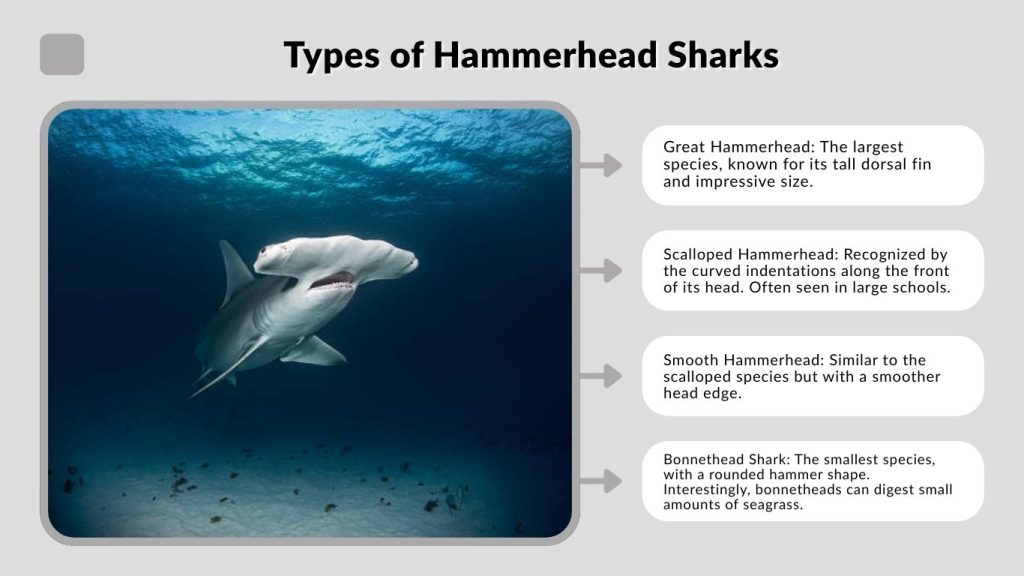
There are several distinct hammerhead species, each with unique characteristics:
- Great Hammerhead: The largest species, known for its tall dorsal fin and impressive size.
- Scalloped Hammerhead: Recognized by the curved indentations along the front of its head. Often seen in large schools.
- Smooth Hammerhead: Similar to the scalloped species but with a smoother head edge.
- Bonnethead Shark: The smallest species, with a rounded hammer shape. Interestingly, bonnetheads can digest small amounts of seagrass.
- Winghead Shark: Features an extremely wide head compared to body size.
Each species plays an important role in its ecosystem by helping regulate fish and ray populations.
FAQs
What do hammerhead sharks eat?
Hammerhead sharks primarily eat stingrays, bony fish, squid, and crustaceans. Some larger species also prey on smaller sharks. Their wide heads help them detect electric signals from hidden prey, making them especially skilled hunters.
Are hammerhead sharks dangerous?
Hammerhead sharks are generally not dangerous to humans. Attacks are rare, and most species are shy. While the great hammerhead is large and powerful, encounters with humans seldom result in aggression.
Where do hammerhead sharks live?
Hammerhead sharks live in tropical and temperate oceans worldwide. They are commonly found near coral reefs, continental shelves, and coastal waters, though some species migrate into deeper offshore regions.
Are hammerhead sharks endangered?
Yes, several hammerhead species are endangered or critically endangered due to overfishing, shark fin trade, and bycatch. Conservation efforts are in place, but population recovery remains slow.
How long do hammerhead sharks live?
Most hammerhead sharks live between 20 and 30 years. They mature slowly and produce limited offspring, which makes their populations vulnerable to decline.