





Emperor penguins are majestic birds that rule the icy continent of Antarctica. Known for their extraordinary endurance and massive size, these penguins are the tallest and heaviest of all living penguin species. From their impressive height to their bold coloration and social behavior, they stand out in the wild. In this guide, you’ll learn how tall emperor penguins really are and how to properly identify them by physical and behavioral features.
How Tall Is an Emperor Penguin?
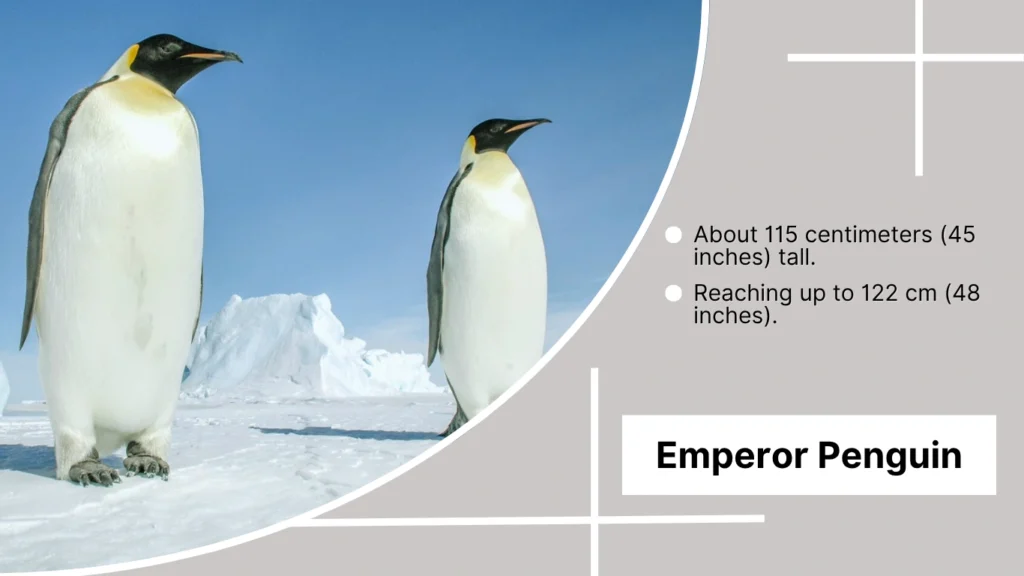
Average Adult Height
The average adult emperor penguin stands about 115 centimeters (45 inches) tall. However, some individuals may grow slightly taller, reaching up to 122 cm (48 inches). Males and females generally have similar height, but males are sometimes a bit heavier.
Height Compared to Other Penguins
Among all 18 known penguin species, emperor penguins are the tallest. Here’s how they compare:
| Penguin Species | Average Height |
| Emperor Penguin | 100–122 cm (39–48 in) |
| King Penguin | 90 cm (35 in) |
| Gentoo Penguin | 75–90 cm (30–35 in) |
| Adélie Penguin | 46–71 cm (18–28 in) |
| Little Blue Penguin | 30–35 cm (12–14 in) |
Penguin Height Compared to Humans
Though emperor penguins are the tallest penguins, they still only reach about waist-height on an average adult human. They are comparable in height to a 5 or 6-year-old child. Seeing one up close is impressive, especially when they waddle upright like little ice walkers.
Emperor Penguin Identification
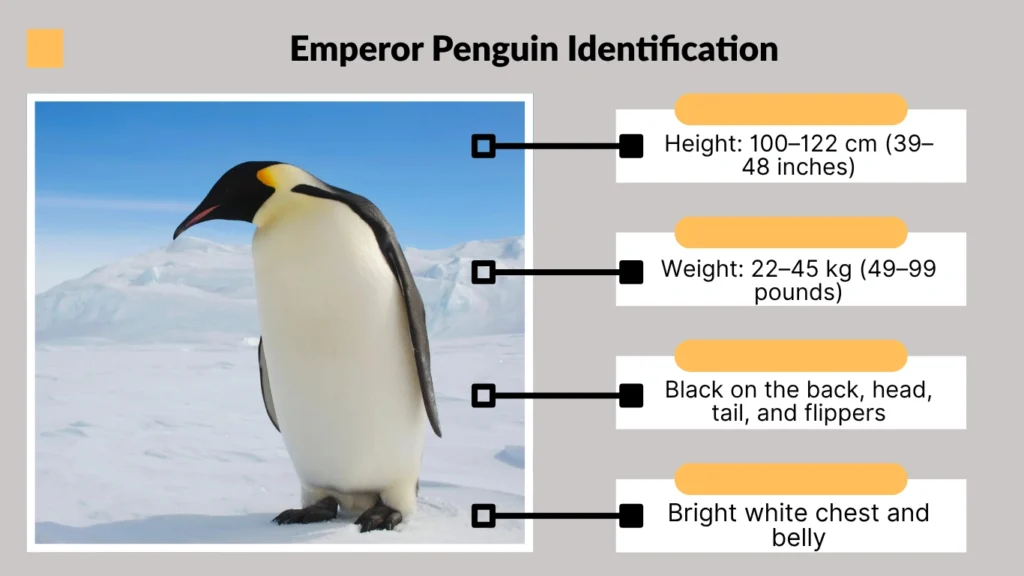
To properly identify an emperor penguin, you should observe several key features related to size, color, and behavior.
Size and Weight
- Height: 100–122 cm (39–48 inches)
- Weight: 22–45 kg (49–99 pounds)
- Seasonal Changes: They gain weight before breeding season and lose it during egg incubation.
Emperor penguins bulk up before winter to survive long fasting periods, especially males who incubate eggs for weeks without eating.
Coloration and Markings
Their coloration is striking and distinctive:
- Black on the back, head, tail, and flippers
- Bright white chest and belly
- Vibrant yellow-orange patches on each side of the neck
- Pale yellow ear patches behind the eyes
These bold contrasts make them easy to identify in a colony or from a distance.
Beak and Eyes
- The beak is long and narrow, often with an orange-pink lower mandible.
- Their eyes are dark brown and adapted to see in dim Antarctic light conditions.
Their beaks help them catch slippery fish and squid, their main diet.
Flippers and Feet
- Emperor penguins have strong, flipper-like wings that are black on the outside and silvery-white underneath.
- Their webbed feet are black with strong claws, allowing them to grip ice and snow while walking or sliding.
They use their bellies and feet to “toboggan” across ice for energy-efficient travel.
Male vs. Female Identification
- Males and females look almost identical.
- Males are slightly larger and heavier on average.
- During breeding season, males are the ones incubating the egg on their feet, covered by a special brood pouch.
Behavioral clues like egg-carrying and vocalizations can help tell the difference during mating season.
Juvenile Emperor Penguin Identification
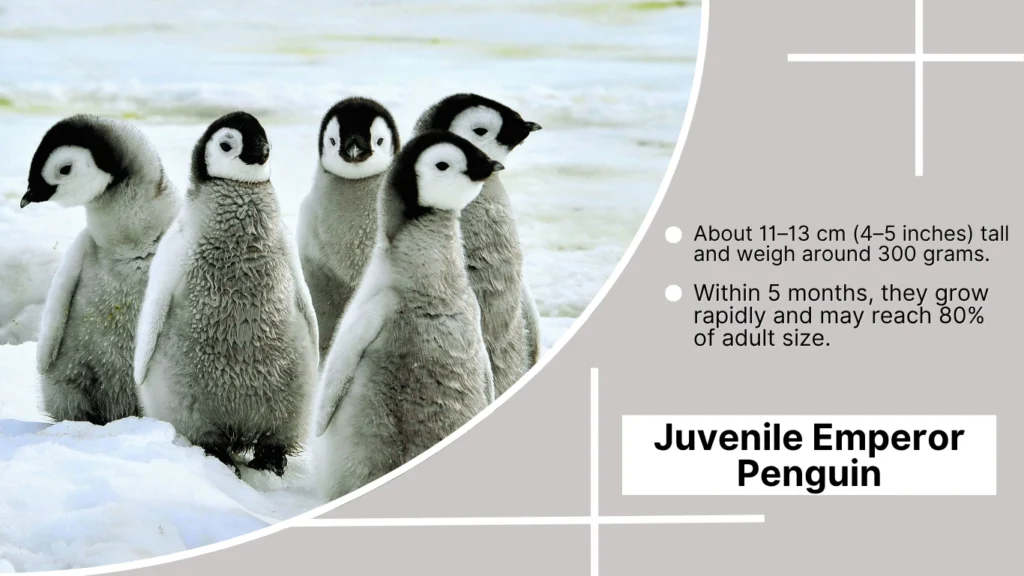
Chicks look nothing like adults and go through several changes before reaching full maturity.
Size and Growth
- Newly hatched chicks are only about 11–13 cm (4–5 inches) tall and weigh around 300 grams.
- Within 5 months, they grow rapidly and may reach 80% of adult size.
Plumage Differences
- Covered in soft grey down with black heads and white facial patches.
- The face mask is a strong identifier, as it looks very different from adults’ bright yellow markings.
Chicks stay close to parents for warmth and protection.
Molting Process
- As they grow, chicks molting their down into sleek, waterproof feathers.
- This transformation occurs before they head out to sea.
During this stage, they are sometimes mistaken for other penguin species due to transitional feather patterns.
How to Identify Emperor Penguins in the Wild
Apart from physical traits, knowing where and how they live can help with identification.
Habitat Clues
- Emperor penguins are exclusive to Antarctica.
- They nest on sea ice rather than land.
- Colonies often contain thousands of birds, making them visible from satellite images.
They are not found anywhere else naturally.
Behavior-Based Identification
- Walk upright with a waddling gait.
- Frequently use tobogganing (sliding on bellies) to travel.
- Vocalize with deep, trumpeting calls that can be heard across colonies.
They form tightly packed groups in winter to conserve warmth—another behavior unique among penguins.
FAQs
1. Are emperor penguins taller than king penguins?
Yes, emperor penguins are noticeably taller. While king penguins average 90 cm in height, emperors average around 115 cm and can grow up to 122 cm.
2. Can emperor penguins reach 4 feet in height?
Yes, large emperor penguins can grow close to 4 feet tall (122 cm), though most are slightly shorter.
3. Do male emperor penguins grow taller than females?
Males are usually slightly taller and heavier, but the difference is small and hard to notice without measuring.
4. At what age do emperor penguins reach full height?
They reach full height within their first year after molting from chick to juvenile and then to adult feathers.
5. Is the emperor penguin the tallest bird in Antarctica?
Yes, it holds the record as the tallest bird native to Antarctica, surpassing all other penguin and seabird species in size.