


Penguins may look adorable in their tuxedo-like feathers, but they’re skilled hunters beneath the waves. As carnivorous seabirds, penguins rely entirely on marine life for survival. From tiny krill to slippery fish and even squid, their diet varies depending on the species and where they live. In this article, we’ll explore 23 common foods penguins love to eat, how their diet changes in the wild versus captivity, and which penguin eats what—plus a few surprising menu items you didn’t expect!
Do Penguins Eat Fish? Yes, and These Are Their Favorites

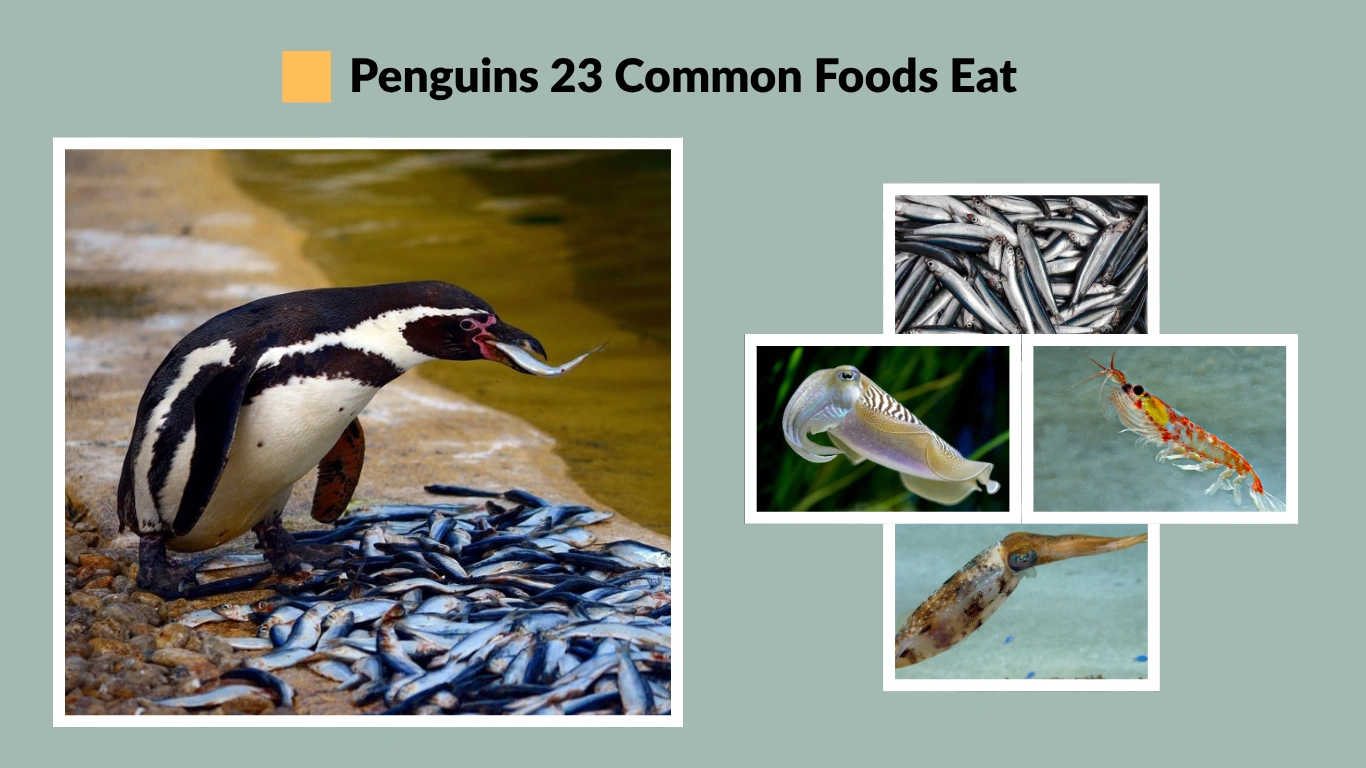
Fish make up the bulk of most penguins’ diets, especially for larger species like the Emperor, King, and African penguins. Fish are rich in protein and fat, making them an ideal energy source—especially during breeding and chick-rearing seasons. Penguins catch fish during deep dives, sometimes lasting several minutes, using their excellent underwater vision and swift swimming abilities. Below are six types of fish that penguins commonly eat in the wild.
1. Anchovies
Anchovies are small, oily fish that are easy for penguins to catch and swallow whole. Species like the African Penguin rely heavily on anchovies, especially along the coasts of South Africa and Namibia. Their high fat content provides excellent energy during molting and chick-feeding.
2. Sardines
Sardines are a major food source for many coastal penguin species. Like anchovies, they travel in schools, making them perfect targets during group hunts. Humboldt and Magellanic Penguins are particularly fond of sardines, diving near the surface to catch them.
3. Lanternfish
These deep-sea fish are commonly eaten by Emperor Penguins, who can dive over 500 meters to hunt them. Lanternfish are abundant in Antarctic waters and are rich in fat, helping penguins build and maintain their blubber layers for insulation.
4. Mullet
Galápagos Penguins and other tropical species consume mullet, which are commonly found in warmer waters. These fish are usually caught near the surface in shallow coastal zones.
5. Cod
Cod are eaten by penguins living in colder waters, such as those near the sub-Antarctic islands. They’re not as common in the diet as sardines or anchovies but are targeted when available, especially by larger penguins that can handle bigger prey.
6. Pilchard
Similar to sardines, pilchards are another small schooling fish that are popular among penguin colonies. They’re often consumed by African and Magellanic Penguins, especially when sardine stocks are low due to overfishing or seasonal migration.
Penguins Love These Crustaceans Too
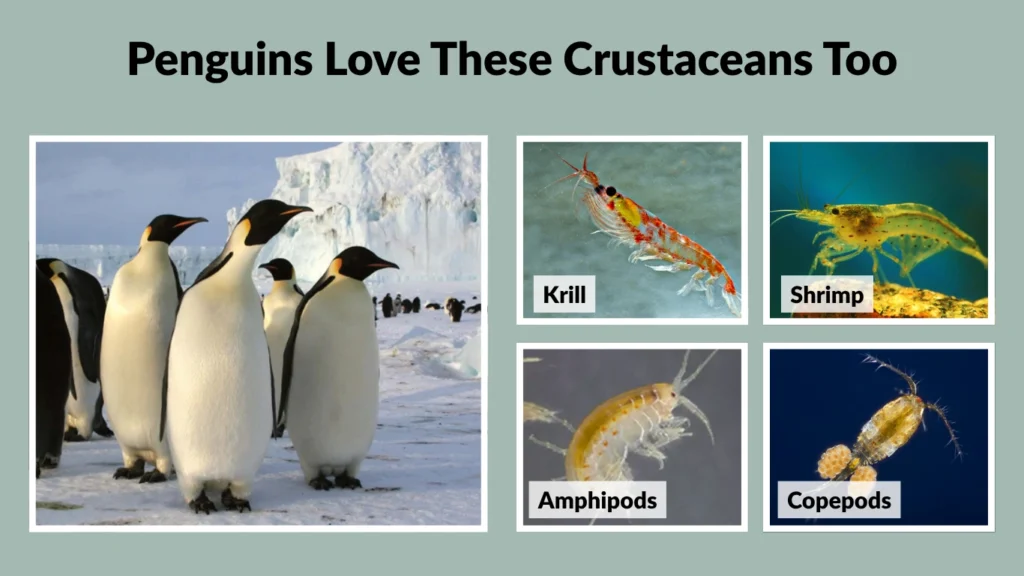
While fish form the core of many penguin diets, crustaceans—especially krill and shrimp—are essential food sources, particularly for species living in colder Antarctic or sub-Antarctic waters. These small, shrimp-like creatures are high in protein and are usually found in large swarms, making them ideal prey for penguins that feed in groups or dive in shallow waters.
7. Krill
Krill are by far the most important food source for several Antarctic penguin species, especially the Adélie, Chinstrap, and Gentoo Penguins. These tiny crustaceans form dense swarms and are rich in nutrients, making them the primary diet during the breeding season. Penguins scoop them up by the thousands while swimming with their beaks open.
8. Shrimp
Penguins living in warmer regions, such as Humboldt and Galápagos Penguins, often feed on small shrimp found in coastal waters. Though not as critical as krill in colder climates, shrimp offer variety and are easier to catch near the surface.
9. Amphipods
These tiny, flea-like marine crustaceans are an additional food source in nutrient-rich waters. Penguins catch them by making short, sharp dives in shallow zones. Amphipods are especially abundant near Antarctic sea ice, where Adélie Penguins feed.
10. Copepods
Among the smallest items on a penguin’s menu, copepods are consumed mostly by penguins in krill-rich regions. They are a secondary diet item, often swallowed along with krill and plankton. Penguins don’t hunt them individually but consume them while filter-feeding through dense swarms.
Squid and Cephalopods in Penguin Diet
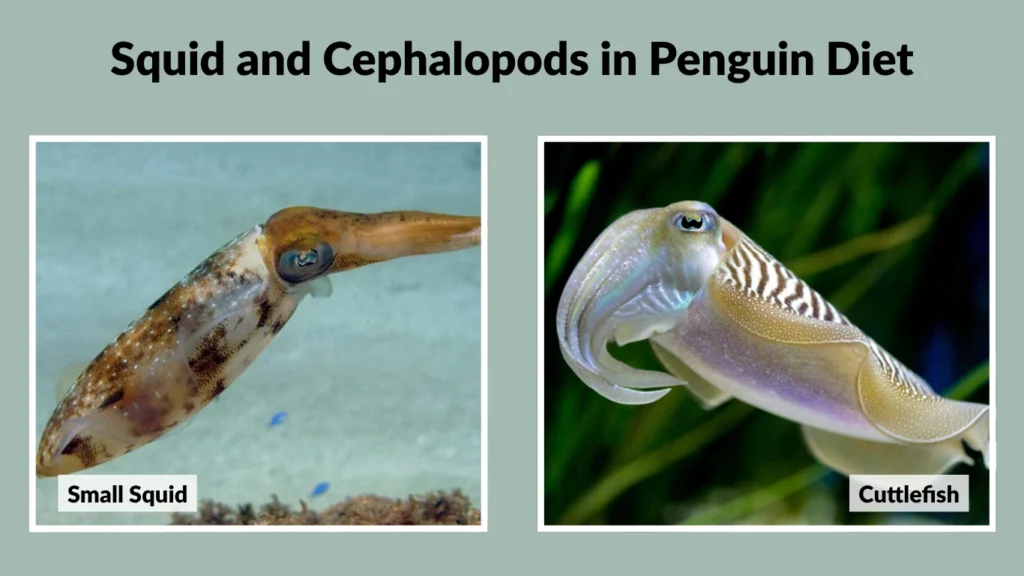
Squid and other cephalopods are an important part of the diet for larger penguin species that dive deeper into the ocean. These creatures are high in protein and fat, providing essential energy for long-distance hunters like the Emperor Penguin. Penguins typically hunt squid during longer dives, often going several hundred meters deep into the dark, cold waters where these soft-bodied animals thrive.
11. Small Squid
Emperor, King, and Gentoo Penguins commonly hunt small squid in Antarctic and sub-Antarctic waters. These squid are swift, but penguins use their sharp beaks and agile swimming to catch them. During the non-breeding season, when fish and krill are harder to find, squid become a more important part of the diet.
12. Cuttlefish
Cuttlefish, a close relative of squid, are consumed by penguins in warmer, coastal regions—especially by African and Galápagos Penguins. Though less common than squid in colder waters, cuttlefish provide variety in diet and are hunted when they approach reefs and shallow seafloors.
Other Surprising Things Penguins Eat
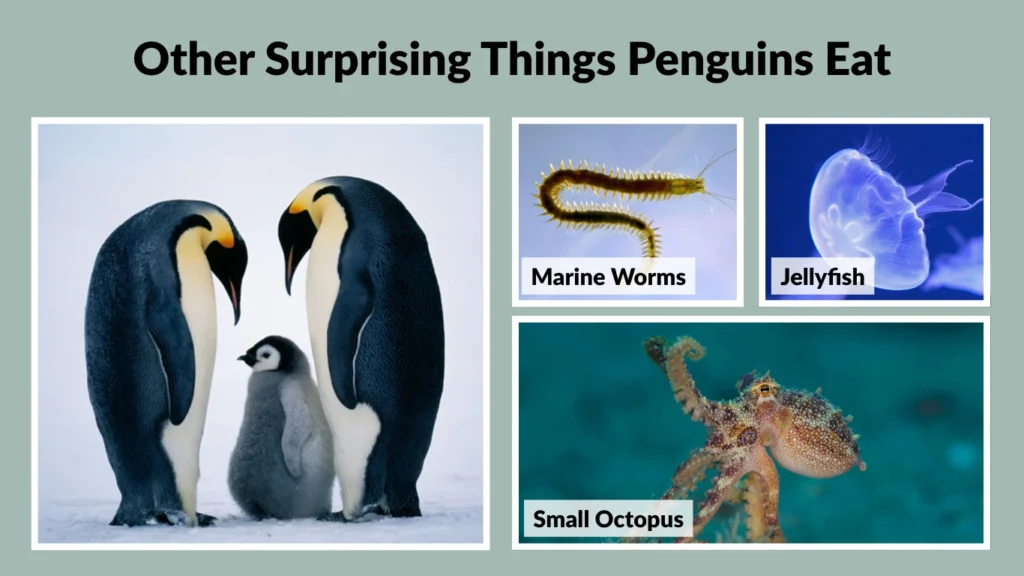
Although fish, squid, and crustaceans make up most of a penguin’s diet, some penguin species are opportunistic feeders and will eat other small marine animals when available. These unexpected items are often seasonal or habitat-specific and may not be part of their everyday diet—but they play a role in survival during food shortages or in unique environments.
13. Marine Worms
In coastal or shallow-water habitats, penguins may eat marine worms such as polychaetes. These worms are rich in nutrients and easy to catch in soft seabeds. Humboldt and Little Blue Penguins are more likely to feed on worms when other prey is scarce.
14. Jellyfish
While not a major food source, some penguins have been observed eating small jellyfish. This behavior is usually opportunistic and more common in warmer waters where jellyfish bloom. Penguins may nip at jellyfish tentacles or consume smaller ones whole.
15. Small Octopus
In regions where octopuses are part of the local marine ecosystem, penguins may occasionally catch and eat juvenile or small octopuses. This is more likely for larger species like the King or Emperor Penguin, capable of handling bigger and more challenging prey.
What Do Penguins Eat in the Wild vs. in Captivity?
Penguins’ diets vary significantly depending on whether they live in the wild or are kept in zoos, aquariums, or rehabilitation centers. While wild penguins hunt for live prey in the ocean, captive penguins are fed a controlled and consistent diet to meet their nutritional needs. Here’s how their diets compare:
Wild Diet
In the wild, penguins eat a diverse range of live marine animals, often influenced by the species and local food availability. They must dive and hunt, sometimes traveling long distances to catch enough food—especially during breeding season.
Captive Diet
In captivity, penguins are typically fed pre-selected frozen fish and squid, thawed and served in clean conditions. Their meals are carefully portioned and often include vitamin supplements to ensure balanced nutrition.
Comparison Table: Wild vs. Captive Penguin Diet
| Aspect | Wild Penguins | Captive Penguins |
| Main Food Types | Live fish, krill, squid, crustaceans, cephalopods | Frozen/thawed fish, squid, occasional supplements |
| Food Variety | High—depends on local habitat | Moderate—routine menu |
| How They Eat | Hunt underwater, dive deep | Fed by hand or tray by caretakers |
| Supplement Use | None—natural diet | Yes—vitamins, especially for breeding adults |
| Effort to Get Food | Must travel and dive to find prey | Food is readily available |
Feeding practices in captivity also vary by species. For instance, Emperor Penguins are extremely rare in zoos due to their size and complex habitat needs. Meanwhile, Humboldt and African Penguins are more common in captivity and adapt well to human feeding routines.
Penguin Diet by Species
Different penguin species have unique dietary preferences shaped by their size, habitat, and diving ability. While all penguins are carnivorous and depend on marine life, what they eat and how they hunt can vary significantly. Here’s a look at the primary foods consumed by some of the most well-known penguin species.
Emperor Penguin
Primary Foods: Fish (especially lanternfish), squid, krill
Emperor penguins are deep divers, reaching depths of over 500 meters. Their large body size allows them to hunt for fat-rich prey like squid and fish in cold Antarctic waters.
Adélie Penguin
Primary Foods: Krill, small fish, amphipods
Living along the Antarctic coast, Adélie penguins heavily depend on Antarctic krill. Their diet may shift to fish when krill availability declines, especially during chick-rearing season.
African Penguin
Primary Foods: Sardines, anchovies, squid
African penguins hunt in the warm waters of southern Africa, feeding on schooling fish like anchovies and sardines. Declines in fish stocks due to overfishing have impacted their food supply.
Galápagos Penguin
Primary Foods: Small mullet, sardines, coastal crustaceans
As the only penguin species found north of the equator, Galápagos penguins feed in tropical waters cooled by ocean currents. They rely on small, shallow-water fish and crustaceans.
How Penguins Catch and Eat Their Food
Penguins are excellent underwater hunters, using speed, agility, and sharp vision to catch prey. Their feeding behavior is shaped by the species’ diving capacity and the type of prey available in their habitat.
Diving and Swimming Techniques
Penguins dive anywhere from a few meters to over 500 meters deep depending on the species. Emperor Penguins are the deepest divers, sometimes staying underwater for more than 20 minutes. Most penguins hunt by swimming with their beaks open, snapping shut on prey like fish or krill.
They use their strong flippers for propulsion and steer with their feet. Their torpedo-shaped bodies allow them to move swiftly through the water, often twisting and flipping to follow fast-moving schools of fish.
Hunting in Groups
Many penguin species, especially Chinstrap, Gentoo, and African Penguins, feed in groups. Hunting in numbers helps them herd prey into tight schools, making it easier to catch multiple fish at once. This strategy also reduces their individual risk of predation from marine animals like seals and orcas.
What Penguins Don’t Eat
Despite their wide-ranging diet, penguins are strictly carnivorous and only eat marine-based animal protein. They do not consume plants, fruits, or land-based insects.
Do Penguins Eat Plants or Seaweed?
No. Penguins do not eat seaweed, algae, or any type of plant matter. Their digestive systems are not designed to process vegetation. They rely entirely on protein-rich marine prey to survive in cold, energy-demanding environments.
Do Penguins Eat Humans or Birds?
Absolutely not. Penguins are non-aggressive toward humans and other birds. They do not hunt birds or mammals. In rare cases, scavenging may occur in captivity or extreme hunger, but this behavior is unnatural and extremely uncommon.
FAQs
1. What do penguins eat besides fish?
Penguins also eat krill, squid, shrimp, marine worms, jellyfish, and small crustaceans, depending on their environment and species.
2. Do all penguins eat the same food?
No. Diet varies by species. For example, Emperor Penguins eat more squid and deep-sea fish, while Adélie Penguins focus on krill.
3. How much food does a penguin eat daily?
On average, a penguin may eat 2 to 5 pounds (1–2.5 kg) of food per day, depending on the species and season. Breeding or molting penguins may eat even more to store fat.
4. Do baby penguins eat the same food as adults?
Not directly. Chicks are fed regurgitated food by their parents. The diet includes pre-digested fish, krill, or squid that adults have stored in their stomachs.
5. Can penguins eat frozen food in captivity?
Yes. In zoos and aquariums, penguins are fed thawed frozen fish and squid supplemented with vitamins. It’s a carefully balanced diet to mimic wild conditions.