



The keel-billed toucan is one of the most colorful and recognizable birds of the tropical Americas. Famous for its large, rainbow-colored beak, this species is often called the “rainbow-billed toucan.” Found mainly in Central America, keel-billed toucans play an important role in rainforest ecosystems by dispersing seeds and maintaining plant diversity. Their striking appearance, social behavior, and cultural importance—especially in Belize—make them a favorite among birdwatchers and wildlife enthusiasts around the world.
What Is a Keel-Billed Toucan?
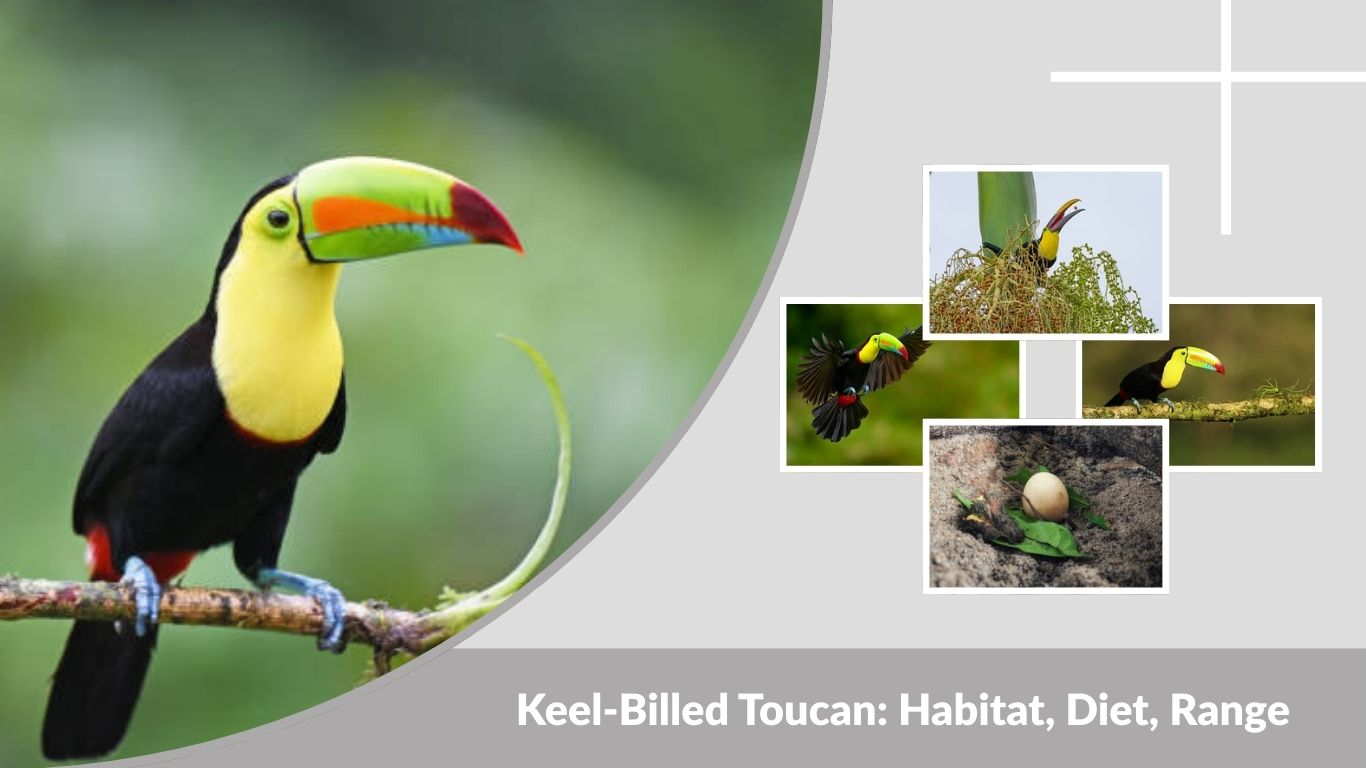
The keel-billed toucan (Ramphastos sulfuratus) is a medium-to-large bird known for its vibrant bill, which features shades of green, yellow, orange, red, and blue. Despite its size, the beak is lightweight and made primarily of keratin, allowing the bird to move and fly efficiently. The body is mostly black with a bright yellow throat, red feathers under the tail, and blue skin around the eyes.
Among common keel billed toucan facts is that the beak serves several purposes. It helps the bird reach fruit on thin branches, regulate body temperature, and communicate with other toucans. This species is highly social and is often seen in small flocks moving through the forest canopy.
Keel-Billed Toucan Habitat and Natural Environment
The keel billed toucan habitat consists mainly of tropical and subtropical forests. These birds prefer lowland rainforests but can also be found in secondary forests, forest edges, and plantations with tall trees. They spend most of their time in the upper canopy, where food is abundant and predators are easier to avoid.
A healthy keel-billed toucan habitat includes large, mature trees that provide nesting cavities and a steady supply of fruit. Because they rely so heavily on forests, habitat destruction poses a serious threat to their long-term survival.
Keel-Billed Toucan Location and Geographic Range

The keel billed toucan location covers a broad stretch of Central America and parts of northern South America. Their range extends from southern Mexico through Guatemala, Belize, Honduras, Nicaragua, Costa Rica, and Panama, reaching into northern Colombia and Venezuela.
Keel-Billed Toucan in Belize
The keel billed toucan in Belize holds special significance, as it is the national bird of the country. Known locally as the “bill bird,” it appears in Belizean culture, conservation programs, and ecotourism. Belize’s protected rainforests provide ideal conditions for the species, making it one of the best places in the world to observe these birds in the wild.
Keel-Billed Toucan Range
Overall, the keel-billed toucan range includes humid tropical regions with dense vegetation and reliable food sources. Their ability to adapt to forest edges has helped them survive in some human-altered landscapes, though untouched rainforest remains their preferred environment.
Keel-Billed Toucan Diet and Feeding Behavior
The keel billed toucan diet is primarily fruit-based. Figs, berries, and tropical fruits make up most of their meals. However, keel-billed toucan diet also includes insects, lizards, frogs, bird eggs, and nestlings, providing essential protein.
Using their long beaks, they pluck fruit and flip it into their mouths with a quick toss of the head. This feeding behavior allows them to access food on branches too thin to support their body weight. By spreading seeds through their droppings, keel-billed toucans contribute significantly to forest regeneration.
Keel-Billed Toucan Lifespan and Survival
The keel-billed toucan lifespan in the wild typically ranges from 15 to 20 years. In captivity, where threats such as predators and food shortages are minimized, they may live even longer. Natural predators include snakes, large birds of prey, and mammals that raid nests. Deforestation and illegal pet trade remain the greatest challenges to their survival today.
Keel-Billed Toucan Babies and Breeding Behavior
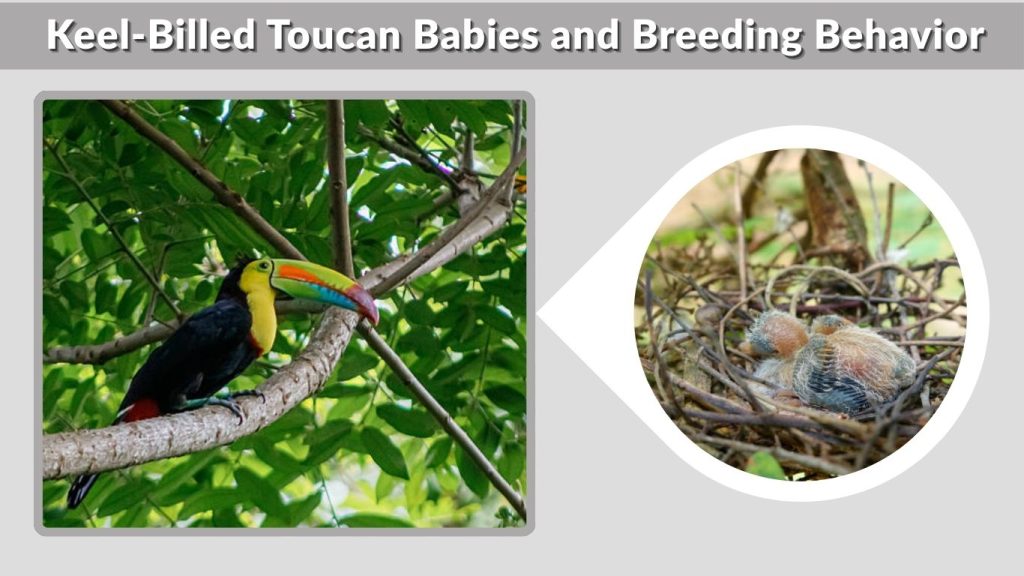
Keel-billed toucans do not build nests in the traditional sense. Instead, they rely on natural tree cavities or abandoned woodpecker holes high above the forest floor. These secure locations help protect their young from predators during the vulnerable early stages of life.
Keel-Billed Toucan Baby Development
A keel-billed toucan baby hatches blind, featherless, and completely dependent on its parents. Both adults take turns feeding the chicks regurgitated fruit and small prey. During the first few weeks, the chicks grow rapidly and develop padded heels to protect their feet from the rough surface of the nest cavity. As feathers emerge and the beak begins to form, the young toucans gradually become more active. After about eight to nine weeks, a baby keel-billed toucan is ready to leave the nest and begin life in the forest canopy.
Male and Female Keel-Billed Toucan Differences
At first glance, male and female keel-billed toucans appear nearly identical. However, the keel-billed toucan female is usually slightly smaller and has a shorter, narrower beak than the male. These differences are subtle and often difficult to spot without direct comparison. Both sexes share responsibilities equally, including incubation, feeding chicks, and defending the nesting site.
Can Keel-Billed Toucans Fly?
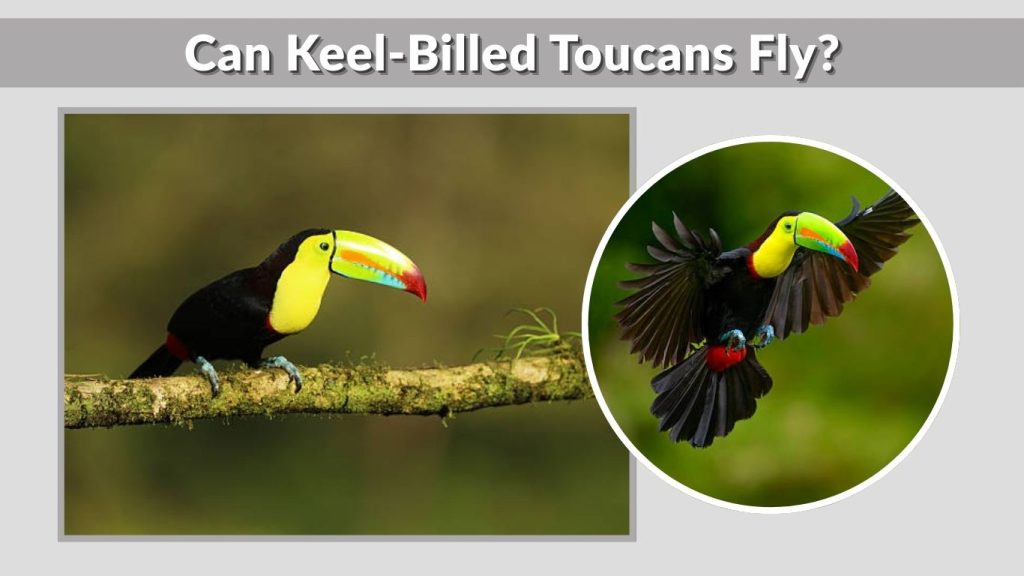
Despite their large beaks, keel-billed toucan flying ability is well adapted to life in the trees. They are capable of flight but generally travel short distances from tree to tree. Their flight pattern consists of rapid wingbeats followed by brief glides, which allows them to move efficiently through the forest canopy. On the ground, keel-billed toucans are less graceful and prefer hopping rather than walking.
Fun and Interesting Keel-Billed Toucan Facts
There are many fascinating keel billed toucan facts that make this species stand out among tropical birds. Their beaks are not only used for feeding but also for regulating body temperature, as blood vessels near the surface release excess heat. Keel-billed toucans are also highly social, often forming small flocks that communicate using croaking calls.
Another interesting fact is that these birds sleep in an unusual position. They tuck their beaks under their wings and curl their tails over their backs, allowing their large bodies to fit comfortably inside tree cavities. This behavior helps conserve heat and keeps them protected during rest.
Conservation Status and Threats
Although keel-billed toucans are not currently classified as endangered, they face increasing threats from deforestation and habitat fragmentation. As rainforests are cleared for agriculture and development, suitable nesting sites and food sources become harder to find. In some regions, illegal capture for the pet trade also poses a risk. Conservation efforts focused on protecting forests and promoting sustainable land use are essential for the long-term survival of keel-billed toucans.
Why the Keel-Billed Toucan Matters
The keel-billed toucan plays a vital role in maintaining healthy tropical forests. By spreading seeds across wide areas, these birds help regenerate plant life and support biodiversity. Their cultural importance, especially in Belize, and their ecological value make them a powerful symbol of rainforest conservation. Protecting the keel-billed toucan range ensures that future generations can continue to admire one of nature’s most colorful and important birds.
FAQs
Where do keel-billed toucans live?
The keel-billed toucan habitat includes tropical and subtropical forests in Central America and northern South America. They are commonly found in southern Mexico, Belize, Guatemala, Costa Rica, Panama, and parts of Colombia and Venezuela.
What do keel-billed toucans eat?
The keel-billed toucan diet is mainly made up of fruit such as figs and berries. They also eat insects, small reptiles, bird eggs, and nestlings, which provide important protein for their diet.
How long do keel-billed toucans live?
The average keel-billed toucan lifespan is about 15 to 20 years in the wild. In captivity, where predators and food shortages are reduced, they may live even longer with proper care.
Can keel-billed toucans fly?
Yes, keel-billed toucan flying ability is well developed, but they usually fly short distances. Their flight consists of quick wingbeats followed by gliding, which helps them move efficiently between trees in the forest canopy.
Are male and female keel-billed toucans different?
Male and female keel-billed toucans look very similar. The keel-billed toucan female is typically slightly smaller and may have a shorter beak, but the difference is subtle and hard to notice without close comparison.