




The longfin mako shark (Isurus paucus) is one of the ocean’s most mysterious and least understood predators. Often overshadowed by its famous cousin, the shortfin mako, this species lives primarily in deeper offshore waters and is rarely seen by humans. Known for its sleek body and unusually long pectoral fins, the longfin mako is built for life in the open ocean. Despite its powerful design and ecological importance, much about this shark remains unknown. Understanding the longfin mako helps highlight the fragile balance of marine ecosystems and the growing need for shark conservation worldwide.
What Is the Longfin Mako Shark?
The longfin mako shark is a large pelagic shark species belonging to the mackerel shark family, Lamnidae. It is one of only two mako shark species in the genus Isurus, the other being the shortfin mako (Isurus oxyrinchus). While the shortfin mako is widely recognized as one of the fastest sharks in the world, the longfin mako remains far less studied and rarely observed.
Scientific Classification
- Kingdom: Animalia
- Phylum: Chordata
- Class: Chondrichthyes
- Order: Lamniformes
- Family: Lamnidae
- Genus: Isurus
- Species: Isurus paucus
As a member of the Lamnidae family, the longfin mako is closely related to other powerful sharks such as the great white shark and porbeagle shark. These species share similar body structures designed for speed, strength, and active hunting in open waters.
H3: Discovery and Naming
The species name paucus means “few” or “small amount” in Latin, referring to the limited number of specimens available when the species was first described. Because the longfin mako inhabits deep offshore waters, encounters with humans have always been rare. Even today, much of what scientists know comes from accidental catches rather than direct observation in the wild.
Physical Characteristics of the Longfin Mako Shark
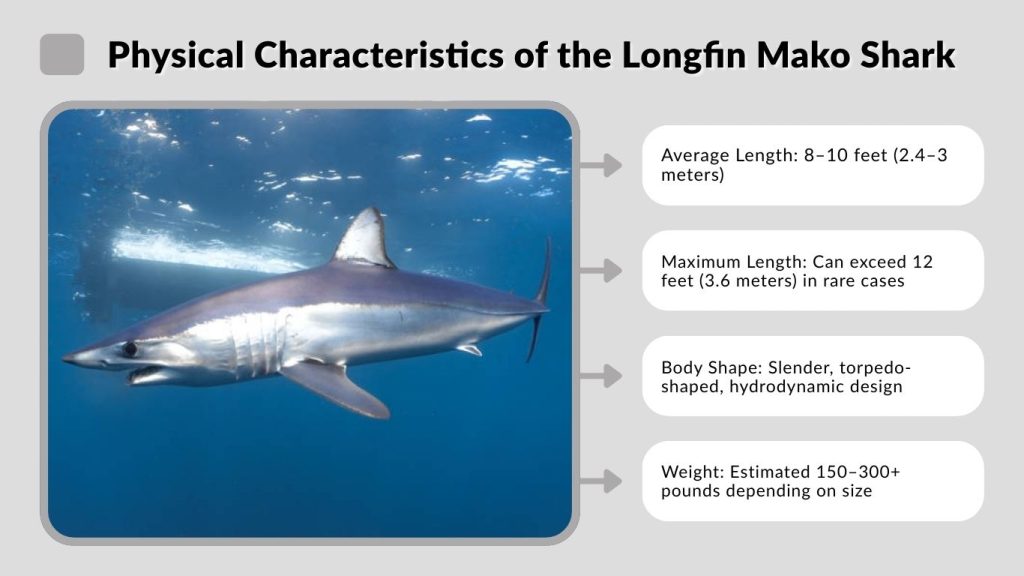
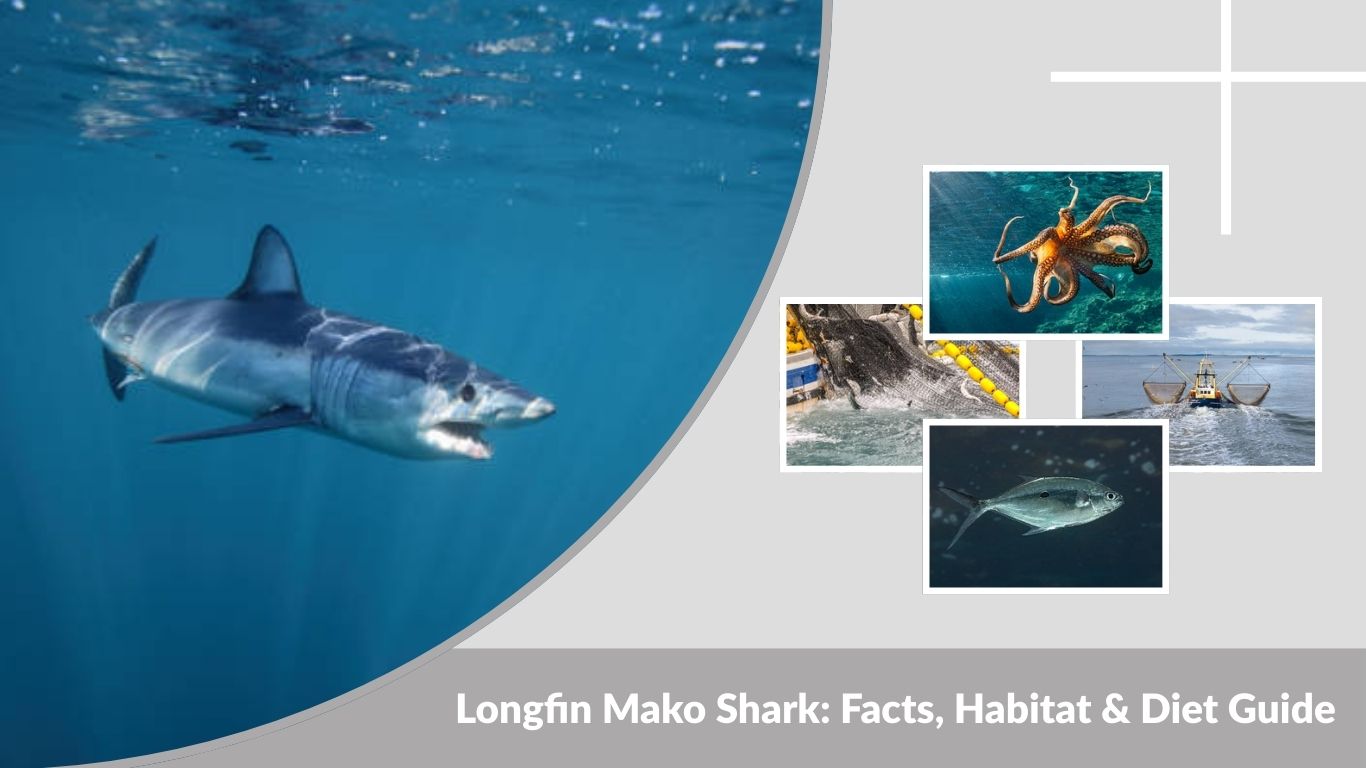
The longfin mako shark (Isurus paucus) has a sleek, powerful body built for life in the open ocean. Although it closely resembles the shortfin mako, several physical traits make it unique. Its streamlined shape reduces drag, allowing it to move efficiently through deep pelagic waters. As a member of the mackerel shark family, it shares features such as a pointed snout, crescent-shaped tail, and strong musculature. However, its longer fins and slightly more slender frame distinguish it from its faster relative.
Below is a quick overview of its key physical characteristics:
- Average Length: 8–10 feet (2.4–3 meters)
- Maximum Length: Can exceed 12 feet (3.6 meters) in rare cases
- Body Shape: Slender, torpedo-shaped, hydrodynamic design
- Weight: Estimated 150–300+ pounds depending on size
- Pectoral Fins: Noticeably long and broad (main identifying feature)
- Snout: Long, pointed, and conical
- Teeth: Sharp, narrow, and slightly curved for gripping prey
- Eyes: Large, adapted for low-light conditions
- Tail (Caudal Fin): Crescent-shaped for strong propulsion
- Coloration: Dark metallic blue or gray on top, white underside
- Camouflage: Countershading for open-ocean concealment
- Thermoregulation: Partially warm-bodied (regional endothermy)
These physical adaptations allow the longfin mako shark to survive and hunt effectively in deep offshore environments where speed, balance, and stealth are essential.
Longfin vs Shortfin Mako Shark
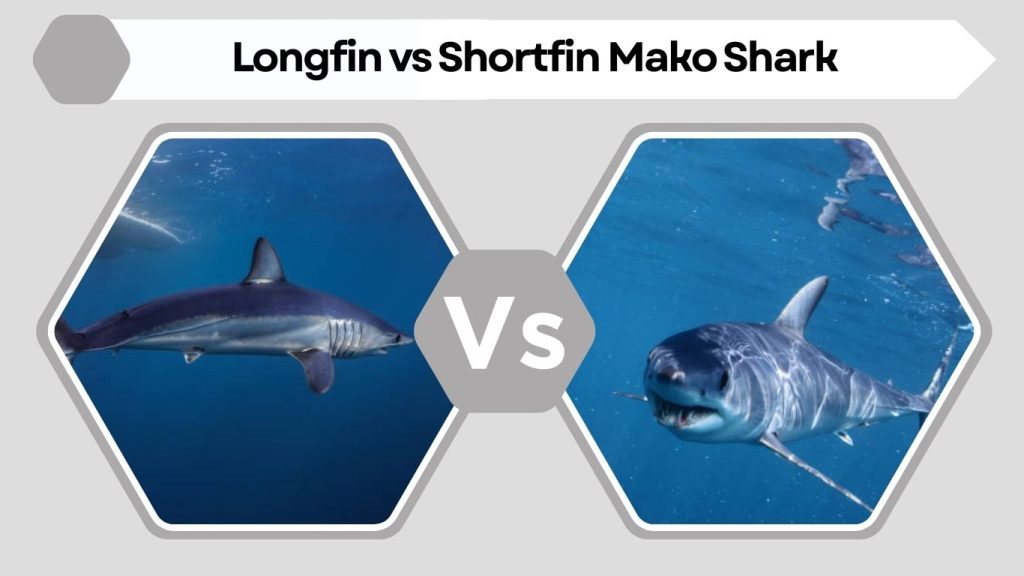
Because the two mako species look similar at first glance, they are often confused. However, there are several important differences between them.
Key Physical Differences
The most obvious difference is the length of the pectoral fins. Longfin makos have much longer and broader fins, while shortfin makos have compact, pointed fins.
The longfin mako generally has a slightly slimmer build compared to the more muscular shortfin mako. Additionally, the eyes of the longfin mako tend to be proportionally larger, possibly an adaptation for improved vision in deeper, darker waters.
Behavioral Differences
Shortfin mako sharks are known for their incredible speed and dramatic leaps from the water. They are active hunters that often swim closer to the surface.
In contrast, the longfin mako appears to spend more time in deeper offshore waters. It is believed to be less surface-active and possibly slower than the shortfin mako. However, due to limited research, much of its behavior remains speculative.
Habitat Range Comparison
Both species inhabit tropical and temperate oceans worldwide. However, the shortfin mako is more commonly found near the surface and closer to coastlines. The longfin mako prefers deeper pelagic zones, typically far from land.
This difference in habitat preference partly explains why the longfin mako is encountered far less frequently than its shortfin relative.
Habitat and Global Distribution
The longfin mako shark is widely distributed but rarely seen. It inhabits offshore waters in tropical and warm temperate regions around the world.
Ocean Regions
Longfin mako sharks have been recorded in the Atlantic Ocean, Pacific Ocean, and Indian Ocean. Sightings and catches suggest a broad global range, though populations appear scattered and low in density.
They are typically associated with deep, open-ocean environments rather than coastal waters. Because of this offshore lifestyle, they are most often encountered by commercial longline fisheries operating in deep water.
Depth Range
Unlike the shortfin mako, which frequently occupies surface waters, the longfin mako tends to inhabit deeper pelagic zones. It is commonly found at depths ranging from several hundred feet below the surface to even deeper offshore waters.
Diet and Hunting Behavior
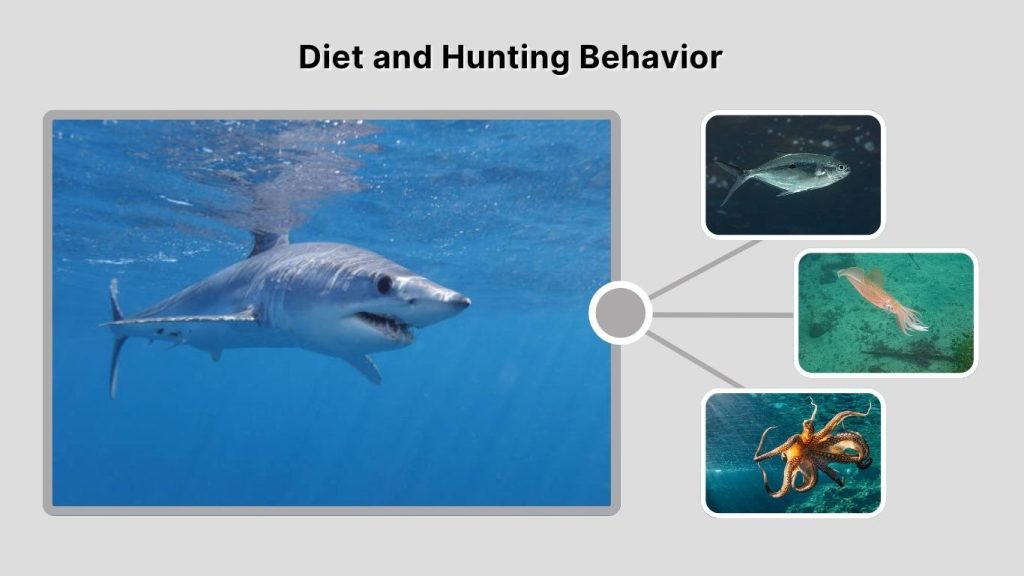
The longfin mako shark is an active predator that feeds primarily in the open ocean. Although detailed studies are limited, stomach content analysis and fishery data provide insight into its feeding habits.
Main Prey
The longfin mako mainly consumes:
- Bony fish, including tuna and mackerel
- Squid and other cephalopods
- Occasionally smaller sharks or pelagic fish species
Because it inhabits deep offshore waters, its diet largely consists of species that migrate vertically in the water column. Squid appear to play a particularly important role in its feeding ecology, suggesting it may hunt at depths where cephalopods are abundant.
Hunting Strategy
Unlike the shortfin mako, which is famous for explosive speed near the surface, the longfin mako is believed to rely more on steady pursuit and precise maneuvering. Its long pectoral fins may provide enhanced stability in deeper water, allowing it to glide efficiently while searching for prey.
Like other lamnid sharks, it likely uses a combination of strong vision, electroreception, and acute sensory perception to detect movement in low-light conditions. As a mid-to-apex predator, it helps regulate populations of fast-swimming fish and squid, contributing to balance in pelagic ecosystems.
Reproduction and Life Cycle
The reproductive biology of the longfin mako shark is not as well documented as that of many coastal shark species. However, researchers believe it shares similar reproductive traits with other mackerel sharks.
Reproductive Method
The longfin mako is ovoviviparous, meaning that embryos develop inside eggs that hatch within the mother’s body. Instead of receiving nourishment through a placenta, developing embryos are sustained by yolk sacs and, in some related species, by consuming unfertilized eggs—a process known as oophagy.
This reproductive strategy results in well-developed pups at birth, increasing their chances of survival in the open ocean.
Gestation and Offspring
Although exact gestation periods remain uncertain, scientists estimate that pregnancy may last over a year, similar to other lamnid sharks. Litter sizes are believed to be relatively small, possibly ranging from a few pups to around a dozen.
Newborn longfin makos are independent from birth and must immediately fend for themselves. With no parental care, survival depends on instinct, speed, and access to sufficient prey.
Lifespan
Precise lifespan data for the longfin mako is limited. However, like many large pelagic sharks, it is thought to grow slowly and mature late. These life history traits—slow growth, late maturity, and small litter sizes—make the species particularly vulnerable to overfishing.
Conservation Status and Threats
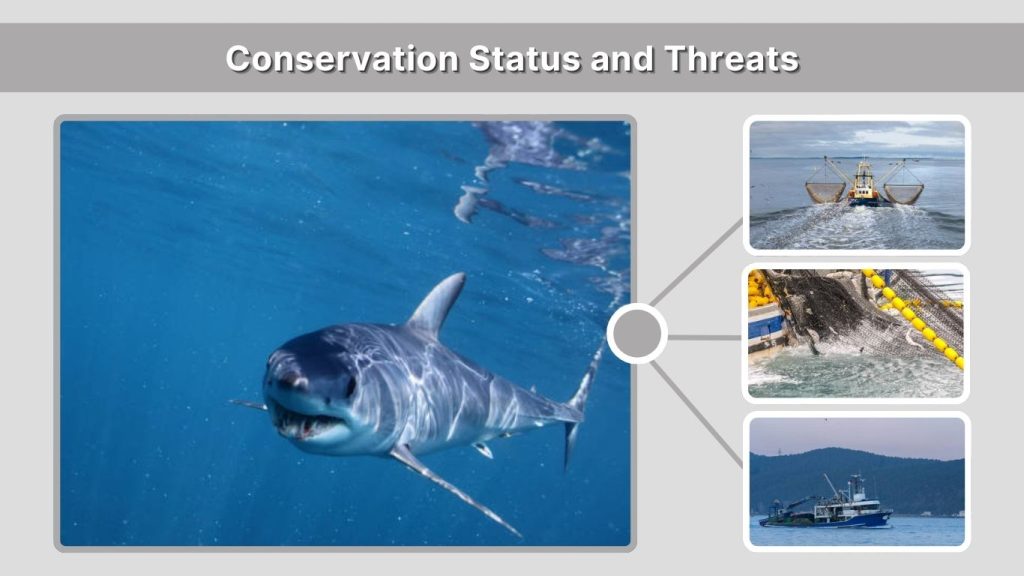
Despite being rarely seen, the longfin mako shark faces significant conservation concerns. Its offshore habitat does not fully protect it from modern fishing pressure.
IUCN Red List Classification
The longfin mako shark is currently listed as Endangered on the IUCN Red List. Population data are incomplete, but available evidence suggests declining numbers across much of its range.
Its low reproductive rate and high exposure to industrial fishing operations increase its vulnerability.
Major Threats
The primary threats to the longfin mako include:
- Commercial longline fisheries, where it is often caught as bycatch
- Targeted fishing for meat and fins
- International fin trade demand
Because it inhabits deep offshore waters, it frequently encounters longline gear set for tuna and swordfish. Even when not specifically targeted, accidental capture can significantly impact already limited populations.
Conservation Efforts
Some international agreements aim to regulate the capture and trade of mako sharks. Fisheries management organizations in certain regions have introduced catch limits or retention bans for mako species.
However, enforcement varies, and more research is needed to accurately assess population sizes and recovery trends. Strengthening sustainable fishing practices and improving monitoring systems are essential steps toward protecting this species.
Why the Longfin Mako Shark Is Important
As a pelagic predator, the longfin mako plays a vital role in maintaining healthy ocean ecosystems. By preying on fast-swimming fish and squid, it helps regulate species populations and supports balance within the marine food web.
Sharks are often considered indicator species, meaning their presence reflects the overall health of marine environments. A decline in large predators like the longfin mako can lead to cascading ecological effects, disrupting food chains and biodiversity.
Protecting the longfin mako is not just about saving a single shark species—it is about preserving the stability of open-ocean ecosystems that support countless forms of marine life.
FAQs
Is the longfin mako shark dangerous to humans?
There are no confirmed records of unprovoked attacks on humans by longfin mako sharks. Because they live far offshore and at considerable depths, encounters with people are extremely rare.
How fast is the longfin mako shark?
While it is built for speed, the longfin mako is generally considered slower than the shortfin mako, which is known as one of the fastest sharks in the world. Exact speed measurements for the longfin species remain limited.
Where is the longfin mako shark found?
The longfin mako inhabits tropical and warm temperate regions of the Atlantic, Pacific, and Indian Oceans. It is typically found in deep, offshore pelagic waters rather than near coastlines.
What is the difference between longfin and shortfin mako sharks?
The most noticeable difference is the length of the pectoral fins. Longfin makos have much longer, broader fins and tend to inhabit deeper waters, while shortfin makos are faster, more muscular, and often found closer to the surface.
Is the longfin mako shark endangered?
Yes, the longfin mako shark is currently classified as Endangered due to fishing pressure, bycatch, and low reproductive rates.
Conclusion
The longfin mako shark (Isurus paucus) remains one of the ocean’s most elusive predators. With its long pectoral fins, streamlined body, and preference for deep offshore waters, it represents a remarkable example of evolutionary adaptation to life in the open sea. Yet despite its strength and efficiency as a hunter, it faces serious threats from modern fishing practices. Greater research, improved fisheries management, and increased public awareness are essential to ensure this rare pelagic shark continues to thrive in the world’s oceans.