




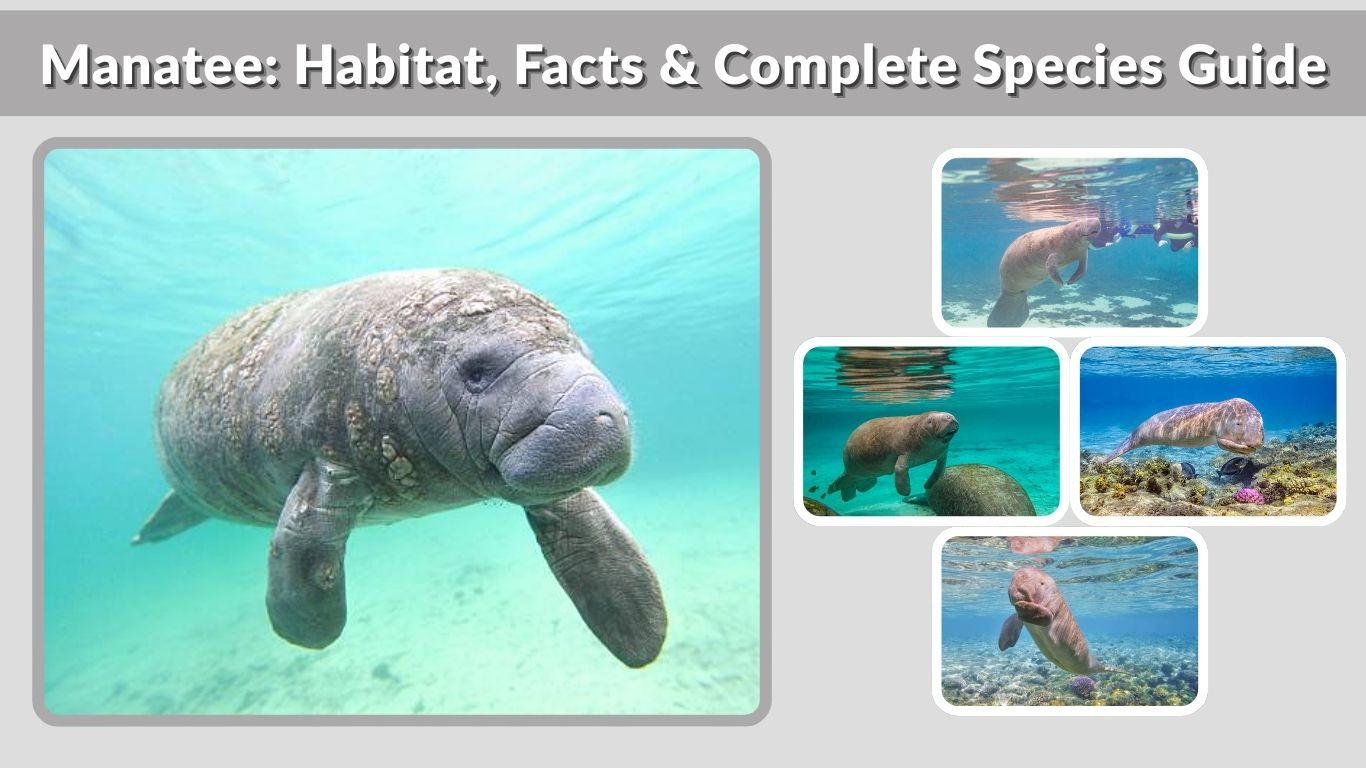
Manatees are large, gentle marine mammals often called “sea cows” because of their slow movement and plant-based diet. These peaceful animals spend much of their time grazing on aquatic vegetation in warm coastal waters and rivers. Despite their size, manatees are calm and curious creatures that play an important role in maintaining healthy aquatic ecosystems. In this guide, you’ll learn what a manatee is, where manatees live, key manatee facts, and details about their habitat.
What Is a Manatee?
A manatee is a large, plant-eating marine mammal belonging to the order Sirenia and the family Trichechidae. There are three main species of manatees: the West Indian manatee, the Amazonian manatee, and the West African manatee.
Manatees are closely related to dugongs and, surprisingly, elephants. Like elephants, they have thick skin and continuously replace molars. Unlike seals or sea lions, manatees are fully aquatic and do not come onto land.
They are called “sea cows” because they graze slowly on underwater plants, much like cows graze on grass in fields. Manatees are herbivores and rely entirely on aquatic vegetation for survival.
Manatee Identification Guide
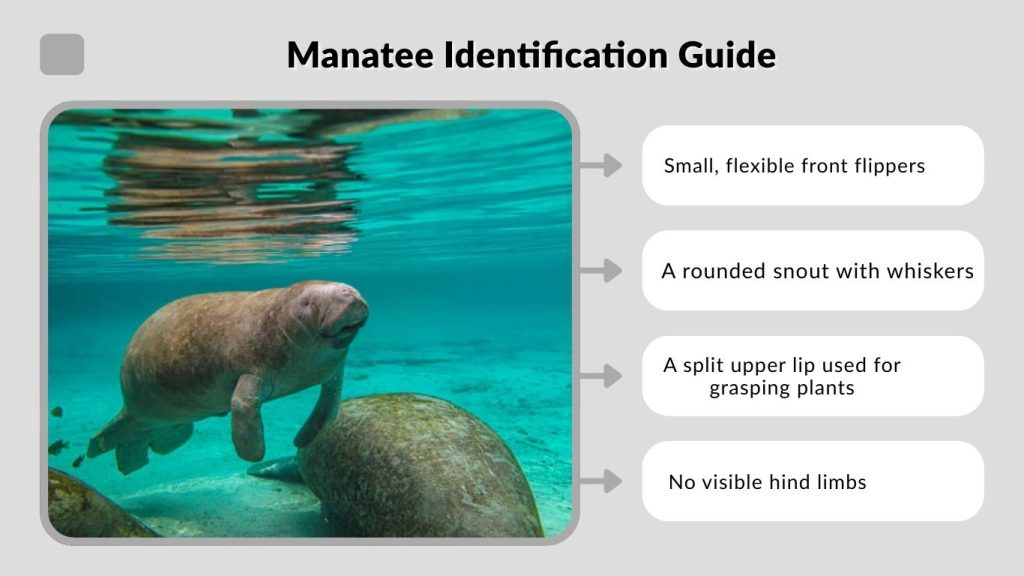
Manatees have a unique appearance that makes them easy to recognize in the wild.
Physical Characteristics
Manatees have large, rounded bodies covered in gray, wrinkled skin. Their bodies taper toward a broad, paddle-shaped tail, which helps them move slowly through the water.
Other key features include:
- Small, flexible front flippers
- A rounded snout with whiskers
- A split upper lip used for grasping plants
- No visible hind limbs
- No dorsal fin
Their whiskered snout is highly sensitive and helps them locate and manipulate aquatic vegetation. The flexible upper lip acts almost like a hand, allowing them to pull plants toward their mouths.
Size and Weight
Adult manatees typically measure between 8 and 13 feet long and weigh between 800 and 1,200 pounds. Some individuals may grow even larger under ideal conditions.
Males and females are similar in size, although females can sometimes be slightly larger. Despite their bulk, manatees are buoyant and move gracefully through the water.
Manatee vs Dugong
Manatees are often confused with dugongs, but there are clear differences.
- Tail shape: Manatees have paddle-shaped tails, while dugongs have fluked tails similar to dolphins.
- Habitat: Manatees live in both freshwater and saltwater, while dugongs prefer marine environments.
- Geographic range: Dugongs are mainly found in the Indo-Pacific region, while manatees are found in the Americas and West Africa.
Manatee Habitat
Manatees are warm-water animals that rely on specific environments to survive.
Where Do Manatees Live?
Manatees live in tropical and subtropical regions around the world. Their range includes:
- Florida and the southeastern United States
- The Caribbean Sea
- The Gulf of Mexico
- Central and South America
- West Africa (African manatee)
- The Amazon River Basin (Amazonian manatee)
Different species occupy slightly different regions, but all prefer warm climates.
Freshwater and Saltwater Environments
One interesting manatee fact is their ability to live in both freshwater and saltwater environments. They are commonly found in:
- Coastal lagoons
- Estuaries
- Seagrass beds
- Rivers
- Natural springs
Manatees frequently move between saltwater and freshwater to access food and maintain proper salt balance in their bodies.
Seasonal Movement Patterns
Manatees are extremely sensitive to cold water. When temperatures drop below about 68°F (20°C), they can suffer from cold stress, which may be fatal.
In Florida, many manatees migrate to warm-water springs during winter months. These natural springs maintain stable temperatures year-round and provide a safe refuge from cold conditions.
Because of their dependence on warm water, habitat loss and environmental changes can have serious impacts on manatee populations.
Manatee Diet Explained
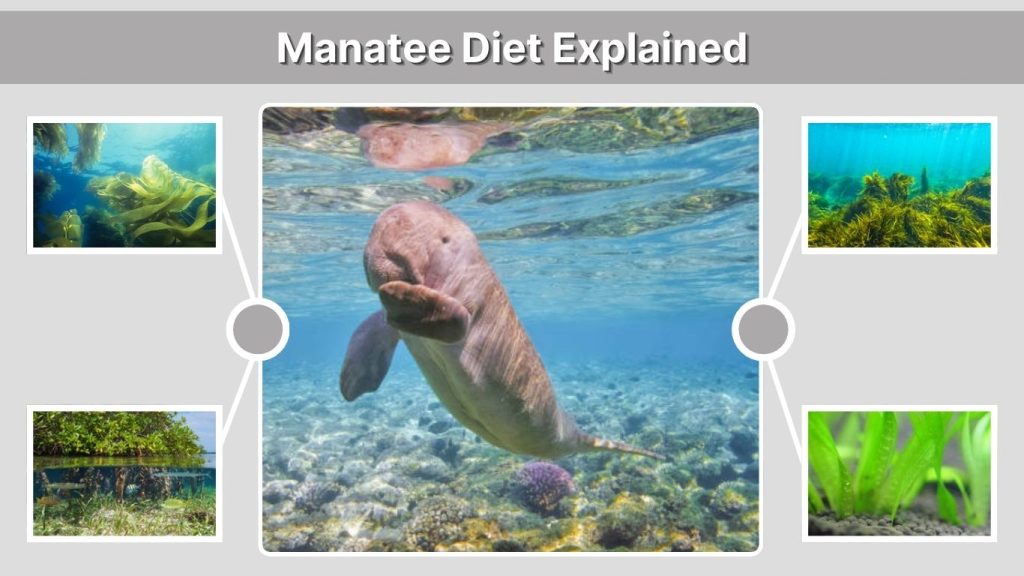
Manatees are strictly herbivorous and spend much of their day eating.
What Do Manatees Eat?
A manatee’s diet consists primarily of:
- Seagrass
- Freshwater plants
- Algae
- Mangrove leaves
They may consume dozens of different plant species depending on availability.
Feeding Behavior
Manatees are slow, steady grazers. They can eat 10 to 15 percent of their body weight per day, which may equal over 100 pounds of vegetation for a large adult.
Using their flexible upper lip and flippers, they grasp plants and pull them into their mouths. Their teeth are constantly replaced throughout their lives to compensate for wear from chewing tough plants.
Because they feed primarily on seagrass, manatees help maintain healthy aquatic vegetation and prevent overgrowth in shallow waters.
Manatee Lifespan and Reproduction
Manatees are long-lived animals, but they reproduce slowly. This combination makes population recovery difficult when numbers decline.
Average Lifespan
In the wild, manatees typically live between 40 and 60 years. Some individuals have been documented living even longer under protected conditions. Their lifespan depends on habitat quality, food availability, and human-related threats such as boat collisions.
Because manatees grow slowly and mature later in life, survival into adulthood is critical for maintaining stable populations.
Reproduction and Calves
Female manatees usually give birth to a single calf after a gestation period of about 12 months. Twins are rare. Calves are born underwater and must swim to the surface for their first breath.
At birth, a calf measures around 4 feet long and weighs approximately 60 to 70 pounds. The mother nurses her calf for up to two years, although the young manatee may begin eating plants within the first few months.
The bond between mother and calf is strong, and young manatees stay close to their mothers for protection and learning.
Growth and Development
Manatees reach sexual maturity between 5 and 9 years of age. However, females typically give birth only once every 2 to 5 years. This slow reproduction rate means populations grow gradually, making conservation efforts especially important.
Fascinating Manatee Facts
Manatees may appear simple at first glance, but they have several unique traits.
- They can hold their breath for up to 20 minutes, though they usually surface every few minutes.
- Manatees continuously replace their teeth throughout their lives. As old teeth wear down, new ones move forward.
- They are slow swimmers, typically traveling at 3 to 5 miles per hour, but they can burst to speeds of up to 15 mph for short distances.
- Manatees have no natural predators as adults; humans pose their greatest threat.
- Their closest living relatives are elephants and hyraxes, not whales or seals.
These facts highlight how unusual and specialized manatees are among marine mammals.
Are Manatees Endangered?
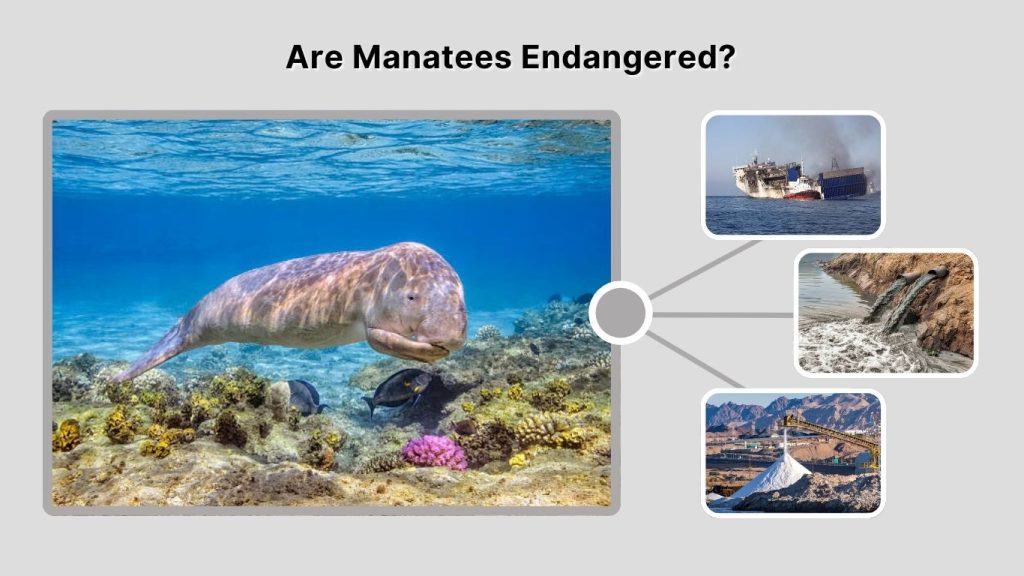
Manatees face several environmental challenges, and their conservation status varies by region.
Conservation Status
The West Indian manatee was once listed as endangered in the United States but is currently classified as threatened. Globally, manatee species are considered vulnerable due to declining populations in certain areas.
While protections have helped stabilize some populations, they remain at risk.
Major Threats
Manatees face multiple human-related threats:
- Boat collisions – One of the leading causes of injury and death
- Habitat loss – Coastal development damages seagrass beds
- Water pollution – Algae blooms reduce food supply
- Cold stress – Exposure to low temperatures
Because they often inhabit shallow waters near shore, manatees are particularly vulnerable to boat strikes.
Conservation Efforts
Conservation programs focus on:
- Establishing protected areas
- Enforcing boat speed zones
- Monitoring populations
- Rescue and rehabilitation programs
Public awareness campaigns also encourage responsible boating practices to reduce injuries.
Manatee Behavior and Social Life
Manatees are generally solitary animals, though they may gather temporarily in areas with abundant food or warm water.
They communicate using chirps, squeaks, and whistles, especially between mothers and calves. While not highly social like dolphins, they do interact peacefully with one another.
Manatees are often curious and may approach boats or divers, but they are gentle and non-aggressive animals.
FAQs
What is a manatee?
A manatee is a large, plant-eating marine mammal belonging to the order Sirenia. Often called a sea cow, it lives in warm coastal waters and rivers and feeds on aquatic vegetation.
Where do manatees live?
Manatees live in tropical and subtropical regions, including Florida, the Caribbean, the Gulf of Mexico, parts of Central and South America, and West Africa. Some species also inhabit freshwater rivers like the Amazon.
What do manatees eat?
Manatees eat seagrass, freshwater plants, algae, and other aquatic vegetation. They can consume up to 10–15% of their body weight in plants each day.
How long do manatees live?
Manatees typically live between 40 and 60 years in the wild, though survival depends on habitat quality and protection from human-related threats.
Are manatees endangered?
Some manatee species are classified as vulnerable or threatened. Major threats include boat collisions, habitat destruction, pollution, and cold stress.