



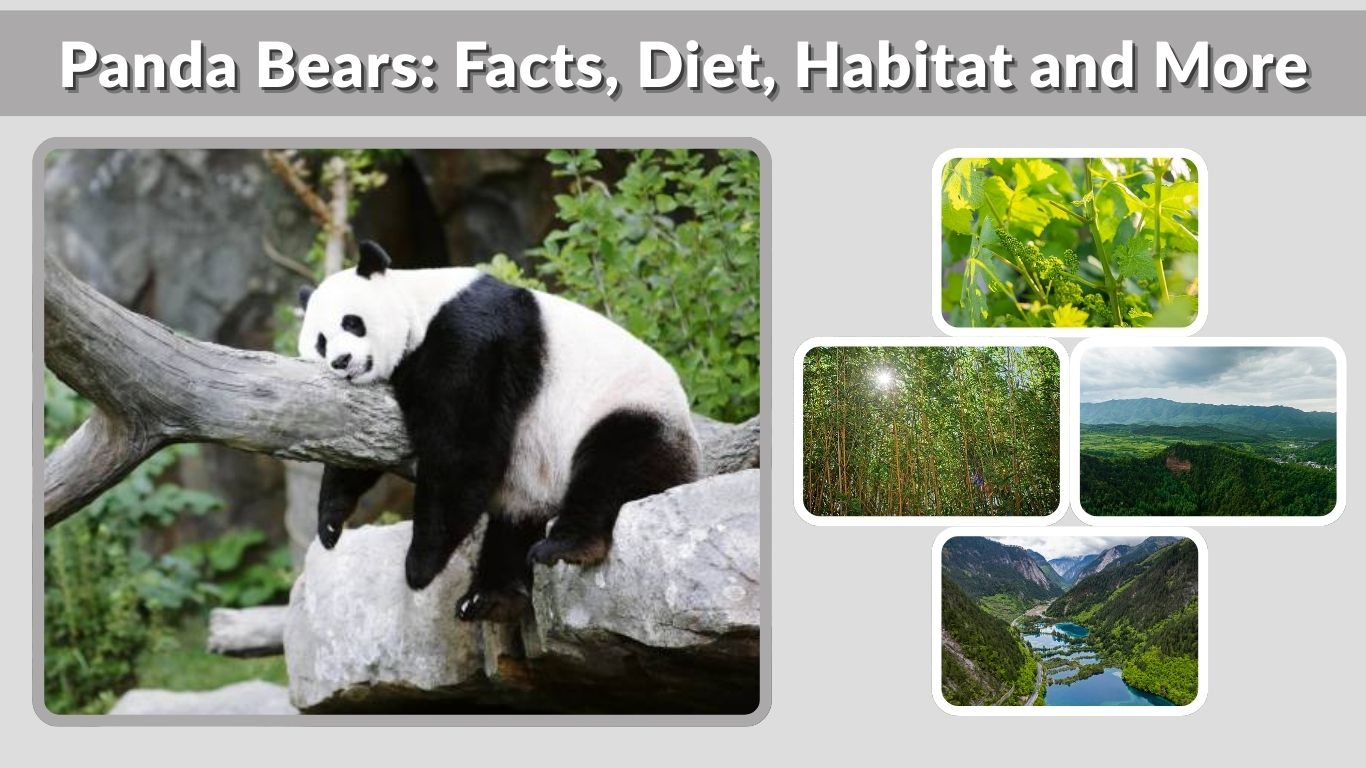
Panda bears are among the most beloved animals in the world, known for their striking black-and-white fur and gentle appearance. Although many people simply call them “pandas,” the term panda bear is commonly used to describe the giant panda, a true member of the bear family. Native to China, panda bears are famous for eating bamboo and living in cool mountain forests. In this guide, you’ll explore panda bear facts, habitat details, diet, physical traits, and family life.
What Is a Panda Bear?
The panda bear animal is scientifically known as Ailuropoda melanoleuca. It belongs to the bear family, Ursidae, which includes species like brown bears and polar bears. Despite its plant-based diet, the panda bear is classified as a carnivore because of its evolutionary history.
Many people wonder why it is called a “panda bear.” The word “bear” is added to emphasize that the giant panda is a true bear species, unlike the red panda, which belongs to a different animal family.
Some quick panda bear facts include:
- They are native to China.
- They have distinctive black eye patches.
- They primarily eat bamboo.
- They are considered a conservation success story.
Although they look cuddly, panda bears are strong animals with powerful jaws and sharp teeth designed for crushing tough plant material.
Panda Bear Habitat and Location
Where Do Panda Bears Live?
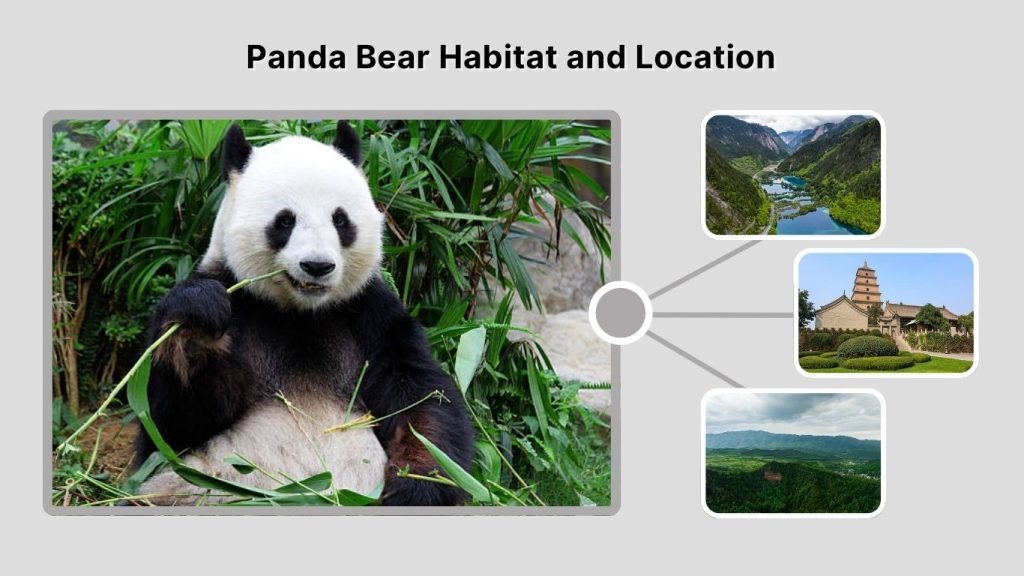
The panda bear habitat is limited to central China. Wild populations are mainly found in the provinces of:
- Sichuan
- Shaanxi
- Gansu
These regions contain mountainous forests with dense bamboo growth. If you’ve ever searched for “panda bear in Africa,” it’s important to clarify that panda bears do not live in Africa. They are native exclusively to Asia, specifically China.
Historically, pandas lived across larger parts of China, but habitat loss reduced their range significantly. Today, most panda bears live within protected nature reserves.
Panda Bear Habitat Characteristics
The panda bear habitat includes:
- Cool mountain forests
- Elevations between 5,000 and 10,000 feet
- Thick bamboo undergrowth
- Freshwater streams
These forests provide both food and shelter. Bamboo grows well in moist, misty conditions, making mountain climates ideal for pandas. Because bamboo is their main food source, the health of these forests directly affects panda survival.
China has established over 60 reserves to protect panda habitats, helping stabilize wild populations.
Panda Bear Diet and Eating Habits
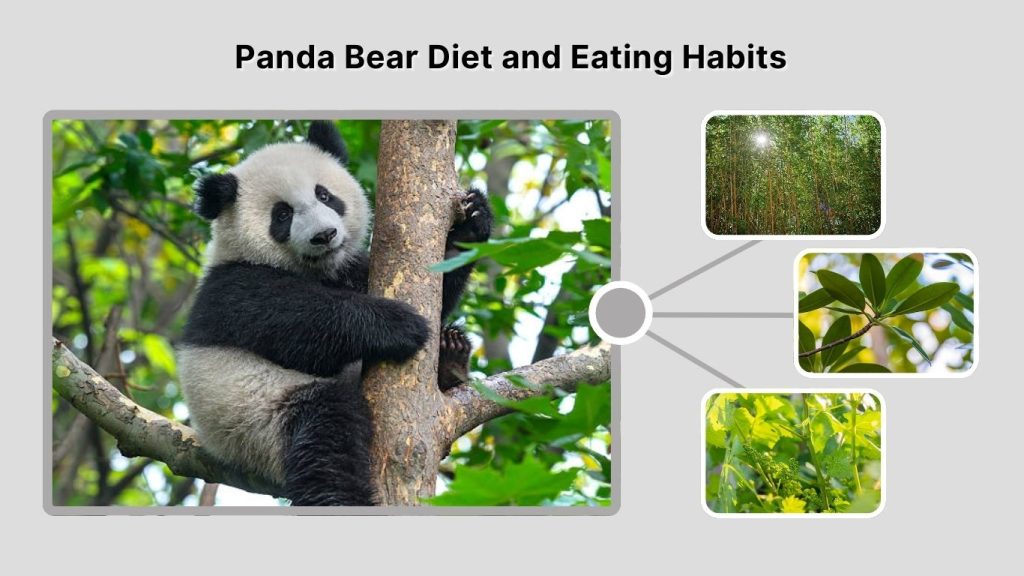
What Do Panda Bears Eat?
The panda bear diet consists mostly of bamboo. In fact, about 99% of their food intake comes from different bamboo species. They eat:
- Bamboo shoots
- Leaves
- Stems
Occasionally, panda bears may eat small animals or carrion, but this is rare. Even though they are classified as carnivores, their eating habits are mostly herbivorous.
Because bamboo is low in nutrients, pandas must eat large amounts daily to meet their energy needs.
Panda Bear Eating Bamboo
Panda bear eating bamboo is a daily routine that takes up much of their time. They typically spend 10 to 16 hours each day feeding.
An adult panda may consume between 26 and 80 pounds of bamboo in one day. Their strong jaw muscles and flat molars help them crush tough bamboo stalks. They also have a unique “pseudo-thumb,” an enlarged wrist bone that helps them grip bamboo stems.
Due to this heavy diet and low energy intake, panda bears are generally slow-moving and spend much of their time resting between meals.
Panda Bear Physical Features
Panda Bear Eyes
One of the most recognizable features of panda bears is their black eye patches. Panda bear eyes are surrounded by dark fur, which contrasts with their white face.
Scientists believe these patches may help with communication or camouflage in shaded forests. The dark coloring might also reduce glare in bright mountain environments. Their round eyes and facial markings contribute to their famously cute appearance.
Panda Bear Face
The panda bear face is round and wide, with a short snout and strong jaw muscles. Their flat molars are adapted for grinding bamboo rather than tearing meat.
The combination of a large head, dark eye patches, and white fur gives pandas a baby-like appearance, which may explain why people find them so appealing.
Panda Bear Tail
Many people are surprised to learn that panda bears do have tails. The panda bear tail is short, measuring only about 4 to 6 inches long.
Because it is small and often hidden by fur, it is not very noticeable. Compared to other bears, the panda’s tail is relatively short and plays a limited role in balance or communication.
Panda Bear Baby and Family Life
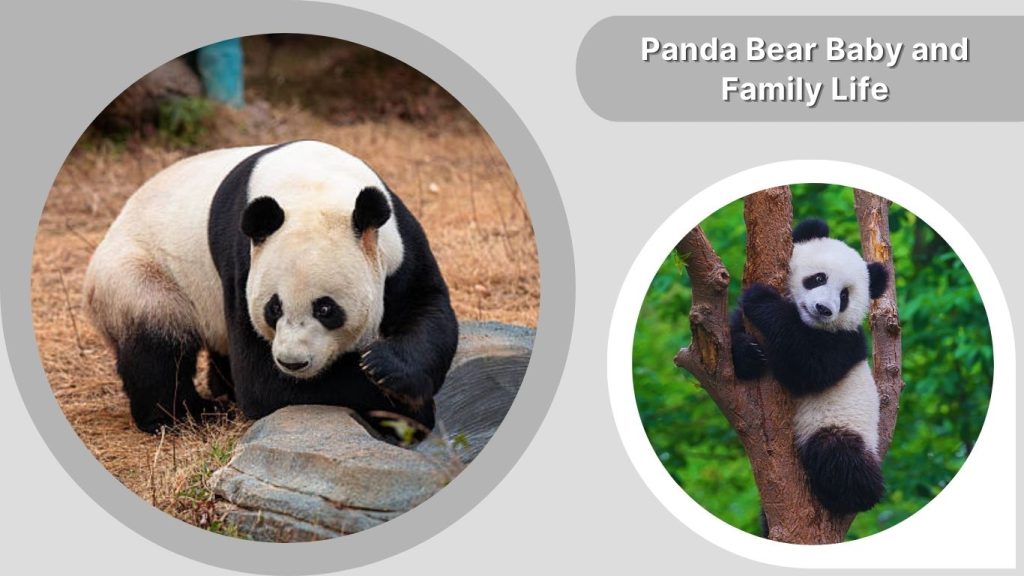
Panda Bear Baby
A panda bear baby is extremely small at birth. Newborn cubs weigh only 3 to 5 ounces and are pink, blind, and nearly hairless.
Within a few weeks, the black-and-white fur begins to develop. The mother provides constant care, warmth, and milk during the early months. Panda cubs are completely dependent on their mother for survival.
Twins are possible, but in the wild, the mother usually focuses on raising one cub successfully.
Panda Bear Family Structure
The panda bear family structure is mostly simple because pandas are solitary animals. Adult males and females live separately except during mating season.
The strongest family bond exists between the mother and her cub. Cubs stay with their mother for 18 to 24 months, learning how to climb trees, find food, and navigate their habitat.
After separation, young pandas establish their own territories in nearby forest areas.
Fascinating Panda Bear Facts
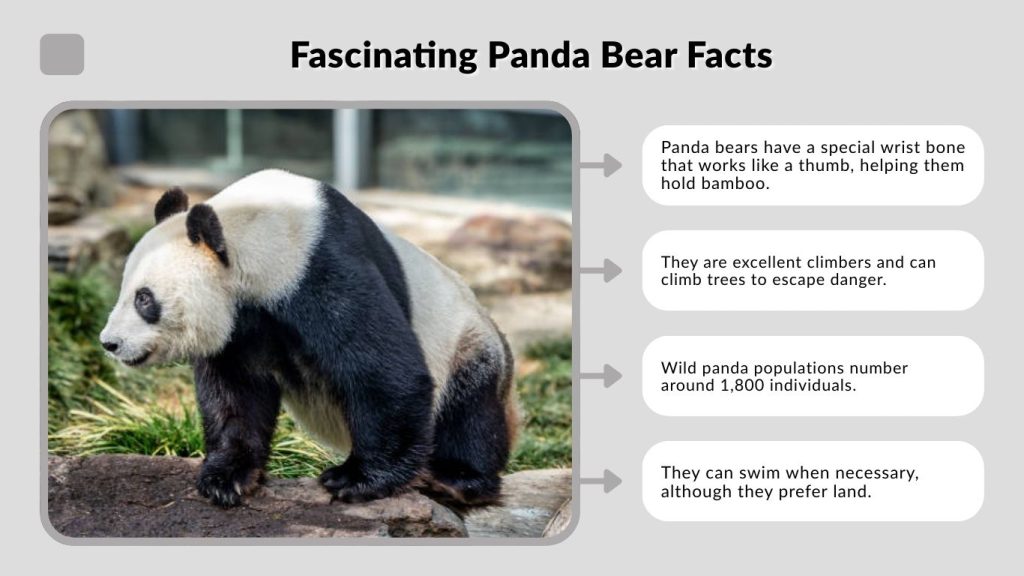
There are many interesting panda bear facts that make these animals unique in the animal kingdom.
- Panda bears have a special wrist bone that works like a thumb, helping them hold bamboo.
- They are excellent climbers and can climb trees to escape danger.
- Wild panda populations number around 1,800 individuals.
- They can swim when necessary, although they prefer land.
- Panda bears live about 20 years in the wild and over 30 years in captivity.
Another fascinating fact is that despite belonging to the order Carnivora, pandas evolved to rely almost entirely on plants. This unusual adaptation makes them one of the most specialized bear species in the world.
Panda Bears in Popular Culture
Panda bears are not only important wildlife animals but also popular symbols in fashion, education, and entertainment.
Panda Bear Costume
A panda bear costume is a favorite choice for Halloween, school plays, and themed events. Because pandas are widely recognized and associated with cuteness, both children and adults enjoy dressing up as them.
Costumes often feature:
- Black-and-white fur patterns
- Oversized panda bear face masks
- Soft plush materials
Panda costumes are especially popular for wildlife awareness campaigns and conservation events.
Panda Bear Hat
A panda bear hat is commonly worn during winter or as a fun fashion accessory. These hats often include:
- Cute panda ears
- Black eye patch designs
- Soft knitted or plush material
Children especially enjoy panda hats because of their playful appearance. Some versions are designed as novelty party items, while others provide warmth during cold weather.
Panda Bear Clipart
Panda bear clipart is widely used in classrooms, worksheets, and digital designs. Teachers often include panda illustrations in lessons about wildlife, endangered animals, and ecosystems.
Clipart is also common in:
- Children’s books
- Educational posters
- Online presentations
- Graphic design projects
When using panda bear clipart, it’s important to follow copyright guidelines and use licensed or royalty-free images.
Why Panda Bears Matter
Panda bears play an important role in conservation efforts worldwide. They are considered an umbrella species, meaning that protecting their habitat also protects many other animals living in the same forests.
The panda is also the symbol of the World Wide Fund for Nature (WWF), making it one of the most recognized conservation icons globally.
Because they depend so heavily on bamboo forests, protecting panda habitats helps preserve entire mountain ecosystems. Continued conservation work ensures that future generations can learn about and appreciate panda bears.
FAQs
Are panda bears really bears?
Yes, panda bears are true members of the bear family (Ursidae). Although they mainly eat bamboo, scientific research confirms that they are genetically related to other bears, such as brown bears and polar bears.
What do panda bears eat?
The panda bear diet consists almost entirely of bamboo, including shoots, leaves, and stems. They may occasionally eat small animals, but this is rare. Because bamboo is low in nutrients, pandas must eat large amounts daily.
Do panda bears live in Africa?
No, panda bears do not live in Africa. They are native to central China and inhabit mountainous bamboo forests. Any reference to a “panda bear in Africa” is a misconception.
How big is a panda bear?
Adult panda bears typically weigh between 150 and 275 pounds and measure about 4 to 6 feet long. Males are usually larger than females. Despite their size, they are skilled climbers.
Why do panda bears have black eyes?
The black patches around panda bear eyes may help with camouflage in forest shadows and may also assist with communication between pandas. These markings also contribute to their distinctive and recognizable appearance.