

Ducks come in a wide variety of breeds, each with its own unique charm, purpose, and personality. Whether you’re looking for high egg production, quality meat, ornamental beauty, or friendly backyard companions, there’s a duck breed suited to every need. From the ever-popular Pekin and Khaki Campbell to the exotic Mandarin and Wood ducks, this guide walks you through 33 popular duck breeds. For each, you’ll find clear identification details, behavior traits, habitat preferences, and how they’re commonly used. Whether you’re a beginner or an experienced keeper, this list will help you discover the perfect ducks for your homestead, pond, or aviary.
1. Pekin Duck

The Pekin Duck is a large, white domestic breed originally developed from Chinese ducks. Brought to the United States in the 1870s, it quickly became one of the most popular meat ducks in the world. Known for its fast growth, gentle nature, and ease of care, the Pekin is a favorite on farms and in backyards alike. It is also widely used in commercial duck production due to its excellent feed-to-meat conversion rate.
Identification
- Feather Color: Pure white
- Bill Color: Deep orange-yellow, broad and flat
- Eye Color: Dark blue to black
- Body Shape: Large, upright, broad-chested, with a slight arch in the back
- Legs and Feet: Bright orange, short and widely set
- Skin Color: White
- Weight:
- Drake (male): 9–11 lbs
- Duck (female): 8–9 lbs
- Voice: Loud quack (females); raspy (males)
- Flight Ability: Flightless
Temperament and Behavior
Pekin ducks are known for their calm, friendly, and docile temperament. They are social animals that enjoy the company of their flock and their human caretakers. Pekins are not aggressive, making them an ideal breed for families and first-time duck owners.
Habitat and Climate Tolerance
This breed adapts well to various environments, including backyards, farms, and wetland areas. They are hardy in both warm and cold climates, though they require shelter from extreme weather. Their thick feathers provide good insulation, but they should be kept dry to avoid feather issues.
Utility and Productivity
The Pekin is primarily raised for meat and is one of the top commercial meat duck breeds worldwide. Its fast growth rate and large body make it ideal for table use. Although not prolific layers compared to some egg-focused breeds, Pekin ducks still lay around 150–200 large white eggs per year. Their friendly disposition and ease of handling also make them suitable for exhibition and as pets.
2. Mallard Duck

The Mallard is the wild ancestor of nearly all domestic duck breeds. Found worldwide, it is easily recognized by the drake’s iridescent green head and the female’s mottled brown plumage. Though wild, Mallards are also raised domestically and contribute greatly to genetic diversity in duck breeding.
Identification
- Feather Color:
- Drake: Iridescent green head, white neck ring, gray body, chestnut breast
- Hen: Mottled brown with orange-brown bill
- Bill Color: - Drake: Yellow
- Hen: Orange with black markings
- Eye Color: Dark brown
- Body Shape: Medium-sized, streamlined
- Legs and Feet: Orange
- Skin Color: Yellow
- Weight: - Drake: 2.5–3 lbs
- Hen: 2–2.5 lbs
- Flight Ability: Excellent flyer
Temperament and Behavior
Mallards are active, alert, and often skittish when kept domestically. They are naturally migratory, vocal, and curious birds. They do best in free-range environments and are strong swimmers and flyers.
Habitat and Climate Tolerance
Adaptable to lakes, ponds, marshes, and rivers. Mallards are hardy in both warm and cold climates and can survive in the wild across diverse regions.
Utility and Productivity
Wild Mallards are primarily valued for hunting and conservation, while domesticated lines may lay 50–100 white to green-tinted eggs per year. They are also occasionally used in ornamental settings or as foundational stock for hybrid breeds.
3. Khaki Campbell Duck
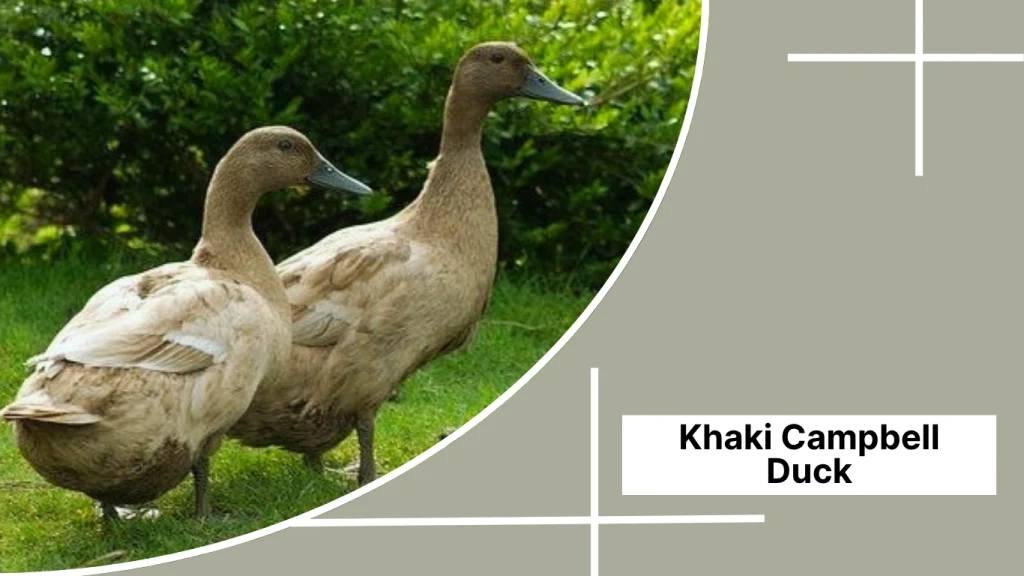
The Khaki Campbell is a prolific egg-laying duck developed in England in the early 1900s. It was bred from Mallard, Rouen, and Runner ducks to create a bird that rivals chickens in egg production. This breed is energetic, practical, and highly productive.
Identification
- Feather Color: Uniform khaki or light brown
- Bill Color: Olive green (drakes), dark green or brown (hens)
- Eye Color: Brown
- Body Shape: Slender, upright, and alert
- Legs and Feet: Brown or orange
- Skin Color: Yellow
- Weight:
- Drake: 4.5–5.5 lbs
- Hen: 3.5–4.5 lbs
- Flight Ability: Poor (limited short bursts)
Temperament and Behavior
Khaki Campbells are active, intelligent, and excellent foragers. They can be shy but are not aggressive. Their energy makes them well-suited to large yards or pasture systems.
Habitat and Climate Tolerance
Adapt well to a variety of environments. They thrive in temperate regions and need access to clean water and dry shelter for optimal health and productivity.
Utility and Productivity
Renowned for their incredible egg-laying capacity—laying up to 250–340 white eggs per year. They are not typically raised for meat due to their smaller size but are ideal for backyard flocks focused on eggs.
4. Indian Runner Duck
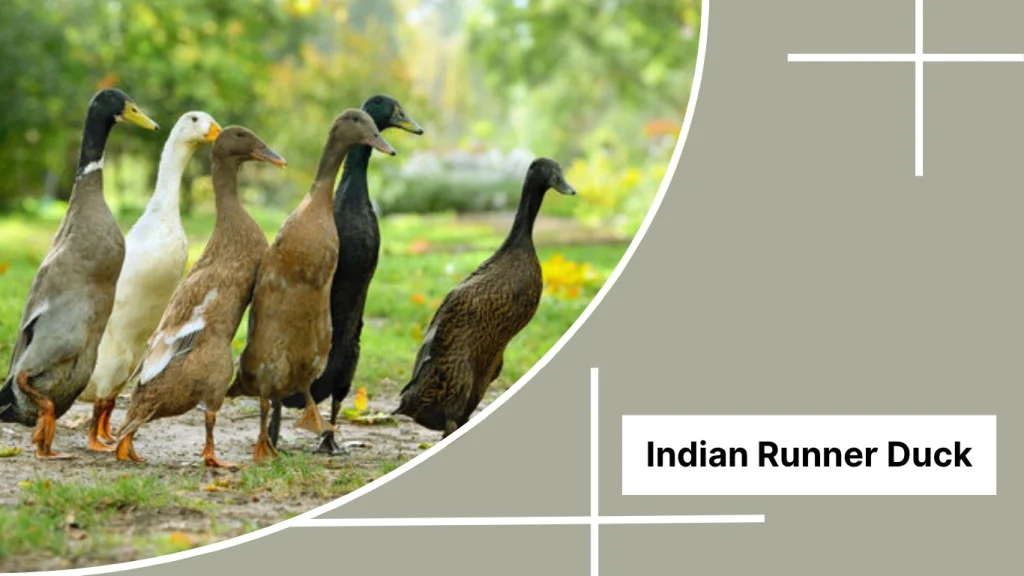
The Indian Runner is a lightweight, upright duck breed known for its comical posture and unmatched foraging ability. Originating from Southeast Asia, it was bred for egg production and thrives in both large and small farm settings.
Identification
- Feather Color: Wide range including fawn, white, black, chocolate, and penciled
- Bill Color: Varies with feather color (often greenish or yellow)
- Eye Color: Dark brown
- Body Shape: Tall, slim, and upright (nearly vertical stance)
- Legs and Feet: Orange or slate, long and placed far back on the body
- Skin Color: Yellow
- Weight:
- Drake: 4–4.5 lbs
- Hen: 3.5–4 lbs
- Flight Ability: Flightless
Temperament and Behavior
Highly active, social, and energetic. Indian Runners are great foragers and enjoy constant movement. They do best in groups and may be nervous if not handled regularly.
Habitat and Climate Tolerance
Adaptable and do well in various climates. Require room to roam and clean water for drinking and occasional bathing (not strong swimmers despite their waterfowl nature).
Utility and Productivity
Exceptional egg layers, producing 250–300 white to blue-tinted eggs per year. While not used for meat, they are excellent for pest control and sustainable egg farming.
5. Muscovy Duck
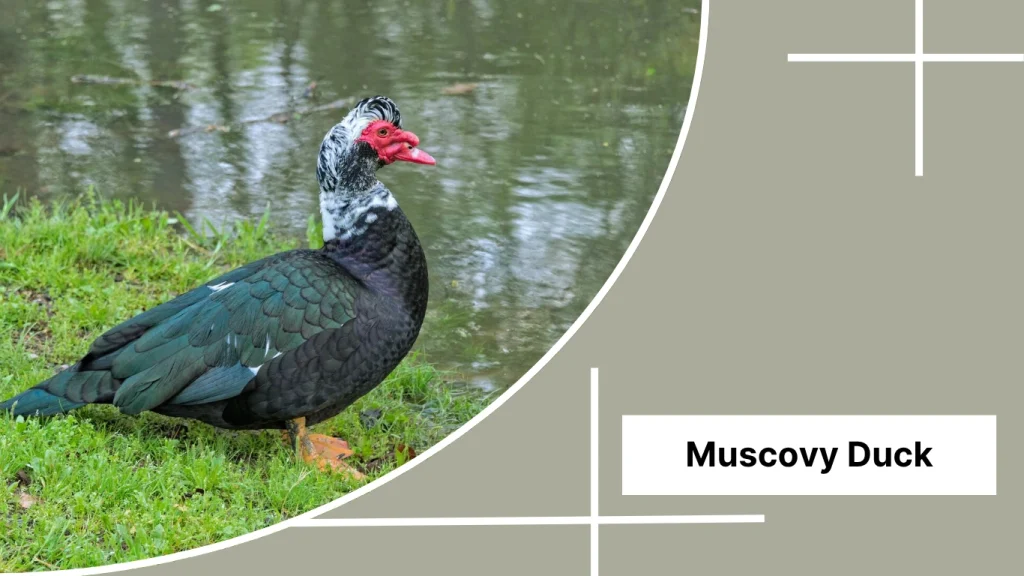
The Muscovy is a unique duck breed native to Central and South America. It differs genetically from other domestic ducks and is known for its quiet nature, large size, and red facial caruncles.
Identification
- Feather Color: Black, white, blue, chocolate, pied, and lavender
- Bill Color: Varies—pink, black, or mottled
- Eye Color: Brown
- Body Shape: Broad, muscular with a long body and short legs
- Legs and Feet: Dark gray to black
- Skin Color: Yellow
- Facial Features: Prominent red caruncles (fleshy growths) around face and bill
- Weight:
- Drake: 10–15 lbs
- Hen: 6–8 lbs
- Flight Ability: Good flyers (especially females)
Temperament and Behavior
Quiet, calm, and less vocal than other ducks. Muscovies are territorial but gentle, and they enjoy perching in trees or on rails.
Habitat and Climate Tolerance
Tolerate hot climates very well and do fine in cold with protection. Prefer dry ground and roosting areas, though they enjoy shallow water for bathing.
Utility and Productivity
Excellent for meat due to lean, flavorful flesh. Egg production ranges from 100–150 eggs per year. Also valued for fly and mosquito control due to their appetite for insects.
6. Rouen Duck

The Rouen duck is a large, heavyweight breed that resembles the wild Mallard but is significantly larger. Originally from France, it was developed as a top-quality meat duck and is also appreciated for its calm nature and ornamental value.
Identification
- Feather Color:
- Drake: Green head, white neck ring, gray body, brown chest (like Mallard but deeper colors)
- Hen: Mottled brown with darker eye line
- Bill Color: - Drake: Yellow
- Hen: Brownish-orange
- Eye Color: Brown
- Body Shape: Deep, broad, and horizontal
- Legs and Feet: Orange
- Skin Color: Yellow
- Weight: - Drake: 9–12 lbs
- Hen: 7–9 lbs
- Flight Ability: Flightless
Temperament and Behavior
Docile, calm, and slow-moving. Rouens are friendly and suitable for mixed flocks and backyard settings. Their size limits foraging range, but they are easy to manage.
Habitat and Climate Tolerance
They do well in mild to cold climates and prefer calm, clean ponds or yards. Their weight makes them vulnerable to overheating in extreme heat.
Utility and Productivity
Primarily used for high-quality meat production. They lay around 100–150 large, white to green-tinted eggs per year. Also appreciated for their show quality.
7. Call Duck
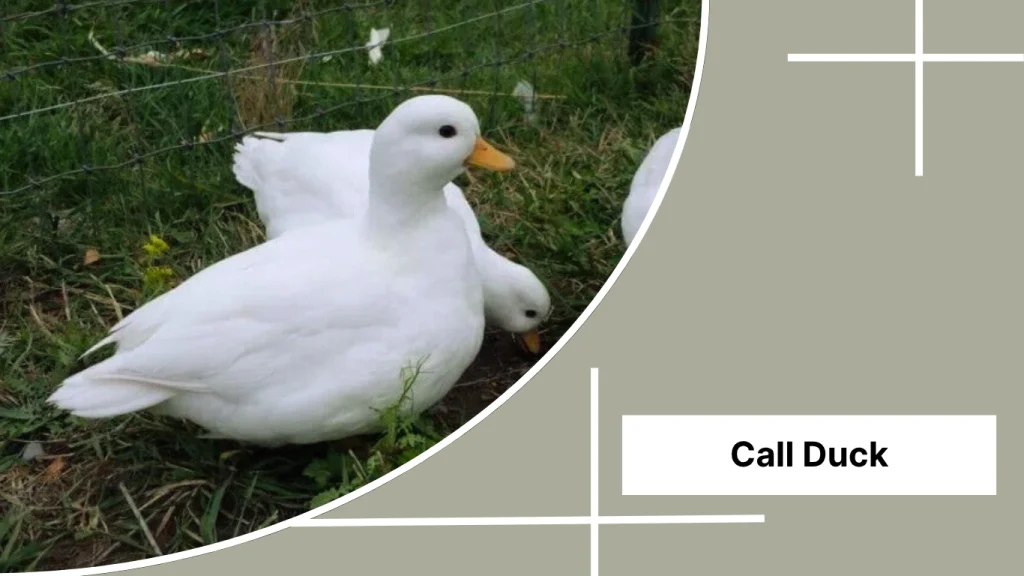
The Call duck is a miniature breed originally used by hunters to lure wild ducks with its loud, high-pitched call. Today, it is mostly kept as an ornamental or pet breed due to its adorable appearance and vocal charm.
Identification
- Feather Color: White, gray, black, blue, chocolate, and more
- Bill Color: Yellow or dark, depending on variety
- Eye Color: Black or dark brown
- Body Shape: Round, short-necked, compact, and petite
- Legs and Feet: Orange, short
- Skin Color: Yellow
- Weight:
- Drake: 1.5–2 lbs
- Hen: 1–1.5 lbs
- Flight Ability: Can fly short distances
Temperament and Behavior
Lively, cheerful, and highly vocal. Call ducks are friendly and social but noisy, especially females. They enjoy human interaction and can be quite playful.
Habitat and Climate Tolerance
Do well in small pens or backyard ponds. They adapt to most climates with shelter, but their small size requires extra care in cold weather.
Utility and Productivity
Not raised for meat or eggs; rather, they are ideal for ornamental use and exhibition. Hens lay around 50–100 small white eggs per year. Popular as pets due to their size and personality.
8. Cayuga Duck

The Cayuga duck is an American breed developed in the 19th century in New York. It is known for its striking, iridescent black plumage that shines green in sunlight. This dual-purpose duck is valued for both its flavorful meat and decent egg production.
Identification
- Feather Color: Black with green iridescence
- Bill Color: Black or dark gray
- Eye Color: Brown
- Body Shape: Full-bodied, rounded, and broad
- Legs and Feet: Black or dark gray
- Skin Color: Dark gray
- Weight:
- Drake: 8 lbs
- Hen: 6–7 lbs
- Flight Ability: Flightless
Temperament and Behavior
Cayugas are quiet, calm, and easygoing. They are friendly with humans and integrate well in mixed flocks. They’re excellent foragers and enjoy roaming freely.
Habitat and Climate Tolerance
Hardy in cold climates and do well in wet or grassy areas. They enjoy clean water for bathing and perform well in backyard and farm environments.
Utility and Productivity
Originally raised for meat, Cayugas produce dark, succulent flesh and are also reliable egg layers. Hens lay 100–150 eggs annually, with colors ranging from gray to black early in the season, fading to white.
9. Welsh Harlequin Duck
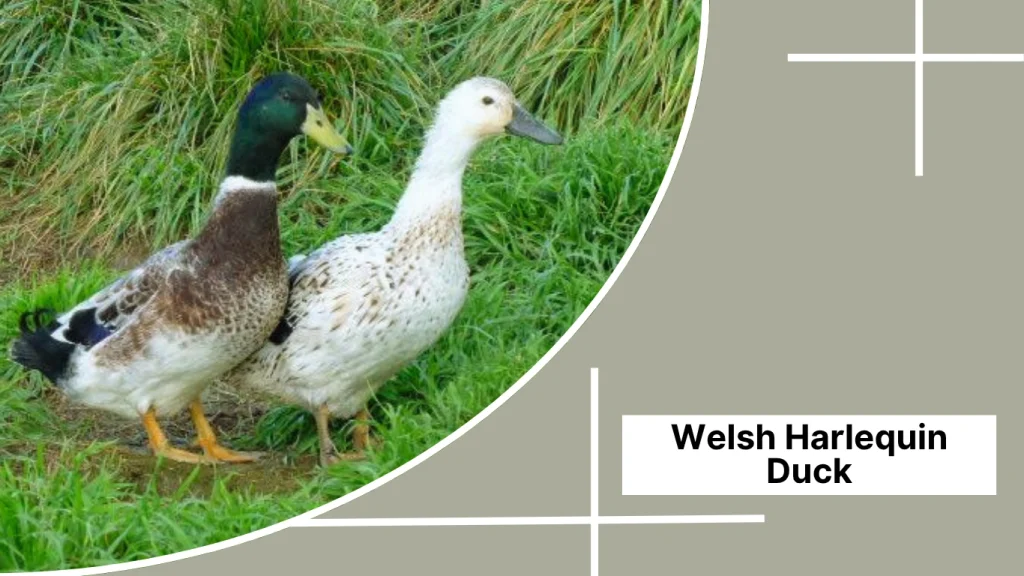
The Welsh Harlequin is a lightweight, elegant breed developed in Wales in the mid-20th century. It descends from Khaki Campbells and was selectively bred for calm temperament and excellent egg-laying performance.
Identification
- Feather Color:
- Drake: Creamy white with green head and chestnut breast
- Hen: Mottled silver and fawn with a soft brown face
- Bill Color: - Drake: Yellow-green
- Hen: Dark green to slate
- Eye Color: Dark brown
- Body Shape: Sleek, upright, and lightweight
- Legs and Feet: Orange
- Skin Color: Yellow
- Weight: - Drake: 5–5.5 lbs
- Hen: 4.5–5 lbs
- Flight Ability: Flightless
Temperament and Behavior
Exceptionally calm, quiet, and friendly. Welsh Harlequins are easy to handle and ideal for beginners. They are social and adapt well to confinement or free-range.
Habitat and Climate Tolerance
Hardy and adaptable to both warm and cold climates. Their light plumage helps with heat reflection in summer, and they are comfortable in coops and ponds alike.
Utility and Productivity
Excellent egg layers, producing 250–300 white eggs per year. Also valued for lean meat and attractive appearance. Their calm personality and productivity make them a top choice for backyard flocks.
10. Swedish Blue Duck
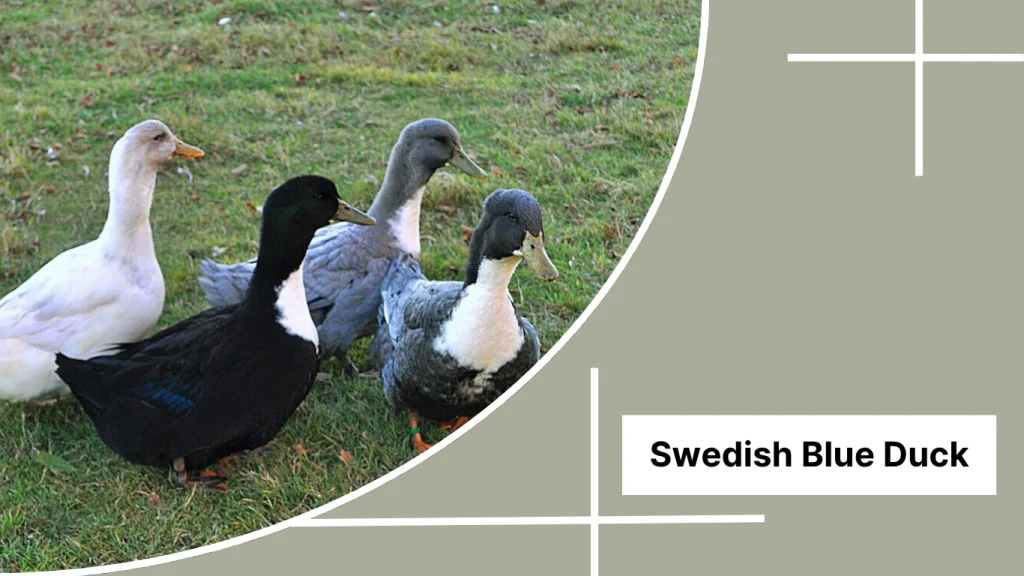
The Swedish Blue is a medium-sized heritage duck breed from Sweden, known for its distinctive blue-gray plumage and white bib. It is appreciated for its calm temperament, hardiness, and usefulness in both meat and egg production.
Identification
- Feather Color: Slate blue with a white bib; sometimes black or splash due to genetics
- Bill Color:
- Drake: Blue or olive green
- Hen: Slaty or greenish
- Eye Color: Dark brown
- Body Shape: Broad, deep-chested, and slightly horizontal
- Legs and Feet: Dark gray or black
- Skin Color: White
- Weight: - Drake: 6.5–8 lbs
- Hen: 5.5–7 lbs
- Flight Ability: Flightless
Temperament and Behavior
Swedish Blues are calm, friendly, and easy to manage. They are quiet compared to other duck breeds and do well in family or mixed-flock settings.
Habitat and Climate Tolerance
Cold-hardy and weather-resistant, this breed thrives in cool, damp conditions. They enjoy free-ranging but also tolerate confinement with proper care.
Utility and Productivity
A dual-purpose breed that lays 120–180 white to green-tinted eggs per year. They are also raised for flavorful meat and are valued for their durability and beauty in backyard flocks.
11. Buff Orpington Duck
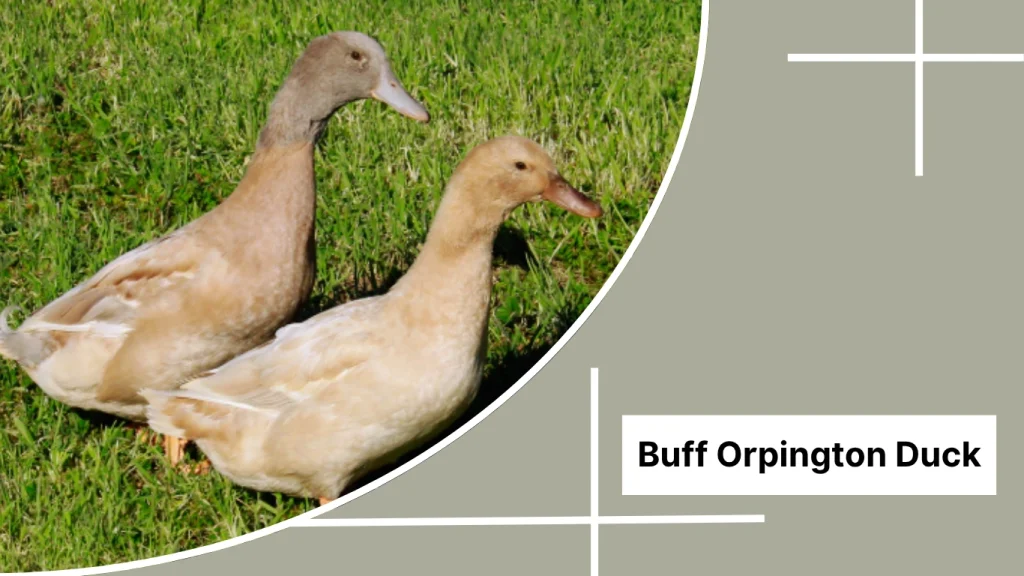
The Buff Orpington duck is a British breed developed by William Cook in the late 1800s. It’s known for its soft buff coloring, attractive appearance, and calm demeanor. It’s a versatile dual-purpose duck, raised for both eggs and meat.
Identification
- Feather Color: Uniform buff (light tan or golden)
- Bill Color: Yellow to orange
- Eye Color: Brown
- Body Shape: Deep, full-bodied, and rounded
- Legs and Feet: Orange
- Skin Color: Yellow
- Weight:
- Drake: 7–8 lbs
- Hen: 5.5–7 lbs
- Flight Ability: Flightless
Temperament and Behavior
Buff ducks are gentle, quiet, and easygoing. They adapt well to small flocks and are ideal for families or new duck keepers. Their friendly disposition makes them suitable for pet or ornamental use.
Habitat and Climate Tolerance
Well-suited for moderate to cool climates. They can tolerate heat if provided with shade and water but thrive in clean, moist environments with plenty of space to forage.
Utility and Productivity
They lay around 150–220 white to tinted eggs annually. Also valued for high-quality, lean meat. Their soft coloring and manageable nature make them a beautiful and productive backyard duck.
12. Magpie Duck

The Magpie duck is a lightweight, elegant breed developed in Wales and England during the early 20th century. It’s named for its distinct color pattern, which resembles that of a magpie bird. Known for being active and excellent foragers, Magpies are ideal for small farms and backyard flocks.
Identification
- Feather Color: White body with colored cap and back—typically black, blue, dun, or chocolate
- Bill Color: Yellow or greenish
- Eye Color: Dark brown
- Body Shape: Upright, streamlined, and athletic
- Legs and Feet: Orange
- Skin Color: Yellow
- Weight:
- Drake: 5–6 lbs
- Hen: 4–5 lbs
- Flight Ability: Minimal flight ability; generally flightless
Temperament and Behavior
Magpie ducks are active, curious, and intelligent. They’re less vocal than other breeds and enjoy foraging. They are friendly when raised with human interaction and do well in mixed flocks.
Habitat and Climate Tolerance
Adapt well to a range of climates. Perform best with access to open ground, grass, and shallow water sources. Their hardiness and alertness help them avoid predators.
Utility and Productivity
Dual-purpose breed used for both eggs and meat. Hens lay about 220–290 white or pale green eggs per year. They also provide lean, flavorful meat and are popular in small-scale, sustainable farms.
13. Saxony Duck

The Saxony duck is a large, attractive breed developed in Germany in the 1930s. It’s recognized for its peach-fawn coloration and excellent performance as a dual-purpose duck—providing both eggs and quality meat.
Identification
- Feather Color:
- Drake: Blue-gray head, rust chest, and cream underbody
- Hen: Warm fawn with creamy facial markings
- Bill Color: - Drake: Yellow or orange
- Hen: Orange with light markings
- Eye Color: Dark brown
- Body Shape: Broad, deep, and well-muscled
- Legs and Feet: Orange
- Skin Color: Yellow
- Weight: - Drake: 8–9 lbs
- Hen: 6.5–7.5 lbs
- Flight Ability: Flightless
Temperament and Behavior
Docile, calm, and personable. Saxonies are social birds that enjoy human interaction. They are excellent foragers and adapt well to free-range systems.
Habitat and Climate Tolerance
Very cold-hardy and comfortable in wet, grassy environments. They do well in moderate to cool climates and need protection from extreme heat.
Utility and Productivity
Hens lay around 180–240 white eggs per year. Saxonies are also valued for their plump carcass and delicious, tender meat. Their stunning appearance makes them popular for show as well as utility.
14. Silver Appleyard Duck
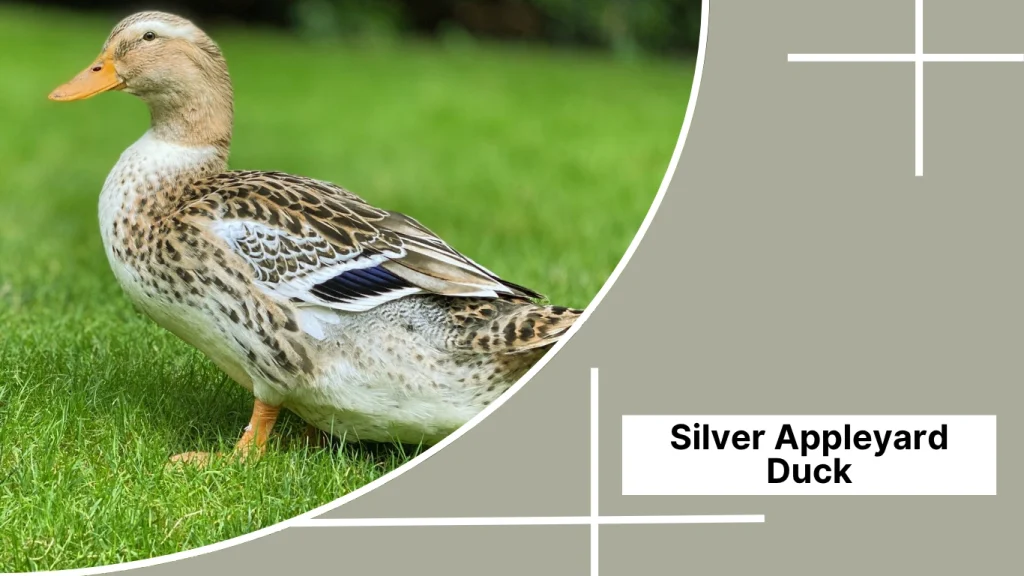
The Silver Appleyard is a large, dual-purpose duck breed developed in England in the 1930s by Reginald Appleyard. It is admired for its attractive plumage, excellent egg-laying ability, and top-quality meat.
Identification
- Feather Color:
- Drake: Silver-white body, dark green head, chestnut breast
- Hen: Mottled silver, buff, and white with dark eye stripes
- Bill Color: - Drake: Greenish
- Hen: Slate gray
- Eye Color: Dark brown
- Body Shape: Broad, rounded, and upright
- Legs and Feet: Orange
- Skin Color: White
- Weight: - Drake: 8–9 lbs
- Hen: 7–8 lbs
- Flight Ability: Flightless
Temperament and Behavior
Friendly, calm, and active. Silver Appleyards are excellent foragers and do well in gardens, orchards, or pasture systems. They are easy to manage and well-suited for family flocks.
Habitat and Climate Tolerance
Hardy in both cold and moderate climates. They enjoy access to water but can also thrive with simple pools and adequate shelter.
Utility and Productivity
Highly productive, laying 220–270 white eggs annually. Their large size also makes them one of the best meat duck breeds, offering a flavorful and lean carcass. They are a favorite for those seeking a balanced utility bird with beauty and charm.
15. East Indie Duck
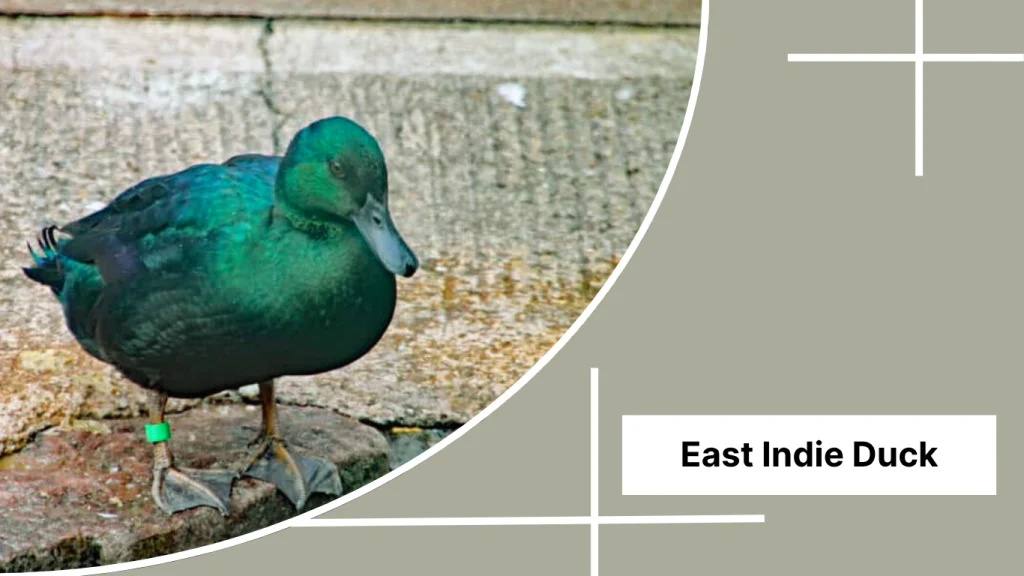
The East Indie, or Black East Indian, is a bantam duck breed renowned for its striking, glossy black plumage with green iridescence. It is one of the oldest ornamental duck breeds and is kept mainly for show and aesthetic appeal.
Identification
- Feather Color: Shimmering black with emerald green sheen
- Bill Color: Black or dark slate
- Eye Color: Dark brown
- Body Shape: Compact, rounded, and petite
- Legs and Feet: Black
- Skin Color: Dark gray
- Weight:
- Drake: 1.5–2 lbs
- Hen: 1–1.5 lbs
- Flight Ability: Good flyers; often clipped in backyard flocks
Temperament and Behavior
Generally calm and shy. They may be flighty if not handled regularly but are quiet and peaceful in calm environments. They do best in pairs or small flocks.
Habitat and Climate Tolerance
Adapt well to small yards or pens with access to shallow water. Their small size requires protection from cold winds, predators, and heavy rainfall.
Utility and Productivity
Not suited for meat production and lay only 40–100 small white or gray eggs per year. Their true value lies in their ornamental beauty, making them a popular exhibition breed.
16. Aylesbury Duck
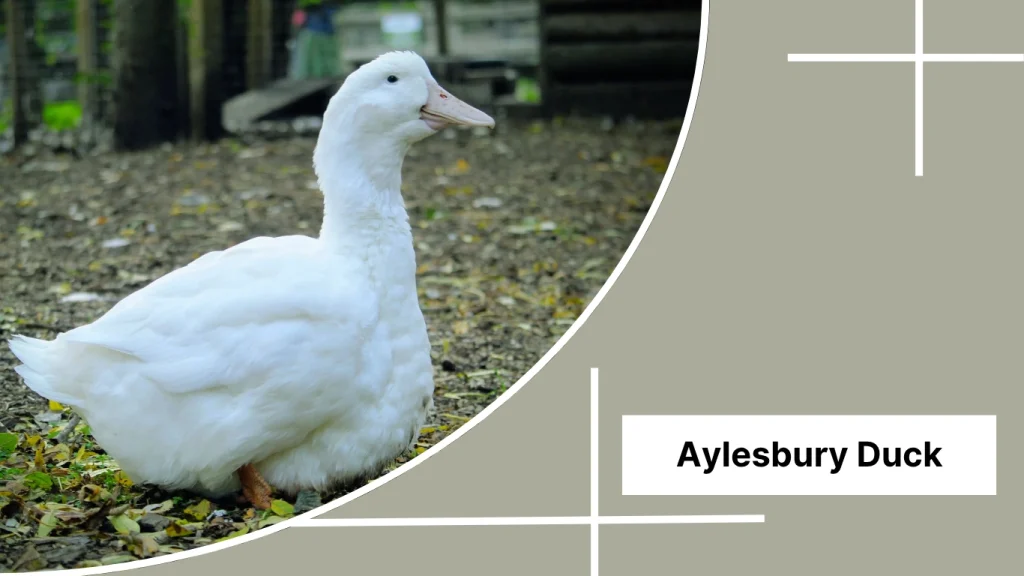
The Aylesbury duck is a traditional British meat breed known for its long, straight body and white plumage. It has been raised for centuries for its tender, mild-flavored meat and remains a classic table duck in the UK.
Identification
- Feather Color: Pure white
- Bill Color: Pale pink (distinct from the orange bill of the Pekin)
- Eye Color: Blue-gray
- Body Shape: Long, deep, and horizontal with a wide breast
- Legs and Feet: Orange
- Skin Color: White
- Weight:
- Drake: 9–10 lbs
- Hen: 7–9 lbs
- Flight Ability: Flightless
Temperament and Behavior
Calm, quiet, and gentle. Aylesburys are easy to handle and not very active foragers, making them suited for enclosed spaces and small farms.
Habitat and Climate Tolerance
Adapt well to cooler, temperate climates. They are sensitive to wet, muddy conditions due to their white feathers and heavy build, so they need clean, dry bedding.
Utility and Productivity
Primarily raised for high-quality meat with a light texture and delicate flavor. Egg production is moderate at around 100–150 white eggs annually. Ideal for gourmet meat production and traditional farming.
17. Bali Duck

The Bali duck is a lightweight, ornamental breed from Indonesia, known for its unique feather crest on top of the head. It is similar in posture to the Indian Runner but is more decorative than productive.
Identification
- Feather Color: White, fawn, or penciled patterns, always with a feathered crest
- Bill Color: Yellow or orange
- Eye Color: Brown
- Body Shape: Upright, slender, with narrow build and vertical carriage
- Legs and Feet: Orange
- Skin Color: Yellow
- Weight:
- Drake: 4–4.5 lbs
- Hen: 3.5–4 lbs
- Flight Ability: Flightless
Temperament and Behavior
Active, alert, and social. Bali ducks are peaceful and do well in ornamental ponds or as garden companions. They may be prone to nervousness if not raised around people.
Habitat and Climate Tolerance
Best suited to warm and humid climates. They enjoy shallow water access and dry shelter. The crest can be sensitive to wet and muddy environments.
Utility and Productivity
Primarily ornamental. Egg production is moderate, around 120–200 white eggs per year. They are kept mostly for appearance and are popular in exhibitions or decorative ponds.
18. Crested Duck
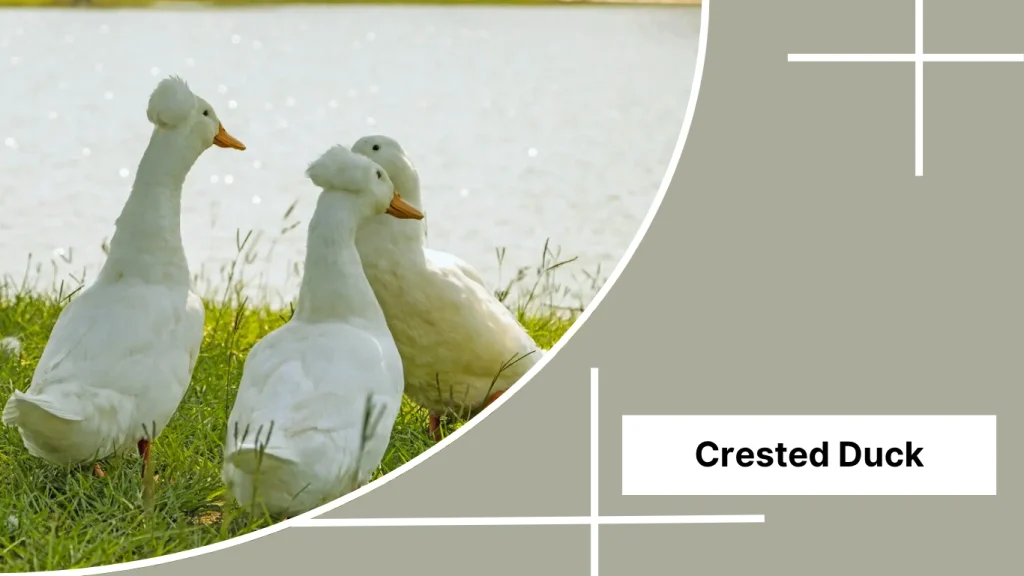
The Crested duck is a domestic breed known for its distinctive feathered crest on top of the head, caused by a genetic mutation. It is kept primarily for ornamental purposes but also serves as a light dual-purpose bird.
Identification
- Feather Color: White is most common; also found in black, blue, fawn, and mottled varieties
- Bill Color: Orange, yellow, or black depending on plumage
- Eye Color: Dark brown
- Body Shape: Medium build with upright posture and prominent crest
- Legs and Feet: Orange
- Skin Color: Yellow
- Weight:
- Drake: 6–7 lbs
- Hen: 5–6 lbs
- Flight Ability: Flightless
Temperament and Behavior
Crested ducks are calm, curious, and enjoy interacting with people. They can be slightly shy and may be more prone to balance issues due to the crest.
Habitat and Climate Tolerance
Adaptable to most climates but should be kept dry and clean to prevent infections around the crest. Suitable for backyard flocks with low predator risk.
Utility and Productivity
Moderate layers, producing about 100–150 white to tinted eggs per year. Also raised for ornamental value and light meat use. The crest makes them a popular novelty bird.
19. Australian Spotted Duck

The Australian Spotted is a bantam duck breed developed in the United States, not Australia, despite the name. It is a colorful and friendly ornamental breed derived from Mallards, Calls, and other small ducks.
Identification
- Feather Color: Three main varieties—green head, blue head, and silver head—all with speckled plumage
- Bill Color: Yellow or greenish depending on variety
- Eye Color: Brown
- Body Shape: Small, compact, with slight curve in the back
- Legs and Feet: Orange
- Skin Color: Yellow
- Weight:
- Drake: 2.5 lbs
- Hen: 2 lbs
- Flight Ability: Limited; can flutter but rarely fly long distances
Temperament and Behavior
Friendly, curious, and social. These ducks enjoy foraging and adapt well to small backyards or garden ponds. They’re often kept as pets or for exhibition.
Habitat and Climate Tolerance
Adaptable to mild climates and backyard setups. They require protection from predators due to their small size and calm demeanor.
Utility and Productivity
Primarily ornamental. Hens lay about 50–125 small white or greenish eggs per year. Valued for beauty, personality, and easy maintenance.
20. Dutch Hookbill Duck

The Dutch Hookbill is one of the oldest domestic duck breeds, originating in the Netherlands. It is easily recognized by its distinctive down-curved bill. Though rare today, it’s prized for its beauty, foraging ability, and unique look.
Identification
- Feather Color: Dusky Mallard, White, and White-Bibbed varieties
- Bill Color: Greenish or black, strongly curved downward
- Eye Color: Brown
- Body Shape: Medium, upright, and sleek
- Legs and Feet: Orange or dark gray
- Skin Color: Yellow
- Weight:
- Drake: 4.5–5.5 lbs
- Hen: 3.5–4.5 lbs
- Flight Ability: Moderate; may need wing clipping
Temperament and Behavior
Gentle, calm, and excellent foragers. Dutch Hookbills are active, intelligent ducks that thrive in pasture-based systems and enjoy roaming.
Habitat and Climate Tolerance
Perform best in moderate climates with access to water and green spaces. Prefer dry shelter and space to move, making them well-suited for farms and gardens.
Utility and Productivity
Excellent egg layers for a light breed, producing 200–250 white to blue-green eggs annually. Rare and protected in conservation programs; also shown in exhibitions.
21. Ancona Duck
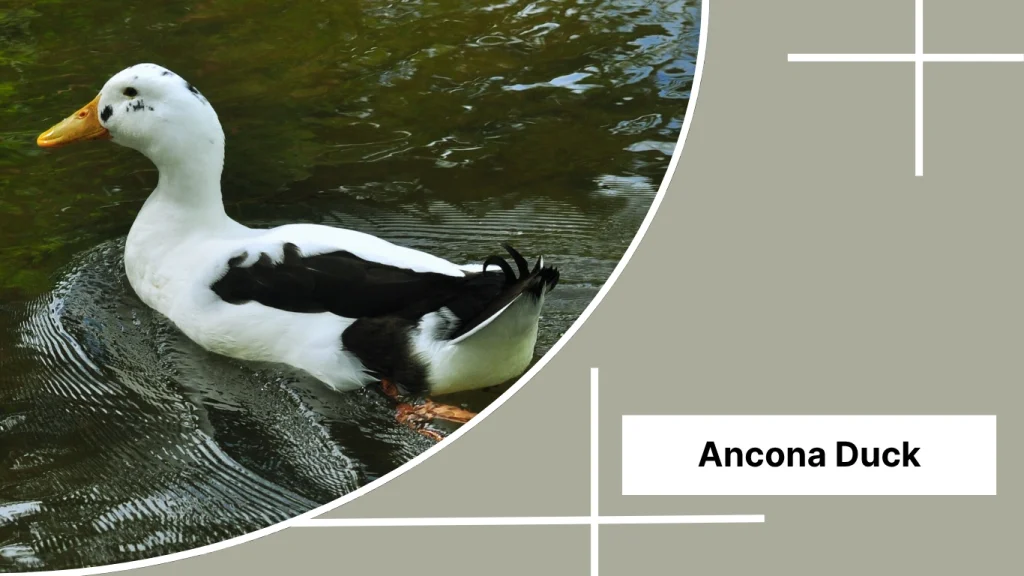
The Ancona is a medium-sized, dual-purpose duck developed in the U.S. in the early 20th century. It’s known for its broken, irregular pied feather patterns and strong egg-laying ability.
Identification
- Feather Color: White base with black, chocolate, blue, lavender, or tricolor patches
- Bill Color: Yellow or mottled with black
- Eye Color: Brown
- Body Shape: Slightly upright, wide-breasted, and deep-bodied
- Legs and Feet: Orange, often mottled
- Skin Color: Yellow
- Weight:
- Drake: 6–7 lbs
- Hen: 5–6 lbs
- Flight Ability: Flightless
Temperament and Behavior
Anconas are friendly, curious, and calm. They are great foragers and thrive in free-range environments. Social and easy to manage in backyard flocks.
Habitat and Climate Tolerance
Hardy in both hot and cold climates. Their active foraging habits make them ideal for pest control in gardens and orchards.
Utility and Productivity
Prolific layers of 210–280 white or blue-tinted eggs per year. Also provide good meat yield with lean flesh. Their speckled plumage helps camouflage in natural settings.
22. Abacot Ranger Duck
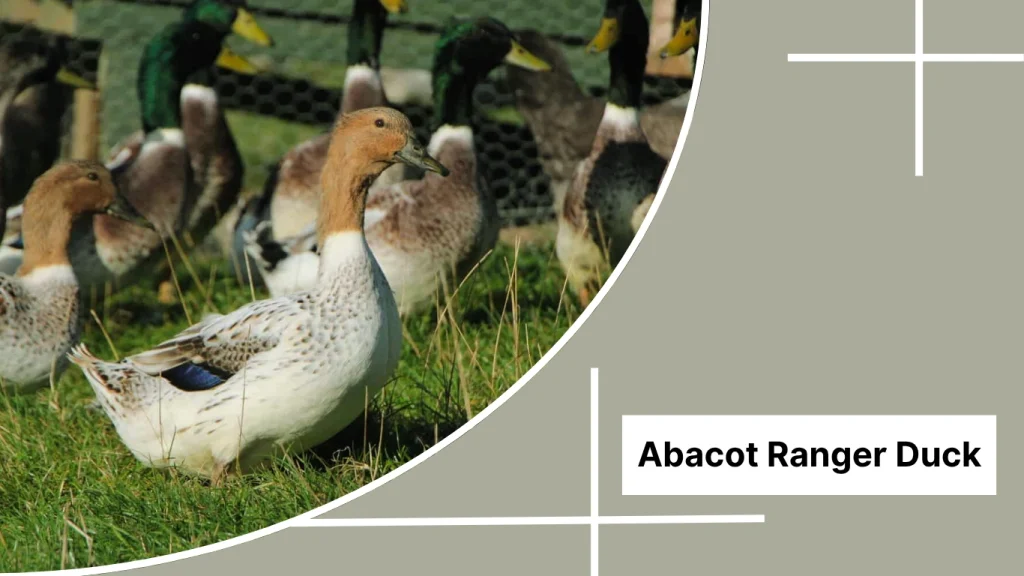
The Abacot Ranger, also known as the Streicher, is a light duck breed developed in the UK during the early 20th century. It is known for its excellent egg production and unique, attractive appearance.
Identification
- Feather Color:
- Drake: White body with dark green head and gray markings
- Hen: Mottled buff and white with eye-stripe
- Bill Color: - Drake: Greenish
- Hen: Slate or black
- Eye Color: Brown
- Body Shape: Upright, well-balanced, medium build
- Legs and Feet: Orange
- Skin Color: White
- Weight: - Drake: 5–6 lbs
- Hen: 4.5–5.5 lbs
- Flight Ability: Flightless
Temperament and Behavior
Abacot Rangers are energetic, calm, and excellent foragers. They’re friendly and easy to manage, thriving in free-range or garden environments.
Habitat and Climate Tolerance
Adaptable to cool and wet climates. They are hardy and prefer grassy areas with clean water sources.
Utility and Productivity
Outstanding layers of 180–250 white eggs annually. Also provide quality meat. Their attractive looks and productive nature make them popular among hobby farmers and backyard keepers.
23. Black East Indian Duck
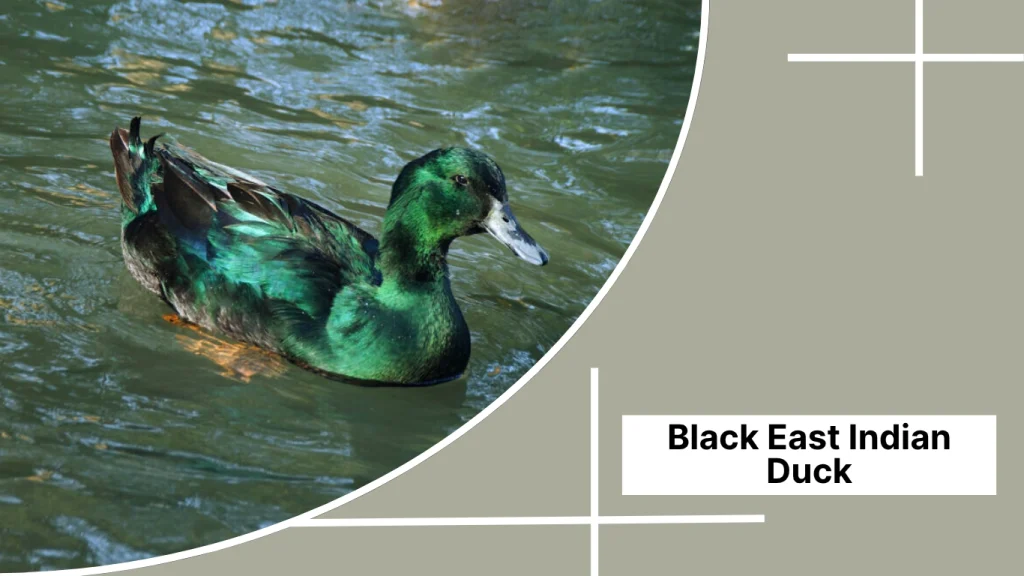
The Black East Indian is one of the oldest bantam duck breeds, believed to have originated in the U.S. in the early 1800s. It’s best known for its shimmering green-black plumage and small size.
Identification
- Feather Color: Iridescent black with green sheen
- Bill Color: Black
- Eye Color: Dark brown
- Body Shape: Compact, rounded, and petite
- Legs and Feet: Black
- Skin Color: Dark gray
- Weight:
- Drake: 1.5–2 lbs
- Hen: 1.25–1.5 lbs
- Flight Ability: Moderate flyers
Temperament and Behavior
Generally shy and quiet. They do best in small, calm flocks and are suitable for urban or decorative settings. Require gentle handling.
Habitat and Climate Tolerance
Prefer mild climates with clean, shallow water. Their small size makes them vulnerable to predators and cold without proper shelter.
Utility and Productivity
Primarily ornamental, though hens lay 60–100 small gray or tinted eggs per year. Popular in poultry shows due to their glossy appearance.
24. German Pekin Duck

The German Pekin is a heavy meat duck breed developed from the Chinese Pekin and refined in Germany for a more upright carriage and robust build. It is recognized for its strong frame, white plumage, and quality meat production.
Identification
- Feather Color: Pure white
- Bill Color: Deep orange
- Eye Color: Blue
- Body Shape: Broad, upright, and muscular
- Legs and Feet: Orange, set wide apart
- Skin Color: Yellow
- Weight:
- Drake: 8.5–9.5 lbs
- Hen: 7.5–8.5 lbs
- Flight Ability: Flightless
Temperament and Behavior
Calm, docile, and easy to raise. German Pekins are quiet, sociable, and well-suited for meat-focused backyard or commercial systems.
Habitat and Climate Tolerance
Well adapted to cooler climates. Their heavy bodies and dense feathers require clean, dry shelter to prevent feather and skin issues.
Utility and Productivity
Primarily raised for premium-quality meat with mild flavor. Lays around 100–150 white eggs per year. A strong contender for commercial duck production and show circuits.
25. Golden Cascade Duck

The Golden Cascade is an American breed developed in the 1970s by Dave Holderread. It’s a lightweight, dual-purpose duck known for good egg production, fast growth, and attractive golden-colored plumage.
Identification
- Feather Color:
- Drake: Creamy buff body with reddish chest and white neck ring
- Hen: Rich golden buff with a white face
- Bill Color: - Drake: Greenish-yellow
- Hen: Orange or slate
- Eye Color: Brown
- Body Shape: Medium-sized, upright
- Legs and Feet: Orange
- Skin Color: Yellow
- Weight: - Drake: 6.5–7.5 lbs
- Hen: 5.5–6.5 lbs
- Flight Ability: Flightless
Temperament and Behavior
Friendly, active, and alert. Golden Cascades are excellent foragers and easy to manage. They’re ideal for backyard setups due to their social and productive nature.
Habitat and Climate Tolerance
Adaptable to various climates, especially suited for temperate zones. They thrive with access to grass and water, and they tolerate both heat and cold when properly sheltered.
Utility and Productivity
Prolific egg layers, averaging 250–300 large white eggs per year. Their fast growth and flavorful meat also make them excellent for dual-purpose use on small farms or homesteads.
26. White Layer Duck
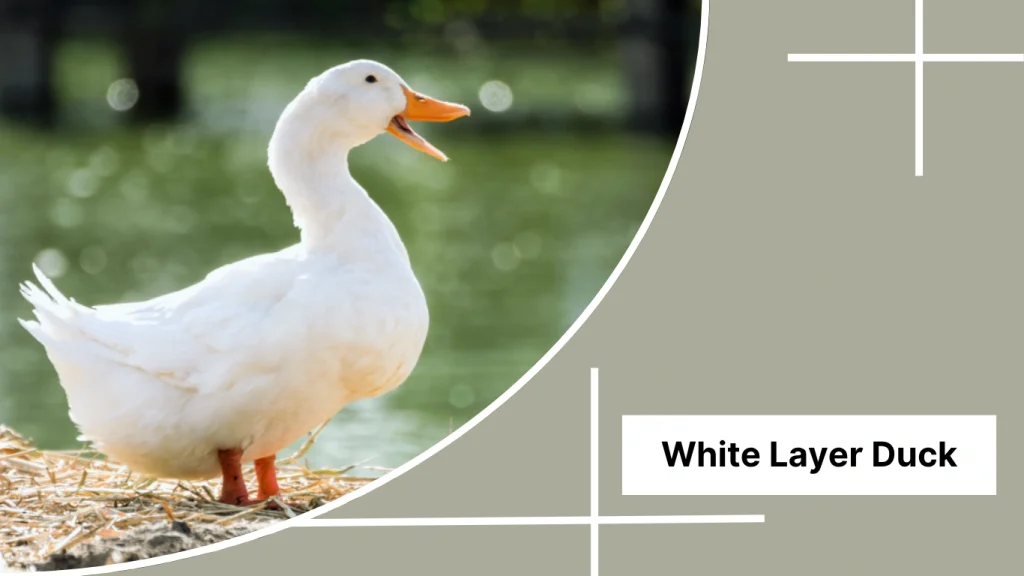
The White Layer is a hybrid duck breed developed for high egg production. Bred primarily from Khaki Campbell and White Leghorn lines, this duck excels in laying large numbers of white eggs and is widely used in commercial and homestead egg operations.
Identification
- Feather Color: Solid white
- Bill Color: Bright orange
- Eye Color: Brown
- Body Shape: Lean, upright, and lightweight
- Legs and Feet: Orange
- Skin Color: Yellow
- Weight:
- Drake: 5.5–6.5 lbs
- Hen: 4.5–5.5 lbs
- Flight Ability: Flightless
Temperament and Behavior
Calm, energetic, and productive. White Layers are not overly social but are manageable and adapt well to both free-range and confined environments.
Habitat and Climate Tolerance
Thrives in temperate climates with proper shelter and clean water. Performs well in backyard systems and commercial egg operations.
Utility and Productivity
Exceptional egg layers, producing 260–300+ large white eggs per year. Not typically used for meat due to lighter frame but highly valued for efficient and consistent egg output.
27. Alabio Duck

The Alabio duck is a native Indonesian breed originating from South Kalimantan. It was developed through a cross between local ducks and Pekins. The breed is known for adaptability, decent meat yield, and steady egg production.
Identification
- Feather Color: Typically white or light brown with dark patches; coloration may vary by strain
- Bill Color: Yellow to orange
- Eye Color: Brown
- Body Shape: Medium, slightly horizontal
- Legs and Feet: Orange
- Skin Color: Yellow
- Weight:
- Drake: 5.5–6.5 lbs
- Hen: 4.5–5.5 lbs
- Flight Ability: Flightless
Temperament and Behavior
Adaptable, hardy, and moderately active. Alabio ducks are good foragers and tolerate tropical conditions well. They are calm in nature and easy to raise in flocks.
Habitat and Climate Tolerance
Best suited to hot and humid tropical regions. Performs well in wet rice fields, marshes, and backyard ponds.
Utility and Productivity
A solid dual-purpose breed. Hens lay around 200–250 white or pale green eggs per year, and the meat is lean and flavorful. Ideal for small farms in Southeast Asia and tropical zones.
28. Tsaiya Duck
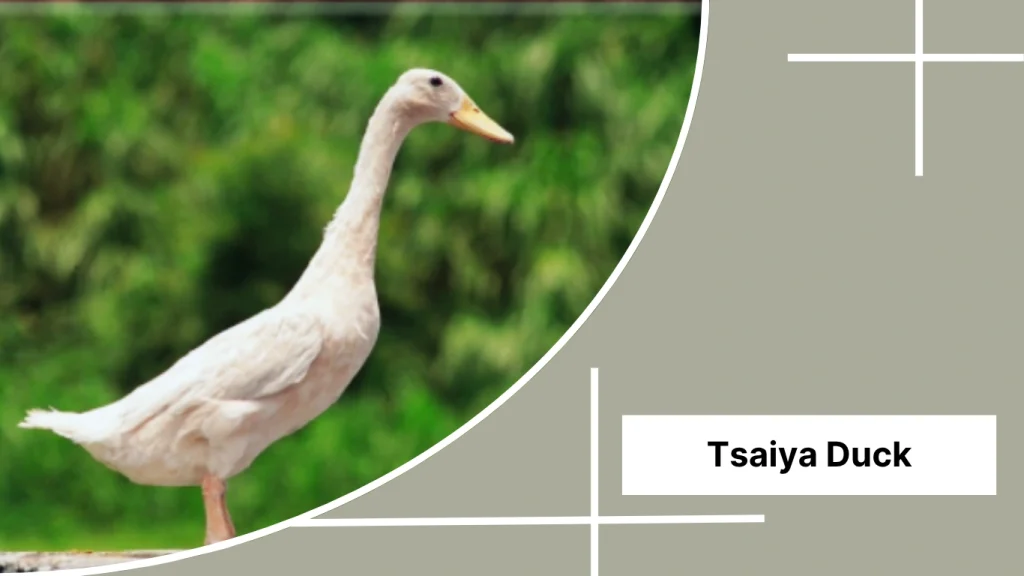
The Tsaiya duck is a lightweight domestic breed originating in Taiwan. It was developed primarily for egg production and is widely used in Asian countries for commercial layer systems, especially for salted egg production.
Identification
- Feather Color:
- Brown Tsaiya: Mottled brown similar to a Mallard hen
- White Tsaiya: Pure white
- Bill Color: - Brown variety: Dark brown or black
- White variety: Yellow
- Eye Color: Brown
- Body Shape: Small, compact, upright
- Legs and Feet: Orange or dark gray
- Skin Color: Yellow
- Weight: - Drake: 3.5–4 lbs
- Hen: 2.5–3.5 lbs
- Flight Ability: Low flight ability; usually managed in enclosures
Temperament and Behavior
Tsaiya ducks are alert, active, and efficient. They are less docile than some western breeds but are productive and easy to maintain in commercial systems.
Habitat and Climate Tolerance
Well suited to warm, humid climates such as Southeast Asia. Performs well in paddy field environments and large-scale egg operations.
Utility and Productivity
Renowned for their egg-laying capability, with hens producing 250–300+ eggs per year. Especially valued for salted and preserved egg industries. Not used for meat due to their small size.
29. Mulard Duck

The Mulard duck (also spelled Moulard) is a hybrid cross between a male Muscovy and a female Pekin. It is a sterile breed primarily used for meat production, especially in foie gras farming due to its large liver and rapid weight gain.
Identification
- Feather Color: Mostly white with some black markings or pied patterns
- Bill Color: Pink or yellowish
- Eye Color: Brown
- Body Shape: Large, broad, and muscular
- Legs and Feet: Orange
- Skin Color: Yellow
- Weight:
- Drake: 10–13 lbs
- Hen: 8–10 lbs
- Flight Ability: Flightless
Temperament and Behavior
Calm, non-aggressive, and quiet like the Muscovy parent. Due to hybrid vigor, they grow fast and are easy to manage in confined systems.
Habitat and Climate Tolerance
Adaptable to various climates, particularly temperate or warm. Prefer clean housing and spacious grow-out areas for best health and growth.
Utility and Productivity
Exclusively used for meat production. Notable for lean meat and foie gras yields. Sterile by nature, so cannot be bred—must be reproduced through controlled crossing of parent breeds.
30. Pomeranian Duck
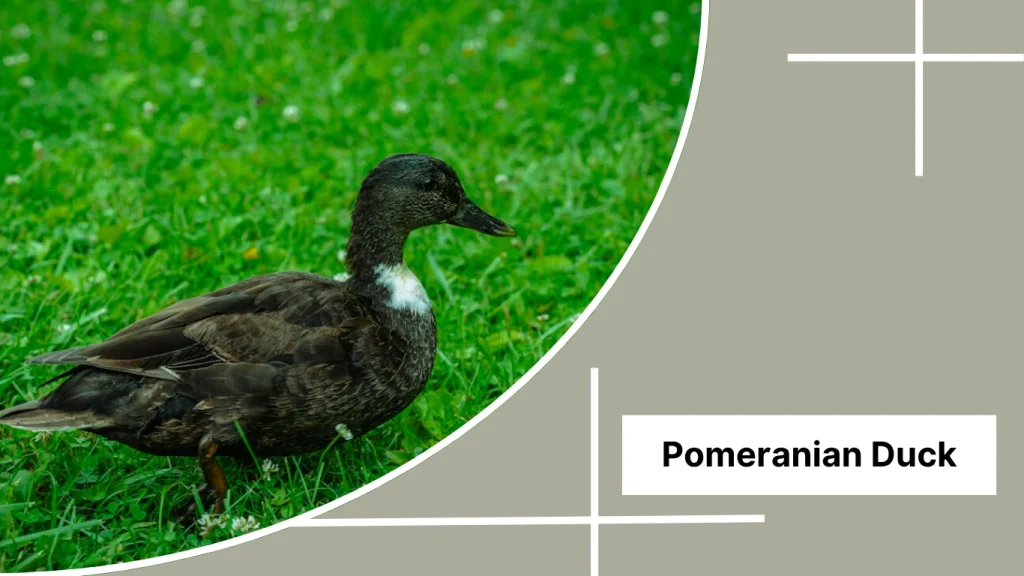
The Pomeranian duck is a heritage breed from the Pomerania region of northern Germany. It is a medium-sized, dual-purpose duck valued for its excellent meat quality and classic good looks.
Identification
- Feather Color: Common in black or blue with a distinctive white bib
- Bill Color: Gray to dark slate
- Eye Color: Brown
- Body Shape: Broad, slightly upright with a round breast
- Legs and Feet: Orange
- Skin Color: Yellow
- Weight:
- Drake: 6.5–7.5 lbs
- Hen: 5.5–6.5 lbs
- Flight Ability: Flightless
Temperament and Behavior
Pomeranians are calm, social, and naturally curious. They do well in pasture-based systems, are good foragers, and are known for being steady and easy to manage.
Habitat and Climate Tolerance
Adapted to cool and wet climates. Hardy birds that perform well in northern regions, particularly in environments with access to water and shelter.
Utility and Productivity
Ideal for small farms looking for meat and eggs. Hens lay approximately 70–130 white to bluish eggs per year. Highly valued for their plump, flavorful carcass and heritage preservation.
31. Mandarin Duck
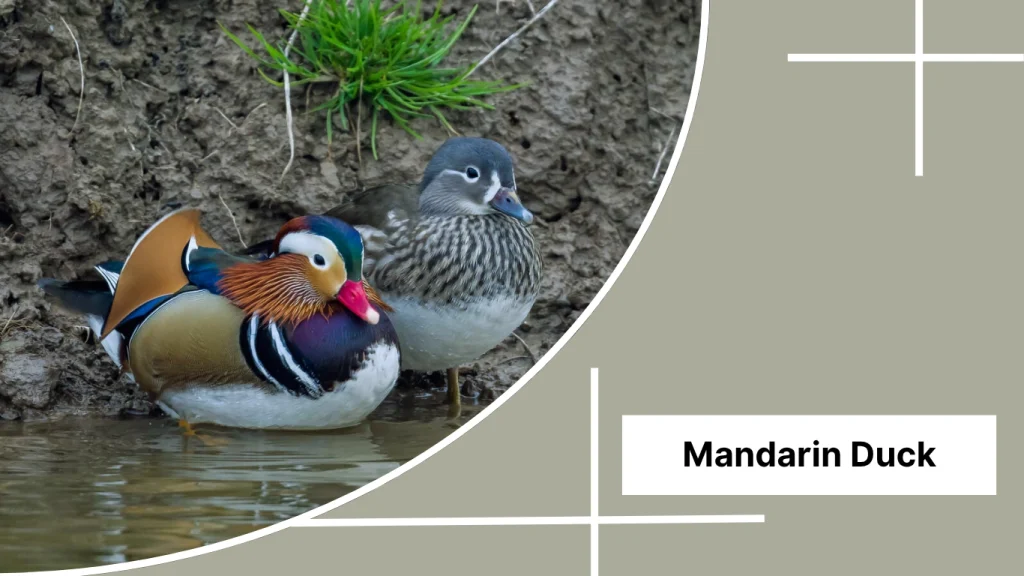
The Mandarin duck is a small, perching ornamental species native to East Asia. It’s admired worldwide for its vibrant plumage, especially in drakes, and is often found in aviaries and decorative ponds.
Identification
- Feather Color:
- Drake: Bright orange, purple, green, and white with sail-like side feathers
- Hen: Mottled gray-brown with white eye ring
- Bill Color: - Drake: Red
- Hen: Gray
- Eye Color: Brown
- Body Shape: Compact, upright with short neck
- Legs and Feet: Orange
- Skin Color: Pinkish
- Weight: - Drake: 1.3–1.5 lbs
- Hen: 1.1–1.3 lbs
- Flight Ability: Excellent flyers
Temperament and Behavior
Shy, quiet, and graceful. Mandarins prefer to stay with their mates and are best kept in peaceful aviary setups. They perch and nest in trees or elevated boxes.
Habitat and Climate Tolerance
Cold-hardy and ideal for ornamental aviaries with plenty of water and roosting space. They require protection from predators and benefit from planted surroundings.
Utility and Productivity
Not used for meat or egg production. They lay 30–50 small white eggs per season. Their value lies in beauty, breeding programs, and wildlife conservation.
32. Wood Duck
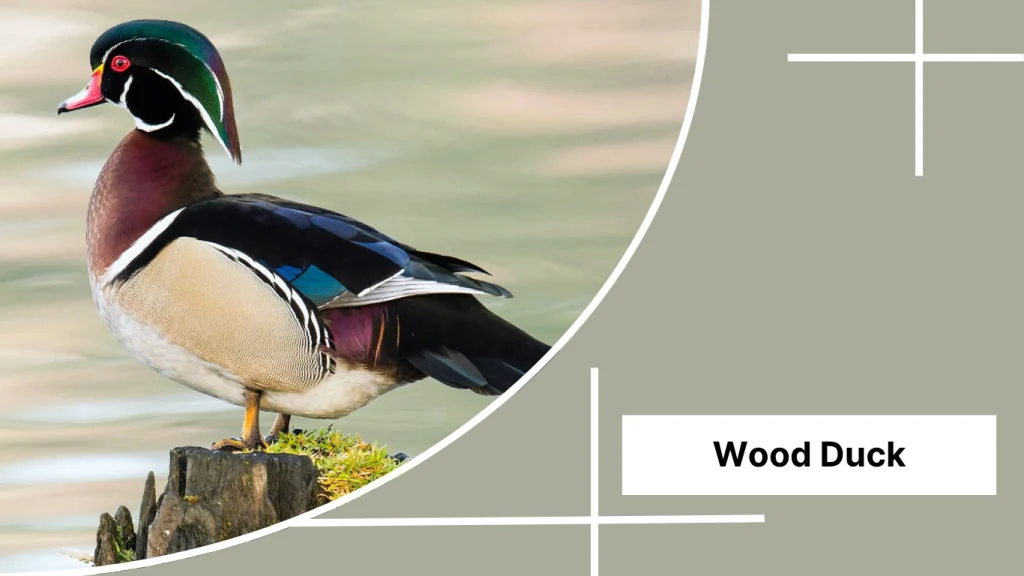
The Wood Duck (Aix sponsa) is a native North American perching duck celebrated for its spectacular coloration and tree-nesting habits. It is closely related to the Mandarin duck and is one of the most striking wild waterfowl species in the world.
Identification
- Feather Color:
- Drake: Iridescent green and purple head, white stripes, red eyes, and chestnut breast
- Hen: Soft gray-brown with white eye-ring and blue wing patch
- Bill Color: - Drake: Red with black tip
- Hen: Gray
- Eye Color: - Drake: Red
- Hen: Brown
- Body Shape: Slim, upright with crested head
- Legs and Feet: Yellow-orange
- Skin Color: Pale
- Weight: - Drake: 1.5–2 lbs
- Hen: 1.2–1.5 lbs
- Flight Ability: Excellent fliers; strong and agile in wooded areas
Temperament and Behavior
Wood Ducks are shy, alert, and fast-moving. They’re cavity nesters that prefer elevated nest boxes or natural tree hollows. Monogamous and generally peaceful, they’re best suited to semi-wild or aviary settings.
Habitat and Climate Tolerance
Naturally adapted to woodland wetlands, lakes, and rivers. They thrive in temperate climates with access to both water and forested areas.
Utility and Productivity
Primarily ornamental and used in wildlife reserves, aviaries, and conservation programs. Hens lay 10–15 white to creamy eggs per clutch. Not used for meat or eggs in domestic settings; admired for beauty and ecological importance.
33. White Crested Duck
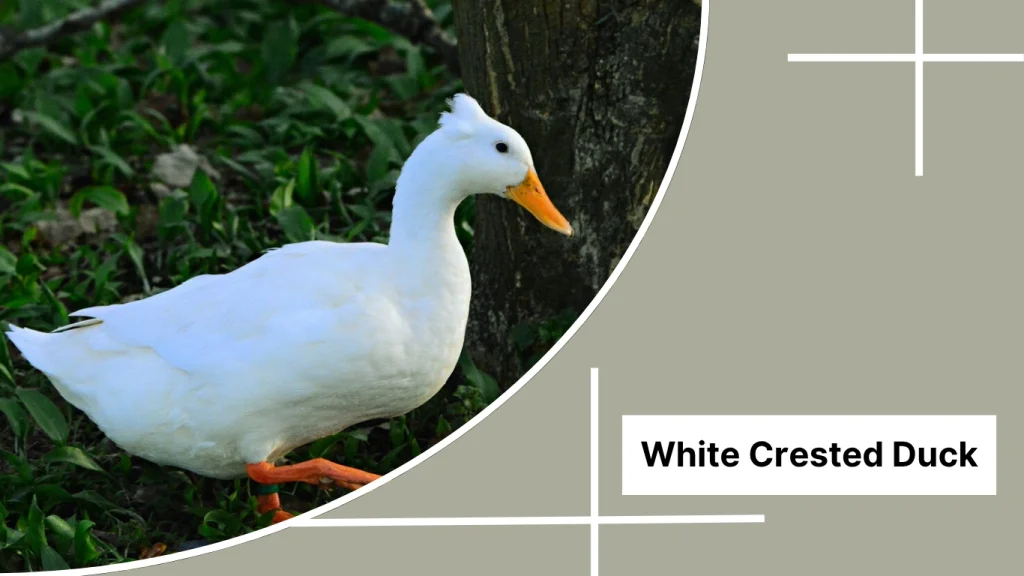
The White Crested duck is a medium-sized ornamental breed distinguished by a fluffy feather crest on the top of the head. It has origins dating back hundreds of years and is often seen in exhibitions and backyard flocks for its unique look.
Identification
- Feather Color: Pure white
- Bill Color: Orange
- Eye Color: Dark brown
- Body Shape: Round, upright with a large feather crest
- Legs and Feet: Bright orange
- Skin Color: Yellow
- Weight:
- Drake: 6.5–7.5 lbs
- Hen: 5.5–6.5 lbs
- Flight Ability: Flightless
Temperament and Behavior
Gentle, curious, and calm. White Crested ducks are friendly and adapt well to backyards. The crest can occasionally cause balance or neurological issues due to its genetic origin.
Habitat and Climate Tolerance
Adaptable to most climates but must be kept dry and clean to prevent crest-related infections. Need extra care in wet or muddy conditions.
Utility and Productivity
Moderate egg producers, laying around 100–150 white eggs annually. Not widely used for meat. Their primary value lies in ornamental appeal and exhibition, where they’re admired for their comical and eye-catching appearance.