




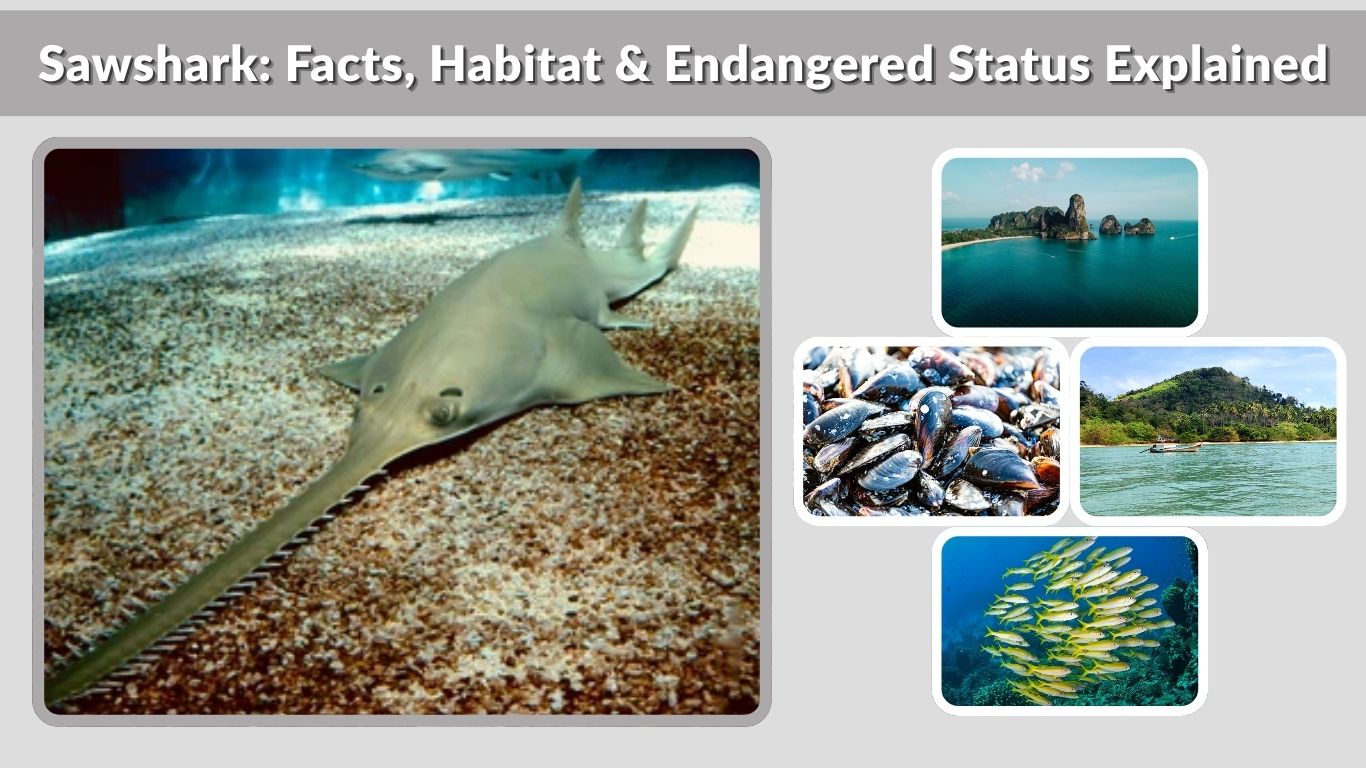
The sawshark is one of the ocean’s most unusual and fascinating predators. Instantly recognizable by its long, saw-like snout lined with sharp teeth, this deep-sea shark uses its unique feature to hunt with remarkable precision. Although often confused with the sawfish, the sawshark is a true shark with distinct physical traits and behaviors. Found mainly in deep offshore waters, this species remains relatively mysterious. In this guide, you’ll explore essential sawshark facts, habitat details, and its conservation status.
What Is a Sawshark?
A sawshark belongs to the family Pristiophoridae, a small group of sharks known for their elongated, toothed rostrum (snout). There are at least eight recognized species of sawsharks distributed across different ocean regions.
Despite its unusual appearance, the sawshark is not related to sawfish, which are actually rays. One major difference lies in their body structure. Sawsharks have a typical shark-shaped body with gill slits located on the sides of their head. In contrast, sawfish have flattened, ray-like bodies with gills underneath.
Another defining feature of the sawshark is the presence of barbels—small whisker-like sensory organs located on the snout. These barbels help the shark detect prey on the ocean floor and are a key way to distinguish sawsharks from sawfish.
Sawsharks are primarily bottom-dwelling predators that spend much of their time near the seabed. Their unique anatomy makes them highly specialized hunters in deep marine environments.
Sawshark Habitat
Where Do Sawsharks Live?
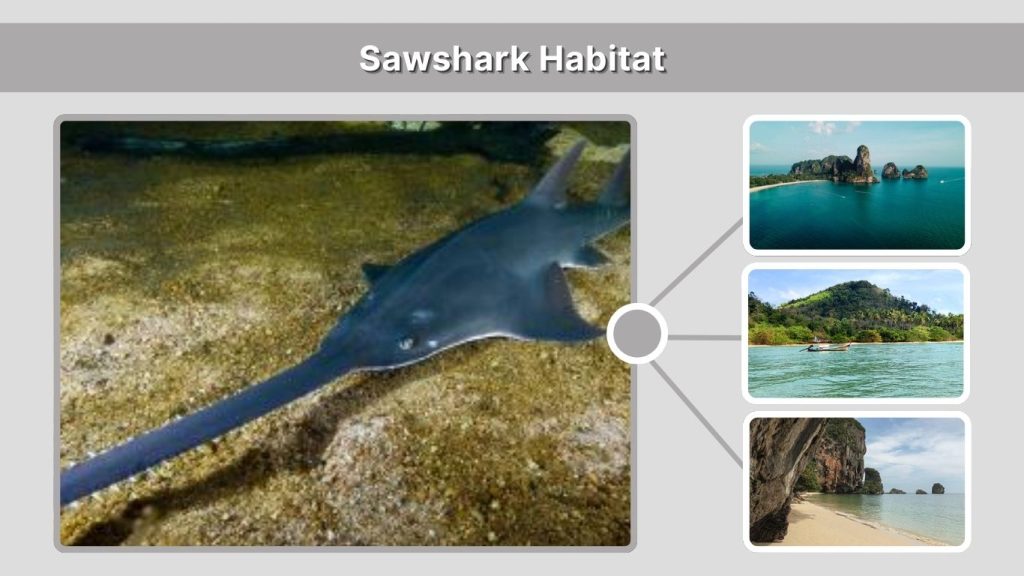
The typical sawshark habitat includes deep-sea environments along continental slopes and offshore seabeds. Unlike many coastal shark species, sawsharks are most commonly found at depths ranging from about 100 to 1,000 meters, depending on the species.
They prefer sandy or muddy bottoms where they can search for prey and partially conceal themselves. The deep ocean provides a stable environment with fewer temperature fluctuations compared to shallow waters.
Geographic Distribution
Sawsharks are primarily found in the Indian Ocean and the western Pacific Ocean. They are commonly recorded in waters around Japan, Australia, and South Africa. Some species have relatively narrow geographic ranges, which can make them more vulnerable to environmental changes.
Because they inhabit deeper waters, sawsharks are less frequently observed than coastal shark species. As a result, much of their behavior and population size remains under scientific study.
Why They Prefer Deep Waters
Deep-water habitats offer several advantages for sawsharks. These areas often contain abundant bottom-dwelling fish, squid, and crustaceans—ideal prey for a specialized predator.
Additionally, deep environments generally have fewer large predators and less direct human disturbance compared to shallow coastal zones. However, expanding deep-sea fishing operations have begun to impact these once-remote habitats.
Sawshark Diet and Hunting Behavior
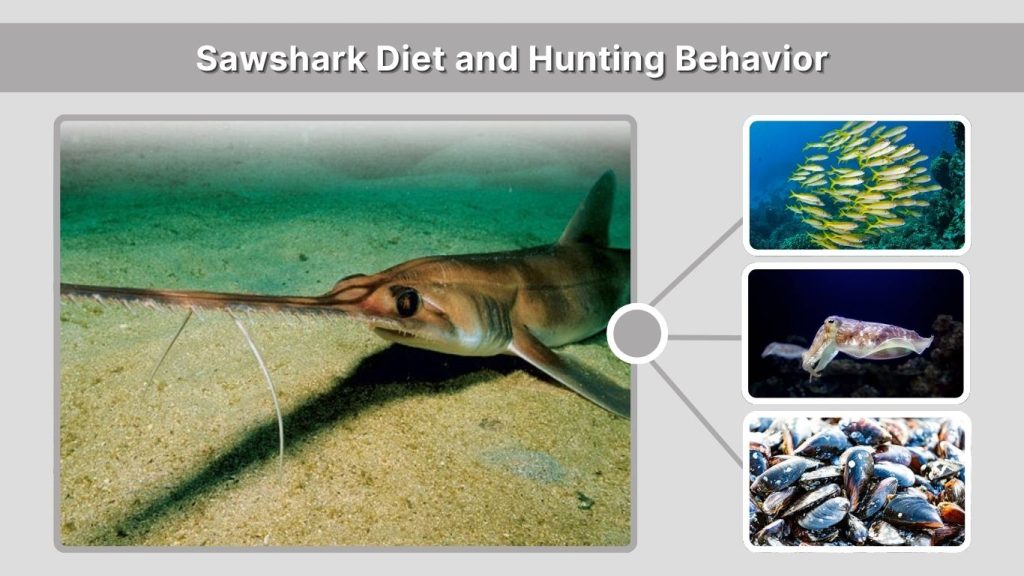
What Do Sawsharks Eat?
Sawsharks feed mainly on small fish, squid, and crustaceans that live near or within the seabed. Their diet consists largely of benthic organisms—animals that inhabit the ocean floor.
Using their sensitive rostrum and barbels, sawsharks detect prey hidden in sediment. Once located, they use quick slashing motions to stun or injure their target before swallowing it whole.
Their feeding strategy allows them to exploit food sources that other predators might miss, giving them a specialized role within deep-sea ecosystems.
Sawshark vs Sawfish: Key Differences
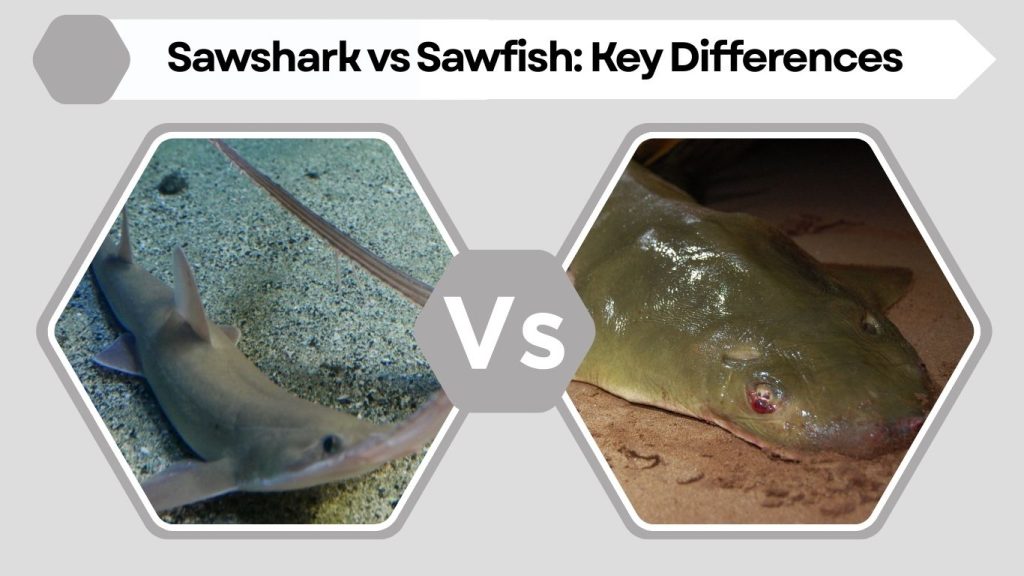
Because of their similar names and saw-like snouts, sawsharks are often confused with sawfish. However, they are very different animals.
Body Structure Differences
Sawsharks are true sharks with a streamlined, cylindrical body and gill slits located on the sides of their heads. Sawfish, on the other hand, are rays with flattened bodies and gill openings underneath.
Another major difference is the presence of barbels. Sawsharks have a pair of whisker-like barbels on their snout, while sawfish do not. These barbels are a key identifying feature.
Habitat Differences
Sawsharks typically live in deep offshore waters along continental slopes. In contrast, sawfish prefer shallow coastal waters, estuaries, and even rivers in some regions.
Size Comparison
Sawsharks are relatively small, usually growing between 3 and 5 feet long. Sawfish are much larger and can exceed 20 feet in length. This size difference alone makes them easy to distinguish.
Understanding these differences helps avoid confusion and highlights the unique adaptations of each species.
Are Sawsharks Endangered?
The conservation status of sawsharks varies by species. Unlike sawfish, which are critically endangered worldwide, many sawshark species are currently listed as Least Concern. However, some are classified as Data Deficient, meaning there is not enough scientific information to determine their true population status.
Because sawsharks live in deep waters and are not commonly targeted by commercial fisheries, they have historically faced less pressure than coastal shark species. Still, increasing deep-sea fishing activity has raised new concerns about their long-term survival.
So while not all sawsharks are officially endangered, certain species could become at risk if current trends continue.
Threats to Sawsharks
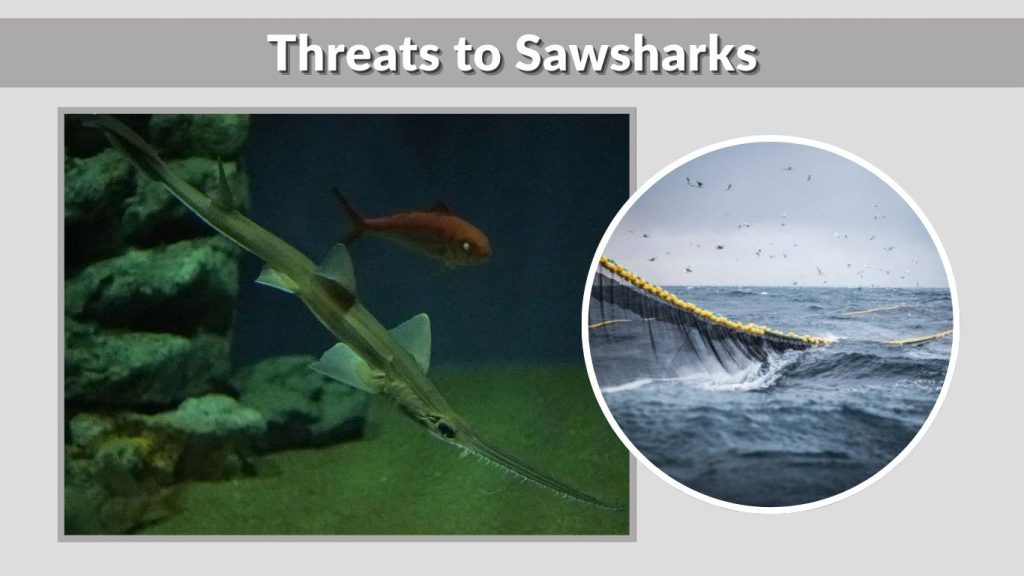
Deep-Sea Fishing and Bycatch
One of the primary threats to sawsharks is bycatch in deep-sea fisheries. Bottom trawling operations that target fish and other marine species can accidentally capture sawsharks.
Because these sharks live close to the seabed, they are especially vulnerable to trawl nets dragged along the ocean floor. Even if released, survival rates may be low.
Habitat Disturbance
Deep-sea trawling not only captures animals but also damages the seabed. This destruction can disrupt the sandy and muddy habitats that sawsharks depend on for feeding.
As deep-sea fishing expands into previously untouched regions, the potential for habitat degradation increases.
Limited Scientific Data
Another challenge is the lack of detailed research. Since sawsharks inhabit deep waters, they are difficult to study. Without accurate population data, it is hard for scientists to assess trends or create targeted conservation plans.
Improved monitoring and research are essential to understanding whether certain sawshark species may be declining.
Importance of Sawsharks in Marine Ecosystems
Sawsharks play an important role as mid-level predators in deep-sea ecosystems. By feeding on small fish, squid, and crustaceans, they help maintain balance within the food web.
Their presence also reflects the health of benthic (seafloor) environments. A stable sawshark population can indicate a relatively undisturbed habitat. Conversely, declines may signal broader ecological problems.
Protecting sawsharks contributes to the overall health and stability of deep-ocean ecosystems.
Conservation Efforts and Future Outlook

Fisheries Regulations
In some regions, fisheries management policies help reduce bycatch of non-target species, including sawsharks. Measures such as gear modifications and trawl restrictions can limit accidental capture.
Research and Monitoring
Marine scientists continue to study sawshark populations through deep-sea surveys and catch records. Gathering reliable data is crucial for assessing their conservation status accurately.
How People Can Help
Consumers can support sustainable seafood practices by choosing products certified by responsible fisheries programs. Supporting marine conservation organizations and spreading awareness about lesser-known shark species also contributes to long-term protection.
While sawsharks are not currently as threatened as sawfish, proactive conservation is key to preventing future declines.
Sawshark Facts
Physical Characteristics
One of the most interesting sawshark facts is the structure of its rostrum. The long, flattened snout is lined with sharp, alternating teeth that resemble a saw blade. This specialized tool is used both for hunting and for stirring up sediment to locate hidden prey.
Most sawsharks grow between 3 and 5 feet (about 1 to 1.5 meters) in length, making them much smaller than sawfish, which can grow over 20 feet long. Their bodies are slender and streamlined, allowing them to move efficiently near the ocean floor.
Their coloration typically includes shades of brown or gray, helping them blend into sandy or muddy seabeds. This natural camouflage protects them from predators and allows them to approach prey undetected.
Unique Adaptations
The sawshark’s rostrum is not just a weapon—it is also packed with sensory organs. Electroreceptors along the snout can detect the tiny electrical signals produced by other animals. This allows sawsharks to locate prey buried beneath the sand.
The barbels on their snout add another layer of sensory detection. These structures help the shark sense movement and vibrations in the sediment.
When hunting, the sawshark rapidly swings its rostrum from side to side. This slashing motion can injure or stun prey, making it easier to capture. In addition, the saw can be used to dig through sand to uncover hidden fish or crustaceans.
These adaptations make the sawshark an efficient predator in deep-sea ecosystems.
FAQs
What is a sawshark?
A sawshark is a deep-sea shark with a long, serrated snout used for detecting and slashing prey. It belongs to the family Pristiophoridae and is different from sawfish, which are rays. Sawsharks also have barbels on their snouts, a feature unique to this group.
Where do sawsharks live?
Sawsharks live mainly in deep offshore waters along continental slopes. They are commonly found in the Indian Ocean and western Pacific Ocean, especially near countries like Japan, Australia, and South Africa. They prefer sandy or muddy seabeds at significant depths.
Are sawsharks endangered?
The endangered status of sawsharks varies by species. Many are listed as Least Concern, but some are Data Deficient due to limited research. Expanding deep-sea fishing activities may pose future risks if not properly managed.
What is the difference between a sawshark and a sawfish?
Sawsharks are true sharks with gill slits on the sides and barbels on their snouts. Sawfish are rays with flattened bodies and no barbels. Sawfish are also much larger and typically live in shallow coastal waters.
Conclusion
The sawshark is a remarkable deep-sea predator known for its distinctive saw-like snout and specialized hunting techniques. From its unique physical adaptations to its deep-water habitat, this shark plays an important role in marine ecosystems.
Although many sawshark species are not currently endangered, growing deep-sea fishing pressure and limited scientific data highlight the need for continued research and careful management. By understanding sawshark facts, habitat preferences, and conservation challenges, we can better appreciate and protect this extraordinary ocean species.