




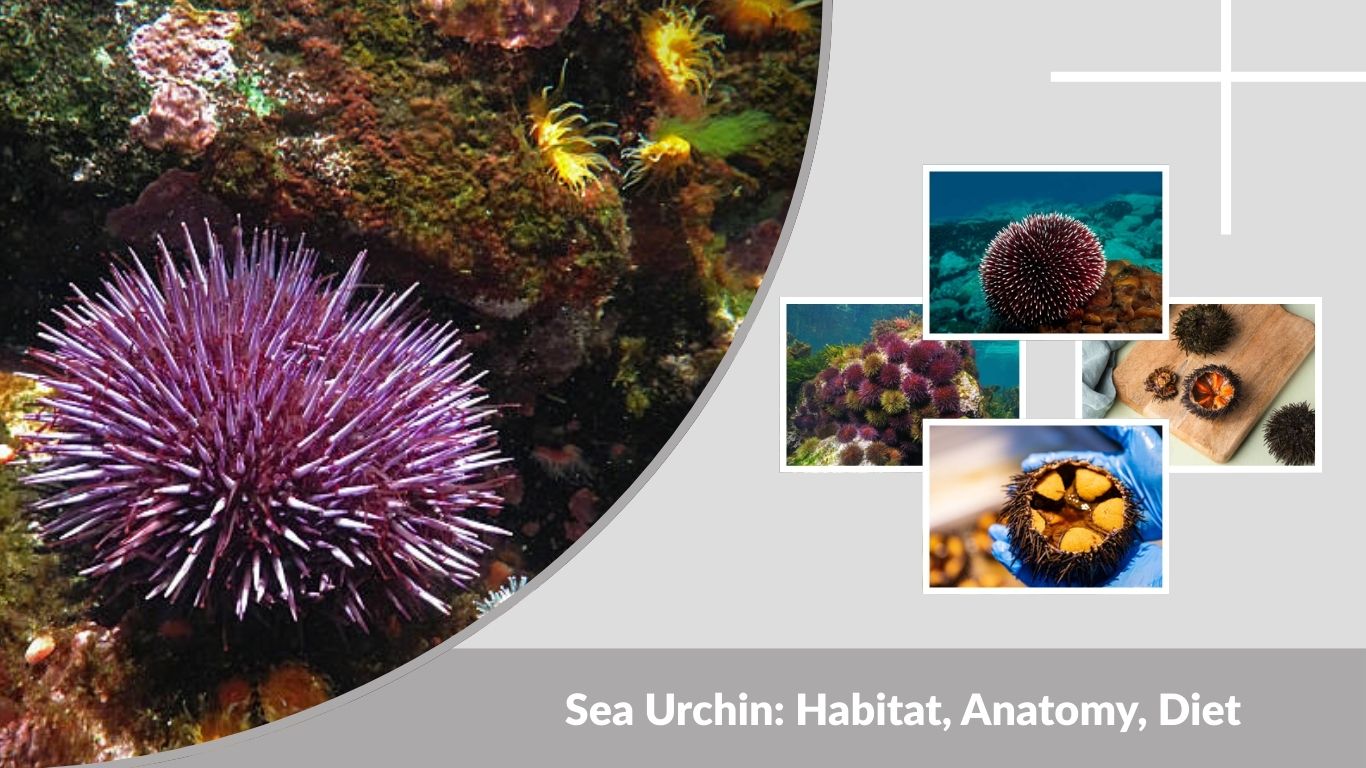
Sea urchins are small, spiny marine animals that live in oceans around the world. At first glance, they look like simple round creatures covered in sharp spikes, but they are surprisingly complex and play a major role in marine ecosystems. From maintaining kelp forests to being served as a delicacy known as uni, sea urchins are both ecologically important and culturally significant. In this article, we’ll explore what sea urchins are, how they survive, what they eat, and why they matter in the underwater world.
What Is a Sea Urchin?
A sea urchin is a marine invertebrate belonging to the class Echinoidea, which is part of the echinoderm family. This group also includes starfish, sand dollars, and sea cucumbers. Like other echinoderms, sea urchins have radial symmetry—meaning their body parts are arranged around a central axis.
Sea urchins are typically round or slightly flattened in shape and are covered in movable spines. Beneath those spines is a hard outer shell called a test, made primarily of calcium carbonate. Although they may appear simple, sea urchins have specialized structures that allow them to move, feed, and sense their environment.
They have existed for hundreds of millions of years, with fossil records dating back to the Paleozoic Era. Today, there are around 950 known species of sea urchins living in different marine environments.
Sea Urchin Anatomy Explained
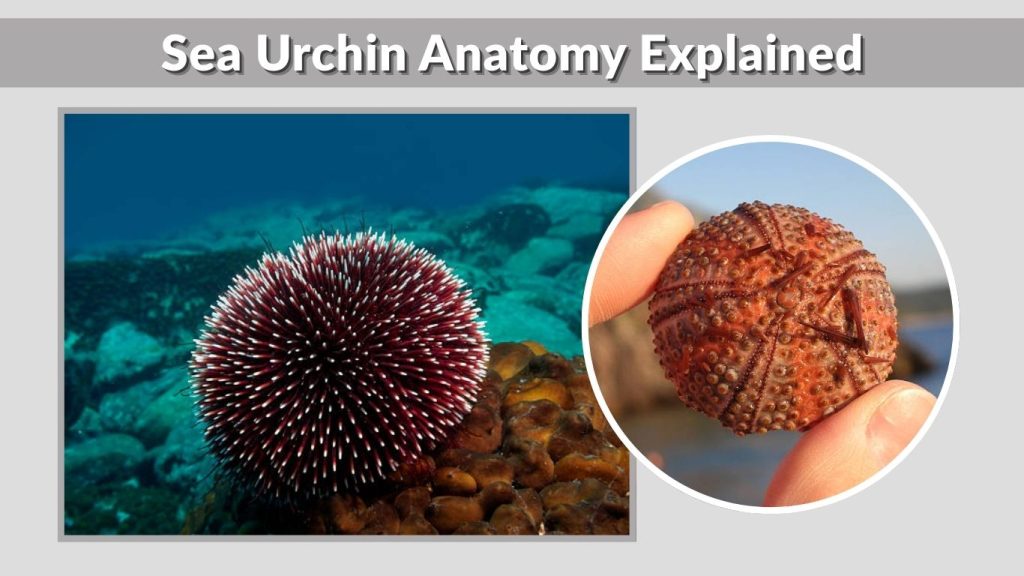
Sea urchins have a fascinating body structure that helps them survive on the ocean floor. Despite not having a brain or centralized nervous system, they are highly adapted to their surroundings.
The Hard Shell (Test)
The test is the rigid outer covering that protects the sea urchin’s internal organs. It is made of fused plates of calcium carbonate arranged in a symmetrical pattern. The shell has tiny holes through which tube feet extend.
The test not only provides protection but also supports muscle attachment and internal structures. When a sea urchin dies and its spines fall off, the empty shell often washes ashore and resembles a white, patterned sphere.
Spines and Their Functions
Sea urchins are best known for their sharp spines. These spines serve several purposes:
- Defense against predators such as fish, sea otters, and crabs
- Assistance in movement across the ocean floor
- Protection from physical damage
Some species, like the long-spined sea urchin, have particularly sharp and sometimes mildly venomous spines. While most sea urchins are not aggressive, stepping on one can result in painful injuries.
Tube Feet and Movement
Between the spines are tiny flexible structures called tube feet. These are part of the sea urchin’s water vascular system, a unique feature of echinoderms.
Tube feet help with:
- Movement
- Breathing
- Gripping surfaces
- Sensing the environment
Sea urchins move slowly by coordinating their tube feet and spines, allowing them to crawl along rocks and reefs in search of food.
Aristotle’s Lantern (Mouth Structure)
One of the most remarkable features of a sea urchin is its mouth, known as Aristotle’s lantern. This complex structure contains five sharp teeth arranged in a circular pattern.
It allows sea urchins to:
- Scrape algae off rocks
- Bite into kelp
- Grind food efficiently
This feeding mechanism makes them highly effective grazers in marine ecosystems.
Where Do Sea Urchins Live?
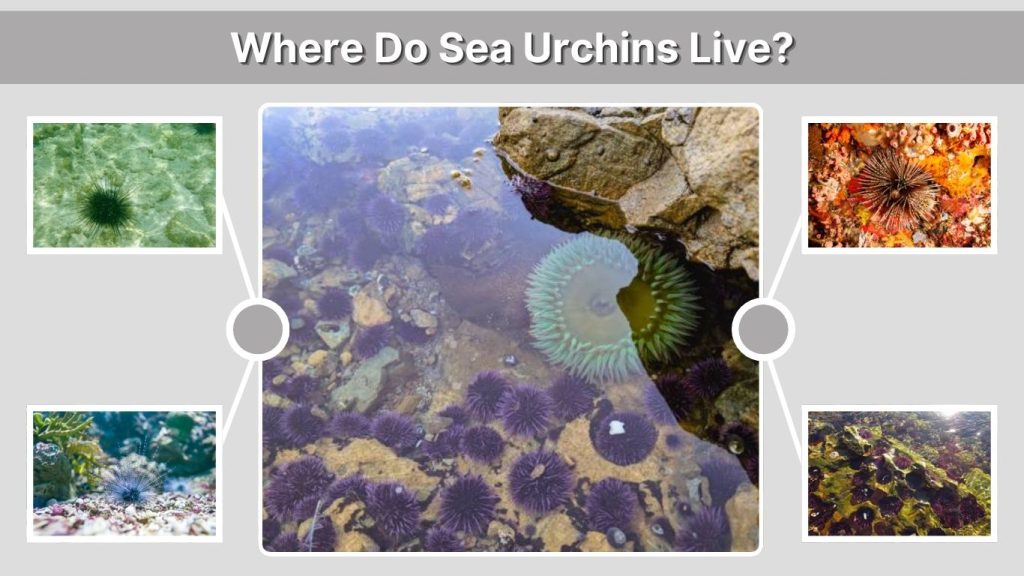
Sea urchins are found in oceans all over the world, from tropical waters to cold polar seas. They inhabit a wide range of environments, including:
- Rocky shorelines
- Coral reefs
- Kelp forests
- Seagrass beds
- Deep-sea ocean floors
Some species live in shallow tide pools, while others survive thousands of feet below the surface. They prefer areas where they can find plenty of algae or plant material to eat and surfaces to cling to.
In kelp forests especially, sea urchins play a crucial ecological role. When their population is balanced, they help maintain healthy kelp growth. However, if their natural predators decline, sea urchins can overgraze and create what scientists call “urchin barrens”—areas stripped of vegetation.
What Do Sea Urchins Eat?
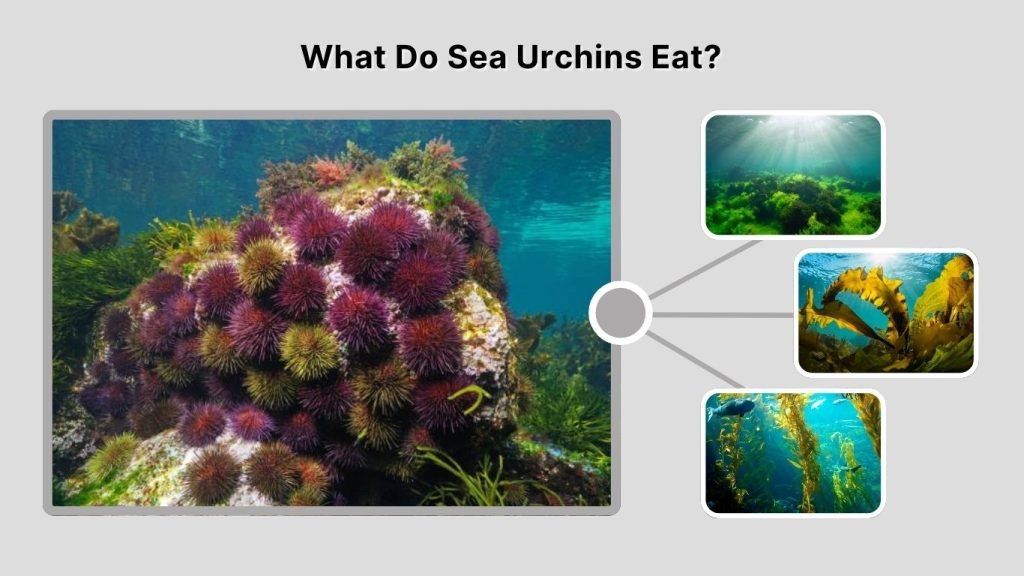
Sea urchins are primarily herbivores, meaning they mostly eat plant matter. Their main diet consists of:
- Algae
- Kelp
- Seaweed
Using Aristotle’s lantern, they scrape algae from rocks and coral surfaces. In some cases, sea urchins may also consume small invertebrates or decaying organic matter, making them opportunistic feeders.
Their grazing habits are important for marine ecosystems. By feeding on algae, they prevent overgrowth that could smother coral reefs. However, when their numbers become too high, they can damage kelp forests by consuming large amounts of kelp.
Predators such as sea otters, lobsters, and certain fish help regulate sea urchin populations and maintain ecosystem balance.
Sea Urchin Life Cycle and Reproduction
Sea urchins reproduce through a process known as spawning, which usually occurs in warmer months when water conditions are favorable.
Spawning Process
Most sea urchins use external fertilization. Males and females release sperm and eggs directly into the water, where fertilization occurs. Timing is important, and many sea urchins release their reproductive cells simultaneously to increase the chances of success.
Once fertilized, the egg develops into a microscopic, free-swimming larva.
Larval Stage
The larval form, called a pluteus larva, drifts in the plankton for several weeks. During this stage, it feeds on microscopic organisms and develops gradually.
Eventually, the larva settles on the ocean floor and undergoes a dramatic transformation, forming the familiar round body and growing its first spines. This metamorphosis marks the beginning of its life as a juvenile sea urchin.
Lifespan
Sea urchin lifespan varies widely by species. Some smaller species live only a few years, while others—like the red sea urchin—can live more than 100 years. Scientists believe certain species show little sign of biological aging, making them fascinating subjects for longevity research.
Are Sea Urchins Dangerous?
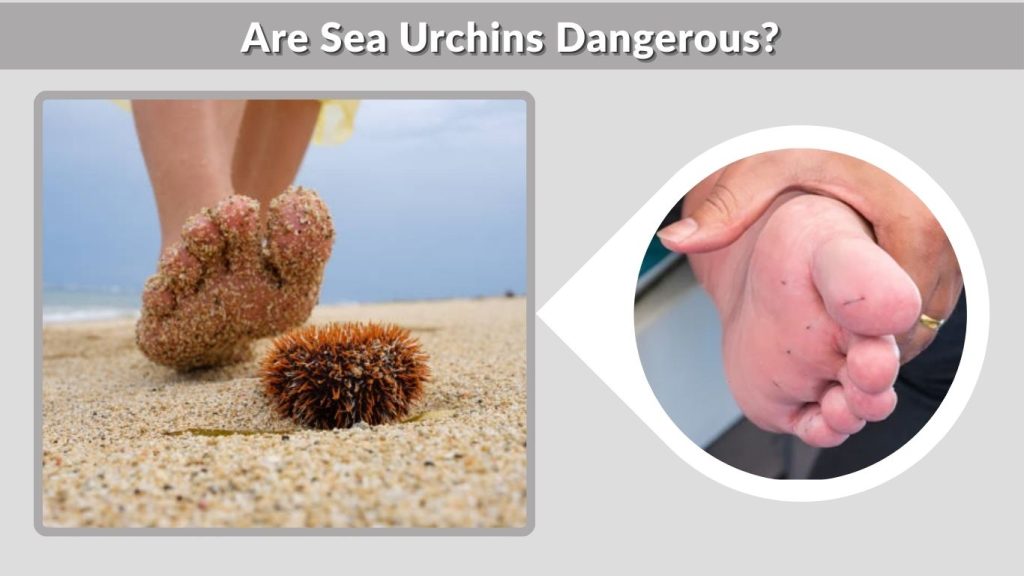
Sea urchins are not aggressive animals, but they can cause injury if accidentally stepped on or handled carelessly.
What Happens If You Step on One?
When stepped on, the spines can easily puncture the skin. These spines are brittle and may break off inside the wound, causing:
- Sharp pain
- Swelling
- Redness
- Risk of infection
In most cases, injuries are mild but uncomfortable.
Are Sea Urchins Venomous?
Some species have mild venom in their spines, which can intensify pain. However, most sea urchin injuries are mechanical rather than toxic. Serious reactions are rare, but individuals with allergies or deep puncture wounds should seek medical attention.
Basic First Aid Tips
If injured by a sea urchin:
- Carefully remove visible spines with tweezers.
- Soak the affected area in hot water to help dissolve spine fragments and relieve pain.
- Clean the wound thoroughly.
- Seek medical care if pain persists or signs of infection appear.
Wearing protective footwear when walking in rocky coastal waters can help prevent injuries.
Sea Urchins in the Marine Ecosystem
Sea urchins play a vital role in maintaining ocean health. As grazers, they control algae growth and help maintain ecological balance.
In kelp forests, sea urchins can either support or disrupt the ecosystem. When predators like sea otters are present, urchin populations remain balanced, allowing kelp forests to thrive. Kelp forests provide shelter and food for many marine species.
However, if predator numbers decline, sea urchins may multiply rapidly and overgraze kelp. This leads to “urchin barrens,” where once-lush underwater forests become rocky, barren landscapes.
Their presence, therefore, directly influences biodiversity and habitat stability.
Sea Urchin as Food (Uni)
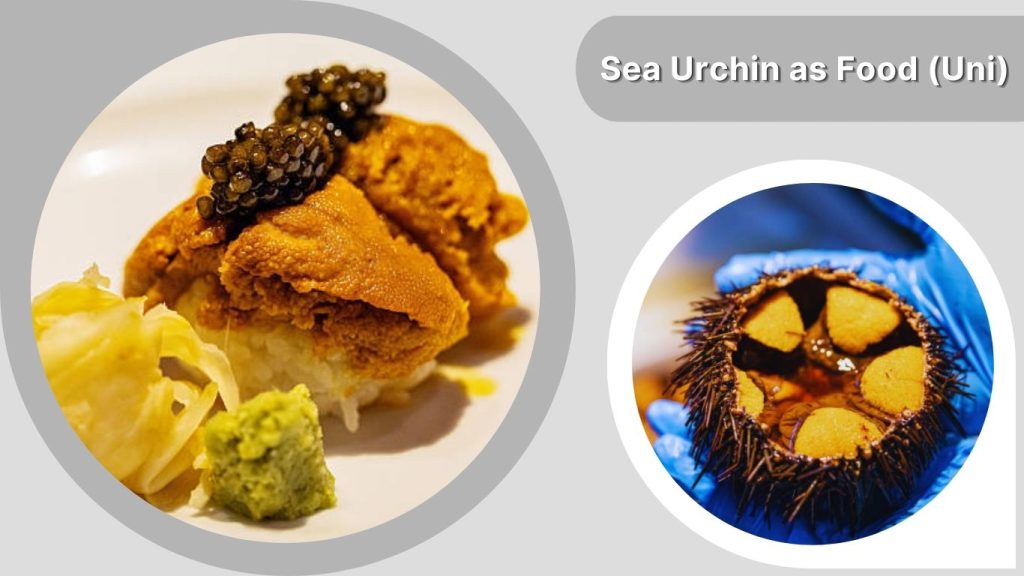
Sea urchins are considered a delicacy in many parts of the world. The edible part is the reproductive organ, commonly known as uni.
Uni is especially popular in Japanese cuisine, where it is served as sushi or sashimi. It has a creamy texture and a rich, slightly sweet, ocean-like flavor. High-quality uni is prized for its bright color and fresh taste.
Nutritionally, sea urchin roe contains:
- Protein
- Omega-3 fatty acids
- Vitamins A and C
- Minerals such as zinc and iodine
Sustainability is an important issue in sea urchin harvesting. In some regions, controlled harvesting actually helps restore damaged kelp forests by reducing overpopulation.
Interesting Sea Urchin Facts
Sea urchins may seem simple, but they have several surprising characteristics:
- They have no brain, yet possess a complex nerve network that coordinates movement and feeding.
- Some species can live for over a century.
- Their five-part symmetry is a defining trait of echinoderms.
- Fossils show that sea urchins have existed for more than 450 million years.
- They can regenerate damaged spines.
Their unique biology continues to interest marine biologists and researchers studying aging and regeneration.
FAQs
How long do sea urchins live?
Sea urchin lifespan varies by species. Some live only a few years, while others, like the red sea urchin, can survive more than 100 years. Certain species show minimal signs of aging, making them scientifically significant for longevity research.
Can you eat all types of sea urchins?
Not all sea urchins are commonly eaten. Only certain species are harvested for their roe, known as uni. Edible varieties are carefully selected based on flavor, size, and safety. Proper handling and freshness are essential for safe consumption.
Do sea urchins have eyes?
Sea urchins do not have traditional eyes. Instead, they sense light through specialized cells distributed across their body. This allows them to detect changes in brightness and respond to their environment despite lacking a centralized brain.
Are sea urchins important to coral reefs?
Yes, sea urchins help control algae growth on coral reefs. By grazing on algae, they prevent it from overwhelming coral colonies. Balanced populations support reef health, but overpopulation can disrupt nearby ecosystems like kelp forests.