

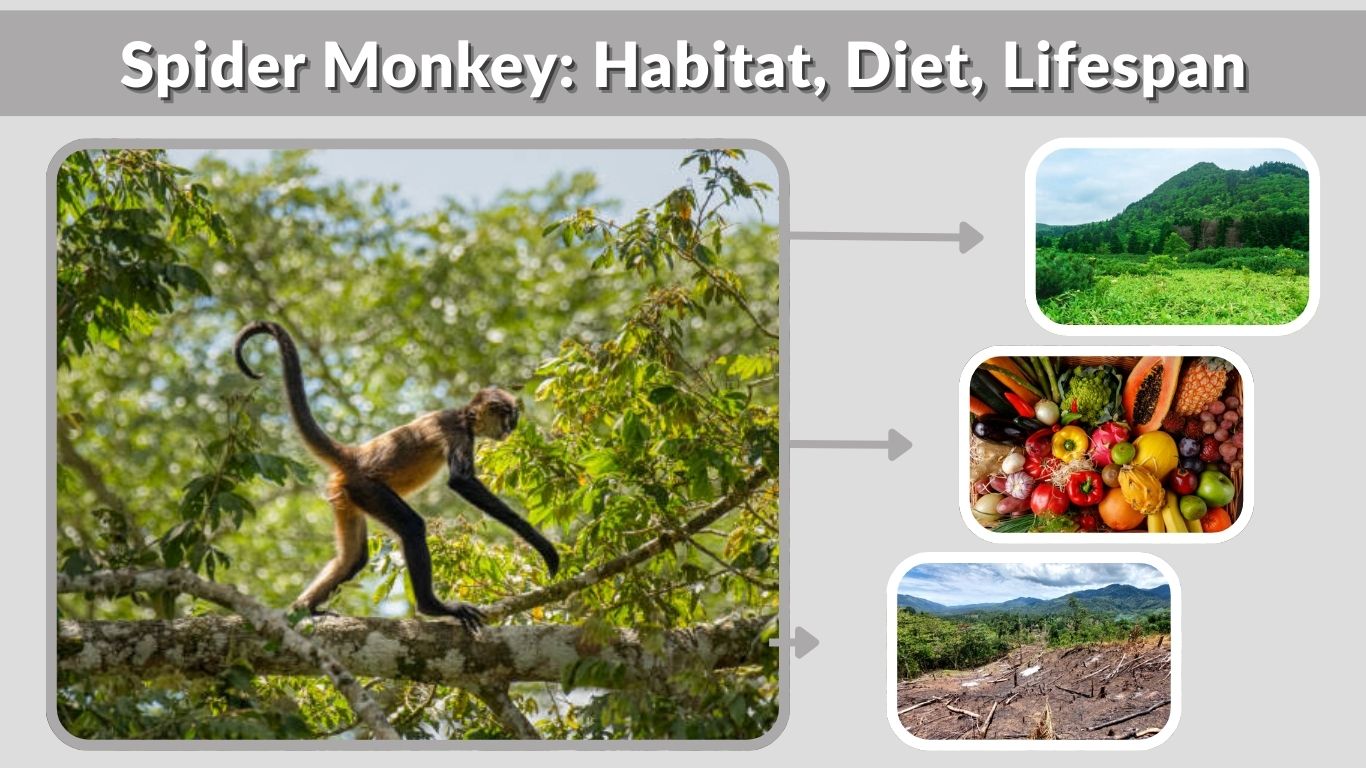
Spider monkeys are among the most agile and intelligent primates found in the forests of Central and South America. They are named for their long limbs and spider-like appearance when swinging through trees. One of their most remarkable features is their prehensile tail, which acts like an extra hand and helps them grip branches while moving through the forest canopy. Spider monkeys play an important role in tropical ecosystems because they help disperse seeds and maintain the health of forest environments.
What Is a Spider Monkey?
A spider monkey is a type of New World monkey belonging to the genus Ateles. These monkeys are famous for their excellent climbing abilities and their long arms, which allow them to swing gracefully between trees.
Scientific Classification
Spider monkeys belong to the following classification:
- Kingdom: Animalia
- Phylum: Chordata
- Class: Mammalia
- Order: Primates
- Family: Atelidae
- Genus: Ateles
There are several species within this genus, each living in different regions of Central and South America.
Types of Spider Monkeys
Some well-known species of spider monkeys include:
- Black spider monkey (Ateles paniscus)
- Brown spider monkey (Ateles hybridus)
- White-bellied spider monkey (Ateles belzebuth)
- Geoffroy’s spider monkey (Ateles geoffroyi)
Although these species look similar, they may differ in color, size, and geographic range.
Key Physical Characteristics
Spider monkeys have several distinctive physical features.
- Long arms and legs that help them swing between branches
- Hook-like hands with reduced thumbs
- Long prehensile tail used for gripping branches
- Slim body structure designed for climbing
Their tail is one of their most important features. It is extremely strong and flexible, allowing spider monkeys to hang from branches or support their body weight while reaching for food.
Where Do Spider Monkeys Live?
Many people wonder where spider monkeys live. These primates are native to the tropical forests of Central and South America.
Native Geographic Range
Spider monkeys live in warm tropical regions where forests provide abundant food and shelter. Their range stretches from southern Mexico down through Central America and into parts of South America.
Countries Where Spider Monkeys Are Found
Spider monkeys are found in several countries, including:
- Mexico
- Panama
- Colombia
- Brazil
- Peru
- Venezuela
In these regions, they thrive in forests with tall trees that allow them to move easily through the canopy.
Distribution in Tropical Forests
Spider monkeys usually live in areas with dense forest vegetation, especially near rivers or humid environments. These habitats provide the fruits, leaves, and seeds that make up most of their diet.
Spider Monkey Habitat
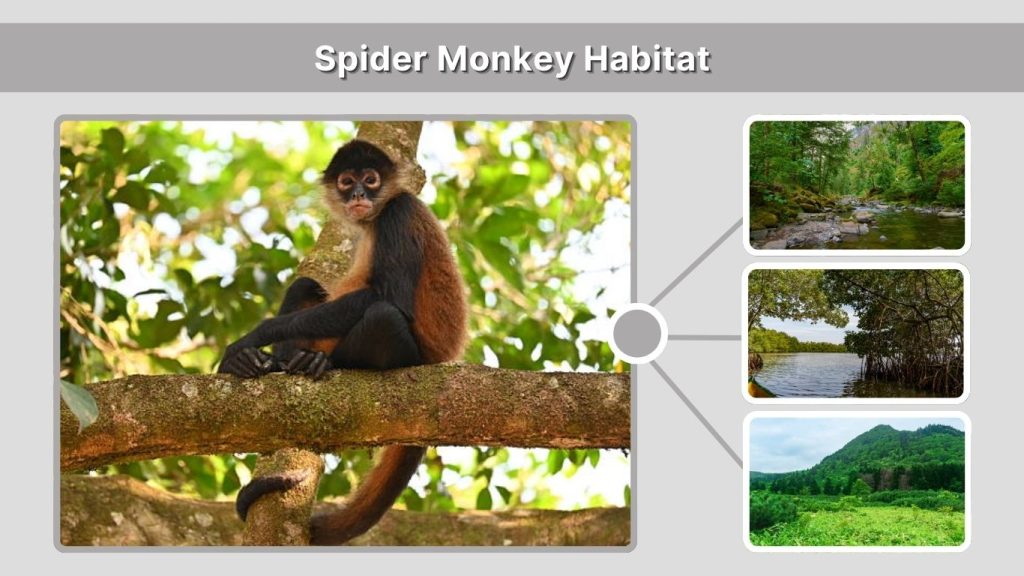
The spider monkey habitat mainly consists of tropical forests where tall trees allow them to swing and climb freely.
Preferred Environments
Spider monkeys are commonly found in:
- Tropical rainforests
- Evergreen forests
- Mangrove forests
- Mountain forests
These environments provide abundant plant life and safe places to rest high in the trees.
Life in the Forest Canopy
Spider monkeys are arboreal animals, meaning they spend nearly their entire lives in trees. They rarely come down to the forest floor. Instead, they move through the upper canopy using a method called brachiation, which involves swinging from branch to branch using their arms.
Living high in the trees offers several advantages:
- Protection from ground predators
- Easy access to fruit trees
- Safe resting and sleeping spots
Habitat Adaptations
Spider monkeys have developed special adaptations that allow them to thrive in forest habitats.
First, their long limbs allow them to travel quickly through trees. Second, their prehensile tail works like a fifth hand, helping them hold branches and maintain balance. Finally, their flexible shoulders allow them to swing smoothly between branches.
These adaptations make spider monkeys some of the most skilled climbers among primates.
Spider Monkey Size and Physical Characteristics

Spider monkeys have a unique body structure that is perfectly adapted for life in the trees.
Body Size
On average, spider monkeys have the following measurements:
- Body length: about 35–65 cm (14–25 inches)
- Tail length: about 60–90 cm (24–35 inches)
Their tail is often longer than their body and plays an essential role in climbing.
Weight Differences
Spider monkeys are relatively lightweight primates.
- Males typically weigh: 7–10 kg (15–22 pounds)
- Females typically weigh: 6–8 kg (13–18 pounds)
Despite their light weight, they have strong muscles that allow them to move quickly through the trees.
Unique Anatomical Features
One unusual feature of spider monkeys is that they lack fully developed thumbs. This adaptation allows their hands to function like hooks, making it easier to swing from branches.
Their shoulders are also extremely flexible, giving them a wide range of movement when climbing or swinging.
What Do Spider Monkeys Eat?

Many people ask what spider monkeys eat. These primates mainly eat plant-based foods and are known as frugivores, meaning fruit makes up the largest part of their diet.
Main Foods
Spider monkeys commonly eat:
- Fruits
- Nuts
- Seeds
- Leaves
Fruit is especially important because it provides the energy they need for their active lifestyle.
Occasional Animal Foods
Although they mostly eat plants, spider monkeys sometimes eat animal-based foods such as:
- Insects
- Bird eggs
These foods provide additional nutrients that help maintain their health.
Foraging Behavior
Spider monkeys often travel long distances while searching for food. They move from tree to tree looking for fruiting plants. Their strong memory helps them remember the locations of productive fruit trees.
Spider Monkey Diet

The spider monkey diet mainly consists of fruits, making these primates primarily frugivores. Fruits provide the energy needed for their active lifestyle, especially because spider monkeys travel long distances through the forest canopy each day.
Fruit-Based Diet
A large portion of their diet includes ripe fruits from many different tree species. Some of the fruits they commonly eat include:
- Figs
- Berries
- Tropical fruits
- Palm fruits
Fruits are rich in sugars and nutrients that help spider monkeys maintain their energy levels.
Seasonal Diet Changes
Food availability in tropical forests changes throughout the year. During seasons when fruit is abundant, spider monkeys eat mostly fruit. However, when fruit becomes scarce, they may rely more on:
- Leaves
- Seeds
- Flowers
This flexibility helps them survive in changing forest environments.
Role in Seed Dispersal
Spider monkeys play a crucial role in forest regeneration. After eating fruits, they disperse the seeds across the forest through their droppings. This process helps new plants grow and maintains the diversity of tropical forests.
Spider Monkey Life Cycle
The spider monkey life cycle includes several stages, from birth to adulthood. Their life cycle is similar to that of many other primates but occurs slowly compared to smaller animals.
Mating Behavior
Spider monkeys usually live in social groups, and females typically choose their mating partners. Breeding can occur at different times of the year depending on food availability and environmental conditions.
Gestation Period
After mating, the female spider monkey carries her baby for about 7 to 8 months before giving birth.
Birth and Infant Care
Most female spider monkeys give birth to one baby at a time. Twins are very rare. Mothers take excellent care of their babies and carry them constantly during the early months of life.
The baby usually clings to its mother’s chest and later rides on her back as it grows.
Growth Stages
Spider monkeys go through several stages of development:
- Infant stage – completely dependent on the mother
- Juvenile stage – learning climbing and social skills
- Adult stage – capable of reproducing and living independently
Young monkeys learn important survival skills by observing their mothers and other group members.
Spider Monkey Baby
A spider monkey baby is small and dependent on its mother for protection and nourishment.
Appearance of Newborns
Newborn spider monkeys are usually born with soft dark fur and are very small compared to adult monkeys. Their eyes are open at birth, and they immediately cling to their mother.
Mother–Baby Bond
The bond between a spider monkey mother and her baby is extremely strong. The baby stays close to its mother for many months and depends on her for food, warmth, and safety.
Learning Survival Skills
As the baby grows, it begins to explore the surrounding branches while staying close to its mother. Over time, it learns how to climb, swing, and find food in the forest.
This learning process is essential for survival in the wild.
Spider Monkey Lifespan
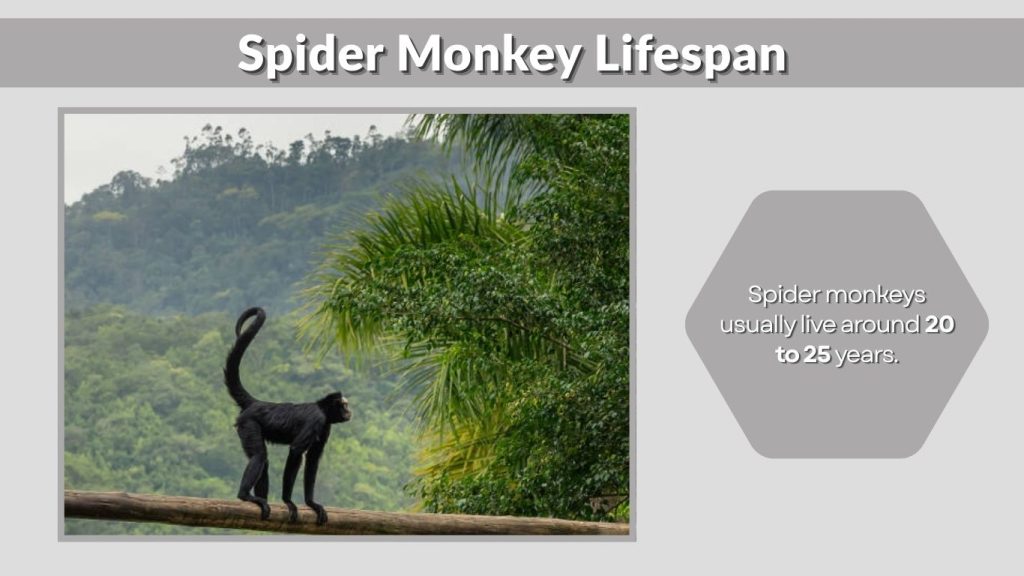
The spider monkey lifespan varies depending on environmental conditions and whether the monkey lives in the wild or in captivity.
Lifespan in the Wild
In their natural habitat, spider monkeys usually live around 20 to 25 years. Survival depends on factors such as food availability, predators, and habitat conditions.
Lifespan in Captivity
In zoos or protected environments, spider monkeys may live 25 to 30 years or longer due to better nutrition and medical care.
Factors Affecting Lifespan
Several factors influence how long spider monkeys live:
- Availability of food
- Habitat quality
- Presence of predators
- Human activities such as deforestation
Protecting their forest habitats is crucial for ensuring healthy spider monkey populations.
Spider Monkey Facts
There are many fascinating spider monkey facts that highlight how unique these primates are.
- Spider monkeys are named for their spider-like appearance when hanging from branches.
- Their prehensile tail acts like a fifth hand, helping them grip branches securely.
- They are among the best tree climbers in the primate world.
- Spider monkeys have excellent memory, allowing them to remember the locations of fruit trees.
- They can swing quickly between branches using their long arms.
Because of their agility and intelligence, spider monkeys are considered some of the most remarkable primates in tropical forests.
Predators and Threats

Spider monkeys face threats from both natural predators and human activities.
Natural Predators
Common predators include:
- Jaguars
- Large birds of prey
- Boa constrictor snakes
Living high in the forest canopy helps reduce the risk of attacks from ground predators.
Human Threats
Human activities pose a significant threat to spider monkeys. These threats include:
- Deforestation
- Habitat destruction
- Illegal hunting
- Wildlife trade
Loss of forest habitat is one of the biggest challenges for spider monkey survival.
Conclusion
Spider monkeys are extraordinary primates known for their long limbs, strong prehensile tails, and incredible agility in the forest canopy. Found in tropical forests across Central and South America, these monkeys play an important role in maintaining healthy ecosystems by spreading seeds and supporting forest regeneration. Understanding their diet, habitat, life cycle, and behavior helps us appreciate the importance of protecting their natural environments so that future generations can continue to observe these fascinating animals in the wild.