


Squirrel monkeys are small, energetic primates known for their agility, intelligence, and highly social behavior. Native to the tropical forests of Central and South America, these monkeys spend most of their lives in the trees, moving quickly through the forest canopy. Despite their small size, squirrel monkeys play an important role in forest ecosystems by helping disperse seeds and controlling insect populations. In this guide, we will explore squirrel monkey habitat, diet, size, lifespan, and some fascinating facts about these lively primates.
What Is a Squirrel Monkey?
A squirrel monkey is a small New World monkey belonging to the genus Saimiri. These monkeys are known for their active lifestyle, curious nature, and distinctive facial appearance. They are among the most agile primates and can move quickly through the branches of trees.
Scientific Classification
Squirrel monkeys belong to the following scientific classification:
- Kingdom: Animalia
- Phylum: Chordata
- Class: Mammalia
- Order: Primates
- Family: Cebidae
- Genus: Saimiri
There are several species within the genus Saimiri, and they are widely distributed across tropical regions of the Americas.
Types of Squirrel Monkeys
Scientists recognize a few different species of squirrel monkeys. Some of the most well-known include:
- Common squirrel monkey (Saimiri sciureus)
- Central American squirrel monkey (Saimiri oerstedii)
- Black-capped squirrel monkey (Saimiri boliviensis)
While these species look quite similar, they may differ slightly in their coloration, distribution, and habitat preferences.
Key Physical Characteristics
Squirrel monkeys have several unique features that make them easy to identify.
- They have a distinct white facial mask surrounding their eyes and mouth.
- Their fur is typically olive, gray, or yellowish in color.
- They have long tails, although these tails are mainly used for balance rather than grasping branches.
- Their bodies are small and slender, allowing them to move quickly through trees.
These monkeys are extremely agile and can leap impressive distances between branches while searching for food.
Where Do Squirrel Monkeys Live?
Squirrel monkeys are native to Central and South America. They inhabit warm tropical regions where dense forests provide plenty of food and shelter.
Native Geographic Range
Their natural range stretches across many tropical areas, especially regions close to rivers and wetlands. These environments provide abundant plant life and insects that squirrel monkeys depend on for food.
Countries Where They Are Found
Squirrel monkeys are commonly found in several countries, including:
- Brazil
- Peru
- Colombia
- Bolivia
- Costa Rica
- Panama
In these regions, they thrive in forests where they can easily move through the tree canopy.
Distribution in Tropical Forests
Squirrel monkeys prefer forests with dense vegetation and tall trees. These environments provide protection from predators and offer plenty of food sources. They often travel in large groups through the forest canopy while foraging for fruits and insects.
Squirrel Monkey Habitat

The squirrel monkey habitat mainly consists of tropical forests that provide both shelter and food. These monkeys are well adapted to life high in the trees.
Preferred Environments
Squirrel monkeys commonly live in:
- Tropical rainforests
- River forests
- Swamp forests
- Secondary forests
These habitats offer the resources needed for survival, including fruits, insects, and safe resting areas.
Life in the Forest Canopy
Squirrel monkeys are arboreal animals, meaning they spend most of their lives in trees. They rarely come down to the forest floor. Instead, they travel through the canopy by jumping and climbing from branch to branch.
Living in the canopy provides several advantages:
- Protection from many predators
- Easy access to fruits and insects
- Safe places to rest and sleep
Their agile movements allow them to navigate complex tree branches quickly and efficiently.
Habitat Adaptations
Squirrel monkeys have developed several adaptations that help them thrive in forest habitats.
First, their small and lightweight bodies make it easier for them to move along thin branches. Second, their long tails help maintain balance when jumping between trees. Finally, their excellent vision and quick reflexes help them avoid predators and locate food sources.
These traits make squirrel monkeys some of the most agile primates in the tropical forest ecosystem.
Squirrel Monkey Size and Physical Characteristics

The squirrel monkey size is relatively small compared to many other monkey species. However, their compact bodies and strong limbs allow them to move with impressive speed and agility.
Average Body Size
Squirrel monkeys typically have the following body measurements:
- Body length: about 25–35 cm (10–14 inches)
- Tail length: about 35–45 cm (14–18 inches)
Their tails are often longer than their bodies, which helps them maintain balance while climbing and jumping.
Weight Differences
Squirrel monkeys are lightweight primates, which helps them move easily through tree branches.
- Male squirrel monkeys usually weigh between 750 and 1100 grams.
- Female squirrel monkeys usually weigh between 500 and 750 grams.
Males are generally slightly larger and heavier than females.
Appearance and Coloring
Squirrel monkeys have distinctive coloration that makes them recognizable.
Their fur is usually olive, gray, or yellowish, with lighter fur on their chest and limbs. The most noticeable feature is their white face mask, which contrasts with their darker head and eyes.
These features, combined with their lively movements and curious behavior, make squirrel monkeys one of the most fascinating primates found in tropical forests.
Squirrel Monkey Life Span

The squirrel monkey life span varies depending on whether the monkey lives in the wild or in captivity. Like many small primates, their lifespan is influenced by factors such as predators, food availability, disease, and environmental conditions.
Lifespan in the Wild
In natural habitats, squirrel monkeys usually live around 15 to 20 years. Their survival depends on access to food, safe habitat, and protection from predators. Young monkeys are especially vulnerable during the early stages of life.
Lifespan in Captivity
When cared for in zoos or research centers, squirrel monkeys can live 20 to 25 years or even longer. Captive environments often provide regular food, veterinary care, and protection from predators, which helps increase their lifespan.
Factors That Affect Lifespan
Several factors can influence how long squirrel monkeys live:
- Availability of food resources
- Habitat quality
- Presence of predators
- Disease and parasites
- Human activities such as deforestation
Protecting their natural habitat is one of the most important steps for maintaining healthy squirrel monkey populations.
What Do Squirrel Monkeys Eat?
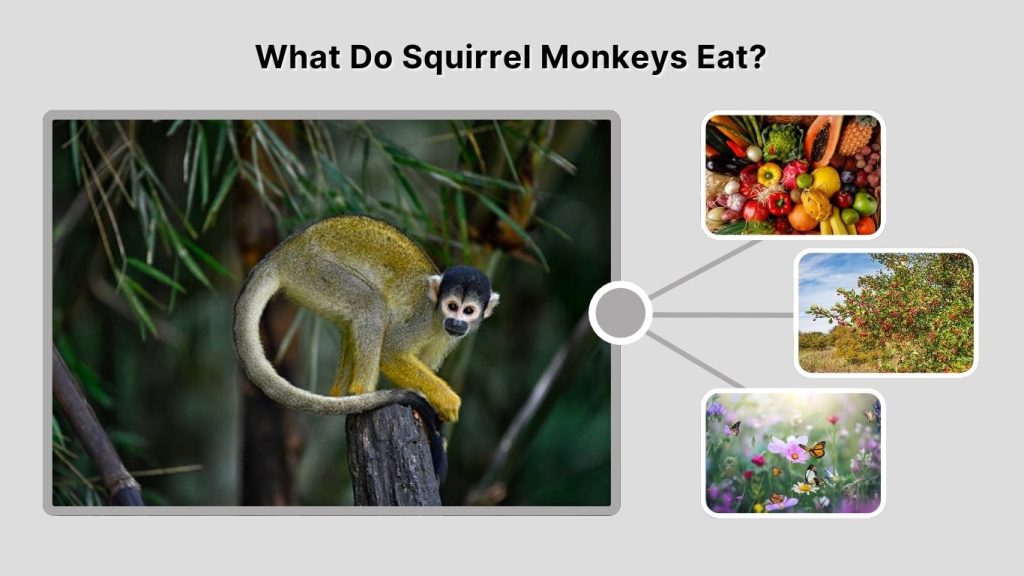
A common question people ask is what do squirrel monkeys eat. These monkeys have a varied diet that allows them to survive in different forest environments.
Main Foods
Most of their diet consists of plant-based foods, including:
- Fruits
- Berries
- Seeds
- Flowers
- Leaves
Fruits are especially important because they provide energy for their active lifestyle.
Animal Food Sources
Squirrel monkeys also consume animal-based foods that supply protein. These include:
- Insects
- Spiders
- Small lizards
- Bird eggs
They often search under leaves and bark to find insects hidden in the trees.
Foraging Behavior
Squirrel monkeys spend a large part of their day searching for food. They move quickly through the forest canopy, inspecting branches and leaves while looking for fruits and insects. Their quick movements and excellent vision help them locate food efficiently.
Squirrel Monkey Diet
The squirrel monkey diet is considered omnivorous, meaning they eat both plants and small animals.
Omnivorous Feeding Behavior
Squirrel monkeys combine different food sources to maintain a balanced diet. Fruits provide carbohydrates for energy, while insects supply essential proteins and nutrients.
Importance of Insects
Insects play a major role in their diet. They are rich in nutrients and help support the monkeys’ active metabolism. During times when fruits are scarce, insects become even more important.
Seasonal Diet Changes
Food availability changes throughout the year in tropical forests. During fruit-rich seasons, squirrel monkeys eat more fruit. When fruits are less available, they rely more heavily on insects, seeds, and small animals.
Social Behavior and Group Structure
Squirrel monkeys are highly social animals and usually live in large groups known as troops.
Living in Large Groups
A typical squirrel monkey troop may contain 20 to 100 individuals. Living in groups helps them stay safe from predators and makes it easier to find food.
Communication
These monkeys communicate with each other using a variety of signals, including:
- Vocal calls
- Facial expressions
- Body movements
Their calls help warn others about predators or coordinate movements while traveling through the forest.
Grooming and Cooperation
Grooming is an important social behavior among squirrel monkeys. By grooming each other, they strengthen social bonds and remove parasites from their fur.
Squirrel Monkey Facts
There are many interesting squirrel monkey facts that make these primates unique.
- Squirrel monkeys are among the smallest monkeys in the Americas.
- They have a relatively large brain compared to their body size.
- These monkeys are extremely fast and agile climbers.
- They can leap several meters between tree branches.
- Squirrel monkeys use many different sounds to communicate with group members.
Because of their intelligence and social behavior, squirrel monkeys have been studied extensively by scientists.
Squirrel Monkey vs Spider Monkey

A common comparison people make is squirrel monkey vs spider monkey, since both species live in similar forest environments.
Size Differences
Spider monkeys are much larger than squirrel monkeys. Spider monkeys have longer limbs and a larger body size, while squirrel monkeys are small and lightweight.
Tail Differences
One of the biggest differences is the tail.
- Spider monkeys have a prehensile tail, which means they can use it like an extra hand to grab branches.
- Squirrel monkeys use their tails mainly for balance, not for gripping.
Movement and Behavior
Spider monkeys move through the trees by swinging from branches using their long arms and tails. Squirrel monkeys, on the other hand, move quickly in short bursts, jumping and running along branches.
Both species are excellent climbers, but their movement styles are quite different.
Predators and Threats

Like many forest animals, squirrel monkeys face threats from both natural predators and human activities.
Natural Predators
Common predators include:
- Birds of prey such as hawks and eagles
- Large snakes
- Wild cats
Living in groups helps squirrel monkeys detect predators early and warn other members.
Human Threats
Human activities also threaten squirrel monkey populations. Major threats include:
- Deforestation
- Habitat loss
- Illegal wildlife trade
Protecting forest ecosystems is essential for their survival.
Conclusion
Squirrel monkeys are fascinating primates known for their small size, agility, and social nature. They live in tropical forests across Central and South America, where they move quickly through the trees in search of fruits, insects, and other foods. Their ability to adapt to different environments and their strong social bonds help them survive in the wild. By protecting their habitats and reducing deforestation, we can help ensure that squirrel monkeys continue to thrive in the forests where they belong.