




The thresher shark is one of the most fascinating and recognizable sharks in the ocean. Known for its extraordinarily long tail, which can be as long as its entire body, this pelagic predator uses a unique hunting technique that sets it apart from other shark species. Belonging to the genus Alopias, thresher sharks are found in tropical and temperate waters worldwide. There are three main species, each adapted to slightly different environments. From their specialized diet to their unusual life cycle, thresher sharks play an important role in maintaining balance in marine ecosystems.
What Is a Thresher Shark?
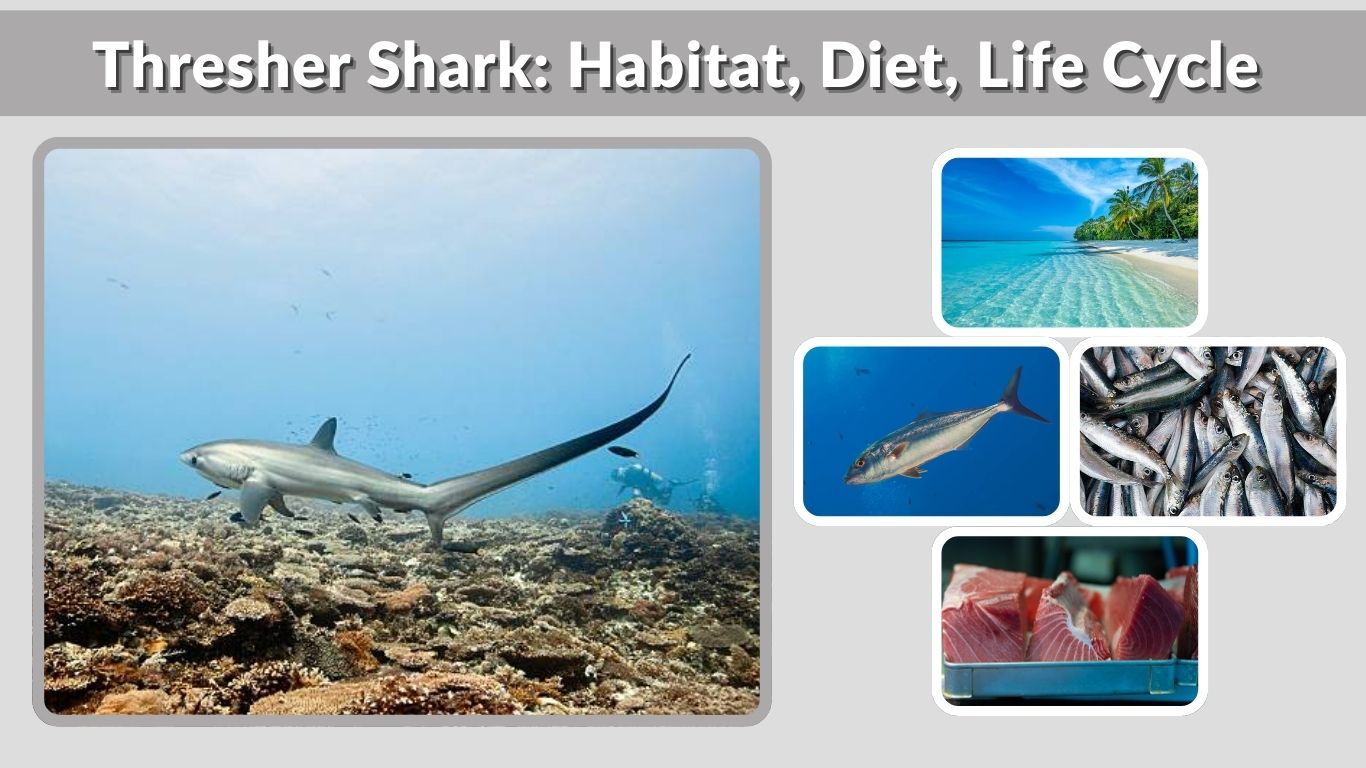
Thresher sharks are large, open-ocean predators that belong to the family Alopiidae. They are best known for their elongated upper tail lobe, which they use as a powerful hunting tool. Unlike many bulky shark species, threshers have slender, streamlined bodies designed for speed and agility in offshore waters.
Scientific Classification
- Kingdom: Animalia
- Phylum: Chordata
- Class: Chondrichthyes
- Order: Lamniformes
- Family: Alopiidae
- Genus: Alopias
Although they share the Lamniformes order with sharks like the great white and mako, thresher sharks are distinct because of their unique tail adaptation and feeding strategy.
The Three Main Species
There are three recognized species of thresher sharks:
- Common thresher (Alopias vulpinus) – The largest and most widely distributed species.
- Bigeye thresher (Alopias superciliosus) – Known for its unusually large eyes and preference for deeper waters.
- Pelagic thresher (Alopias pelagicus) – Typically smaller and found in tropical open-ocean environments.
While they share similar body structures, each species has differences in size, habitat depth, and behavior.
The Famous Long Tail
The most striking feature of the thresher shark is its tail. The upper lobe of the caudal fin can equal or even exceed the length of its body. This tail is not just decorative—it is a highly specialized hunting tool.
Thresher sharks use their tails to herd and stun schools of fish. By whipping the tail through a tightly packed group of prey, they can incapacitate multiple fish at once before circling back to feed. This strategy makes them one of the most efficient open-water predators.
Thresher Shark Habitat
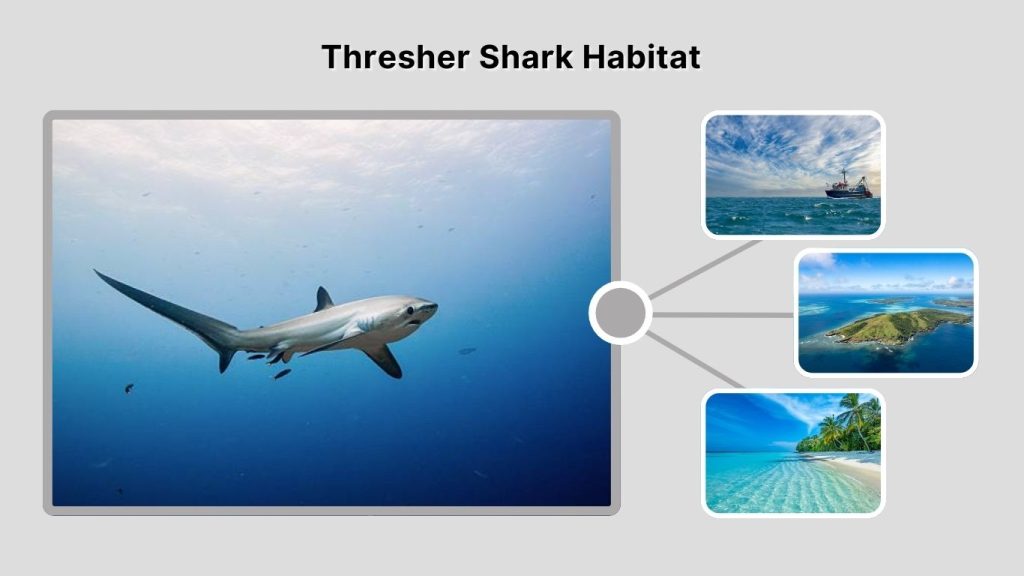
Understanding thresher shark habitat helps explain their feeding patterns and migration behavior. These sharks are primarily pelagic, meaning they inhabit open-ocean waters rather than remaining close to the seabed.
Global Distribution
Thresher sharks are found across the world’s oceans, including:
- The Atlantic Ocean
- The Pacific Ocean
- The Indian Ocean
They are commonly found in tropical and temperate regions, though specific ranges vary by species.
The common thresher has the broadest distribution and can be found in both hemispheres. The pelagic thresher is more closely associated with warm tropical waters, while the bigeye thresher often inhabits deeper offshore areas.
Coastal vs Offshore Habitat
Although threshers are considered open-ocean sharks, they are sometimes seen near continental shelves and coastal regions. Juveniles may spend more time in coastal waters, where food is abundant and predation risk may be lower.
Adults, however, tend to roam offshore, especially in areas with high concentrations of schooling fish. Their movements are often tied closely to prey availability.
Depth Range
Depth preference differs among species:
- Common thresher: Frequently found near the surface but can dive deeper.
- Bigeye thresher: Known for deep-water habits, sometimes diving hundreds of meters below the surface.
- Pelagic thresher: Typically inhabits mid-water depths in tropical regions.
The bigeye thresher’s large eyes are believed to help it see in low-light, deeper conditions. These vertical movements allow threshers to follow prey species that migrate between surface and deep waters.
Migration Patterns
Thresher sharks are migratory animals. They often travel long distances in response to seasonal temperature changes and prey movement. In some regions, they move closer to shore during certain times of the year, especially when schooling fish populations increase.
Migration helps them access feeding grounds while maintaining favorable environmental conditions.
What Do Thresher Sharks Eat?
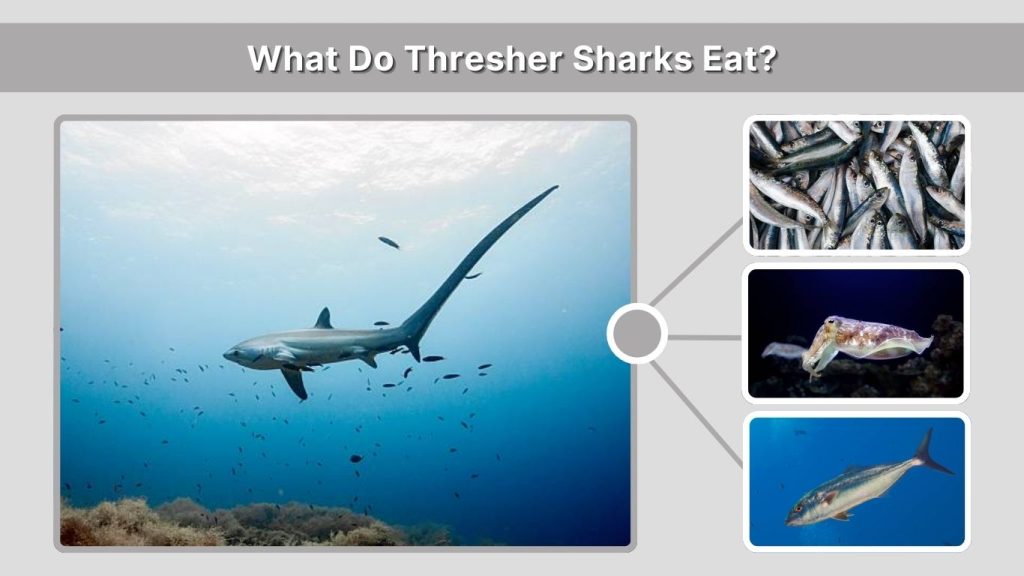
Thresher sharks are carnivorous predators with a diet that mainly consists of small to medium-sized fish and cephalopods.
Primary Food Sources
The typical thresher shark diet includes:
- Schooling fish such as sardines, anchovies, mackerel, and herring
- Squid and other cephalopods
- Occasionally small pelagic fish species
Because they rely heavily on schooling fish, threshers are often found in areas where large fish aggregations occur.
Thresher Shark Diet by Species
While all three species consume similar prey types, there are slight differences:
- The common thresher frequently targets schooling fish near the surface.
- The bigeye thresher feeds more often on deep-water squid and fish.
- The pelagic thresher focuses on small fish common in tropical open waters.
These dietary differences reflect their preferred habitat depths and hunting behavior.
Unique Hunting Strategy
The thresher shark’s hunting technique is one of the most unusual in the shark world. Instead of relying solely on speed and bite force, it uses its tail as a weapon.
First, the shark swims in tight circles to herd fish into a dense ball. Then, it lashes its long tail through the group with powerful force, stunning or killing several fish at once. Afterward, it calmly consumes the immobilized prey.
This tail-slapping method allows threshers to conserve energy while maximizing feeding efficiency, making them highly successful predators in open-water ecosystems.
Thresher Shark Life Cycle
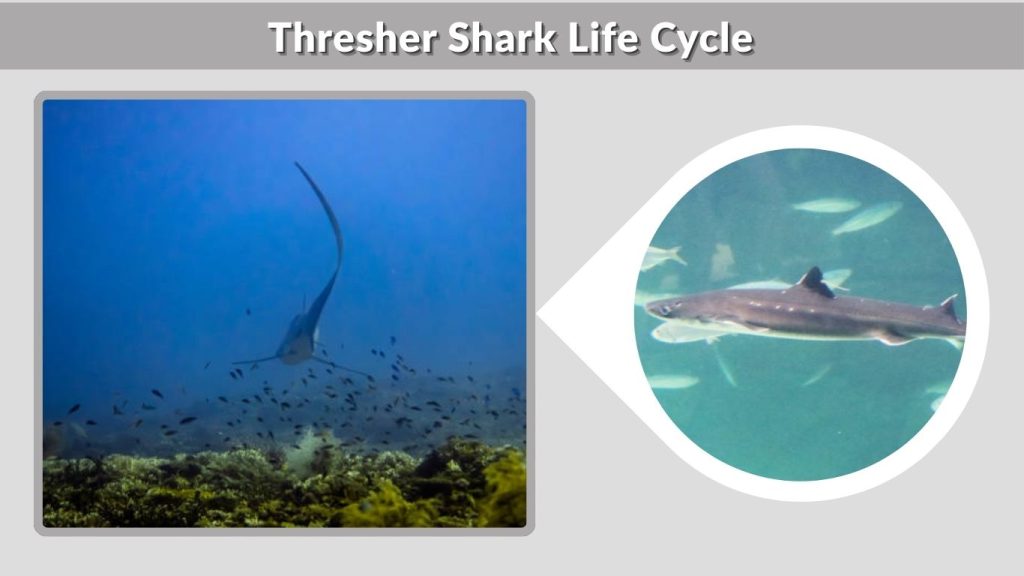
The thresher shark life cycle is characterized by slow growth, low reproductive output, and late maturity—traits common among large pelagic sharks. While details vary slightly between species, their overall reproductive pattern is similar.
Reproductive Method
Thresher sharks are ovoviviparous, meaning their eggs hatch inside the mother’s body. After internal fertilization, embryos develop within the uterus, nourished first by yolk sacs.
As development continues, embryos may consume unfertilized eggs provided by the mother—a process known as oophagy. This gives the strongest pups extra nutrition before birth, increasing their survival chances in the open ocean.
Gestation Period
The gestation period for thresher sharks is estimated to last about 9 to 12 months, depending on the species and environmental conditions. Compared to many fish species, this is a relatively long pregnancy.
Because they reproduce slowly and do not breed every year, thresher shark populations recover slowly when numbers decline.
Birth and Juvenile Stage
Thresher sharks typically give birth to 2 to 4 pups per litter, though the common thresher may occasionally have slightly larger litters.
Newborn pups are already quite large—often measuring over 3 feet (about 1 meter) at birth. They are fully independent immediately and receive no parental care.
Juveniles sometimes remain in coastal or productive waters where food is abundant and predation risk is lower.
Growth and Maturity
Thresher sharks grow slowly and reach sexual maturity relatively late:
- Males generally mature earlier than females
- Females may not reproduce until several years later
Late maturity combined with small litter sizes makes thresher sharks particularly vulnerable to overfishing and population decline.
Thresher Shark Lifespan
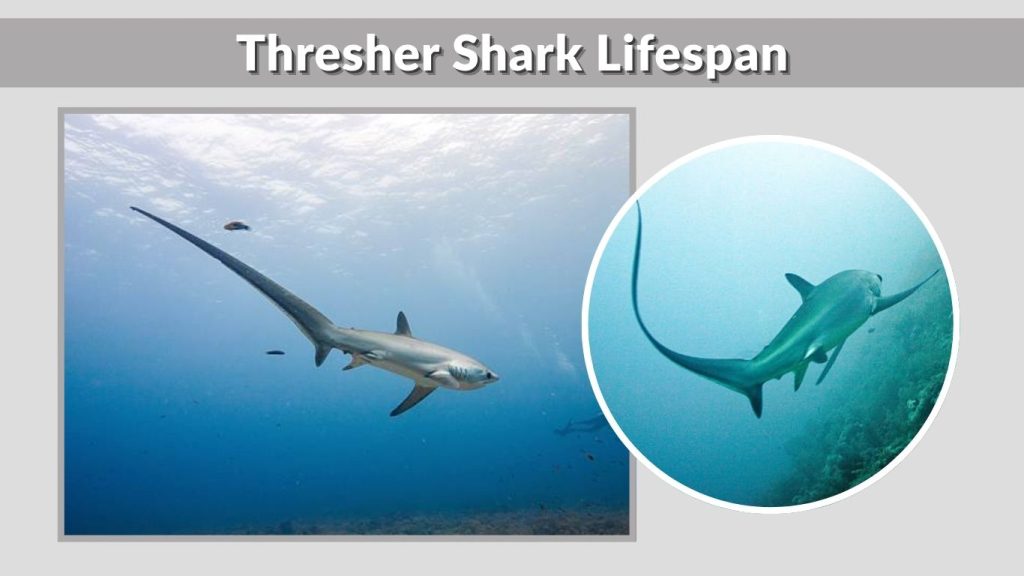
The thresher shark lifespan varies by species, but these sharks are considered moderately long-lived.
Average Lifespan
Most thresher sharks are estimated to live between 20 and 50 years, depending on species and environmental conditions.
The common thresher may live longer than the pelagic thresher, though research is ongoing to determine precise age ranges.
Factors That Influence Lifespan
Several factors affect how long thresher sharks live:
- Fishing pressure
- Availability of prey
- Habitat quality
- Environmental changes such as warming oceans
Because they reproduce slowly, even small increases in mortality can significantly impact long-term population stability.
Behavior and Interaction with Humans
Thresher sharks are generally shy and non-aggressive. Despite their large size and powerful tail, they rarely pose a threat to humans.
Social Behavior
- Mostly solitary animals
- Occasionally seen in small groups
- May gather in areas with abundant prey
Some regions are known for seasonal aggregations, where divers may observe threshers at cleaning stations. These cleaning stations allow smaller fish to remove parasites from the sharks’ bodies.
Are Thresher Sharks Dangerous?
There are very few confirmed incidents involving thresher sharks and humans. They are not considered aggressive and typically avoid divers and swimmers.
Most human interactions occur through commercial fishing operations rather than recreational ocean activities.
Conservation Status and Threats
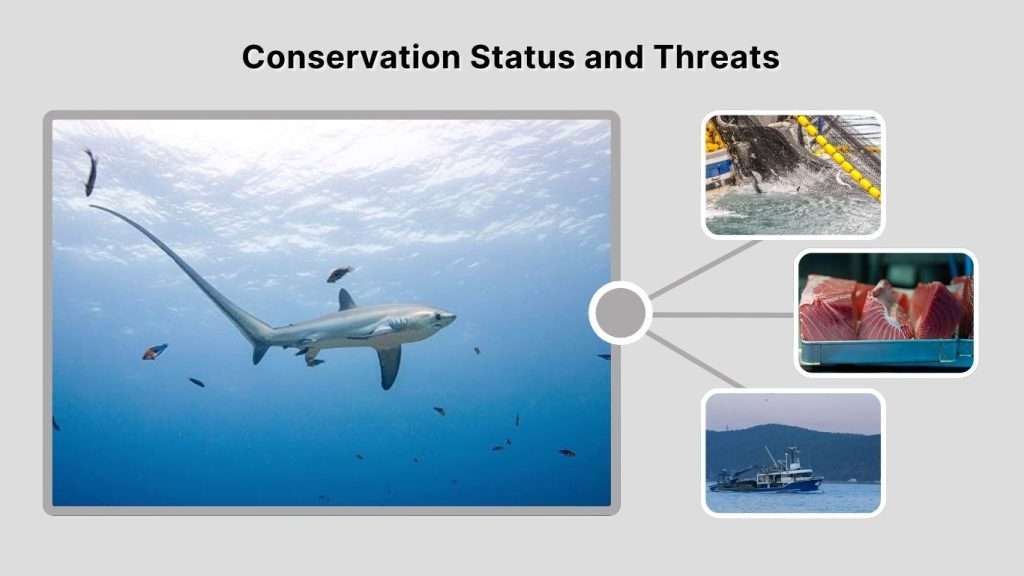
Although thresher sharks are powerful predators, they face increasing conservation challenges.
IUCN Red List Status
All three species of thresher sharks are currently classified as threatened under the IUCN Red List, with some populations listed as Vulnerable or Endangered, depending on region and species.
Their slow reproductive rate makes them especially sensitive to fishing pressure.
Major Threats
The primary threats to thresher sharks include:
- Commercial fishing (targeted and bycatch)
- Longline and gillnet fisheries
- Demand for shark fins and meat
Because threshers often inhabit offshore waters, they frequently encounter industrial fishing operations targeting tuna and swordfish.
Conservation Efforts
Conservation measures include:
- International trade regulations
- Fishing quotas and catch restrictions
- Marine protected areas
- Monitoring and tagging programs
Improving sustainable fisheries management is essential to ensuring long-term survival of thresher shark populations.
Why Thresher Sharks Matter to Ocean Ecosystems
Thresher sharks play a vital role in regulating populations of small schooling fish. By controlling prey numbers, they help maintain balance in marine food webs.
As mid-to-apex predators, they contribute to healthy ocean ecosystems. A decline in thresher shark populations can disrupt predator-prey relationships and affect overall biodiversity.
Protecting these unique sharks supports not only their survival but also the stability of open-ocean environments worldwide.
Conclusion
The thresher shark is one of the ocean’s most extraordinary predators, instantly recognizable by its long, whip-like tail. Found in tropical and temperate waters around the globe, these pelagic sharks rely on specialized hunting techniques and slow, steady life cycles. From their offshore habitat and unique diet to their late maturity and moderate lifespan, every aspect of their biology reflects adaptation to life in the open sea. However, slow reproduction and heavy fishing pressure make them vulnerable. Continued conservation efforts are essential to protect thresher sharks and preserve the delicate balance of marine ecosystems.