




Goldfish are among the most beloved aquarium fish in the world, admired for their variety, beauty, and personality. Over centuries of selective breeding, dozens of distinct goldfish types have emerged—ranging from sleek, single-tailed swimmers to ornate, bubble-eyed showpieces. In this guide, we’ll explore 27 different types of goldfish, each with unique features such as body shape, tail design, coloration, and care needs. Whether you’re a beginner or a seasoned aquarist, understanding these varieties will help you choose the right goldfish and provide the best environment for them to thrive. Let’s dive into the world of goldfish and discover what makes each one special.
1. Common Goldfish
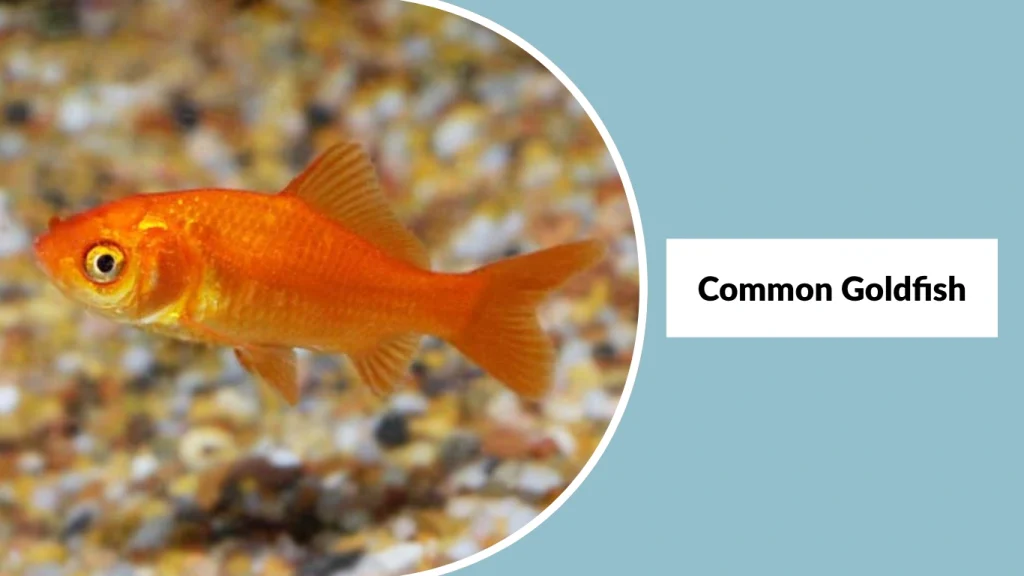
The Common Goldfish is one of the oldest and most widely recognized goldfish varieties. It’s known for its hardiness, simple appearance, and suitability for both beginners and experienced keepers. Unlike fancy goldfish, it has a single tail and a streamlined body, making it an active and fast swimmer.
Identification
- Single, short and forked tail
- Streamlined, slender body
- Metallic orange, gold, red, or white coloration
- No head growth or eye modifications
- Can grow up to 10–12 inches in large aquariums or ponds
- Lifespan ranges from 10 to 20 years
Behavior and Care
Common Goldfish are energetic swimmers that thrive in spacious tanks or outdoor ponds. They are social and do well in groups, especially with other single-tailed goldfish. They tolerate a wide range of water conditions, making them ideal for beginners.
Diet
They are omnivores and enjoy a mix of flake food, pellets, vegetables (like peas and spinach), and occasional protein sources such as bloodworms or brine shrimp.
Habitat
Best suited for larger tanks (at least 20 gallons for one) or outdoor ponds. They prefer cooler water temperatures and require strong filtration due to their waste production.
2. Comet Goldfish
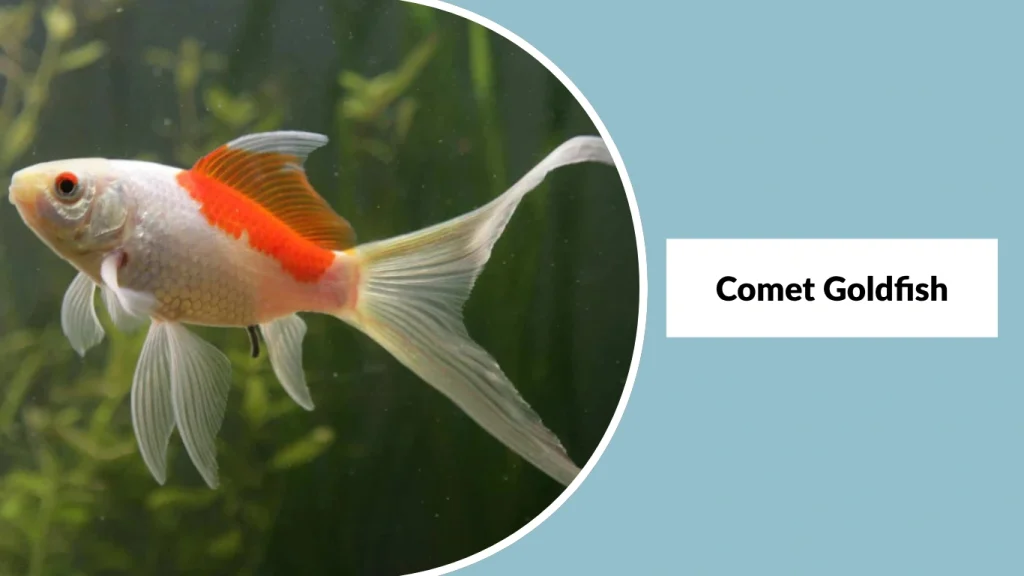
The Comet Goldfish is a popular and attractive variety known for its long, flowing tail and high activity level. It was developed in the United States and is often found in pet stores due to its adaptability and striking appearance. Compared to the Common Goldfish, the Comet is more slender and has a longer tail.
Identification
- Long, deeply forked tail (can be as long as the body)
- Slender, torpedo-shaped body
- Available in red, orange, white, and bi-color (like red-and-white)
- No head growth or telescopic eyes
- Reaches up to 10–12 inches in length
- Known for its graceful swimming style
Behavior and Care
Comet Goldfish are very active swimmers and need plenty of space to move around. They are generally peaceful and do well in ponds and large aquariums. Their quick movements make them less ideal tank mates for slower fancy goldfish.
Diet
They are not picky eaters. Their diet can include goldfish flakes or pellets, vegetables like lettuce and peas, and treats such as daphnia or freeze-dried shrimp.
Habitat
Requires a minimum tank size of 30 gallons for one fish, with larger tanks for multiple fish. They adapt well to outdoor ponds and enjoy cool to moderate temperatures. Filtration is essential to keep the water clean due to their messy feeding habits.
3. Shubunkin Goldfish
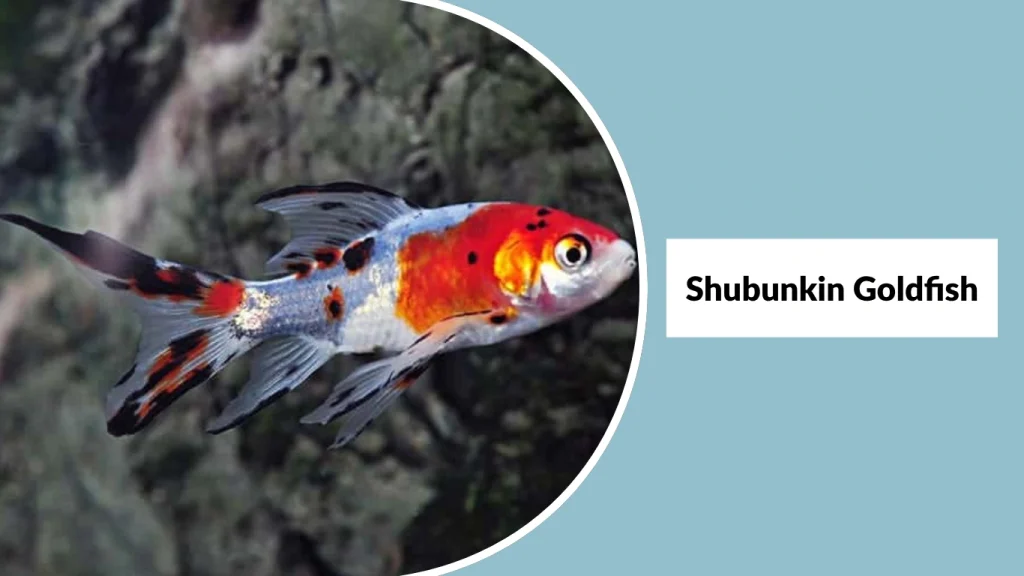
Shubunkin Goldfish are a colorful, single-tailed variety prized for their calico patterns. They combine the hardiness of Common and Comet goldfish with a unique blend of colors and transparent scales that give a “glassy” appearance. There are a few types of Shubunkins, including American, London, and Bristol.
Identification
- Single tail (short or long depending on type)
- Calico coloration: blue, red, orange, black, and white
- Iridescent, nacreous (pearly) scales
- Streamlined body similar to Common or Comet Goldfish
- Can grow up to 12 inches in length
- Often found with speckled patterns and blue undertones
Behavior and Care
Shubunkins are fast swimmers and very active. They do best in groups and are excellent for outdoor ponds. Their energetic behavior may stress slow fancy goldfish, so they should be kept with similar types.
Diet
Their diet includes standard goldfish food, vegetables like zucchini and lettuce, and protein-rich treats. They enjoy foraging in substrate and plants.
Habitat
Shubunkins thrive in large tanks or garden ponds. They are cold-water tolerant and can survive winters in temperate regions, making them ideal pond dwellers. They require clean, well-oxygenated water.
4. Fantail Goldfish

Fantail Goldfish are a common fancy variety with a rounded body and a flowing, double tail. They are often the first fancy goldfish recommended for beginners due to their hardiness and less extreme features compared to other fancy breeds.
Identification
- Rounded, egg-shaped body
- Double tail that splits into two lobes (fan-shaped)
- Short dorsal fin and long caudal fin
- Comes in metallic and nacreous colors (red, orange, white, calico)
- Typically grows up to 6–8 inches
- No head growth or eye modifications
Behavior and Care
Fantails are slower swimmers compared to single-tailed goldfish but are peaceful and social. They do well in aquariums with similarly slow-moving companions.
Diet
They prefer a varied diet with flakes, sinking pellets, and soft vegetables. Because of their body shape, they are prone to buoyancy issues, so avoid overfeeding and offer shelled peas to support digestion.
Habitat
Best kept in tanks of at least 20 gallons per fish with gentle filtration and minimal water current. They thrive in stable, clean water conditions and moderate temperatures.
5. Ryukin Goldfish
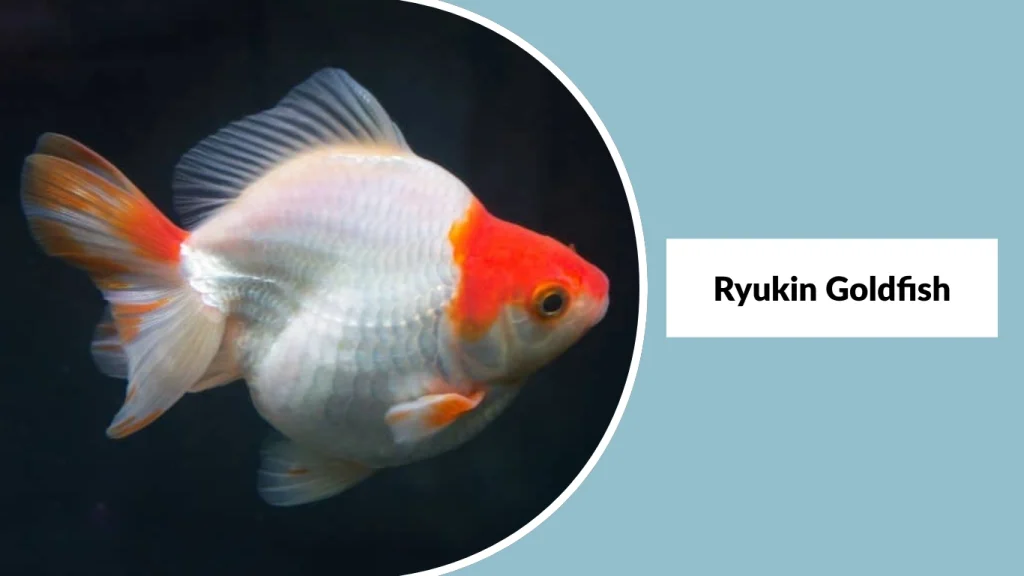
Ryukin Goldfish are a fancy breed known for their distinct hump behind the head and deep, round bodies. They originated in Japan and are admired for their elegant appearance and flowing fins. Ryukins come in both short-tail and long-tail varieties.
Identification
- Prominent shoulder hump behind the head
- Deep, round, compact body
- Double tail, often long and flowing
- Dorsal fin is tall and erect
- Colors include red, white, orange, calico, and tri-color
- Typically grows up to 6–8 inches (some larger in ponds)
Behavior and Care
Ryukins are hardy but more aggressive than many other fancy goldfish. They can outcompete slower tank mates for food. Despite being fancy, they swim well and are active.
Diet
Feed a balanced mix of goldfish pellets, blanched vegetables (spinach, peas), and occasional protein-rich treats. Avoid floating food to reduce the risk of swim bladder issues.
Habitat
They prefer aquariums of at least 20–30 gallons. Long-finned Ryukins benefit from low water flow and smooth decorations to prevent fin damage. Clean, stable water is essential for their health.
6. Veiltail Goldfish
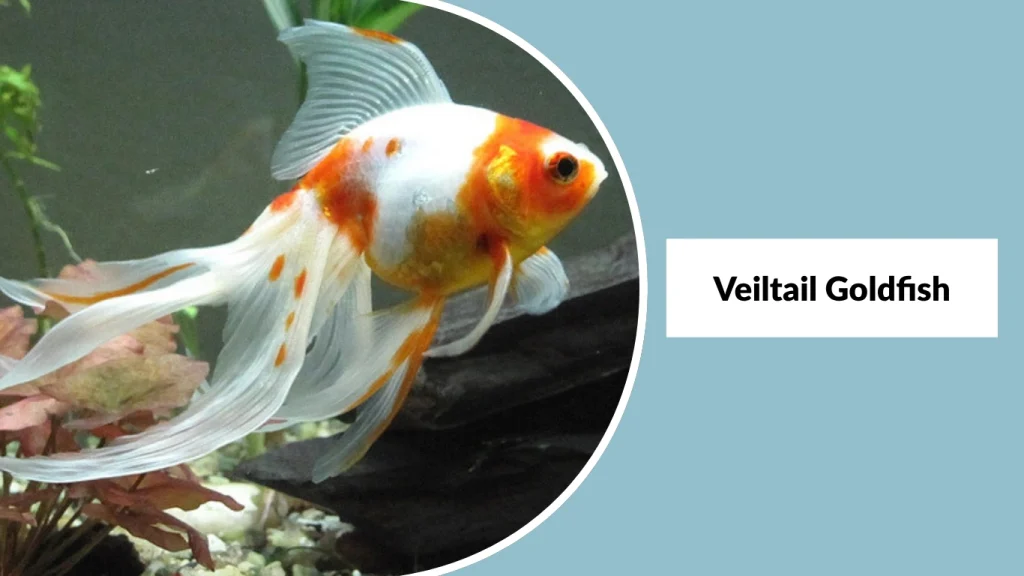
Veiltail Goldfish are among the most elegant and graceful varieties, known for their dramatically long and flowing fins. They are admired in aquariums but are more delicate than hardier goldfish types.
Identification
- Extremely long, flowing double tail
- Deep, rounded body
- Dorsal fin is tall and upright
- Available in metallic and nacreous colors
- Usually grows up to 6–7 inches
- Fins are longer and softer than those of the Fantail
Behavior and Care
Veiltails are slow swimmers and should be kept with other gentle, fancy varieties. Their long fins make them vulnerable to fin nipping and damage, so tank mates must be chosen carefully.
Diet
Offer sinking pellets, gel foods, and vegetables like blanched zucchini. Avoid sharp food or hard pellets that may cause digestive issues.
Habitat
They require tanks of at least 20 gallons with minimal water current and soft, rounded decorations. Due to their fragility, pristine water quality and gentle filtration are critical. Avoid keeping them in outdoor ponds.
7. Oranda Goldfish

Oranda Goldfish are one of the most popular fancy varieties, instantly recognized by the fleshy hood (wen) that develops on their head. This distinctive growth gives them a lion-like appearance and adds to their visual appeal.
Identification
- Prominent raspberry-like head growth (wen)
- Rounded, deep body
- Double tail, often long and flowing
- Colors include red, orange, white, blue, black, chocolate, and calico
- Can grow up to 8–10 inches in aquariums
- Dorsal fin present, unlike Lionheads
Behavior and Care
Orandas are peaceful, calm fish that prefer slower environments. They do best in tanks with similarly gentle fancy goldfish. The wen can obscure vision, so avoid housing them with faster or more aggressive tank mates.
Diet
Feed sinking pellets or gel foods to avoid gulping air. Supplement with peas and soft vegetables for digestive health. Avoid overfeeding to prevent buoyancy and wen-related infections.
Habitat
Orandas require at least 30 gallons per fish due to their size and waste output. Smooth decorations and gentle water flow are essential to protect their sensitive wen. Stable temperatures and pristine water quality help avoid wen infections.
8. Lionhead Goldfish

The Lionhead Goldfish is a true fancy variety bred to have no dorsal fin and a large, fleshy head growth (wen). Its appearance resembles a mythical Chinese lion, which is where it gets its name. This breed is favored for its unique profile and slow, graceful movements.
Identification
- Large head growth covering the entire head, cheeks, and gill plates
- Completely lacks a dorsal fin (flat back)
- Short, rounded, egg-shaped body
- Double tail, usually short and rounded
- Found in red, orange, white, chocolate, calico, and bi-colors
- Typically grows up to 5–6 inches
Behavior and Care
Lionheads are very slow swimmers due to their body shape and lack of a dorsal fin. They are gentle and do best when housed with similar slow-moving goldfish. Their wen can limit vision, affecting how they find food.
Diet
Sinking food like pellets, soft gel-based foods, and blanched vegetables are best. Avoid floating foods to reduce the risk of swim bladder problems. Overfeeding can cause wen overgrowth and related infections.
Habitat
Best kept in a low-flow tank with smooth surfaces to avoid damage to the wen. A minimum of 20 gallons per fish is recommended. Good filtration is needed, but water movement should be gentle. Regular water changes and monitoring are essential for keeping the head growth healthy.
9. Ranchu Goldfish

Ranchu Goldfish are a prized Japanese variety often called the “king of goldfish.” They are similar to Lionheads but have a more arched back and tucked-in tail, creating a rounded, compact shape. Ranchus are highly valued in goldfish shows for their symmetry and refined appearance.
Identification
- No dorsal fin (smooth, arched back)
- Large head growth (wen) covering the head and face
- Deep, egg-shaped body with a prominent curve from head to tail
- Double tail, rounded and tucked downward
- Found in red, white, black, chocolate, calico, and bi-color
- Typically reaches 5–8 inches in length
Behavior and Care
Ranchus are gentle and slow due to their unique shape. They should be kept with other slow-moving fancy goldfish to avoid competition. Their delicate wen and compact body make them sensitive to poor water quality and rough tank conditions.
Diet
Sinking pellets, gel foods, and blanched vegetables are ideal. Feed small portions 2–3 times daily to avoid swim bladder problems. Ranchus also benefit from high-quality protein sources like bloodworms and daphnia in moderation.
Habitat
Requires a tank of at least 20–30 gallons per fish, with minimal water current and smooth decorations. Avoid sharp or rough surfaces that can injure their wen. Consistent water quality and temperature are critical for their well-being.
10. Pearlscale Goldfish
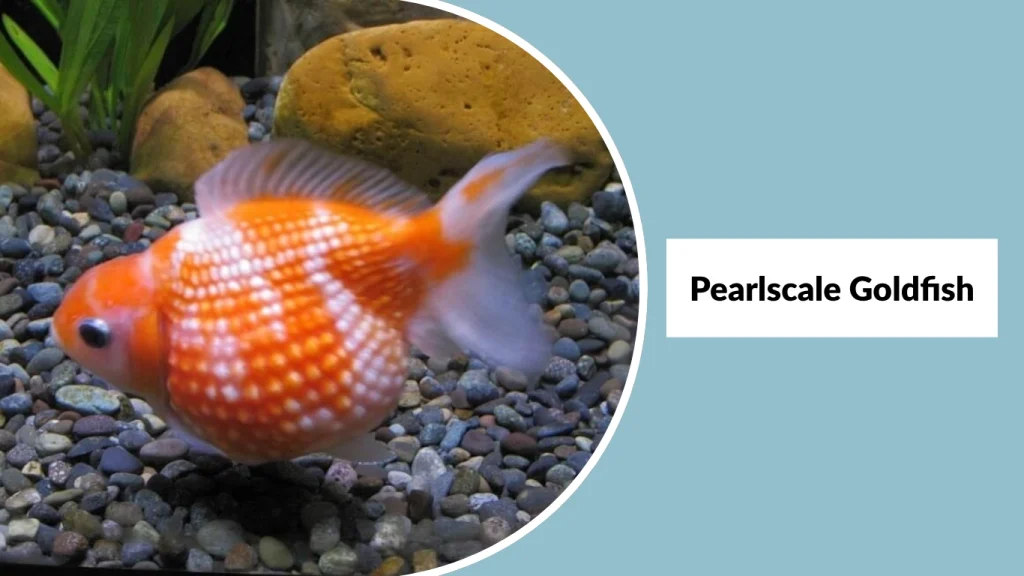
Pearlscale Goldfish are a uniquely textured fancy variety known for their round, golf ball-like bodies and raised, bead-like scales. Their unusual appearance makes them a favorite among collectors, but they are more delicate than hardier goldfish types.
Identification
- Extremely round, globe-shaped body
- Thick, raised scales with a pearl-like appearance
- Double tail, short and rounded
- Dorsal fin present
- Available in red, white, calico, blue, chocolate, and bi-color
- Grows up to 6–8 inches in ideal conditions
Behavior and Care
Pearlscales are slow swimmers and very gentle in nature. Their rounded bodies make them more prone to buoyancy issues and physical injury. They do best in tanks with other peaceful fancy varieties and no sharp décor.
Diet
Feed sinking pellets or gel foods to avoid air ingestion. Supplement with soft veggies like shelled peas or spinach. Avoid high-fat or floating foods to reduce the risk of swim bladder problems.
Habitat
They require a tank of at least 20 gallons per fish, with low flow and rounded tank decorations. Due to their body shape and sensitive scales, they need pristine water conditions and gentle care. Avoid sudden temperature swings and handle them with extreme care.
11. Bubble Eye Goldfish
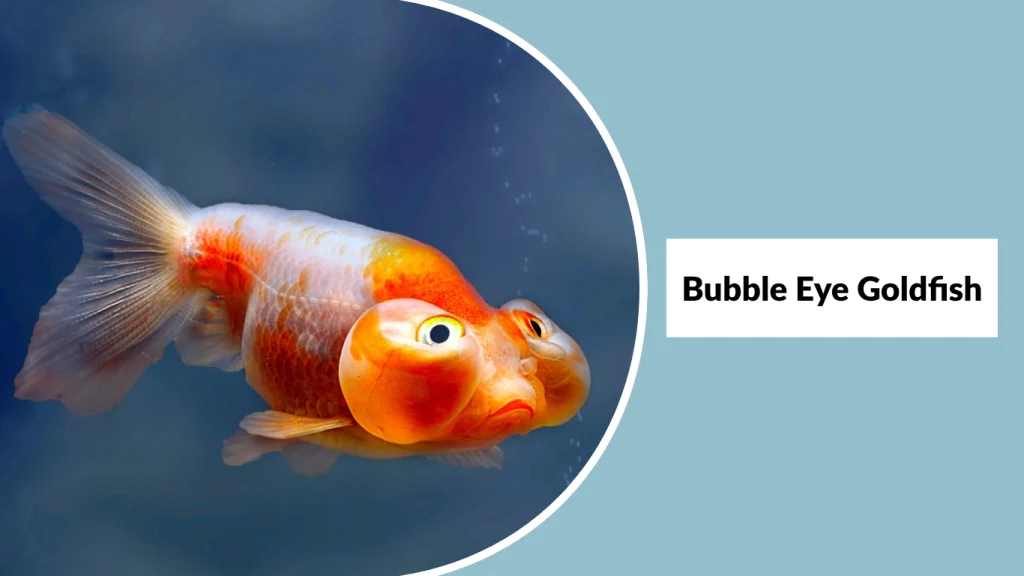
The Bubble Eye Goldfish is one of the most unique and delicate fancy goldfish breeds. It’s easily recognized by the large, fluid-filled sacs (bubbles) under its eyes. These sacs are extremely fragile and can rupture with rough handling or sharp tank decorations.
Identification
- Large, transparent fluid-filled sacs beneath each eye
- No dorsal fin (smooth back)
- Egg-shaped body
- Double tail, short and rounded
- Colors include red, white, orange, calico, and bi-color
- Typically grows to 4–6 inches
Behavior and Care
Bubble Eye Goldfish are extremely slow and poor swimmers. Their vision is partially obstructed by the eye sacs, making it difficult for them to compete for food. They should only be kept with equally slow and gentle tank mates.
Diet
Offer sinking pellets, gel foods, and soft vegetables like blanched spinach or shelled peas. Feed small, frequent meals to reduce competition and avoid overfeeding, which can lead to floating issues.
Habitat
Must be kept in a calm tank with soft, smooth decorations to avoid injuring their delicate bubbles. A minimum of 20 gallons is recommended per fish. Water flow should be minimal, and water parameters should be stable to prevent infections or damage to the eye sacs.
12. Telescope Goldfish
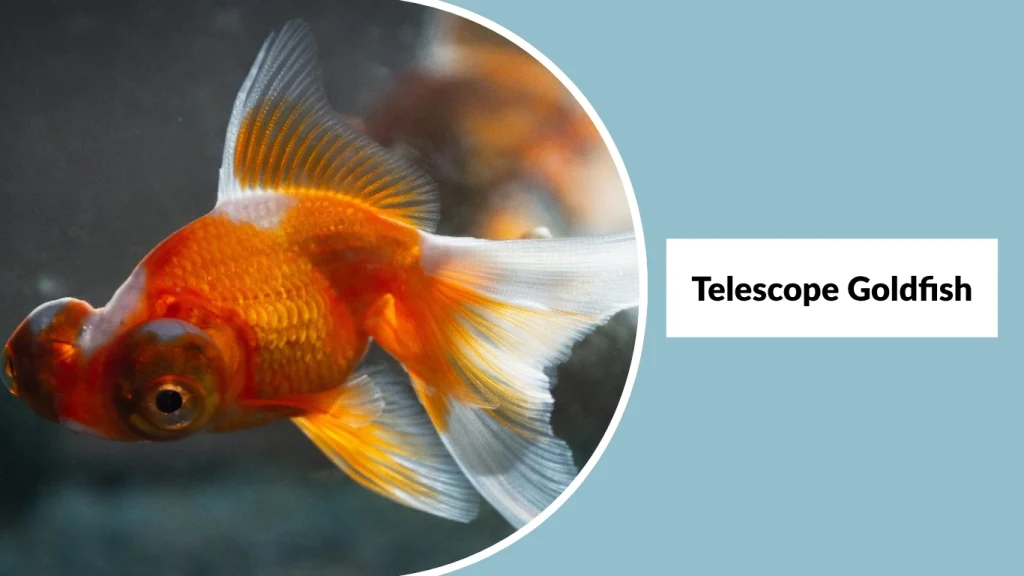
Telescope Goldfish are known for their large, protruding eyes that extend outward from the sides of the head. This distinctive feature gives them a dramatic look, but also makes them vulnerable to injury and vision problems. They are one of the more iconic fancy goldfish varieties.
Identification
- Bulging, telescope-like eyes
- Rounded, egg-shaped body
- Double tail that may be short or flowing
- Dorsal fin present and upright
- Colors include red, black, white, calico, chocolate, and panda (black and white)
- Typically reaches 6–8 inches in length
Behavior and Care
Due to their limited vision, Telescope Goldfish are slow and should not be housed with faster or aggressive goldfish. They are peaceful and social, preferring calm environments and compatible tank mates.
Diet
Feed with sinking pellets and soft vegetables like peas or zucchini slices. They benefit from frequent, small meals since their poor eyesight makes it harder to find food.
Habitat
Best kept in tanks of at least 20–30 gallons with soft décor and low water flow. Avoid sharp or rough surfaces to protect their protruding eyes. Consistent water quality and temperature help prevent infections and injuries.
13. Black Moor Goldfish
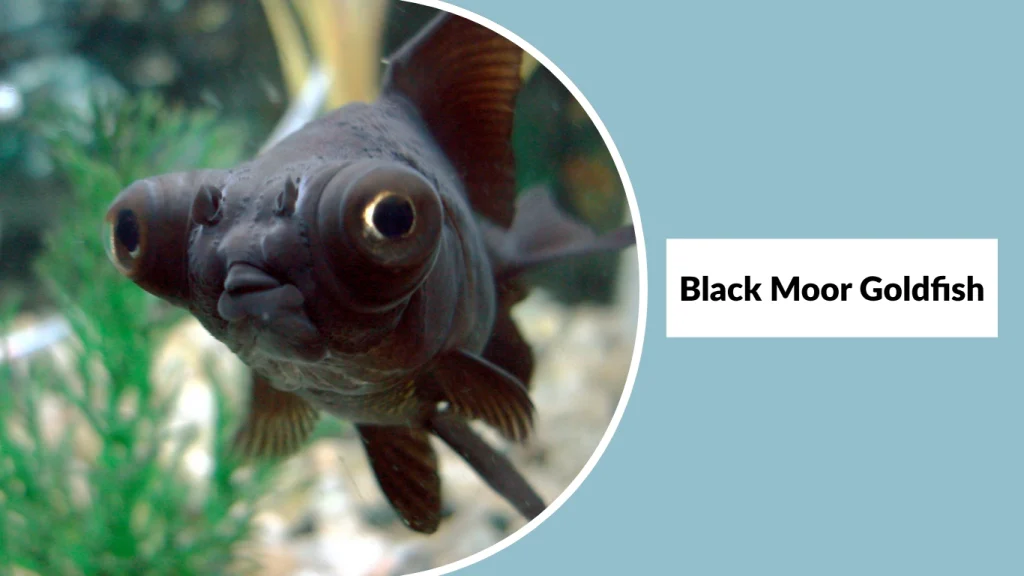
The Black Moor Goldfish is a variant of the Telescope Goldfish, distinguished by its velvety black coloration and protruding eyes. It’s one of the most popular fancy types due to its striking look and peaceful temperament.
Identification
- Protruding telescope eyes
- Deep, rounded body
- Velvety matte black coloration
- Double tail, typically broad and flowing
- Upright dorsal fin
- Grows up to 6–8 inches
Behavior and Care
Black Moors are gentle and slow-moving due to their poor eyesight. They should be housed with other calm fancy goldfish to avoid competition or bullying. Their dark color may fade with age or under stress.
Diet
Feed sinking goldfish pellets, soft greens like spinach, and occasional protein-rich treats such as brine shrimp. Ensure food is easy to locate due to their limited vision.
Habitat
Requires a tank of at least 20–30 gallons per fish with gentle flow and soft furnishings. Avoid sharp objects to prevent eye injury. Provide stable, clean water and cooler temperatures (65–75°F) to maintain color and health.
14. Celestial Eye Goldfish

Celestial Eye Goldfish are among the rarest and most delicate varieties, known for their distinctive, upward-facing eyes. These eyes give the fish a “stargazing” look, but also leave them nearly blind and very vulnerable.
Identification
- Protruding, upward-turned eyes
- No dorsal fin (smooth back)
- Egg-shaped body
- Double tail, typically short and rounded
- Colors include red, orange, white, and calico
- Grows to 5–6 inches
Behavior and Care
Due to their unique eye structure, Celestial Eyes are very slow and easily stressed. They require calm tank mates and a quiet environment. Their poor vision affects their feeding ability and spatial awareness.
Diet
Use sinking food or soft gel-based diets that are easy to find. Feed small amounts several times a day to ensure they receive enough nutrition without overfeeding.
Habitat
Best suited for a peaceful tank with minimal decorations and no sharp edges. A minimum 20-gallon tank is ideal for one fish. Gentle filtration and excellent water quality are essential to protect their sensitive eyes.
15. Panda Telescope Goldfish
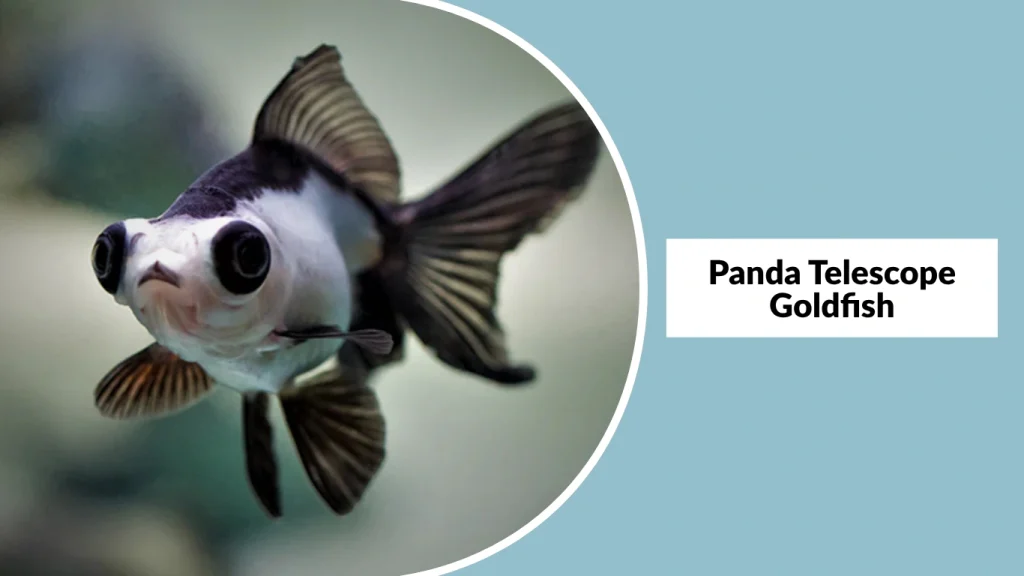
Panda Telescope Goldfish are a striking variant of the Telescope breed, recognized for their contrasting black and white coloration that resembles a panda. Like other telescope varieties, they have prominent protruding eyes and require gentle care due to their delicate features.
Identification
- Bulging, telescope-style eyes
- Distinct black and white (panda-like) coloration
- Rounded, egg-shaped body
- Upright dorsal fin and double tail
- Color pattern can shift or fade with age
- Grows up to 6–8 inches
Behavior and Care
Panda Telescopes are peaceful but poor swimmers due to their eyes and rounded shape. They thrive with other slow, fancy goldfish. Their black and white contrast is beautiful but sensitive to water quality and stress.
Diet
They eat sinking pellets, blanched vegetables, and occasional live or freeze-dried treats. Feed small portions 2–3 times daily and monitor to ensure they locate food properly.
Habitat
They require at least a 20-gallon tank with smooth décor and gentle filtration. Avoid housing with fast swimmers to prevent injury or feeding difficulties. Stable water parameters and low lighting help maintain their coloration.
16. Tosakin Goldfish
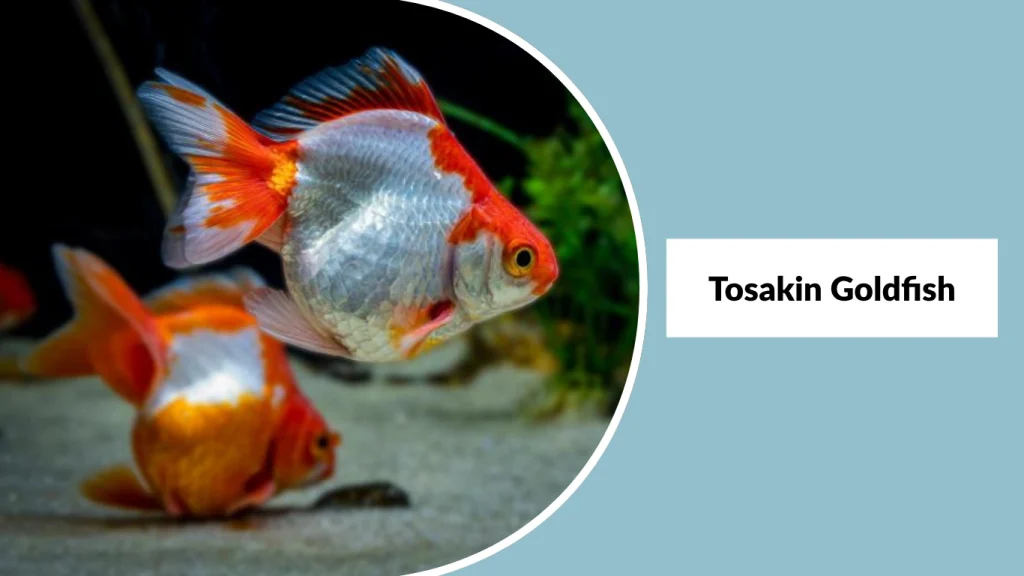
Tosakin Goldfish are a rare and elegant Japanese breed known for their unique tail that spreads out horizontally like an open fan. This ornamental variety is cherished by collectors for its beauty and graceful movement in still water.
Identification
- Deep, rounded body
- Large, flowing tail that spreads sideways in a circular shape
- Dorsal fin present
- Tail curves inward, creating a full, rounded display
- Colors include red, white, red-and-white, and orange
- Typically grows up to 6–8 inches
Behavior and Care
Tosakins are extremely delicate swimmers and prefer very calm waters. They are gentle and slow, often best kept in shallow tanks with minimal current. Their broad tails can be damaged easily by strong filters or rough tankmates.
Diet
Use soft, sinking pellets or gel foods. Blanched greens like lettuce or spinach can also be offered. Feed small, frequent meals to support healthy digestion without causing float issues.
Habitat
Requires a shallow, wide tank (20 gallons or more) to allow the tail to display fully. Gentle filtration is essential, and tank decorations should be soft and smooth. Due to their rarity and fragility, Tosakins are best cared for by experienced goldfish keepers.
17. Butterfly Tail Goldfish

Butterfly Tail Goldfish are admired for their symmetrical, butterfly-shaped caudal fins when viewed from above. This fancy variety is often showcased in top-view aquariums to highlight its stunning tail spread. They are available in several subtypes, including Butterfly Telescope and Butterfly Demekin.
Identification
- Wide, flat double tail that resembles butterfly wings
- Rounded or egg-shaped body
- Often paired with telescope eyes, but also found with standard eyes
- Dorsal fin present
- Found in red, white, black, calico, panda, and chocolate varieties
- Typically grows up to 6–8 inches
Behavior and Care
Butterfly Tails are gentle and somewhat slow swimmers. Their fins are delicate, so they do best with other slow-moving, non-aggressive goldfish. Their beauty is best appreciated from a top-down view in shallow tanks or bowls.
Diet
Sinking pellets, gel-based foods, and blanched vegetables work best. Their rounded body shape makes them prone to swim bladder issues, so avoid overfeeding or floating foods.
Habitat
They require a minimum of 20–30 gallons per fish in a tank with a wide footprint. Water flow should be minimal to protect their long tails. Use smooth decorations and maintain stable, clean water conditions for optimal health and tail quality.
18. Curled Gill Goldfish
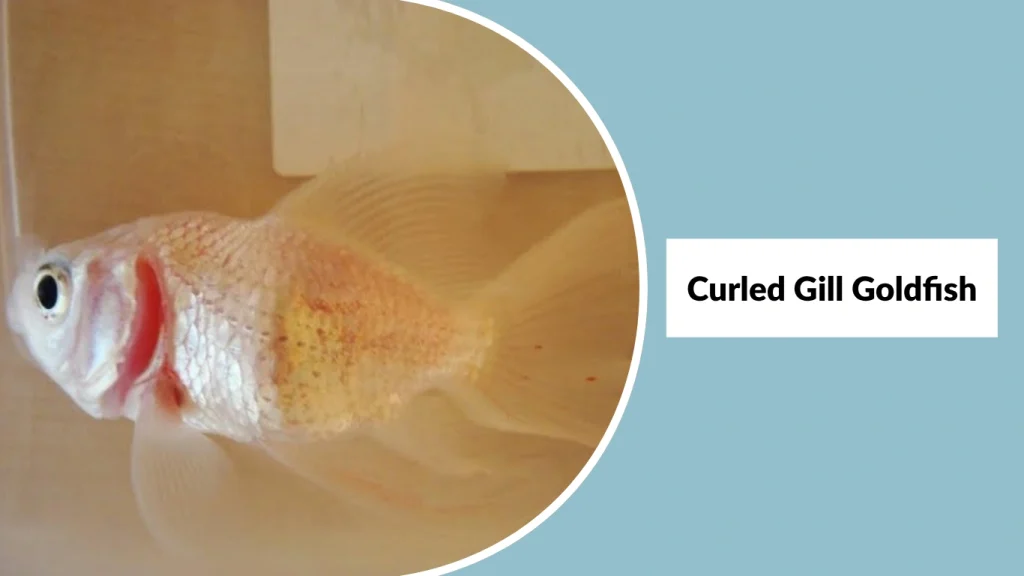
Curled Gill Goldfish, also known as Reversed Gill Goldfish, are a rare and unusual variety characterized by outwardly turned gill covers. This feature gives them a unique appearance, but also makes them more vulnerable to water quality issues and injury.
Identification
- Outward-curled gill covers (exposed gill lining)
- Rounded, egg-shaped body
- Double tail
- Dorsal fin present
- Available in red, white, orange, and calico
- Grows up to 5–7 inches
Behavior and Care
Curled Gill Goldfish are peaceful but more sensitive than other varieties due to their exposed gill tissue. They should be housed with other gentle goldfish and protected from aggressive behavior or excessive water flow.
Diet
Offer a balanced diet of sinking pellets, soft greens, and occasional treats like daphnia or bloodworms. Feed carefully to reduce competition and ensure gentle digestion.
Habitat
Requires a 20–30 gallon tank with calm waters and excellent filtration. Avoid sharp decorations and strong currents to protect their exposed gills. Regular monitoring of ammonia and nitrite levels is essential.
19. Tamasaba Goldfish

Tamasaba Goldfish, often called “Sabao” in Japan, is a hardy single-tailed fancy variety that combines the body of a Ryukin with the strong tail of a mackerel. They are ideal for outdoor ponds and are known for their resilience and beauty.
Identification
- Deep, rounded Ryukin-like body
- Long, single tail (mackerel-shaped)
- Dorsal fin upright
- Color is traditionally red and white, though other colors exist
- Grows up to 8–10 inches
Behavior and Care
Tamasaba Goldfish are active, strong swimmers with a peaceful temperament. They thrive in ponds and large tanks and can tolerate cold temperatures, making them excellent for year-round outdoor keeping.
Diet
They eat flakes, pellets, vegetables, and occasional protein-rich foods. Their hardy nature allows them to forage effectively in pond environments.
Habitat
Ideal for outdoor ponds or large tanks with at least 30 gallons per fish. They tolerate a range of temperatures and are less prone to disease than more delicate fancy varieties. Regular water changes and strong filtration support their growth and vitality.
20. Izumo Nankin Goldfish
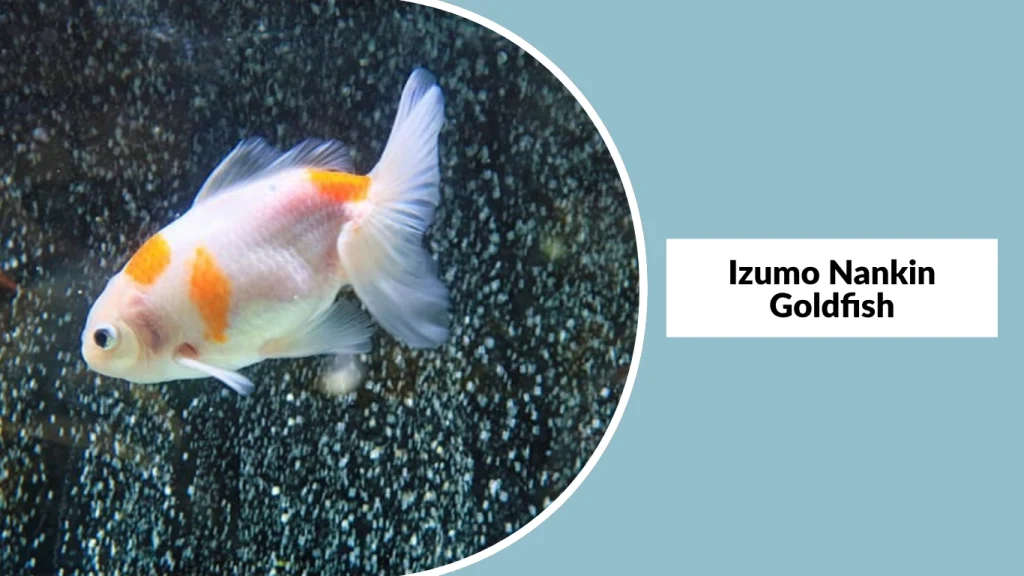
Izumo Nankin Goldfish is a rare and traditional Japanese breed, developed in the 18th century and cherished for its elegant form and smooth dorsal-less profile. This breed is primarily appreciated in top-view aquariums to showcase its symmetry and movement.
Identification
- No dorsal fin (smooth-backed profile)
- Deep, rounded body
- Wide, short double tail, often forming a triangular spread
- Typically red-and-white in coloration
- Eyes are normal (not protruding)
- Grows up to 6–8 inches
Behavior and Care
Izumo Nankin are slow, graceful swimmers and do best with other fancy goldfish of similar size and speed. They are peaceful and social but may struggle in tanks with faster or more aggressive fish.
Diet
Provide sinking pellets or gel foods along with soft vegetables like shelled peas and spinach. Feed smaller meals 2–3 times daily to promote healthy digestion.
Habitat
Best kept in shallow, wide tanks or ponds with a smooth bottom and gentle water flow. Use rounded decorations and maintain excellent water quality. Their smooth backs and delicate tails require a calm, protective environment for optimal health and display.
21. Sakura Goldfish

Sakura Goldfish are not a specific breed but rather a color variant found in several fancy goldfish types. “Sakura” refers to their soft, pastel-like coloration—usually a mix of red, white, and transparent scales that give them a cherry blossom appearance. This coloration is most commonly seen in varieties like Ranchu, Oranda, and Pearlscale.
Identification
- Delicate red, white, and translucent (pinkish) scales
- Typically found in Ranchu, Pearlscale, or Oranda body types
- Double tail
- Dorsal fin may be present or absent depending on the variety
- Size varies by type (commonly 5–8 inches)
Behavior and Care
Sakura Goldfish are similar in behavior to their respective breed (e.g., Sakura Ranchu behaves like a Ranchu). They are peaceful, slow-moving, and should be housed with similar fancy goldfish to avoid stress or food competition.
Diet
Feed sinking pellets or gel food, supplemented with soft greens and occasional treats like bloodworms. They are sensitive to overfeeding due to their rounded shape.
Habitat
Tank size and care depend on the breed they belong to, but in general, 20–30 gallons per fish is recommended. Maintain gentle water flow, smooth tank décor, and excellent water conditions to preserve their delicate scale coloration. Avoid strong lighting, which may fade their soft tones.
22. Jikin Goldfish

Jikin Goldfish, also known as the “Peacock Tail” goldfish, is a rare and elegant Japanese variety distinguished by its unique tail formation and striking red-and-white coloration. It is considered a national treasure in Japan and is prized in top-view displays.
Identification
- Deep, slender body with a flat back
- Unique “X-shaped” or “peacock” tail when viewed from above
- Dorsal fin present
- Pure white body with red markings, especially on fins, lips, and gill covers
- Red coloration restricted to 12 specific points in show-grade specimens
- Grows up to 8–10 inches
Behavior and Care
Jikin Goldfish are peaceful but need calm tank mates due to their tail shape, which can be delicate. They are active swimmers and do well in larger tanks or ponds with enough horizontal space to show their tail structure.
Diet
A balanced diet of sinking goldfish pellets, gel food, and soft vegetables like spinach or peas is ideal. Occasional treats such as daphnia or bloodworms can be offered.
Habitat
Best housed in a wide tank or shallow pond with minimal current to preserve the tail’s shape. A minimum of 30 gallons is recommended. Clean water and stable parameters are critical for maintaining their coloration and health. Avoid sharp objects that can damage the tail.
23. Watonai Goldfish
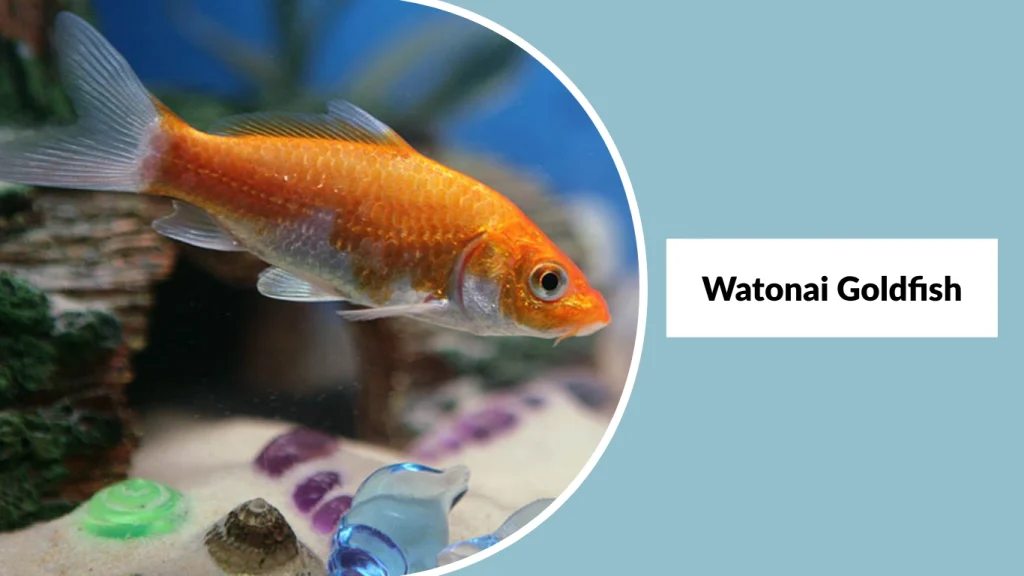
The Watonai Goldfish is a rare and traditional Japanese variety created by crossing the Wakin and Ryukin goldfish. It combines the hardiness and single-tail strength of the Wakin with the double tail and elegance of the Ryukin, resulting in a long-bodied goldfish with a flowing double tail.
Identification
- Long, streamlined body similar to a Wakin
- Flowing, double tail (like a Ryukin but more elongated)
- Dorsal fin upright and prominent
- Colors typically red, white, or red-and-white
- Grows up to 10–12 inches, often larger in ponds
Behavior and Care
Watonai are strong swimmers and do well in both aquariums and ponds. They are peaceful, hardy, and more active than many other fancy varieties, making them an excellent choice for outdoor environments.
Diet
Feed them a mix of sinking pellets, floating flakes, and blanched vegetables like peas or lettuce. They also enjoy occasional live or frozen protein sources like bloodworms.
Habitat
Ideal for ponds or large tanks (30+ gallons per fish). They tolerate colder temperatures and can overwinter outdoors in temperate climates. Strong filtration and ample swimming space are important due to their size and activity level. Their long fins require a smooth, open environment to avoid tearing.
24. Meteor Goldfish
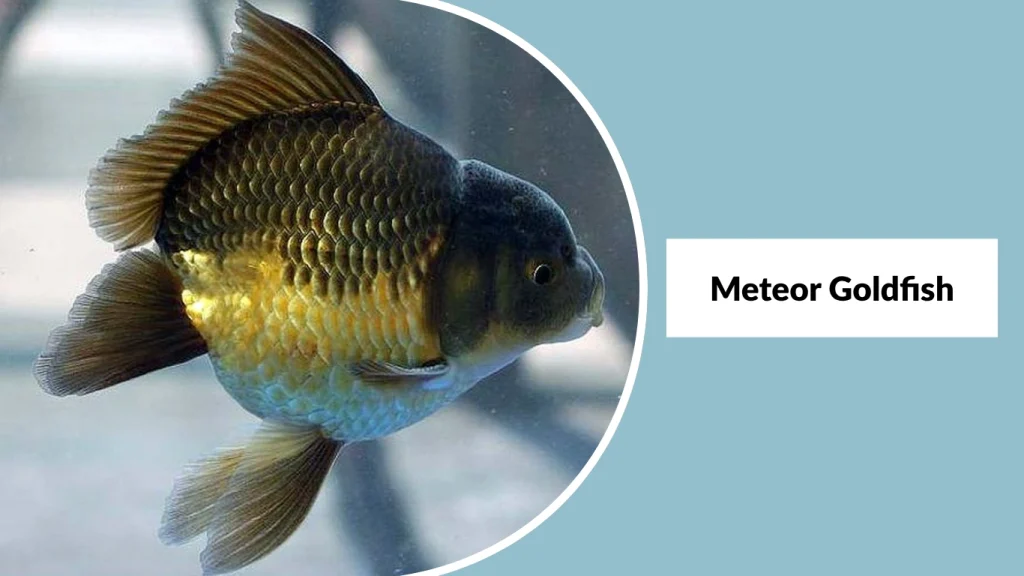
Meteor Goldfish are an extremely rare and unusual variety best known for lacking a caudal (tail) fin entirely. This tailless trait gives them a unique, stubby appearance and alters their swimming behavior, making them a true curiosity among goldfish enthusiasts.
Identification
- No caudal (tail) fin
- Rounded, compact body
- Dorsal fin may or may not be present
- Colors typically include red, orange, white, and calico
- May resemble a tailless Fantail or Ryukin
- Grows up to 4–6 inches
Behavior and Care
Due to their lack of a tail, Meteor Goldfish are very poor swimmers and must be kept in tanks without strong current. They are peaceful but slow-moving and should only be housed with other gentle goldfish varieties.
Diet
Provide sinking or gel-based foods to prevent gulping air. Feed small, frequent meals with soft veggies like peas and spinach to aid digestion. Due to their awkward swimming, monitor feeding to ensure they get enough nutrition.
Habitat
They require a very calm environment in a 20+ gallon tank. Avoid strong filters and any sharp décor. Their limited mobility makes them vulnerable, so pristine water and gentle tank mates are essential for their health and safety.
25. Eggfish Goldfish
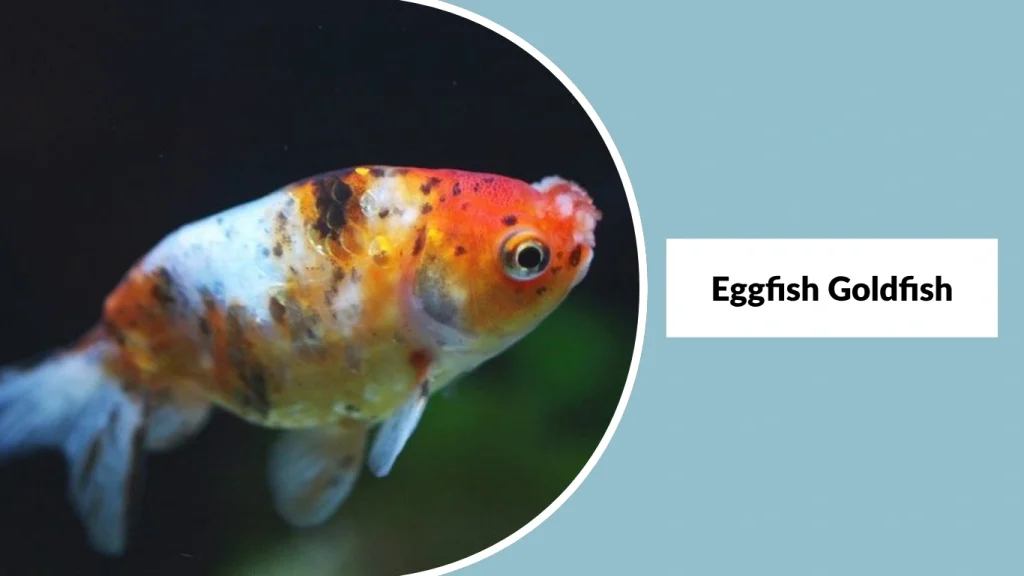
The Eggfish Goldfish is a traditional Chinese variety that served as the foundation for many other fancy breeds like Ranchu and Lionhead. It is named for its smooth, egg-like body and simple, elegant appearance. Unlike its descendants, the Eggfish lacks both a dorsal fin and head growth.
Identification
- Smooth, egg-shaped body
- No dorsal fin (flat-backed profile)
- No wen or head growth
- Double tail, typically short and rounded
- Colors include red, orange, white, and calico
- Grows up to 5–6 inches
Behavior and Care
Eggfish are peaceful and slow swimmers. Their lack of a dorsal fin makes them less stable in the water, so they are best kept with similar fancy goldfish. They are hardy compared to other dorsal-less varieties due to their simpler build.
Diet
A balanced diet of sinking pellets, soft greens, and occasional treats such as bloodworms or brine shrimp is suitable. Feed in small portions 2–3 times daily to reduce bloating and buoyancy issues.
Habitat
Ideal in a calm tank of at least 20 gallons per fish, with soft decorations and minimal water movement. They thrive in clean, stable water with temperatures between 68–74°F. Due to their gentle nature, avoid housing them with faster or nippy species.
26. Nymph Goldfish
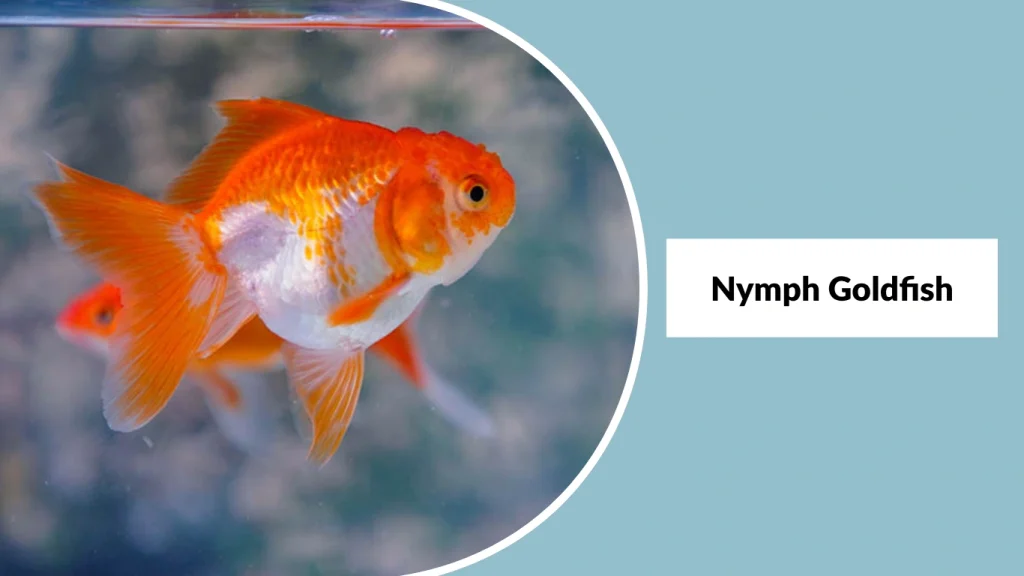
Nymph Goldfish are an uncommon and intermediate variety, often described as a cross between single-tail and fancy goldfish. They typically have the body shape of a fancy goldfish like a Fantail, but with a single, straight tail instead of a double one. Their simple elegance and hardiness make them great for both tanks and ponds.
Identification
- Egg-shaped or rounded body
- Single, straight caudal (tail) fin
- Dorsal fin present
- Colors include red, orange, white, calico, and bronze
- No head growth or eye modifications
- Grows up to 6–8 inches
Behavior and Care
Nymph Goldfish are energetic yet calm, combining the swimming power of single-tailed goldfish with the appearance of fancier types. They are social and adaptable, doing well in a variety of settings including outdoor ponds.
Diet
They thrive on standard goldfish pellets or flakes, supplemented with soft vegetables like spinach or zucchini, and occasional protein-based treats such as brine shrimp or daphnia.
Habitat
Nymphs are versatile and can be housed in tanks of at least 20 gallons or outdoor ponds. They are hardy in a wide range of temperatures and tolerate cooler water well. Clean water and stable conditions help maintain their health and coloration.
27. Froghead Goldfish

Froghead Goldfish, also called Hama-tou in some regions, are one of the rarest and most unusual goldfish varieties. They are named for their distinctive head shape, which resembles that of a frog due to the bulging, fluid-filled tissues around the face. This variety is seldom seen in the commercial pet trade and is typically kept by collectors.
Identification
- Bulbous, frog-like head structure
- Rounded or slightly elongated body
- Double tail (short or moderately flowing)
- Dorsal fin may or may not be present, depending on strain
- Colors often include red, orange, white, and calico
- Grows up to 5–7 inches
Behavior and Care
Froghead Goldfish are gentle and slow swimmers. The fleshy head features make them more vulnerable to injury and infection, similar to Bubble Eye and Oranda types. They require a calm environment and compatible, peaceful tank mates.
Diet
Feed soft, sinking pellets or gel foods, supplemented with blanched vegetables like peas and spinach. Their feeding habits are slow, so ensure they are not outcompeted during mealtime.
Habitat
They need a smooth, low-flow tank of at least 20 gallons. Decorations should be rounded and soft to prevent facial injuries. Stable water quality and moderate lighting are essential to avoid stress and infection around the sensitive head area. Froghead Goldfish are best suited for experienced goldfish keepers due to their rarity and care needs.