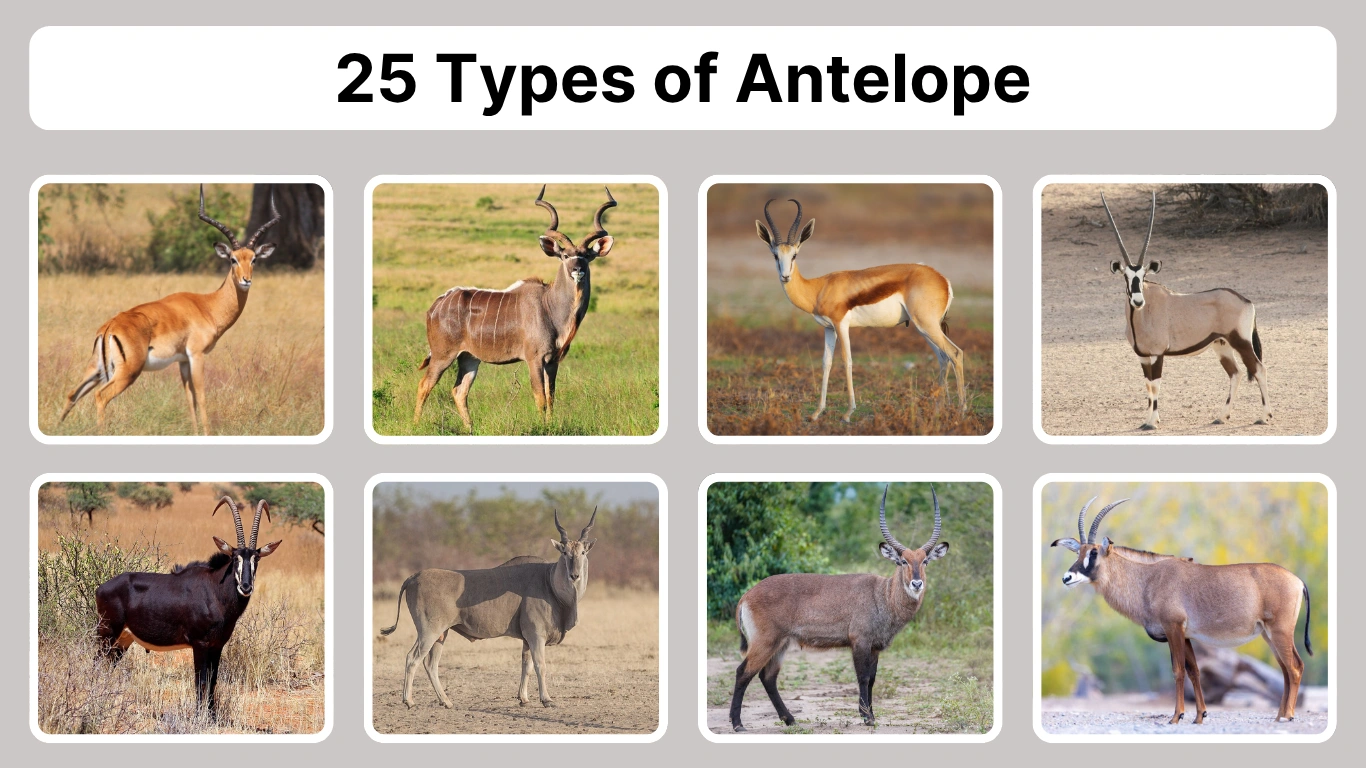
Antelopes are a diverse group of herbivorous mammals known for their grace, speed, and striking horns. Found primarily across Africa and parts of Asia, these animals inhabit a wide range of environments—from open savannas and grasslands to dense forests and mountainous regions. With over 90 species in total, antelopes vary greatly in size, appearance, and behavior.
This guide explores 25 notable types of antelope, highlighting their unique physical characteristics, natural habitats, diets, and behaviors. Whether it’s the swift Springbok of southern Africa or the rare and unusual Four-horned Antelope of India, each species plays a vital role in its ecosystem and offers fascinating adaptations for survival in the wild.
1. Impala (Aepyceros melampus)

The Impala is a medium-sized antelope known for its agility, speed, and graceful leaps. It is one of the most common and widespread antelope species in Africa.
Identification
- Length: 53–59 inches (135–150 cm)
- Weight: 88–165 pounds (40–75 kg)
- Color: Reddish-brown coat with lighter underparts and distinctive black markings on the tail and ears
- Horns: Males have lyre-shaped, ridged horns up to 36 inches long; females are hornless
Habitat and Range
Found throughout eastern and southern Africa, inhabiting savannas, woodlands, and grasslands near water sources.
Diet and Feeding Habits
Impala are mixed feeders, grazing on grasses and browsing on shrubs and herbs. Their diet varies seasonally based on availability.
Behavior and Traits
Highly social, living in herds ranging from a few individuals to hundreds. Males establish territories during the breeding season and compete for females. Known for impressive leaps—up to 10 feet high and 30 feet long—to evade predators.
2. Kudu (Tragelaphus strepsiceros)
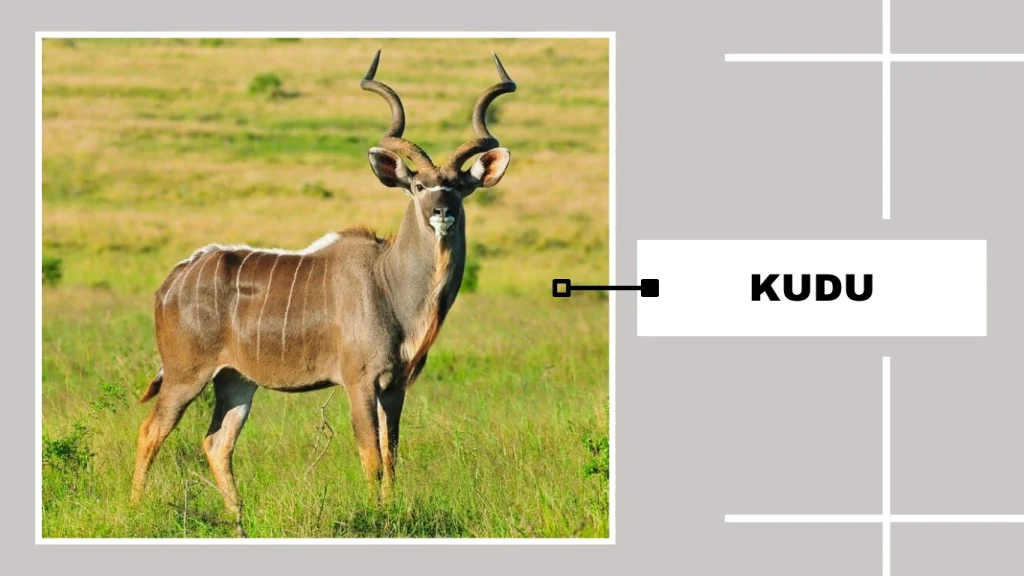
The Kudu is a large African antelope known for its impressive spiral horns and striking body markings, making it one of the most majestic antelopes on the continent.
Identification
- Length: 55–79 inches (140–200 cm)
- Weight: 440–600 pounds (200–275 kg)
- Color: Reddish-brown to grayish coat with 6–10 vertical white stripes along the torso
- Horns: Males have long, spiraled horns up to 72 inches; females usually hornless
Habitat and Range
Widespread across eastern and southern Africa, favoring woodlands, savannas, and dense bush areas.
Diet and Feeding Habits
Browsers that feed primarily on leaves, shoots, and grasses. Their diet adapts with seasonal availability.
Behavior and Traits
Generally shy and elusive, kudu tend to be solitary or form small groups. Males use their impressive horns during fights for dominance. Known for excellent camouflage in thick vegetation.
3. Springbok (Antidorcas marsupialis)
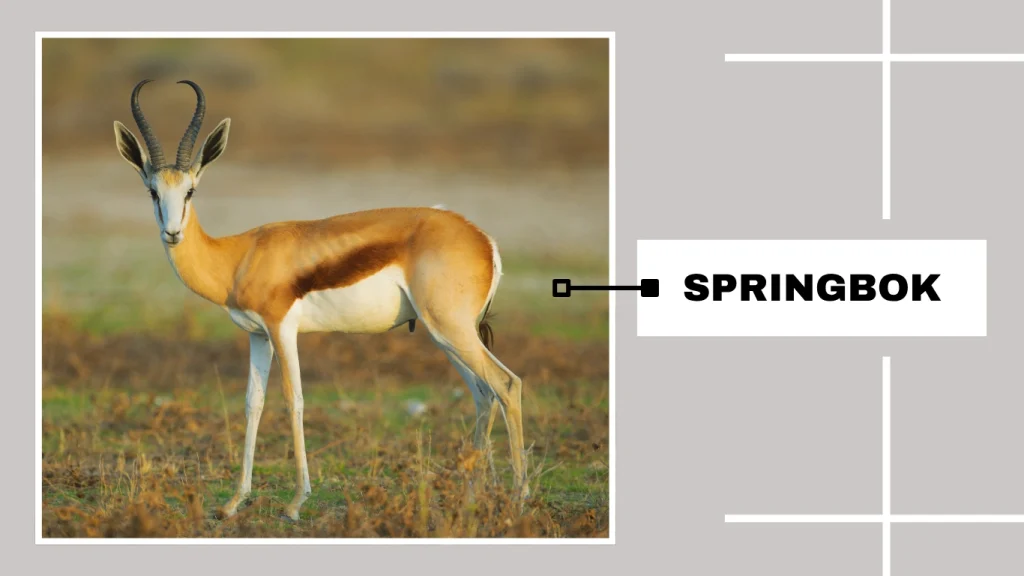
The Springbok is a small, graceful antelope famous for its distinctive coloring and remarkable leaping behavior known as “pronking.”
Identification
- Length: 39–45 inches (100–115 cm)
- Weight: 77–110 pounds (35–50 kg)
- Color: Light brown upper body with white underparts and a dark brown stripe running along the sides
- Horns: Both males and females have slender, curved horns about 12–20 inches long
Habitat and Range
Native to southern Africa, especially Namibia, Botswana, South Africa, and Angola. Prefers dry savannas, grasslands, and semi-desert regions.
Diet and Feeding Habits
Mixed feeders—primarily grazers but also browse when necessary. They can survive without drinking water for long periods by obtaining moisture from plants.
Behavior and Traits
Known for their energetic leaps (pronking), springboks often jump high and stiff-legged to display fitness and evade predators. They live in herds that vary in size and exhibit complex social structures.
4. Gemsbok (Oryx) (Oryx gazella)
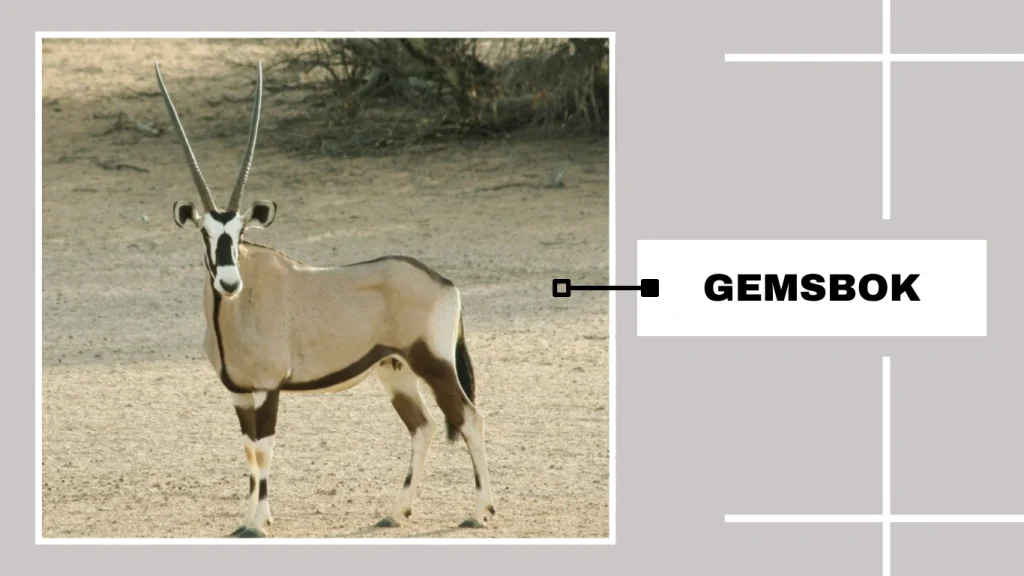
The Gemsbok is a large and striking antelope known for its long, straight horns and distinctive facial markings, often associated with arid and semi-arid regions.
Identification
- Length: 65–75 inches (165–190 cm)
- Weight: 400–600 pounds (180–270 kg)
- Color: Tan to gray body with contrasting black and white facial patterns and black markings on legs and tail
- Horns: Both sexes have long, straight, ringed horns up to 33 inches (85 cm)
Habitat and Range
Native to southern Africa, especially Namibia and Botswana. Adapted to deserts, dry savannas, and scrublands.
Diet and Feeding Habits
Herbivorous browsers and grazers, feeding on grasses, shrubs, and herbs. Can survive long periods without water by metabolizing moisture from plants.
Behavior and Traits
Territorial and often found in small herds. Known for their ability to withstand extreme heat and drought conditions. Their horns are used for defense against predators and during intraspecific conflicts.
5. Sable Antelope (Hippotragus niger)
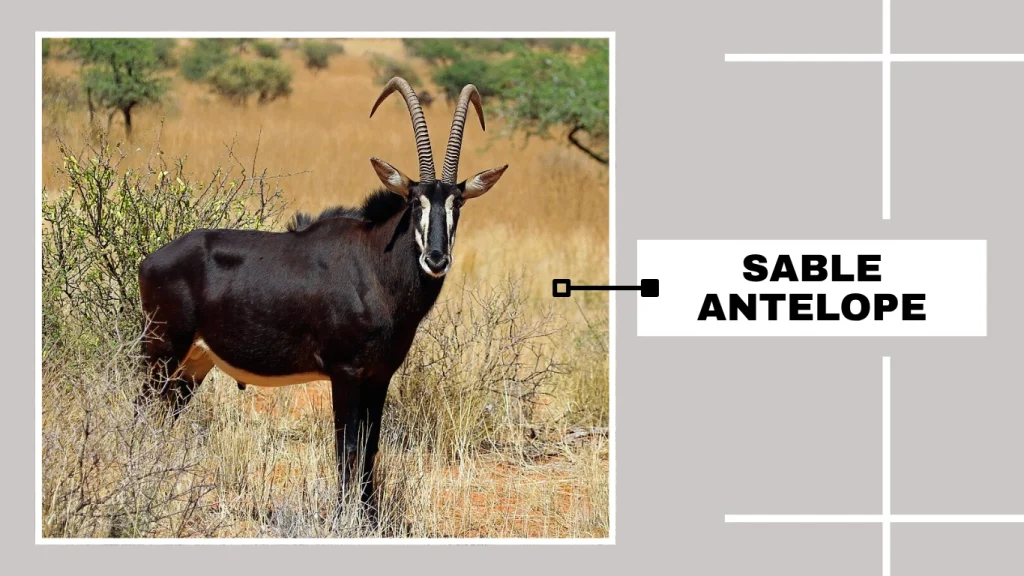
The Sable Antelope is a striking and robust antelope known for its glossy black coat (in males) and impressive curved horns.
Identification
- Length: 64–78 inches (160–200 cm)
- Weight: 330–530 pounds (150–240 kg)
- Color: Males are mostly black with white underparts; females and young are reddish-brown
- Horns: Both sexes have long, curved, ringed horns up to 40 inches (1 meter)
Habitat and Range
Found primarily in southern Africa, in woodlands and savanna grasslands near water sources.
Diet and Feeding Habits
Primarily grazers, feeding on grasses and sometimes browsing during dry seasons.
Behavior and Traits
Sable antelopes live in herds led by dominant males. Males use their long, curved horns in battles for dominance. Known for their agility and ability to defend against predators. Their striking appearance makes them a popular game species.
6. Eland (Taurotragus oryx)
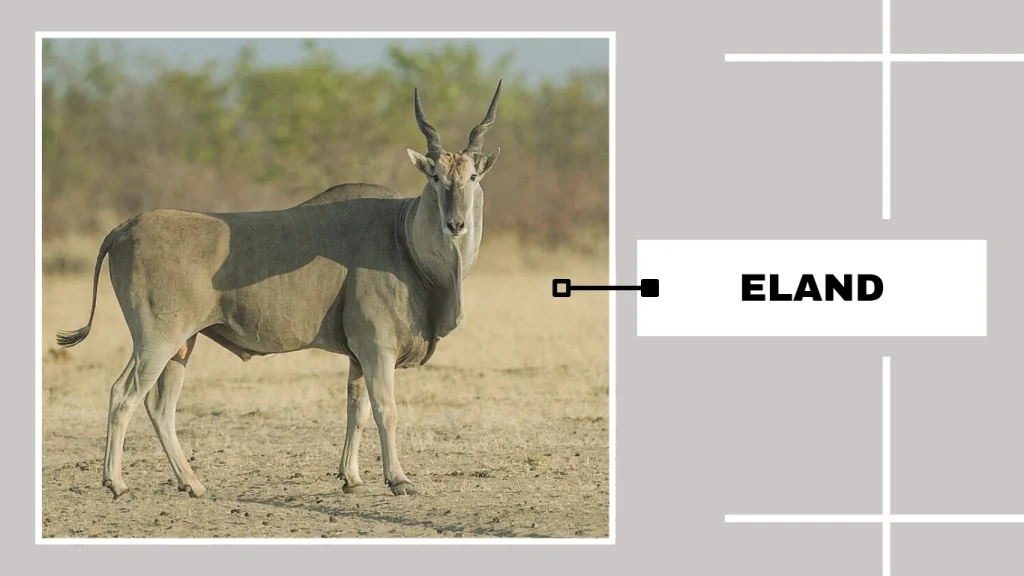
The Eland is the largest species of antelope, recognized for its impressive size, spiral horns, and distinctive dewlap.
Identification
- Length: 80–100 inches (200–250 cm)
- Weight: 880–2,200 pounds (400–1,000 kg)
- Color: Tawny or grayish coat with faint vertical white stripes on the body
- Horns: Both males and females have tightly spiraled horns up to 30 inches (75 cm)
Habitat and Range
Found across much of eastern and southern Africa. Prefers savannas, plains, and lightly wooded areas.
Diet and Feeding Habits
Browsers and grazers feeding on grasses, leaves, and fruits. Can survive long periods without water.
Behavior and Traits
Elands are social, living in herds of varying sizes. Despite their bulk, they are surprisingly agile and capable of leaping great distances. Males have a characteristic dewlap hanging from the neck.
7. Waterbuck (Kobus ellipsiprymnus)

The Waterbuck is a large antelope easily recognized by its shaggy coat and distinctive white ring on its rump.
Identification
- Length: 57–79 inches (145–200 cm)
- Weight: 330–480 pounds (150–220 kg)
- Color: Reddish-brown to grayish coat with a white elliptical ring on the rump
- Horns: Males have long, ridged, curved horns up to 40 inches (1 meter); females usually hornless
Habitat and Range
Common across sub-Saharan Africa near water sources such as rivers, lakes, and wetlands.
Diet and Feeding Habits
Grazers feeding mostly on grasses. Require regular access to water.
Behavior and Traits
Territorial males defend territories near water. Waterbucks are known for their strong scent glands that produce a musky odor. They are wary and tend to stay close to water bodies for safety.
8. Dik-dik (Madoqua spp.)
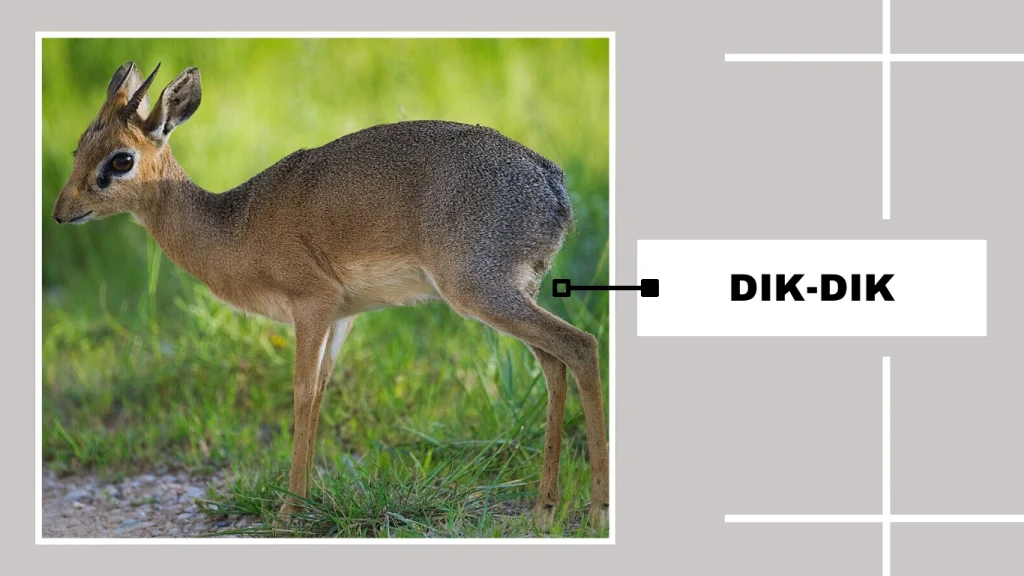
Dik-diks are small antelopes known for their diminutive size, large eyes, and distinctive elongated snouts.
Identification
- Height: 12–16 inches at the shoulder
- Weight: 7–12 pounds
- Color: Reddish-brown to grayish coat, with lighter underparts
- Horns: Males have short, pointed horns; females usually hornless
Habitat and Range
Found in eastern and southern Africa, inhabiting arid bushlands and savannas with dense vegetation for cover.
Diet and Feeding Habits
Browsers feeding mainly on leaves, shoots, fruits, and berries. Get most of their water from food.
Behavior and Traits
Monogamous and territorial. Dik-diks use scent marking to defend territories. Their small size and agility help them evade predators. Known for their alarm calls that warn other animals of danger.
9. Bushbuck (Tragelaphus scriptus)
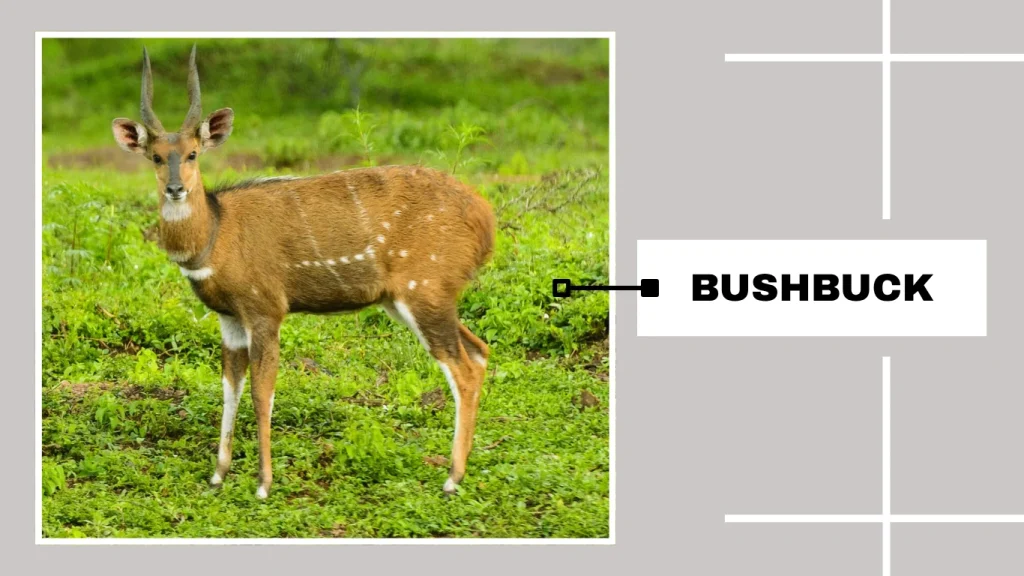
The Bushbuck is a medium-sized, solitary antelope often found in dense forests and thickets across sub-Saharan Africa.
Identification
- Length: 45–59 inches (115–150 cm)
- Weight: 110–210 pounds (50–95 kg)
- Color: Reddish to dark brown coat with white spots and stripes; markings vary among individuals
- Horns: Males have short, spiral horns up to 20 inches (50 cm); females hornless
Habitat and Range
Widely distributed across forests, woodlands, and savanna areas near water sources throughout sub-Saharan Africa.
Diet and Feeding Habits
Browsers feeding on leaves, shoots, fruits, and grasses. Mostly active at dawn and dusk.
Behavior and Traits
Typically solitary and secretive. Males are territorial and may mark boundaries with secretions. Excellent climbers and swimmers, bushbucks are well adapted to dense habitats.
10. Nyala (Tragelaphus angasii)
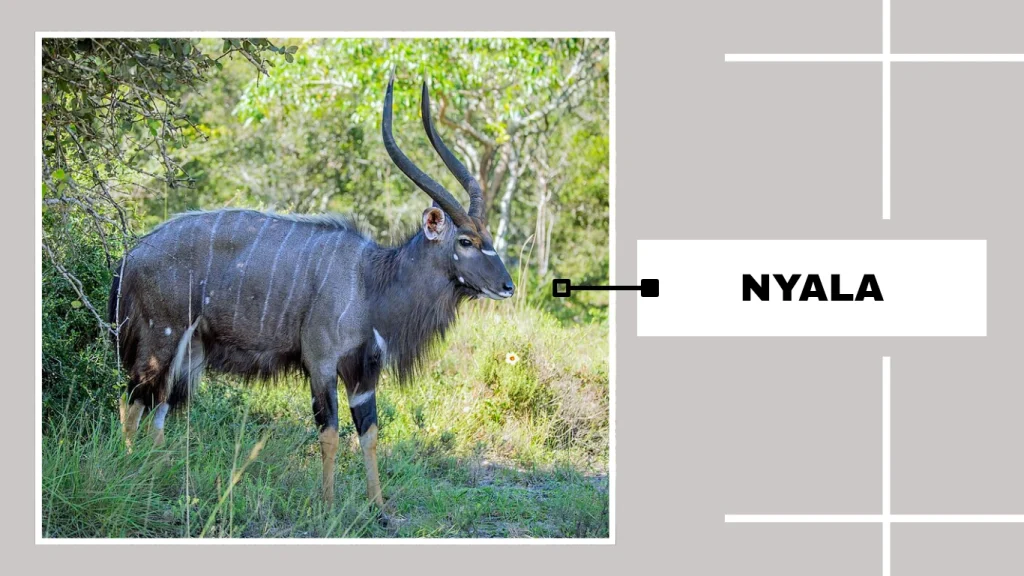
The Nyala is a strikingly patterned antelope with sexual dimorphism; males are darker with bold white markings, while females are lighter and less conspicuous.
Identification
- Length: 51–64 inches (130–160 cm)
- Weight: Males 220–330 pounds (100–150 kg); females 120–180 pounds (55–80 kg)
- Color: Males dark brown to slate with white vertical stripes and spots; females reddish-brown with lighter markings
- Horns: Males have long, spiral horns up to 33 inches (85 cm); females hornless
Habitat and Range
Found in southern Africa, especially Mozambique, South Africa, and Zimbabwe. Prefers dense woodlands, thickets, and riverine forests.
Diet and Feeding Habits
Browsers feeding mainly on leaves, fruits, and twigs.
Behavior and Traits
Generally shy and nocturnal, but sometimes active during the day. Males are territorial during breeding season. Known for their beautiful coats and shy nature.
11. Roan Antelope (Hippotragus equinus)

The Roan Antelope is a large and powerful antelope species, noted for its reddish-brown coat and impressive backward-curving horns.
Identification
- Length: 71–79 inches (180–200 cm)
- Weight: 440–660 pounds (200–300 kg)
- Color: Reddish-brown coat with black facial markings and lighter underparts
- Horns: Both sexes have long, ringed, backward-curving horns up to 40 inches (1 meter)
Habitat and Range
Native to savannas, woodlands, and grasslands of central and southern Africa.
Diet and Feeding Habits
Grazers that feed primarily on grasses but also browse when necessary.
Behavior and Traits
Live in herds led by dominant males. Known for their endurance and speed. Often wary and elusive, with a strong territorial instinct.
12. Hartebeest (Alcelaphus buselaphus)

The Hartebeest is a large African antelope distinguished by its elongated face and uniquely shaped horns that curve inward and backward.
Identification
- Length: 59–71 inches (150–180 cm)
- Weight: 330–440 pounds (150–200 kg)
- Color: Reddish-brown to tan coat with darker patches on the face and legs
- Horns: Both sexes have lyre-shaped, ridged horns that curve backward
Habitat and Range
Found in savannas, open plains, and dry grasslands across sub-Saharan Africa.
Diet and Feeding Habits
Primarily grazers feeding on grasses. Can survive in arid environments with sparse water.
Behavior and Traits
Highly social, forming large herds. Known for fast running speeds and endurance. Males establish territories during the breeding season. Hartebeests often migrate in search of food and water.
13. Grant’s Gazelle (Nanger granti)
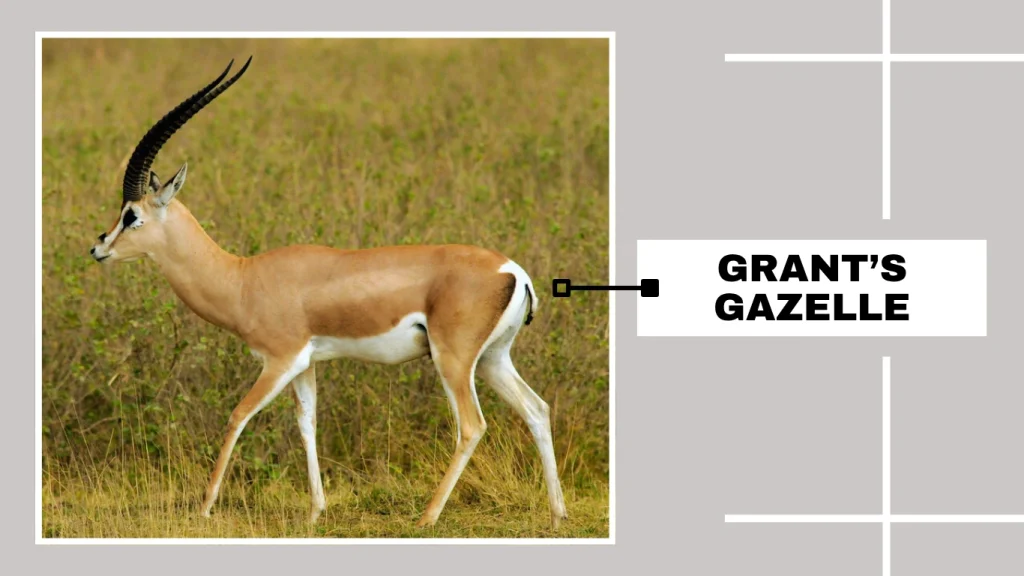
Grant’s Gazelle is a medium-sized gazelle known for its slender build, speed, and striking facial markings.
Identification
- Length: 45–50 inches (115–130 cm)
- Weight: 90–130 pounds (40–60 kg)
- Color: Tan to reddish-brown coat with a white belly and distinctive black stripe on the flanks
- Horns: Both sexes have ringed, slightly curved horns; males’ horns are longer
Habitat and Range
Native to East Africa, especially Kenya and Tanzania. Found in savannas, open grasslands, and arid regions.
Diet and Feeding Habits
Mixed feeders, grazing on grasses and browsing on shrubs and herbs, especially in dry seasons.
Behavior and Traits
Known for agility and speed, reaching up to 50 mph. Live in herds and display territorial behavior among males during breeding seasons.
14. Thomson’s Gazelle (Eudorcas thomsonii)
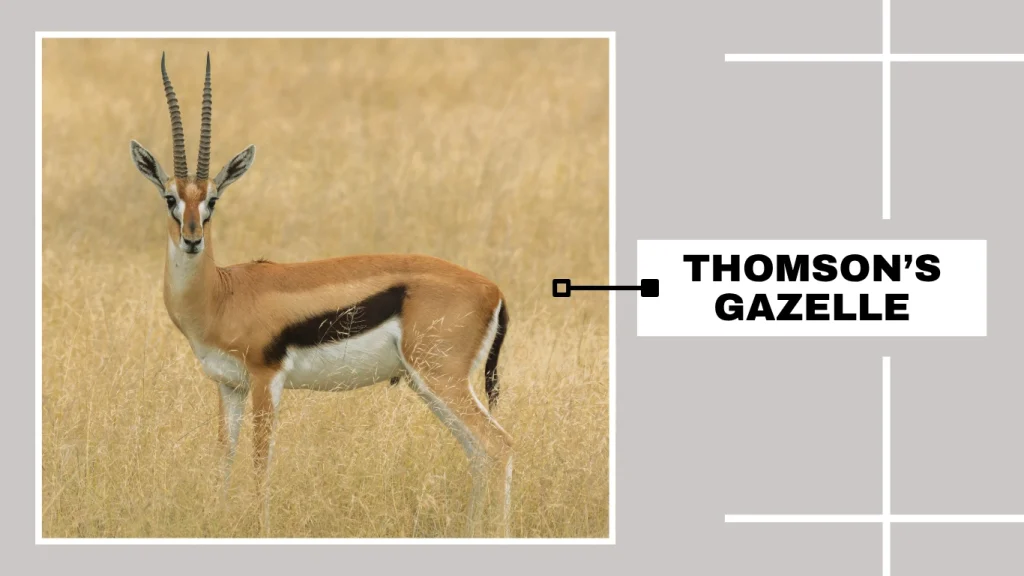
Thomson’s Gazelle is one of the most common and well-known gazelles, famed for its speed and agility.
Identification
- Length: 39–43 inches (100–110 cm)
- Weight: 40–75 pounds (18–34 kg)
- Color: Light brown back with white underparts and a distinct black side stripe
- Horns: Both males and females have short, ringed horns, males’ horns are longer and thicker
Habitat and Range
Found across East Africa, primarily in Kenya and Tanzania’s savannas and grasslands.
Diet and Feeding Habits
Primarily grazers, feeding on short grasses, but also browse during dry periods.
Behavior and Traits
Noted for their incredible speed—can reach up to 50 mph—to evade predators. Live in herds, with males defending territories during the mating season. Their agility makes them a favorite prey for cheetahs.
15. Topi (Damaliscus lunatus jimela)
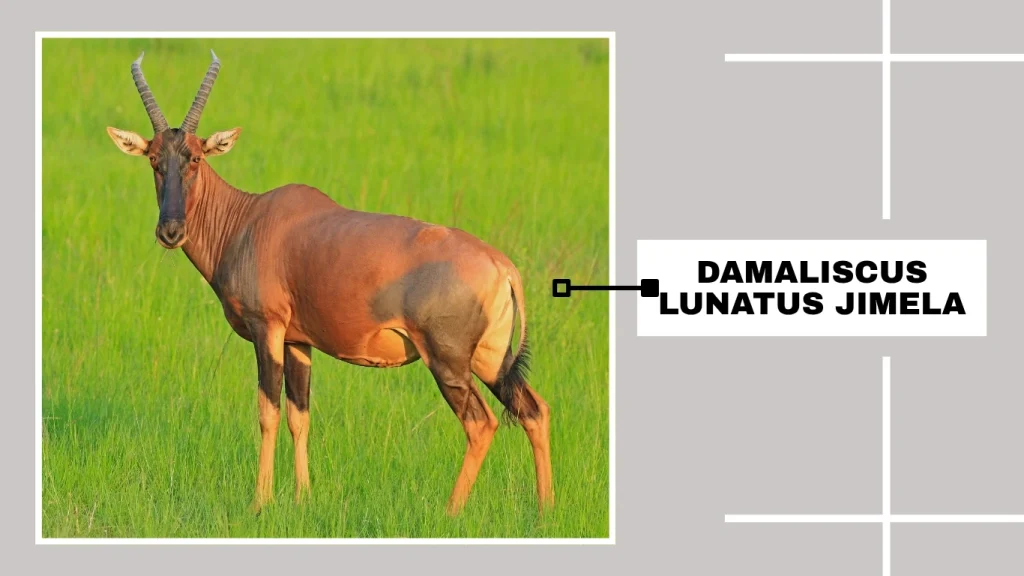
The Topi is a fast and alert antelope recognized by its reddish-brown coat and dark face mask.
Identification
- Length: 50–59 inches (127–150 cm)
- Weight: 100–165 pounds (45–75 kg)
- Color: Reddish-brown body with bluish-black face and legs
- Horns: Both sexes have ringed, lyre-shaped horns
Habitat and Range
Native to savannas and floodplains of East Africa, especially Kenya, Tanzania, and Uganda.
Diet and Feeding Habits
Grazers feeding mostly on short grasses.
Behavior and Traits
Highly social, forming large herds. Known for their speed and vigilance, often living alongside other grazing species. Males defend territories during the breeding season.
16. Greater Kudu (Tragelaphus strepsiceros)

The Greater Kudu is a large and elegant antelope famous for its impressive spiral horns and striking body stripes.
Identification
- Length: 55–79 inches (140–200 cm)
- Weight: 440–600 pounds (200–275 kg)
- Color: Reddish-brown to grayish with 6–10 vertical white stripes on the body
- Horns: Males have long, twisted spiral horns up to 72 inches; females lack horns
Habitat and Range
Found in woodlands and savannas across eastern and southern Africa.
Diet and Feeding Habits
Browsers that feed on leaves, shoots, and fruits.
Behavior and Traits
Generally shy and solitary or in small groups. Males use their horns in battles for dominance. Known for their excellent camouflage and ability to remain motionless when threatened.
17. Lesser Kudu (Tragelaphus imberbis)
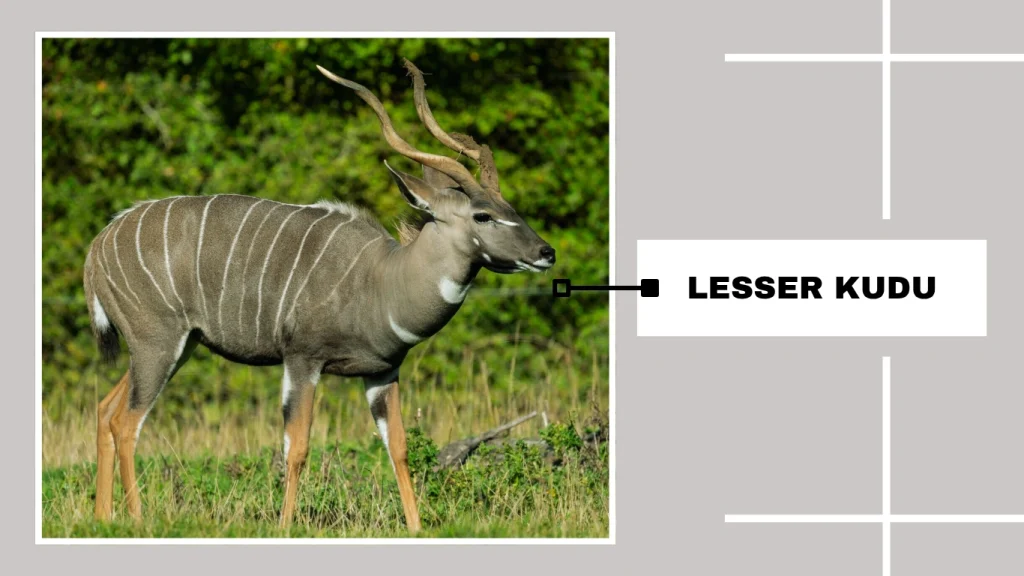
The Lesser Kudu is a smaller relative of the Greater Kudu, known for its slender build and bold white stripes.
Identification
- Length: 40–47 inches (100–120 cm)
- Weight: 110–175 pounds (50–80 kg)
- Color: Reddish-brown to gray coat with 6–10 white vertical stripes
- Horns: Males have tightly spiraled horns up to 24 inches; females hornless
Habitat and Range
Native to dry bushlands and savannas of eastern Africa, including Kenya, Tanzania, and Ethiopia.
Diet and Feeding Habits
Browsers feeding on leaves, shoots, and herbs.
Behavior and Traits
Elusive and primarily nocturnal. Usually solitary or in small groups. Known for agility and excellent camouflage in dense bush. Males engage in horn wrestling during mating season.
18. Klipspringer (Oreotragus oreotragus)
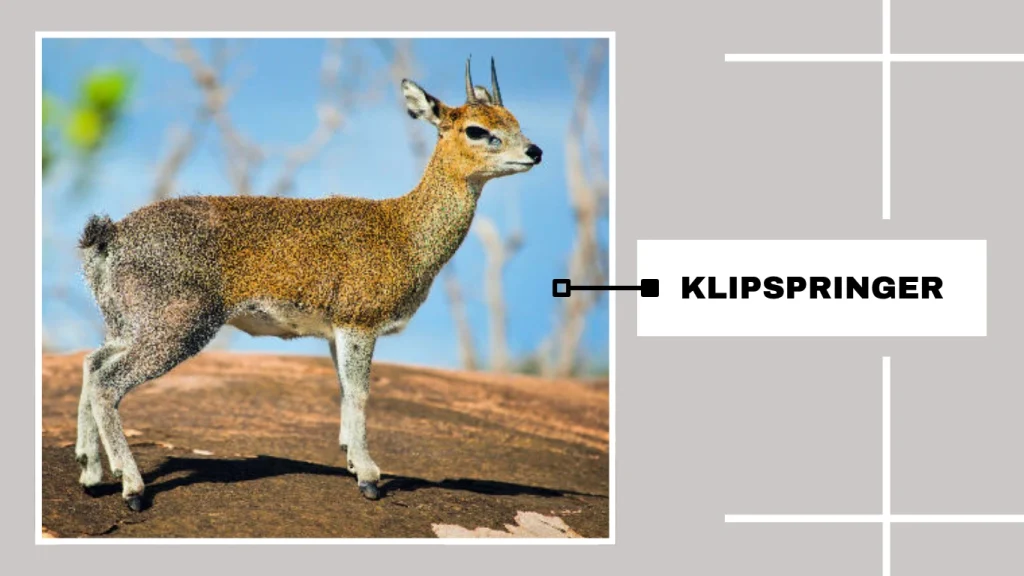
The Klipspringer is a small antelope adapted to rocky terrains, known for its incredible agility and padded hooves that provide excellent grip.
Identification
- Height: 18–24 inches at shoulder
- Weight: 24–35 pounds
- Color: Yellowish to grayish-brown coat with a slightly speckled appearance
- Horns: Both sexes may have short, straight horns, usually less than 10 inches
Habitat and Range
Found in rocky hills, cliffs, and mountainous regions across eastern and southern Africa.
Diet and Feeding Habits
Browsers feeding mainly on leaves, shoots, and fruits.
Behavior and Traits
Klipspringers are territorial and often seen in monogamous pairs. Their remarkable climbing ability allows them to evade predators by navigating steep rocky outcrops. They use high-pitched calls to communicate.
19. Oribi (Ourebia ourebi)
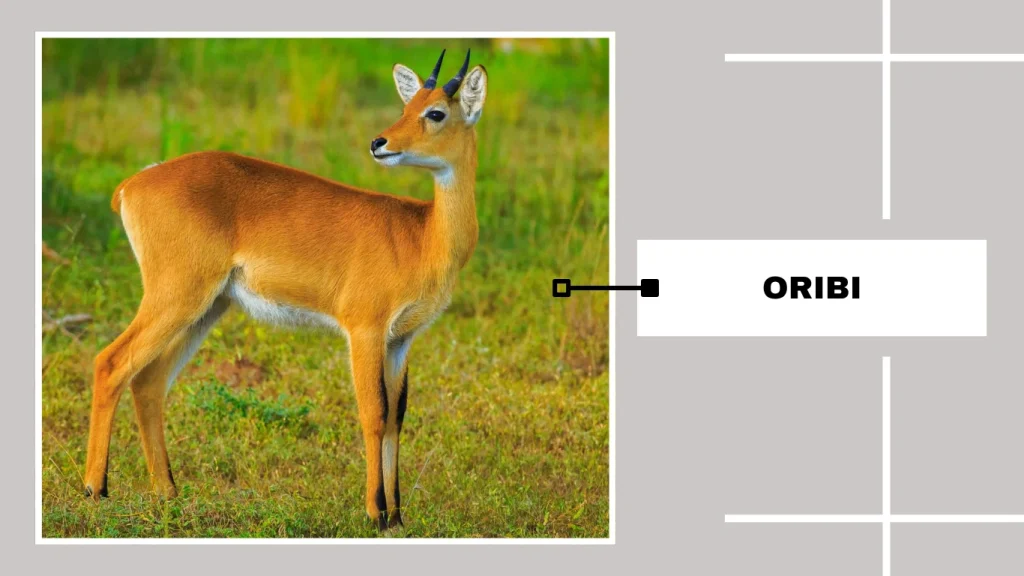
The Oribi is a small and graceful antelope, notable for its slender build and swift movements.
Identification
- Height: 20–24 inches at shoulder
- Weight: 33–66 pounds
- Color: Light reddish-brown to yellowish coat with white underparts
- Horns: Males have thin, straight, ringed horns up to 8 inches long; females usually hornless
Habitat and Range
Widespread across sub-Saharan Africa, inhabiting savannas, grasslands, and open woodlands.
Diet and Feeding Habits
Primarily grazers, feeding on a variety of grasses and herbs.
Behavior and Traits
Oribis are shy and alert, often seen alone or in small groups. They use high-pitched alarm calls to warn of predators and are capable of quick bursts of speed to escape danger.
20. Blesbok (Damaliscus pygargus phillipsi)
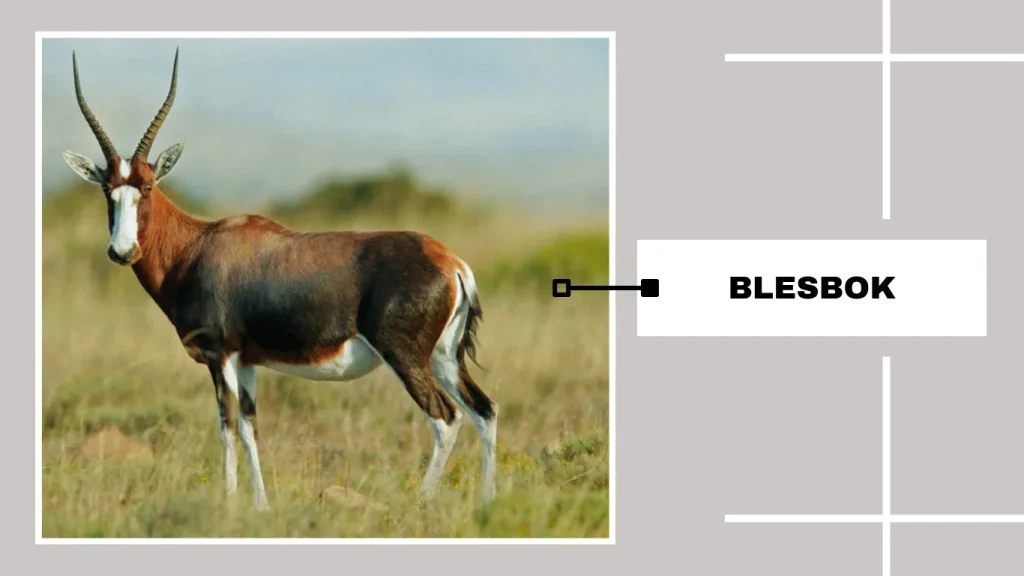
The Blesbok is a medium-sized antelope native to South Africa, recognized for its distinctive white face and forehead blaze.
Identification
- Length: 50–59 inches (127–150 cm)
- Weight: 110–165 pounds (50–75 kg)
- Color: Reddish-brown body with a white blaze on the face and white rump patch
- Horns: Both sexes have lyre-shaped, ringed horns
Habitat and Range
Found in open grasslands and savannas of South Africa, especially in the Highveld region.
Diet and Feeding Habits
Strict grazers, feeding mainly on short grasses.
Behavior and Traits
Highly social, forming large herds. Known for their endurance and speed. Males are territorial during breeding season and engage in display fights. Blesboks are closely related to bonteboks.
21. Mountain Nyala (Tragelaphus buxtoni)
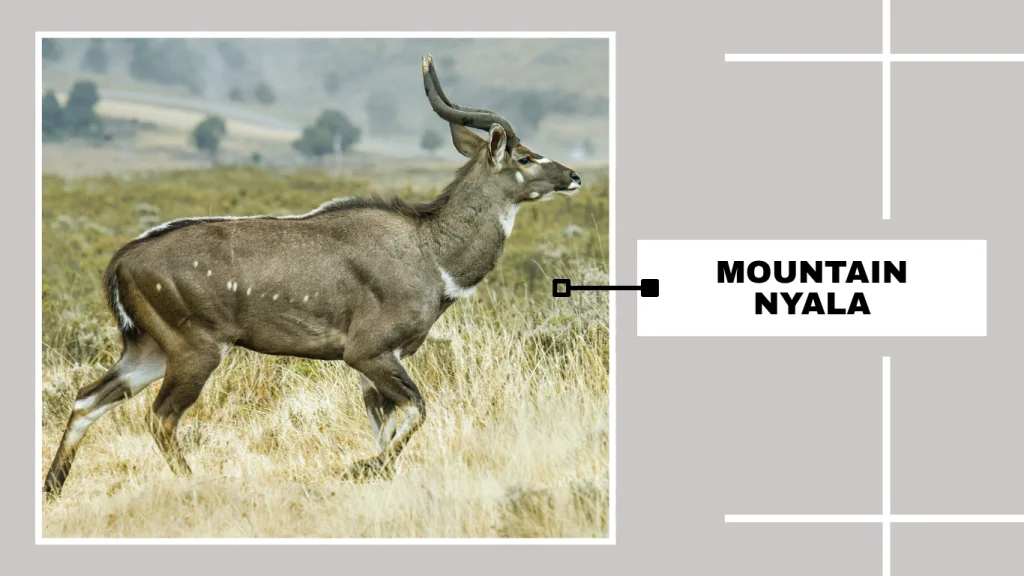
The Mountain Nyala is a rare and elusive antelope native to the highlands of Ethiopia, recognized for its striking markings and large, spiraled horns.
Identification
- Length: 50–62 inches (130–158 cm)
- Weight: 330–440 pounds (150–200 kg)
- Color: Chestnut brown with white vertical stripes and spots
- Horns: Males have long, spiraled horns up to 35 inches; females are hornless
Habitat and Range
Endemic to the montane forests and woodlands of the Ethiopian Highlands.
Diet and Feeding Habits
Browsers feeding on leaves, shoots, and fruits.
Behavior and Traits
Solitary or found in small groups. Due to habitat loss and hunting, it is considered endangered. Known for its shy nature and preference for dense forest cover.
22. Bontebok (Damaliscus pygargus pygargus)

The Bontebok is a striking antelope native to South Africa, closely related to the Blesbok but distinguished by its habitat and coloration.
Identification
- Length: 50–59 inches (127–150 cm)
- Weight: 110–165 pounds (50–75 kg)
- Color: Reddish-brown with a white face, white rump patch, and a dark stripe along the back
- Horns: Both sexes have lyre-shaped, ringed horns
Habitat and Range
Found primarily in coastal grasslands and fynbos in South Africa.
Diet and Feeding Habits
Strict grazers, feeding mainly on grasses.
Behavior and Traits
Forms herds that can range from small groups to hundreds. Males establish territories during the breeding season. Conservation efforts have helped restore populations after near-extinction.
23. Blackbuck (Antilope cervicapra)
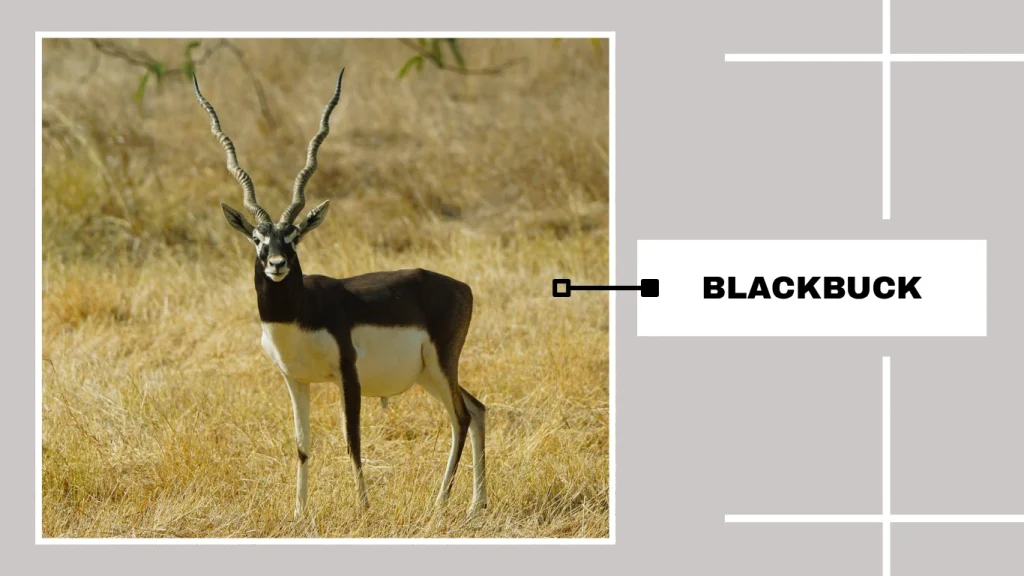
The Blackbuck is a medium-sized antelope native to the Indian subcontinent, notable for its striking black-and-white coloration and twisted horns.
Identification
- Length: 41–59 inches (105–150 cm)
- Weight: 66–121 pounds (30–55 kg)
- Color: Males are black with white underparts and facial markings; females are tan to fawn colored
- Horns: Males have long, tightly spiraled horns up to 28 inches (70 cm); females usually hornless
Habitat and Range
Found in grasslands and open plains of India, Nepal, and Pakistan.
Diet and Feeding Habits
Primarily grazers feeding on grasses and herbs.
Behavior and Traits
Highly territorial and social, forming herds with dominant males. Known for their speed and agility. Males perform impressive leaps and displays during mating season.
24. Saiga Antelope (Saiga tatarica)
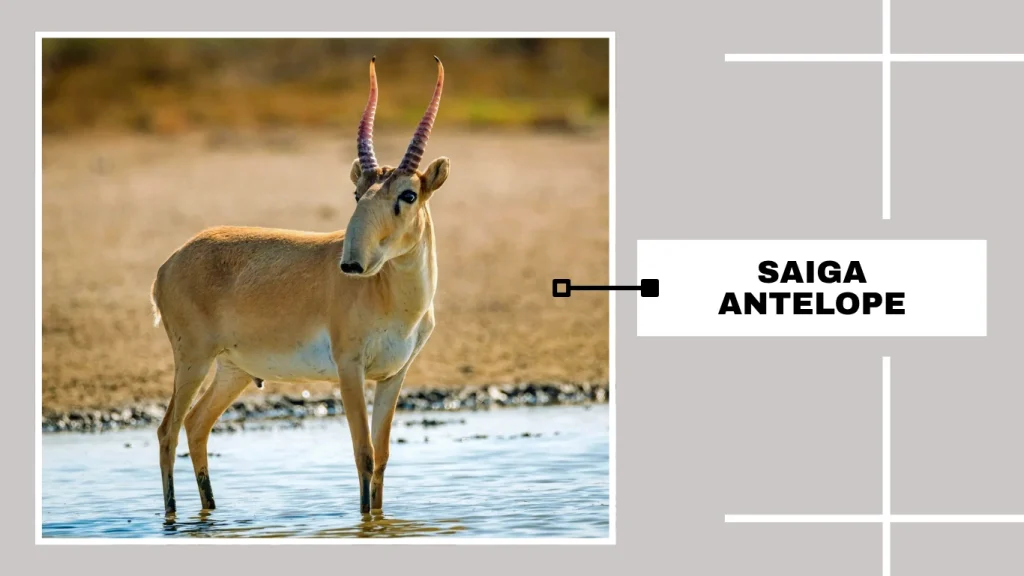
The Saiga Antelope is a distinctive and critically endangered species known for its unusual bulbous nose, which helps filter dust and regulate temperature.
Identification
- Length: 40–47 inches (100–120 cm)
- Weight: 50–75 pounds (23–34 kg)
- Color: Pale yellow to reddish-brown coat, lighter in winter
- Nose: Large, downward-facing, flexible nostrils
Habitat and Range
Native to the steppes and semi-deserts of Central Asia, including Kazakhstan, Mongolia, and parts of Russia.
Diet and Feeding Habits
Grazers feeding on grasses, herbs, and shrubs adapted to arid environments.
Behavior and Traits
Highly migratory, moving in large herds across vast open landscapes. Faces threats from habitat loss, hunting, and disease. Known for fast running speeds and ability to survive harsh climates. Conservation efforts are ongoing to protect remaining populations.
25. Four-horned Antelope (Tetracerus quadricornis)
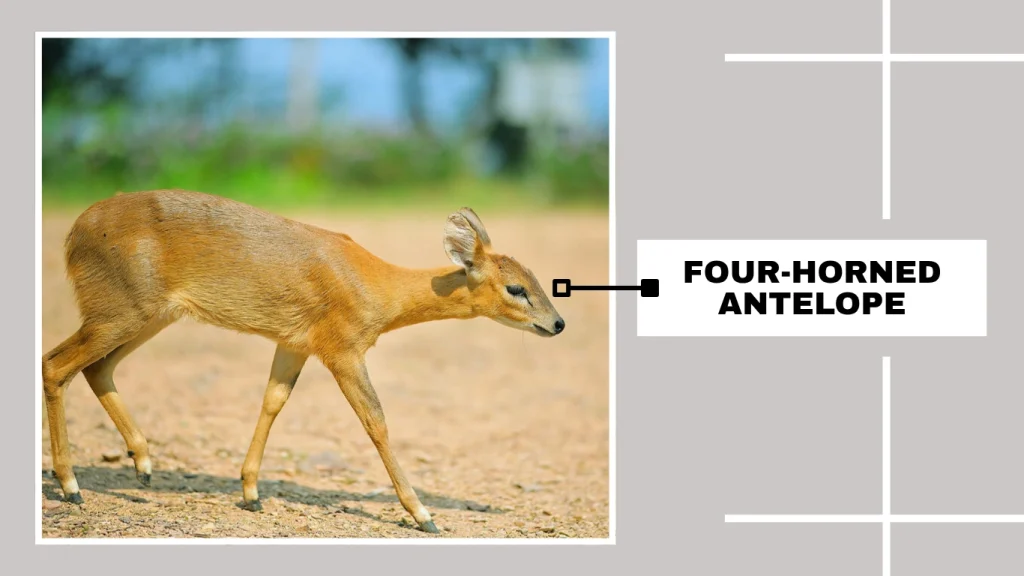
The Four-horned Antelope, also known as the Chousingha, is a unique and relatively small antelope species distinguished by having four horns instead of the usual two.
Identification
- Height: 24–28 inches at the shoulder
- Weight: 40–66 pounds (18–30 kg)
- Color: Yellowish-brown coat with lighter underparts
- Horns: Males have two pairs of short, sharp horns; females typically lack horns
Habitat and Range
Found primarily in forested and rocky areas of the Indian subcontinent, including India and Nepal.
Diet and Feeding Habits
Browsers feeding on leaves, fruits, flowers, and grasses.
Behavior and Traits
Solitary or found in small groups. Elusive and shy, often relying on camouflage and agility to avoid predators. The only antelope species with four horns, making it distinctive among ungulates.