




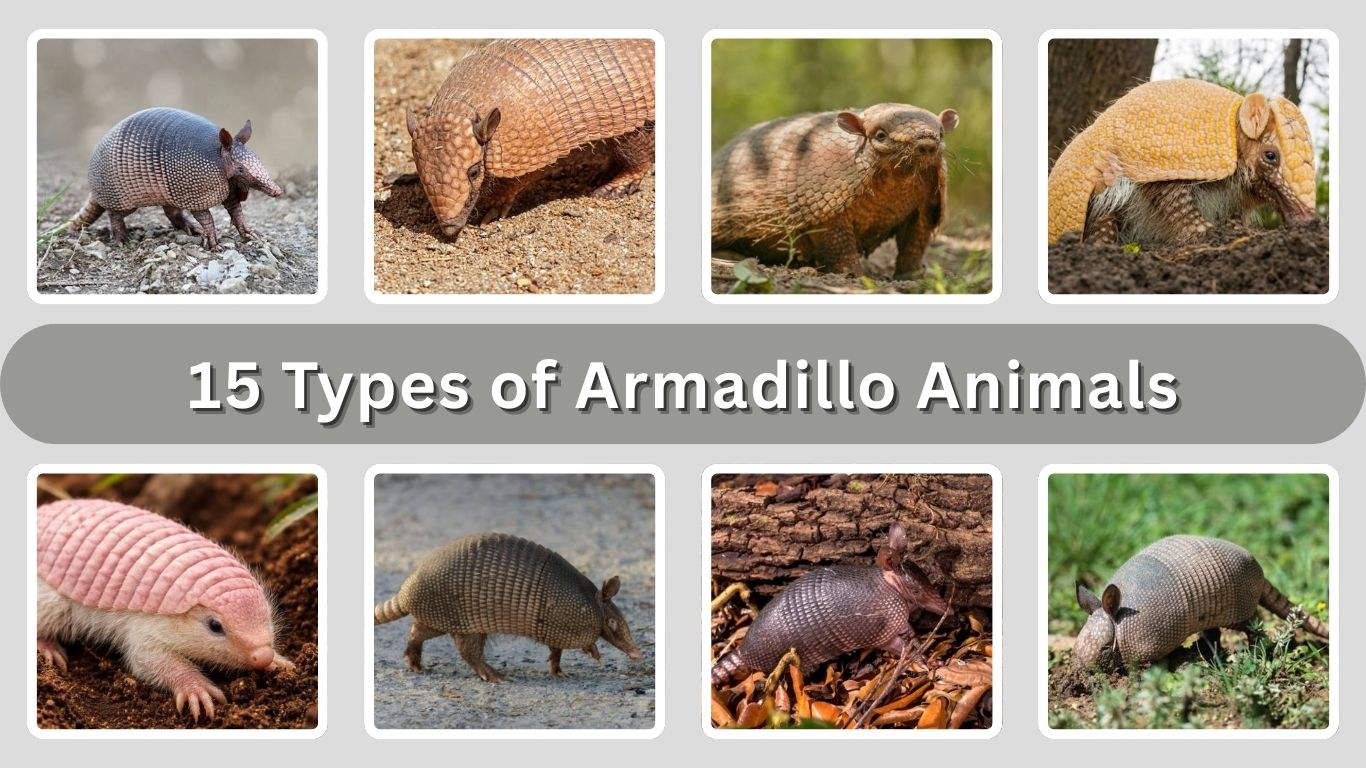
Armadillos are fascinating, armor-plated mammals known for their strong digging skills, long snouts, and insect-based diets. Native mainly to the Americas, they range from the tiny pink fairy armadillo to the massive giant armadillo. These animals occupy habitats from tropical rainforests to dry grasslands and even semi-deserts. In this guide, we explore fifteen different types of armadillos, highlighting the remarkable diversity, adaptations, and survival strategies found within this unique group of mammals.
1. Nine-banded Armadillo (Dasypus novemcinctus)
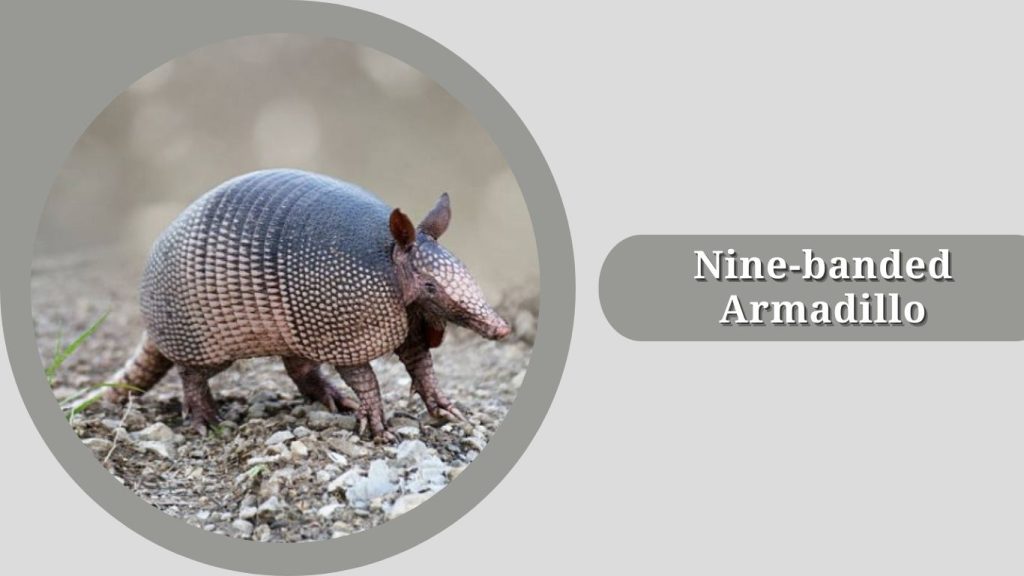
The nine-banded armadillo is the most widespread and well-known armadillo species in the world. It is famous for its armored body, long snout, and strong digging abilities. Originally native to Central and South America, it has expanded its range into the southern and central United States. This adaptable mammal is mostly nocturnal and plays an important role in controlling insect populations.
Identification
- Gray to brown bony armor with nine movable bands
- Long, narrow snout with small eyes and large ears
- Strong, short legs with powerful curved claws
- Long, tapering tail covered in bony rings
- Usually 60–80 cm long, excluding the tail
Habitat
Nine-banded armadillos inhabit a wide variety of environments, including forests, grasslands, wetlands, scrublands, and farmland. They prefer areas with loose, sandy, or loamy soil where digging burrows is easy. Their range extends from Argentina and Uruguay through Central America and Mexico into the southern United States.
Behavior
This species is solitary and mainly nocturnal, although it may be active during the day in cooler weather. It is an excellent digger and swimmer, often inflating its stomach and intestines to help float across water. When threatened, it usually runs quickly to the nearest burrow rather than curling into a ball.
Diet and Lifespan
Nine-banded armadillos are omnivorous but primarily insect-eaters. Their diet includes ants, termites, beetles, larvae, worms, and small vertebrates, along with some plant matter. In the wild, they typically live around 7 to 12 years, though some individuals may live longer.
2. Six-banded Armadillo (Euphractus sexcinctus)
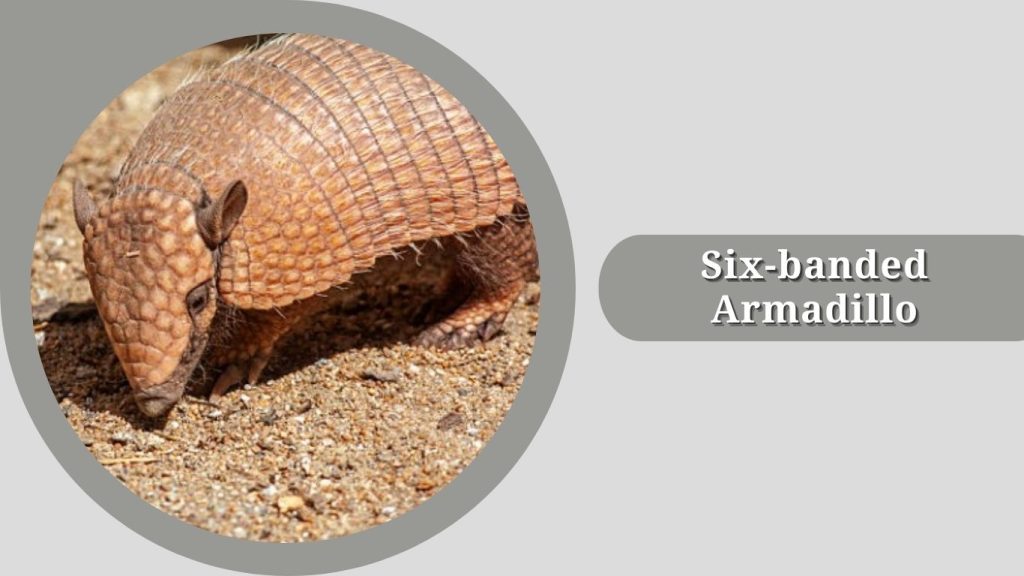
The six-banded armadillo, also known as the yellow armadillo, is a medium-sized, strongly built species native to South America. It is more active during the daytime than many other armadillos and is known for its aggressive defense behavior when threatened. This adaptable species is commonly found in open habitats and human-modified landscapes.
Identification
- Yellowish to light brown armor with six to seven movable bands
- Broad head with a blunt snout and strong jaws
- Short, powerful legs with large digging claws
- Sparse bristly hairs on the sides and belly
- Thick, armored tail with visible bony rings
Habitat
Six-banded armadillos inhabit savannas, grasslands, scrublands, dry forests, and agricultural areas. They prefer open or semi-open environments with loose soil for burrowing. Their range includes Brazil, Bolivia, Paraguay, Uruguay, and northern Argentina.
Behavior
Unlike many armadillos, this species is often diurnal. It is solitary and territorial, frequently defending burrows aggressively. When disturbed, it may grunt, charge, or dig rapidly to escape rather than curling into a tight ball.
Diet and Lifespan
Six-banded armadillos are omnivorous, feeding on insects, worms, small vertebrates, fruits, roots, and carrion. They are opportunistic foragers. In the wild, they are believed to live around 10 to 15 years.
3. Seven-banded Armadillo (Dasypus septemcinctus)
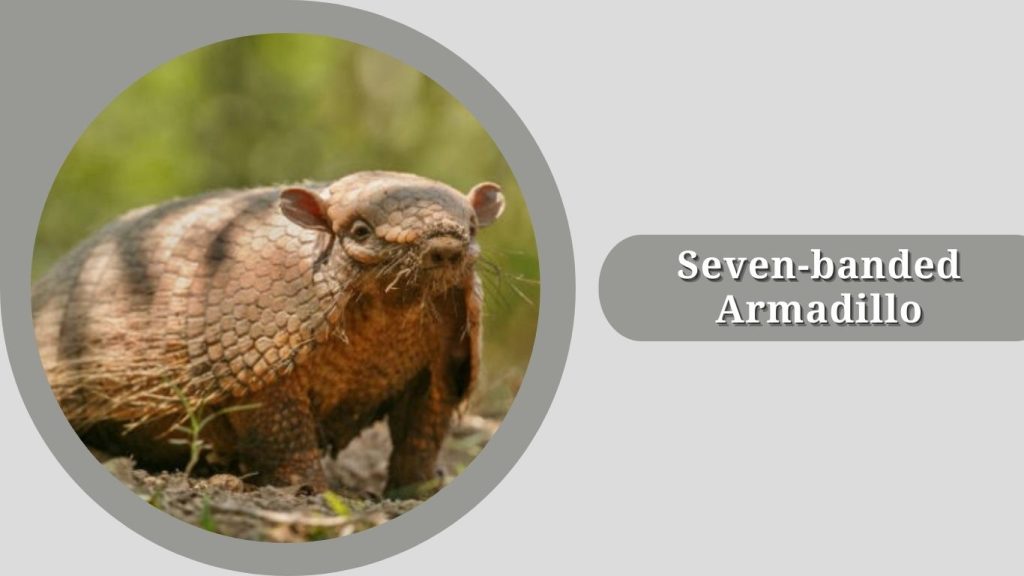
The seven-banded armadillo is a small, lightly built species closely related to the nine-banded armadillo. It is one of the lesser-known armadillos and is adapted to a wide range of habitats. This species is shy, fast-moving, and relies heavily on burrowing to avoid predators.
Identification
- Gray to brown armor with about seven movable bands
- Smaller body size and shorter tail than nine-banded armadillo
- Long, narrow snout and pointed ears
- Fine, sparse hair on the underside
- Strong foreclaws for digging
Habitat
Seven-banded armadillos inhabit grasslands, savannas, forest edges, and agricultural areas. They prefer soft soils where they can dig shallow burrows. Their natural range includes parts of Brazil, Bolivia, Paraguay, Uruguay, and northern Argentina.
Behavior
This species is mostly nocturnal and solitary. It rests in burrows during the day and becomes active at night to forage. When threatened, it quickly digs or flees rather than rolling into a ball.
Diet and Lifespan
Seven-banded armadillos feed mainly on insects such as ants, termites, and beetle larvae, along with worms and some plant material. Their lifespan in the wild is estimated to be about 7 to 10 years.
4. Three-banded Armadillo (Tolypeutes species)
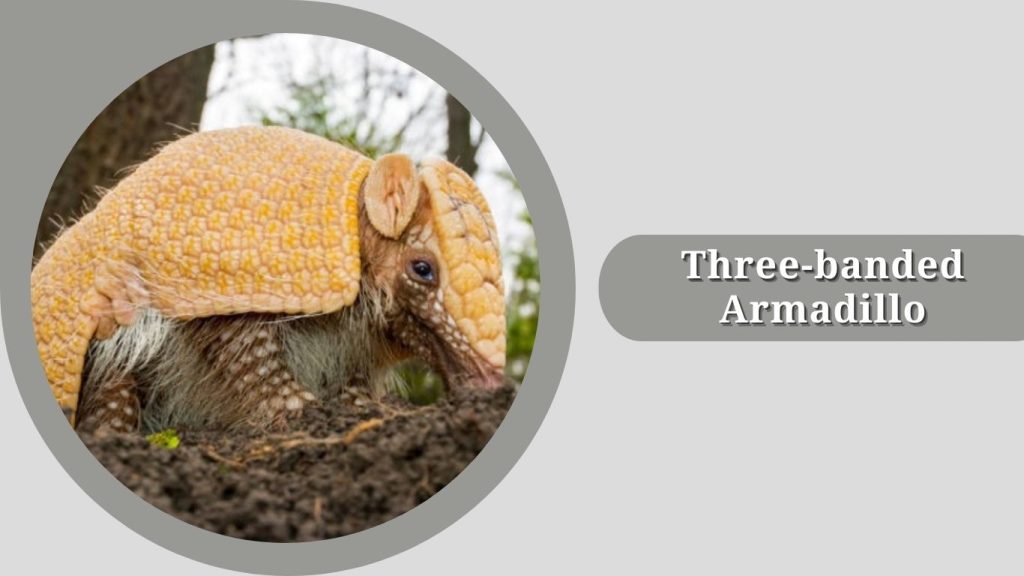
The three-banded armadillo is one of the most unique armadillo types and the only armadillo capable of rolling completely into a tight ball. There are two living species—the Brazilian three-banded armadillo and the southern three-banded armadillo. Both are known for their flexible armor and strong defensive behavior.
Identification
- Only three large, flexible armor bands
- Highly rounded body shape
- Small head with blunt snout
- Strong claws for digging
- Can close completely into a hard, sealed ball
Habitat
Three-banded armadillos live in dry forests, savannas, scrublands, and grasslands. They prefer warm regions with sandy or loose soil. Their range includes parts of Brazil, Bolivia, Paraguay, and Argentina.
Behavior
Unlike most armadillos that flee, this species relies almost entirely on rolling into a tight ball for protection. It is mainly nocturnal and solitary, spending daylight hours resting in shallow burrows or under vegetation.
Diet and Lifespan
Three-banded armadillos feed mostly on ants and termites, along with beetle larvae and other small invertebrates. In the wild, they are thought to live around 12 to 15 years.
5. Pink Fairy Armadillo (Chlamyphorus truncatus)
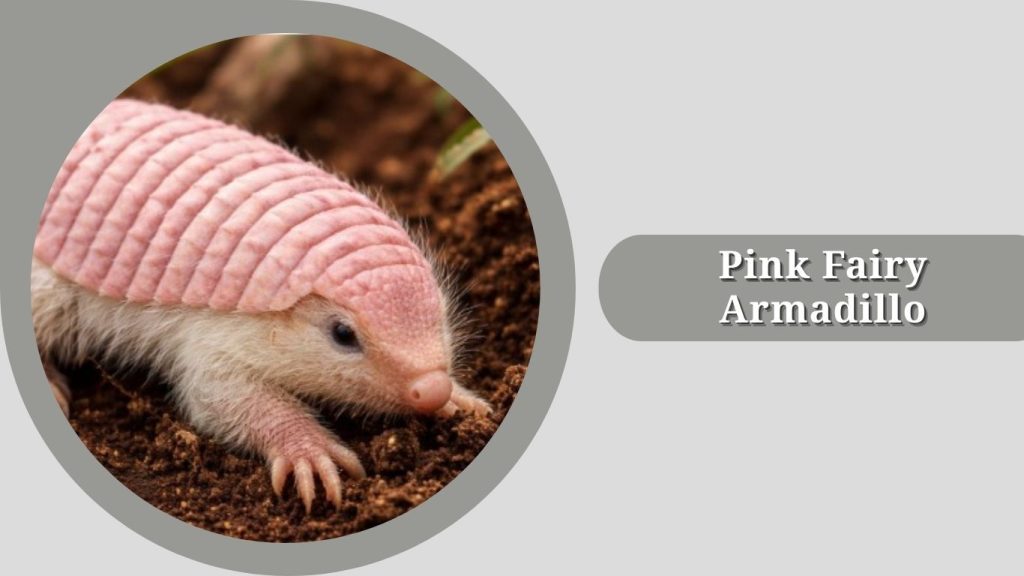
The pink fairy armadillo is the smallest and rarest armadillo species in the world. Often called the “sand swimmer,” it spends most of its life underground, moving through loose soil with remarkable speed. Its pale pink armor and silky white fur make it one of the most unusual-looking mammals in South America.
Identification
- Very small body, usually under 15 cm long
- Pale pink, flexible armor plate on the back
- White, silky fur covering the sides and belly
- Short tail with a flattened end
- Large front claws adapted for digging
Habitat
Pink fairy armadillos are found only in central Argentina, where they inhabit dry grasslands, sandy plains, and scrubby regions. They require loose, sandy soil for burrowing and are rarely seen above ground, making them extremely difficult to study.
Behavior
This species is almost entirely subterranean. It emerges mainly at night and quickly buries itself if disturbed. Pink fairy armadillos are very sensitive to environmental changes and stress, which contributes to their rarity.
Diet and Lifespan
Their diet consists mainly of ants, insect larvae, worms, and other small invertebrates. Very little is known about their lifespan in the wild, but it is believed to be relatively short, possibly around 8 to 10 years.
6. Giant Armadillo (Priodontes maximus)
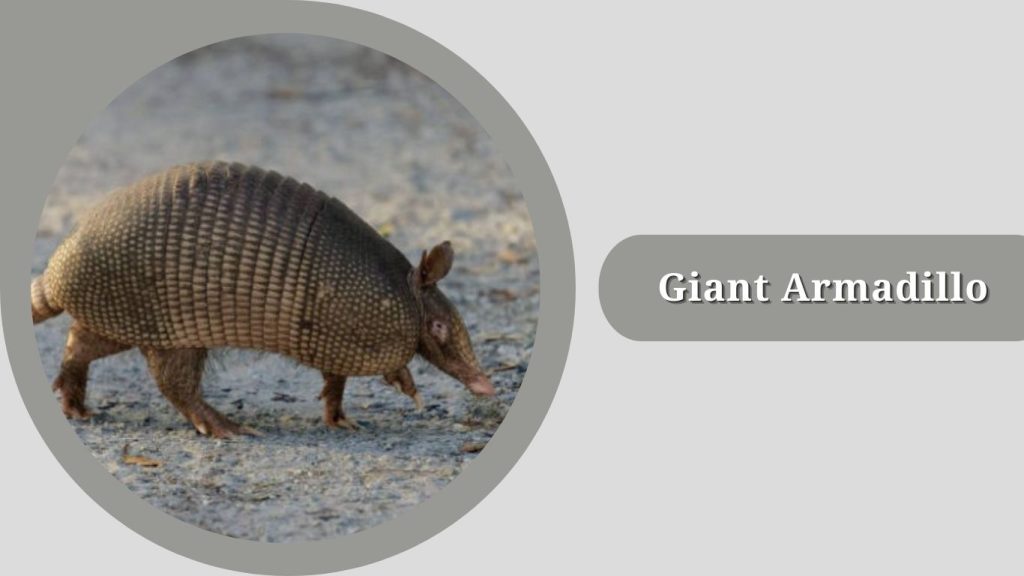
The giant armadillo is the largest living armadillo species, sometimes reaching over 1.5 meters in total length including the tail. It is a powerful digger with enormous claws used to tear open termite mounds and excavate deep burrows. Because of habitat loss and hunting, this impressive species is now considered vulnerable.
Identification
- Very large body with dark brown armor plates
- Long, narrow head with a tubular snout
- Massive curved front claws, especially the third claw
- Short, rounded ears and a thick, armored tail
- Sparse hair on the underside
Habitat
Giant armadillos inhabit tropical rainforests, floodplains, savannas, and dry forests. They are widely but sparsely distributed across northern and central South America, including Brazil, Peru, Venezuela, Colombia, and the Guianas.
Behavior
This species is solitary and mainly nocturnal. During the day, it shelters in deep burrows that can later be used by other animals. When threatened, it may retreat quickly underground or use its powerful claws defensively.
Diet and Lifespan
Giant armadillos feed primarily on termites, ants, and other insects, occasionally eating worms and small vertebrates. In the wild, they are believed to live around 12 to 15 years, possibly longer.
7. Greater Long-nosed Armadillo (Dasypus kappleri)
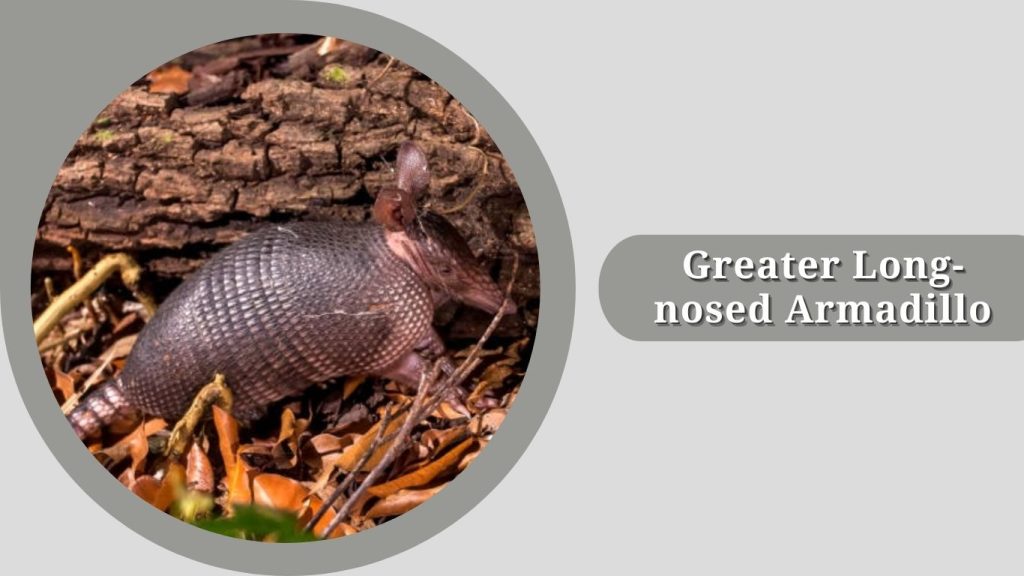
The greater long-nosed armadillo is a large, slender species with an extremely long head and snout. It is one of the biggest members of the genus Dasypus and is well adapted to forest life. This armadillo is shy and rarely seen due to its nocturnal and secretive habits.
Identification
- Large size with long, narrow head and snout
- Brownish-gray armor with numerous small scutes
- Long tail with bony rings
- Strong but relatively slender legs
- Poor eyesight but strong sense of smell
Habitat
Greater long-nosed armadillos are found mainly in tropical rainforests and moist lowland forests. Their range includes the Amazon Basin and surrounding regions in Brazil, Peru, Colombia, Venezuela, and the Guianas.
Behavior
This species is solitary and nocturnal. It spends most of the day in burrows and becomes active at night to forage. When threatened, it quickly flees or digs rather than attempting to curl into a ball.
Diet and Lifespan
Greater long-nosed armadillos feed mostly on insects such as ants, termites, beetles, and larvae, along with worms and some plant matter. Their estimated lifespan in the wild is around 8 to 12 years.
8. Southern Long-nosed Armadillo (Dasypus hybridus)
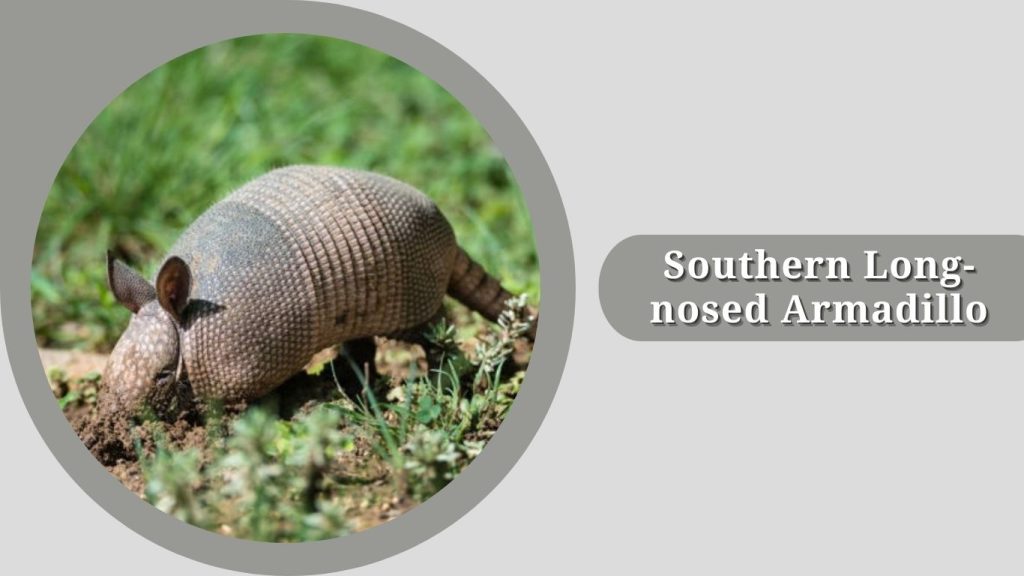
The southern long-nosed armadillo is a small to medium-sized armadillo native to southern South America. It closely resembles other long-nosed armadillos but is generally smaller and more lightly built. This species is adapted to cooler climates and open habitats compared to many tropical armadillos.
Identification
- Small to medium body with grayish-brown armor
- Long, narrow head and pointed snout
- Thin tail covered in bony rings
- Short legs with strong digging claws
- Sparse hair on the belly and sides
Habitat
Southern long-nosed armadillos live in grasslands, pampas, open woodlands, and agricultural areas. They prefer well-drained soils suitable for digging burrows. Their range includes Argentina, Uruguay, southern Brazil, and Paraguay.
Behavior
This species is mostly nocturnal and solitary. It spends daylight hours inside burrows and emerges at night to forage. When threatened, it usually flees quickly or digs rather than curling into a ball.
Diet and Lifespan
Southern long-nosed armadillos mainly eat insects such as ants, termites, and beetle larvae, along with worms and some plant material. In the wild, they are believed to live about 7 to 10 years.
9. Hairy Armadillo (Chaetophractus villosus)
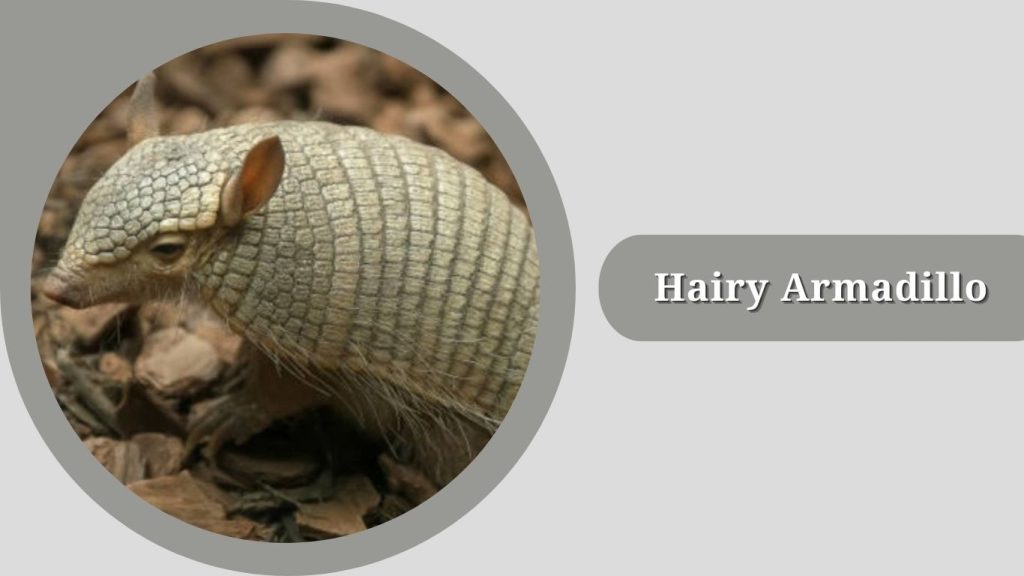
The hairy armadillo is named for the coarse hair that grows between its armor plates, giving it a shaggy appearance. It is one of the most common armadillos in southern South America and is well adapted to cold, dry environments.
Identification
- Brownish armor with long, coarse hairs between scutes
- Broad body with flexible bands
- Short, powerful legs with strong claws
- Thick, armored tail with sparse hair
- Hairy underside compared to other species
Habitat
Hairy armadillos inhabit grasslands, steppes, scrublands, and semi-deserts. They are commonly found in Argentina, Bolivia, Paraguay, and Chile, and have also been introduced to Tierra del Fuego.
Behavior
This species can be active both day and night depending on temperature. It is a strong digger and creates extensive burrow systems. When threatened, it may hiss, bite, or dig rapidly to escape.
Diet and Lifespan
Hairy armadillos are omnivorous, feeding on insects, worms, roots, seeds, small animals, and carrion. Their lifespan in the wild is estimated at around 10 to 15 years.
10. Big Hairy Armadillo (Chaetophractus nationi)
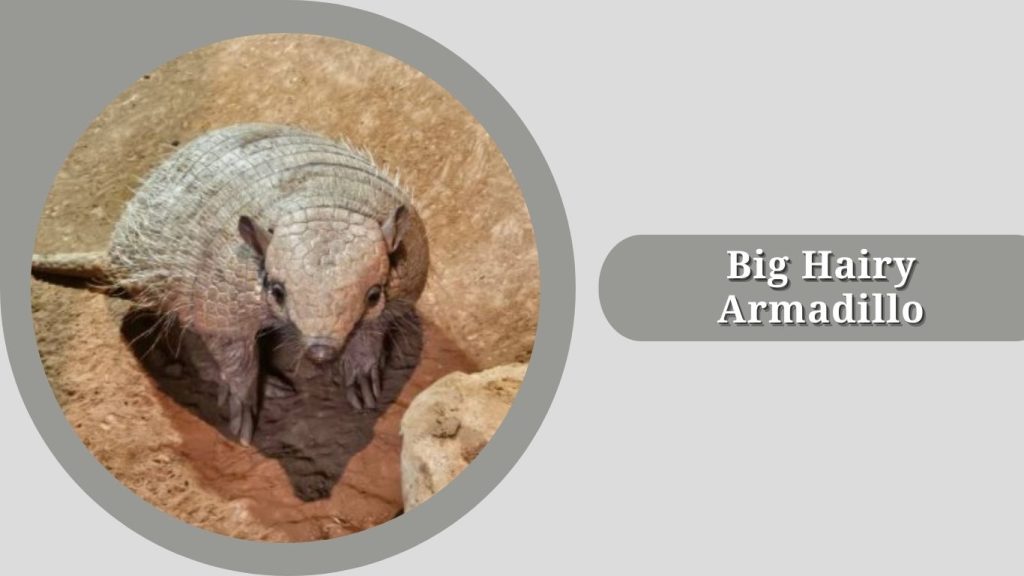
The big hairy armadillo is a medium-sized, heavily furred armadillo native to the high-altitude regions of South America. It is closely related to the hairy armadillo but is generally larger and adapted to colder, drier environments. Its thick fur and strong armor help it survive in harsh climates.
Identification
- Dense, long hair growing between armor plates
- Yellowish-brown to dark brown armored shell
- Broad, sturdy body with flexible bands
- Strong legs with large digging claws
- Hairy belly compared to most armadillos
Habitat
Big hairy armadillos inhabit high-altitude grasslands, dry steppes, and rocky plains of the Andes. They are found mainly in Bolivia, Peru, northern Chile, and northwestern Argentina.
Behavior
This species is solitary and mostly nocturnal, though it may also be active at dusk or during cooler daylight hours. It digs deep burrows for shelter and protection from temperature extremes.
Diet and Lifespan
Big hairy armadillos are omnivorous, feeding on insects, larvae, small vertebrates, roots, and plant matter. In the wild, they are believed to live around 8 to 12 years.
11. Andean Hairy Armadillo (Chaetophractus vellerosus)
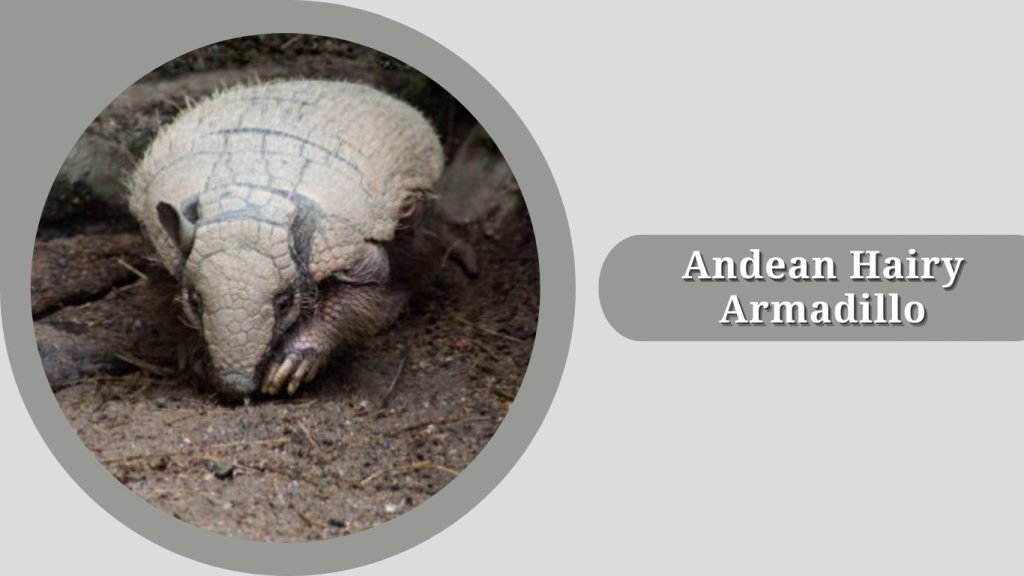
The Andean hairy armadillo is a small to medium-sized species known for its pale coloration and thick fur. It is well adapted to dry, sandy, and semi-desert environments and is one of the armadillos that can tolerate cooler and drier conditions.
Identification
- Light brown to pale yellow armor
- Thick, coarse hair between the bands
- Slender body with a narrow head
- Short legs with sharp claws
- Hairy underside and sides
Habitat
Andean hairy armadillos inhabit dry grasslands, sandy plains, scrublands, and semi-desert regions. They are mainly found in Argentina, Bolivia, and Paraguay, often in loose soils ideal for burrowing.
Behavior
This species is mostly nocturnal and solitary. It rests in burrows during the day and emerges at night to forage. When threatened, it quickly digs or wedges itself into burrow entrances.
Diet and Lifespan
Andean hairy armadillos eat insects, worms, roots, seeds, and small animals. Their natural lifespan is estimated to be about 7 to 12 years.
12. Screaming Hairy Armadillo (Chaetophractus vellerosus)
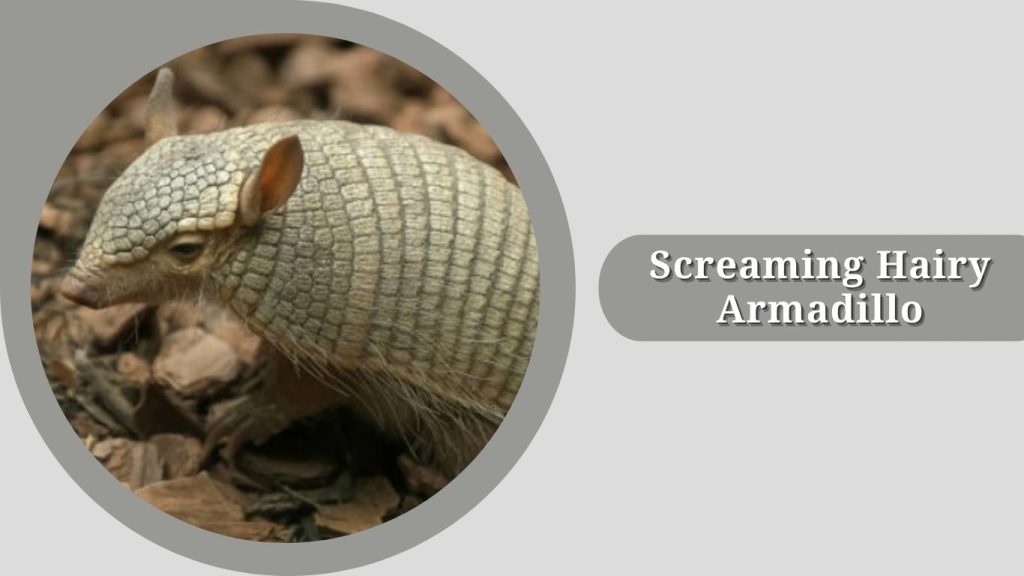
The screaming hairy armadillo gets its unusual name from the loud, high-pitched squeals it makes when handled or threatened. It is a small, fur-covered armadillo adapted to dry, sandy environments and is well known for its strong digging abilities.
Identification
- Pale yellow to light brown armor
- Dense, coarse hair between armor bands
- Small to medium body size
- Narrow head with pointed snout
- Strong curved claws for fast digging
Habitat
Screaming hairy armadillos inhabit dry grasslands, scrublands, and sandy plains. They are mainly found in Argentina, Bolivia, and Paraguay, often in open, arid regions with loose soil.
Behavior
This species is mostly nocturnal and solitary. During the day, it shelters in burrows. When threatened, it produces loud squealing sounds and digs rapidly to escape or wedges itself into burrows.
Diet and Lifespan
Their diet includes insects, larvae, worms, small vertebrates, roots, and plant matter. In the wild, screaming hairy armadillos are believed to live around 7 to 10 years.
13. Pichi Armadillo (Zaedyus pichiy)
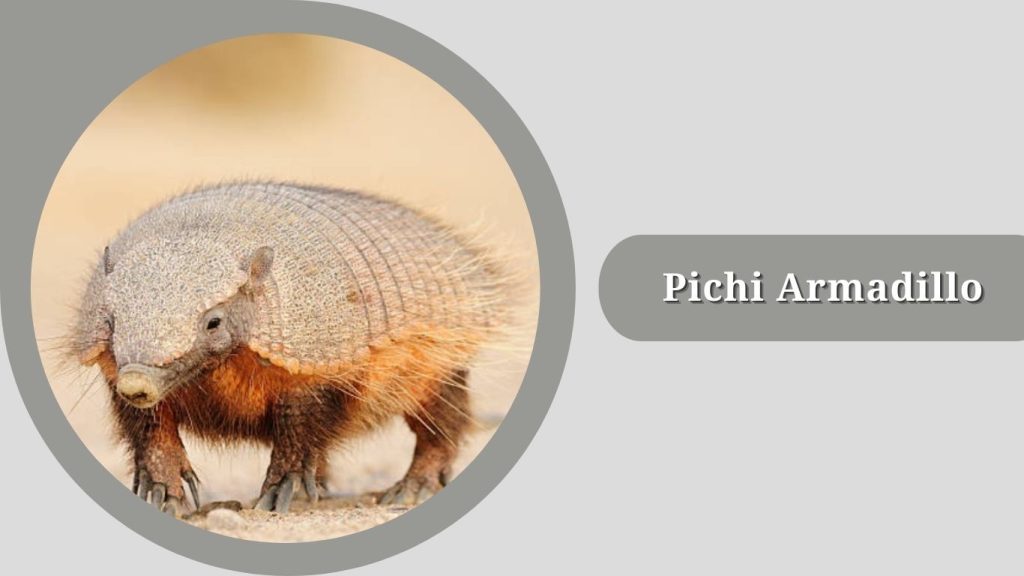
The pichi armadillo is a small, hardy species native to southern South America. It is well adapted to cold, dry environments and is one of the few armadillos known to hibernate during winter in colder regions.
Identification
- Small body with pale brown armor
- Distinct white band across the head
- Sparse hair on the underside
- Short, sturdy legs with strong claws
- Short, tapered tail
Habitat
Pichi armadillos live in dry steppes, Patagonian shrublands, and semi-deserts. They are mainly found in Argentina and Chile, especially in Patagonia.
Behavior
This species is solitary and can be both diurnal and nocturnal depending on season. In cold climates, it may enter torpor or hibernate. When threatened, it burrows quickly or presses itself flat against the ground.
Diet and Lifespan
Pichi armadillos feed on insects, larvae, spiders, worms, roots, and plant matter. Their lifespan in the wild is estimated to be about 6 to 10 years.
14. Northern Naked-tailed Armadillo (Cabassous centralis)
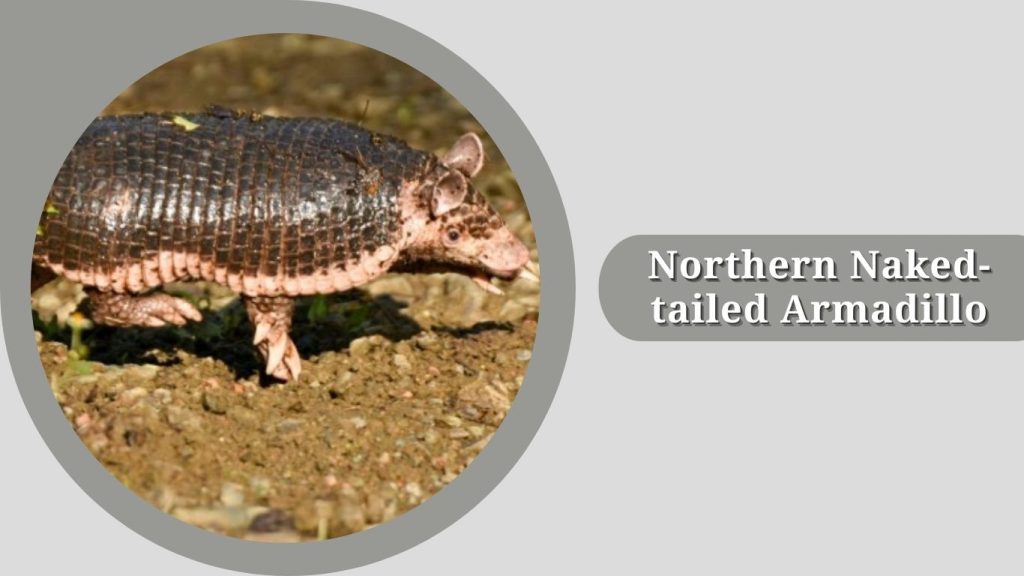
The northern naked-tailed armadillo is a small to medium-sized species distinguished by its nearly hairless, soft-looking tail. It is a powerful digger that specializes in feeding on ants and termites, often breaking into underground nests.
Identification
- Short, almost hairless tail with few visible scales
- Dark gray to brown armor
- Broad head with a short, pointed snout
- Large front claws, especially the middle claw
- Small eyes and rounded ears
Habitat
Northern naked-tailed armadillos inhabit tropical rainforests, moist forests, and wooded savannas. Their range includes southern Mexico, Central America, and parts of northwestern South America.
Behavior
This species is nocturnal and solitary. It spends daylight hours underground and emerges at night to forage. When threatened, it quickly digs straight down to escape.
Diet and Lifespan
Northern naked-tailed armadillos feed mainly on ants and termites, along with other insects and larvae. Their estimated lifespan in the wild is around 7 to 11 years.
15. Southern Naked-tailed Armadillo (Cabassous unicinctus)
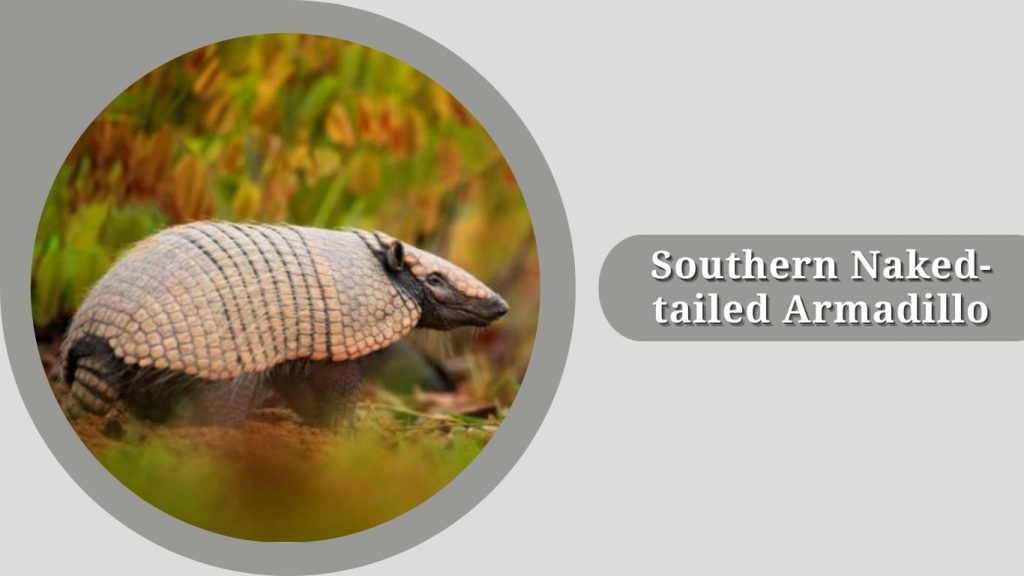
The southern naked-tailed armadillo is closely related to its northern counterpart but is more widely distributed across South America. It is rarely seen due to its underground lifestyle and nocturnal habits.
Identification
- Almost hairless tail with scattered scales
- Brownish to gray armored body
- Short legs with very large digging claws
- Small, rounded ears
- Compact, sturdy build
Habitat
Southern naked-tailed armadillos live in tropical and subtropical forests, savannas, and grasslands. They are found in Brazil, Peru, Ecuador, Colombia, Venezuela, Bolivia, and the Guianas.
Behavior
This species is mostly nocturnal and solitary. It rests in burrows during the day and emerges at night to dig into ant and termite nests. When disturbed, it quickly burrows to escape.
Diet and Lifespan
Southern naked-tailed armadillos mainly eat ants, termites, and insect larvae. In the wild, they are thought to live around 8 to 12 years.