


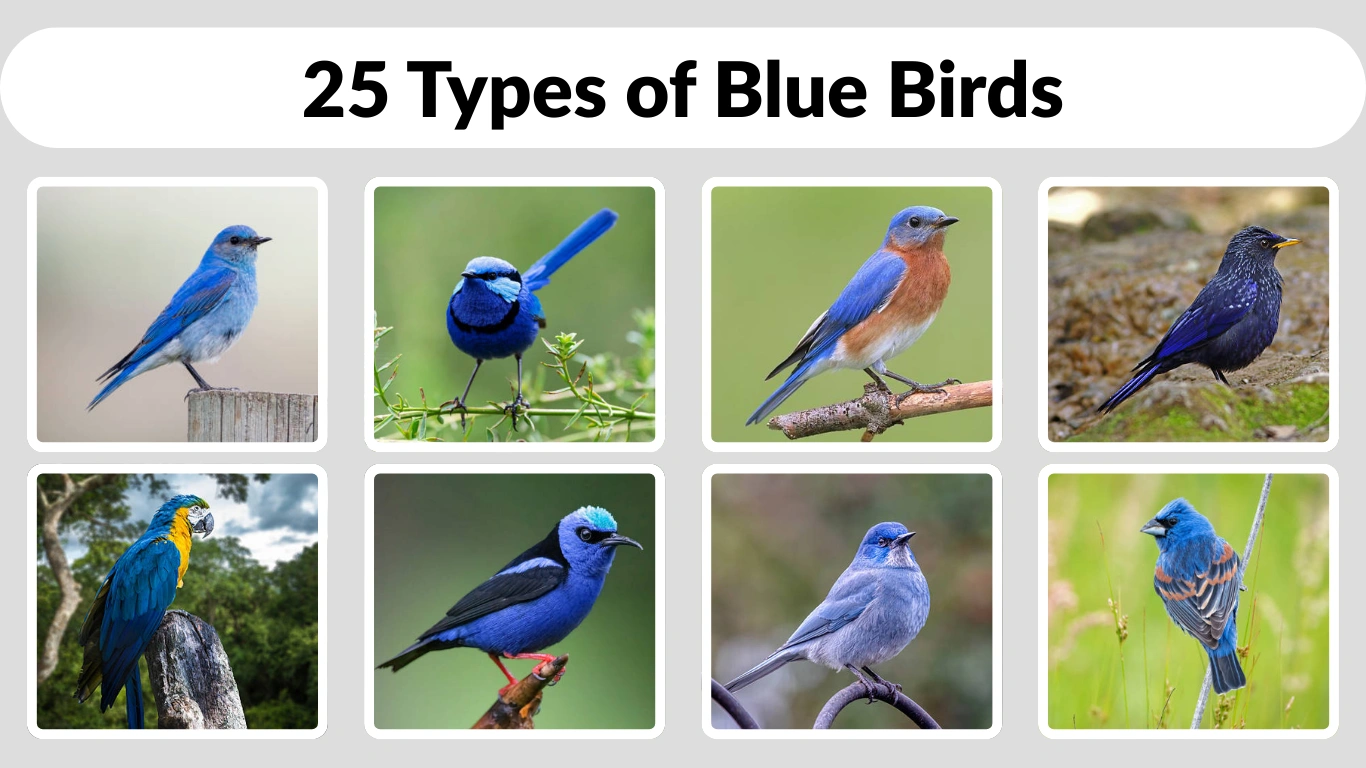
Blue birds are among the most captivating sights in the natural world, celebrated for their brilliant colors, diverse habitats, and fascinating behaviors. From tiny songbirds to majestic parrots, each species brings its own charm and ecological role. This collection highlights 25 unique blue birds found across different continents, offering a glimpse into their beauty, habits, and identities. Whether you’re a birdwatcher or nature lover, these species are truly unforgettable.
1. Blue Jay
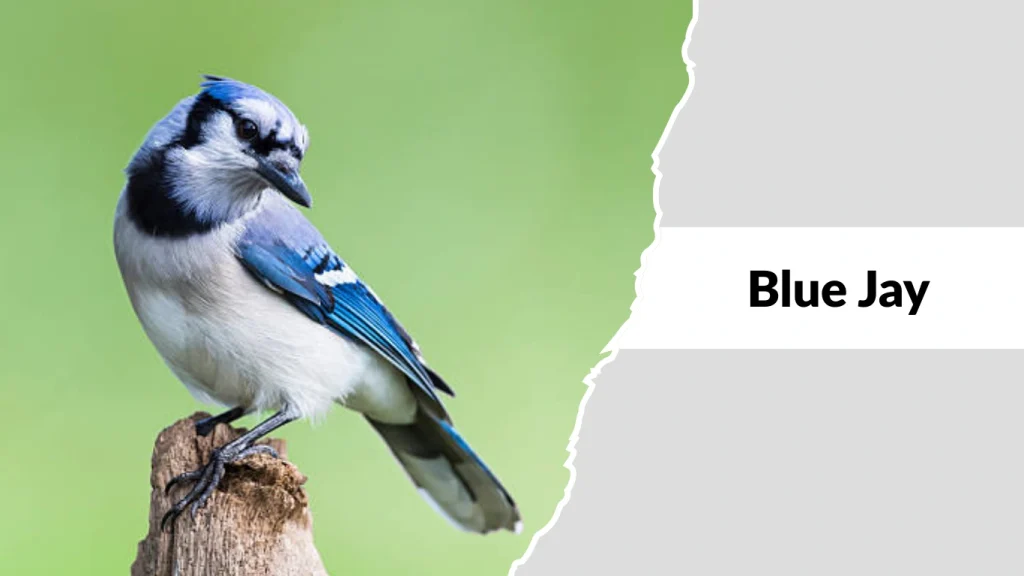
A bright, bold bird known for its vibrant blue plumage, loud calls, and intelligent behavior. Common across North America, the Blue Jay is a familiar sight in forests, parks, and backyards, often traveling in small, active groups.
Identification
- Bright blue upperparts with black barring
- White or light gray underparts
- Distinctive blue crest on head
- Black necklace-like band across the chest
- Strong bill and striking facial pattern with white cheeks
Habitat
Blue Jays thrive in mixed woodlands, especially areas with oak trees. They are equally comfortable in suburban yards, parks, and gardens where they can find food and tall trees for nesting.
Behavior
They are highly vocal and intelligent birds, capable of mimicking hawk calls. Blue Jays store food for later use, travel in loose family groups, and exhibit strong territorial instincts during breeding season.
Diet
Their diet includes acorns, seeds, nuts, fruits, insects, and occasionally small vertebrates. They frequently visit bird feeders, especially those offering peanuts or sunflower seeds.
2. Eastern Bluebird

A small, gentle songbird known for its vivid blue wings and warm reddish chest. Common in open fields and orchards, the Eastern Bluebird is often seen perched on wires or fence posts while hunting insects.
Identification
- Bright blue back, wings, and tail
- Rusty-red throat and breast
- White belly
- Slender body with a short, straight bill
- Females are duller with more gray tones
Habitat
Eastern Bluebirds prefer open habitats such as meadows, pastures, orchards, and fields with scattered trees. They readily use nest boxes, making them a favorite among backyard birdwatchers.
Behavior
They hunt by perching and scanning the ground for insects, then swooping down to capture prey. Eastern Bluebirds form monogamous pairs and may raise multiple broods during a single breeding season.
Diet
Composed mainly of insects like beetles, caterpillars, and grasshoppers in warmer months, and berries such as holly or juniper during winter when insects are scarce.
3. Mountain Bluebird
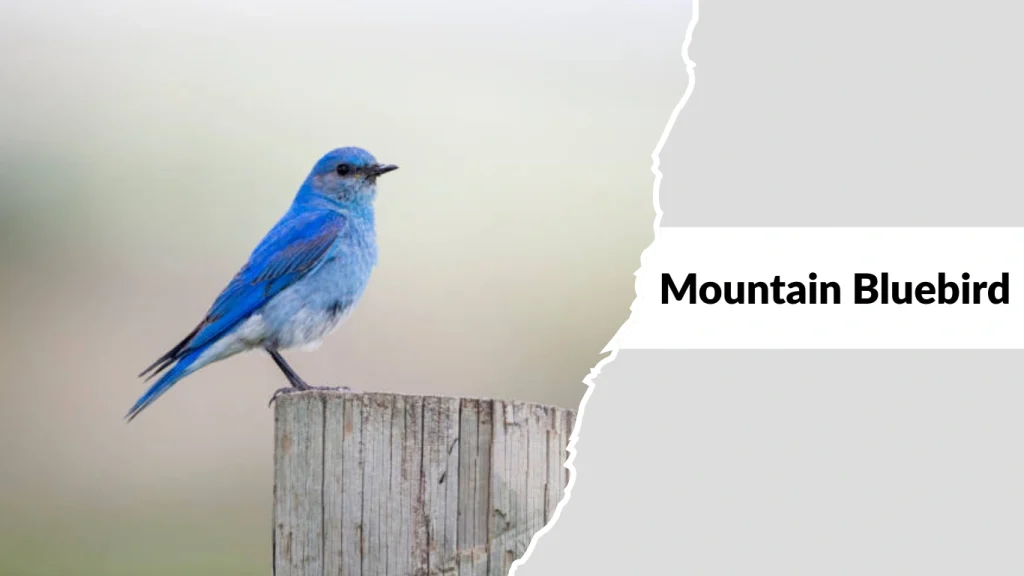
A striking sky-blue songbird found in open western landscapes. Known for its graceful flight and vibrant color, the Mountain Bluebird often perches on shrubs or fence posts while scanning for insects.
Identification
- Brilliant sky-blue plumage in males
- Females are gray-brown with pale blue wings and tail
- Slim body with a small, thin bill
- Pale underside with minimal markings
- Slightly longer wings than other bluebirds
Habitat
Mountain Bluebirds prefer wide-open spaces such as prairies, grasslands, sagebrush plains, and high mountain meadows. They frequently nest in tree cavities or human-made nest boxes.
Behavior
These birds often hover over the ground while searching for prey—a behavior unique among bluebirds. They migrate in loose flocks and show strong site fidelity, returning to the same breeding areas each year.
Diet
Primarily insects during spring and summer, including beetles, spiders, and caterpillars. In winter, they shift to fruits and berries, especially in colder regions where insects are scarce.
4. Western Bluebird
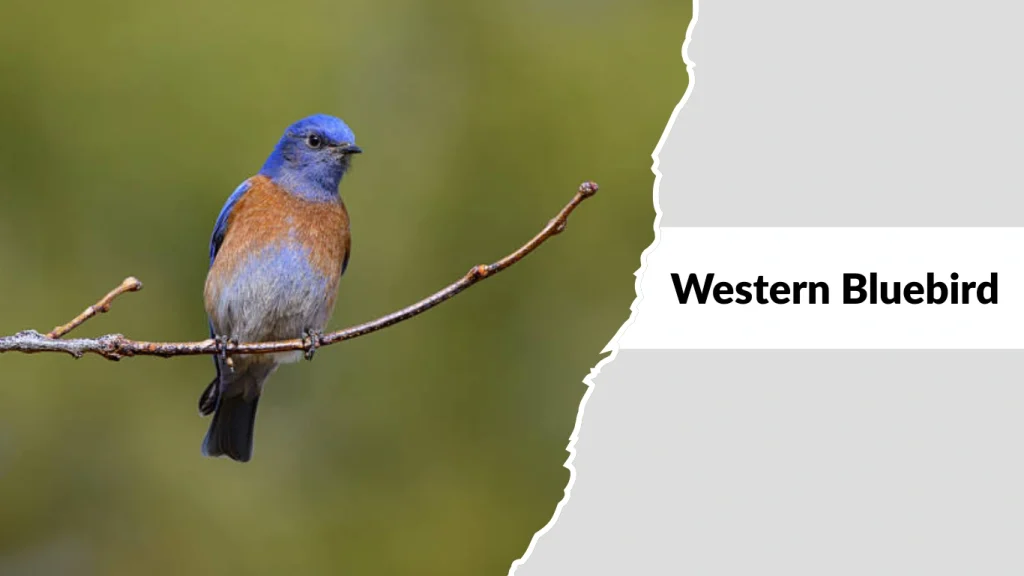
A colorful and charming songbird of western North America, the Western Bluebird is known for its deep blue wings and rich orange chest. It is often found in open woodlands, farmlands, and forest edges.
Identification
- Deep blue head, wings, and tail
- Bright rusty-orange throat and breast
- Grayish belly
- Females are duller with soft blue tones and muted orange
- Short, straight bill and compact body
Habitat
Western Bluebirds prefer open forests, oak woodlands, farmlands, and areas with scattered trees. They readily occupy nest boxes and natural cavities, especially in regions recovering from wildfire.
Behavior
They hunt by dropping to the ground from low perches to catch insects. Western Bluebirds are social, often forming small flocks outside the breeding season, and may stay together in family groups.
Diet
Their diet consists mainly of insects such as beetles, caterpillars, and grasshoppers. In cooler months, they switch to berries and small fruits, including mistletoe and elderberry.
5. Indigo Bunting
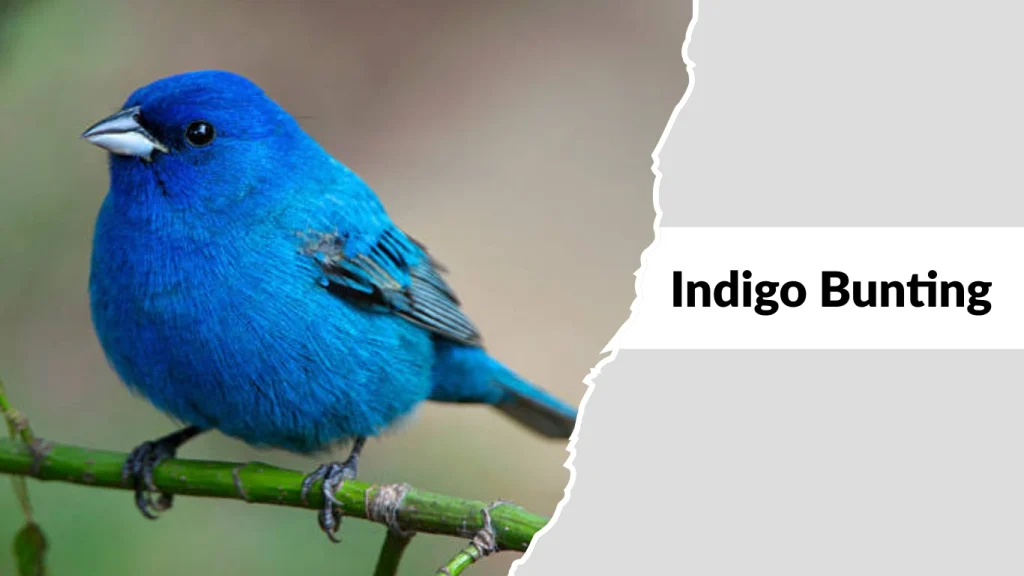
A small, vibrant songbird known for its brilliant blue coloring and cheerful, musical song. Often called the “blue canary,” the Indigo Bunting is common in summer across eastern and central North America.
Identification
- Adult males are bright, sparkly blue in summer
- Females are brown with subtle bluish hints
- Small conical bill
- Compact body with short tail
- Winter plumage in males becomes brownish with some blue
Habitat
Indigo Buntings thrive in brushy fields, woodland edges, roadsides, and overgrown meadows. They favor areas with dense shrub growth for nesting and feeding.
Behavior
These birds migrate at night using star patterns to navigate. Males sing persistently from treetops during breeding season to defend territory and attract mates.
Diet
Their diet includes seeds, berries, and insects. During the breeding season, they rely heavily on caterpillars and small invertebrates to feed their young.
6. Lazuli Bunting
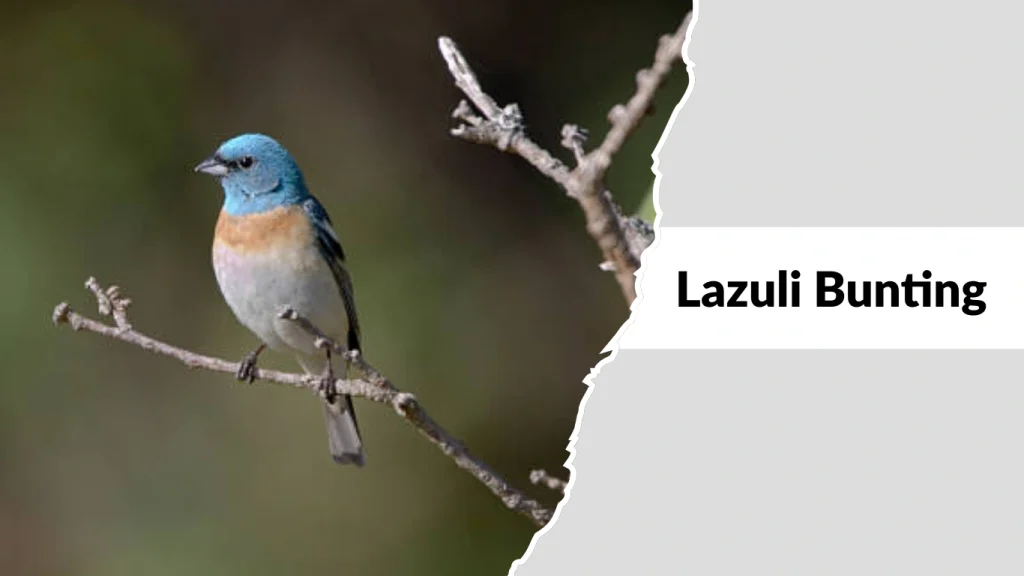
A stunning western songbird recognized by its vivid blue head and back paired with warm orange tones. The Lazuli Bunting brings bright color and sweet trilling songs to open habitats in the western U.S.
Identification
- Bright sky-blue head and upperparts in males
- Warm orange breast with white belly
- Females are brownish with faint blue on wings and tail
- Short conical seed-eating bill
- White wingbars distinctive in both sexes
Habitat
Found in shrubby areas, canyon edges, open woodlands, and riparian zones. They prefer habitats with low bushes for nesting and open spaces for foraging.
Behavior
Lazuli Buntings are active, social birds that often join mixed-species flocks. Males sing complex, buzzy songs, and the species hybridizes occasionally with Indigo Buntings where their ranges overlap.
Diet
Their diet includes seeds, insects, and berries. They forage both on the ground and among shrubs, especially seeking protein-rich insects during breeding season.
7. Blue Grosbeak
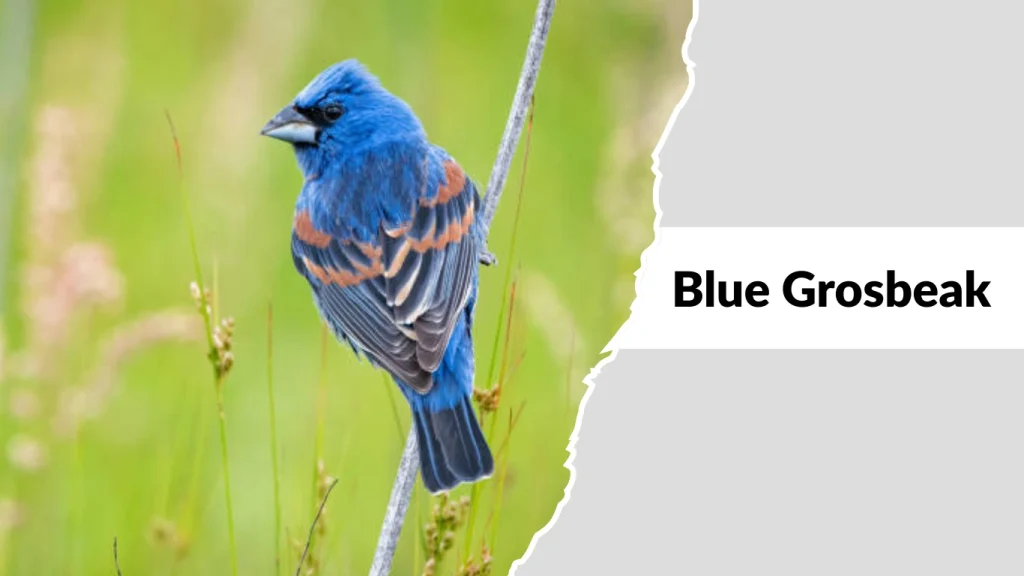
A medium-sized songbird known for its rich blue plumage and oversized bill. Blue Grosbeaks add a splash of color to brushy habitats across the southern United States and Central America, often singing from exposed perches.
Identification
- Deep cobalt-blue body in adult males
- Chestnut wingbars on both wings
- Large, thick, silver-blue conical bill
- Females are warm brown with subtle blue hints
- Slightly larger and bulkier than buntings
Habitat
Blue Grosbeaks favor shrubby fields, woodland edges, roadsides, and areas with tall grasses or hedgerows. They commonly nest low in dense vegetation.
Behavior
These birds are shy but vocal, often delivering rich, warbling songs. Pairs remain attentive during breeding, and the species may raise two broods in a season. They migrate long distances, wintering in Central America and Mexico.
Diet
Their diet includes insects, seeds, and grains. During warmer months, they feed heavily on grasshoppers, caterpillars, and beetles to nourish growing chicks.
8. Steller’s Jay
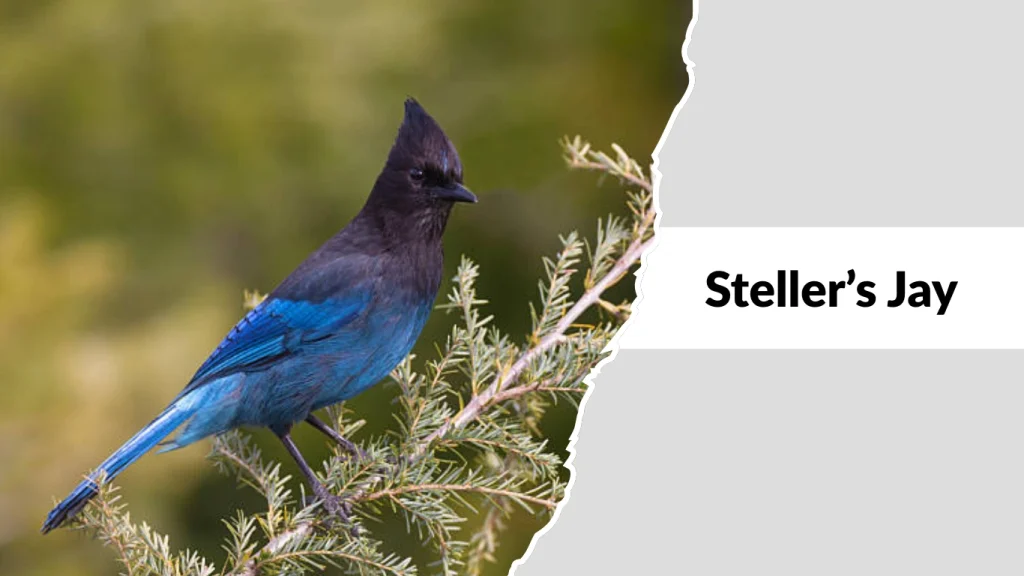
A striking and bold bird of western forests, the Steller’s Jay is easily recognized by its deep blue body and dark, crested head. Highly intelligent and social, it is a familiar presence in campgrounds, woodlands, and mountain regions.
Identification
- Deep blue body with blackish head and crest
- Bold crest standing tall on the head
- Black-to-blue gradient on upperparts
- White or blue streaks on the face in some subspecies
- Strong, straight bill
Habitat
Steller’s Jays inhabit coniferous forests, montane woodlands, and mixed woods across the western United States, Canada, and Mexico. They frequently visit campsites and backyards in search of food.
Behavior
Curious and vocal, these jays mimic hawk calls, steal food, and work cooperatively in small groups. They are territorial during nesting but highly social otherwise, often foraging with other bird species in mixed flocks.
Diet
Their diet is diverse: insects, seeds, nuts, berries, small animals, eggs, and human scraps. They are especially known for caching seeds and nuts to eat later in winter.
9. Pinyon Jay
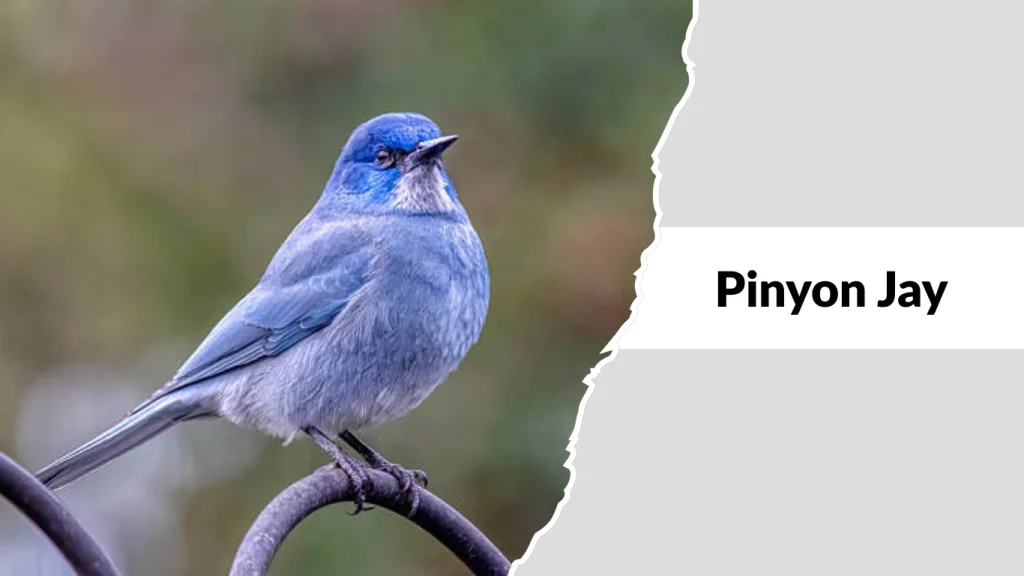
A charismatic, social bird of the American West, the Pinyon Jay is closely tied to pinyon pine forests. Its dusty blue color, loud calls, and flocking behavior make it easy to recognize in open woodland landscapes.
Identification
- Uniform dull blue plumage overall
- Slightly darker head and wings
- Stout, straight bill
- Lacks the crest seen in many other jays
- Long tail and stocky build
Habitat
Pinyon Jays are strongly associated with pinyon–juniper woodlands. They thrive in dry, open forests of the western U.S., often traveling widely in search of pine seeds.
Behavior
Extremely social, they move in large flocks that maintain constant communication with loud calls. They are expert seed hoarders, storing thousands of pine seeds each year and remembering their locations.
Diet
Primarily eat pinyon pine seeds, which they cache extensively. They also consume insects, berries, and occasionally small vertebrates, especially during breeding season.
10. Florida Scrub-Jay
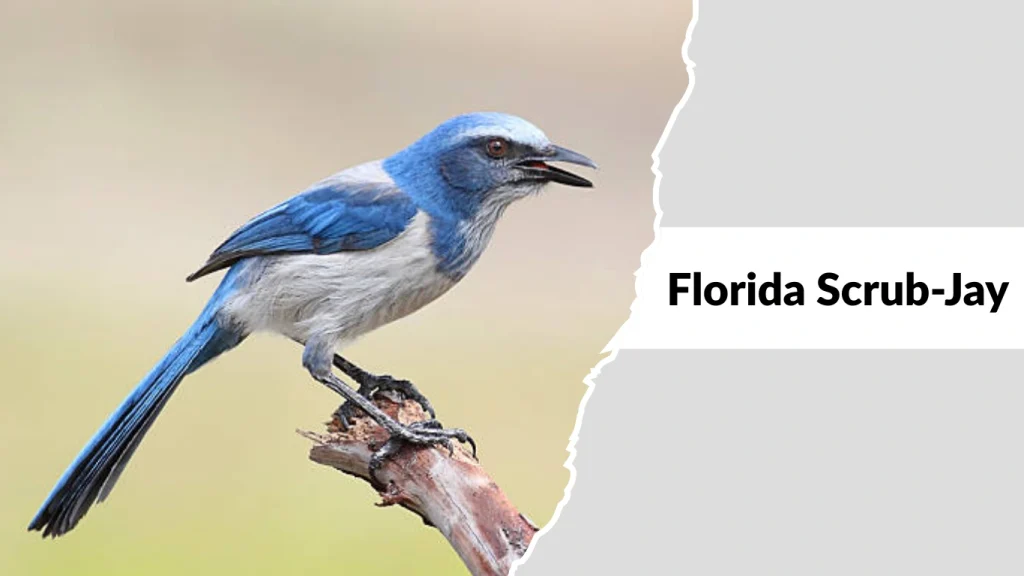
A rare and highly localized bird, the Florida Scrub-Jay is found only in the scrub habitats of Florida. Its cooperative family structure and gentle blue coloration make it one of North America’s most distinctive birds.
Identification
- Light blue head, wings, and tail
- Grayish back and whitish underparts
- Long tail and slender bill
- No crest
- Smooth, soft coloration compared to other jays
Habitat
This species is restricted to Florida’s scrub ecosystems—dry, sandy areas dominated by low oak shrubs and palmetto. It depends on these habitats for nesting and food storage.
Behavior
Florida Scrub-Jays live in cooperative family groups where offspring help parents raise younger siblings. They are trusting, often approaching humans, but highly territorial within their scrub patches.
Diet
Their diet includes acorns, insects, seeds, fruits, and small vertebrates. They store acorns each fall, burying them in sandy soil to retrieve during winter months.
11. Mexican Jay
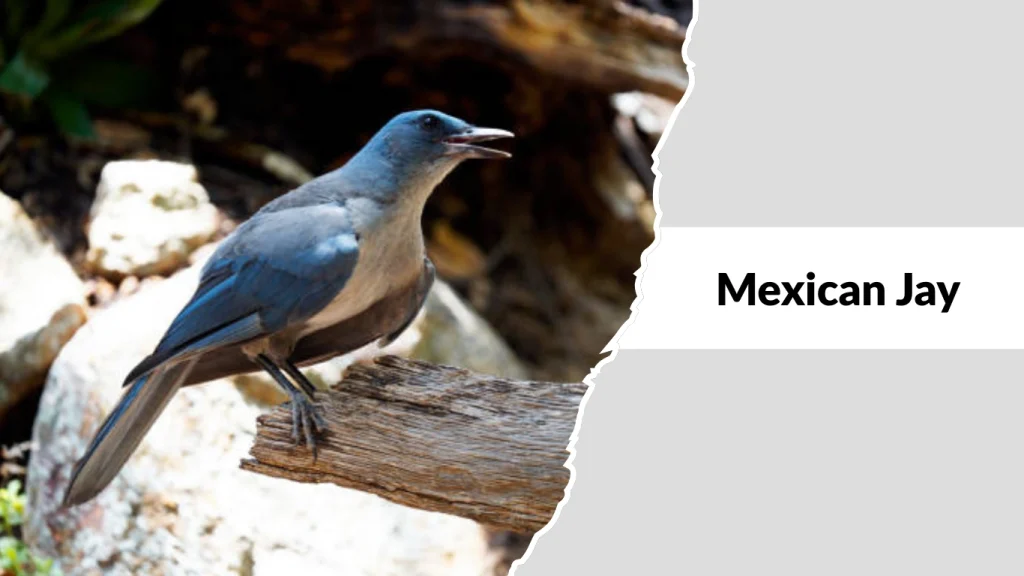
A social and intelligent bird of the southwestern U.S. and Mexico, the Mexican Jay is known for its soft blue plumage and cooperative group behavior. These jays roam oak and pine-oak woodlands in loose family groups.
Identification
- Soft blue head, wings, and tail
- Pale grayish belly and back
- Long tail and slender, straight bill
- No crest
- Smooth, even coloration compared to other jay species
Habitat
Mexican Jays inhabit pine-oak forests, scrubby foothills, and canyons in the southwestern United States and Mexico. They prefer areas with abundant acorns and pine seeds.
Behavior
They live in cooperative social groups, with multiple adults helping to raise young. Mexican Jays communicate with varied calls and forage together, often staying in the same territories for generations.
Diet
Their diet consists mainly of insects, acorns, pine seeds, berries, and small animals. Like other jays, they store food for later use, especially during winter and breeding seasons.
12. California Scrub-Jay
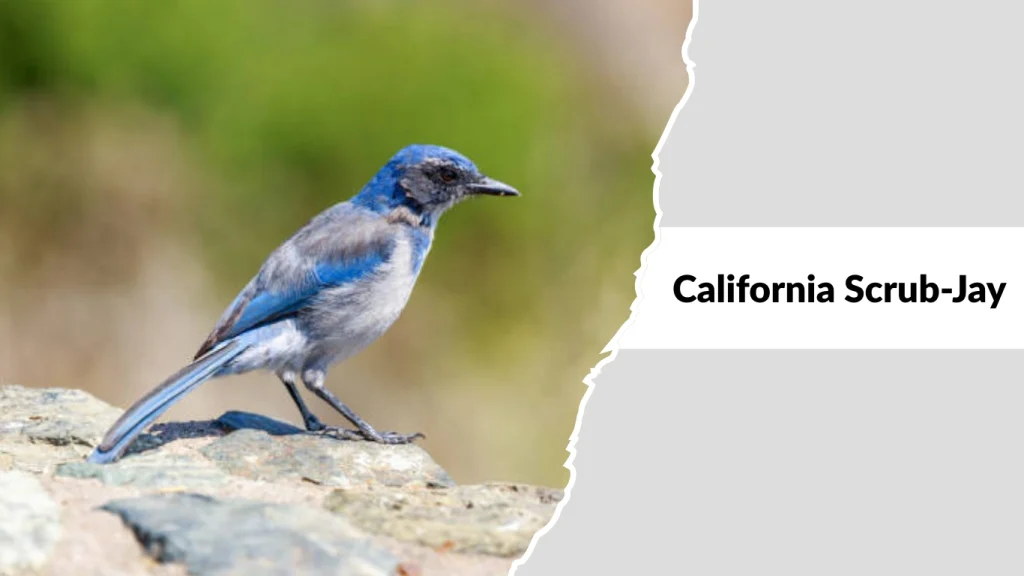
A lively and intelligent bird of the Pacific Coast, the California Scrub-Jay is known for its bold blue plumage and curious nature. Common in suburban areas, oak woodlands, and foothills, it is frequently seen hopping through shrubs or calling loudly from a perch.
Identification
- Bright blue head, wings, and tail
- Grayish back with a white or gray underside
- Blue collar across the chest
- Long tail and slender bill
- No crest, unlike some other jays
Habitat
California Scrub-Jays live in oak woodlands, chaparral, suburban neighborhoods, and coastal scrub areas. They adapt well to human presence and are often seen visiting yards for food.
Behavior
Highly intelligent, they cache acorns, raid feeders, and show problem-solving skills. They are vocal birds, using a wide range of calls to communicate within territories and family groups.
Diet
These jays eat insects, acorns, seeds, fruits, small reptiles, and occasionally eggs or nestlings. They frequently bury acorns, contributing to the regeneration of oak forests.
13. Island Scrub-Jay
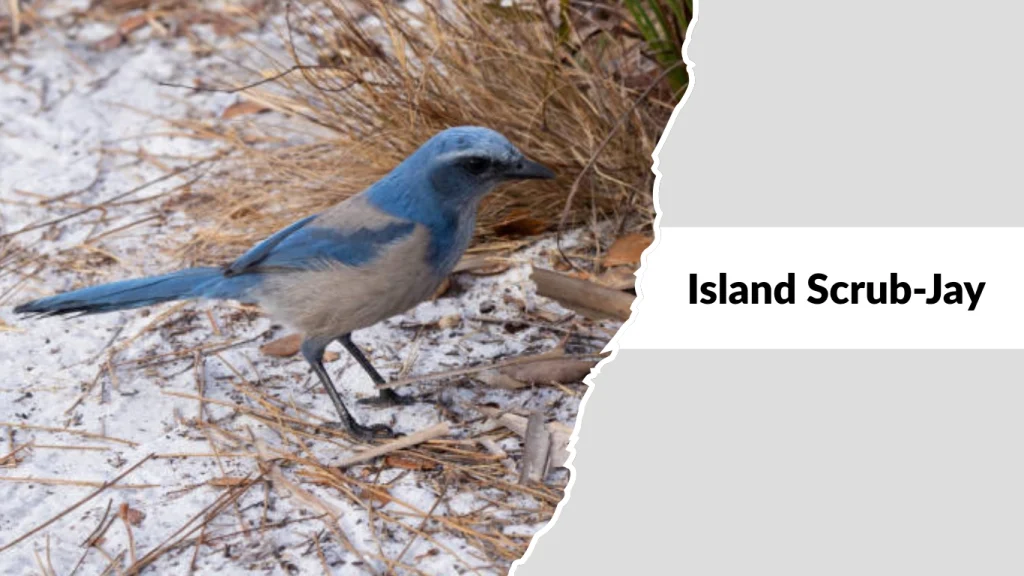
A rare and range-restricted bird found only on Santa Cruz Island off the coast of California. The Island Scrub-Jay is larger and more intensely blue than its mainland relatives, making it one of North America’s most unique birds.
Identification
- Deep cobalt-blue head, wings, and tail
- Grayish back and pale underparts
- Stocky body and larger size than other scrub-jays
- Long tail and strong bill
- No crest
Habitat
They inhabit oak woodlands, chaparral, and coastal slopes on Santa Cruz Island. Their limited range makes them vulnerable to habitat changes and environmental threats.
Behavior
Island Scrub-Jays are territorial and remain on the island year-round. They cache acorns extensively and may help disperse oak forests. Their vocalizations are loud and varied, used to maintain territory and social bonds.
Diet
Their diet includes insects, acorns, fruits, small vertebrates, and eggs. Like other scrub-jays, they rely heavily on stored acorns during winter months.
14. Blue Rock Thrush

A slender, elegant songbird known for its striking blue color and preference for rocky habitats. The Blue Rock Thrush is common across parts of Europe, Asia, and North Africa, often seen perched on cliffs or rooftops.
Identification
- Adult males are deep blue overall
- Females are brownish with scaled underparts
- Medium-length bill suited for insect hunting
- Upright posture typical of thrushes
- Slightly elongated body with long wings
Habitat
Blue Rock Thrushes inhabit rocky cliffs, mountainsides, ruins, and coastal areas. They adapt well to human structures and may nest in buildings or stone walls.
Behavior
They are solitary and territorial, frequently singing from high perches. Their melodious song carries across open landscapes. They forage by hopping among rocks, scanning for insects and small prey.
Diet
Their diet includes insects, small reptiles, berries, and occasionally small mammals. They hunt actively on rocky surfaces, capturing prey with quick strikes.
15. Blue-gray Gnatcatcher
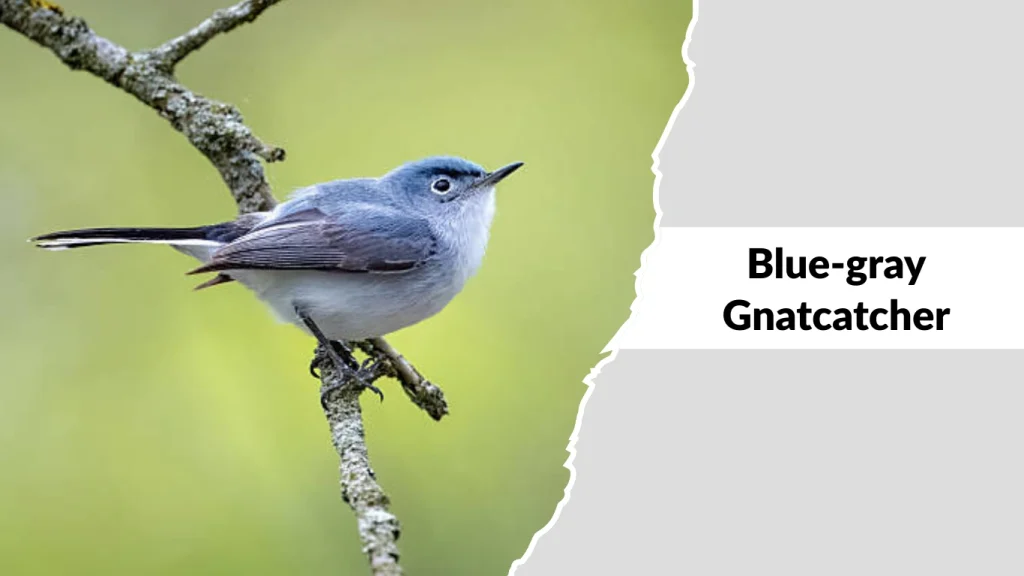
A tiny, active songbird recognized by its soft blue-gray color and constant tail flicking. The Blue-gray Gnatcatcher is widespread across North America and is often seen flitting through treetops in search of insects.
Identification
- Soft blue-gray upperparts
- White underparts
- Long black-and-white tail
- Thin, slightly curved bill
- White eyering giving it a sharp, expressive look
Habitat
These birds inhabit deciduous forests, woodland edges, thickets, and scrubby areas. They are especially common in open woodlands and young forests where insects are plentiful.
Behavior
Restless and energetic, they move quickly through branches, making short hops and flights while foraging. Blue-gray Gnatcatchers build delicate, lichen-covered nests that resemble small knots in tree branches.
Diet
Primarily insectivorous, feeding on small insects, spiders, and larvae. They glean prey from foliage and occasionally catch flying insects mid-air.
16. Blue Dacnis
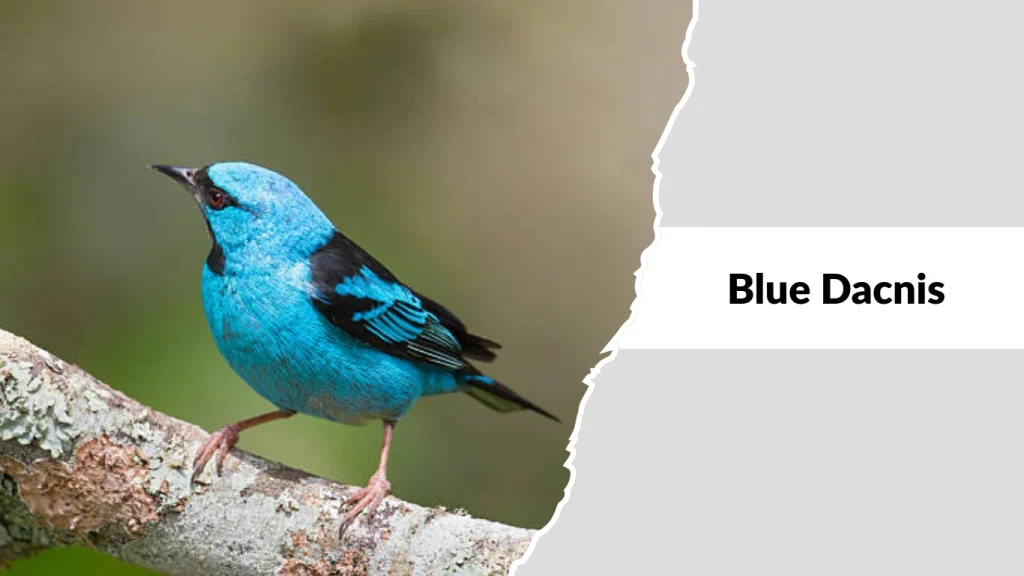
A small, brilliantly colored tropical bird found in Central and South America. The Blue Dacnis is admired for its vivid blue plumage and lively behavior as it moves through forest canopies and gardens.
Identification
- Males are bright turquoise-blue with black mask and wings
- Females are greenish with subtle blue tones
- Slender, slightly curved bill adapted for fruit and insect foraging
- Small, agile body
- Quick movements while feeding
Habitat
Blue Dacnis birds inhabit tropical forests, plantations, gardens, and forest edges. They are particularly common in humid lowlands but also occur in foothills.
Behavior
Active and social, they often form small flocks or join mixed-species feeding groups. Their swift movements and soft calls make them easy to spot in fruiting trees.
Diet
Their diet includes fruits, nectar, and insects. They forage among foliage and flowers, helping to disperse seeds and occasionally acting as pollinators.
17. Red-legged Honeycreeper
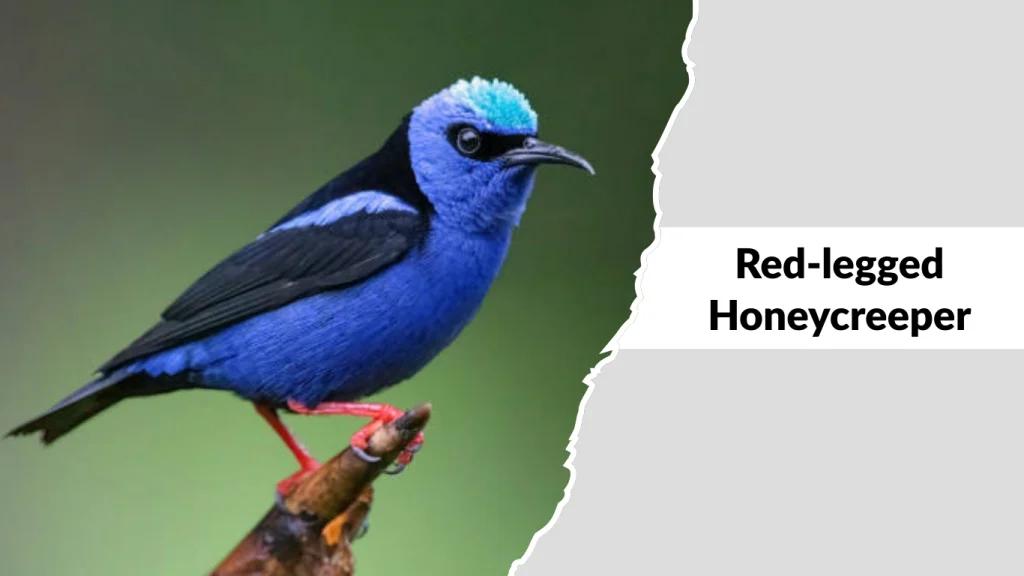
A vibrant tropical bird known for its glowing blue plumage and bright red legs. Found across Central and South America, this species brings striking color to forests, gardens, and plantations.
Identification
- Males are electric blue with black wings and mask
- Bright red legs are a key distinguishing feature
- Females are greenish with pale underparts
- Slender, slightly curved bill
- Small, agile body built for nectar and insect feeding
Habitat
Red-legged Honeycreepers live in tropical forests, forest edges, plantations, and gardens. They are often drawn to flowering trees and fruiting shrubs.
Behavior
They are active and often travel in small flocks or mixed feeding groups. Males and females communicate with high, sharp calls while foraging among the canopy.
Diet
Their diet includes nectar, fruits, insects, and small arthropods. They frequently visit flowering plants, where their curved bills help them extract nectar efficiently.
18. Hyacinth Macaw
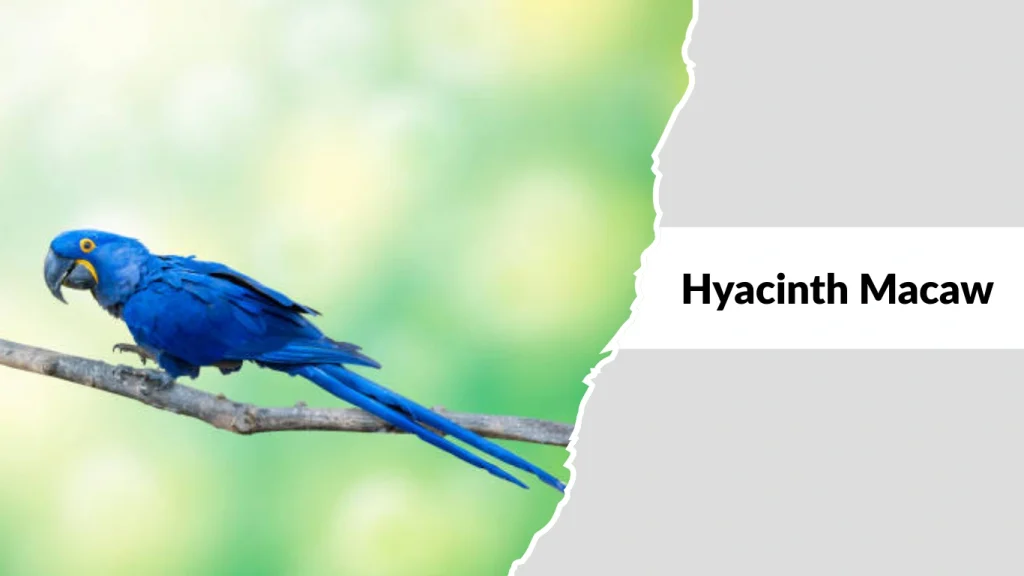
The Hyacinth Macaw is the largest flying parrot in the world, known for its stunning cobalt-blue feathers and strong, curved bill. Native to South America, this magnificent bird inhabits open woodlands and savannas.
Identification
- Deep cobalt-blue plumage across the entire body
- Bright yellow skin around the eyes and base of the bill
- Extremely large, powerful black bill
- Long tail and broad wings
- One of the largest parrot species
Habitat
These macaws live in palm-dominated woodlands, forests, and savannas of Brazil, Bolivia, and Paraguay. They rely heavily on large palm trees for food and nesting cavities.
Behavior
Hyacinth Macaws are intelligent, social birds that form strong pair bonds. They vocalize loudly, fly gracefully in pairs or small groups, and show remarkable problem-solving abilities both in the wild and captivity.
Diet
Their diet consists mainly of palm nuts, which they crack open with their powerful bills. They also eat fruits and seeds, often traveling long distances to find food-rich areas.
19. Blue-and-yellow Macaw
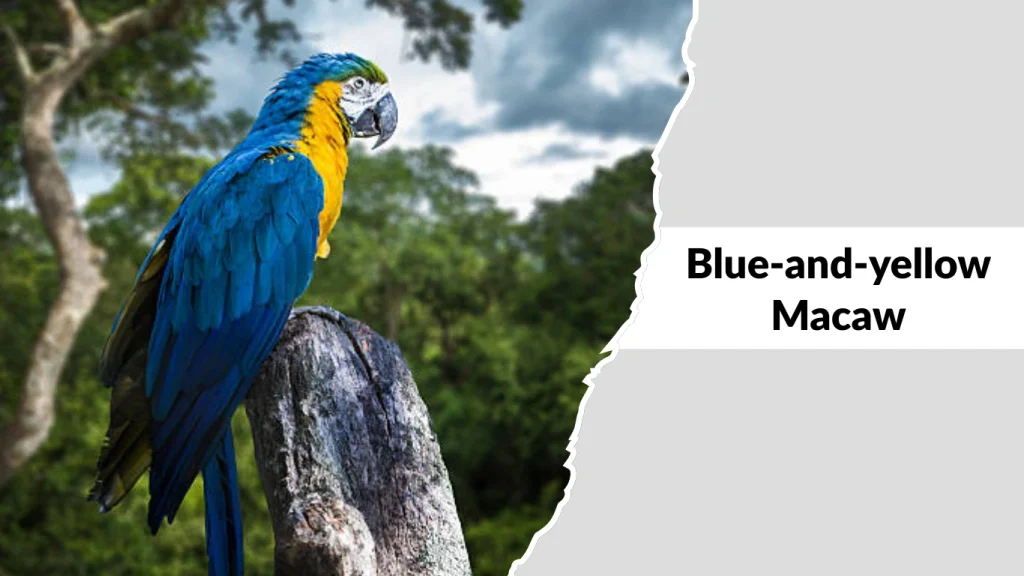
A spectacular and iconic parrot known for its brilliant blue wings and bright yellow underparts. The Blue-and-yellow Macaw is widespread across the tropical forests and riverbanks of South America, often seen flying in noisy pairs.
Identification
- Bright blue wings, back, and tail
- Vibrant yellow chest and belly
- Greenish forehead
- Large black bill with bare white facial skin
- Long tail and powerful build
Habitat
These macaws inhabit rainforests, gallery forests, and river edges throughout much of the Amazon Basin. They prefer tall trees for nesting and roosting and may visit open areas while foraging.
Behavior
Highly social and intelligent, they form strong pair bonds and communicate with loud, harsh calls. They often travel in pairs or small flocks, displaying agile flight and cooperative foraging behaviors.
Diet
Their diet includes nuts, seeds, fruits, and berries. Blue-and-yellow Macaws use their strong bills to crack open hard nuts and climb branches with ease.
20. Blue-crowned Motmot

A colorful and charismatic bird native to Central and South America, the Blue-crowned Motmot is easily recognized by its vivid blue crown and long, racket-tipped tail. It is often found quietly perched in tropical forests.
Identification
- Bright blue crown and nape
- Green body with blue highlights on wings and tail
- Long tail with distinctive racket-shaped tips
- Black mask around the eyes
- Stout bill and upright posture
Habitat
Blue-crowned Motmots live in tropical forests, forest edges, and shaded gardens. They prefer areas with dense vegetation and are often seen in low to mid-level branches.
Behavior
They are calm, secretive birds that sit motionless while scanning for prey. Their signature behavior is tail-wagging, where the long tail swings like a pendulum. Motmots nest in burrows dug into earthen banks.
Diet
Their diet includes insects, fruits, small reptiles, and amphibians. They capture prey by swooping down from a perch and often swallow small animals whole.
21. Blue Bird-of-paradise
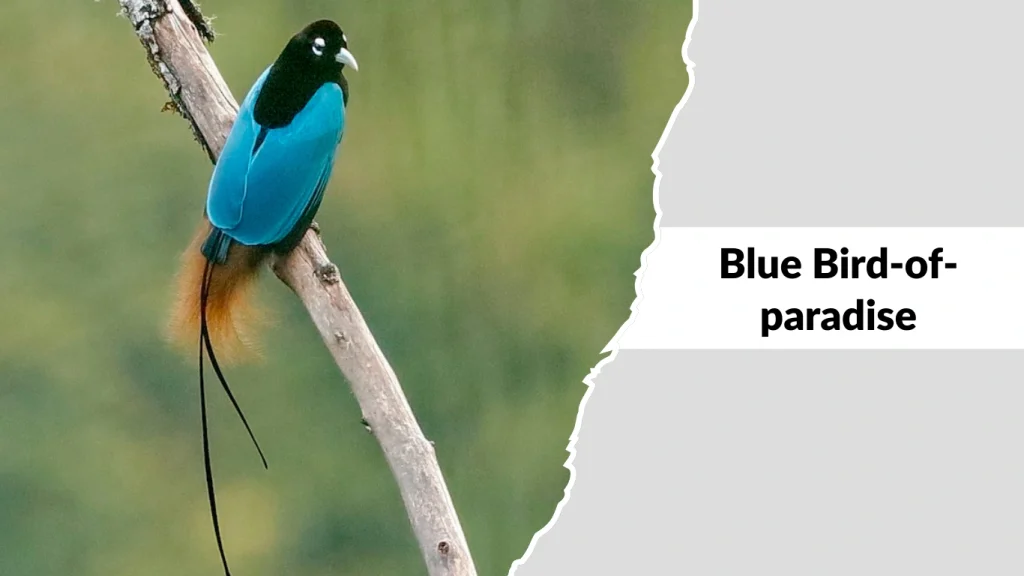
A breathtaking and rare species from the montane forests of Papua New Guinea, the Blue Bird-of-paradise is admired for its deep blue plumage, elegant tail streamers, and elaborate courtship displays.
Identification
- Deep blue body with contrasting dark wings
- Long, ribbon-like tail streamers in males
- Ornate black face and breast shield
- Females are brownish with subtle blue accents
- Sleek, graceful build typical of birds-of-paradise
Habitat
Found in high-elevation forests and forest edges of Papua New Guinea. They prefer dense, mossy environments where they can forage and display safely.
Behavior
Males perform elaborate courtship dances on chosen display perches, spreading their plumage and showcasing their long tail streamers. These birds are generally solitary except during mating.
Diet
Their diet includes fruits, insects, and small invertebrates. They forage through the canopy, plucking fruits and occasionally hunting prey among foliage.
22. Blue Whistling Thrush
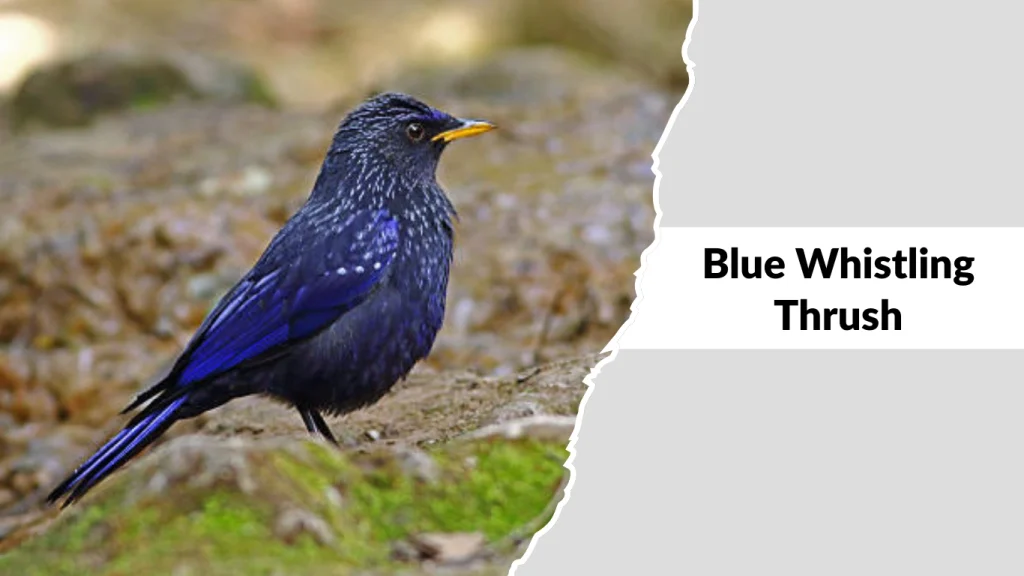
A striking and melodious bird found across the Himalayas and Southeast Asia. The Blue Whistling Thrush is known for its deep blue plumage speckled with lighter spots and its powerful, flute-like call.
Identification
- Dark blue, almost purplish body with fine whitish speckles
- Bright yellow or orange bill (varies by region)
- Large, robust thrush with strong legs
- Long tail and bold stance
- Distinctive whistling song
Habitat
This species inhabits mountain streams, forest edges, rocky valleys, and hillside trails. It prefers moist environments and is often seen near cascading water.
Behavior
Blue Whistling Thrushes are bold and active, hopping on rocks and scanning for prey. They sing loudly at dawn and dusk, especially during the breeding season. They are mostly solitary except when raising young.
Diet
Their diet includes insects, snails, frogs, small reptiles, and berries. They often forage along streams, flipping leaves and stones to uncover hidden prey.
23. Blue Fairywren
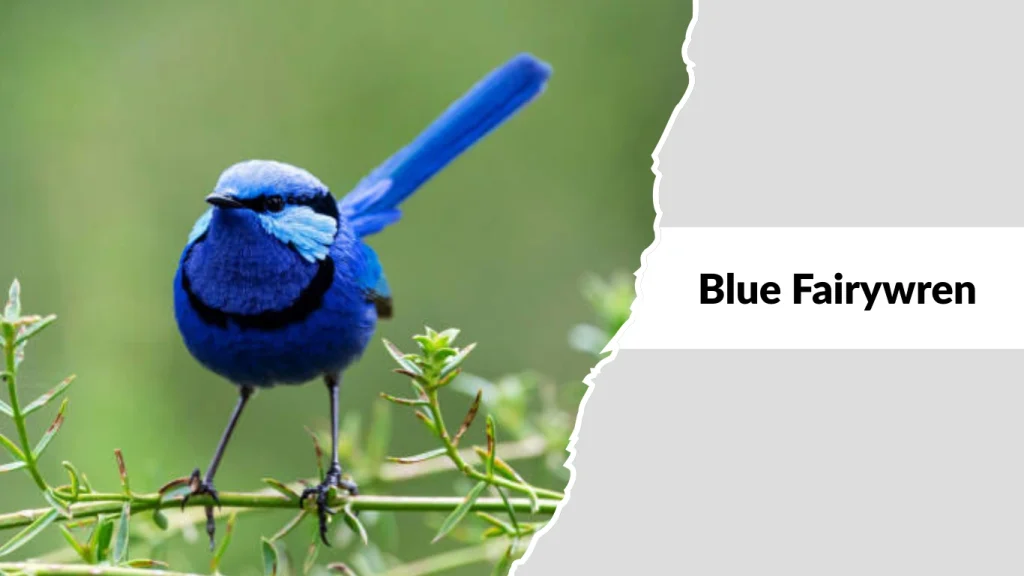
A tiny, jewel-like bird native to Australia, the Blue Fairywren is adored for its brilliant sapphire-blue plumage and lively social behavior. It is commonly seen flitting through shrubs and grasslands in small family groups.
Identification
- Males in breeding season are vivid electric blue with black markings
- Females and non-breeding males are brownish with subtle blue hints
- Slender tail often held upright
- Tiny, delicate frame
- Thin, pointed bill
Habitat
Blue Fairywrens inhabit grasslands, shrublands, woodlands, and suburban gardens across much of Australia. They favor areas with dense low vegetation for cover and nesting.
Behavior
Highly social, they live in cooperative family groups where several helpers assist breeding pairs. Males perform charming displays, including presenting flower petals to females.
Diet
Primarily feeds on insects and small arthropods. They forage close to the ground, hopping quickly between shrubs and open spaces while searching for prey.
24. Mountain Blue-capped Cordon-bleu
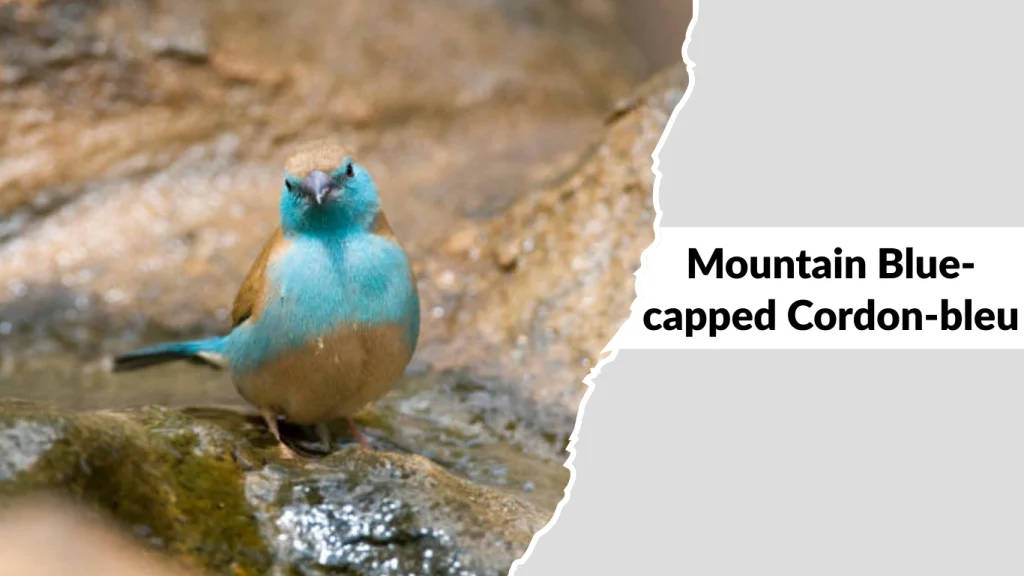
A beautiful and delicate African finch, the Mountain Blue-capped Cordon-bleu is admired for its bright blue face and soft, graceful appearance. Found in East African highlands, it frequents woodlands and bushy areas.
Identification
- Bright blue head and face
- Brownish wings and back
- Pale underparts with bluish tones
- Small, conical pinkish bill
- Slender, elegant body typical of waxbills
Habitat
These birds inhabit montane woodlands, bushy savannas, and cultivated areas. They prefer regions with scattered shrubs and grass, often near human settlements.
Behavior
Mountain Blue-capped Cordon-bleus are social and often found in pairs or small groups. They communicate with soft calls and perform subtle courtship displays that include bowing and hopping.
Diet
Their diet consists mainly of grass seeds, small insects, and occasional berries. They forage close to the ground, using their fine bills to pick seeds from grasses and low plants.
25. Blue-headed Vireo

A small, cleanly marked songbird native to North America, the Blue-headed Vireo is known for its crisp blue-gray head and bold facial pattern. It inhabits mixed and coniferous forests, where its steady, deliberate movements set it apart.
Identification
- Blue-gray head with striking white spectacles
- Olive-green back and wings
- White underparts with yellowish flanks
- Thick, slightly hooked bill typical of vireos
- Slow, methodical foraging style
Habitat
This species lives in mixed woodlands, boreal forests, and coniferous stands across Canada and the northern United States. During migration, it frequents forest edges, parks, and shrubby areas.
Behavior
Blue-headed Vireos move slowly through branches, inspecting leaves for insects. Their steady, sweet song is often heard before the bird is seen. They are solitary during the breeding season but join mixed flocks in migration.
Diet
Their diet consists mainly of insects and spiders, supplemented by berries during migration and winter. They glean prey from foliage and occasionally hover briefly to snatch insects from the underside of leaves.