

Brown birds may appear simple at first glance, but they include some of the most widespread, adaptable, and behaviorally fascinating species in the world. Found in forests, wetlands, coastlines, and even city streets, these birds blend beautifully into their environments with earthy tones and subtle markings. This list highlights 26 common brown birds, offering a glimpse into their diversity, habitats, and roles in nature for birdwatchers and nature lovers alike.
1. House Sparrow
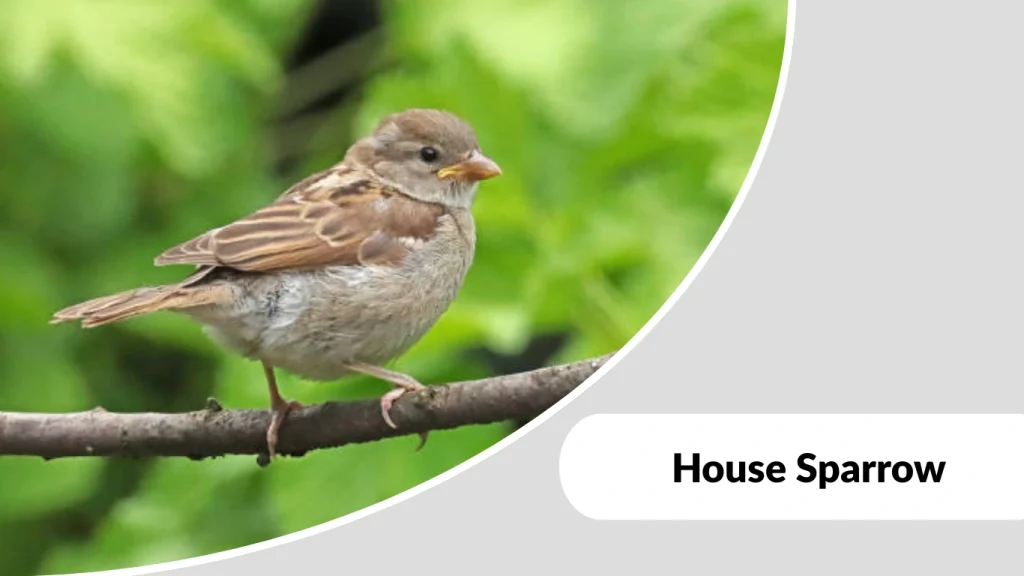
A familiar and widespread small bird found across cities, towns, farms, and villages worldwide. The House Sparrow is known for its adaptability, social behavior, and close association with human environments, making it one of the most commonly seen brown birds.
Identification
- Brown and gray body with streaked wings
- Males have a black bib and gray crown
- Females are plain brown with a pale eyebrow
- Short, stout conical bill
- Compact, rounded body shape
Habitat
House Sparrows thrive in urban areas, agricultural fields, parks, and residential neighborhoods. They prefer places where humans provide food sources such as grains, scraps, and bird feeders. They nest in cavities, eaves, buildings, and other man-made structures.
Behavior
Highly social and active, they form flocks year-round and communicate with chirping calls. House Sparrows aggressively compete for nesting sites and food. They display strong territorial behavior during breeding season and are often seen hopping on the ground while foraging.
Diet
Their diet consists mainly of seeds and grains, supplemented by insects—especially when feeding young. They also consume food scraps, fruits, and small invertebrates, making them well-suited to living near humans.
2. Song Sparrow
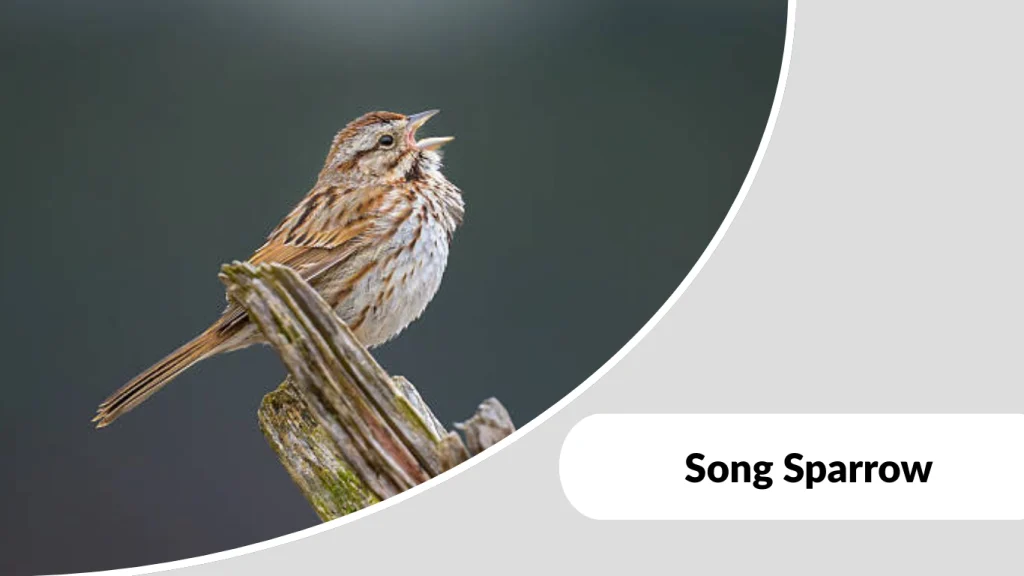
A widespread and melodic brown bird known for its streaked plumage and rich, varied song. The Song Sparrow is found across North America and is easily recognized by its musical notes and characteristic plumage pattern.
Identification
- Brown-streaked body with bold chest streaks forming a central spot
- Grayish face with brown crown stripes
- Long, rounded tail
- Stout, slightly curved bill
- Considerable variation in coloration across regions
Habitat
Song Sparrows inhabit marshes, forest edges, gardens, shrublands, and suburban areas. They prefer dense vegetation for nesting and feeding, often staying close to low shrubs and grasses.
Behavior
These birds are active and vocal, frequently singing from exposed perches. They hop along the ground in search of food and display territorial behavior during the breeding season. Song Sparrows are year-round residents in many areas but migrate in colder regions.
Diet
Their diet includes seeds, insects, berries, and small invertebrates. They forage both on the ground and among low vegetation, especially favoring insects during the breeding season.
3. House Wren
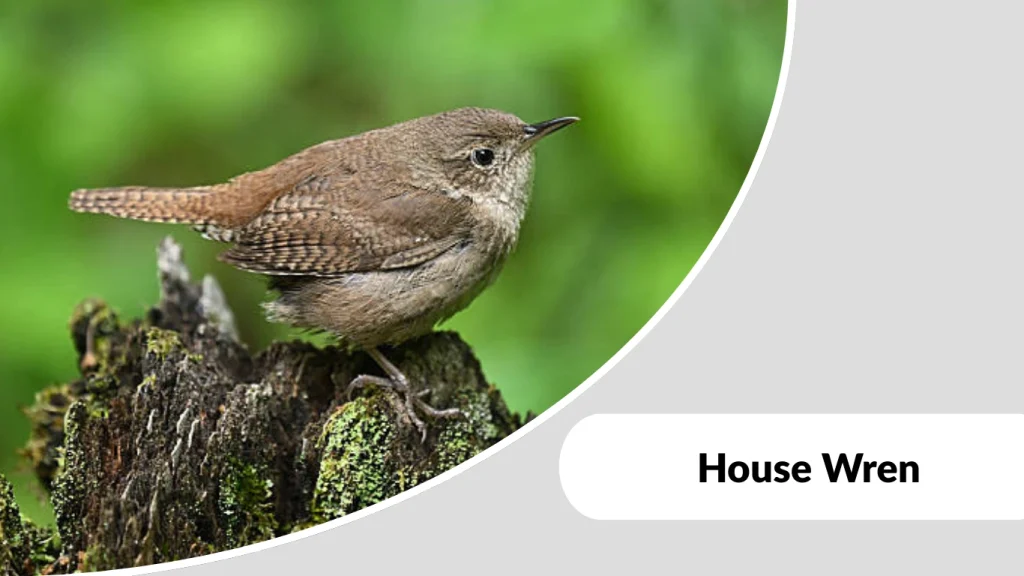
A tiny, energetic brown bird known for its bubbly song and restless nature. House Wrens are common across the Americas and often nest close to people, frequently occupying birdhouses and small cavities.
Identification
- Plain brown upperparts with faint barring
- Pale, lightly speckled underparts
- Thin, slightly curved bill
- Short wings and a short, often cocked tail
- Small, lightweight body built for quick movements
Habitat
House Wrens thrive in gardens, woodlands, parks, and shrubby areas. They prefer habitats with abundant cavities, such as old trees, birdhouses, and crevices in buildings or fences.
Behavior
Highly active, they flit constantly through vegetation while searching for insects. House Wrens are known for aggressively defending nesting sites, even removing other birds’ nesting material to claim a cavity. Their cheerful, bubbling song fills the air during spring and summer.
Diet
Their diet is primarily insect-based, including beetles, spiders, caterpillars, and larvae. They forage among foliage, logs, and crevices, often probing cracks to find hidden prey.
4. Carolina Wren
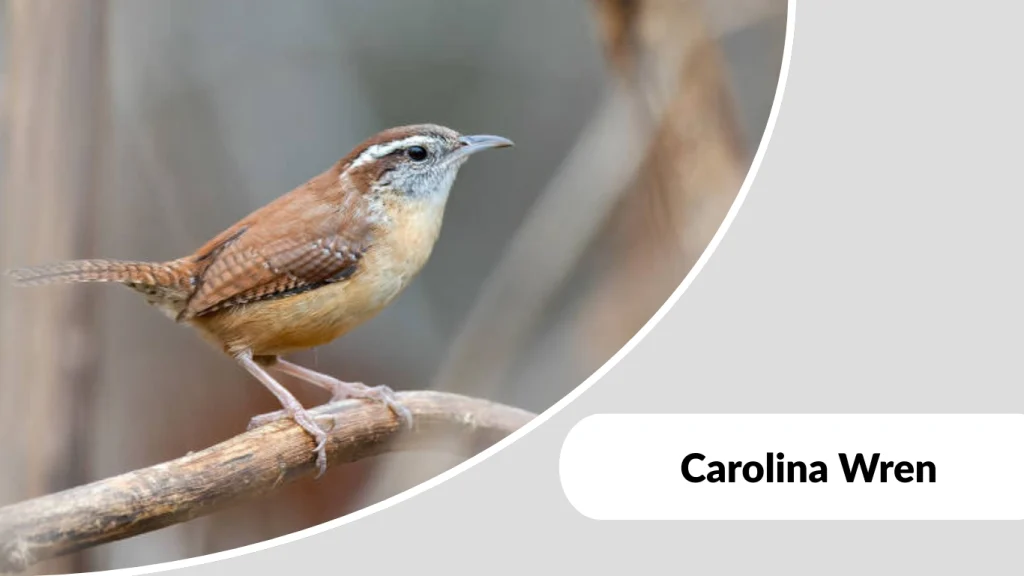
A bold, vocal brown bird known for its loud “tea-kettle, tea-kettle” song and energetic behavior. Carolina Wrens are common in the southeastern United States and are frequent visitors to yards and gardens.
Identification
- Warm reddish-brown upperparts
- Buff-colored underparts
- Distinct white eyebrow stripe
- Slightly curved bill
- Rounded body with an often upright tail
Habitat
Carolina Wrens inhabit woodlands, suburban yards, thickets, and brushy areas. They often stay near dense vegetation, fallen logs, and sheltered spots where they can forage and nest.
Behavior
Active and curious, they explore crevices, woodpiles, and porches while searching for food. Carolina Wrens remain paired year-round and communicate with loud calls. They build dome-shaped nests in cavities, flowerpots, and even abandoned items.
Diet
Their diet includes insects, spiders, small invertebrates, and occasionally seeds or berries. They search low to the ground, probing bark and debris to uncover prey.
5. Winter Wren
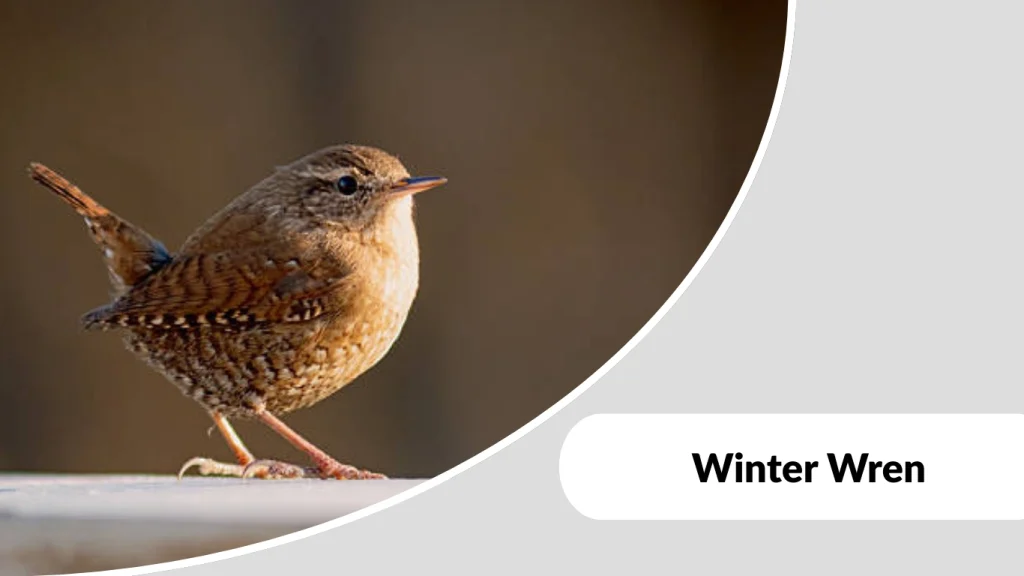
A tiny, secretive brown bird known for its rich, cascading song that is surprisingly loud for its small size. Winter Wrens are commonly found in dense forests, especially near fallen logs and mossy undergrowth.
Identification
- Dark brown body with heavy barring on wings and tail
- Very short, stubby tail often held upright
- Tiny round body and short neck
- Thin, slightly curved bill
- Subtle pale eyebrow line
Habitat
Winter Wrens prefer damp, dense coniferous and mixed forests. They stay close to the ground, especially around fallen trees, mossy roots, and tangled underbrush. During winter, they may wander into shrubby areas and wooded parks.
Behavior
They are active skulkers, darting quickly through low vegetation. Despite their small size, Winter Wrens have one of the most powerful songs relative to body size. They remain solitary outside the breeding season and are known for exploring crevices and roots.
Diet
Their diet includes insects, spiders, beetle larvae, and other tiny invertebrates. They forage low to the ground, probing moss, bark, and leaf litter to find hidden prey.
6. Marsh Wren
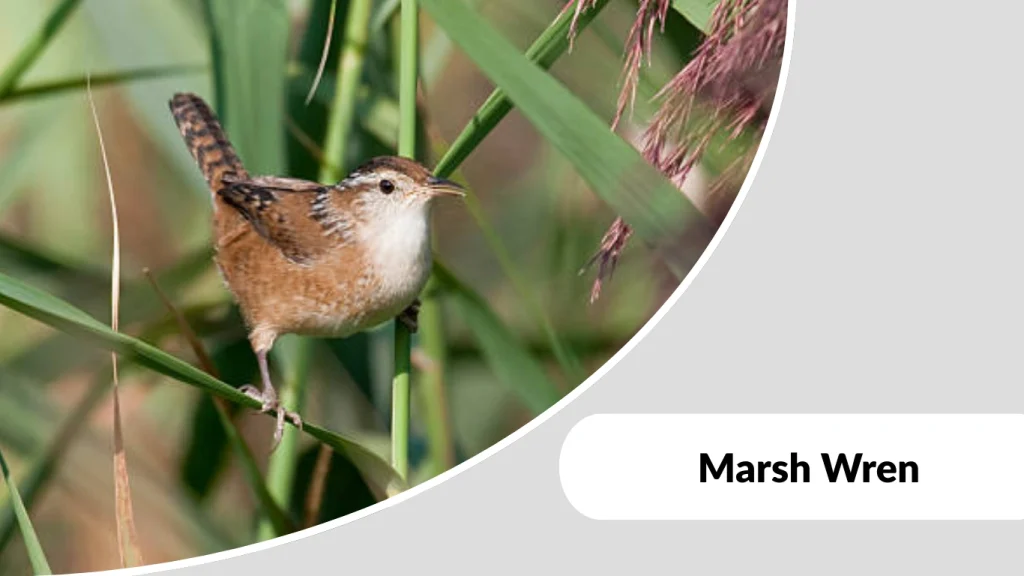
A small, energetic brown bird found primarily in marshes and wetland habitats. The Marsh Wren is known for its loud, chattering song and its skillful weaving of intricate nests among cattails.
Identification
- Brown upperparts with a darker crown
- Distinct white eyebrow stripe
- Heavily barred wings and tail
- Thin, slightly curved bill
- Small body with an upright tail
Habitat
Marsh Wrens inhabit freshwater and brackish marshes filled with cattails, reeds, and sedges. They build their nests suspended between plant stems, often in colonies where vegetation is dense.
Behavior
Highly active and vocal, Marsh Wrens hop along reeds and grasses while delivering their rapid, mechanical song. Males often construct multiple nests during breeding season. They are territorial and may aggressively defend nesting areas.
Diet
Their diet consists mainly of insects and small invertebrates, including beetles, spiders, caterpillars, and aquatic larvae. They forage by probing stems and vegetation for hidden prey.
7. Bewick’s Wren
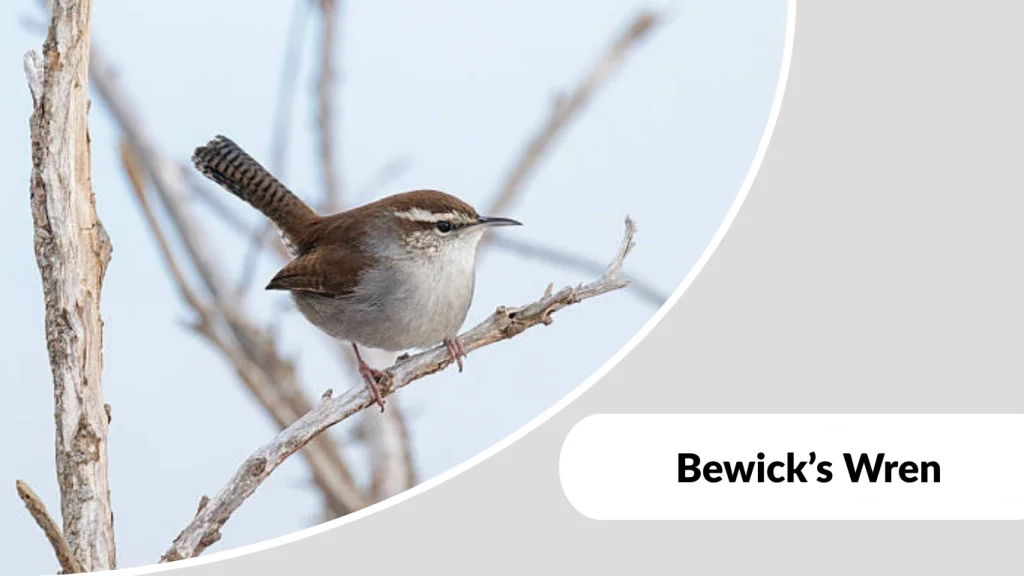
A slender, active brown wren known for its long tail and sweet, musical song. Bewick’s Wrens are commonly found in western and central North America, especially in brushy habitats and suburban gardens.
Identification
- Brown upperparts with pale underparts
- Distinct long white eyebrow stripe
- Long tail with bold black-and-white barring
- Thin, slightly curved bill
- Slim, lively body shape
Habitat
Bewick’s Wrens inhabit scrublands, chaparral, open woodlands, and residential areas with thick shrubs. They prefer territories with abundant cover and nesting cavities, such as old trees and sheltered structures.
Behavior
They are restless and curious, frequently flicking their long tails while moving through vegetation. Bewick’s Wrens sing clear, musical phrases and are territorial during breeding season. Pairs remain bonded and defend their territory year-round.
Diet
Their diet includes insects, spiders, caterpillars, and other small invertebrates. They forage actively in shrubs, bark crevices, and ground vegetation, probing for prey with precision.
8. Brown Thrasher
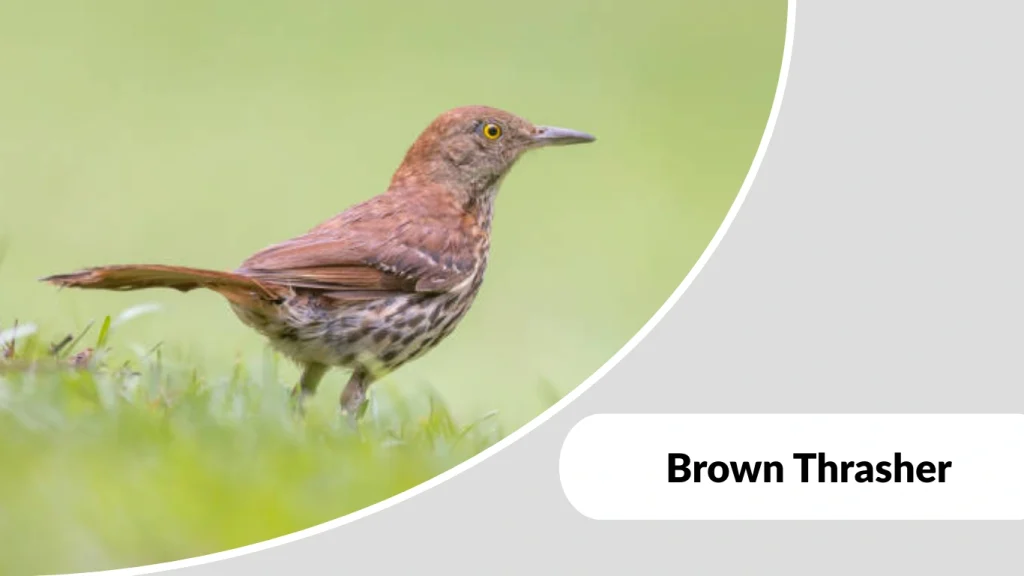
A striking brown songbird known for its bold streaks and impressive vocal abilities. The Brown Thrasher can sing hundreds of distinct phrases, making it one of North America’s most versatile vocalists.
Identification
- Rich reddish-brown upperparts
- Heavily streaked white underparts
- Bright yellow eyes
- Long, sturdy tail
- Slightly curved bill
Habitat
Brown Thrashers inhabit dense shrubs, hedgerows, forest edges, and overgrown fields. They prefer areas with thick cover for nesting and protection but will venture out onto lawns or paths while foraging.
Behavior
They are secretive but vocal, often singing from concealed perches. Brown Thrashers forage by vigorously sweeping leaf litter with their bills. They are territorial during breeding season and fiercely defend their nests.
Diet
Their diet includes insects, fruits, berries, nuts, and occasional small vertebrates. They forage on the ground, flipping leaves and probing soil to uncover prey.
9. Brown Creeper
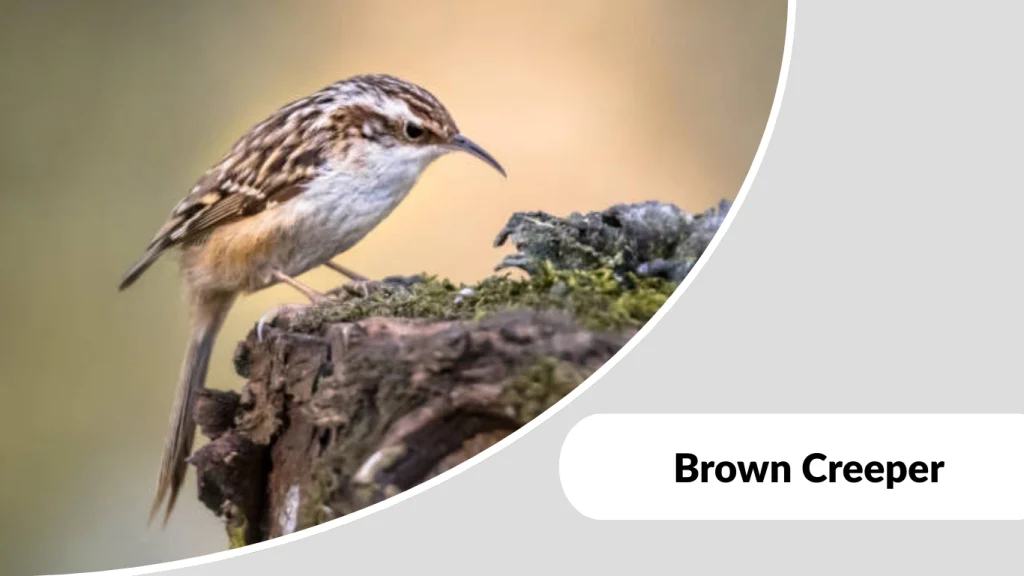
A tiny, tree-climbing bird known for its camouflaged brown plumage and unique foraging style. The Brown Creeper spirals up tree trunks in search of insects, blending almost perfectly with bark.
Identification
- Brown, mottled upperparts resembling tree bark
- Whitish underparts
- Thin, downcurved bill
- Long, stiff tail used for support while climbing
- Small, slender body with cryptic coloration
Habitat
Brown Creepers inhabit mature forests, especially those with large trees. They prefer coniferous and mixed woodlands, and in winter may appear in parks or wooded neighborhoods with tall tree trunks to forage on.
Behavior
They climb tree trunks in a distinctive upward spiraling motion, then fly to the base of another tree to begin again. Brown Creepers are quiet and unobtrusive, often detected only by their high, thin call.
Diet
Their diet consists mainly of insects, spiders, larvae, and eggs hidden in bark crevices. They probe into cracks with their slender bills, making them efficient bark foragers.
10. Brown-headed Cowbird
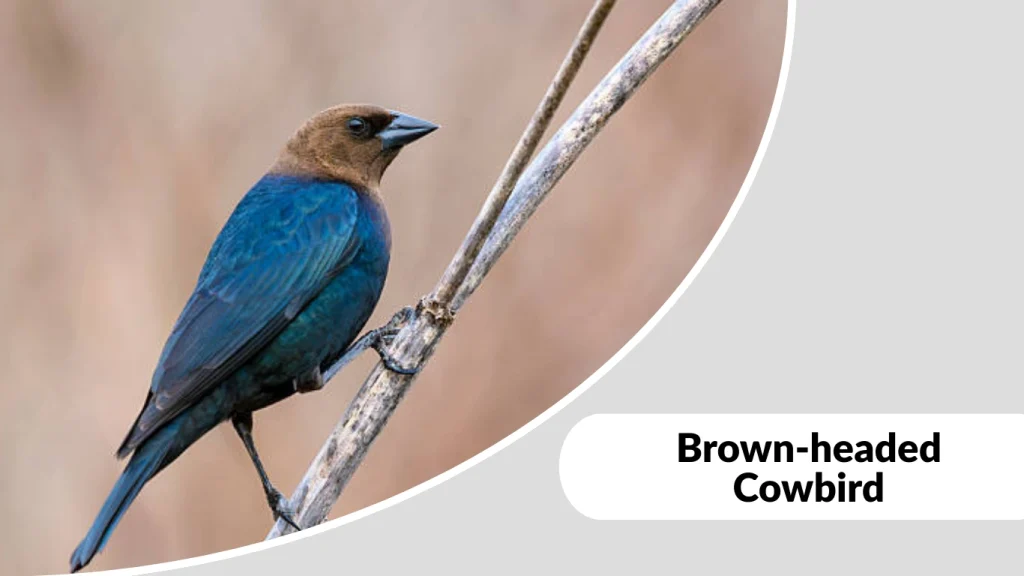
A small, stocky brown bird known for its brood parasitism—females lay their eggs in the nests of other bird species. Brown-headed Cowbirds are widespread across North America and often seen in open habitats.
Identification
- Males have glossy black bodies with a rich brown head
- Females are plain brown overall with subtle streaking
- Short, thick conical bill
- Medium-length tail
- Stout, compact body shape
Habitat
Cowbirds thrive in grasslands, agricultural fields, forest edges, and suburban areas. They prefer open environments with scattered trees, often following livestock or foraging in short grass.
Behavior
Females deposit their eggs in the nests of other birds, leaving foster parents to raise their chicks. Cowbirds are social and often form mixed flocks with blackbirds and starlings. They forage mostly on the ground.
Diet
Their diet includes seeds, grains, insects, and small invertebrates. They frequently feed in open fields, consuming weed seeds and insects stirred up by grazing animals.
11. Brown Pelican

A large coastal bird recognized for its brown body, long bill, and dramatic plunge-diving style. The Brown Pelican is commonly found along ocean shorelines and is one of the most familiar seabirds in the Americas.
Identification
- Brown body with pale or white head (varies by season)
- Long, pouched bill
- Broad wings and large body
- Dark legs and webbed feet
- Juveniles are uniformly brown with pale bellies
Habitat
Brown Pelicans inhabit coastal waters, beaches, estuaries, mangroves, and harbors. They prefer warm ocean coastlines and are rarely found inland. They roost on sandbars, piers, rocky outcrops, and coastal islands.
Behavior
Famous for plunge-diving, they soar above water and dive headfirst to catch fish. Brown Pelicans are social and often travel or rest in groups. They fly in graceful single-file lines close to the waves.
Diet
Their diet consists mainly of fish, especially schooling species like anchovies and mullet. They catch prey by diving from the air and using their expandable throat pouch to scoop up fish and water before swallowing.
12. Brown Booby

A sleek and agile seabird known for its brown-and-white plumage and striking diving ability. Brown Boobies are commonly found in tropical and subtropical oceans around the world.
Identification
- Dark brown head, neck, and upperparts
- White belly and lower breast
- Long, pointed wings
- Sharp, dagger-like bill
- Strong, streamlined body built for diving
Habitat
Brown Boobies inhabit warm coastal waters, offshore islands, coral reefs, and open oceans. They nest on rocky islands, sandy beaches, and cliffs, often forming large colonies.
Behavior
Expert divers plunge into the water from great heights to catch fish. They fly with swift, direct wingbeats and often follow boats. Brown Boobies are social and nest in dense colonies with loud vocalizations.
Diet
Their diet includes fish, squid, and other marine life. They catch prey by diving straight into the sea, using their sharp bill to spear or grab fish near the surface.
13. American Robin (Female)
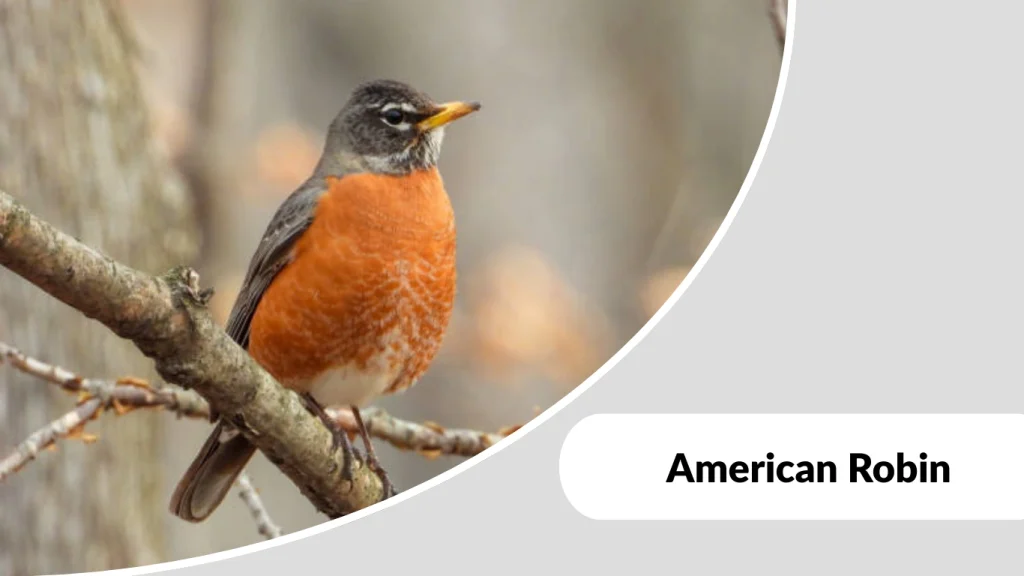
The female American Robin is a familiar brown-toned bird often seen hopping across lawns and gardens. Though less brightly colored than the male, her warm brown plumage provides excellent camouflage while nesting.
Identification
- Brown upperparts with a muted orange breast
- Paler and duller coloration than the male
- White throat with dark streaks
- Long legs and rounded body
- Straight, yellowish bill
Habitat
Female American Robins thrive in suburban yards, parks, forests, and open fields. They frequently forage on lawns and build nests in shrubs, trees, or building ledges.
Behavior
They hop across the ground searching for food, often tilting their heads to locate worms. Females take the lead in nest-building and incubation. They are active, alert birds and may raise multiple broods each season.
Diet
Their diet includes earthworms, insects, berries, and fruits. They forage on lawns for worms and switch to fruit-heavy diets during winter months.
14. Cedar Waxwing (Female)
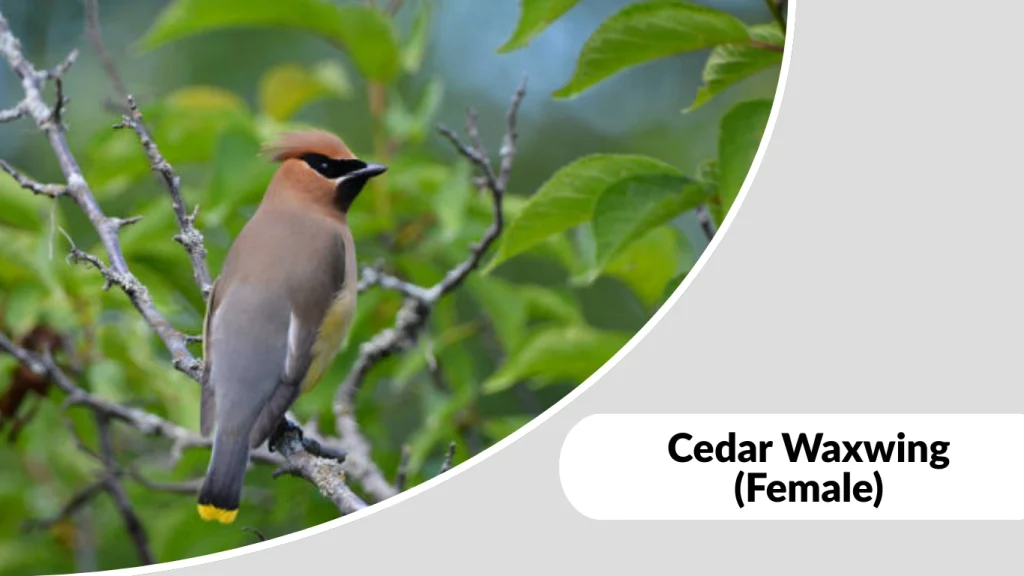
The female Cedar Waxwing is a sleek, brown-toned songbird known for its smooth plumage and social behavior. Although less vibrant than males, she retains the species’ elegant, silky appearance.
Identification
- Soft brown upperparts fading into gray
- Pale yellow belly
- Subtle crest on the head
- Black mask outlined in white
- Lacks the bright red wing wax tips often seen on males
Habitat
Female Cedar Waxwings inhabit woodlands, orchards, suburban areas, and river edges. They prefer habitats rich in fruiting trees and shrubs, often forming large flocks around abundant food sources.
Behavior
Highly social, they travel in flocks year-round and engage in cooperative feeding. Cedar Waxwings perform gentle courtship rituals, including passing berries back and forth. They are strong fliers and often perch quietly in groups.
Diet
Their diet consists mainly of fruits and berries, including serviceberries, dogwood, and cedar berries. They also catch insects on the wing during warmer months, especially when feeding nestlings.
15. Hermit Thrush
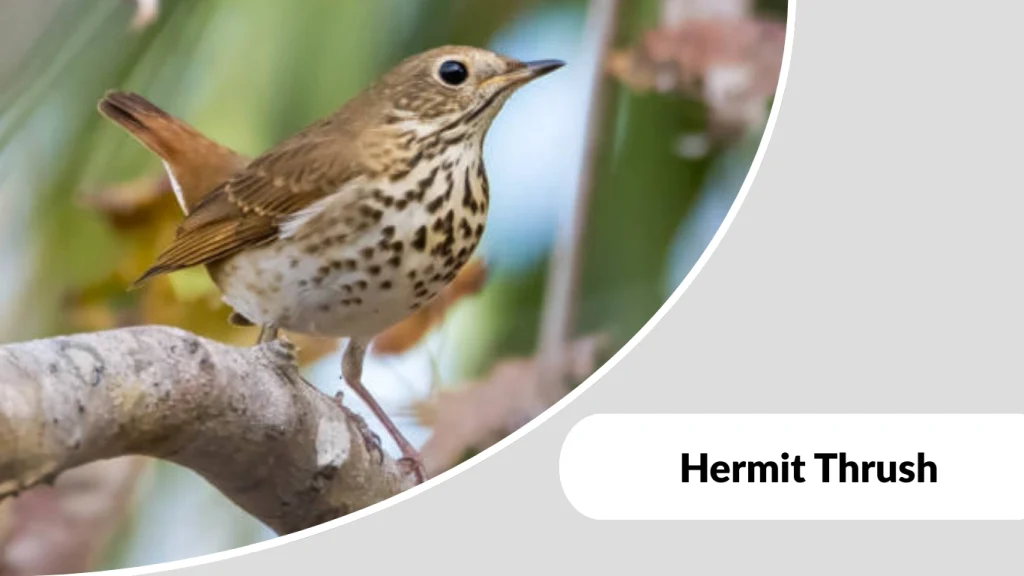
A quiet, brown forest bird admired for its beautiful, flute-like song. Hermit Thrushes are common across North America, especially in wooded and shrubby habitats.
Identification
- Brown upperparts with a reddish tail
- Light underparts with distinct dark spots on the breast
- Thin, straight bill
- Large, expressive eyes
- Slender body with upright posture
Habitat
Hermit Thrushes inhabit coniferous and mixed forests, understory thickets, and wooded edges. During winter, they move into open woodlands, parks, and dense shrub areas with abundant berries.
Behavior
They are solitary and calm, often seen hopping quietly on the forest floor while flicking their wings. Hermit Thrushes are known for their ethereal, echoing song, especially during breeding season.
Diet
Their diet includes insects, spiders, small invertebrates, and berries. They forage on the ground, probing leaf litter and low vegetation for food, and switch to fruit-heavy diets in winter.
16. Swainson’s Thrush
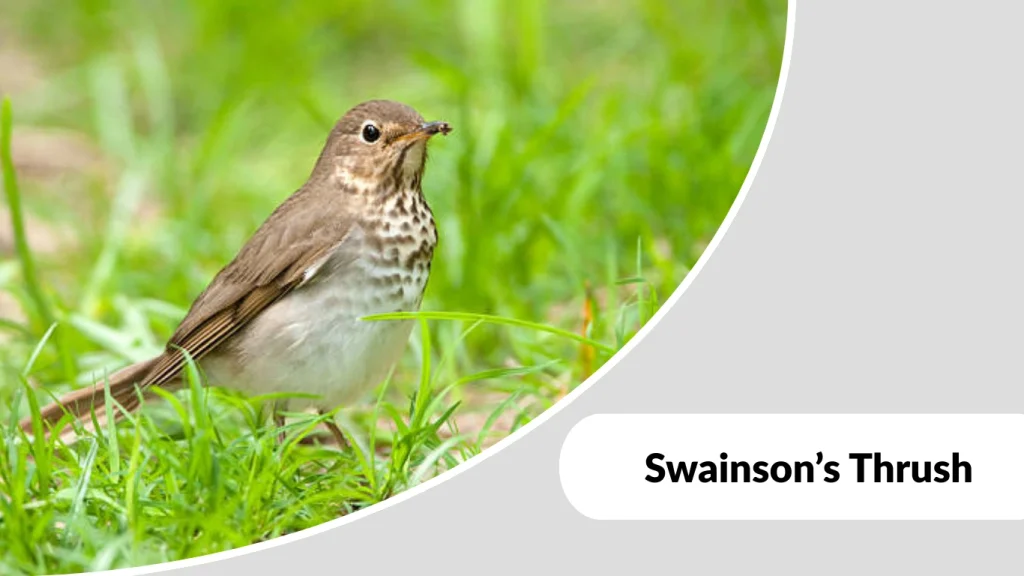
A slender, brown forest thrush known for its upward-spiraling, flute-like song. Swainson’s Thrushes are long-distance migrants commonly found across North America during spring and fall.
Identification
- Olive-brown upperparts
- Buffy eye ring creating a gentle, expressive look
- Spotted breast with warm buff tones
- Slim body with long legs
- Straight, thin bill
Habitat
They inhabit dense understory forests, especially coniferous and mixed woodlands. During migration, they appear in parks, thickets, and forest edges rich in berries and insects.
Behavior
Quiet and secretive, Swainson’s Thrushes move stealthily through vegetation while foraging. Their distinctive, upward-spiraling song is heard at dawn and dusk. They migrate thousands of miles to wintering grounds in Central and South America.
Diet
Their diet includes insects, spiders, and berries. They forage on the ground and in low shrubs, shifting to berry-heavy diets during fall migration.
17. Wood Thrush
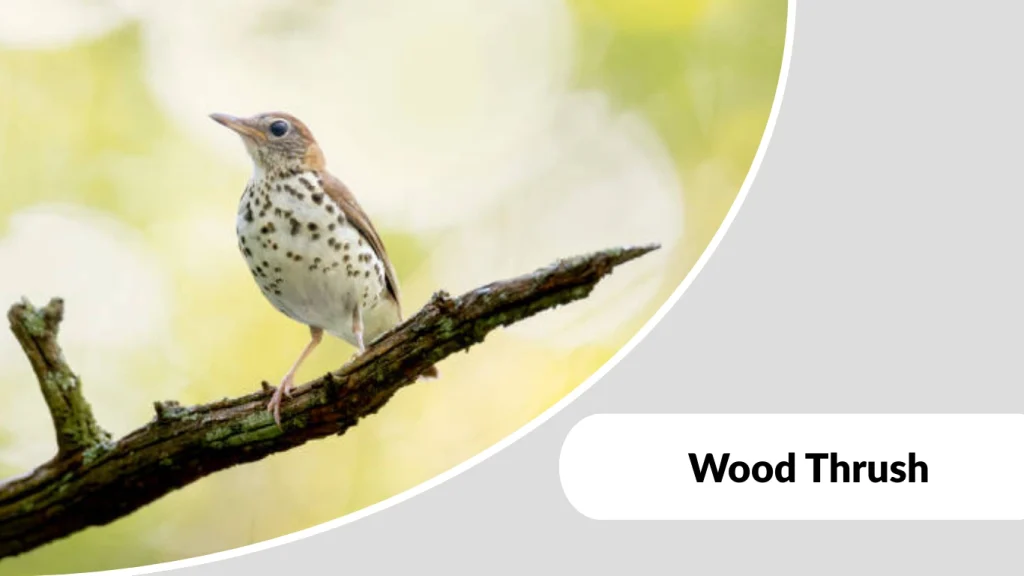
A richly colored brown thrush known for its haunting, flute-like song that resonates through eastern forests. The Wood Thrush is celebrated as one of North America’s most beautiful singers.
Identification
- Warm reddish-brown upperparts
- White underparts with bold black spots
- Large eyes and a sturdy, straight bill
- Plump, upright posture
- Short tail compared to other thrushes
Habitat
Wood Thrushes inhabit mature deciduous forests with dense understory and moist soils. They prefer shaded woodlands, especially near streams and wetlands where insects are abundant.
Behavior
They forage quietly on the forest floor, flipping leaves to find prey. Wood Thrushes are solitary during breeding, and males sing ethereal, echoing songs from shaded perches. They migrate to Central America for winter.
Diet
Their diet consists mainly of insects, earthworms, snails, and berries. They rely heavily on soft-bodied invertebrates during breeding season and switch to fruits in late summer and fall.
18. Northern Flicker
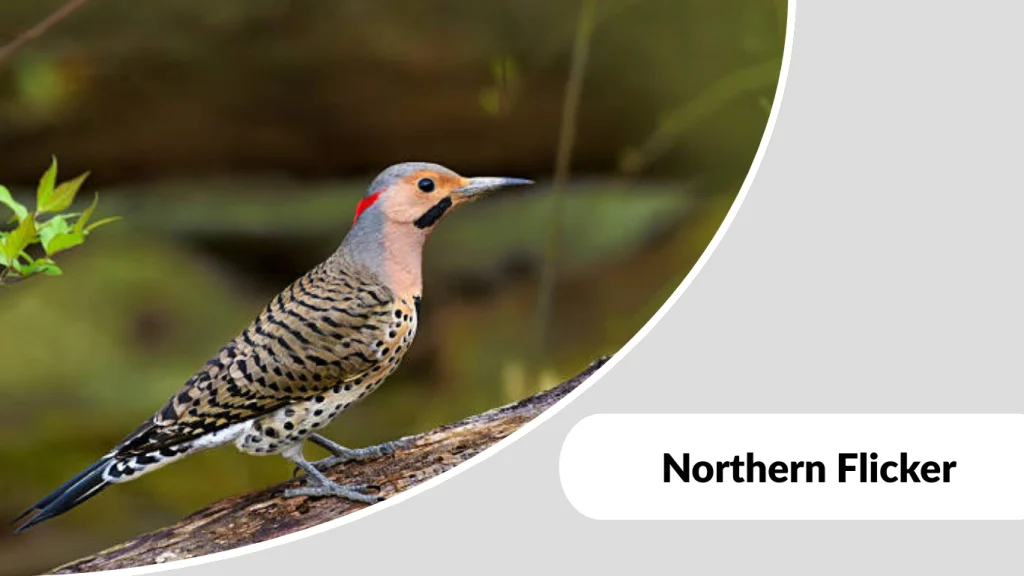
A large, brown woodpecker known for its distinctive spotted plumage and ground-foraging behavior. Unlike most woodpeckers, Northern Flickers often search for ants on the ground, making them unique among their family.
Identification
- Brown body with black spots on the belly
- Black crescent-shaped chest patch
- Barred back and wings
- Red or yellow wing and tail linings (depending on region)
- Long, slightly curved bill
Habitat
Northern Flickers inhabit forests, woodlands, open fields, and suburban areas. They prefer areas with scattered trees and often nest in tree cavities, abandoned holes, or even nest boxes.
Behavior
Active and vocal, they drum on trees and metal surfaces to communicate. Unlike many woodpeckers, they forage mostly on the ground for ants. They perform swooping flights, flashing their bright underwing colors.
Diet
Their diet includes ants, beetles, and other insects, along with fruits and seeds. They use their long, sticky tongues to extract insects from soil and decaying wood.
19. Mourning Dove
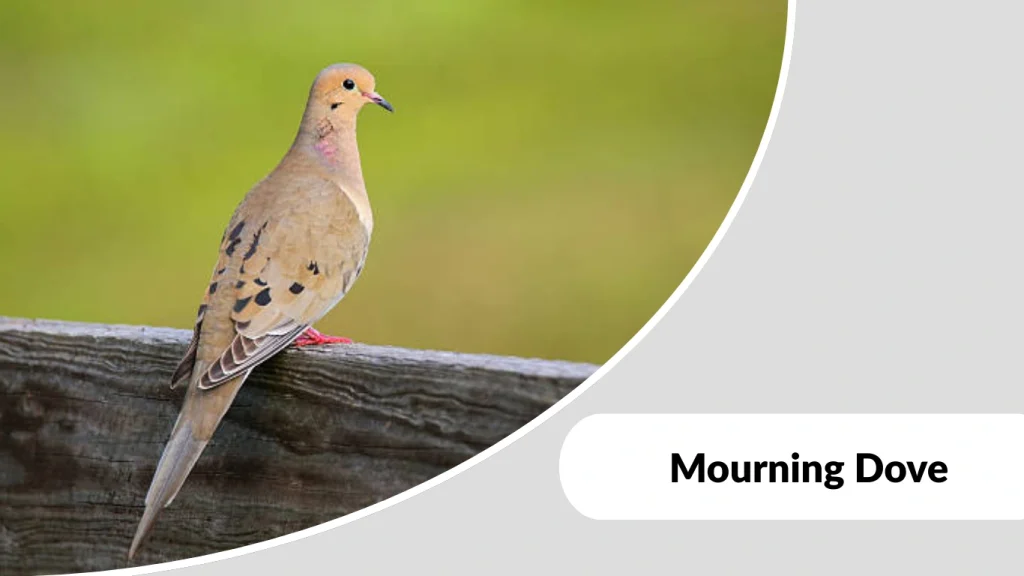
A gentle, slender brown bird known for its soft cooing calls and graceful flight. Mourning Doves are one of the most widespread and familiar birds across North America, often seen perched on wires or foraging on the ground.
Identification
- Light brown to tan body with subtle black spots on the wings
- Long, pointed tail with white edges
- Small head and slender neck
- Thin, slightly curved bill
- Soft, muted overall coloration
Habitat
Mourning Doves inhabit open fields, suburban yards, farms, grasslands, and forest edges. They prefer areas with scattered trees or structures for perching and open ground for feeding.
Behavior
They are calm and gentle, often feeding quietly in pairs or small groups. Mourning Doves produce a distinctive whistling sound with their wings during takeoff and are known for their soothing, mournful call.
Diet
Their diet consists mainly of seeds and grains. They forage almost exclusively on the ground, swallowing seeds whole and storing them in a crop before digestion.
20. Eurasian Collared-Dove
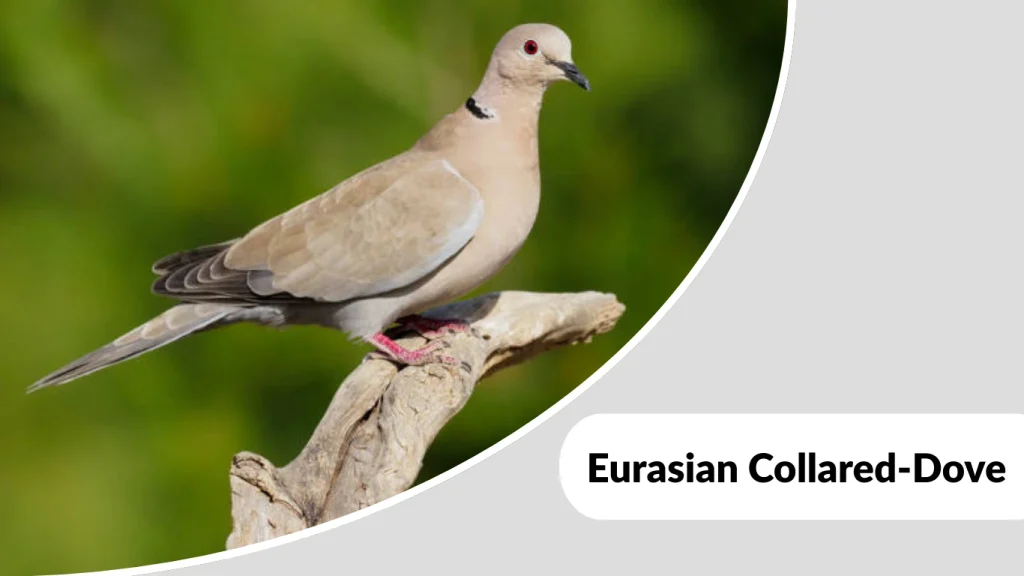
A pale brown dove known for its gentle cooing and distinctive black collar around the neck. The Eurasian Collared-Dove has rapidly expanded its range across Europe, Asia, and the Americas.
Identification
- Light brown or buff-gray body
- Thin black collar on the back of the neck
- Long, squared tail with white edges
- Small head and thin bill
- Dark eyes with a soft, calm expression
Habitat
These doves inhabit suburban areas, farms, parks, and open country. They prefer places with scattered trees, rooftops, and feeding areas, often near human settlements.
Behavior
Eurasian Collared-Doves are gentle and social, often seen perched on wires or rooftops. They produce a rhythmic three-part cooing call and fly with strong, direct wingbeats. They frequently visit backyard feeders.
Diet
Their diet includes seeds, grains, fruits, and occasional insects. They forage mainly on the ground but also feed from platform feeders and agricultural fields.
21. Dunnock
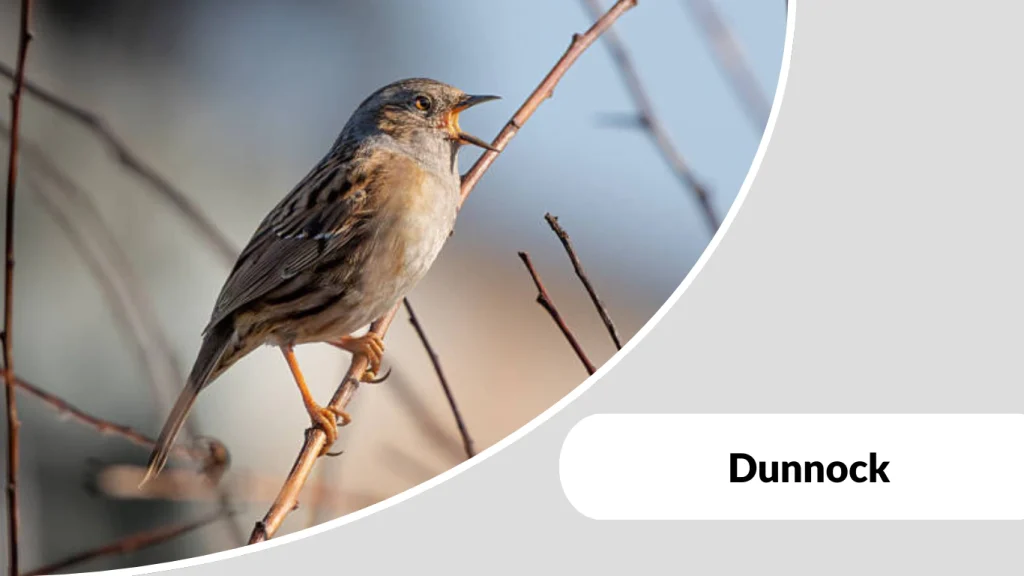
A small, brown ground-dwelling bird found throughout Europe and parts of Asia. Dunnocks are known for their modest appearance, subtle coloring, and quiet, creeping movements through underbrush.
Identification
- Brown, streaked upperparts
- Grayish head and breast
- Thin, pointed bill
- Slender body with a slightly hunched posture
- Pinkish legs and subtle facial markings
Habitat
Dunnocks inhabit gardens, hedgerows, woodlands, and scrubby areas. They prefer dense vegetation for cover and nesting, often staying close to the ground.
Behavior
They move quietly and methodically, creeping through leaf litter and shrubs. Dunnocks are solitary outside the breeding season and have complex breeding systems, sometimes involving multiple partners.
Diet
Their diet includes insects, spiders, seeds, and small invertebrates. They primarily forage on the ground, probing the soil and leaf litter for hidden prey.
22. Eurasian Tree Sparrow
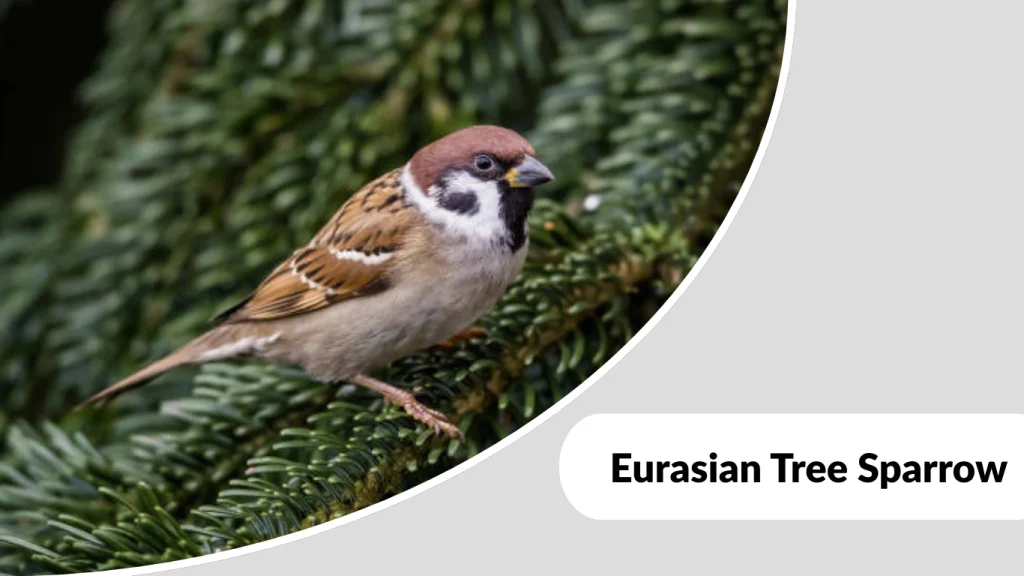
A small, active brown bird commonly found across Europe and Asia, and in some introduced regions. The Eurasian Tree Sparrow is known for its chestnut-colored head and social flocking behavior.
Identification
- Warm brown upperparts with black streaking
- Chestnut-brown cap on the head
- Distinct black cheek spot
- White collar and black bib
- Short, conical bill
Habitat
Eurasian Tree Sparrows inhabit farmland, villages, parks, gardens, and woodland edges. They prefer areas with scattered trees and human structures for nesting.
Behavior
They are social and often seen in flocks, especially outside the breeding season. Tree Sparrows nest in cavities, buildings, and nest boxes. Their chirping calls are constant as they forage together.
Diet
Their diet includes seeds, grains, insects, and plant material. They forage on the ground and visit feeders, especially during winter months.
23. Chipping Sparrow
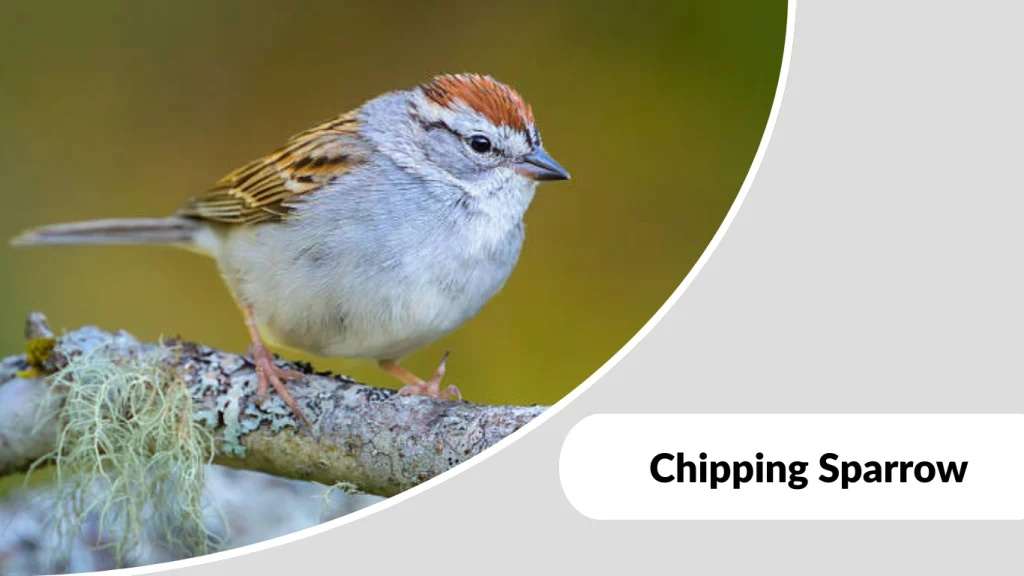
A small, slender brown sparrow widely found across North America. The Chipping Sparrow is easily recognized by its clean plumage and distinct rufous crown during the breeding season.
Identification
- Brown-streaked back
- Clean gray underparts
- Bright rufous crown in breeding adults
- Black eye line
- Thin, pointed bill
Habitat
Chipping Sparrows inhabit open woodlands, suburban yards, parks, and grassy fields. They prefer areas with scattered trees and open ground for feeding.
Behavior
These sparrows are active and social, often forming flocks outside the breeding season. Their song is a simple, rapid trill. They forage on the ground and visit feeders, especially those offering seeds.
Diet
Their diet includes seeds, grains, and insects. During the breeding season, they rely heavily on insects to feed their young, while seeds make up most of their winter diet.
24. White-throated Sparrow (Brown Morph)
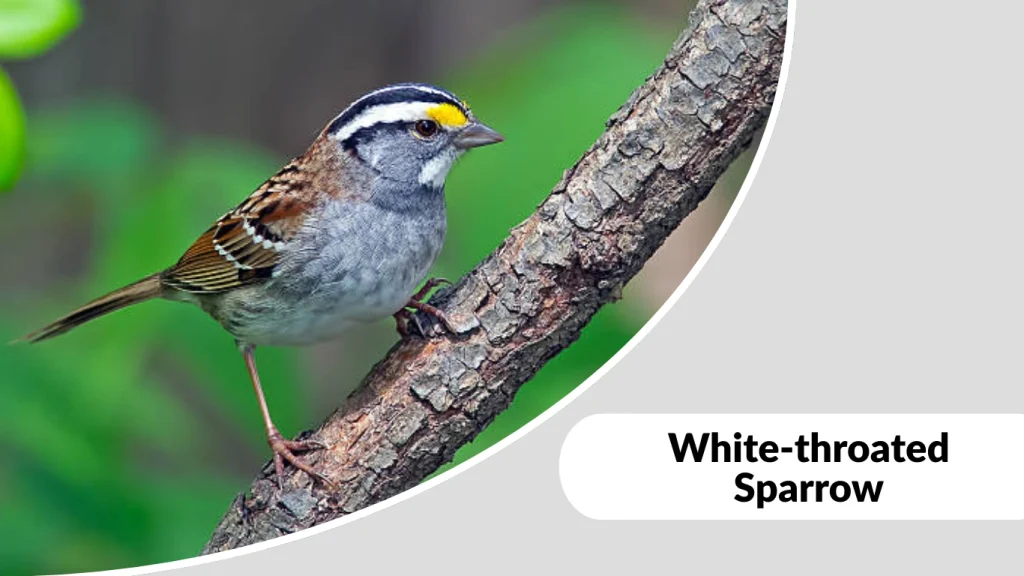
A familiar woodland sparrow known for its distinct song and two color variations. The brown morph features warm brown tones and subtle markings that help it blend into forest habitats.
Identification
- Brown-streaked back and wings
- White throat patch
- Tan and brown head stripes (instead of black and white in the white morph)
- Yellow lores near the bill
- Plump body with a rounded shape
Habitat
White-throated Sparrows inhabit forests, wooded edges, shrubby areas, and suburban landscapes. They winter in mixed habitats with dense vegetation and forage on the ground for seeds.
Behavior
They often scratch through leaf litter with both feet to uncover food. Their clear, whistled song—“Oh sweet Canada”—is a hallmark of northern forests. They migrate in large numbers across North America.
Diet
Their diet includes seeds, berries, insects, and small invertebrates. They forage mainly on the forest floor, especially around fallen leaves and brush.
25. Savannah Sparrow
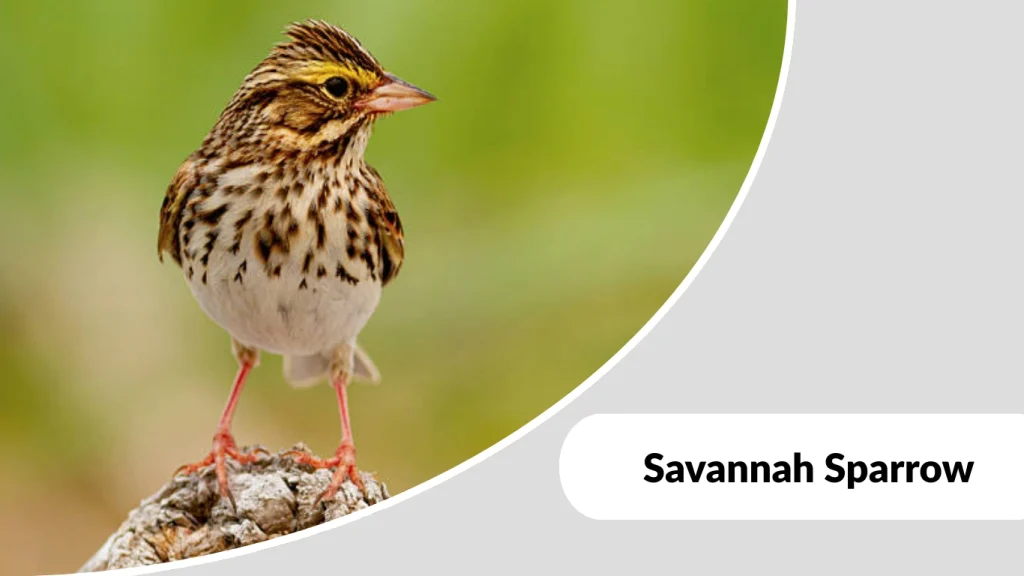
A small, streaked brown bird commonly found in open fields and grasslands across North America. The Savannah Sparrow is known for its subtle plumage and distinctive yellow spot near the eye.
Identification
- Brown, streaked upperparts and underparts
- Small yellow patch (lore) in front of the eye
- Short, notched tail
- Thin, pointed bill
- Compact sparrow build
Habitat
Savannah Sparrows inhabit open landscapes such as meadows, coastal grasslands, pastures, tundra, and agricultural fields. They prefer low vegetation where they can forage and nest discreetly.
Behavior
These sparrows forage on the ground, often running or hopping between grasses. They sing a thin, buzzy song from low perches and may form winter flocks in open areas.
Diet
Their diet includes seeds, insects, and small invertebrates. During summer, they focus heavily on insects to feed their young, shifting to seeds in fall and winter.
26. Lincoln’s Sparrow
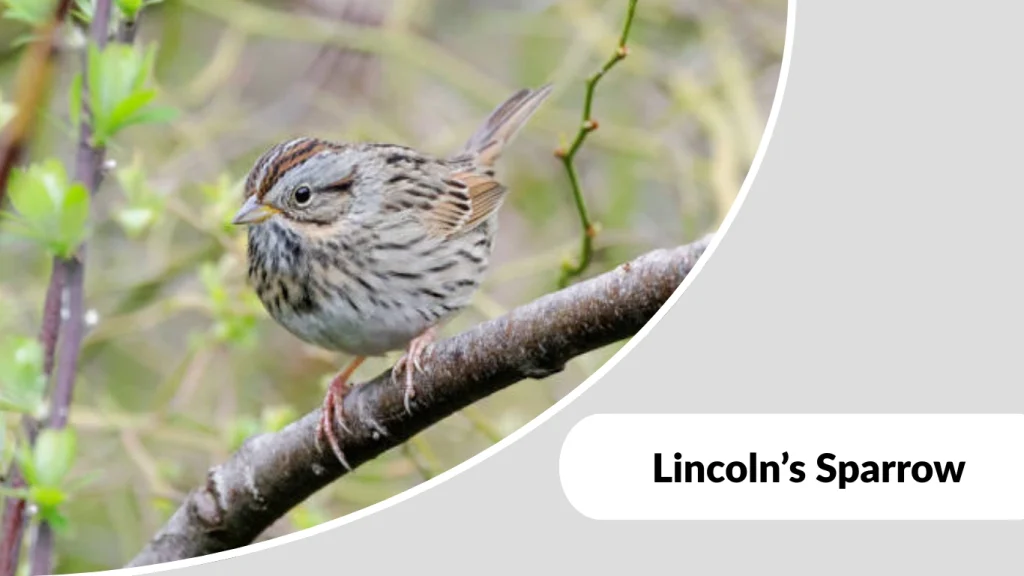
A shy, beautifully patterned sparrow recognized for its fine streaking and buffy wash across the chest. Lincoln’s Sparrows are often found in dense cover and wet meadows.
Identification
- Brown upperparts with fine streaks
- Buffy chest with crisp, thin streaking
- Gray face with a slight crest
- Thin, pointed bill
- Narrow, dark malar stripe
Habitat
They inhabit wet meadows, shrubby marsh edges, alpine willows, and dense thickets. During migration, they appear in brushy fields and woodland edges.
Behavior
Quiet and elusive, Lincoln’s Sparrows tend to skulk in dense vegetation. Their song is surprisingly sweet and musical, often compared to a subdued version of the House Wren’s.
Diet
Their diet includes seeds, insects, caterpillars, spiders, and small invertebrates. They forage low to the ground, often scratching in leaf litter or probing among grasses.