
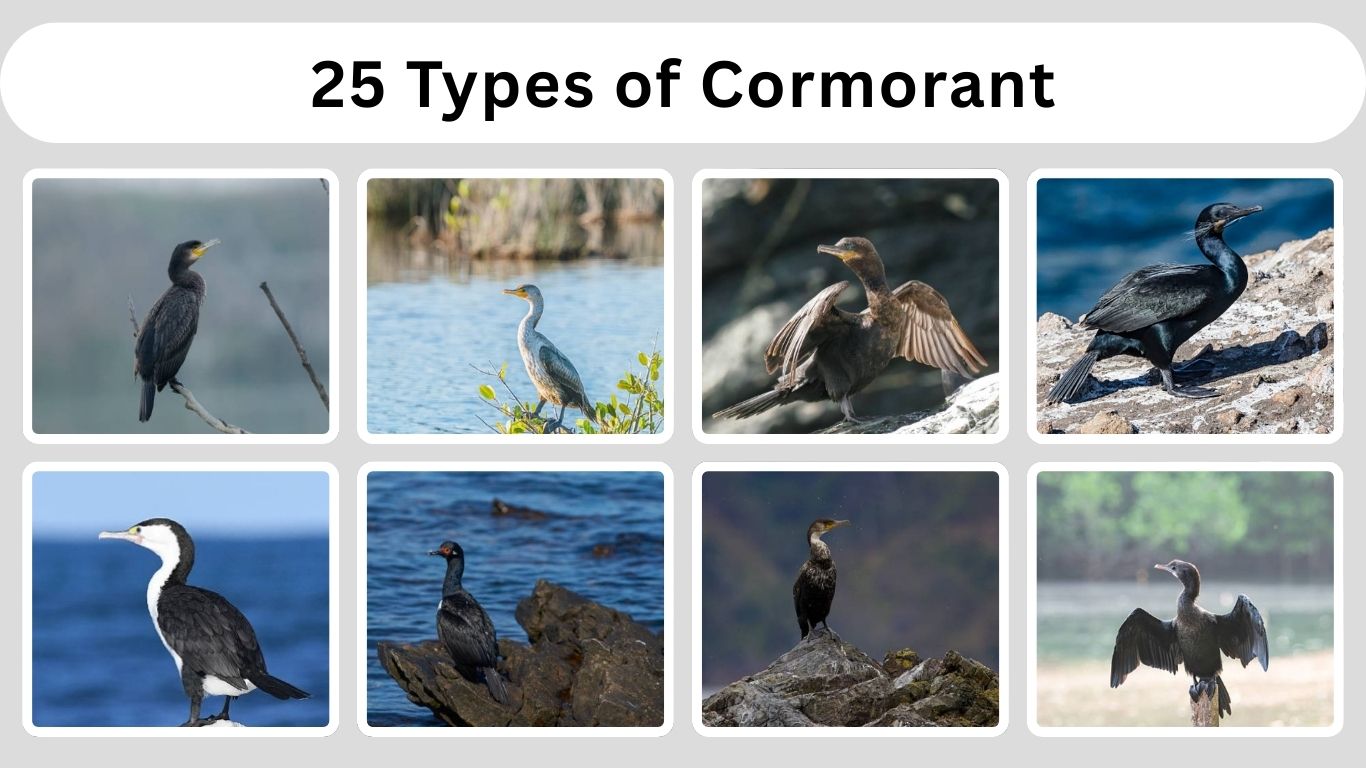
Cormorants are fascinating fish-eating water birds known for their strong diving skills, long necks, and distinctive habit of spreading their wings to dry. Found across coastal regions, rivers, lakes, and wetlands worldwide, they play an important role in aquatic ecosystems by helping control fish populations. With over forty species globally, cormorants vary in size, color patterns, and habitat preferences. This guide explores different types of cormorants, highlighting their identification features, habitats, behaviors, and natural lifestyles.
1. Great Cormorant (Phalacrocorax carbo)
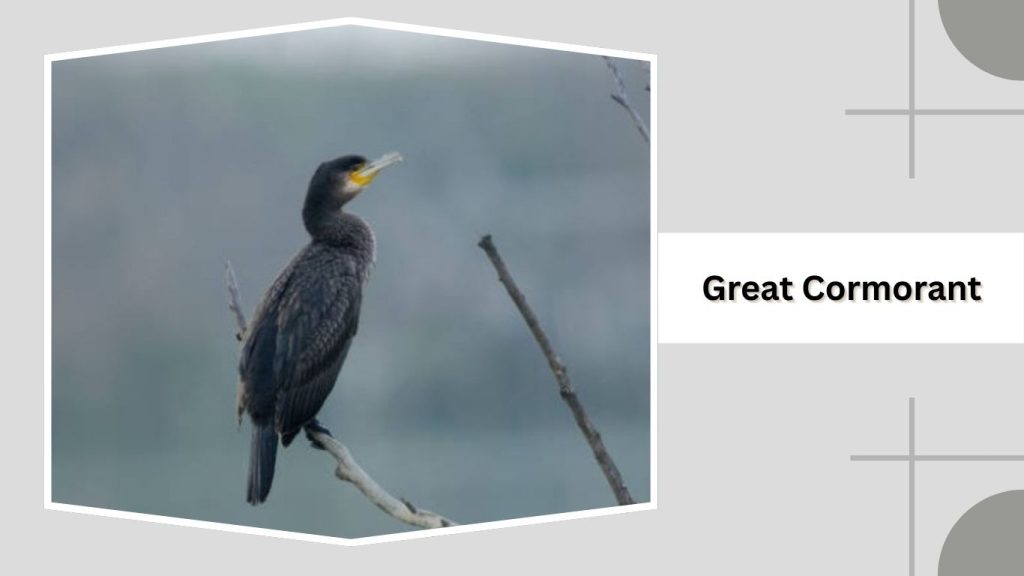
The great cormorant is one of the largest and most widespread cormorant species in the world. It is well known for its powerful diving ability, long hooked bill, and dark glossy plumage. This bird is commonly seen perched on rocks, poles, or trees near water, often spreading its wings to dry after fishing.
Identification
- Large, heavy-bodied water bird
- Mostly black plumage with a greenish sheen
- Long neck and long hooked bill
- Yellow bare skin around the base of the bill
- Adults often show a white throat patch in breeding season
- Strong webbed feet adapted for diving
Habitat
Great cormorants live around coasts, lakes, rivers, wetlands, and large reservoirs. They prefer open water where fish are abundant. You can often spot them on sea cliffs, rocky islands, harbors, or inland lakes, resting in groups after feeding.
Behaviors
They are excellent divers and swimmers, using their feet to propel underwater. Great cormorants often hunt alone or in loose groups. A common behavior is standing with wings spread to dry their feathers after swimming.
Diet and Lifespan
Their diet mainly consists of fish, including perch, eels, and herring. They catch prey underwater and swallow it whole. In the wild, great cormorants typically live around 10 to 15 years, though some individuals can survive longer in protected environments.
2. Double-crested Cormorant (Nannopterum auritum)
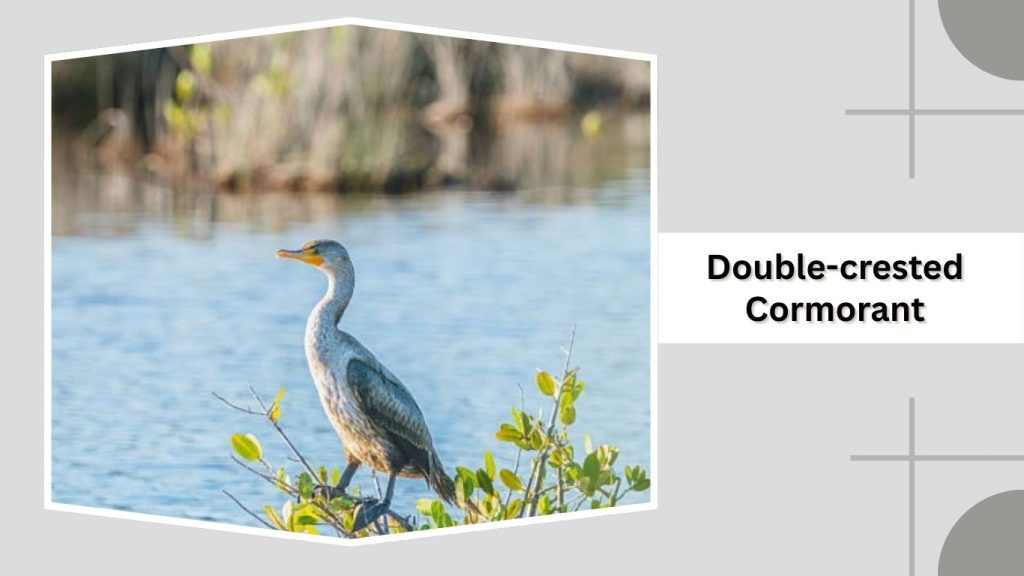
The double-crested cormorant is a widespread North American cormorant known for its slim build, long neck, and distinctive breeding plumes. It is commonly seen around lakes, rivers, reservoirs, and coastlines, often resting on posts, rocks, or trees near water. This species is highly adaptable and thrives in both freshwater and marine environments.
Identification
- Medium-to-large black water bird
- Long, slender neck with slightly hooked bill
- Orange-yellow facial skin near the base of the bill
- Breeding adults show two small tufts (“double crests”) of feathers on the head
- Dark body with a subtle greenish or bronze sheen
- Strong webbed feet for swimming and diving
Habitat
Double-crested cormorants inhabit lakes, rivers, wetlands, estuaries, and coastal shores. They are often found near open water with easy access to fish and suitable perching or nesting sites such as trees, cliffs, or artificial structures.
Behaviors
They are powerful underwater swimmers, using their feet to chase fish. These cormorants frequently fish alone but may gather in large feeding flocks. Like other cormorants, they often spread their wings to dry after leaving the water.
Diet and Lifespan
Their diet is mostly fish, including small to medium-sized freshwater and marine species. They may also eat amphibians or crustaceans. In the wild, double-crested cormorants usually live about 6 to 12 years, though some individuals survive longer.
3. Neotropic Cormorant (Nannopterum brasilianum)
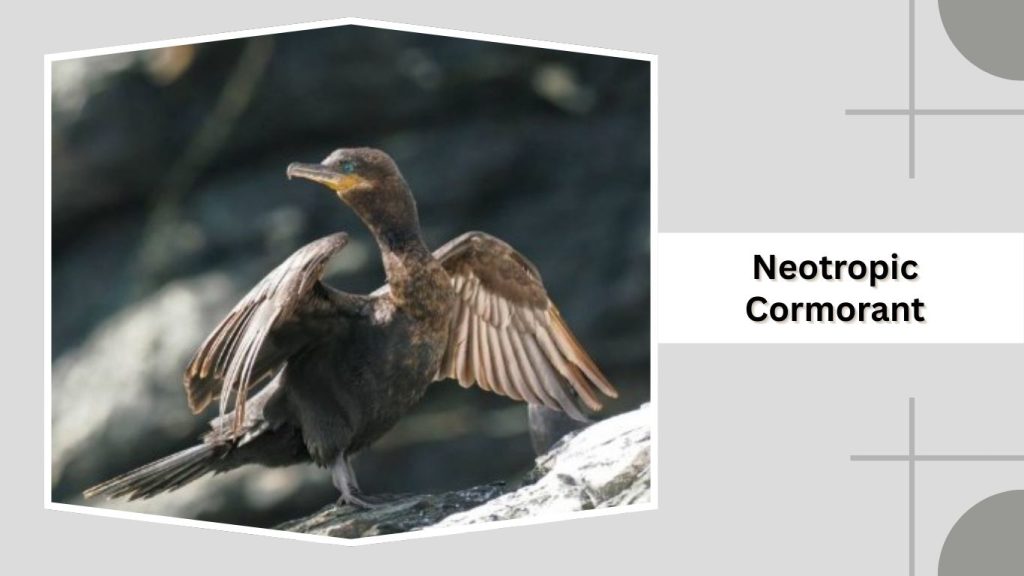
The neotropic cormorant is a slender, long-tailed cormorant widely distributed across Central and South America, with parts of the southern United States also within its range. It is easily recognized by its slim shape, long neck, and habit of perching on low branches, wires, or posts near water. Compared to larger cormorants, it appears more delicate and agile.
Identification
- Medium-sized, slim-bodied cormorant
- Mostly black plumage with a glossy greenish sheen
- Long tail and thin neck
- Small hooked bill
- Adults often show white feathers around the face and throat in breeding season
- Webbed feet adapted for swimming
Habitat
Neotropic cormorants live around rivers, lakes, lagoons, mangroves, estuaries, and coastal shores. They prefer warm regions with calm or slow-moving water and are frequently seen near freshwater wetlands as well as sheltered coastal areas.
Behaviors
They are active divers that chase fish underwater, often hunting alone or in small groups. Neotropic cormorants commonly perch on exposed branches or man-made structures. Wing-spreading after swimming is a regular behavior.
Diet and Lifespan
Their diet mainly includes small fish, along with occasional crustaceans and aquatic insects. In the wild, neotropic cormorants generally live around 10 to 12 years, depending on habitat quality and predation.
4. Brandt’s Cormorant (Urile penicillatus)
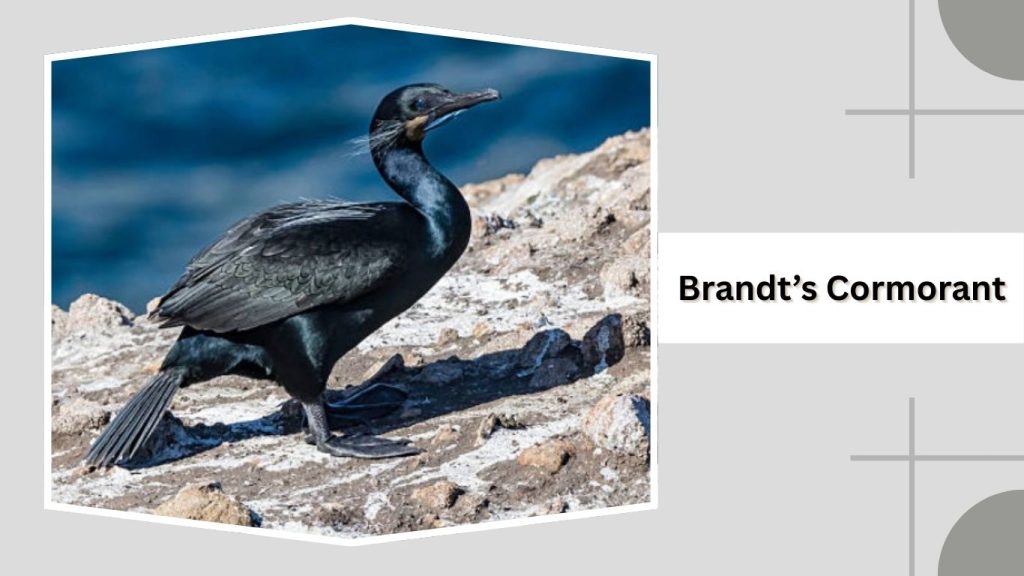
Brandt’s cormorant is a large coastal cormorant found mainly along the Pacific coast of North America. It is strongly associated with rocky shorelines, offshore islands, and kelp forests. This species is heavier and darker than many other cormorants and is often seen resting on sea cliffs, rocks, or harbor structures near the ocean.
Identification
- Large, robust black seabird
- Thick neck and long hooked bill
- Bright blue throat patch during breeding season
- Glossy black plumage with slight green sheen
- Shorter tail compared to slimmer cormorants
- Strong webbed feet for powerful swimming
Habitat
Brandt’s cormorants live almost exclusively in marine environments, including rocky coasts, offshore islands, bays, and open ocean waters. They usually stay close to shore where fish are abundant and nesting cliffs are available.
Behaviors
They are strong divers that pursue fish underwater, often foraging alone or in small groups. During breeding season, they nest in dense colonies on cliffs and rocky islands. Wing-spreading to dry feathers is commonly observed.
Diet and Lifespan
Their diet consists mainly of marine fish such as anchovies, sardines, and rockfish. Occasionally, they also eat small invertebrates. In the wild, Brandt’s cormorants typically live around 10 to 14 years.
5. Pelagic Cormorant (Urile pelagicus)
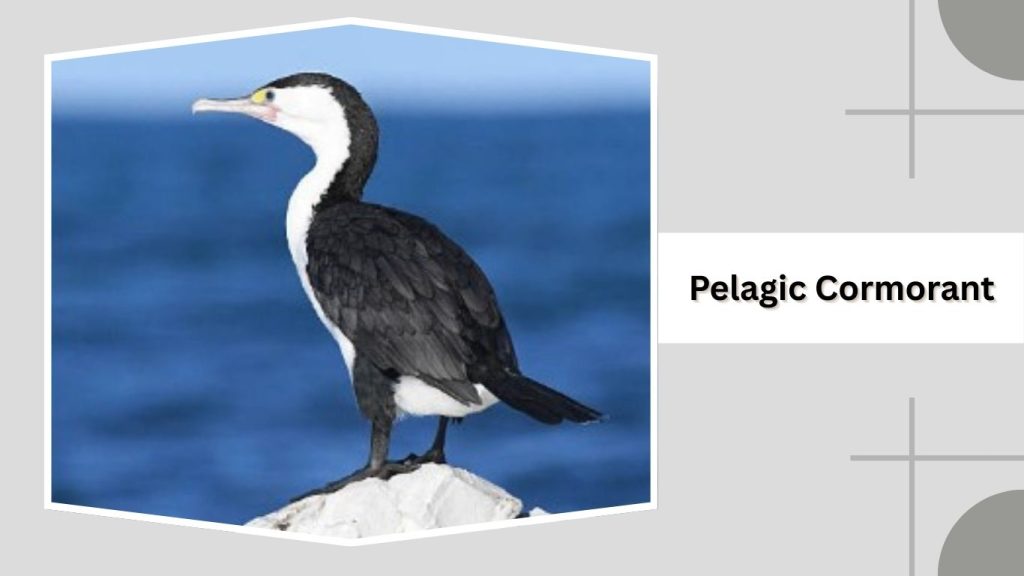
The pelagic cormorant is a slender, long-necked cormorant native to the northern Pacific coast. It is especially common along rocky shorelines and offshore islands from Alaska down to parts of California. Compared to heavier cormorants, it appears more delicate and agile, often seen alone or in small numbers perched on narrow cliff ledges.
Identification
- Medium-sized, slim-bodied cormorant
- Dark black plumage with a greenish sheen
- Long thin neck and slender hooked bill
- Bright red facial skin and small crests in breeding season
- Long tail relative to body size
- Strong webbed feet for diving
Habitat
Pelagic cormorants inhabit marine environments such as rocky coasts, sea cliffs, offshore islands, and sheltered bays. They prefer clear, shallow coastal waters where they can easily dive for fish among rocks and kelp beds.
Behaviors
They are excellent divers, swimming low in the water and slipping beneath the surface to chase prey. Pelagic cormorants often forage alone rather than in large flocks. They regularly perch on narrow rock outcrops and spread their wings after swimming.
Diet and Lifespan
Their diet mainly includes small coastal fish, along with crustaceans and other marine invertebrates. In the wild, pelagic cormorants generally live about 8 to 12 years.
6. Red-faced Cormorant (Urile urile)
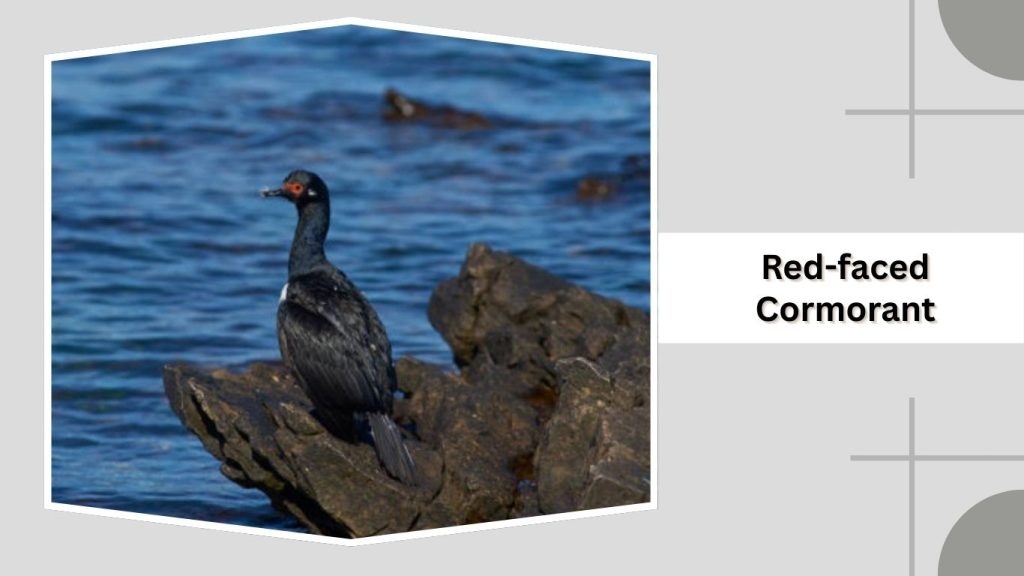
The red-faced cormorant is a striking seabird of the northern Pacific, best known for the vivid red skin around its face during the breeding season. It is more localized than many other cormorants and is mainly found around the Aleutian Islands and parts of Alaska. This species prefers remote, rugged coastlines.
Identification
- Medium-to-large black cormorant
- Bright red facial skin, especially noticeable in breeding season
- Long neck and hooked bill
- Dark glossy plumage with greenish highlights
- Blue markings may appear around the face in breeding adults
- Strong webbed feet for diving
Habitat
Red-faced cormorants live in marine environments, especially along rocky coasts, sea cliffs, and offshore islands. They usually stay close to cold, nutrient-rich waters where fish are plentiful.
Behaviors
They are powerful divers, using their feet to propel themselves underwater. Red-faced cormorants often forage alone or in small groups. They nest on narrow cliff ledges and rocky slopes and frequently perch high above the sea.
Diet and Lifespan
Their diet consists mainly of fish, along with some marine invertebrates. In the wild, red-faced cormorants are believed to live around 10 to 15 years, depending on environmental conditions.
7. Japanese Cormorant (Phalacrocorax capillatus)
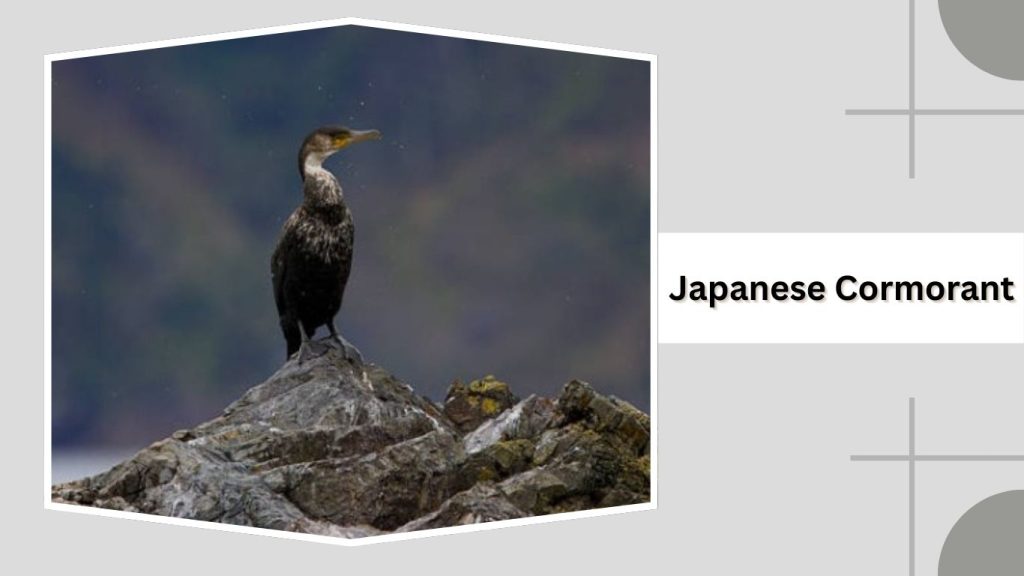
The Japanese cormorant is a large coastal species native to East Asia, especially around Japan, Korea, and parts of China and Russia. It is famous for its long history of use in traditional fishing practices in Japan. This bird is robust, dark-plumaged, and well adapted to life in cold and temperate coastal waters.
Identification
- Large, heavy-bodied cormorant
- Mostly black plumage with a glossy greenish sheen
- Long neck and strong hooked bill
- Pale yellow facial skin at the base of the bill
- White patches on the head and thighs during breeding season
- Strong webbed feet for swimming
Habitat
Japanese cormorants inhabit rocky coastlines, offshore islands, estuaries, and occasionally large inland lakes. They prefer marine and brackish waters where fish are abundant and nesting cliffs or sheltered ledges are available.
Behaviors
They are excellent divers, capable of pursuing fish underwater with speed and precision. Outside the breeding season, they may forage alone or in loose groups. They are also known for roosting on rocks, piers, and coastal trees.
Diet and Lifespan
Their diet mainly includes fish such as ayu, sardines, and other coastal species. In the wild, Japanese cormorants typically live around 10 to 15 years.
8. Indian Cormorant (Phalacrocorax fuscicollis)
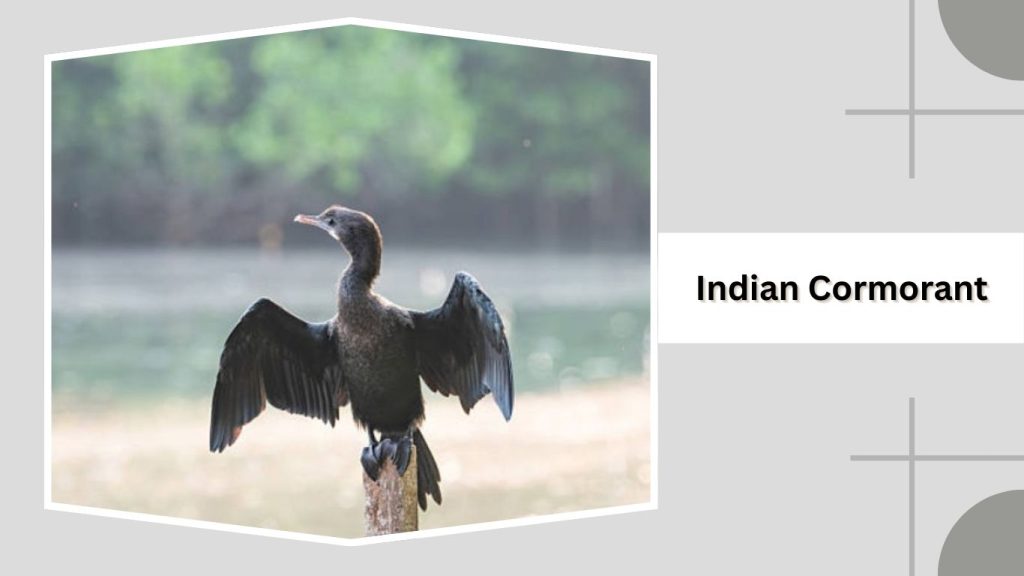
The Indian cormorant is a slender, medium-sized cormorant widely found across South Asia, including India, Sri Lanka, Bangladesh, and parts of Southeast Asia. It is commonly seen around large rivers, lakes, reservoirs, and coastal lagoons. Compared to heavier cormorants, this species looks more streamlined and agile in flight and while diving.
Identification
- Medium-sized, slim-bodied cormorant
- Long, thin neck and narrow hooked bill
- Mostly black plumage with a glossy greenish tone
- Pale yellow facial skin near the base of the bill
- White throat and neck stripe during breeding season
- Strong webbed feet for efficient diving
Habitat
Indian cormorants inhabit freshwater lakes, rivers, wetlands, estuaries, and coastal waters. They favor open water bodies with abundant fish and nearby trees, rocks, or posts for roosting and nesting.
Behaviors
They are active divers, often swimming low in the water before plunging beneath the surface to chase fish. Indian cormorants may forage alone or in small groups and are frequently seen resting with wings spread to dry.
Diet and Lifespan
Their diet mainly consists of fish, including carp and other freshwater species, along with occasional aquatic insects. In the wild, Indian cormorants usually live around 10 to 12 years.
9. Little Cormorant (Microcarbo niger)
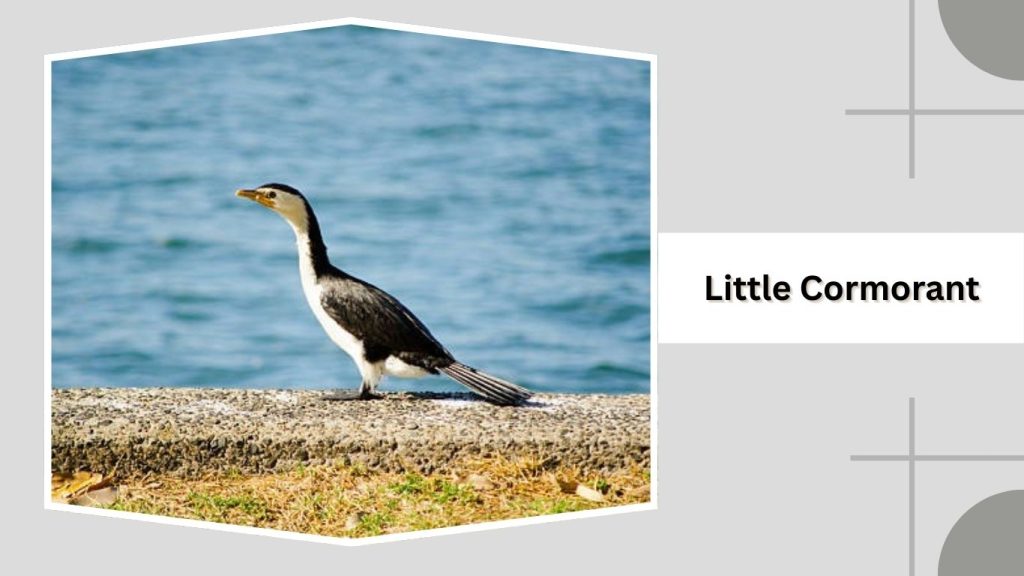
The little cormorant is a small, compact cormorant species widely distributed across South Asia and Southeast Asia. It is commonly found around ponds, lakes, rivers, marshes, and even village wetlands. Compared to larger cormorants, it appears short-necked and quick in its movements, often seen diving repeatedly in shallow water.
Identification
- Small-sized cormorant with compact body
- Short neck and short hooked bill
- Mostly black plumage with a glossy greenish sheen
- Breeding adults may show fine white filaments on head and neck
- Pale facial skin near the base of the bill
- Webbed feet adapted for swimming
Habitat
Little cormorants inhabit freshwater wetlands, village ponds, rivers, reservoirs, and sometimes sheltered coastal lagoons. They prefer calm, shallow waters rich in small fish and are often seen close to human settlements.
Behaviors
They are very active feeders, diving frequently and surfacing quickly. Little cormorants often forage in small groups and may cooperate to herd fish. After feeding, they regularly perch on trees or poles and spread their wings to dry.
Diet and Lifespan
Their diet mainly consists of small fish, tadpoles, and aquatic insects. In the wild, little cormorants typically live around 8 to 12 years.
10. Pygmy Cormorant (Microcarbo pygmaeus)
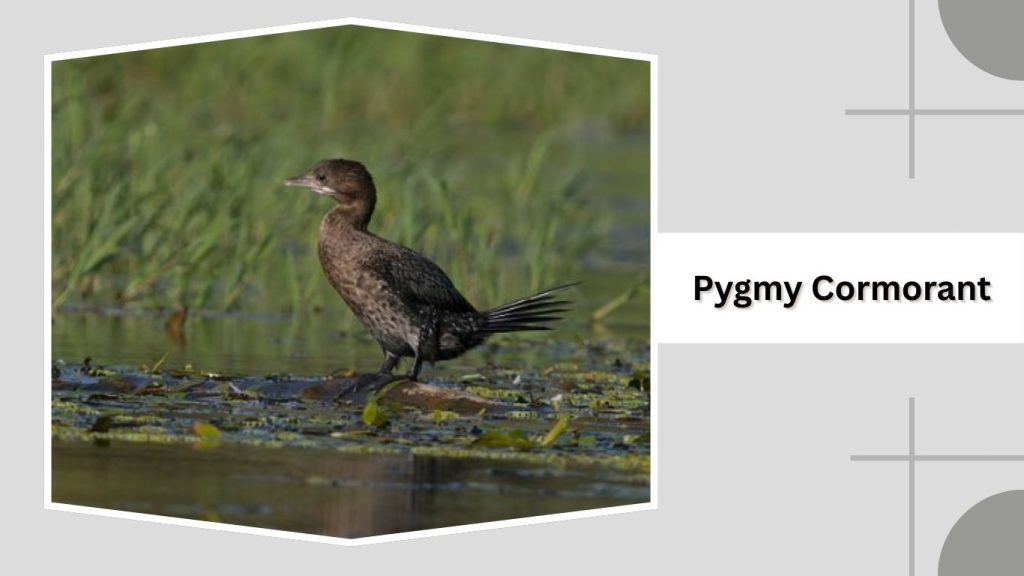
The pygmy cormorant is a small and slender cormorant native to southeastern Europe, the Middle East, and parts of Central Asia. It is one of the smallest cormorant species and is often found around slow-moving rivers, lakes, and wetlands. Its lightweight build and short neck make it easily distinguishable from larger cormorants.
Identification
- Very small, slim-bodied cormorant
- Short neck and small hooked bill
- Dark brownish-black plumage with greenish sheen
- Breeding adults show white streaks on head and neck
- Pale facial skin around the bill
- Webbed feet suited for agile swimming
Habitat
Pygmy cormorants inhabit freshwater wetlands, reed beds, slow rivers, lakes, and floodplains. They favor warm lowland areas with dense vegetation and plentiful small fish.
Behaviors
They are quick, agile divers that feed mainly in shallow water. Pygmy cormorants often forage in small flocks and may rest communally in trees or reed beds. Wing-spreading to dry feathers is common.
Diet and Lifespan
Their diet consists mostly of small fish, along with aquatic insects and crustaceans. In natural conditions, pygmy cormorants usually live about 8 to 10 years.
11. Socotra Cormorant (Phalacrocorax nigrogularis)
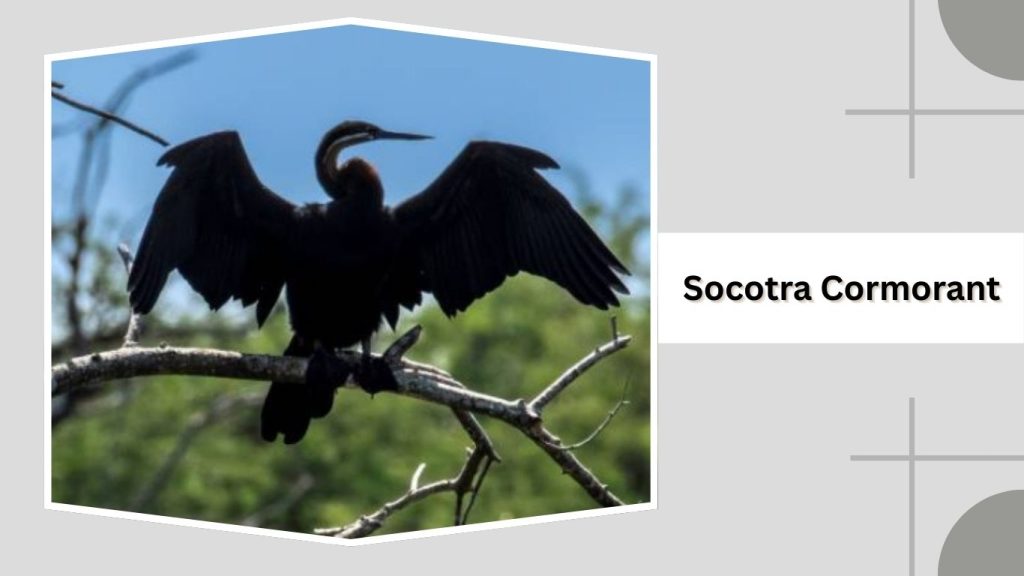
The Socotra cormorant is a large, dark seabird native to the Middle East, particularly around the Persian Gulf, Red Sea, and Arabian Sea. It is well known for forming massive breeding colonies on offshore islands and remote coastal areas. This species is more marine-oriented than many other cormorants and rarely ventures far inland.
Identification
- Large, heavy-bodied cormorant
- Mostly black plumage with slight greenish gloss
- Thick neck and strong hooked bill
- Bare facial skin that appears dark with bluish tones
- Breeding adults may show white patches on the face and neck
- Powerful webbed feet for deep diving
Habitat
Socotra cormorants inhabit warm coastal waters, offshore islands, rocky shores, and open sea near the coast. They usually remain close to marine environments and depend heavily on ocean fish populations.
Behaviors
They are strong divers and often forage in large flocks, sometimes coordinating movements to herd fish. During the breeding season, they gather in dense colonies that can include tens of thousands of birds.
Diet and Lifespan
Their diet mainly includes marine fish such as sardines and anchovies. In the wild, Socotra cormorants typically live around 10 to 15 years.
12. European Shag (Gulosus aristotelis)
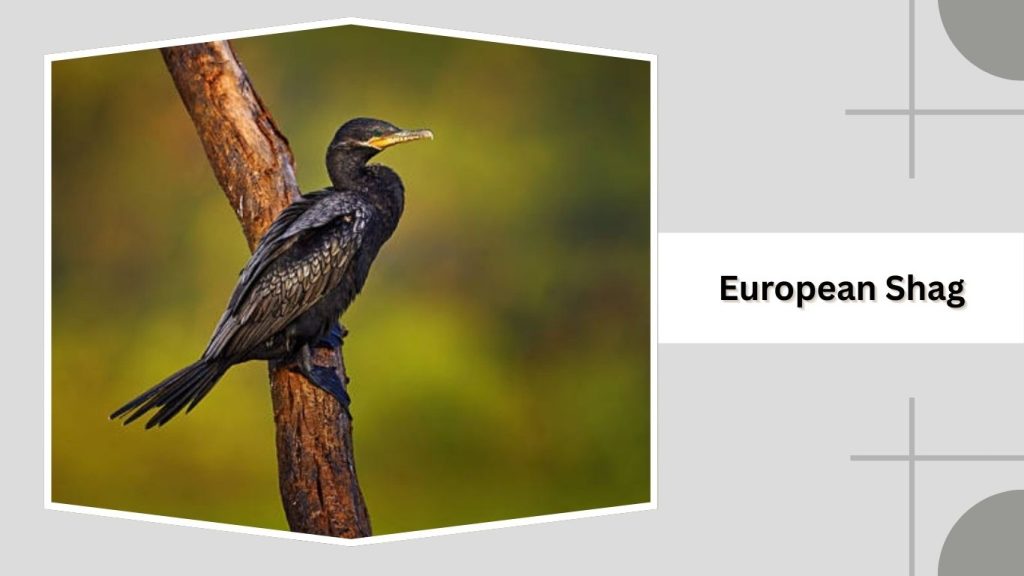
The European shag is a slim, elegant cormorant-like seabird found mainly along the rocky coasts of Europe, North Africa, and parts of the Middle East. It is smaller and more slender than the great cormorant and is well known for its glossy green-black plumage and distinctive head crest during the breeding season.
Identification
- Medium-sized, slender seabird
- Glossy greenish-black plumage
- Long thin neck and narrow hooked bill
- Distinct short crest on the head in breeding season
- Bright green eyes
- Strong webbed feet for agile diving
Habitat
European shags live almost entirely in marine environments, especially rocky coastlines, sea cliffs, offshore islands, and sheltered bays. They prefer clear coastal waters where they can dive for fish near the seabed.
Behaviors
They are skilled divers, often feeding close to the shore and among underwater rocks. European shags usually forage alone or in small groups. They nest in colonies on cliff ledges and rocky crevices.
Diet and Lifespan
Their diet mainly consists of small to medium-sized fish, especially bottom-dwelling species. In the wild, European shags typically live around 10 to 15 years.
13. Flightless Cormorant (Nannopterum harrisi)
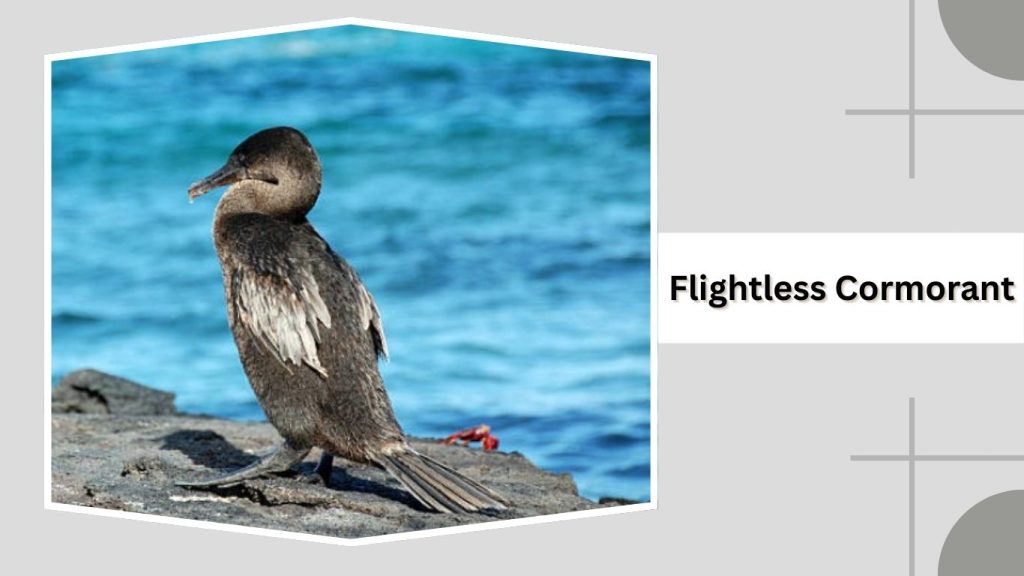
The flightless cormorant is a unique species found only in the Galápagos Islands. Unlike all other cormorants, it has lost the ability to fly and instead is specially adapted for swimming and diving. Its short wings, heavy body, and powerful legs make it an excellent underwater hunter in the rich coastal waters of the islands.
Identification
- Large, heavy-bodied cormorant
- Very short, reduced wings (cannot fly)
- Long neck and strong hooked bill
- Black upperparts with brownish tones
- White throat and chest
- Strong legs and large webbed feet
Habitat
Flightless cormorants live along rocky coastlines, lava shores, and shallow coastal waters of the Galápagos. They rarely move far from shore and depend heavily on cool, nutrient-rich currents for food.
Behaviors
They swim and dive with great efficiency, using their strong legs to propel themselves underwater. Because they cannot fly, they move between feeding areas by swimming or walking over rocks. They nest close to the shoreline.
Diet and Lifespan
Their diet mainly includes fish, eels, and small octopuses. In the wild, flightless cormorants generally live around 10 to 12 years.
14. Guanay Cormorant (Leucocarbo bougainvilliorum)
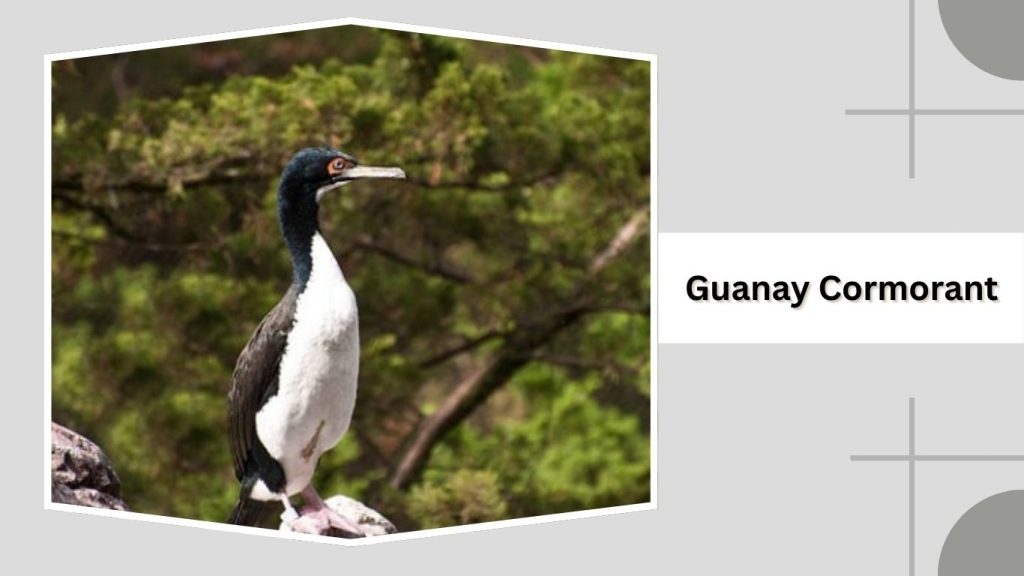
The guanay cormorant is a large seabird native to the Pacific coast of South America, especially Peru and Chile. It is one of the most abundant seabirds in this region and is historically famous for its massive colonies that produced thick deposits of guano. This species is strongly tied to cold, productive ocean waters.
Identification
- Large, heavy-bodied cormorant
- Black upperparts with white underparts
- Distinct white stripe along the side of the head
- Long neck and strong hooked bill
- Bright red facial skin around the eyes and bill
- Powerful webbed feet for diving
Habitat
Guanay cormorants inhabit coastal waters, offshore islands, and rocky shorelines along the Pacific coast of South America. They prefer cold, nutrient-rich waters where schooling fish are abundant.
Behaviors
They often forage in huge flocks, sometimes numbering in the thousands, plunging and diving into the sea after fish. During breeding season, they nest in extremely dense colonies on rocky islands and headlands.
Diet and Lifespan
Their diet mainly consists of anchovies and other small marine fish. In natural conditions, guanay cormorants typically live around 12 to 18 years.
15. Imperial Cormorant (Leucocarbo atriceps)
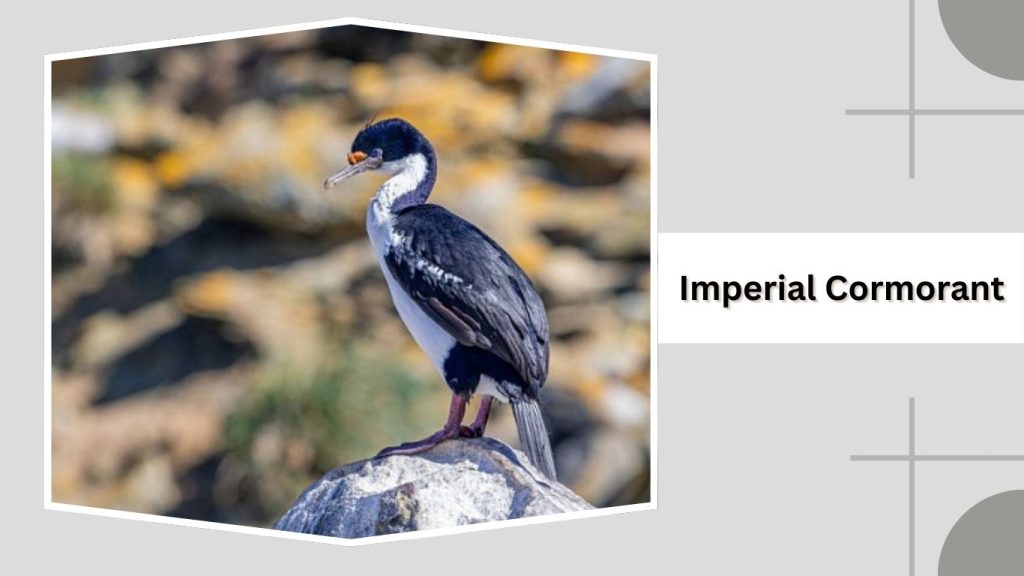
The imperial cormorant, also known as the blue-eyed shag, is a striking seabird of the southern oceans. It is commonly found along the coasts of southern South America, the Falkland Islands, and the Antarctic Peninsula. This species is easily recognized by its bold black-and-white coloration and vivid blue eye ring.
Identification
- Large black-and-white cormorant
- White chest and belly with black back and wings
- Bright blue eye ring and facial skin
- Yellow-orange patch at the base of the bill
- Long neck and strong hooked bill
- Powerful webbed feet for deep diving
Habitat
Imperial cormorants inhabit cold marine environments, including rocky coasts, offshore islands, fjords, and sheltered bays. They prefer clear, productive waters where fish and marine invertebrates are plentiful.
Behaviors
They are strong divers, often feeding in groups and diving repeatedly in coastal waters. Imperial cormorants breed in large colonies on rocky islands and coastal cliffs, building nests from seaweed and guano.
Diet and Lifespan
Their diet includes fish, crustaceans, and mollusks. In the wild, imperial cormorants usually live around 10 to 15 years.
16. Rock Shag (Leucocarbo magellanicus)
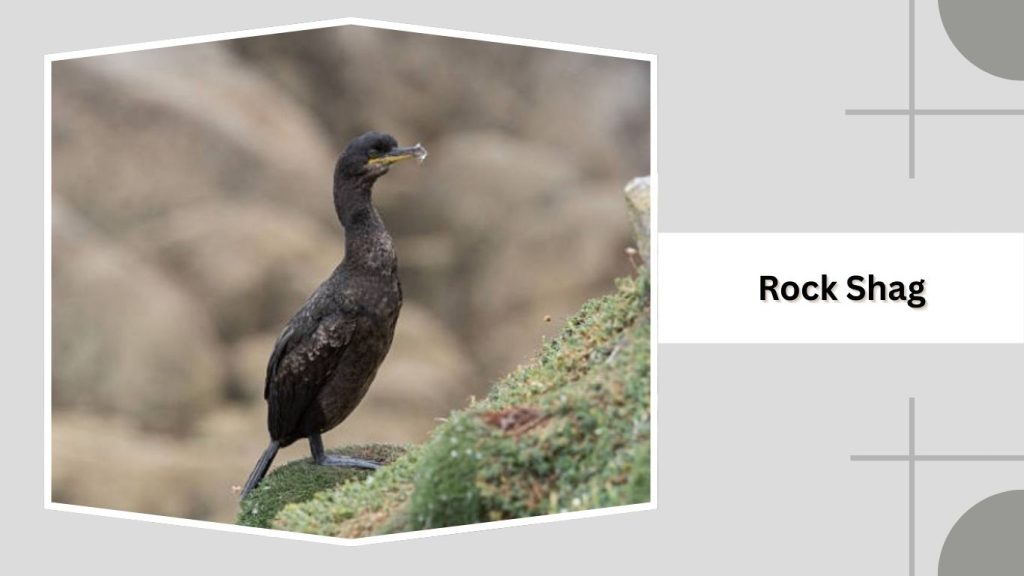
The rock shag is a medium-sized cormorant native to southern South America, especially along the coasts of Chile and Argentina. It is closely associated with rocky shorelines, islands, and cold coastal waters. This species is often seen resting on wave-washed rocks or low cliffs close to the sea.
Identification
- Medium-sized black-and-white cormorant
- Black upperparts with white underparts
- Red facial skin at the base of the bill
- Thin white line extending behind the eye
- Long neck and slender hooked bill
- Strong webbed feet for swimming
Habitat
Rock shags live in cold marine environments such as rocky coasts, offshore islands, and exposed headlands. They usually remain close to shore where fish are abundant and suitable nesting ledges are available.
Behaviors
They are agile divers that feed close to the seabed, often in shallow coastal waters. Rock shags may forage alone or in small groups and typically nest in colonies on rocky cliffs and slopes.
Diet and Lifespan
Their diet mainly includes fish and some marine invertebrates. In the wild, rock shags generally live about 10 to 14 years.
17. Crozet Shag (Leucocarbo melanogenis)
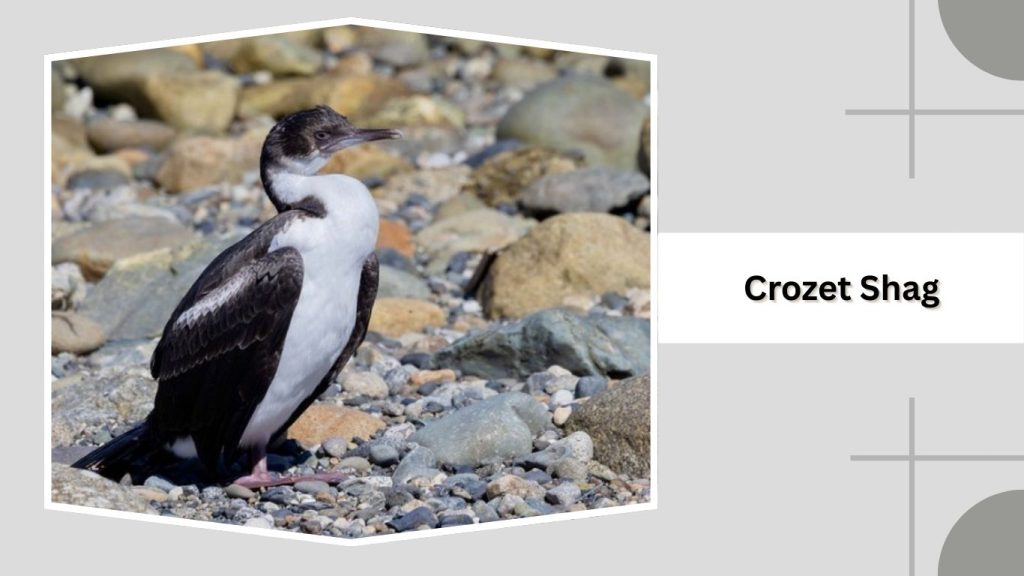
The Crozet shag is a cormorant-like seabird found on remote subantarctic islands of the southern Indian Ocean, especially around the Crozet and Prince Edward Islands. It is adapted to cold, rough seas and is usually seen near rocky coasts and wave-battered shorelines.
Identification
- Medium-to-large black-and-white shag
- White underparts with black back and wings
- Reddish facial skin at the base of the bill
- Pale markings on the face
- Long neck and slender hooked bill
- Strong webbed feet for diving
Habitat
Crozet shags inhabit cold marine environments, particularly rocky coasts, offshore islands, and subantarctic shorelines. They rarely venture far inland and depend on productive coastal waters.
Behaviors
They are strong coastal divers, feeding mainly near shore. Crozet shags usually forage alone or in small groups and nest in colonies on rocky slopes, ledges, and cliff faces.
Diet and Lifespan
Their diet mainly consists of fish, crustaceans, and other marine organisms. In the wild, Crozet shags are believed to live around 10 to 15 years.
18. Macquarie Shag (Leucocarbo purpurascens)
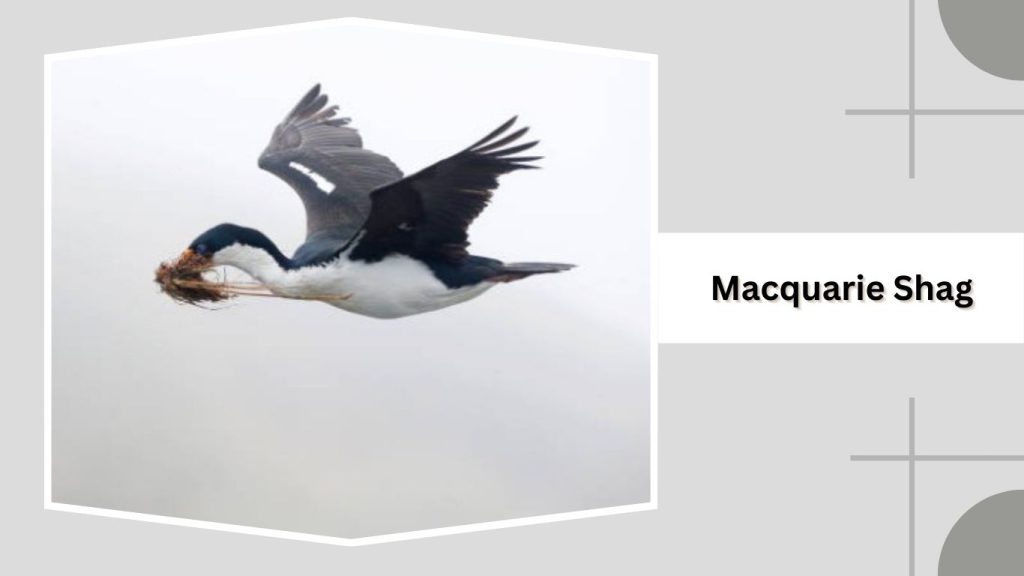
The Macquarie shag is a subantarctic seabird found mainly around Macquarie Island and nearby Southern Ocean islands. It is well adapted to cold, windy marine environments and is typically seen along rocky shores, cliff bases, and sheltered coastal waters. This species is closely tied to the ocean and rarely moves far from land.
Identification
- Medium-sized black-and-white shag
- Black upperparts with white underparts
- Reddish facial skin at the base of the bill
- Pale eye ring and facial markings
- Long neck and slender hooked bill
- Strong webbed feet for diving
Habitat
Macquarie shags inhabit cold marine environments, including rocky coastlines, offshore islands, and sheltered bays. They prefer productive coastal waters where fish and marine invertebrates are available.
Behaviors
They are skilled divers, usually feeding close to shore in shallow coastal waters. Macquarie shags often forage alone or in small groups and nest in colonies on rocky slopes and cliff ledges.
Diet and Lifespan
Their diet mainly consists of small fish, crustaceans, and other marine organisms. In the wild, Macquarie shags generally live around 10 to 15 years.
19. Campbell Shag (Leucocarbo campbelli)
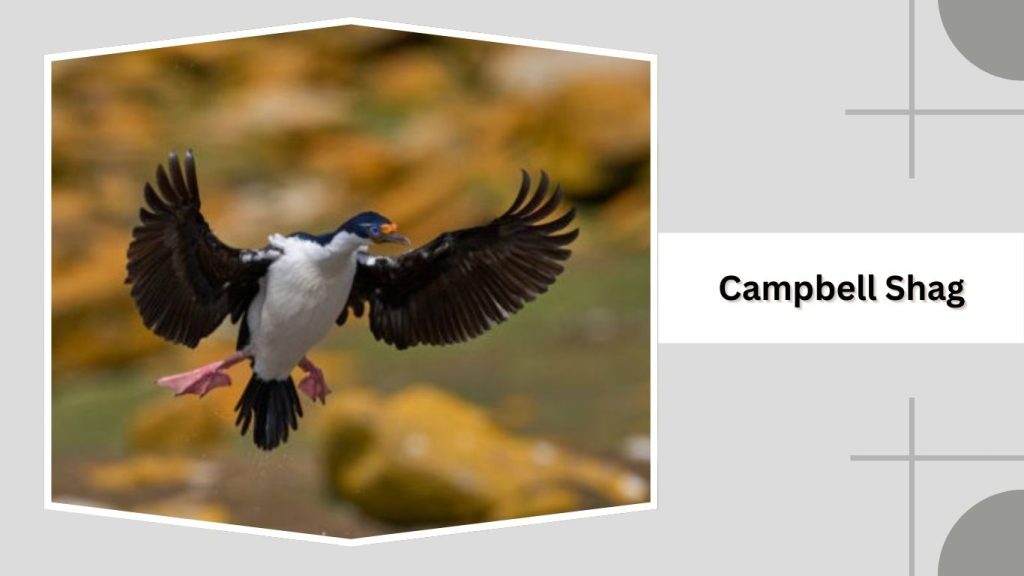
The Campbell shag is a rare seabird restricted to Campbell Island and nearby subantarctic islands south of New Zealand. It is closely related to other southern shags and is adapted to cold, stormy marine environments. This species is typically seen along rocky coastlines and offshore islets.
Identification
- Medium-sized black-and-white shag
- White underparts with black back and wings
- Reddish facial skin at the base of the bill
- Pale eye ring and subtle facial markings
- Long neck and slender hooked bill
- Strong webbed feet for diving
Habitat
Campbell shags inhabit cold marine environments, particularly rocky shores, offshore islands, and cliff-lined coasts. They rely on clean, productive waters close to land.
Behaviors
They are agile coastal divers, feeding mostly near the seabed. Campbell shags usually forage alone or in small groups and nest in colonies on cliff ledges and rocky slopes.
Diet and Lifespan
Their diet consists mainly of fish and marine invertebrates. In the wild, Campbell shags are believed to live around 10 to 15 years.
20. Auckland Shag (Leucocarbo colensoi)
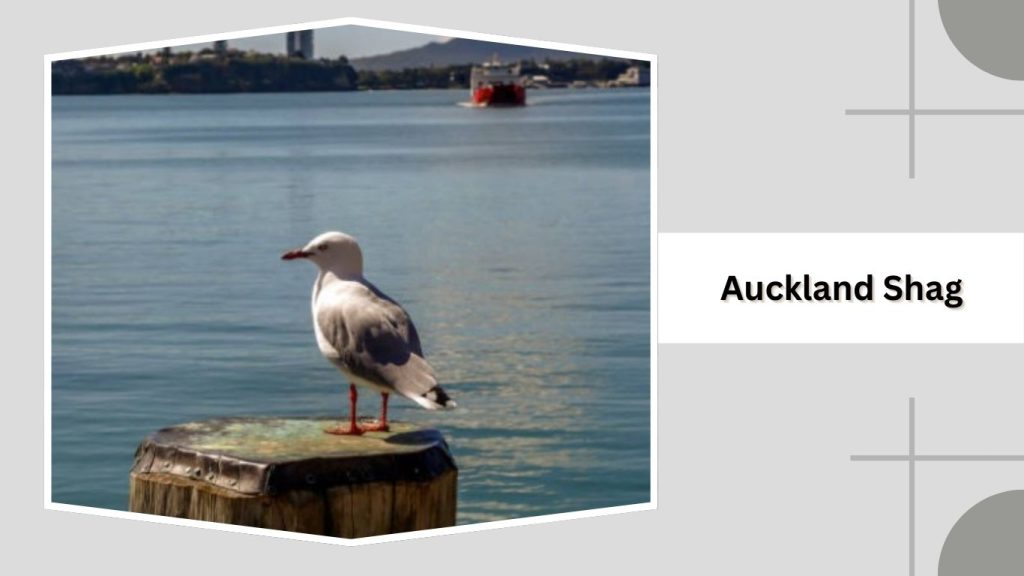
The Auckland shag is a distinctive black-and-white seabird native to the Auckland Islands south of New Zealand. It is one of the rarest shag species and is strongly tied to cold, subantarctic marine environments. This bird is usually seen along rocky coastlines, in sheltered bays, and around offshore stacks.
Identification
- Medium-to-large black-and-white shag
- White face and throat contrasting with dark cap
- Yellow-orange facial skin at the base of the bill
- Pale blue eye ring
- Long neck and slender hooked bill
- Strong webbed feet for diving
Habitat
Auckland shags inhabit cold marine environments, including rocky shores, offshore islands, sea cliffs, and sheltered coastal waters. They remain close to land where nesting ledges and feeding grounds are nearby.
Behaviors
They are skilled divers, usually feeding in nearshore waters. Auckland shags often forage alone or in small groups and nest in small colonies on cliff ledges and rocky outcrops.
Diet and Lifespan
Their diet mainly includes fish and marine invertebrates. In the wild, Auckland shags typically live around 10 to 15 years.
21. Stewart Island Shag (Leucocarbo chalconotus)
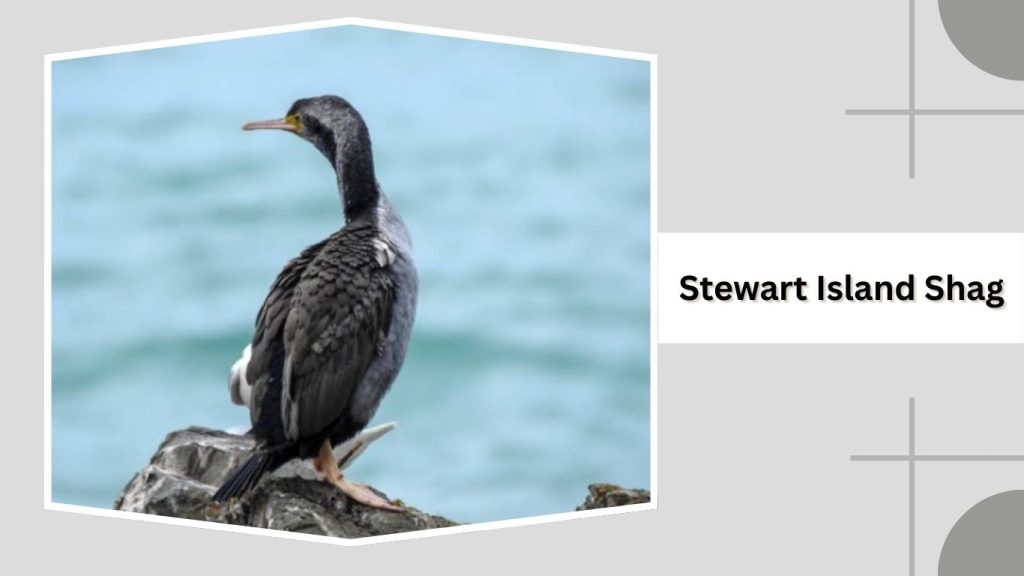
The Stewart Island shag is a rare shag species found only around Stewart Island and parts of southern New Zealand. It is closely associated with cool, productive coastal waters and rocky shorelines. This bird is known for its striking black-and-white plumage and limited geographic range.
Identification
- Medium-to-large black-and-white shag
- White throat and face with darker crown
- Yellow-orange facial skin at the base of the bill
- Pale blue eye ring
- Long neck and slender hooked bill
- Strong webbed feet for powerful diving
Habitat
Stewart Island shags inhabit cold marine environments such as rocky coasts, offshore islands, sea cliffs, and sheltered bays. They usually remain close to land where fish are abundant.
Behaviors
They are capable divers, feeding mostly in nearshore waters. Stewart Island shags often forage alone or in small groups and nest in colonies on rocky ledges and coastal cliffs.
Diet and Lifespan
Their diet mainly consists of fish, along with some marine invertebrates. In the wild, Stewart Island shags generally live around 10 to 15 years.
22. Pitt Shag (Leucocarbo featherstoni)
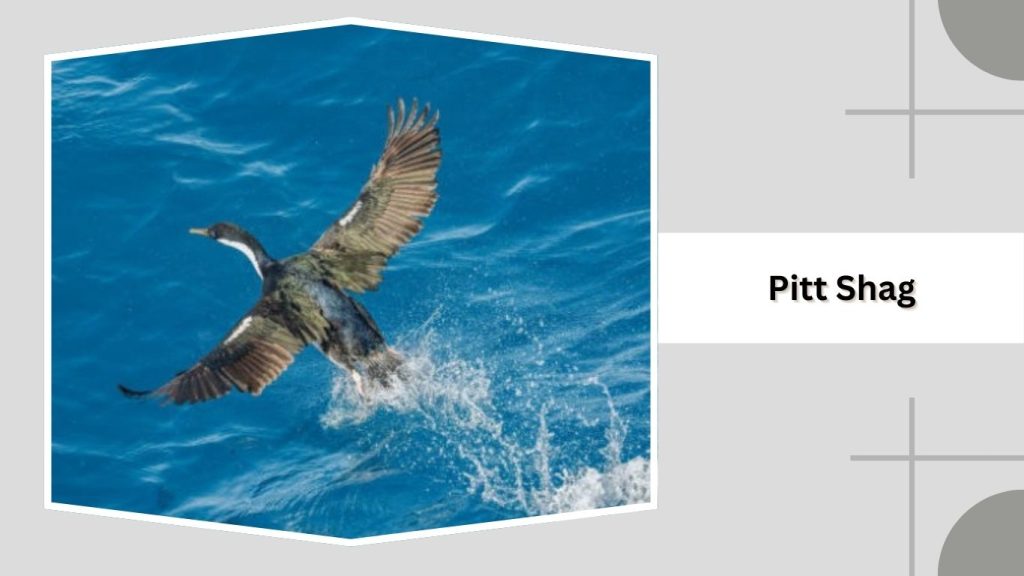
The Pitt shag is a rare seabird restricted to the Chatham Islands, especially around Pitt Island, east of New Zealand. It is one of the most localized shag species in the world and is strongly tied to cold, coastal marine environments. This bird is usually seen along rocky shores and offshore stacks.
Identification
- Medium-sized black-and-white shag
- White face and throat with dark crown and nape
- Yellow-orange facial skin at the base of the bill
- Pale blue eye ring
- Long neck and slender hooked bill
- Strong webbed feet for efficient diving
Habitat
Pitt shags inhabit cold marine environments, particularly rocky coastlines, offshore islands, and cliff-lined shores. They depend on nearshore waters for feeding and nesting.
Behaviors
They are agile divers, feeding close to the seabed in coastal waters. Pitt shags usually forage alone or in small groups and nest in small colonies on narrow cliff ledges and rocky outcrops.
Diet and Lifespan
Their diet mainly includes small fish and marine invertebrates. In the wild, Pitt shags are believed to live around 10 to 15 years.
23. Little Pied Cormorant (Microcarbo melanoleucos)
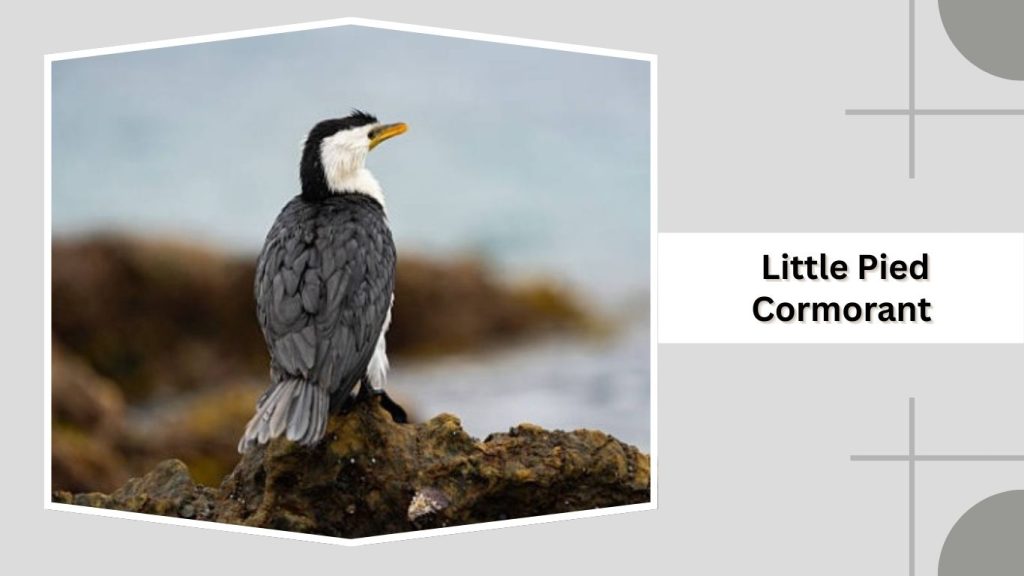
The little pied cormorant is a small black-and-white cormorant commonly found in Australia, New Zealand, and nearby islands. It is easily recognized by its contrasting plumage and compact body. This species inhabits a wide variety of freshwater and coastal environments and is often seen perched on branches, poles, or rocks near water.
Identification
- Small, compact black-and-white cormorant
- White face, throat, and underparts
- Black back, wings, and cap
- Short neck and small hooked bill
- Pale facial skin near the bill
- Webbed feet for agile swimming
Habitat
Little pied cormorants live around lakes, rivers, wetlands, reservoirs, estuaries, and sheltered coastal waters. They are highly adaptable and can thrive in both freshwater and marine environments.
Behaviors
They are energetic divers, often making repeated short dives in shallow water. Little pied cormorants frequently forage alone or in small groups and regularly perch to rest and dry their wings.
Diet and Lifespan
Their diet mainly consists of small fish, aquatic insects, and crustaceans. In the wild, little pied cormorants usually live around 8 to 12 years.
24. Pied Cormorant (Phalacrocorax varius)
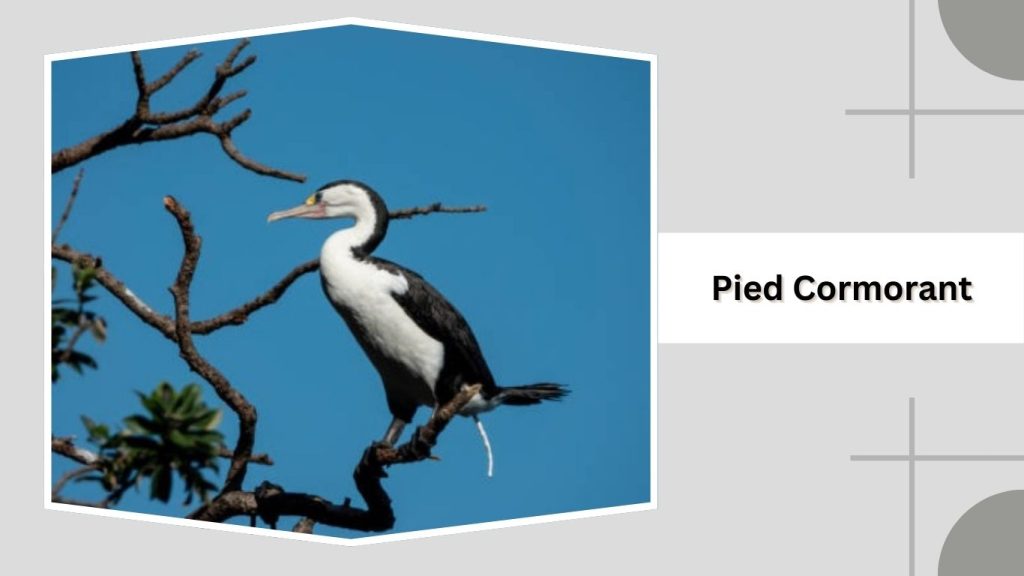
The pied cormorant, also known as the pied shag, is a large black-and-white cormorant found mainly in Australia, New Zealand, and surrounding coastal regions. It is a robust, long-necked species often seen along coastlines, estuaries, and large inland waters. Its bold contrast between dark upperparts and white underparts makes it easy to recognize.
Identification
- Large black-and-white cormorant
- White face, neck, and underparts
- Black back, wings, and crown
- Yellow facial skin around the base of the bill
- Long neck and strong hooked bill
- Powerful webbed feet for diving
Habitat
Pied cormorants inhabit coastal waters, estuaries, bays, harbors, and large inland lakes and rivers. They prefer open water where fish are plentiful and roosting sites are nearby.
Behaviors
They are strong divers, capable of chasing fish underwater for extended periods. Pied cormorants often forage alone or in small groups and commonly rest on rocks, buoys, and piers.
Diet and Lifespan
Their diet mainly consists of fish, along with some crustaceans and cephalopods. In the wild, pied cormorants typically live around 10 to 15 years.
25. Spotted Shag (Stictocarbo punctatus)
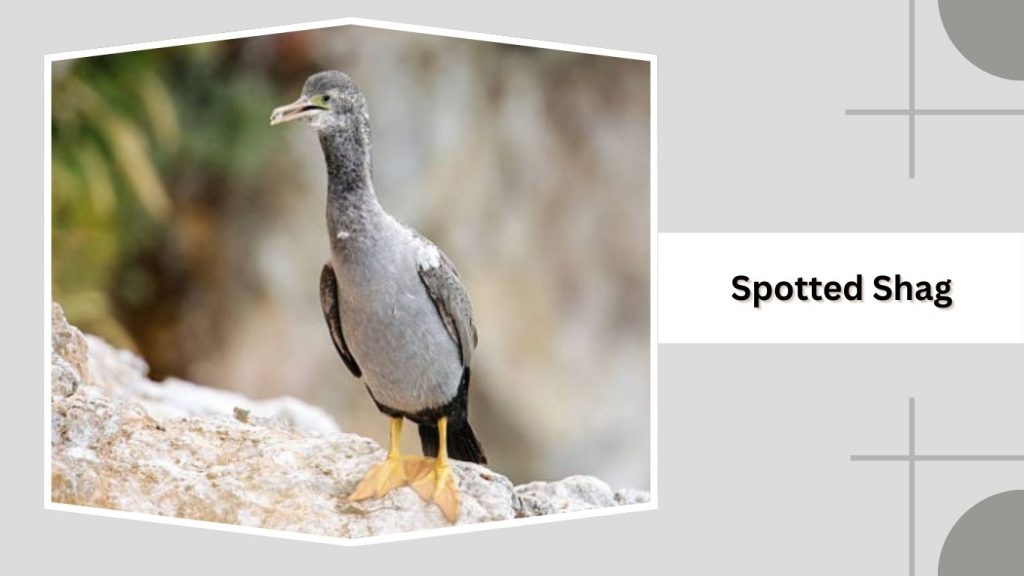
The spotted shag is a striking black-and-white seabird native to New Zealand. It is well known for its beautiful spotted pattern, long crest, and bright facial skin. This species is strongly associated with rocky coastlines and offshore islands, where it nests in colonies and feeds in nearby coastal waters.
Identification
- Medium-sized black-and-white shag
- Distinct black spots on white upper wings and back
- Long slender neck and narrow hooked bill
- Bright blue and orange facial skin
- Prominent crest during breeding season
- Strong webbed feet for diving
Habitat
Spotted shags inhabit marine environments such as rocky shores, sea cliffs, offshore islands, and sheltered bays. They remain close to the coast where clear water supports abundant fish populations.
Behaviors
They are agile divers that hunt fish in coastal waters, often feeding alone or in small groups. Spotted shags commonly nest in dense colonies on cliff ledges and rocky stacks and frequently perch upright on exposed rocks.
Diet and Lifespan
Their diet mainly includes small fish and some marine invertebrates. In the wild, spotted shags generally live around 10 to 15 years.
FAQs
What is a cormorant?
A cormorant is a medium-to-large water bird that specializes in catching fish by diving underwater. They have long necks, hooked bills, and webbed feet that make them powerful swimmers. Cormorants are found worldwide along coasts, lakes, rivers, and wetlands.
Where are cormorants commonly found?
Cormorants live on every continent except Antarctica. Most species prefer coastal areas, but many also inhabit freshwater lakes, rivers, reservoirs, and wetlands. They are usually seen near open water where fish are abundant and safe resting or nesting sites are available.
Why do cormorants spread their wings?
Cormorants often spread their wings after swimming to help dry their feathers. Unlike many water birds, their feathers are not fully waterproof, which allows them to dive more easily but requires drying after feeding.
What do cormorants eat?
Cormorants mainly eat fish, including small schooling species and bottom-dwelling fish. Some species also consume crustaceans, amphibians, or mollusks. They hunt by diving underwater and catching prey with their hooked bills.
Are cormorants protected birds?
In many countries, cormorants are protected under wildlife conservation laws. However, in some regions, limited population control is allowed because large colonies may compete with fisheries. Protection status varies by country and species.