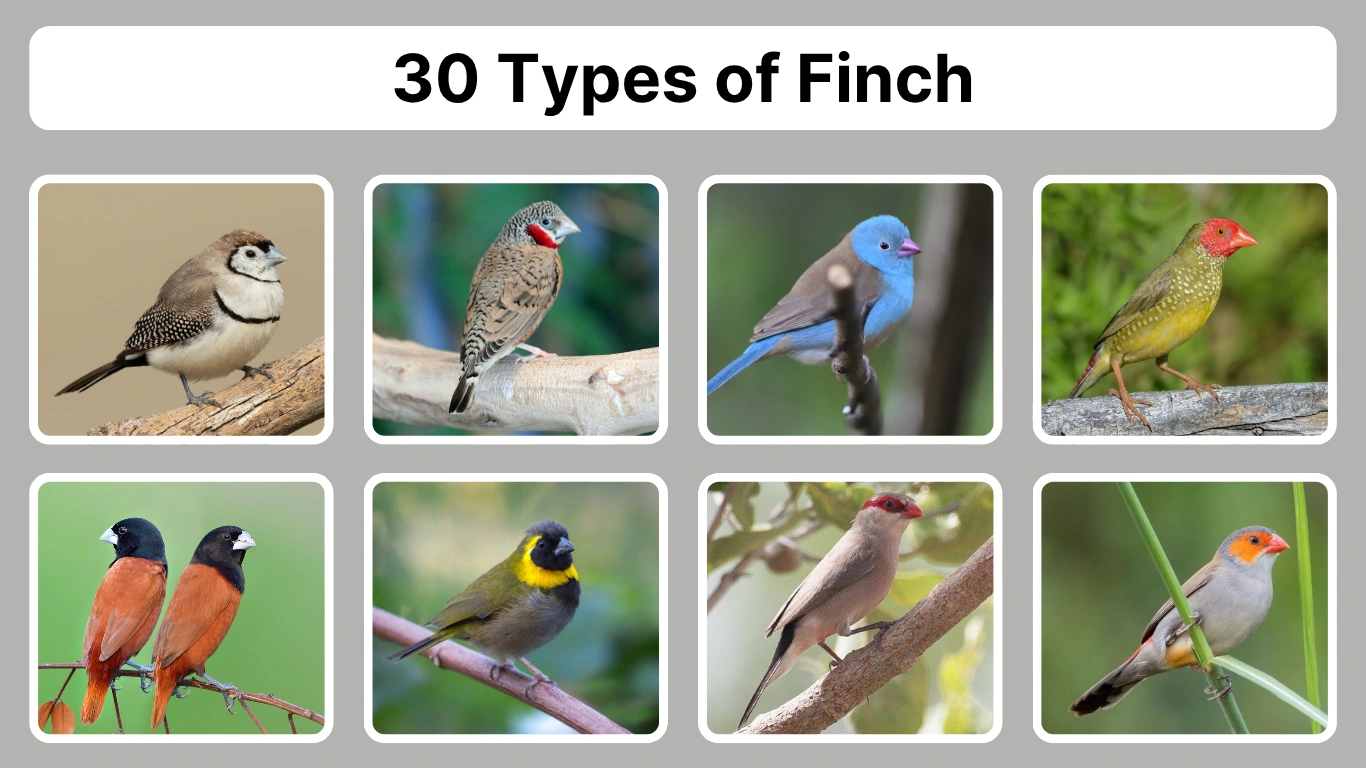
Finches are a diverse and colorful group of small songbirds found across the globe, celebrated for their lively personalities, melodic calls, and vibrant plumage. From the bold red hues of the Strawberry Finch to the soft gray tones of the Grey Singing Finch, these birds have adapted to a wide variety of habitats—from African savannas to Australian grasslands and North American forests.
In this guide, we explore 30 distinct types of finches, each introduced with a brief overview followed by detailed sections on identification, behavior, habitat, diet, and breeding. Whether you’re a bird enthusiast, pet owner, or curious learner, this list offers a fascinating look into the beauty and variety of finch species.
1. Zebra Finch
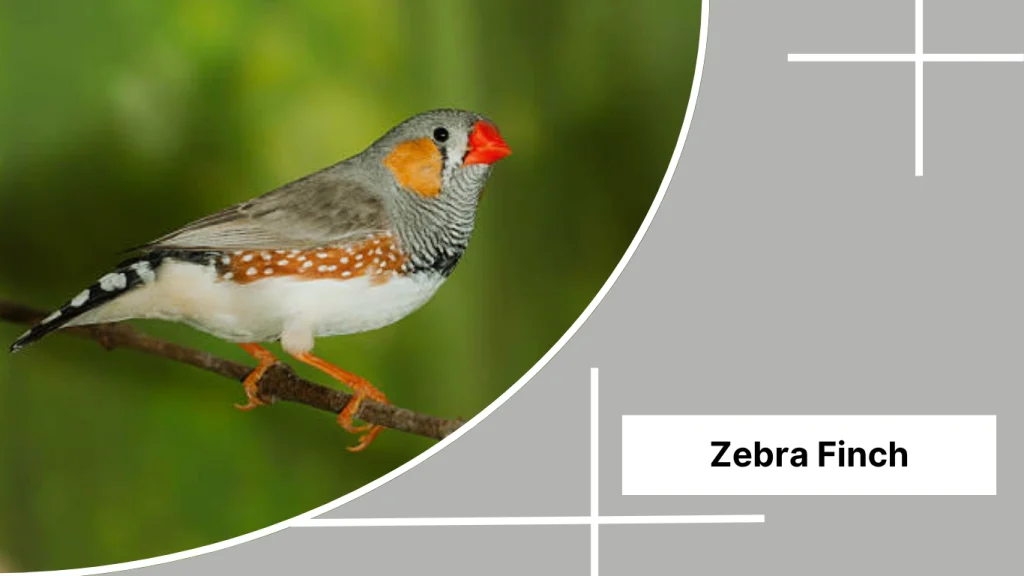
The Zebra Finch (Taeniopygia guttata) is a small, active songbird native to Australia, widely kept as a pet due to its easy care and pleasant chirping. It’s easily recognized by its bold markings and is one of the most studied birds in behavioral and vocal research.
Identification
- Size: 4 to 4.3 inches (10–11 cm)
- Weight: Around 12 grams
- Male: Gray body, black-and-white striped throat, orange cheeks, chestnut flanks with white dots
- Female: Paler overall, lacks cheek patches, lighter beak
- Beak: Red in males, orange in females
- Tail: Black and white barred
- Legs: Orange
- Eye: Dark brown
Natural Habitat
Zebra Finches thrive in Australia’s dry grasslands, open woodlands, and savannas. They often settle near water sources, forming large flocks that forage together.
Behavior
They are highly social birds, often living in groups. Males are known for their unique songs, used to attract females and establish territory. Zebra Finches are quick, curious, and constantly active.
Diet
Their primary diet includes grass seeds, millet, and small insects. In captivity, they are fed seed mixes, vegetables, and protein supplements during breeding.
Breeding Habits
Zebra Finches breed year-round in captivity and during rainy seasons in the wild. Both parents share incubation duties. Chicks grow fast, becoming independent within 3–4 weeks.
2. Gouldian Finch

The Gouldian Finch (Erythrura gouldiae), also known as the Lady Gouldian Finch, is a vividly colored bird native to northern Australia. It is admired for its bright, multicolored plumage and is popular among aviculturists for its beauty and gentle nature.
Identification
- Size: 5 to 6 inches (12–15 cm)
- Weight: About 14 grams
- Head: Can be red, black, or yellow (three color morphs)
- Chest: Purple or mauve
- Belly: Bright yellow
- Back and wings: Green
- Beak: Pale, tipped with red or orange
- Tail: Long and pointed, usually black
- Legs: Pale pink
Habitat & Range
They inhabit open woodlands, tropical savannas, and grassy plains in northern Australia, especially around the Kimberley and Top End regions.
Behavior
Gouldian Finches are gentle and social but can be shy. They tend to form small flocks and require a calm, stable environment in captivity. Unlike Zebra Finches, they are quieter and less vocal.
Diet
Their wild diet includes grass seeds, especially sorghum and spinifex. In captivity, they thrive on a mixture of seeds, greens, egg food, and minerals.
Breeding
They nest in tree hollows and require warm temperatures to breed successfully. The female lays 4–8 eggs, and both parents incubate them. Chicks fledge after about 21 days.
3. Society Finch

The Society Finch (Lonchura domestica) is a domesticated finch with no known wild population. Bred from munia ancestors, it is known for its calm temperament and usefulness as a foster parent for more delicate finch species.
Identification
- Size: 4 to 5 inches (10–13 cm)
- Weight: Around 12–14 grams
- Head: Rounded, often chocolate brown or pied
- Body: Can vary from solid brown to pied or white
- Beak: Short and pale
- Legs: Pink or light brown
- Tail: Short and rounded
Habitat
As a domesticated bird, Society Finches are kept in aviaries and cages. They do not exist in the wild and are adapted to human care.
Behavior
They are highly social, peaceful, and rarely aggressive. Their cooperative nature makes them ideal for mixed-species aviaries. Males produce soft, warbling songs.
Diet
They eat a variety of seeds, such as millet, along with greens, grit, and calcium supplements. A varied diet helps prevent deficiencies.
Breeding
Society Finches are prolific breeders and excellent parents. They are often used to foster eggs or chicks of more sensitive species, such as Gouldian Finches.
4. Java Finch

The Java Finch (Padda oryzivora), also known as the Java Sparrow or Ricebird, is a striking bird originally from Indonesia. It’s easily recognized by its thick beak and sleek plumage and is widely bred in captivity.
Identification
- Size: 5.5 to 6 inches (14–15 cm)
- Weight: About 20–25 grams
- Head: Black with large white cheek patches
- Body: Pale gray
- Belly: Slightly pinkish or beige
- Beak: Thick, conical, and bright pink
- Eyes: Red with a dark ring
- Legs: Pink
- Tail: Black
Habitat
In the wild, they are found in grasslands, rice fields, and open woodlands in Java, Bali, and Bawean. Due to introductions, feral populations exist in Hawaii, Sri Lanka, and the Caribbean.
Behavior
Java Finches are calm, social birds that prefer to live in pairs or groups. They produce soft chirps and whistles and enjoy perching and hopping rather than flying long distances.
Diet
Their diet mainly consists of rice and other grains. In captivity, they should be fed a seed mix, along with greens, soft foods, and cuttlebone for calcium.
Breeding
They breed in colonies and build dome-shaped nests. The female lays 4–6 eggs, incubated by both parents. Chicks fledge in about three weeks.
5. Purple Finch
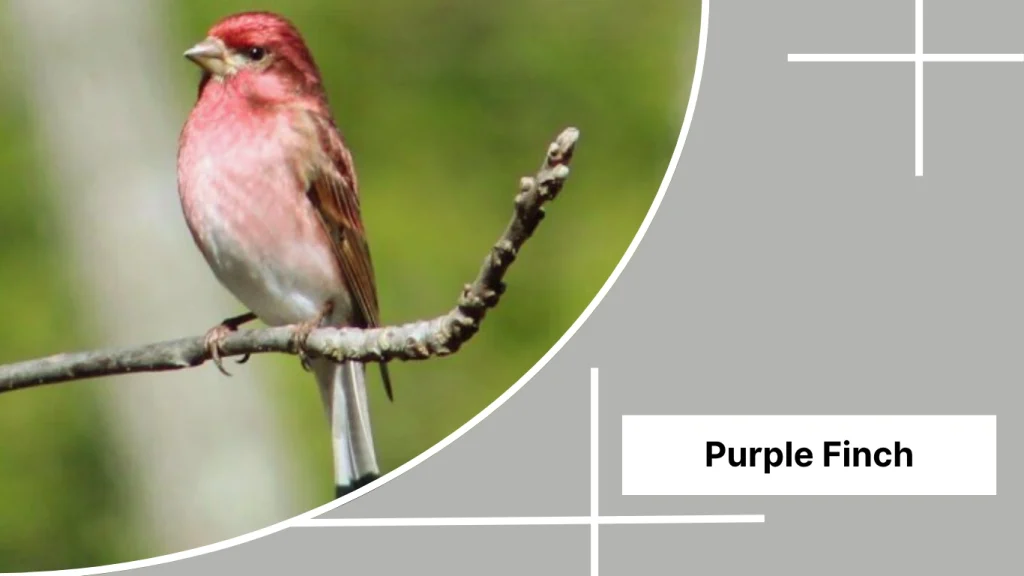
The Purple Finch (Haemorhous purpureus) is a North American finch known for the rosy-red color of the males. It inhabits coniferous and mixed forests and is a seasonal visitor to backyard feeders.
Identification
- Size: 5.5 to 6.3 inches (14–16 cm)
- Weight: 20–25 grams
- Male: Raspberry-red head, chest, and back; brown wings and tail
- Female: Brown and white with heavy streaking and a bold face pattern
- Beak: Thick and conical
- Eyes: Dark
- Legs: Grayish
- Tail: Slightly notched
Habitat
Purple Finches breed in northern coniferous forests and migrate to southern woodlands and suburbs during winter, ranging across Canada and the northeastern United States.
Behavior
They are calm, non-territorial birds, often found foraging in trees or visiting feeders. Males sing cheerful, warbling songs, especially during the breeding season.
Diet
They eat seeds, buds, berries, and insects. At feeders, they prefer sunflower seeds and suet.
Breeding
Nesting occurs in trees, with cup-shaped nests made of twigs and grasses. The female lays 3–5 eggs, and only she incubates them, while the male provides food.
6. House Finch
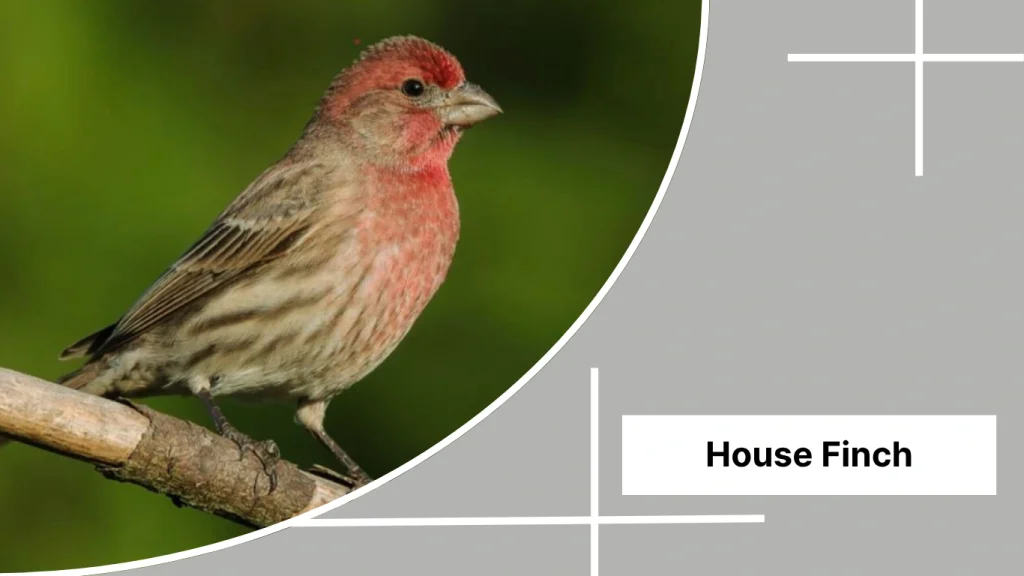
The House Finch (Haemorhous mexicanus) is a widespread songbird native to the western United States and Mexico but now common across North America. Known for its cheerful song and adaptability, it’s a regular visitor to backyard feeders.
Identification
- Size: 5 to 6 inches (13–15 cm)
- Weight: 16–21 grams
- Male: Red head, throat, and chest; streaked brown back and belly
- Female: Plain brown with blurry streaks, no red coloring
- Beak: Short, thick, and slightly curved
- Eyes: Dark brown
- Tail: Long and flat, notched at the tip
- Legs: Dark gray
Habitat
Originally native to the arid southwest, House Finches now inhabit cities, suburbs, farms, parks, and forest edges throughout North America. They are highly adaptable and thrive in urban settings.
Behavior
House Finches are gregarious and often travel in flocks. Males sing bright, musical warbles to attract females. They are non-aggressive and often nest in hanging planters, vents, and outdoor lights.
Diet
They primarily eat seeds, fruits, and buds. At feeders, they love black oil sunflower seeds, millet, and nyjer. They may also consume insects during nesting season.
Breeding
Females build compact nests in sheltered spaces, laying 3–6 pale blue eggs. Incubation lasts about two weeks, and fledglings leave the nest in 12–19 days. Multiple broods per year are common.
7. American Goldfinch

The American Goldfinch (Spinus tristis), also called the Eastern Goldfinch or Wild Canary, is a vibrant yellow finch found throughout North America. It is the state bird of Iowa, New Jersey, and Washington.
Identification
- Size: 4.3 to 5.1 inches (11–13 cm)
- Weight: 11–20 grams
- Male (breeding): Bright yellow body, black forehead, black wings with white bars
- Female: Olive-yellow with duller markings
- Winter Plumage: Both sexes turn brownish with yellow hints
- Beak: Small and conical, orange in summer
- Tail: Notched, black with white edges
- Legs: Pale pink
Habitat
They inhabit weedy fields, meadows, orchards, and backyard feeders across the United States and southern Canada. They prefer open spaces with scattered shrubs and trees.
Behavior
They are acrobatic, bouncy fliers with a flight call that sounds like “per-chick-o-ree.” Highly social outside of breeding season, they form flocks and display synchronized movements in flight.
Diet
Goldfinches eat seeds from thistles, sunflowers, dandelions, and grasses. At feeders, they love nyjer seed and sunflower chips. They are strict vegetarians.
Breeding
They nest late in the season, often July or August, to align with peak seed availability. Nests are tightly woven in shrubs or trees. Females lay 4–6 eggs and raise the chicks with little male assistance.
8. European Goldfinch
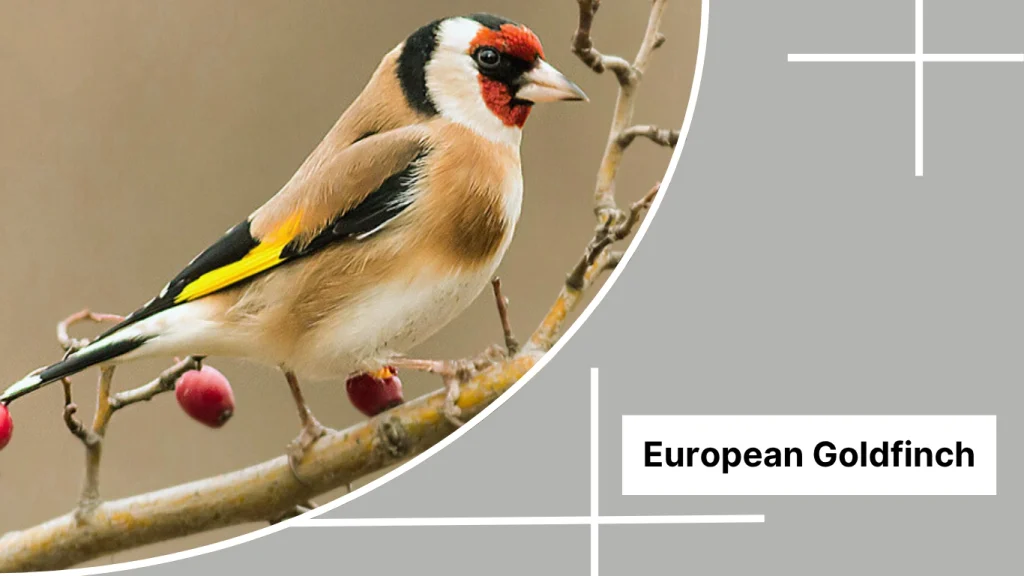
The European Goldfinch (Carduelis carduelis) is a colorful finch native to Europe, North Africa, and western Asia, introduced in parts of the world like Australia and New Zealand. It’s prized for its vibrant face pattern and melodic song.
Identification
- Size: 4.7 to 5.1 inches (12–13 cm)
- Weight: 14–19 grams
- Head: Red face with black and white markings
- Body: Buff to white underside
- Wings: Black with a bright yellow stripe
- Tail: Black with white spots
- Beak: Long and pointed, ivory-colored
- Legs: Pink
Habitat
European Goldfinches live in gardens, orchards, parks, and woodland edges. They avoid dense forests and prefer areas rich in thistle and other weedy plants.
Behavior
They are social birds with a lively, musical song. In winter, they gather in flocks and may roam considerable distances in search of food. Their calls are pleasant and soft, making them popular in aviaries.
Diet
Mainly seed-eaters, particularly fond of thistle, dandelion, and teasel. They may supplement their diet with insects in spring. In captivity, a seed mix and occasional greens are recommended.
Breeding
Breeding begins in late spring. The female builds a neat cup-shaped nest in a tree or shrub. She lays 4–6 pale blue eggs, which hatch in 12–14 days. Both parents help feed the young.
9. Lesser Goldfinch
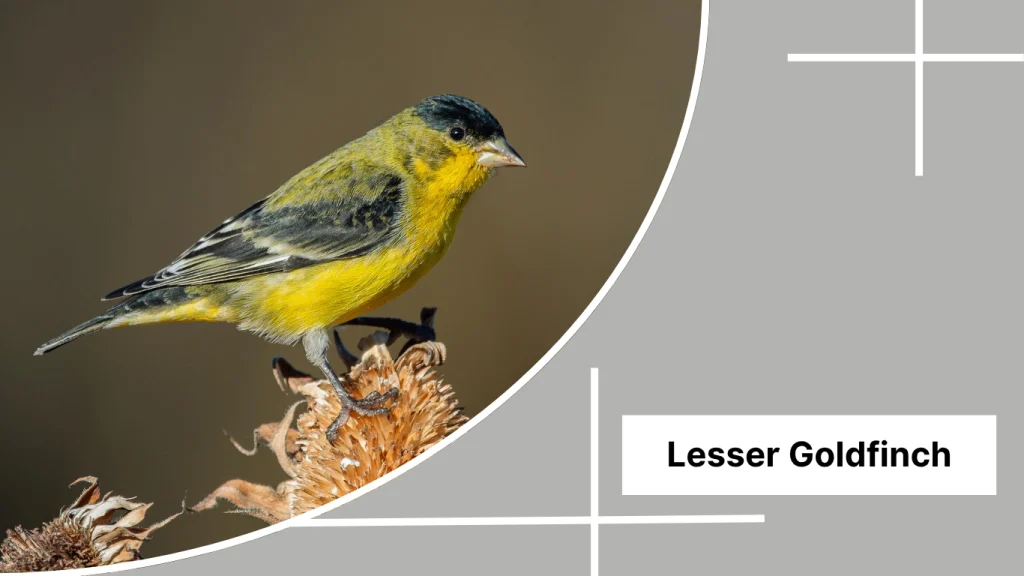
The Lesser Goldfinch (Spinus psaltria) is a small, lively finch found in the southwestern United States, Mexico, and parts of Central America. It’s known for its bright coloration and cheerful whistling calls.
Identification
- Size: 3.5 to 4.7 inches (9–12 cm)
- Weight: 8–11 grams
- Male: Black or dark green back (depending on region), bright yellow underparts, black cap, black wings with white patches
- Female: Olive-gray back, dull yellow underparts, no cap
- Beak: Short, conical, and pale
- Tail: Slightly notched, black with white corners
- Legs: Gray
Habitat
They prefer shrubby open areas, woodland edges, gardens, and desert scrub. Often found near streams, in foothills, and around feeders in suburban backyards.
Behavior
Lesser Goldfinches are active and agile, often feeding upside-down. They form flocks outside the breeding season and often mix with other finches.
Diet
Primarily seed eaters—favoring sunflower, dandelion, and thistle seeds. They also consume small insects and fruit. At feeders, they go for nyjer and black oil sunflower seed.
Breeding
They nest in shrubs or low trees, building small cup nests from plant fibers. The female lays 3–4 eggs and incubates alone, while the male may help feed the chicks once hatched.
10. Greenfinch

The European Greenfinch (Chloris chloris) is a robust, chunky finch native to Europe, parts of Asia, and North Africa. Its rich green coloration and loud calls make it easy to recognize.
Identification
- Size: 5.5 to 6 inches (14–15 cm)
- Weight: 25–30 grams
- Male: Olive-green body, bright yellow wing and tail edges
- Female: Duller overall, with more gray and brown tones
- Beak: Pale pink and strong
- Tail: Forked with yellow outer feathers
- Legs: Pinkish
Habitat
They inhabit woodlands, farmland, hedgerows, parks, and gardens. Readily adapts to urban settings and is commonly seen at bird feeders.
Behavior
Greenfinches are often seen in flocks, especially outside of the breeding season. They are bold and can be dominant at feeders. Males sing loud, nasal trills from treetops or during short display flights.
Diet
They feed mainly on seeds, including sunflower and grain crops. During breeding, they may include insects. They readily take seeds from feeders, especially sunflower hearts.
Breeding
Greenfinches breed in dense shrubs or trees. The female constructs a neat, well-lined nest and lays 4–6 pale eggs. She incubates them for about two weeks. Both parents feed the chicks.
11. Brambling Finch
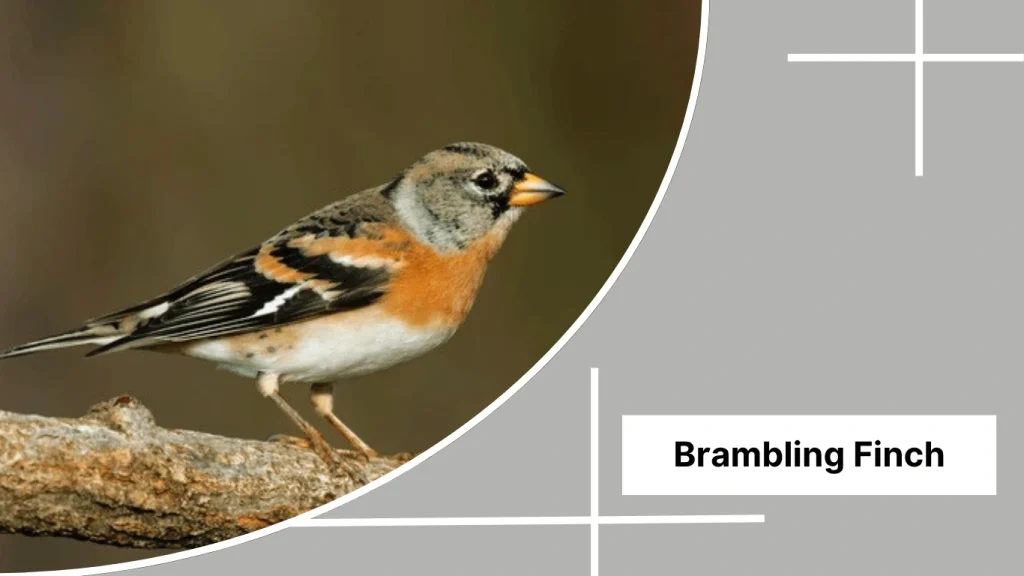
The Brambling (Fringilla montifringilla) is a migratory finch native to the forests of Europe and Asia. Often mistaken for the Chaffinch, it stands out with its orange chest and white rump, especially in flight.
Identification
- Size: 5.5 to 6.2 inches (14–16 cm)
- Weight: 20–27 grams
- Male (breeding): Black head, orange breast, white belly, white rump, dark back
- Female/Non-breeding Male: Gray-brown head, muted orange breast, white belly
- Wings: Dark with white wing bars
- Tail: Dark with white edges
- Beak: Yellow in winter, black in breeding season
- Legs: Brown
Habitat
They breed in coniferous and mixed forests across northern Europe and Asia. In winter, they migrate south to woodlands, farmland, and gardens in central and southern Europe and parts of Asia.
Behavior
Bramblings often join large mixed flocks of finches in winter. They feed on the ground and are particularly attracted to beech mast. They are shy and tend to flush quickly when startled.
Diet
Their diet consists of seeds, particularly beech nuts in winter, and insects during breeding season. They will also eat berries and grains when other food is scarce.
Breeding
They nest in trees or shrubs, often concealed among foliage. The female builds the nest and lays 4–7 eggs. Incubation lasts about 12–14 days, and fledglings leave the nest around day 14.
12. Cassin’s Finch
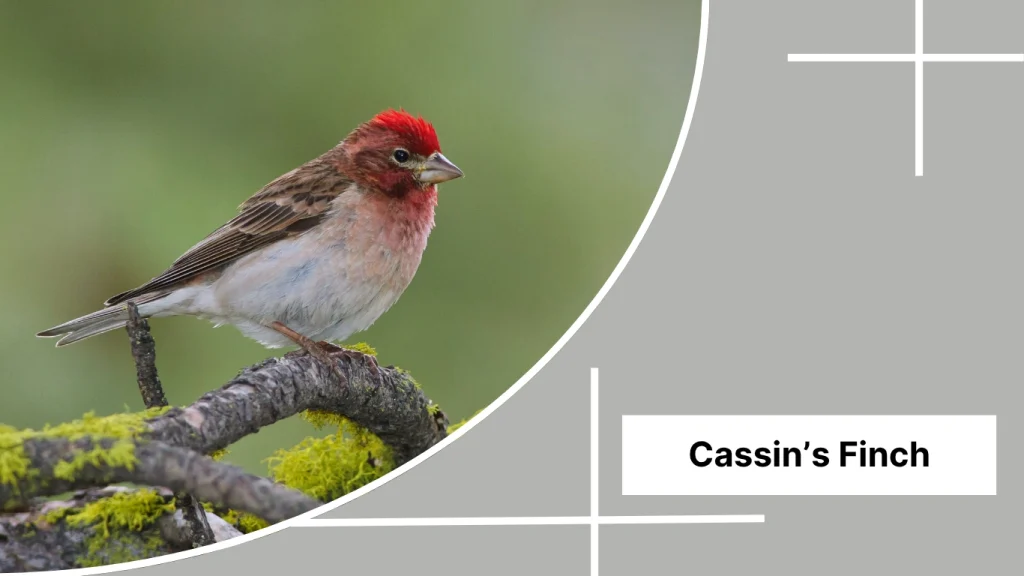
Cassin’s Finch (Haemorhous cassinii) is a robust mountain finch native to the western United States and southern Canada. It resembles the Purple Finch but has a more peaked crown and narrower streaks.
Identification
- Size: 6.3 inches (16 cm)
- Weight: 24–34 grams
- Male: Raspberry-red cap, face, and chest, streaked brown back, and light underparts
- Female: Brown and white with strong streaking, pale face with a bold eye stripe
- Beak: Long, pointed, and conical
- Tail: Notched
- Legs: Grayish
Habitat
Cassin’s Finches inhabit coniferous forests and mountain ranges, especially the Rockies and Sierra Nevada. In winter, they may descend to lower elevations or visit feeders.
Behavior
They are calm and often seen in small flocks. Males sing musical warbles and trills from perches. They may mix with other finch species when foraging in the wild.
Diet
Cassin’s Finches feed on pine seeds, buds, berries, and some insects. At feeders, they prefer sunflower seeds, especially in colder months.
Breeding
Nests are built in conifer trees. The female constructs a shallow cup of twigs and lays 3–5 eggs. Incubation lasts about two weeks. Both parents feed the chicks.
13. Crimson Finch

The Crimson Finch (Neochmia phaeton) is a brilliantly colored grass finch native to northern Australia and New Guinea. Its bold red plumage and long tail make it stand out among finch species.
Identification
- Size: 5.5 to 6 inches (14–15 cm)
- Weight: Around 10–14 grams
- Male: Deep crimson red over most of the body, black tail and thighs
- Female: Paler red with gray-brown on the back and belly
- Beak: Thick, conical, and red
- Eyes: Dark brown
- Tail: Long and pointed, black
- Legs: Pinkish-gray
Habitat
They live near freshwater wetlands, grassy riverbanks, reeds, and tall grasses in the tropical north of Australia and southern New Guinea.
Behavior
Crimson Finches are social and active, often found in pairs or small groups. They communicate with sharp, high-pitched calls and enjoy bathing and foraging at ground level.
Diet
They feed on grass seeds, insects, and small invertebrates. During breeding, insects form a key part of their diet.
Breeding
They build dome-shaped nests in tall grass or shrubs. Females lay 3–6 eggs, and both parents take part in incubation and chick rearing.
14. Orange-cheeked Waxbill

The Orange-cheeked Waxbill (Estrilda melpoda) is a colorful and delicate finch found in western and central Africa. It is named for its bright orange facial patches and is popular in the pet trade.
Identification
- Size: 3.5 to 4 inches (9–10 cm)
- Weight: Around 8–10 grams
- Face: Orange cheek patches
- Body: Olive-brown upperparts, grayish chest, and belly with fine barring
- Beak: Bright red and short
- Tail: Black and rounded
- Legs: Pale pink
Habitat
These birds inhabit grasslands, agricultural fields, gardens, and open savannas, often close to water. They favor areas with tall grasses and shrubs.
Behavior
Orange-cheeked Waxbills are shy but social. They move in small flocks and exhibit a flitting, bouncy flight. Their calls are soft and high-pitched.
Diet
They feed on grass seeds, millet, and small insects. In captivity, they require a soft food mix, greens, and access to grit for digestion.
Breeding
They build domed nests with side entrances using grass and feathers. The female lays 4–6 eggs, incubated by both parents. The young fledge in about 21 days.
15. Strawberry Finch

The Strawberry Finch (Amandava amandava), also known as the Red Avadavat, is a striking bird native to South Asia. Males in breeding plumage resemble ripe strawberries due to their vivid red coloring with white spots.
Identification
- Size: 3.5 to 4 inches (9–10 cm)
- Weight: 8–10 grams
- Male (breeding): Bright red body with white spots on the wings and flanks, black tail
- Male (non-breeding): Brownish overall with faint streaks
- Female: Light brown above, pale buff below
- Beak: Red, conical
- Tail: Short and dark
- Legs: Pink
Habitat
They inhabit grasslands, wetlands, and agricultural fields across India, Nepal, Bangladesh, and parts of Southeast Asia. Often found near water and tall grasses.
Behavior
Strawberry Finches are social and active, often seen in pairs or small flocks. Males perform display flights and sing during the breeding season. Outside breeding, their plumage dulls significantly.
Diet
Their diet consists of grass seeds, millet, and small insects during breeding. In captivity, a finch mix, greens, and protein-rich soft food are ideal.
Breeding
They nest in tall grass, building domed structures. Females lay 4–6 eggs, incubated by both parents. Chicks fledge around 21 days after hatching.
16. Red-headed Finch
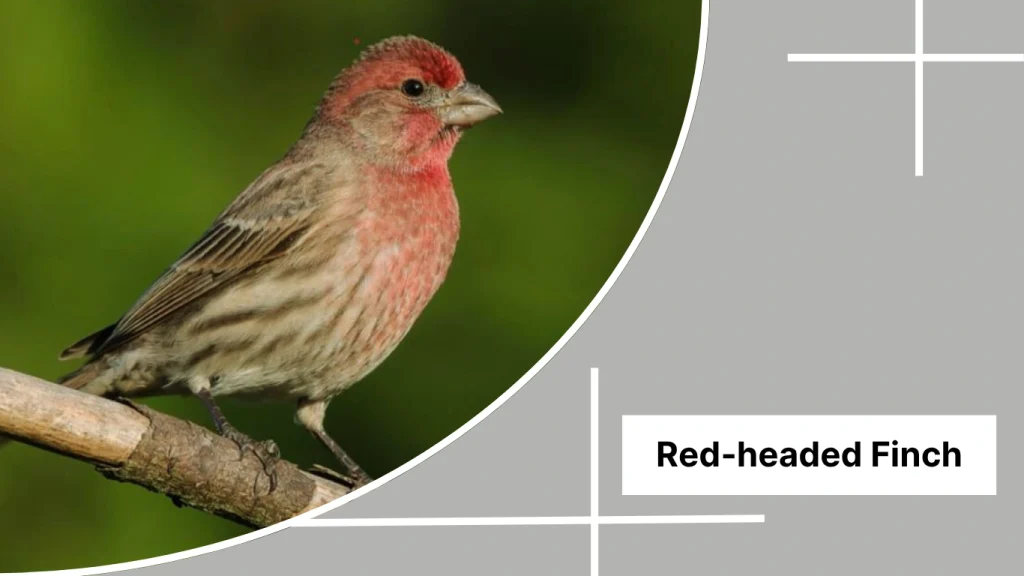
The Red-headed Finch (Amadina erythrocephala) is a robust and beautifully patterned finch native to southern Africa. Its distinct red head and scaly body markings make it easy to recognize.
Identification
- Size: 5.5 to 6 inches (14–15 cm)
- Weight: 18–25 grams
- Male: Bright red head, pale brown body with fine white scalloping
- Female: Duller head with more uniform grayish-brown plumage
- Beak: Thick, ivory-colored
- Tail: Short and dark
- Legs: Pink
Habitat
Red-headed Finches are found in arid savannas, thorn scrub, and open woodlands of Namibia, Botswana, and South Africa. They often visit farms and rural settlements.
Behavior
These finches are social and often form small flocks. They are ground foragers and prefer open, dry environments. Males perform courtship dances and songs.
Diet
They feed primarily on grass seeds and grains. During breeding, they consume some insects. In captivity, a mix of seeds and greens supports their health.
Breeding
They nest in tree cavities or man-made structures like fence posts. Nests are lined with feathers and grass. Females lay 4–6 eggs, and both parents share incubation and feeding duties.
17. Owl Finch

The Owl Finch (Taeniopygia bichenovii), also known as the Bicheno Finch or Double-barred Finch, is a small Australian bird named for its round, owl-like facial markings. It’s admired for its calm temperament, tidy appearance, and suitability for community aviaries.
Identification
- Size: 4 inches (10–11 cm)
- Weight: 10–12 grams
- Face: White with bold black ring (owl-like mask)
- Body: Creamy white belly, brown upperparts
- Wings: Brown with white spots
- Tail: Black
- Beak: Pale blue-gray
- Legs: Pink
Habitat
Native to eastern and northern Australia, Owl Finches are found in open grasslands, woodlands, and urban gardens—often near water.
Behavior
They are peaceful, highly social birds that live in small flocks. Their calls are soft and buzzing. Owl Finches adapt well to aviaries and bond strongly with mates.
Diet
They primarily eat grass seeds and millet. In captivity, they benefit from a mix of seeds, egg food, and greens.
Breeding
They build dome-shaped nests in shrubs or nest boxes. Females lay 4–6 eggs, incubated by both parents. Chicks fledge in about 3 weeks.
18. Cut-throat Finch
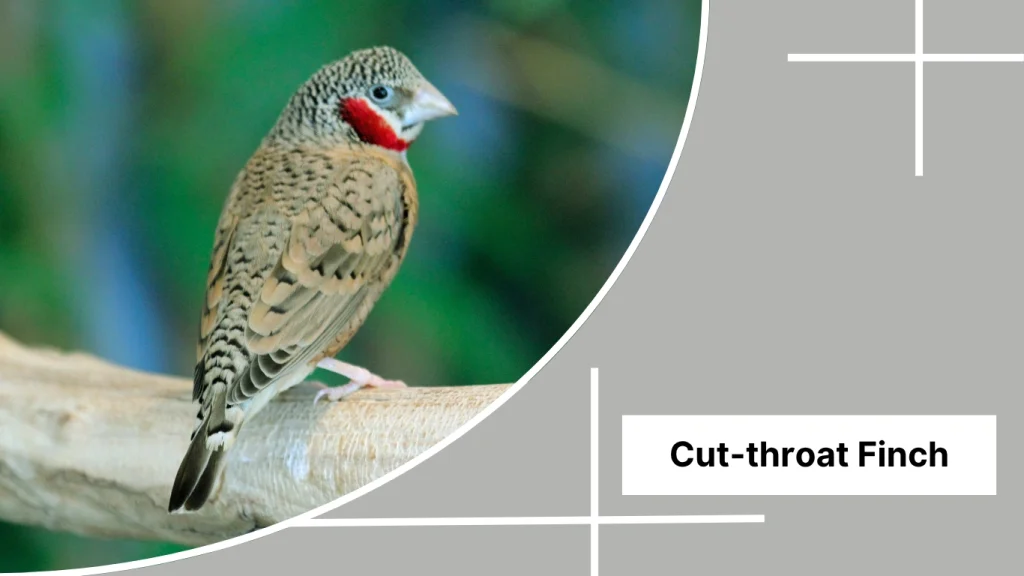
The Cut-throat Finch (Amadina fasciata) is a robust African finch named for the vivid red band across the male’s throat, which resembles a cut mark. Its bold personality and striking appearance make it both popular and slightly challenging to house with smaller species.
Identification
- Size: 5 to 5.5 inches (13–14 cm)
- Weight: 15–20 grams
- Male: Gray-brown body with heavy dark spotting, vivid red throat slash
- Female: Similar but lacks the red band
- Beak: Short, thick, and ivory-colored
- Tail: Dark and square
- Legs: Pale pink
Habitat
They inhabit dry savannas, grasslands, and scrubby bushland across sub-Saharan Africa, especially near water.
Behavior
Cut-throat Finches are bold and energetic. Males may show aggression during breeding season. They enjoy dust-bathing and ground foraging.
Diet
They feed on a mix of grass seeds and insects. During breeding, insects and egg food are essential for chick development.
Breeding
They build loosely structured grass nests in shrubs or trees. The female lays 4–6 eggs, and both parents share incubation and feeding. Chicks fledge in about 18–21 days.
19. Bengalese Finch

The Bengalese Finch (Lonchura striata domestica), also known as the Society Finch in the U.S., is a calm, domesticated bird developed through selective breeding. It is not found in the wild and is highly valued for its gentle nature and excellent parenting skills.
Identification
- Size: 4 to 4.5 inches (10–11.5 cm)
- Weight: 12–14 grams
- Plumage: Varies—commonly chocolate and white pied, fawn, or solid white
- Beak: Short, thick, and pale pink or ivory
- Tail: Short and rounded
- Legs: Pale pink
Habitat
As a domesticated species, Bengalese Finches are bred and kept entirely in captivity. They thrive in aviaries and indoor cages with ample space and companionship.
Behavior
Extremely social and peaceful, they do well in groups and rarely show aggression. Males sing soft, rhythmic warbles and are known for forming strong pair bonds.
Diet
Their diet includes a seed mix (millet-based), fresh greens, egg food, and grit for digestion. They also benefit from vitamin-enriched supplements.
Breeding
They breed easily and are often used to foster eggs and chicks of more delicate finches like Gouldians. Both parents share nesting and chick-rearing duties.
20. Blue-capped Cordon-bleu

The Blue-capped Cordon-bleu (Uraeginthus cyanocephalus) is a stunning African waxbill known for its powder-blue plumage and soft whistling song. It is commonly found across East Africa and favored by birdkeepers for its striking colors and peaceful nature.
Identification
- Size: 4.5 to 5 inches (11–13 cm)
- Weight: 10–12 grams
- Male: Bright blue head, breast, and face; light brown back and belly
- Female: Less extensive blue, mostly on the face and flanks
- Beak: Slender, pinkish or grayish
- Tail: Long and blue-black
- Legs: Pale gray
Habitat
Native to East Africa—especially Kenya, Tanzania, and Ethiopia—they live in savannas, open woodland, gardens, and farmland, often near human settlements.
Behavior
They are gentle, curious, and often seen in pairs or small flocks. Males sing a soft, musical trill during courtship, often accompanied by a hopping dance.
Diet
They feed mainly on grass seeds and small insects. In captivity, they require a varied diet of fine seeds, soft food, and live food like mealworms during breeding.
Breeding
They nest in shrubs, constructing dome-shaped nests from grass and feathers. Females lay 4–6 eggs, and both parents care for the chicks. Fledging occurs around 21 days.
21. Star Finch

The Star Finch (Bathilda ruficauda) is a small, colorful Australian finch named for its distinctive white “star-like” spots on the face and body. Its gentle temperament and striking appearance make it a favorite among aviculturists.
Identification
- Size: 4.3 to 4.7 inches (11–12 cm)
- Weight: 10–12 grams
- Male: Bright red face, pale olive-green back, yellow underparts, white facial spots
- Female: Duller red face, fewer spots
- Beak: Red and slightly curved
- Tail: Yellowish or olive with darker tips
- Legs: Pink
Habitat
Star Finches inhabit grasslands, savannas, and reed beds in northern Australia, especially in areas near water. Their numbers have declined in some regions due to habitat loss.
Behavior
They are calm, social, and flock-oriented. Males sing soft trills and display by puffing up their plumage. They thrive in aviaries and form strong pair bonds.
Diet
Their natural diet includes grass seeds and insects. In captivity, they eat a mix of seeds, greens, soft food, and occasional live insects during breeding.
Breeding
They build dome-shaped nests in thick vegetation or nest boxes. Females lay 4–6 eggs, incubated by both parents. Fledging takes about 18–21 days.
22. Double-barred Finch

The Double-barred Finch (Taeniopygia bichenovii) is a small, elegant Australian finch distinguished by two black chest bands. It is also known as the Bicheno Finch and is admired for its peaceful nature and striking plumage.
Identification
- Size: 4 inches (10 cm)
- Weight: 10–12 grams
- Head: White face encircled by a black line (mask-like)
- Chest: Two distinct black horizontal bands
- Body: White underparts, brown wings and back
- Beak: Gray-blue
- Tail: Black and white
- Legs: Pink
Habitat
They are found in open grasslands, dry savannas, and lightly wooded areas of northern and eastern Australia, often near water.
Behavior
Highly social and active, they move in flocks and are rarely aggressive. They adapt well to captivity and prefer living in pairs or small groups.
Diet
They eat grass seeds, especially spinifex, and occasional insects. A varied diet of seed mix, greens, and egg food supports health in aviary settings.
Breeding
They nest in shrubs or hollow logs, constructing dome-shaped nests with side entrances. Females lay 4–6 eggs, cared for by both parents. Fledging occurs within 3 weeks.
23. Chestnut Munia
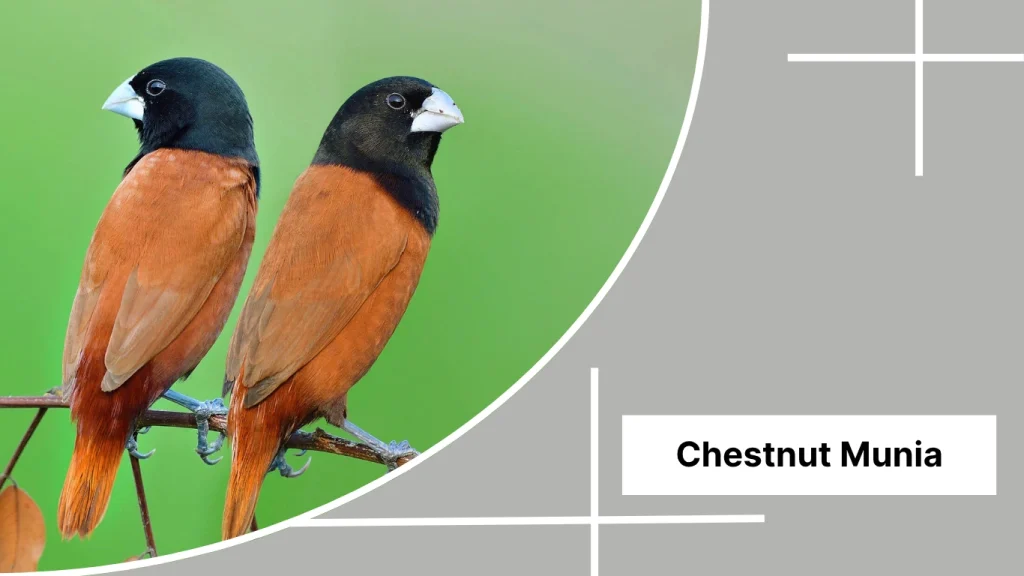
The Chestnut Munia (Lonchura atricapilla), also known as the Black-headed Munia, is a striking Asian finch admired for its rich chestnut body and contrasting black head. It’s commonly found across Southeast Asia and often seen in rice fields and wetlands.
Identification
- Size: 4.3 to 5 inches (11–13 cm)
- Weight: 12–15 grams
- Head: Glossy black
- Body: Deep chestnut brown
- Belly: Whitish or buff
- Beak: Thick, pale bluish-gray
- Tail: Short, dark
- Legs: Gray
Habitat
They inhabit wetlands, marshes, rice paddies, and grassy fields across South and Southeast Asia, including India, Indonesia, and the Philippines.
Behavior
Chestnut Munias are peaceful and flock-oriented. They fly in small groups and forage mostly on the ground or in grass. Their calls are soft and repetitive.
Diet
Primarily granivorous, feeding on grass seeds and grains. During the breeding season, they supplement with insects. In captivity, they thrive on millet, canary seed, and egg food.
Breeding
They build round, ball-shaped nests in reeds or shrubs. Females lay 4–6 eggs, incubated by both parents. Chicks fledge in about 3 weeks.
24. Parrot Finch

The Parrot Finch (Erythrura spp.) is a colorful group of finches found in Asia and the Pacific Islands, known for their bright green and red or blue plumage. They resemble small parrots in color and are active, curious birds.
Identification
- Size: 4 to 5 inches (10–13 cm)
- Weight: 10–14 grams
- Color: Varies by species—often green body with red or blue face and rump
- Beak: Black or gray, slender and pointed
- Tail: Medium length, often dark or matching rump color
- Legs: Pale pink or gray
Habitat
Found in forests, bamboo thickets, and grasslands in Southeast Asia, Papua New Guinea, and surrounding islands. Some species also adapt to plantations and farmlands.
Behavior
They are energetic, fast-moving, and often shy. Parrot Finches enjoy climbing and darting through foliage and thrive in spacious aviaries with dense cover.
Diet
They require a mix of seeds, soft food, fruits, and especially live food like termites or mealworms during breeding. Green seeding grasses are particularly favored.
Breeding
Nests are constructed in thick vegetation or nest boxes. Females lay 4–6 eggs. Both parents share incubation and chick-rearing, with fledging occurring in about 21 days.
25. Scaly-breasted Munia
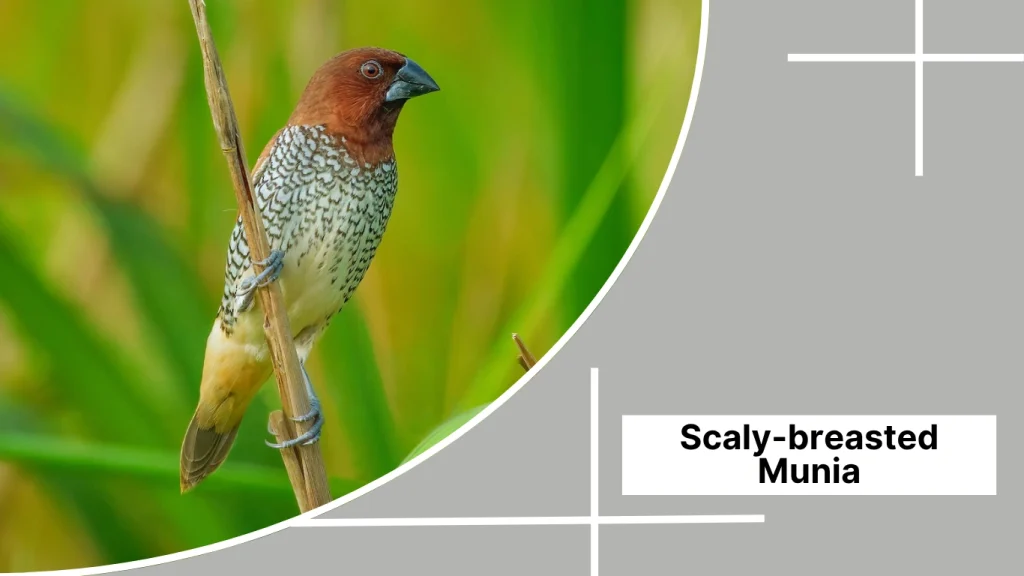
The Scaly-breasted Munia (Lonchura punctulata), also known as the Spotted Munia or Nutmeg Mannikin, is a small, seed-loving finch named for its scaly-patterned breast. Native to tropical Asia, it has also established feral populations worldwide.
Identification
- Size: 4 to 4.7 inches (10–12 cm)
- Weight: 12–15 grams
- Head: Chestnut-brown
- Underparts: White with distinct dark scale-like markings
- Upperparts: Rich brown
- Beak: Short, thick, and grayish
- Tail: Short and rounded
- Legs: Gray-blue
Habitat
They inhabit open grasslands, farmland, gardens, and reed beds across South and Southeast Asia. They’ve also spread to regions like the Pacific Islands, Australia, and the U.S. (Hawaii and Florida).
Behavior
Scaly-breasted Munias are gregarious and often found in large flocks. They forage on the ground and in tall grasses, producing high-pitched calls and chirps.
Diet
They feed primarily on grass seeds and grains. In captivity, a varied seed mix, greens, and grit are essential for good health.
Breeding
They construct ball-shaped nests in shrubs, reeds, or trees. Females lay 4–6 eggs, with both parents incubating and feeding the chicks. Fledging occurs within 21–24 days.
26. African Silverbill
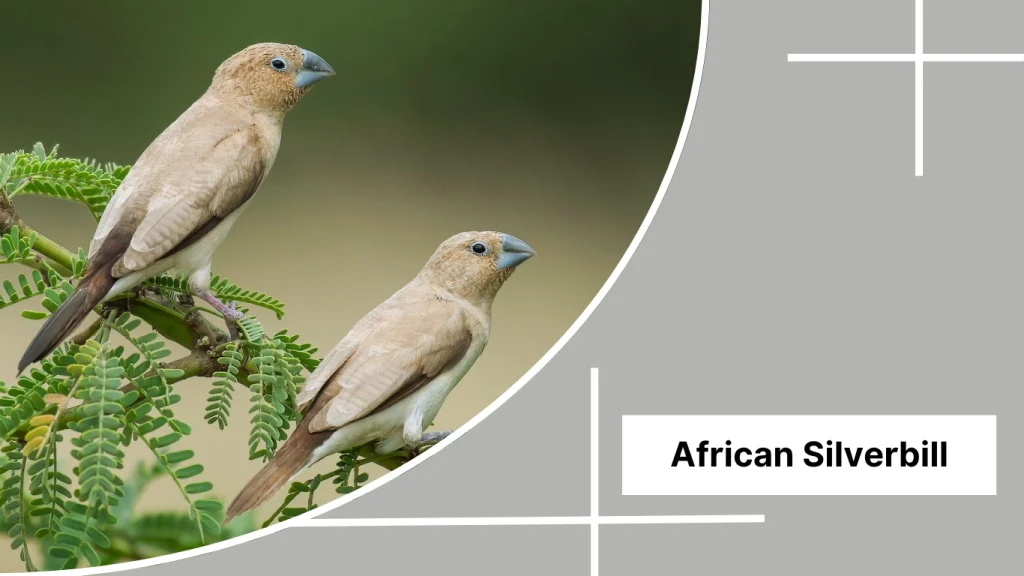
The African Silverbill (Euodice cantans) is a petite, social finch with a silvery sheen on its bill and soft brown plumage. Native to sub-Saharan Africa and parts of the Middle East, it is a favorite in aviaries for its peaceful nature.
Identification
- Size: 4 to 4.5 inches (10–11.5 cm)
- Weight: 8–11 grams
- Body: Pale brown upperparts, cream to white underparts
- Wings: Dark brown with white markings
- Beak: Short, thick, and silvery-gray
- Tail: Black and squared
- Legs: Pale pink
Habitat
They are commonly found in dry grasslands, acacia scrub, and agricultural areas across Africa, especially near human settlements and water sources.
Behavior
African Silverbills are quiet, calm, and often seen in small flocks or pairs. They communicate with soft chirping and display strong pair bonds, often sitting close together.
Diet
They feed on small seeds, grains, and some insects. In captivity, a fine seed mix, greens, and occasional egg food are suitable.
Breeding
They build round grass nests in shrubs or trees. The female lays 3–6 eggs, and both parents take turns incubating and feeding the young. Fledging occurs after about 18–21 days.
27. Black-rumped Waxbill
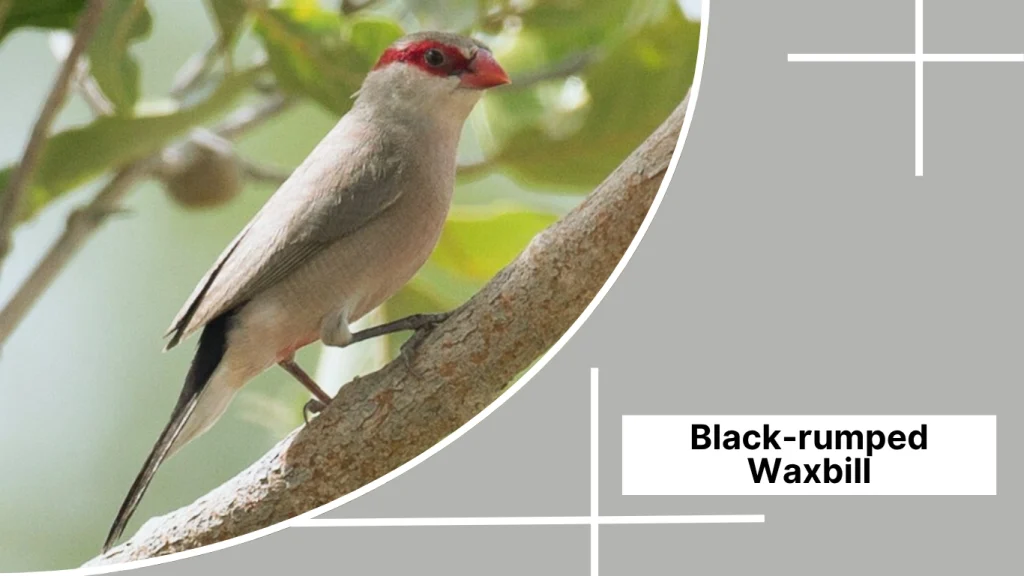
The Black-rumped Waxbill (Estrilda troglodytes) is a delicate, finely marked African finch known for its vibrant red bill and signature black rump. It is admired for its quiet demeanor and graceful movements.
Identification
- Size: 3.5 to 4 inches (9–10 cm)
- Weight: 7–10 grams
- Body: Grayish-white with fine barring on the chest and flanks
- Rump: Glossy black
- Face: Often lightly tinted with pink
- Beak: Bright red and slender
- Tail: Black
- Legs: Gray
Habitat
This waxbill is native to sub-Saharan Africa, favoring grassy savannas, thickets, riverbanks, and cultivated fields. It is especially abundant near moist environments.
Behavior
Black-rumped Waxbills are gentle and flock-oriented. They fly in short bursts and forage low in tall grasses. Their contact calls are soft and squeaky.
Diet
They primarily consume grass seeds, millet, and occasionally small insects. In captivity, they thrive on fine seeds, soft food, and greens.
Breeding
They build round, domed nests in shrubs or grass clumps. Females lay 4–6 eggs. Both parents share incubation and feed the young, which fledge at around 21 days.
28. Grey Singing Finch

The Grey Singing Finch (Serinus leucopygius) is a charming, songful finch from the dry savannas of Africa. It is best known for its sweet, melodious voice, which makes it a favorite among birdkeepers.
Identification
- Size: 4.5 to 5 inches (11–13 cm)
- Weight: 10–12 grams
- Body: Pale gray head and upperparts
- Underparts: Whitish-gray
- Rump: White
- Beak: Pale, pointed, and slightly curved
- Tail: Black with white edges
- Legs: Pinkish-gray
Habitat
Found across dry grasslands, acacia scrub, and rocky hillsides in West and Central Africa, especially in areas with scattered bushes and open space.
Behavior
They are active, alert, and social, often kept in pairs or small groups. Males sing delightful, whistling melodies, particularly during early morning hours.
Diet
Their diet includes small seeds (especially millet and canary seed), greens, and egg food. During breeding, they may also accept small insects.
Breeding
Nests are built in shrubs or nest boxes. Females lay 3–5 eggs. Both parents care for the chicks, which typically fledge within three weeks.
29. Cuban Finch
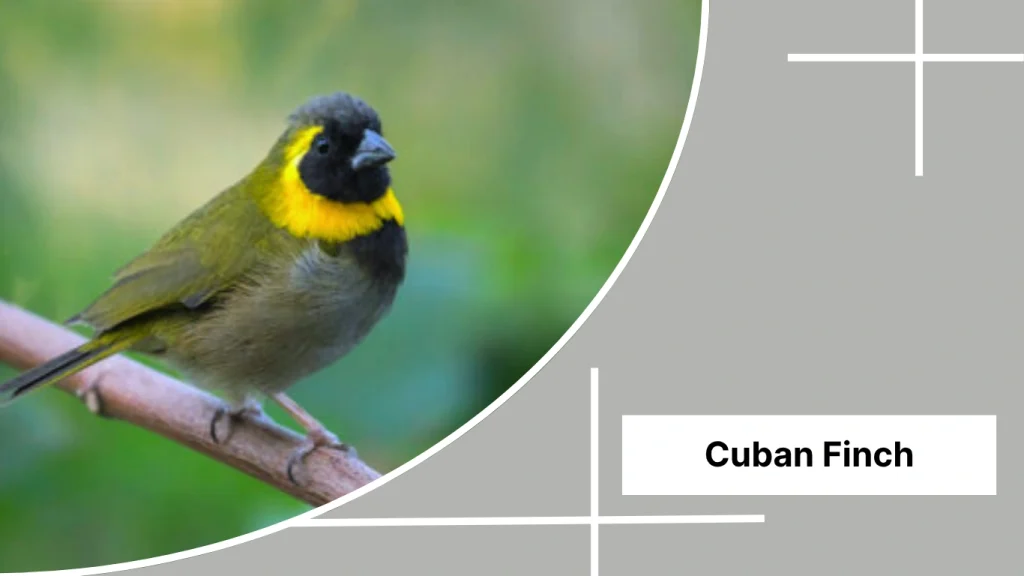
The Cuban Finch (Tiaris canorus), also known as the Cuban Grassquit, is a small, striking finch native to the Caribbean. It is recognized for its bright yellow plumage and contrasting black face, along with its charming song.
Identification
- Size: 4 to 4.5 inches (10–11.5 cm)
- Weight: 10–12 grams
- Male: Yellow-green body, black face mask, olive back, yellow belly
- Female: Duller overall with a less defined facial mask
- Beak: Short, thick, and dark gray
- Tail: Dark and rounded
- Legs: Pinkish-gray
Habitat
Native to Cuba and nearby islands, they inhabit open woodlands, forest edges, plantations, and brushy fields. They prefer areas with low shrubs and grass for cover.
Behavior
Cuban Finches are sociable and vocal. Males sing clear, cheerful songs throughout the day. They do well in aviaries when provided with enough space and greenery.
Diet
They feed on a variety of seeds, greens, and insects. In captivity, they thrive on a balanced finch seed mix with added soft foods during breeding.
Breeding
They construct small cup-shaped nests in low shrubs. The female lays 3–5 eggs. Both parents assist in incubation and chick-rearing, with fledging occurring in about 18–21 days.
30. Pine Siskin
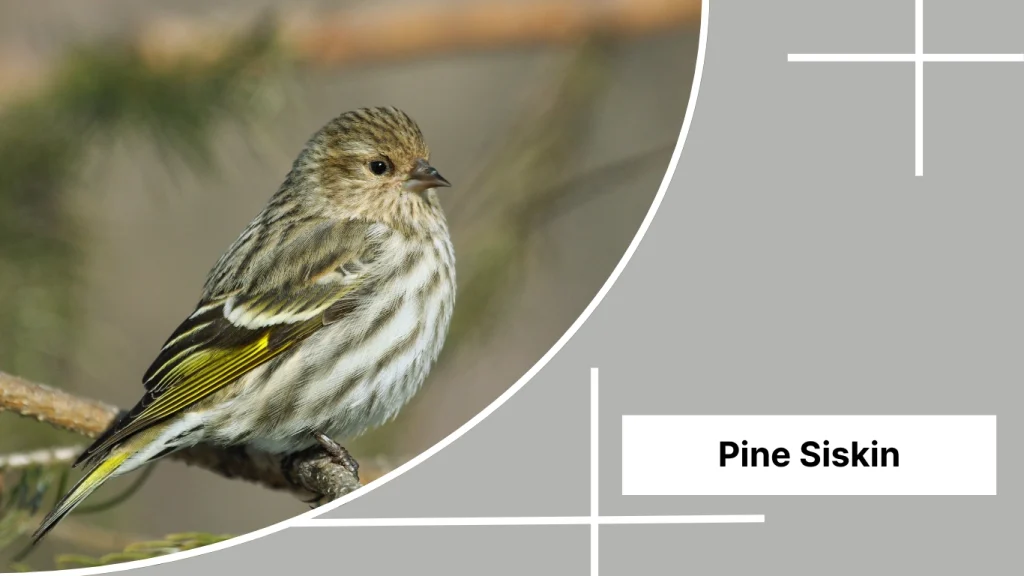
The Pine Siskin (Spinus pinus) is a streaky, energetic finch native to North America, often seen fluttering around feeders in winter. Known for its buzzy calls and flashes of yellow on its wings, it adapts easily to changing habitats.
Identification
- Size: 4.3 to 5.5 inches (11–14 cm)
- Weight: 12–18 grams
- Plumage: Heavily streaked brown and white with yellow wing bars and tail edges
- Beak: Thin, sharply pointed, and slightly curved
- Tail: Notched with yellow tint
- Legs: Dark brown
Habitat
They inhabit coniferous and mixed forests across Canada and the northern U.S., often descending southward in winter during irruption years.
Behavior
Pine Siskins are active, social, and noisy. They travel in flocks and exhibit acrobatic feeding behaviors. Their distinctive “zreee” calls are heard while flying or foraging.
Diet
They feed on seeds (especially conifers), thistle, and small buds. At feeders, they prefer nyjer and sunflower chips. During nesting, they add insects to their diet.
Breeding
Nests are built high in conifer trees. Females lay 3–5 eggs and incubate them alone, while the male brings food. Chicks fledge after about 2–3 weeks.