


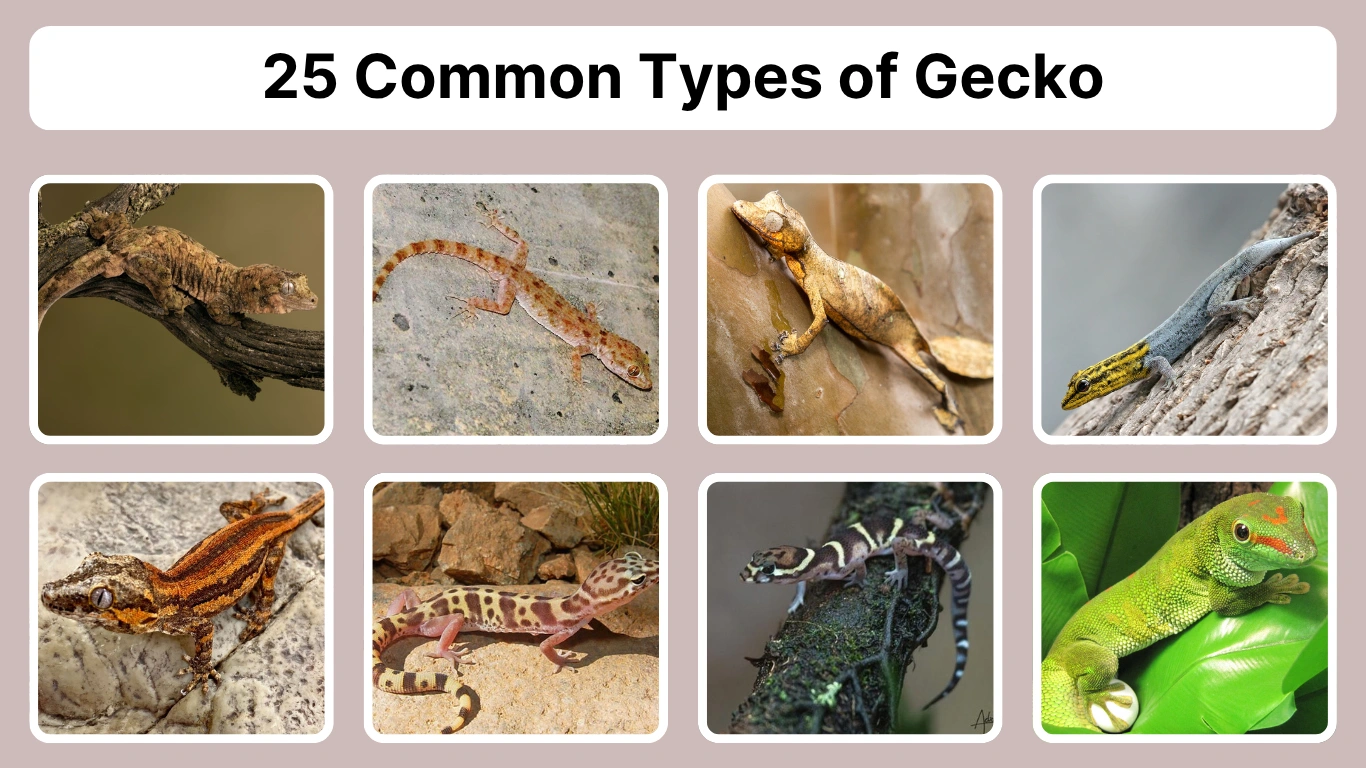
Geckos are a diverse group of lizards found across the world, known for their adaptability, unique features, and fascinating behaviors. From colorful day geckos to camouflaged leaf-tailed species, each type has its own charm. This guide explores 25 common gecko species, highlighting how to identify them, where they live, and what they eat—ideal for reptile enthusiasts, hobbyists, or curious nature lovers.
1. Leopard Gecko

The Leopard Gecko (Eublepharis macularius) is one of the most popular pet reptiles in the world. Native to the dry, rocky regions of Afghanistan, Pakistan, India, and Iran, it is known for its distinctive spotted pattern, docile temperament, and ease of care—making it ideal for beginners.
Identification
- Color: Yellow to white base with dark brown or black spots
- Size: 7 to 10 inches in length
- Weight: 45 to 65 grams (adults)
- Skin: Bumpy, soft, and regularly shed
- Eyes: Large with vertical pupils, capable of blinking
- Tail: Fat and thick, used for energy storage
Behavior
Leopard Geckos are nocturnal and ground-dwelling. They are calm and tolerate handling well. When threatened, they may drop their tail as a defense mechanism, which later regenerates. Males are territorial, while females can sometimes be housed together.
Habitat
In the wild, they inhabit arid deserts and rocky grasslands with dry, sandy soil and scattered vegetation. In captivity, they thrive in horizontal enclosures with warm hides, cool zones, and a moist hide for shedding. Substrate, heat gradient, and UVB lighting help simulate natural conditions.
Diet
Leopard Geckos are insectivores. They feed on crickets, mealworms, dubia roaches, and other live insects. Their prey should be gut-loaded and dusted with calcium and vitamin D3 supplements to maintain strong bones and prevent metabolic bone disease. Juveniles eat daily, while adults can be fed every other day.
2. Crested Gecko
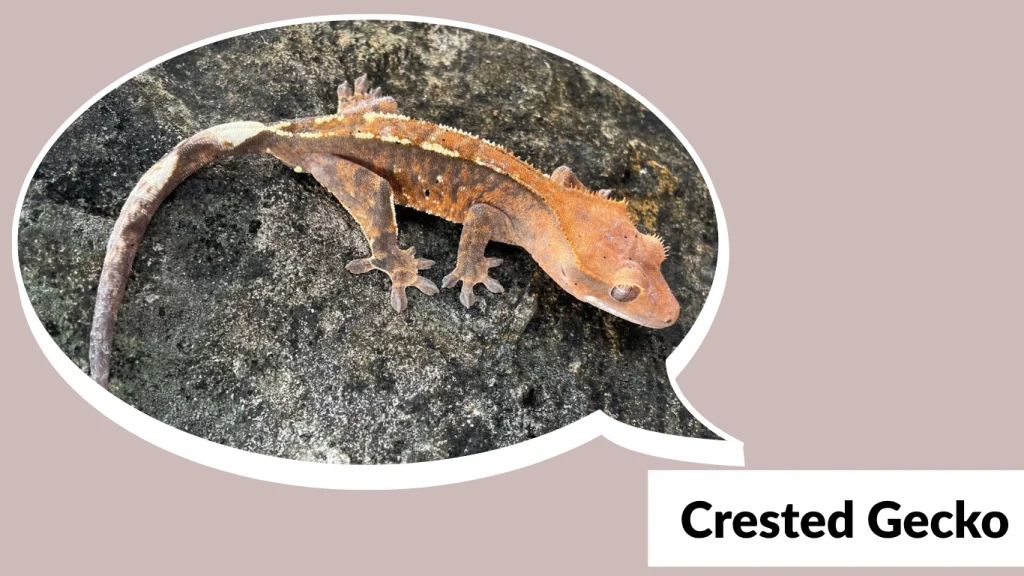
The Crested Gecko (Correlophus ciliatus) is a striking, arboreal species native to New Caledonia. It was once thought extinct until its rediscovery in 1994. Known for its fringed “eyelashes” and wide color range, it’s a favorite among reptile enthusiasts for its calm nature and ease of care.
Identification
- Color: Wide variety—orange, red, cream, gray, and patterned morphs
- Size: 8 to 10 inches in length
- Skin: Soft and velvety with loose folds
- Head: Triangular with fringed ridges above the eyes
- Tail: Prehensile but can be dropped and doesn’t regenerate
- Eyes: Large, lidless, and silvery
Behavior
Crested Geckos are nocturnal and arboreal. They are gentle and handle stress well, though they prefer not to be overhandled. They can jump long distances and use their tails for balance and grip.
Habitat
They live in humid tropical forests, clinging to tree branches and leaves. In captivity, they require a tall, well-ventilated enclosure with plenty of vertical climbing space, live plants or vines, and moderate humidity levels. Misting is essential for hydration and shedding.
Diet
Crested Geckos are omnivores. In the wild, they eat fruit, nectar, and insects. In captivity, they thrive on specially formulated fruit-based powdered diets mixed with water, supplemented occasionally with gut-loaded insects like crickets or small roaches.
3. Tokay Gecko

The Tokay Gecko (Gekko gecko) is a large, bold species native to Southeast Asia. Known for its vivid coloration and loud “to-kay!” call, it has a strong personality and is best suited for experienced keepers due to its powerful bite and defensive behavior.
Identification
- Color: Bright blue-gray with vivid orange or red spots
- Size: 10 to 14 inches in length
- Skin: Granular and rough-textured
- Head: Broad and muscular with large jaws
- Eyes: Bulging with vertical pupils and no eyelids
- Toes: Large adhesive pads for climbing
Behavior
Tokay Geckos are nocturnal and highly territorial. They are defensive when threatened and known for their strong, prolonged bite. While stunning in appearance, they are mostly display pets unless tamed from a young age.
Habitat
They inhabit tropical rainforests, tree trunks, cliffs, and even buildings in urban areas. In captivity, they require a tall enclosure with secure hiding places, high humidity, and sturdy vertical surfaces for climbing. They also benefit from a temperature gradient and proper UVB exposure.
Diet
They are insectivores with a big appetite. Their diet includes crickets, roaches, moths, and even small vertebrates. In captivity, they should be fed a variety of gut-loaded insects, occasionally supplemented with pinky mice or gecko diet powders for added nutrition.
4. African Fat-Tailed Gecko

The African Fat-Tailed Gecko (Hemitheconyx caudicinctus) is a calm, ground-dwelling lizard native to the savannas and scrublands of West Africa. Similar in care to the Leopard Gecko, it is prized for its docile nature, earthy coloration, and fat-storing tail.
Identification
- Color: Brown base with darker bands and a pale dorsal stripe
- Size: 7 to 9 inches in length
- Skin: Smooth with soft, velvety texture
- Tail: Thick, used for fat storage; can be dropped when threatened
- Eyes: Large with vertical pupils, capable of blinking
- Feet: Lacks adhesive toe pads; not a climber
Behavior
African Fat-Tailed Geckos are nocturnal, gentle, and slow-moving. They tolerate handling well and rarely bite. They prefer to stay low to the ground and often retreat to hides during the day.
Habitat
In the wild, they live in dry, rocky areas with access to humid burrows. In captivity, they thrive in a horizontal terrarium with multiple hiding spots, a humid hide for shedding, and a warm basking area. They do best in moderate humidity and require no vertical space.
Diet
They are insectivores that feed on crickets, mealworms, roaches, and other live prey. In captivity, their diet should be supplemented with calcium and vitamins. Feeding is typically done 3–4 times per week for adults and more frequently for juveniles.
5. House Gecko
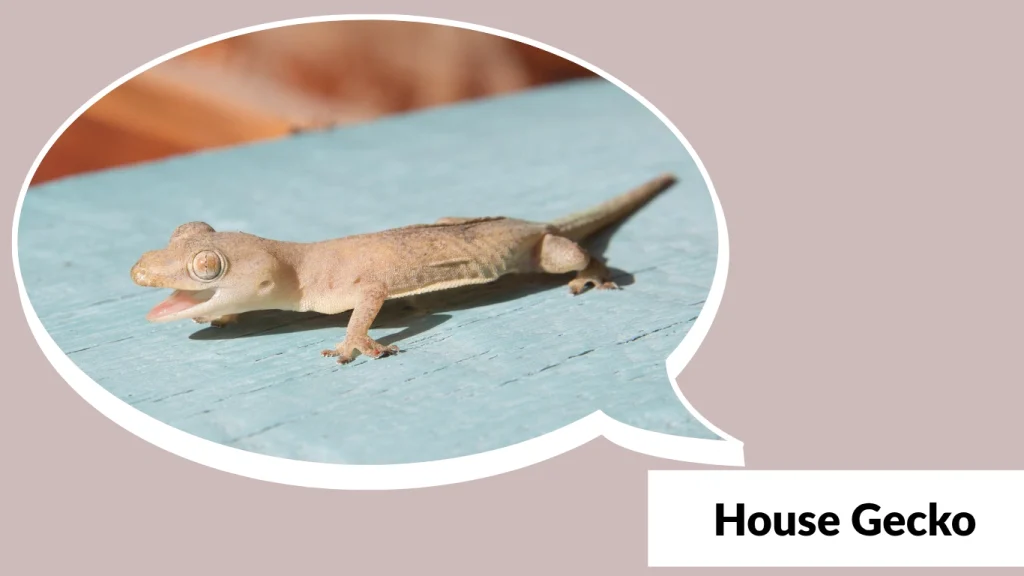
House Geckos (Hemidactylus spp.) are small, adaptable lizards found in tropical and subtropical regions around the world. Often seen near lights at night, they are excellent climbers and have a long-standing relationship with human dwellings.
Identification
- Color: Pale gray, tan, or translucent with subtle markings
- Size: 3 to 5.5 inches in length
- Skin: Soft and slightly translucent
- Toes: Wide with adhesive pads for climbing smooth surfaces
- Tail: Slender and can regenerate if dropped
- Eyes: Large with vertical pupils and no eyelids
Behavior
House Geckos are nocturnal and quick-moving. They are very shy and typically not handled as pets. In the wild, they help control insect populations and are often heard making chirping sounds at night.
Habitat
They are commonly found on walls, ceilings, windows, and tree trunks in warm climates. They thrive in both urban and rural settings. In captivity, they require a vertical enclosure with hiding spaces, climbing branches, moderate humidity, and nighttime warmth.
Diet
Their diet includes moths, mosquitoes, flies, and other small insects. In captivity, they are fed pinhead crickets, fruit flies, and small roaches. Feeding should include calcium supplementation to maintain bone health. They drink from droplets and need regular misting.
6. Mediterranean House Gecko
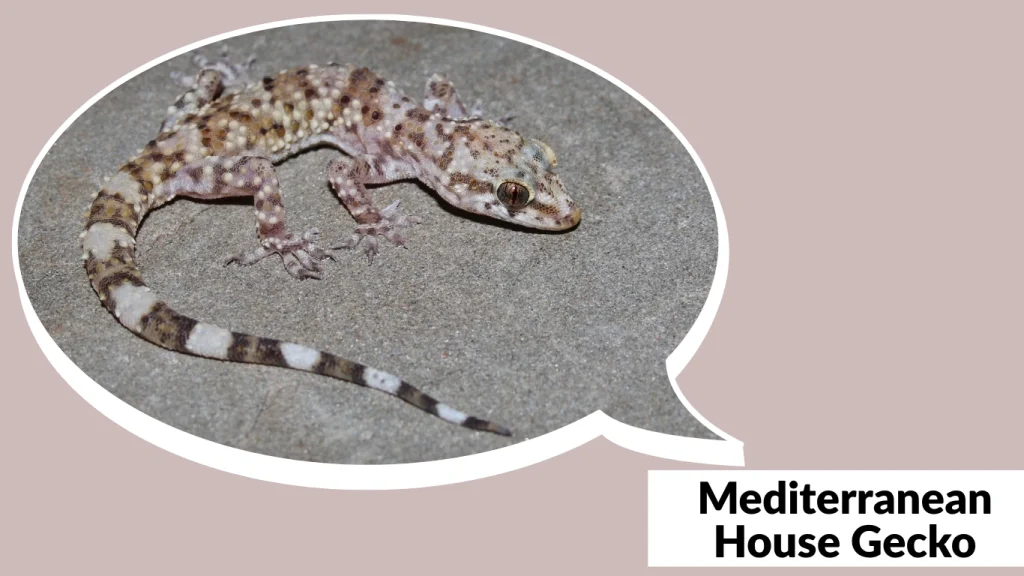
The Mediterranean House Gecko (Hemidactylus turcicus) is a small, nocturnal species commonly found in southern Europe, North Africa, and across warm parts of the United States. It is frequently seen on exterior walls and windows, feeding on insects attracted to lights.
Identification
- Color: Pale pink, tan, or gray with mottled spots
- Size: 4 to 5 inches in length
- Skin: Translucent and bumpy with visible internal organs in bright light
- Eyes: Large with vertical pupils; lacks eyelids
- Toes: Broad pads with microscopic setae for climbing smooth surfaces
Behavior
Mediterranean House Geckos are shy, fast, and active during the night. They make short, high-pitched chirps and are highly agile climbers. Though not commonly kept as pets, they are harmless and often welcome visitors around homes for insect control.
Habitat
They prefer warm, dry environments and thrive in human dwellings, ruins, and stone walls. In captivity, they require a small vertical enclosure with plenty of climbing space, shelter, and moderate humidity.
Diet
These geckos are insectivores that feed on mosquitoes, moths, ants, and small beetles. In captivity, they should be provided with small live insects like fruit flies or pinhead crickets, dusted occasionally with calcium and vitamins.
7. Mourning Gecko

The Mourning Gecko (Lepidodactylus lugubris) is a small, parthenogenetic species found across coastal areas of the Indo-Pacific. All individuals are female and reproduce by cloning themselves, making them fascinating for both hobbyists and researchers.
Identification
- Color: Light brown or tan with darker mottled markings
- Size: 3.5 to 4 inches in length
- Skin: Smooth and slightly glossy
- Tail: Slender and delicate
- Eyes: Large and dark, suited for nocturnal activity
Behavior
Mourning Geckos are social and active, often found in groups. They are quick, vocal, and climb very well. Though they are rarely handled due to their small size and speed, they thrive in bioactive terrariums and are often used in planted vivariums alongside frogs.
Habitat
They live in coastal forests, palm groves, and even human structures. In captivity, they require a humid, vertical setup with live plants, hiding spots, and plenty of climbing surfaces. Misting is necessary to maintain proper humidity.
Diet
These geckos are omnivores. In the wild, they feed on fruit nectar, pollen, and small insects. In captivity, they thrive on a diet of fruit-based gecko diets (like Pangea or Repashy) along with occasional small insects such as fruit flies or pinhead crickets.
8. Gargoyle Gecko

The Gargoyle Gecko (Rhacodactylus auriculatus) is a thick-bodied, nocturnal gecko native to southern New Caledonia. It’s named for its bumpy skull ridges that resemble horns or ears, giving it a “gargoyle”-like appearance. Known for its diverse coloration and calm demeanor, it’s a favorite in the pet trade.
Identification
- Color: Gray, brown, orange, or red with striped or blotched patterns
- Size: 8 to 10 inches in length
- Skin: Bumpy with soft texture
- Head: Broad with raised ridges above the eyes
- Tail: Prehensile and regenerates if dropped
Behavior
Gargoyle Geckos are slow, deliberate climbers. They are nocturnal, becoming active at night to explore and feed. While they can be shy at first, they often tolerate gentle handling. They may vocalize with soft squeaks when disturbed.
Habitat
In the wild, they live in humid forests with dense vegetation and moderate temperatures. In captivity, they require a tall, well-planted enclosure with branches, cork bark, and leaf litter. Moderate to high humidity and daily misting are essential for hydration and healthy shedding.
Diet
They are omnivores and consume both fruit and insects. In captivity, they thrive on commercial gecko diet powders mixed with water, supplemented with small live insects like crickets or dubia roaches 1–2 times per week.
9. Day Gecko

Day Geckos (genus Phelsuma) are brightly colored, diurnal geckos native to Madagascar and other parts of the Indian Ocean. They are active during the day and known for their vibrant green bodies and red or blue markings.
Identification
- Color: Bright green with red, blue, or yellow accents
- Size: 5 to 12 inches depending on species
- Skin: Smooth and glossy
- Eyes: Large with round pupils and no eyelids
- Toes: Equipped with strong adhesive pads
Behavior
Day Geckos are fast, alert, and do not tolerate handling well. They can be skittish and may drop their tail if stressed. Their curious nature and striking colors make them ideal for display terrariums.
Habitat
They inhabit tropical rainforests, banana groves, and coastal vegetation. In captivity, they need a tall, humid enclosure with plenty of plants, branches, and natural light. UVB exposure is essential for their health and coloration.
Diet
They are omnivorous and eat nectar, fruit, insects, and small invertebrates. In captivity, they do well on a combination of fruit-based gecko diets, honey mixtures, and gut-loaded insects like crickets and flies. Regular misting ensures they stay hydrated.
10. Gold Dust Day Gecko

The Gold Dust Day Gecko (Phelsuma laticauda) is a dazzling green lizard native to northern Madagascar and nearby islands. It gets its name from the yellow speckles—like gold dust—across its upper body. Active during the day, it’s a vibrant species that thrives in tropical settings.
Identification
- Color: Bright green with gold-yellow specks and red markings on the head and back
- Size: 5 to 6 inches in length
- Skin: Smooth, shiny, and delicate
- Eyes: Large and lidless with round pupils
- Toes: Broad pads for gripping vertical surfaces
Behavior
Gold Dust Day Geckos are diurnal and quick-moving. They are easily stressed by handling and best appreciated as display animals. They are very active, often seen climbing, hunting, or basking under lights.
Habitat
In the wild, they live in banana groves, palm trees, and around human dwellings in warm, humid environments. In captivity, they require a vertical enclosure with dense foliage, climbing surfaces, high humidity, and strong UVB lighting to mimic their natural tropical habitat.
Diet
They are omnivores and eat nectar, soft fruits, and insects. In captivity, they thrive on a diet of fruit-based gecko mix (like Repashy or Pangea) supplemented with small insects such as fruit flies or crickets, dusted with calcium and vitamins.
11. Satanic Leaf-Tailed Gecko

The Satanic Leaf-Tailed Gecko (Uroplatus phantasticus) is a master of camouflage found in the rainforests of Madagascar. Its flattened tail mimics a dead leaf, making it nearly invisible among forest debris. This nocturnal gecko is highly sought after for its bizarre and fascinating appearance.
Identification
- Color: Brown, tan, gray, or mottled like dried leaves
- Size: 3 to 4 inches in length
- Tail: Flattened and leaf-shaped with notched edges
- Eyes: Large, lidless, with vertical pupils
- Body: Extremely flat and thin, aiding in camouflage
Behavior
They are nocturnal, shy, and arboreal. During the day, they remain motionless against bark or leaves to avoid detection. They are sensitive to stress and handling and do best in quiet, low-traffic environments.
Habitat
They live in humid, lowland rainforests of Madagascar, hiding among leaf litter and tree trunks. In captivity, they require a vertically oriented terrarium with dense foliage, high humidity, cooler temperatures, and plenty of hiding spots. Daylight should be subdued, and night temperatures should drop slightly.
Diet
Satanic Leaf-Tailed Geckos are insectivorous. They feed on small insects like crickets, fruit flies, and moths. In captivity, they should be fed small, gut-loaded live prey 2–3 times per week with occasional calcium and vitamin dusting.
12. Flying Gecko

The Flying Gecko (genus Ptychozoon) is a group of geckos native to Southeast Asia, known for their gliding abilities. They possess skin flaps along their limbs, body, and tail, allowing them to glide between trees and escape predators in their forest habitat.
Identification
- Color: Gray to brown with mottled or bark-like patterns
- Size: 6 to 8 inches in length
- Skin: Flaps on the limbs, sides, and tail for gliding
- Eyes: Large, lidless, and adapted for night vision
- Toes: Broad with adhesive pads and skin extensions
Behavior
Flying Geckos are nocturnal, shy, and excellent at camouflage. They stay motionless against bark during the day and glide short distances when disturbed. Handling is discouraged due to their fragile skin flaps.
Habitat
They inhabit humid tropical forests, often clinging to tree trunks and branches. In captivity, they require a tall enclosure with vertical space, natural bark, live plants, and high humidity. A secure lid is essential, as they are agile and can climb smooth surfaces.
Diet
They are insectivorous, feeding on crickets, small roaches, moths, and other flying insects. In captivity, they need a diet of live insects dusted with calcium and vitamins 2–3 times per week. They also drink water droplets from leaves after misting.
13. Giant Day Gecko

The Giant Day Gecko (Phelsuma grandis) is one of the largest and most colorful species in the day gecko group. Native to Madagascar, it is known for its vibrant green body and red facial markings, often seen basking in sunlight on trees or walls.
Identification
- Color: Bright green with red spots or stripes on the head and back
- Size: 9 to 12 inches in length
- Skin: Smooth and glossy
- Eyes: Large, round, and lidless
- Toes: Strong adhesive pads for vertical climbing
Behavior
These geckos are diurnal, active, and visually oriented. They are territorial and may display aggression toward other geckos. While beautiful, they are not suited for handling, as their skin is delicate and they can become stressed easily.
Habitat
They inhabit tropical forests and urban areas in northern Madagascar. In captivity, they require a tall enclosure with live plants, branches, high humidity, and full-spectrum UVB lighting. Proper ventilation and daily misting are crucial for hydration and shedding.
Diet
Giant Day Geckos are omnivores, feeding on insects, nectar, soft fruits, and flower pollen. In captivity, they thrive on fruit-flavored gecko diets, supplemented with live prey like crickets or small roaches dusted with calcium. Regular misting ensures proper hydration.
14. Central American Banded Gecko

The Central American Banded Gecko (Coleonyx mitratus) is a small, terrestrial gecko native to Central America, particularly found in countries like Nicaragua, Costa Rica, and Honduras. It is nocturnal, secretive, and known for its banded body pattern and ease of care.
Identification
- Color: Yellow or tan with dark brown to black bands across the body
- Size: 4.5 to 6 inches in length
- Skin: Smooth and glossy
- Eyes: Large, lidless with vertical pupils
- Tail: Plump and used for fat storage
Behavior
These geckos are calm and slow-moving, often hiding during the day and emerging at night to hunt. They may vocalize with small squeaks if startled. While not commonly kept, they tolerate handling gently and are low-maintenance pets.
Habitat
They live in dry forests, scrublands, and rocky terrain with plenty of ground cover. In captivity, they require a shallow, horizontal enclosure with dry substrate, hiding spots, and a warm basking area. A small moist hide helps with shedding.
Diet
They are insectivorous, feeding on small invertebrates like crickets, roaches, and worms. In captivity, they should be fed live insects 2–3 times per week, dusted with calcium and multivitamins. Water should be offered in a shallow dish.
15. Chinese Cave Gecko
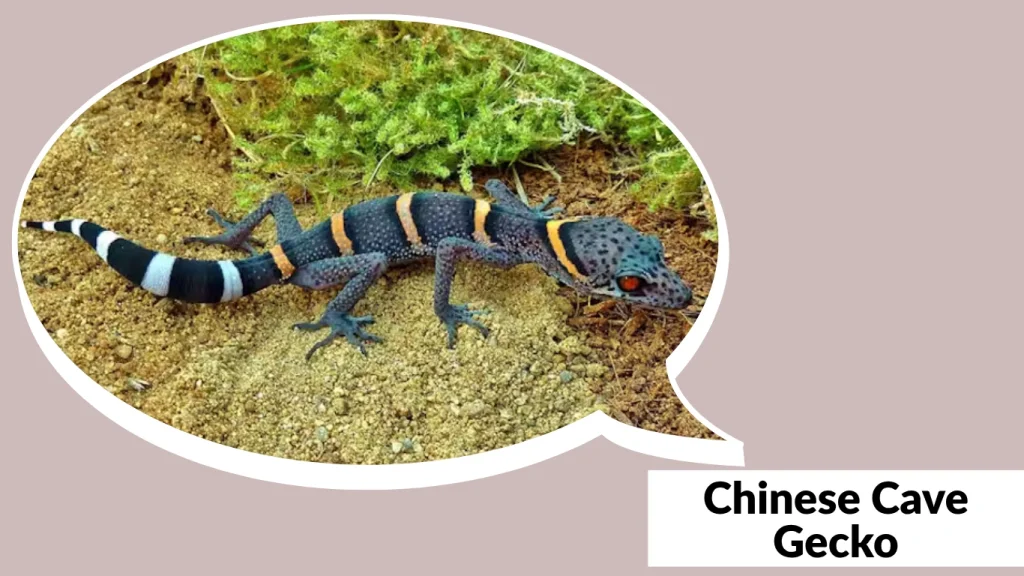
The Chinese Cave Gecko (Goniurosaurus hainanensis) is a stunning, ground-dwelling gecko species native to southern China. It is prized for its contrasting colors—dark body with bright orange or yellow markings—and striking red eyes.
Identification
- Color: Black or deep purple body with bright yellow, orange, or white bands
- Size: 6 to 8 inches in length
- Eyes: Bright red with vertical pupils
- Skin: Smooth and slightly velvety
- Tail: Thick and banded
Behavior
Chinese Cave Geckos are shy, nocturnal, and ground-dwelling. They prefer dark, cool environments and rarely climb. They are not typically aggressive and tolerate minimal handling if done gently and infrequently.
Habitat
They inhabit cool, humid forest floors and limestone cave environments. In captivity, they thrive in a horizontal terrarium with high humidity, ample hiding spots, a moist substrate, and subdued lighting. Good ventilation is important to prevent mold and respiratory issues.
Diet
These geckos are insectivores, feeding on crickets, roaches, mealworms, and other appropriately sized live insects. Their food should be gut-loaded and dusted with calcium and vitamin D3 supplements. Water should always be available in a shallow dish.
16. Western Banded Gecko

The Western Banded Gecko (Coleonyx variegatus) is a small, desert-dwelling gecko native to the southwestern United States and northern Mexico. Known for its delicate appearance and subtle coloration, it is mostly active at night and has adapted well to arid conditions.
Identification
- Color: Pale pink to tan with dark brown or black bands
- Size: 3.5 to 4.5 inches in length
- Skin: Smooth and slightly translucent
- Eyes: Large with vertical pupils and movable eyelids
- Tail: Thin and fragile, easily dropped if threatened
Behavior
Western Banded Geckos are shy and gentle, hiding under rocks or logs during the day and emerging at night to feed. When startled, they may wave their tail and produce squeaks. They can tolerate occasional gentle handling.
Habitat
They inhabit deserts, scrublands, and rocky hillsides. In captivity, they require a small horizontal enclosure with sand or dry soil substrate, hiding shelters, and a warm basking spot. A small humid hide is useful for aiding in shedding.
Diet
They are insectivorous, feeding on ants, spiders, small beetles, and other arthropods. In captivity, they eat pinhead crickets, fruit flies, or small mealworms, dusted with calcium and vitamin supplements 2–3 times per week.
17. Moorish Gecko

The Moorish Gecko (Tarentola mauritanica) is a hardy, wall-dwelling gecko native to southern Europe and North Africa. It’s commonly seen clinging to walls and ceilings in warm, dry regions and is known for its rough, spiny appearance.
Identification
- Color: Gray, brown, or tan with mottled or spotted patterns
- Size: 5 to 6 inches in length
- Skin: Rough and warty with tubercle-like scales
- Eyes: Large and lidless with vertical pupils
- Toes: Wide pads with claws and adhesive lamellae
Behavior
Moorish Geckos are nocturnal and active climbers. They are territorial and may emit chirps or clicks. Although they can be fast and skittish, they adapt well to captive life and are often seen patrolling walls for insects.
Habitat
They live in rocky areas, ruins, stone walls, and buildings. In captivity, they need a vertical terrarium with hiding places, rough surfaces, and moderate warmth. Dry conditions with occasional misting simulate their natural environment well.
Diet
Their diet consists of moths, beetles, flies, and spiders. In captivity, they eat small crickets, roaches, and fruit flies. Insects should be gut-loaded and dusted with calcium to ensure proper bone development.
18. Yellow-Headed Gecko

The Yellow-Headed Gecko (Gonatodes albogularis) is a small, brightly colored species found in Central and South America. Males are particularly striking, with vivid yellow or orange heads contrasting against a dark blue or black body. They are fast, secretive, and best suited for observation rather than handling.
Identification
- Color: Males have a bright yellow head with a dark body; females are mottled brown or gray
- Size: 3 to 4 inches in length
- Skin: Smooth and glossy
- Eyes: Large with round pupils and no eyelids
- Tail: Slender and slightly banded
Behavior
These geckos are diurnal and active during the day. They are shy and quick to flee when approached. Males are territorial and often display head-bobbing or color changes during interactions with other males.
Habitat
They live in tropical forests, tree trunks, and rock walls, often seen sunning in open patches of light. In captivity, they need a small but vertically oriented enclosure with plants, cork bark, and hiding spots. Moderate humidity and ambient warmth are important.
Diet
Yellow-Headed Geckos feed on tiny insects such as ants, fruit flies, springtails, and pinhead crickets. In captivity, they should be fed small, live insects 3–4 times per week, with occasional calcium and vitamin supplements.
19. White-Lined Gecko

The White-Lined Gecko (Gekko vittatus), also known as the Skunk Gecko, is a slender, tropical gecko species found in Indonesia, New Guinea, and surrounding islands. It gets its name from the distinctive white stripe running from its nose down the length of its back.
Identification
- Color: Dark brown or gray with a bright white or yellowish stripe along the spine
- Size: 6 to 9 inches in length
- Skin: Smooth and slightly glossy
- Tail: Long and tapered
- Eyes: Large with vertical pupils and no eyelids
Behavior
White-Lined Geckos are nocturnal and moderately active. They are fast, agile climbers and may drop their tail if stressed. While not overly aggressive, they are best as display pets rather than for handling.
Habitat
They inhabit humid lowland forests, often found in trees, hollow logs, and building crevices. In captivity, they require a vertical enclosure with high humidity, hiding places, branches, and daily misting to simulate their natural environment.
Diet
They are insectivores, feeding on crickets, roaches, and small moths. In captivity, a diet of gut-loaded insects dusted with calcium and multivitamins ensures proper growth and health. Occasional treats like waxworms may be offered sparingly.
20. Indo-Pacific Gecko
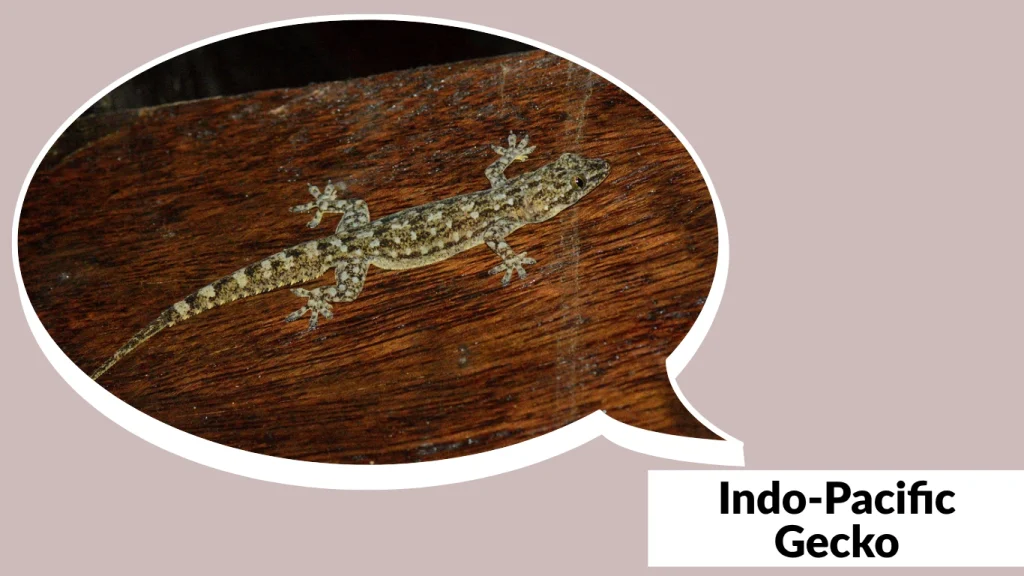
The Indo-Pacific Gecko (Hemidactylus garnotii), also known as the Garnot’s House Gecko, is a slender, smooth-skinned gecko found across Southeast Asia, the Pacific Islands, and introduced populations in Florida and Hawaii. This parthenogenetic species consists entirely of females that reproduce without males.
Identification
- Color: Light gray, pinkish-brown, or lavender with faint spots or stripes
- Size: 4 to 5 inches in length
- Skin: Smooth and semi-translucent
- Eyes: Large and lidless with vertical pupils
- Tail: Long, thin, and easily dropped
Behavior
Indo-Pacific Geckos are nocturnal and secretive. They are quick, wall-climbing geckos that tend to hide during the day and hunt small insects at night. They may vocalize softly when disturbed and are not typically handled due to their delicate build.
Habitat
They are found in tropical forests, under bark, and around buildings. In captivity, they need a small vertical enclosure with hiding places, climbing surfaces, moderate humidity, and gentle misting to maintain hydration.
Diet
They feed on small insects like ants, fruit flies, and tiny roaches. In captivity, offer gut-loaded live insects dusted with calcium and multivitamins 2–3 times per week. Hydration is mainly obtained by licking droplets from leaves and enclosure surfaces.
21. Halmahera Gecko

The Halmahera Gecko (Gehyra marginata) is a large-bodied, tropical gecko native to the Halmahera Island region in Indonesia. It is known for its soft, velvety skin and powerful climbing ability, thanks to its wide toe pads.
Identification
- Color: Grayish-purple or brown with light blotches or speckles
- Size: 8 to 11 inches in length
- Skin: Velvety and easily torn
- Eyes: Large, silver or coppery with vertical pupils
- Feet: Wide adhesive toe pads for climbing
Behavior
Halmahera Geckos are nocturnal, shy, and fast-moving. They can be vocal when stressed and may emit squeaks or clicks. Though not aggressive, they are better kept as visual pets due to their fragile skin and speed.
Habitat
They inhabit tropical rainforests, tree trunks, and dense vegetation. In captivity, they need a tall enclosure with ample vertical space, plants, cork bark, and high humidity levels. Daytime temperatures should be mild with cooler nights.
Diet
These geckos are insectivorous. They thrive on a diet of gut-loaded crickets, roaches, and occasional waxworms or silkworms. All feeders should be calcium and vitamin supplemented. Regular misting ensures proper hydration, as they drink from droplets rather than standing water.
22. Lined Leaf-Tailed Gecko

The Lined Leaf-Tailed Gecko (Uroplatus lineatus) is a master of camouflage, native to the humid rainforests of Madagascar. It gets its name from its striped pattern and flat, leaf-shaped tail that helps it blend seamlessly into tree bark and foliage.
Identification
- Color: Tan to light brown with dark longitudinal stripes
- Size: 8 to 10 inches in length
- Skin: Smooth and flat, adapted for camouflage
- Tail: Wide and leaf-like with lined texture
- Eyes: Large, lidless with vertical pupils
Behavior
These geckos are nocturnal and extremely secretive. During the day, they cling flat against tree trunks to avoid detection. They are sensitive to stress and are best kept as observation-only pets.
Habitat
They inhabit humid lowland forests and dense vegetation in Madagascar. In captivity, they require a tall, heavily planted enclosure with branches, high humidity (above 80%), and cooler temperatures. Good airflow and naturalistic setups are essential.
Diet
They are insectivores, feeding on moths, crickets, roaches, and other soft-bodied insects. In captivity, they should be offered live, gut-loaded insects 3–4 times per week with calcium and vitamin D3 supplementation.
23. Common Flat-Tailed Gecko

The Common Flat-Tailed Gecko (Uroplatus fimbriatus) is one of the largest species in the Uroplatus genus, also known for its exceptional camouflage and fringed body. Native to Madagascar, it mimics dead leaves and tree bark to avoid predators.
Identification
- Color: Mottled gray or brown with bark-like patterning
- Size: 10 to 12 inches in length
- Skin: Flap-like extensions around limbs and body edges
- Tail: Broad, flat, and bark-mimicking
- Eyes: Large and lidless with vertical slits
Behavior
This gecko is nocturnal, arboreal, and nearly invisible during the day. It lies flat against branches or bark and becomes active at night to hunt. It does not tolerate handling and can become stressed easily.
Habitat
Found in moist tropical forests, it clings to tree trunks and branches. In captivity, it requires a tall, naturalistic enclosure with high humidity (75–90%), dense foliage, and plenty of vertical hiding spots. Gentle misting is needed to maintain hydration.
Diet
Strictly insectivorous, it feeds on large crickets, roaches, and other soft-bodied insects. In captivity, live prey should be offered several times a week, always dusted with calcium and vitamin supplements to ensure proper nutrition.
24. Rough-Tailed Gecko

The Rough-Tailed Gecko (Cyrtopodion scabrum), also known as the Keeled Rock Gecko, is a small, ground-dwelling species native to parts of the Middle East, North Africa, and Central Asia. Its rough, keeled scales and adaptability to dry environments make it well-suited to arid habitats.
Identification
- Color: Pale gray or tan with dark blotches or speckles
- Size: 3.5 to 5 inches in length
- Skin: Rough-textured with prominent keeled scales
- Tail: Cylindrical and bumpy, easily dropped
- Eyes: Large with vertical pupils
Behavior
Rough-Tailed Geckos are nocturnal and highly secretive. They stay hidden under rocks or inside cracks during the day and come out at night to hunt. They are not typically aggressive but are quick and avoid handling.
Habitat
They live in dry deserts, rocky plains, ruins, and walls in arid regions. In captivity, they require a horizontal tank with dry, sandy or rocky substrate, low humidity, and warm basking areas. Hiding places are essential for their comfort.
Diet
These geckos are insectivores, feeding on ants, small beetles, spiders, and moths. In captivity, they eat pinhead crickets and other tiny live prey. Regular calcium and vitamin dusting are necessary to prevent deficiencies.
25. Chahoua Gecko (New Caledonian Mossy Gecko)
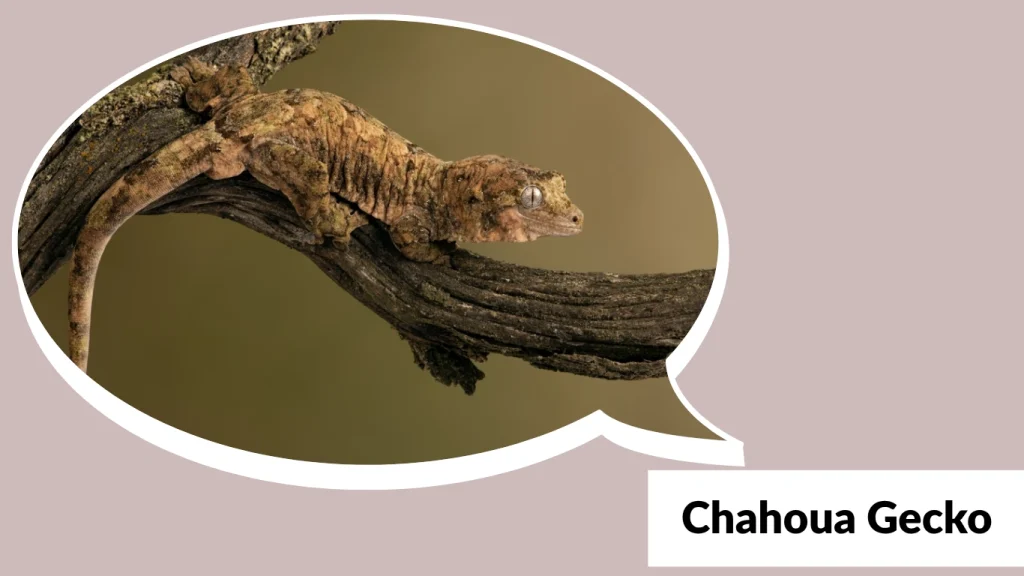
The Chahoua Gecko (Mniarogekko chahoua), also called the New Caledonian Mossy Gecko, is a robust, slow-moving species known for its mossy, camouflage-like appearance and prehensile tail. It is native to the forests of New Caledonia and is one of the most personable geckos in captivity.
Identification
- Color: Olive, green, brown, or reddish with mottled moss-like texture
- Size: 10 to 12 inches in length
- Skin: Soft and textured for camouflage
- Tail: Prehensile and can regenerate if dropped
- Eyes: Large with lidless, silver or coppery pupils
Behavior
Chahoua Geckos are nocturnal and arboreal. They are calm and intelligent, often tolerating gentle handling. They are social compared to many geckos and may show some curiosity toward their keeper.
Habitat
They inhabit humid tropical forests, clinging to tree bark and foliage. In captivity, they need a vertical terrarium with live plants, cork bark, moderate to high humidity, and mild temperatures. Misting twice daily helps maintain hydration and humidity.
Diet
They are omnivorous. In the wild, they feed on fruit, nectar, and small insects. In captivity, they do well on a base diet of commercial fruit gecko diets (like Pangea or Repashy), supplemented with gut-loaded insects like crickets or dubia roaches.