




Koi fish are more than just beautiful pond dwellers—they are living works of art with deep roots in Japanese culture. Over centuries of selective breeding, dozens of distinct koi varieties have emerged, each with unique colors, patterns, scale types, and body features. Whether you’re a beginner koi keeper or an experienced collector, understanding these koi types is essential for selecting, appreciating, and caring for them.
This guide explores 21 different types of koi fish, from classic varieties like Kohaku and Showa to rare and dynamic types like Kumonryu and Butterfly Koi. Each type is detailed with identifying traits, color quality, body shape, and why it holds a special place in the world of koi keeping. Dive in to discover which koi varieties might become the stars of your pond.
1. Kohaku
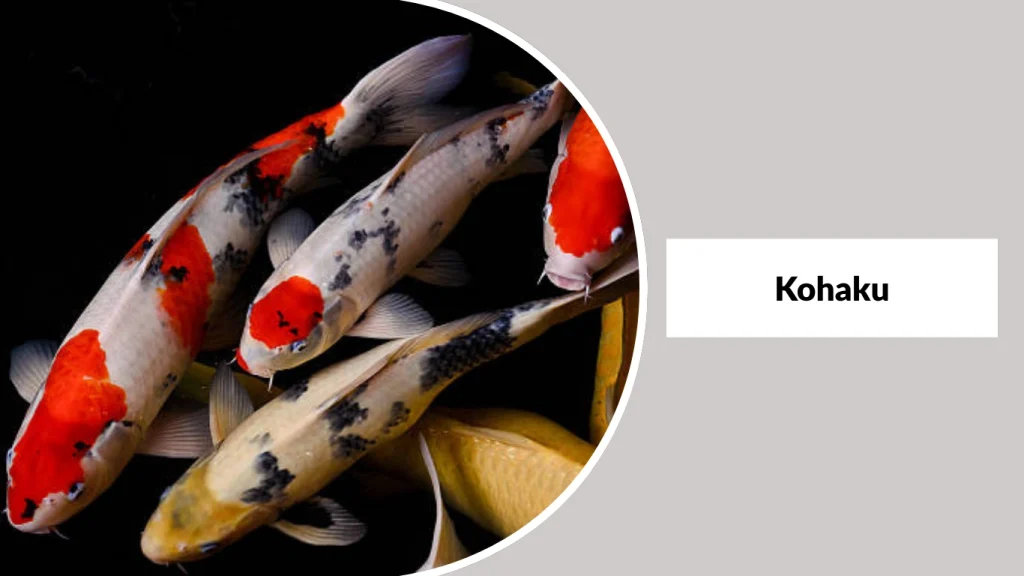
Kohaku is one of the most iconic and traditional types of koi fish. It features a pure white body adorned with bold red (hi) markings. Simplicity and elegance define this variety, making it a favorite among koi breeders and enthusiasts around the world. Kohaku is often considered the foundation of all koi varieties.
Identification
- Pure white (shiroji) base
- Red (hi) markings in large, clean patches
- No black or other color present
- Skin should be clear, with well-defined and balanced patterning
- Common patterns include two-step, three-step, and inazuma (lightning pattern)
- Typically grows between 24–36 inches in optimal conditions
Color Quality
The red should be deep and uniform, with sharp edges where it meets the white. The white should be snow-like, free of blemishes or yellowing. Early development may show softer edges, which refine with age.
Body Shape
Kohaku should have a well-balanced, symmetrical body with a strong backbone and graceful swimming posture. Judges also look for harmony between pattern placement and body proportions in competitions.
Popularity
As one of the “Big Three” koi (along with Sanke and Showa), Kohaku enjoys immense popularity and historical value. In fact, most koi competitions judge other varieties against the Kohaku standard due to its timeless beauty.
2. Taisho Sanke (Sanke)

Taisho Sanke, often called simply “Sanke,” is one of the most prestigious and widely recognized koi varieties. It features a white body with red and black markings and was developed during the Taisho era in Japan. Sanke koi are graceful and elegant, combining the beauty of Kohaku with subtle black highlights.
Identification
- White base (like Kohaku)
- Red (hi) markings similar to Kohaku
- Small, refined black (sumi) spots mainly on the upper half of the body
- No black markings on the head (a key distinguishing feature from Showa)
- Ideal pattern has good balance and sharp color separation
- Grows up to 30–36 inches in proper conditions
Color Quality
The red and black should be solid and evenly distributed. Sumi should be glossy and well-positioned, often appearing later in development. The white must be clean to enhance contrast.
Body Shape
A strong, torpedo-shaped body with a smooth contour is preferred. Balanced distribution of color across the body is essential for show quality.
Popularity
Sanke is a staple in koi ponds and competitions. Its classic red-black-white combination appeals to both beginners and serious collectors.
3. Showa Sanshoku (Showa)

Showa Sanshoku, or simply “Showa,” is another major koi variety and a close cousin to Sanke. It features a black body overlaid with red and white markings, giving it a bolder, more dramatic appearance. Showa koi are powerful in pattern and presence.
Identification
- Black (sumi) base body color
- Red (hi) and white (shiroji) markings layered over the black
- Sumi appears on both the body and the head (unlike Sanke)
- Often has sumi bands across the body, called “motoguro” on pectoral fins
- Grows up to 30–36 inches with good care
Color Quality
Ideal Showa have deep, jet-black sumi, vibrant red, and snowy white. The three colors should be well balanced and appear harmoniously from head to tail.
Body Shape
Showa should be thick-bodied and robust, symbolizing strength. Their powerful coloration and symmetrical markings enhance their visual impact.
Popularity
Highly prized in competitions, Showa represent one of the “Big Three” koi and are favored for their bold contrast and dynamic visual flow.
4. Shiro Utsuri
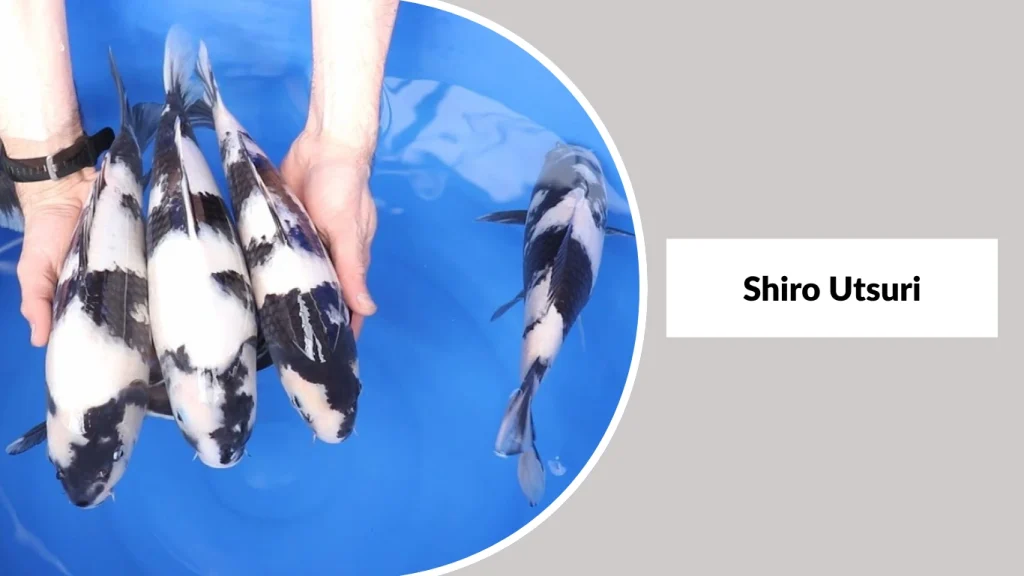
Shiro Utsuri is a striking koi variety featuring only two colors: black and white. It belongs to the Utsurimono group and is known for its dramatic contrast and deep, lacquer-black patterns over a pure white base. It is often mistaken for Showa, but lacks red markings.
Identification
- Jet black (sumi) base color
- White (shiroji) patterns over the black
- Sumi appears on both body and head
- Motoguro (black markings) often found on pectoral fins
- Pattern should be well-balanced and wrap around the body
- Grows up to 28–34 inches
Color Quality
The black should be solid, glossy, and deep, while the white must be clean and unblemished. A well-contrasted pattern is highly valued in competitions.
Body Shape
A broad, powerful body shape with symmetrical patterning and good frame enhances the visual appeal. Strong bone structure supports graceful movement.
Popularity
Shiro Utsuri is favored by hobbyists who appreciate bold monochromatic contrast. It stands out in ponds and show tanks due to its sharp, clean pattern.
5. Hi Utsuri
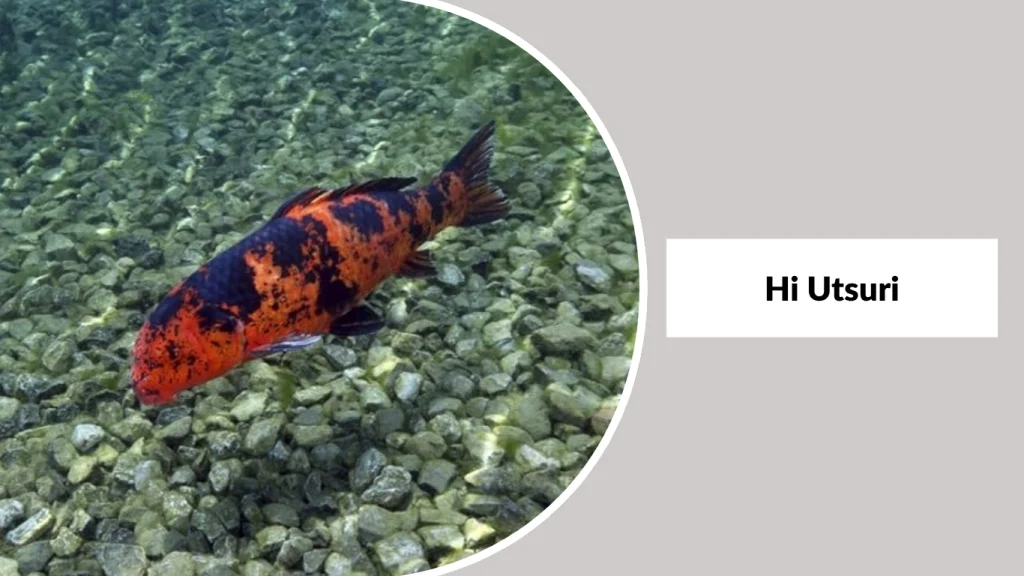
Hi Utsuri is a member of the Utsurimono class, displaying a rich red-orange (hi) pattern over a jet-black body. The contrast between the two colors gives this koi a fiery and vibrant appearance, making it one of the more visually intense varieties.
Identification
- Black (sumi) base color
- Bright red or deep orange (hi) markings over the black
- Sumi should wrap around the body and extend to the head
- Motoguro often present on pectoral fins
- Pattern should have symmetry and balance
- Typically grows up to 28–34 inches
Color Quality
Hi should be deep and consistent with crisp edges against the black. The black must be strong and glossy, especially on the head and dorsal area.
Body Shape
A stocky, thick body complements the bold coloration. Symmetry in pattern distribution enhances the fish’s visual power.
Popularity
Hi Utsuri’s fiery look and energetic contrast make it a favorite for koi ponds. It brings a warm, bold presence when swimming among more subdued varieties.
6. Ki Utsuri

Ki Utsuri is the rarest member of the Utsurimono group, known for its vibrant yellow (ki) markings over a deep black body. Because yellow pigments are genetically less stable, high-quality Ki Utsuri are hard to breed and highly prized among collectors.
Identification
- Jet black (sumi) base
- Yellow (ki) markings over the body and sometimes the head
- Motoguro (black) on the base of pectoral fins is common
- Pattern should wrap around the body with clean color separation
- Grows up to 26–32 inches
Color Quality
The yellow should be bright and uniform, not pale or dull. The black must be deep and glossy, offering strong contrast. Yellow hues may darken with age, so younger koi may appear more golden.
Body Shape
Ki Utsuri should have a well-built, balanced frame with smooth, muscular curves. Bold pattern placement enhances the impression of strength.
Popularity
Due to its rarity, Ki Utsuri is considered a collector’s gem. Its unique yellow-and-black palette creates a glowing appearance that stands out in both ponds and shows.
7. Bekko

Bekko is a simple yet elegant koi variety characterized by a solid-colored body adorned with scattered black (sumi) spots. It is closely related to the Utsurimono group but differs in that the base color is dominant, and the black markings are secondary and usually more refined.
Identification
- Solid base color: white (Shiro Bekko), red (Aka Bekko), or yellow (Ki Bekko)
- Small, isolated black (sumi) spots scattered across the back
- No black markings on the head (key distinction from Utsuri)
- Dorsal fin often has some sumi markings
- Grows up to 24–30 inches
Color Quality
The base color should be clean, even, and free from blemishes. Sumi should be glossy, well-positioned, and balanced across the body, avoiding a cluttered look.
Body Shape
Bekko koi should have a streamlined, symmetrical body with smooth transitions between markings. A clean, well-proportioned frame enhances their elegance.
Popularity
Although not as flashy as multi-colored varieties, Bekko koi are admired for their simplicity and balance. They make an excellent contrast fish in a pond and are great for those who appreciate minimalistic beauty.
8. Asagi

Asagi is one of the oldest and most traditional koi varieties, known for its serene, net-like blue scale pattern and subtle red highlights. Its classic appearance and calm demeanor make it a beloved staple among koi enthusiasts.
Identification
- Light to medium blue reticulated (net-like) scale pattern across the back
- Red or orange (hi) on the belly, pectoral fins, gill plates, and tail base
- Head should be clean, typically pale blue or white
- No markings on the top of the head or dorsal region
- Grows up to 28–34 inches
Color Quality
The blue scales should be uniform with clear reticulation, resembling a fine mesh. The hi should be even and confined to the lower parts of the body for a clean, balanced look.
Body Shape
Asagi koi have a strong, torpedo-shaped body that moves gracefully. The smoothness of the pattern across the body emphasizes their symmetry and scale texture.
Popularity
Highly respected for its history and aesthetic calmness, Asagi is often recommended for balanced pond compositions. Its subtle beauty contrasts well with more vibrant koi.
9. Shusui

Shusui is the Doitsu (scaleless) version of Asagi, sharing a similar color palette but with a distinct, clean-lined appearance. It features rows of large, mirror-like scales along the spine and red or orange highlights along the body sides.
Identification
- Scaleless body with a row of dark blue scales along the dorsal line
- Light blue or grey skin
- Red or orange (hi) on the sides, cheeks, and fin bases
- Clean, unmarked head
- Grows up to 28–34 inches
Color Quality
Shusui should have a pale, clear blue or grey body with vibrant and even hi along the sides. The dorsal scales must form a straight, well-defined line down the back.
Body Shape
The streamlined, smooth body of Shusui gives it an elegant look in motion. The lack of scales enhances the visibility of its coloration and body tone.
Popularity
Shusui is a favorite among fans of Doitsu koi and those who appreciate clean, minimalist design. Its pattern and smooth skin create a calm visual flow in ponds and tanks.
10. Goshiki

Goshiki, meaning “five colors” in Japanese, is a unique and vibrant koi variety that combines the patterns of Kohaku with a dark, reticulated Asagi-like base. This fusion of colors creates an eye-catching contrast that evolves and deepens as the fish matures.
Identification
- White base with red (hi) Kohaku-style markings
- Blue or black reticulated (net-like) scales across the body
- Subtle hints of grey, black, and indigo create a five-color appearance
- The hi may appear to “float” above the dark body
- Grows up to 28–32 inches
Color Quality
Hi should be bold and crisp, with strong contrast against the darker, often metallic-looking base. The reticulation should be uniform and enhance, not overpower, the pattern.
Body Shape
Goshiki koi are thick-bodied with a graceful silhouette. Clean head and body symmetry are essential to show off the complexity of their colors and scale texture.
Popularity
Goshiki has gained strong popularity for its dramatic visual appeal and unique color layering. Its pattern continues to develop with age, offering long-term interest for collectors and hobbyists alike.
11. Koromo
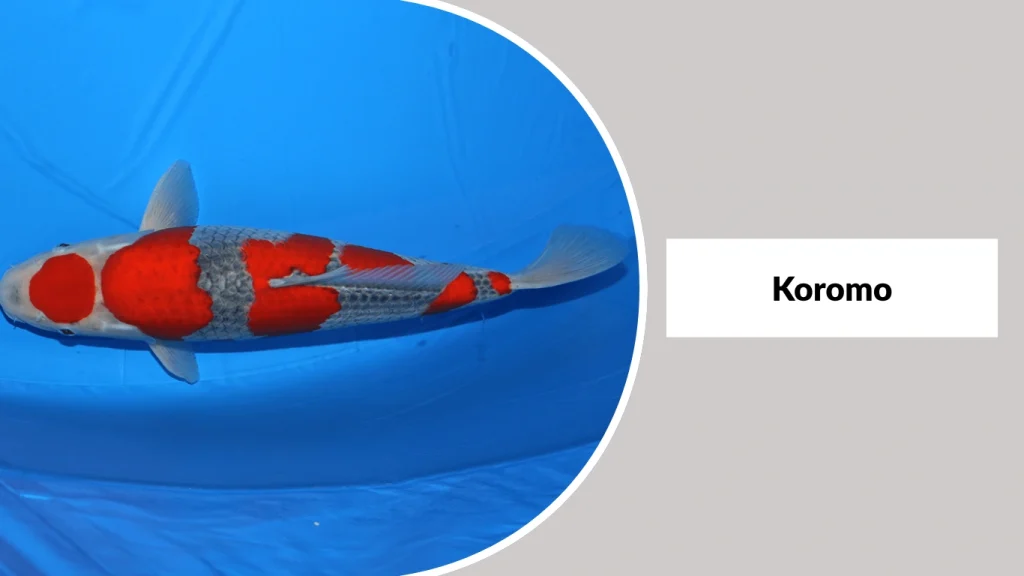
Koromo, meaning “robed,” is a refined koi variety that blends the traits of Kohaku with a delicate overlay of reticulated (net-like) blue or black scales. This gives the red patterns a robed or shaded appearance, adding depth and texture to a classic base.
Identification
- White body with red (hi) patterns like Kohaku
- Blue or black netting overlaying the hi areas only
- Netting may be sparse or dense depending on type (Ai Goromo, Budo Goromo, Sumi Goromo)
- Clean, unmarked head is preferred
- Grows up to 26–30 inches
Color Quality
The red should be vivid and evenly placed, with the overlay forming a neat, symmetrical pattern. The white background must be spotless to enhance contrast.
Body Shape
A smooth, torpedo-shaped frame with balanced pattern placement enhances the graceful impression of the Koromo. Harmony in coloration is key for judging.
Popularity
Koromo is valued for its subtlety and elegance, appealing to koi keepers who appreciate refined beauty over bold contrasts.
12. Ochiba Shigure
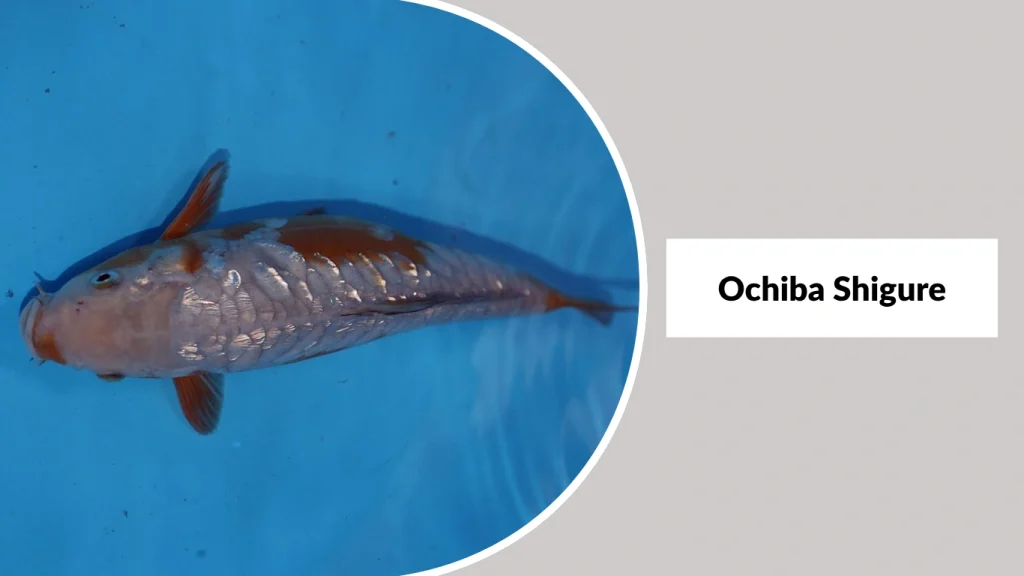
Ochiba Shigure translates to “autumn leaves on water,” and this koi lives up to its poetic name. It combines a grey or blue base with brown or coppery patterns, mimicking fallen leaves floating on a pond’s surface.
Identification
- Base color is grey, blue-grey, or silvery
- Overlaid with soft brown, bronze, or copper hi patterns
- Pattern style often resembles Kohaku in layout
- Some individuals may have subtle netting on the base color
- Grows up to 28–32 inches
Color Quality
Both the grey base and brown patterns should be soft, balanced, and free of blemishes. A calm, natural tone is preferred over vivid coloration.
Body Shape
A broad and flowing frame showcases the muted elegance of this koi. Proportion and simplicity are more important than high contrast.
Popularity
Ochiba Shigure is loved for its earthy, tranquil tones and poetic appearance. It provides a gentle visual break in colorful koi ponds.
13. Kumonryu
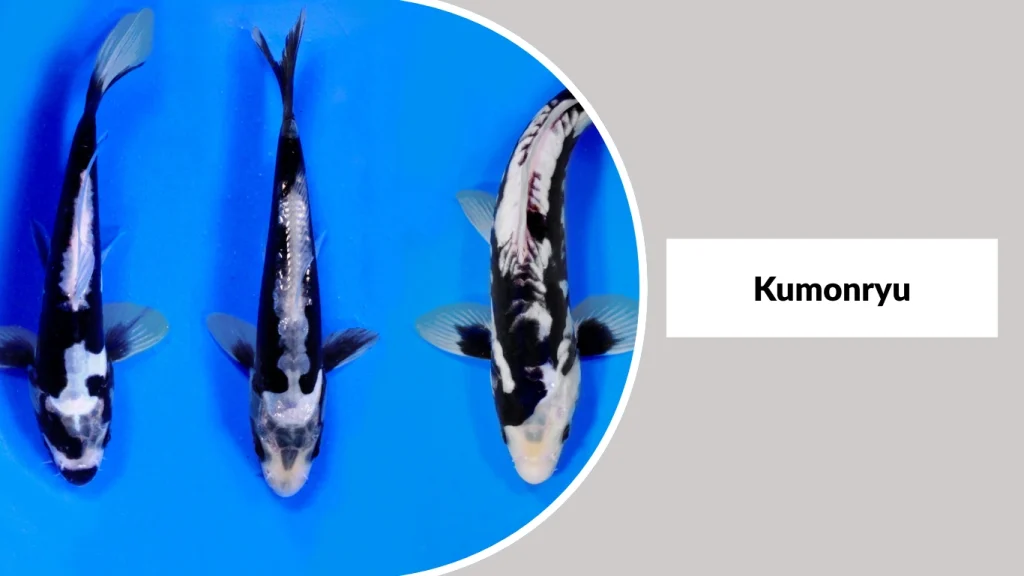
Kumonryu, meaning “dragon of clouds,” is a dynamic, scaleless (Doitsu) koi known for its ever-changing black and white patterns. Its appearance can transform with the seasons, giving it a mysterious, living-art quality.
Identification
- Scaleless (Doitsu) body
- Pure white base with black (sumi) markings that change over time
- Pattern can shift seasonally, appearing and disappearing
- May have sumi on head and fins
- Grows up to 26–30 inches
Color Quality
The black should be deep and glossy, standing out boldly against a clean white base. Sudden changes in pattern are normal and part of its appeal.
Body Shape
A strong, thick Doitsu body helps showcase the smooth, scaleless skin and fluid contrast. Balanced proportions help enhance visual symmetry even as patterns shift.
Popularity
Kumonryu’s shifting patterns and mystical name make it one of the most intriguing koi types for collectors who enjoy unpredictability and natural transformation.
14. Beni Kumonryu
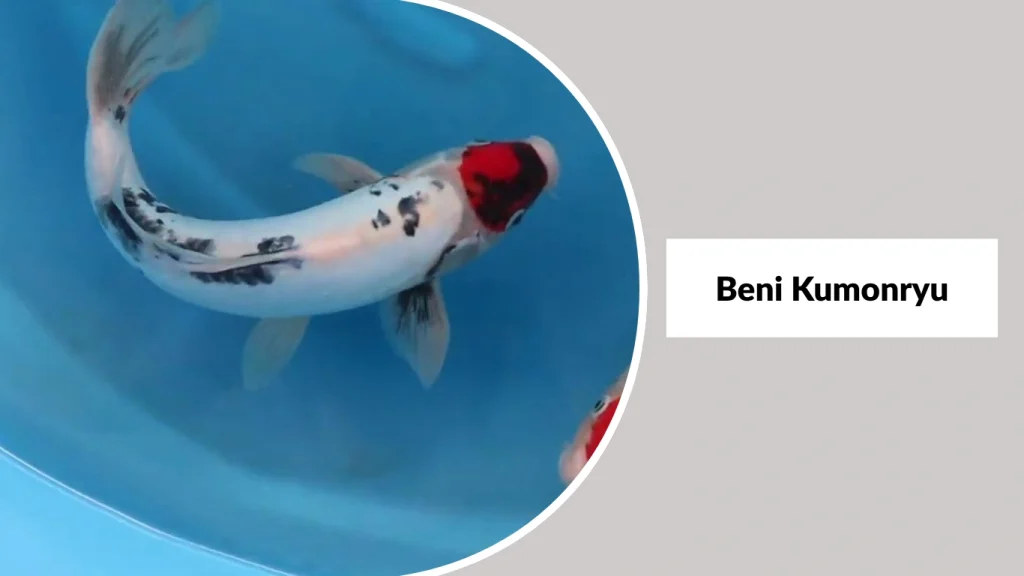
Beni Kumonryu is a vibrant variation of Kumonryu that includes red (beni) markings alongside the black and white Doitsu base. It shares the same pattern-changing behavior, offering even more dynamic coloration.
Identification
- Scaleless body
- Black, white, and red/orange markings
- Sumi and beni patterns can change or disappear with temperature and age
- Often features beni on head, shoulders, or fins
- Grows up to 26–30 inches
Color Quality
The red should be rich and deep, complementing the pure white and inky black. Clean transitions and balanced placement of all three colors are ideal.
Body Shape
Like Kumonryu, it has a thick, smooth Doitsu body with a bold presence. Proportional fins and head help maintain balance regardless of pattern changes.
Popularity
Beni Kumonryu adds warmth and contrast to the mysterious beauty of Kumonryu. Its unique blend of unpredictability and tri-color design appeals to koi enthusiasts who love living art.
15. Doitsu Koi
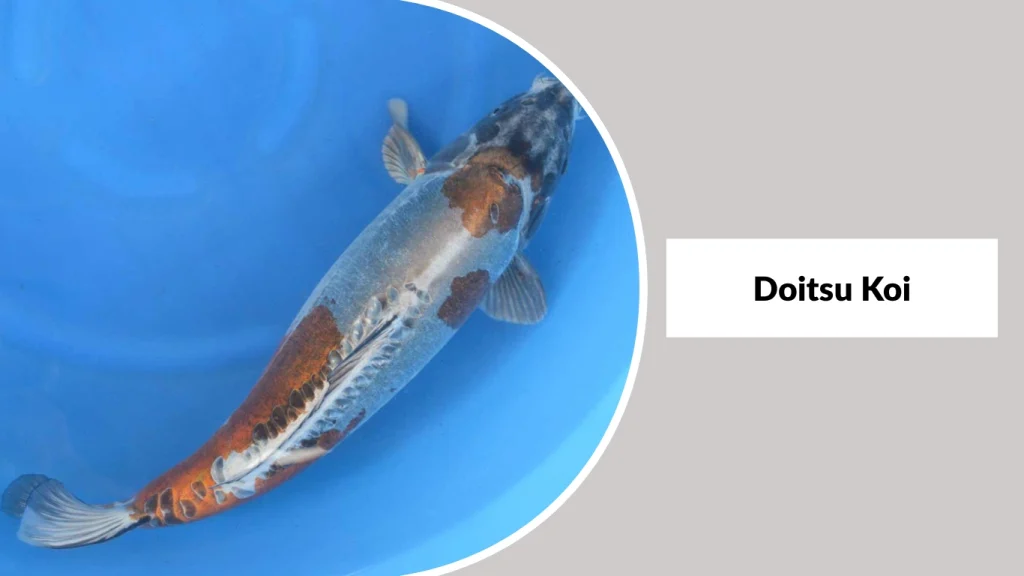
Doitsu Koi are not a color variety, but a scaleless version of almost any koi type. Originating from German carp, Doitsu koi may have completely smooth skin or rows of large mirror-like scales along the dorsal line and sides.
Identification
- Typically scaleless body, or with mirror scales along dorsal line
- Can be found in any color pattern (e.g., Doitsu Kohaku, Doitsu Showa)
- Smooth, glossy skin
- Highly reflective surface emphasizes colors
- Grows up to 28–32 inches
Color Quality
Color appears more intense due to the lack of scales. Clean transitions and vivid pigmentation are key. The skin must be free from blemishes.
Body Shape
The Doitsu body should be smooth and well-proportioned. The absence of scales highlights the need for a perfect frame and color symmetry.
Popularity
Doitsu koi are appreciated for their bold, clean appearance and enhanced coloration. Their dramatic shine makes them a popular choice in mixed ponds.
16. Gin Rin Koi
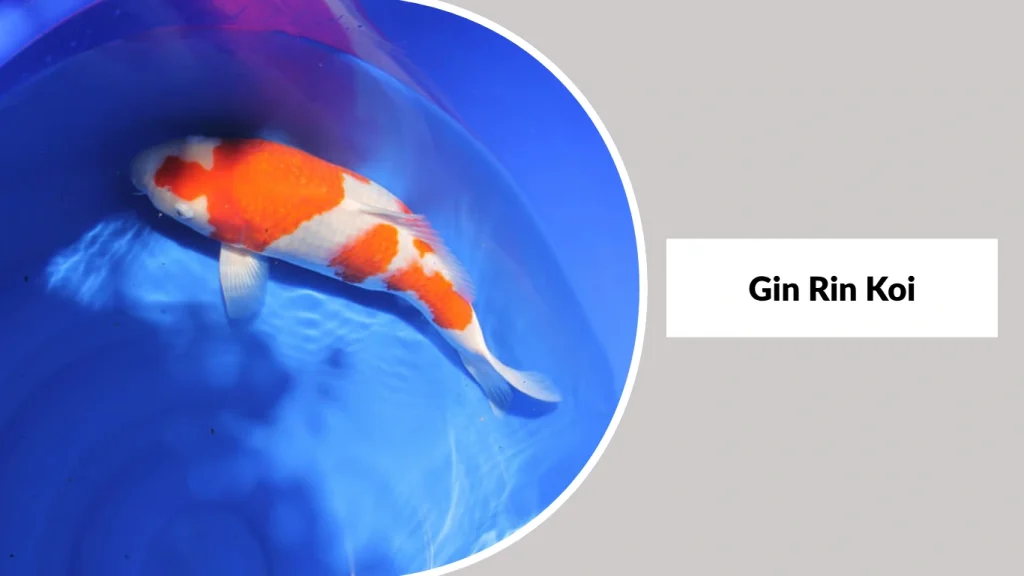
Gin Rin Koi are koi with diamond-like, reflective scales that sparkle under sunlight. “Gin Rin” refers to the glittering effect and can be applied to many varieties, such as Gin Rin Kohaku or Gin Rin Sanke.
Identification
- Shiny, metallic-reflective scales across the body
- Applies to many koi types, not a standalone pattern
- Scales look like they’re dusted with glitter
- Best specimens have full rows of consistent sparkle
- Grows up to 26–30 inches
Color Quality
The base pattern must still follow ideal color standards, but the Gin Rin effect should be uniform and vibrant across the body for high value.
Body Shape
A strong, flowing body enhances the reflective quality. Irregular scale rows or broken sparkle reduce quality in competition.
Popularity
Gin Rin koi are admired for their flash and glamour. They stand out brilliantly in both indoor tanks and outdoor ponds, adding sparkle to any collection.
17. Butterfly Koi (Longfin Koi)
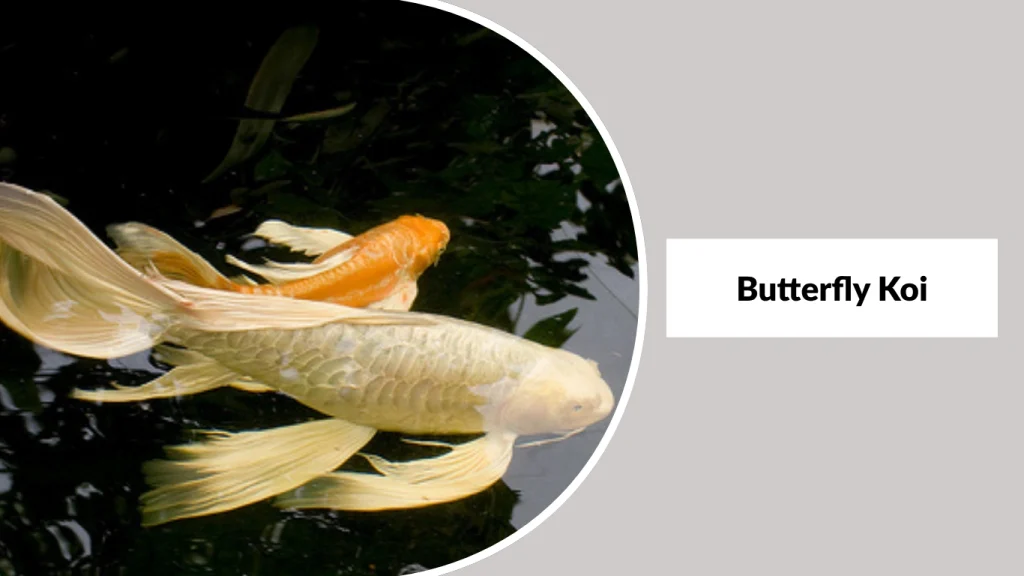
Butterfly Koi, also known as Longfin Koi or Dragon Carp, are a hybrid variety developed for their flowing, elegant fins. Their long pectoral, dorsal, and caudal fins resemble butterfly wings in motion, offering a graceful presence in any pond.
Identification
- Long, trailing fins and tail
- Available in many color varieties (e.g., Butterfly Kohaku, Butterfly Showa)
- Fin length often matches or exceeds body length
- Smooth, flowing movements in water
- Grows up to 36 inches or more, including fins
Color Quality
Standard color requirements apply based on the base variety (e.g., clean red in Butterfly Kohaku). Fin clarity, symmetry, and length are key judging factors.
Body Shape
Body should be slim and torpedo-shaped to complement the long fins. Fins must be evenly extended and free from damage or curling.
Popularity
Butterfly Koi are popular with hobbyists for their stunning movement and elegant appearance. Though not traditionally judged in Japanese competitions, they are highly prized worldwide.
18. Hikarimono

Hikarimono are a group of single-colored, metallic koi known for their reflective, glossy scales. These koi shimmer brilliantly in sunlight, making them one of the flashiest types in a pond.
Identification
- Solid metallic coloration (e.g., Platinum Ogon, Yamabuki Ogon)
- Colors include gold, white, orange, and silver
- No markings or patterns—pure color only
- Scales and skin have high luster
- Grows up to 28–32 inches
Color Quality
The metallic sheen should be consistent across the entire body with no dull or patchy areas. Purity and brightness of the single color are essential.
Body Shape
A strong, symmetrical body with a balanced fin structure enhances the overall shimmer. Imperfections are more visible on these smooth-colored koi.
Popularity
Hikarimono are favorites for those who want high-impact visuals. Their bright shine adds contrast to patterned koi in a pond.
19. Hikarimoyo
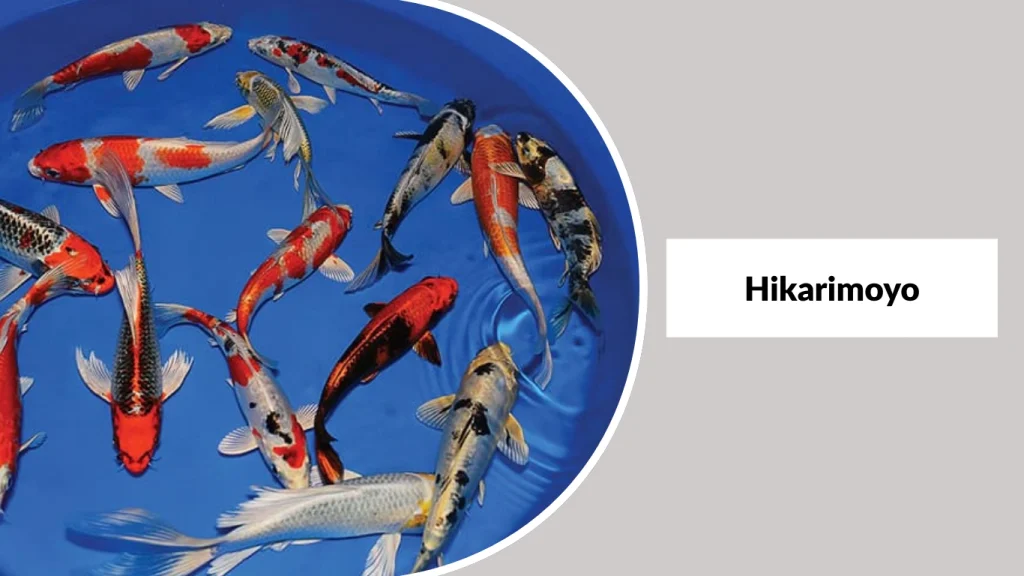
Hikarimoyo is a group of metallic koi that combine multiple colors and patterns, similar to Kohaku, Sanke, or Showa, but with a reflective, metallic base. These koi are known for their vibrant appearance and strong contrast.
Identification
- Metallic (shiny) body with multicolor patterns
- Typically white base with red, black, or orange markings
- Includes varieties like Hariwake (metallic Kohaku) and Kikusui (Doitsu Hariwake)
- Scales should reflect light evenly
- Grows up to 28–32 inches
Color Quality
Each color must be vivid and distinct, with strong separation and metallic sheen. The white base should be bright and clean to support the overall shine.
Body Shape
A smooth, thick body with symmetrical pattern placement supports a powerful visual impact. Fin shape and quality also affect overall appearance.
Popularity
Hikarimoyo are loved for combining traditional patterning with brilliant shine. They stand out in ponds and are especially eye-catching under sunlight or in shallow water.
20. Hikari Utsurimono
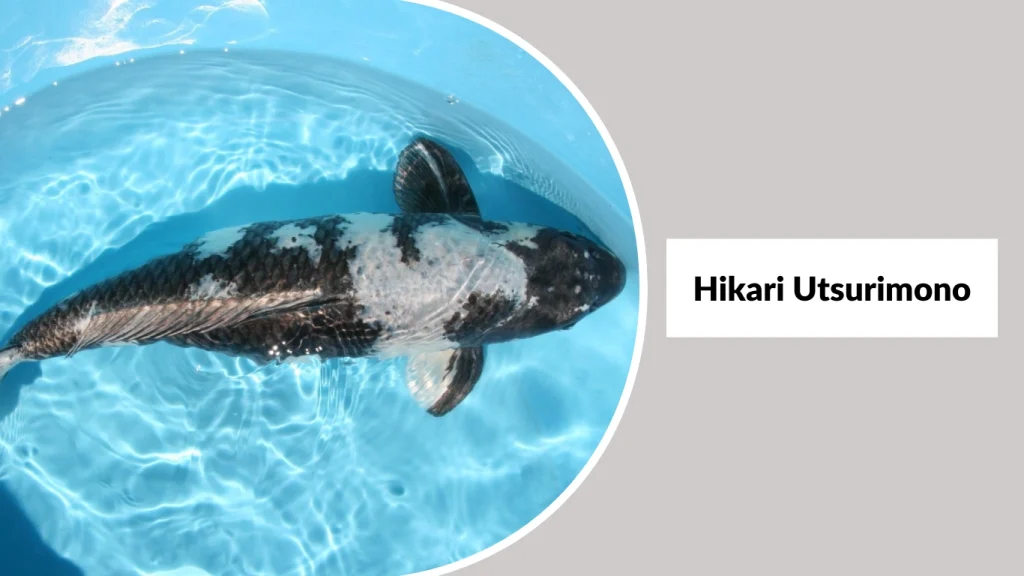
Hikari Utsurimono are metallic versions of the traditional Utsuri group (black-based koi with red, white, or yellow markings). Their metallic sheen enhances the dramatic contrast between sumi and overlay colors, making them appear more vibrant and polished.
Identification
- Black (sumi) base with metallic red (hi), white (shiro), or yellow (ki) markings
- Metallic sheen across the entire body
- Includes types like Kin Showa (metallic Showa), Gin Shiro (metallic Shiro Utsuri), and Kin Ki Utsuri
- Motoguro markings often visible on pectoral fins
- Grows up to 28–32 inches
Color Quality
The sumi should be glossy and jet black, while the overlay colors must be bright, metallic, and well-defined. Strong contrast is key, and all areas should reflect light evenly.
Body Shape
A thick, powerful body with smooth contour lines helps highlight the color contrast and reflective shine. Patterns should wrap the body symmetrically.
Popularity
Hikari Utsurimono koi are appreciated for their bold patterns and brilliant metallic finish. Their energetic appearance and deep contrast make them standout additions to any koi collection.
21. Matsuba

Matsuba is a metallic koi variety known for its single-colored body overlaid with a distinctive black pinecone-like scale pattern (reticulation). The name “Matsuba” means “pine needle” in Japanese, referring to the dark centers of each scale that create a textured, layered effect.
Identification
- Solid metallic body color: white (Gin Matsuba), red (Hi Matsuba), or yellow (Ki Matsuba)
- Black centers on each scale forming a reticulated pinecone pattern
- Dorsal and caudal fins often have matching dark shading
- Grows up to 28–32 inches
Color Quality
The base color must be clean, shiny, and vibrant. The black scale centers should be consistent in size and intensity from head to tail. The reticulation should form an orderly, symmetrical pattern.
Body Shape
A strong, thick body with broad shoulders and a clean dorsal line highlights the Matsuba’s textured look. Uniform scaling is essential for overall symmetry and visual appeal.
Popularity
Matsuba koi are valued for their bold simplicity and striking pattern. Their unique texture makes them an excellent contrast fish in a pond full of patterned or multi-colored koi.