
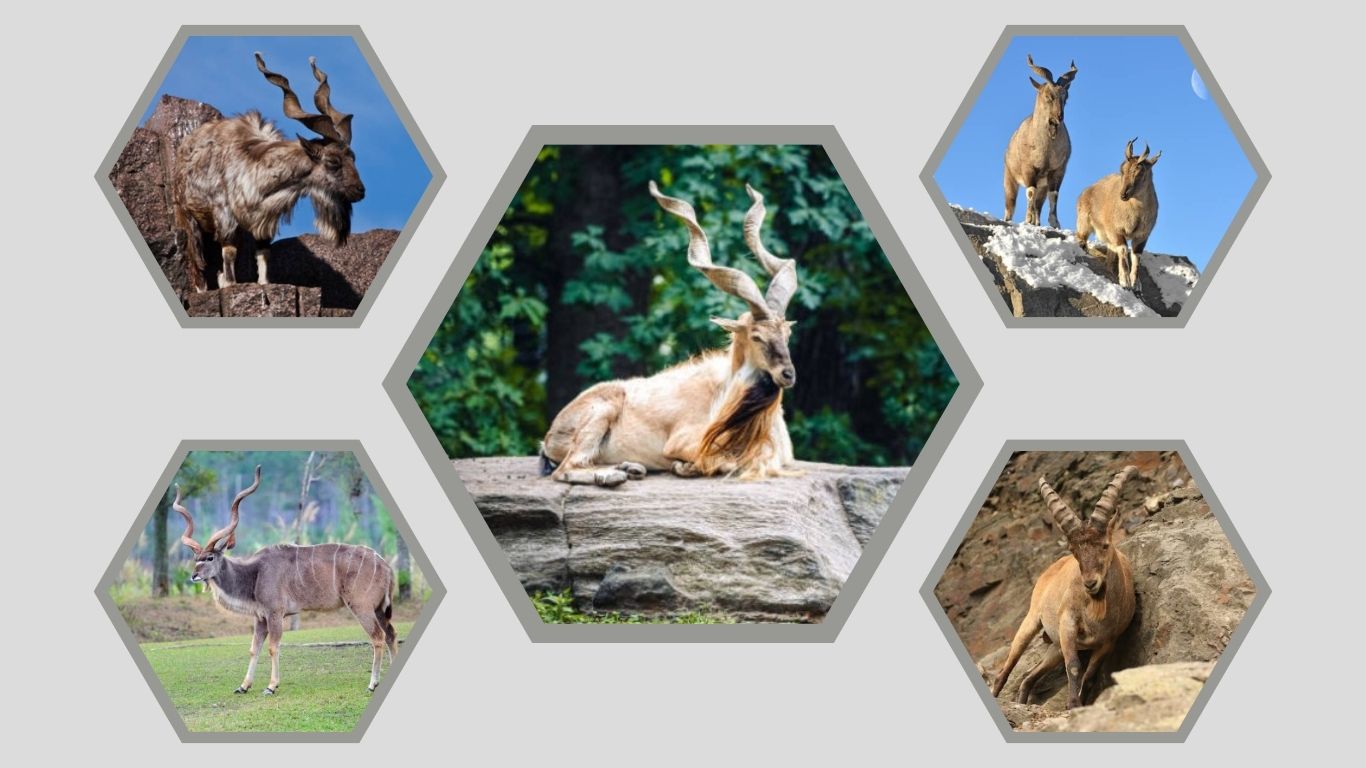
The markhor is one of the world’s most striking wild goats, famous for its dramatic corkscrew horns and powerful mountain-climbing ability. Native to the rugged highlands of Central and South Asia, markhor are divided into several regional types based on horn shape, body features, and geographic range. In this guide, you’ll explore the main markhor types, learning how to identify them, where they live, and what makes each form unique in the wild.
1. Astor Markhor (Capra falconeri falconeri)
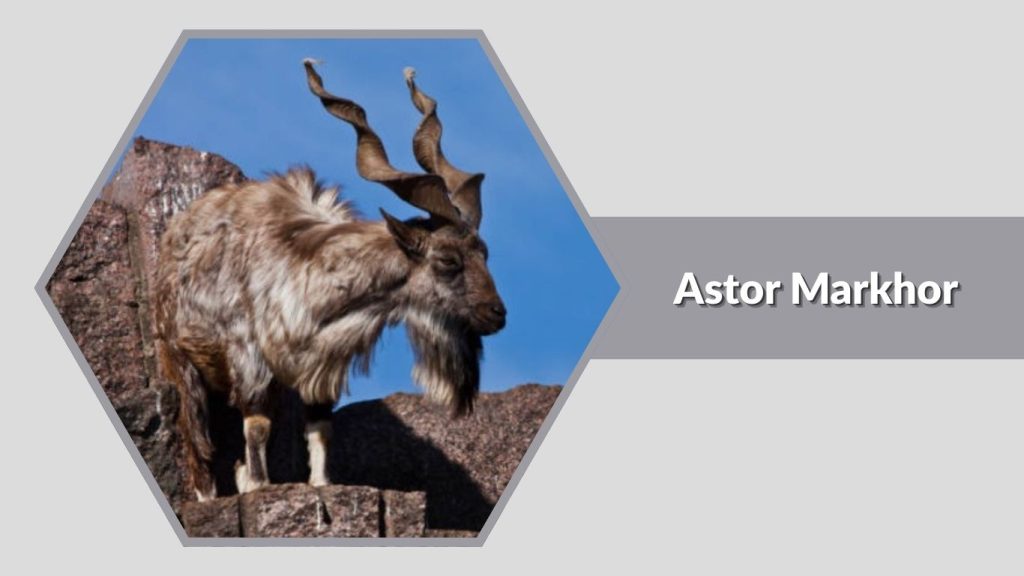
The Astor markhor, also known as the flare-horned markhor, is one of the most famous and visually striking types of markhor. It is mainly found in the high mountain regions of northern Pakistan and parts of Kashmir. This subspecies is especially known for its wide-spreading, corkscrew-shaped horns and powerful build. Living at high altitudes, the Astor markhor is perfectly adapted to cold climates, rocky cliffs, and steep forested slopes.
Identification
- Large wild goat with a robust, muscular body
- Coat color ranges from light brown to dark tan, lighter on the belly
- Males have a long blackish beard and shaggy chest hair
- Horns are thick, heavy, and twist upward while flaring outward
- Males are much larger and more heavily horned than females
- Short, sturdy legs adapted for climbing steep rocky terrain
Habitat and Range
Astor markhor inhabit the rugged mountains of Gilgit-Baltistan, northern Khyber Pakhtunkhwa, and parts of Kashmir. They prefer elevations between 2,000 and 4,000 meters, where forests of oak, pine, and juniper meet open alpine slopes. During summer, they often move higher to graze in alpine meadows, while in winter they descend to lower forested valleys to escape heavy snow.
Physical Characteristics
This subspecies is famous for its broad, flaring horns, which can exceed 1.5 meters (5 feet) in large males. The horns twist like a corkscrew but spread outward more than other markhor types. Their thick coat becomes longer and shaggier in winter, especially on the chest and throat. Males are noticeably larger, often weighing over 90 kg, while females are slimmer with shorter, straighter horns.
Diet and Behavior
Astor markhor are herbivores, feeding on grasses, leaves, shoots, herbs, and shrubs. In forest zones, they browse on oak leaves, juniper, and pine needles. They are mostly active in the early morning and late afternoon, resting on rocky ledges during midday. Males are often solitary or form small bachelor groups, while females and young live in herds.
Conservation Status and Threats
The Astor markhor is classified under the Endangered markhor complex, mainly due to habitat loss, poaching, and competition with livestock. However, community-based conservation and controlled trophy hunting programs in northern Pakistan have helped some populations recover. Protecting mountain forests and reducing illegal hunting remain crucial for the long-term survival of this iconic wild goat.
2. Bukharan Markhor (Capra falconeri heptneri)
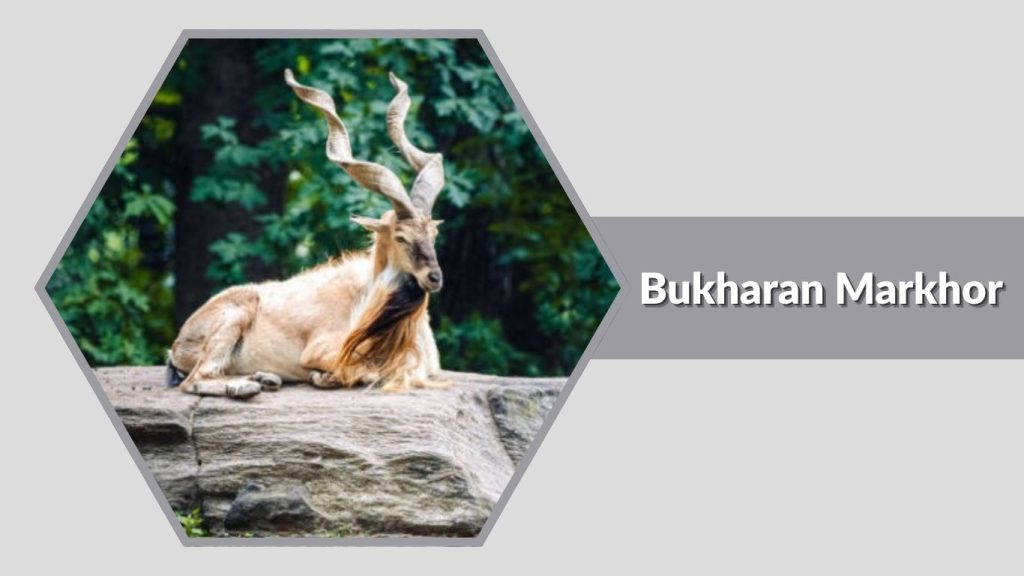
The Bukharan markhor is a rare and geographically isolated type of markhor found mainly in Central Asia, including parts of Tajikistan, Uzbekistan, Turkmenistan, and northern Afghanistan. It is sometimes called Heptner’s markhor. Compared to the Astor markhor, this subspecies usually has narrower, more upright corkscrew horns and a slightly slimmer body. It is one of the least numerous markhor types, making it especially important from a conservation point of view.
Identification
- Medium to large wild goat with a lean, athletic build
- Coat is light brown to sandy gray, paler on the underside
- Adult males develop a dark beard and long throat and chest hair
- Horns are long, corkscrew-shaped, and more vertical than flared
- Females are smaller, with shorter, less twisted horns
- Strong hooves and flexible joints adapted for rocky cliffs
Habitat and Range
Bukharan markhor live in dry, rugged mountain systems such as the Pamir-Alay and western Tian Shan ranges. They usually occupy elevations between 1,500 and 3,500 meters, favoring steep slopes, rocky outcrops, and sparse juniper or pistachio woodlands. Seasonal movement is common, with animals climbing higher in summer and descending into lower valleys during harsh winters.
Physical Characteristics
This subspecies is recognized by its tall, narrow spiral horns, which rise almost straight upward before twisting. In large males, horns may reach 120–140 cm in length. The body is covered in a coarse coat that thickens in winter, helping them survive cold, windy mountain conditions. Males are significantly larger than females and show more dramatic beard and mane development during the breeding season.
Diet and Behavior
Bukharan markhor are strict herbivores, feeding on grasses, herbs, leaves, and mountain shrubs. In forested areas, they browse on juniper, wild almond, and other hardy plants. They are cautious and alert animals, often resting on high rocky ledges where predators are easier to detect. Social structure usually consists of female–young groups, while adult males tend to be solitary except during the rut.
Conservation Status and Threats
The Bukharan markhor is considered highly threatened, with fragmented and declining populations. Major threats include poaching, habitat degradation, and competition with domestic livestock. Political instability in parts of its range has also limited conservation efforts. International cooperation, protected areas, and community-based wildlife management are essential to prevent this rare markhor type from disappearing.
3. Kabul Markhor (Capra falconeri megaceros)
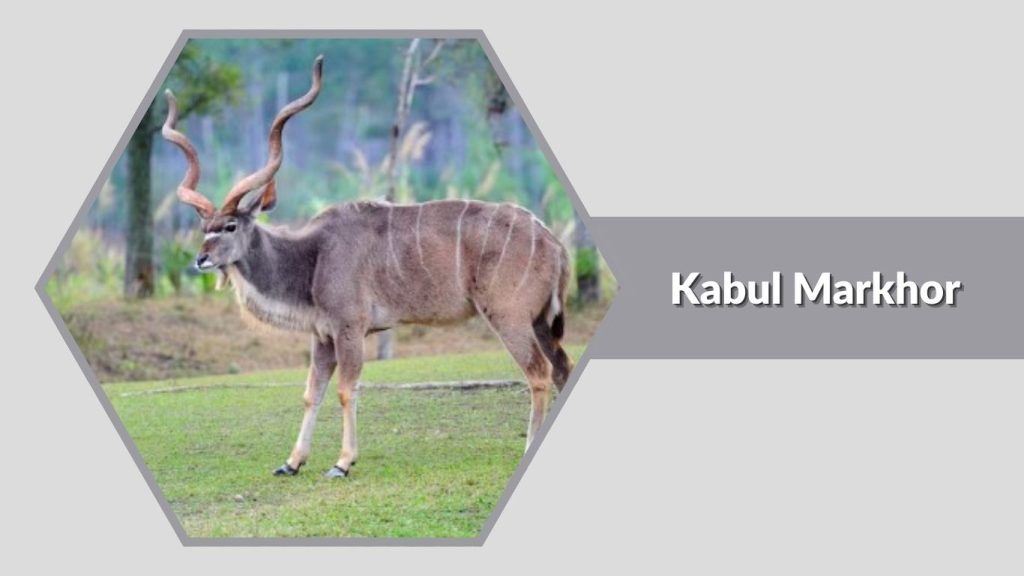
The Kabul markhor, often called the straight-horned markhor, is a distinctive type found mainly in eastern Afghanistan and parts of northern Pakistan. It differs from other markhor subspecies because its horns are usually less flared and more upright, giving the animal a narrower, taller appearance. This subspecies is adapted to harsh, dry mountain environments and is known for its agility on steep, rocky slopes where few large mammals can survive.
Identification
- Large wild goat with a slimmer, more upright body profile
- Coat color varies from light brown to grayish tan, paler underneath
- Adult males grow a dark beard and moderate chest mane
- Horns are long, corkscrew-shaped, but rise more straight than wide
- Females are smaller, with shorter, lightly twisted horns
- Strong, sharp-edged hooves for gripping rocky surfaces
Habitat and Range
Kabul markhor mainly inhabit the arid and semi-arid mountains of eastern Afghanistan and the border regions of Pakistan. They are usually found between 1,500 and 3,000 meters, favoring steep cliffs, broken rocky hills, and open woodlands of juniper and scrub oak. These areas provide both grazing patches and high ledges for safety from predators.
Physical Characteristics
This subspecies is best known for its tall, relatively straight spiral horns, which can exceed 130 cm in mature males. The body is slightly lighter and narrower than that of the Astor markhor. In winter, the coat becomes thicker and longer, especially around the neck and chest. Males are heavily built around the shoulders, while females are noticeably more delicate.
Diet and Behavior
Kabul markhor are herbivorous browsers and grazers. Their diet includes mountain grasses, herbs, leaves, and the shoots of shrubs and small trees. During dry seasons, they rely heavily on hardy vegetation such as juniper and wild pistachio. They are most active during early morning and late afternoon, spending the hotter parts of the day resting on shaded rock ledges.
Conservation Status and Threats
The Kabul markhor is considered endangered, with populations declining due to illegal hunting, habitat destruction, and competition with domestic livestock. Ongoing conflict in parts of its range has made conservation difficult. Expanding protected areas, reducing poaching, and involving local communities in wildlife protection are key steps for safeguarding this rare and poorly studied markhor type.
4. Kashmir Markhor (Capra falconeri cashmiriensis)
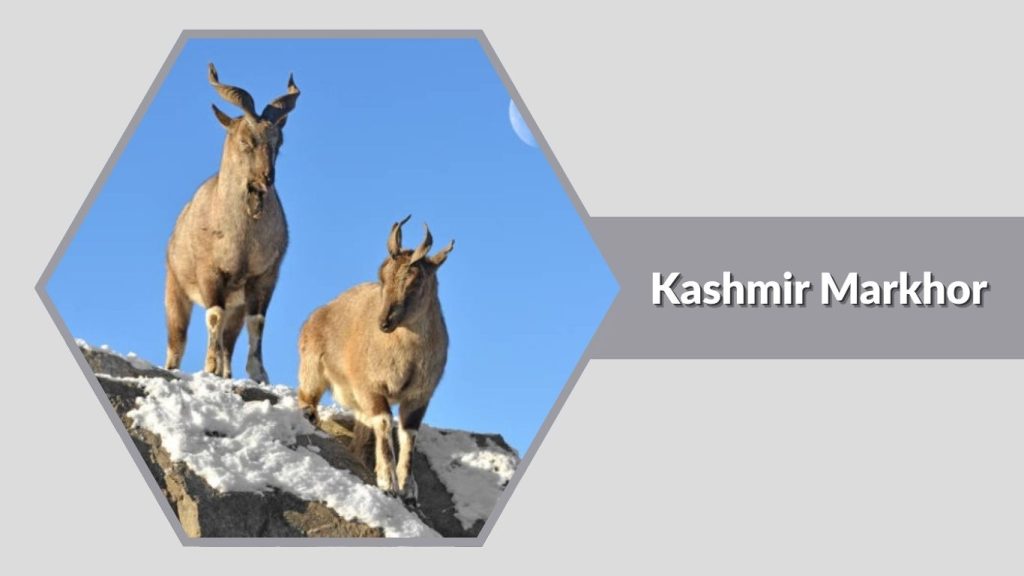
The Kashmir markhor is a regional type of markhor associated with the mountain ranges of Kashmir and adjacent parts of northern Pakistan and India. Some zoologists group it with the Astor markhor, but many conservation and wildlife references still describe it as a distinct regional form because of its horn shape and localized distribution. It is well adapted to cold, forested mountains and is known for its impressive spiraled horns and thick winter coat.
Identification
- Large, powerfully built wild goat with a deep chest
- Coat ranges from light brown to dark grayish brown
- Adult males develop a long blackish beard and heavy chest mane
- Horns are long, twisted like a corkscrew, moderately flared outward
- Females are smaller, with shorter, less massive horns
- Stocky legs and hard hooves suited for steep, rocky slopes
Habitat and Range
Kashmir markhor inhabit the western Himalayas and Pir Panjal ranges, particularly in Kashmir, northern Pakistan, and nearby highland regions. They are usually found between 2,000 and 4,000 meters. Their preferred environment includes conifer forests, alpine scrub, and open grassy slopes, where cliffs and broken rocks provide protection from predators and human disturbance.
Physical Characteristics
This markhor type is characterized by its strong, well-developed body and thick seasonal coat. In winter, males grow long hair on the throat, chest, and shoulders, giving them a shaggy appearance. The horns form bold spirals that rise upward before curving outward, often reaching 120–150 cm in length. Compared to the Kabul markhor, the Kashmir form tends to be bulkier, with broader horns.
Diet and Behavior
Kashmir markhor are herbivores, feeding on grasses, herbs, leaves, and young shoots. In forested zones, they browse on oak, pine, juniper, and mountain shrubs. They are mostly active at dawn and dusk. Females and young live in herds, while adult males are more solitary, joining groups mainly during the winter breeding season.
Conservation Status and Threats
The Kashmir markhor faces serious pressure from habitat loss, illegal hunting, and overgrazing by livestock. Political tension and human expansion in mountain regions have further fragmented populations. Conservation efforts focus on protected areas, cross-border wildlife management, and community involvement, which are essential to ensure the survival of this impressive mountain goat.
5. Suleiman Markhor (Capra falconeri jerdoni)

The Suleiman markhor is a regional type of markhor native to the Suleiman Mountain Range of southern Pakistan and southeastern Afghanistan. It is sometimes grouped with the Kabul markhor, but many wildlife sources still describe it separately because of its distinct horn form and restricted range. This markhor is well adapted to dry, rugged mountains, where steep cliffs and sparse vegetation dominate the landscape.
Identification
- Large wild goat with a strong but relatively slender build
- Coat color ranges from sandy brown to grayish tan
- Adult males grow a dark beard and a noticeable throat and chest mane
- Horns are long, twisted, and usually less flared than Astor markhor
- Females are smaller, lighter in build, with shorter, straighter horns
- Narrow hooves and flexible joints adapted for climbing rocky slopes
Habitat and Range
Suleiman markhor inhabit the arid and semi-arid mountains of the Suleiman Range, extending into parts of Balochistan and southeastern Afghanistan. They typically live between 1,000 and 3,000 meters in elevation. Their habitat includes dry cliffs, broken rocky hills, open scrublands, and sparse juniper or pistachio woodlands, where they find both food and safe escape terrain.
Physical Characteristics
This markhor type is known for its slimmer body profile and tall, spiral horns. The horns twist upward in a corkscrew pattern and may reach 100–130 cm in mature males. The coat becomes thicker during winter, especially around the neck and chest. Compared to the Astor and Kashmir markhor, the Suleiman markhor usually appears lighter and less heavily built.
Diet and Behavior
Suleiman markhor are herbivores that feed on grasses, herbs, leaves, and the shoots of shrubs and small trees. In dry regions, they rely heavily on hardy plants such as juniper, wild olive, and mountain shrubs. They are most active in the early morning and late afternoon, resting on shaded rock ledges during the hottest parts of the day.
Conservation Status and Threats
The Suleiman markhor is considered endangered, with small and scattered populations. The main threats include illegal hunting, habitat degradation, and competition with domestic livestock. Limited access to remote mountain regions has made monitoring difficult. Long-term survival depends on strong protection, community-based conservation programs, and habitat preservation across its narrow natural range.
FAQs
How many types of markhor are there?
Most scientists recognize three main subspecies of markhor, but wildlife and conservation sources commonly describe five regional types based on horn shape and geographic range. These include the Astor, Bukharan, Kabul, Kashmir, and Suleiman markhor, each adapted to different mountain environments.
Where are markhor mainly found?
Markhor are native to the mountain regions of Central and South Asia. Their range includes northern Pakistan, Afghanistan, parts of India (Kashmir), Tajikistan, Turkmenistan, and Uzbekistan. They live in steep, rocky terrain, open forests, and alpine slopes at high elevations.
What makes markhor horns so special?
Markhor are famous for their long, corkscrew-shaped horns, which are among the most impressive of any wild goat. The exact shape varies by type—some are wide and flared, while others are straighter and more upright—helping scientists and wildlife experts distinguish between markhor forms.
Are markhor endangered?
Yes. Markhor are classified as Endangered overall, although some local populations are slowly recovering. The main threats include illegal hunting, habitat loss, and competition with domestic livestock. Conservation programs in Pakistan and Central Asia have helped stabilize certain groups.
What do markhor eat in the wild?
Markhor are herbivores. They feed on grasses, herbs, leaves, and shoots of shrubs and small trees. In forested areas, they often browse on oak and juniper, while in drier regions they rely on hardy mountain plants adapted to cold and low-nutrient conditions.