


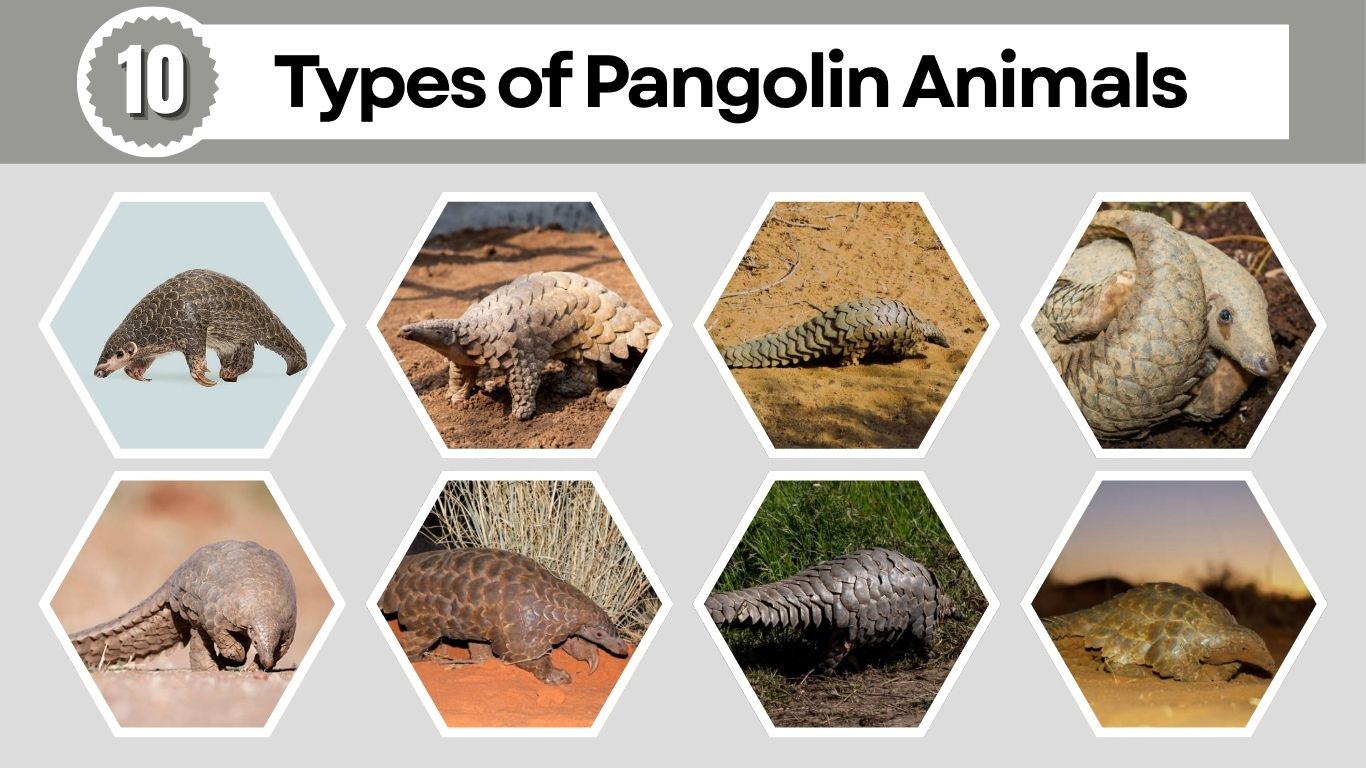
Pangolins are unique, scale-covered mammals often called “scaly anteaters” because of their armor-like bodies and insect-based diet. Found across Asia and Africa, they play an important ecological role by controlling ant and termite populations. Despite their shy and harmless nature, all pangolin species are now threatened due to habitat loss and illegal wildlife trade. In this guide, we explore ten different types of pangolin animals, highlighting the incredible diversity within this ancient and fascinating group.
1. Chinese Pangolin (Manis pentadactyla)
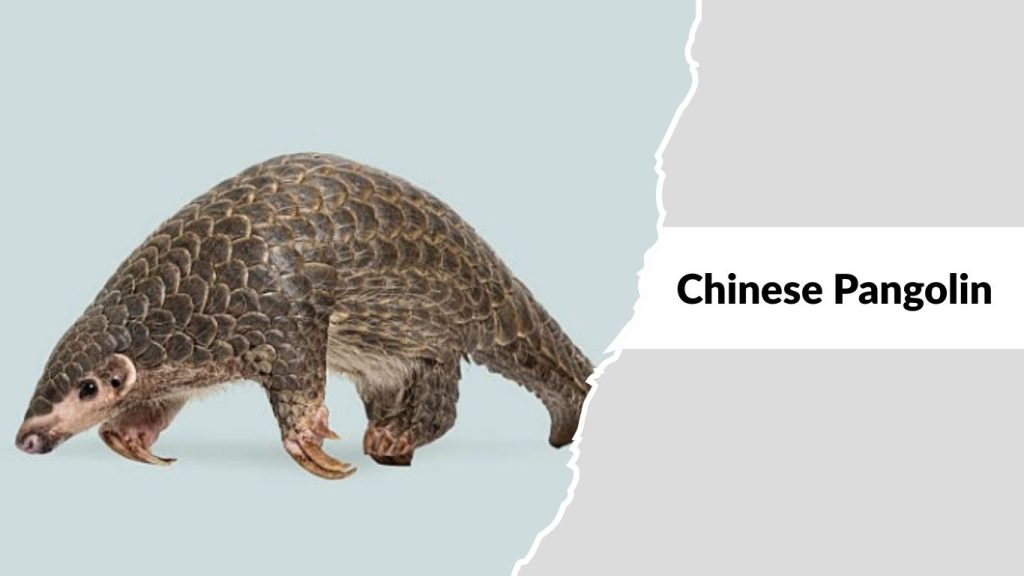
The Chinese pangolin is a small, secretive, scale-covered mammal native to parts of South and Southeast Asia. Known for its nocturnal habits and powerful digging ability, it spends most of its life searching for ants and termites. This species is critically endangered due to habitat loss and heavy illegal trafficking, making it one of the most threatened mammals in the world.
Identification
- Covered in overlapping brown to dark olive keratin scales
- Small to medium body size with a long, thick tail
- Narrow head with a pointed snout and no visible teeth
- Strong, curved front claws adapted for digging
- Rolls into a tight ball when threatened
Habitat
Chinese pangolins are found in forests, grasslands, agricultural areas, and foothill regions. They prefer environments with loose soil where they can easily dig burrows and access termite mounds. These pangolins are mainly distributed across southern China, northern Vietnam, Nepal, Bhutan, and parts of northeastern India, often living in warm, humid zones with good insect populations.
Behavior
This species is solitary and mostly nocturnal. During the day, it rests inside deep burrows, emerging at night to forage. Chinese pangolins rely heavily on their sense of smell to locate prey. When threatened, they curl into a tight armored ball, using their sharp scales and tail as protection against predators.
Diet and Lifespan
Chinese pangolins feed almost entirely on ants and termites, which they capture using their extremely long, sticky tongue. They can consume thousands of insects in a single night. In the wild, their lifespan is estimated to be around 10 to 15 years, though exact figures are uncertain due to their secretive nature.
2. Indian Pangolin (Manis crassicaudata)
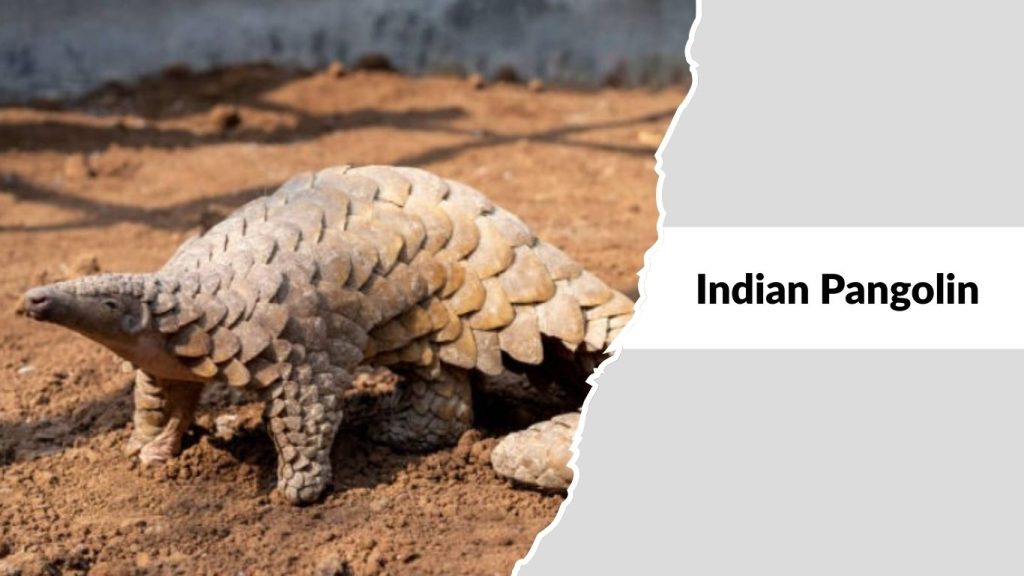
The Indian pangolin is a medium-to-large species of pangolin widely distributed across the Indian subcontinent. It is well known for its strong digging skills, heavy overlapping scales, and powerful tail. This shy, nocturnal mammal spends most of its life underground or foraging for insects. Like all pangolins, it faces serious threats from illegal wildlife trade and habitat destruction.
Identification
- Large, thick, dark brown to yellowish-brown scales
- Heavier body and tail compared to many Asian pangolins
- Long, tapering snout with no teeth
- Strong forelimbs with sharp claws for digging
- Rolls into a tight ball when disturbed
Habitat
Indian pangolins live in a wide range of environments, including tropical forests, dry deciduous forests, grasslands, scrublands, and farmlands. They adapt well to both lowland and hilly areas, often building deep burrows in soft soil. Their range includes India, Pakistan, Sri Lanka, Nepal, and Bangladesh.
Behavior
This species is solitary, shy, and mostly nocturnal. During daylight hours, it remains hidden inside burrows. At night, it becomes active, slowly walking while sniffing the ground to locate ant nests and termite colonies. When threatened, it coils into a tight armored ball and may use its tail to strike.
Diet and Lifespan
Indian pangolins mainly feed on ants and termites, using their long, sticky tongues to extract insects from nests and underground tunnels. They occasionally consume larvae and small invertebrates. In the wild, they are believed to live around 12 to 20 years under natural conditions.
3. Sunda Pangolin (Manis javanica)
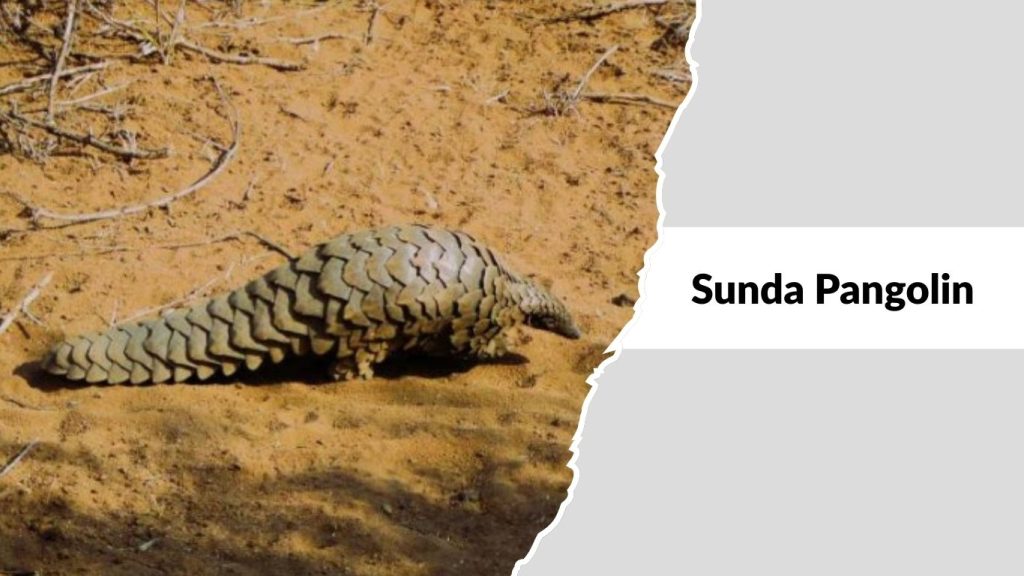
The Sunda pangolin, also known as the Malayan pangolin, is a small to medium-sized pangolin native to Southeast Asia. It is an excellent climber and is often found both on the ground and in trees. This species is critically endangered due to intense illegal trafficking for its scales and meat, making it one of the most heavily exploited mammals in the world.
Identification
- Overlapping dark brown to olive-colored keratin scales
- Slender body with a very long, prehensile tail
- Small head with a narrow, pointed snout
- Powerful curved claws for tearing into termite mounds
- Strong gripping tail used for climbing
Habitat
Sunda pangolins inhabit tropical rainforests, secondary forests, mangroves, and plantations. They are well adapted to forested landscapes and are often found near rivers and dense vegetation. Their range includes Malaysia, Indonesia, Thailand, Myanmar, Cambodia, Laos, Vietnam, and parts of southern China.
Behavior
This species is mostly nocturnal and highly secretive. It spends the day resting in burrows or hollow trees and becomes active at night to forage. Sunda pangolins are strong climbers and frequently search for ants and termites in tree cavities as well as on the forest floor.
Diet and Lifespan
Sunda pangolins primarily eat ants and termites, capturing them with a long, sticky tongue. They may also consume insect larvae and small invertebrates. In the wild, their estimated lifespan ranges from about 10 to 15 years, though exact data is limited.
4. Philippine Pangolin (Manis culionensis)
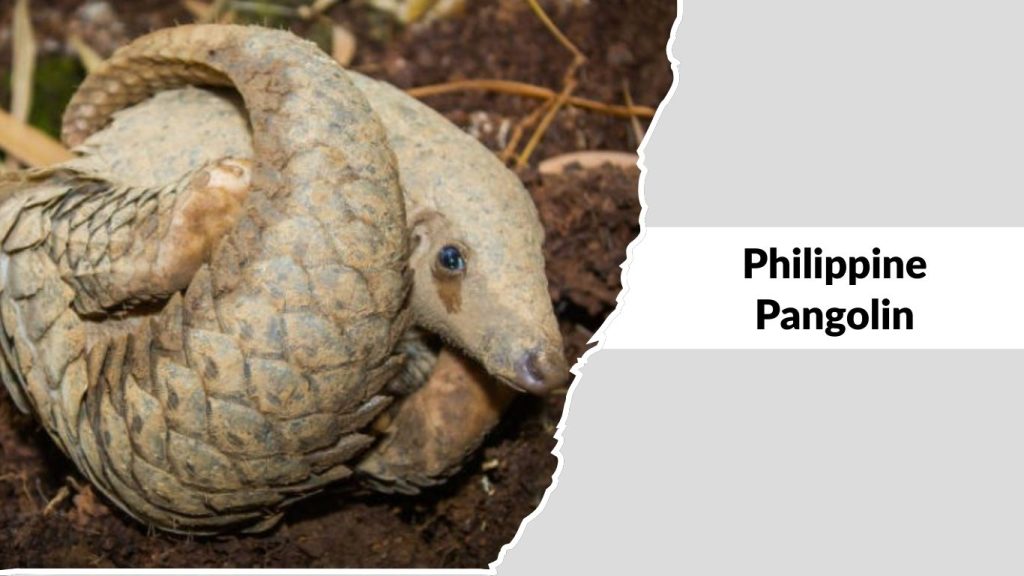
The Philippine pangolin is a rare, small-bodied pangolin species found only in the Palawan region of the Philippines. It is one of the least-studied pangolins in the world and is known for its fine, closely packed scales and excellent climbing ability. Due to heavy hunting and illegal trade, this species is now critically endangered.
Identification
- Small to medium size with fine, light to dark brown scales
- Relatively small head with a narrow, pointed snout
- Long, flexible, prehensile tail for climbing
- Strong foreclaws for digging and tearing insect nests
- Can curl into a tight, protective ball
Habitat
Philippine pangolins inhabit lowland tropical forests, secondary forests, and limestone areas. They are often associated with forested hillsides and dense vegetation. This species is endemic to Palawan and nearby islands, making its distribution extremely limited and highly vulnerable to habitat disturbance.
Behavior
This pangolin is solitary and mostly nocturnal. During the day, it hides in burrows, rock crevices, or hollow trees. At night, it forages both on the ground and in trees, using its strong sense of smell to locate ants and termites.
Diet and Lifespan
Its diet consists mainly of ants and termites, along with insect larvae. The Philippine pangolin uses its long, sticky tongue to extract prey from narrow tunnels. Little is known about its lifespan in the wild, but it is thought to live around 10 to 15 years.
5. African White-bellied Pangolin (Phataginus tricuspis)
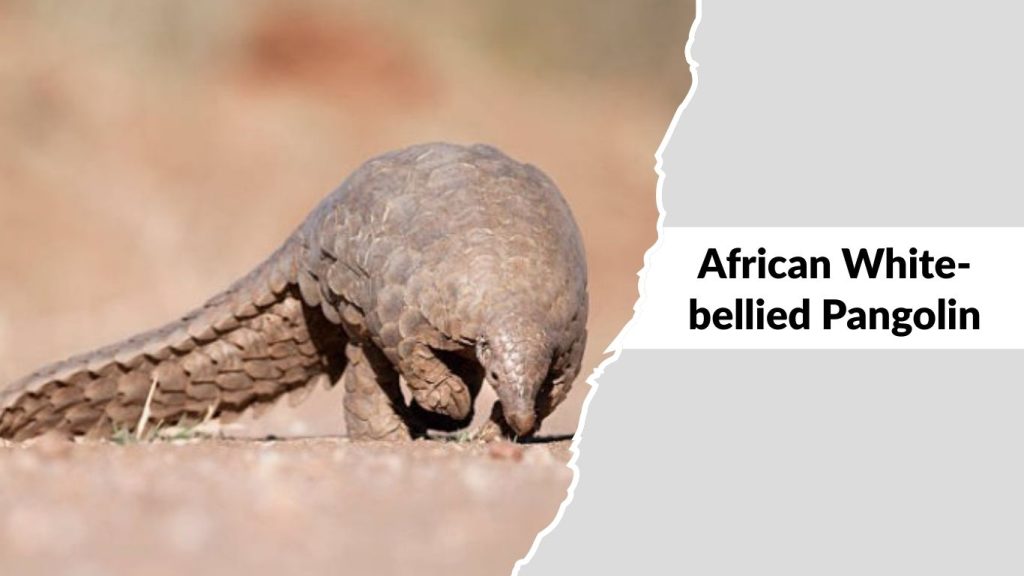
The African white-bellied pangolin, also called the tree pangolin, is a small, agile species native to sub-Saharan Africa. It is especially well adapted to climbing and spends much of its life in trees. This pangolin is named for the pale, often whitish underside of its body and is increasingly threatened by bushmeat hunting and illegal trade.
Identification
- Small, lightweight body with dark overlapping scales
- Distinct pale or whitish belly with sparse scales
- Long, prehensile tail for gripping branches
- Sharp, curved claws for climbing and tearing nests
- Large eyes compared to ground-dwelling pangolins
Habitat
African white-bellied pangolins live mainly in tropical rainforests, secondary forests, and wooded savannas. They are strongly associated with forest canopies and dense vegetation. Their range stretches across central and western Africa, including countries such as Cameroon, Nigeria, Ghana, Gabon, and the Congo Basin.
Behavior
This species is solitary, shy, and nocturnal. It spends daylight hours hidden in tree hollows or dense foliage. At night, it moves skillfully among branches searching for ants and termites. When threatened, it curls into a ball or drops from trees and remains motionless.
Diet and Lifespan
African white-bellied pangolins mainly feed on arboreal ants and termites. They use their long, sticky tongue to extract insects from bark crevices and nests. Their natural lifespan is estimated at around 10 to 15 years in the wild.
6. Giant Ground Pangolin (Smutsia gigantea)
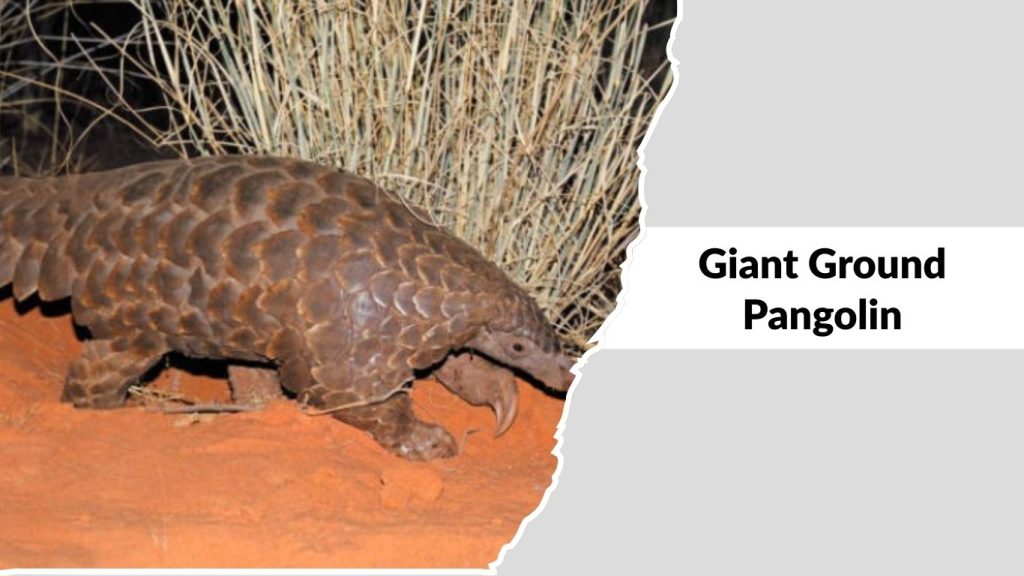
The giant ground pangolin is the largest living pangolin species and one of Africa’s most impressive insect-eating mammals. It has a heavy body, massive scales, and powerful limbs adapted for breaking into hard termite mounds. Because of habitat loss and illegal hunting, this species is now considered endangered.
Identification
- Very large, heavy-bodied pangolin with thick, dark brown scales
- Broad head with a long, narrow snout
- Extremely strong forelimbs with huge curved claws
- Long, thick tail used for balance and defense
- Can roll partially into a ball, though size limits tight curling
Habitat
Giant ground pangolins inhabit tropical forests, swamp forests, and savannas. They are mostly ground-dwelling and prefer areas with abundant termite mounds. Their distribution covers central and western Africa, including Uganda, South Sudan, Cameroon, the Republic of Congo, and parts of West Africa.
Behavior
This species is solitary, slow-moving, and mainly nocturnal, although it may sometimes be active at dusk or dawn. During the day, it rests in deep burrows or dense vegetation. When threatened, it may hiss, swing its tail, or use its strong claws in defense.
Diet and Lifespan
Giant ground pangolins feed largely on termites and large ant species. Their long, sticky tongue can extend more than 60 cm to reach deep inside nests. They are believed to live around 15 to 20 years in the wild.
7. Black-bellied Pangolin (Phataginus tetradactyla)
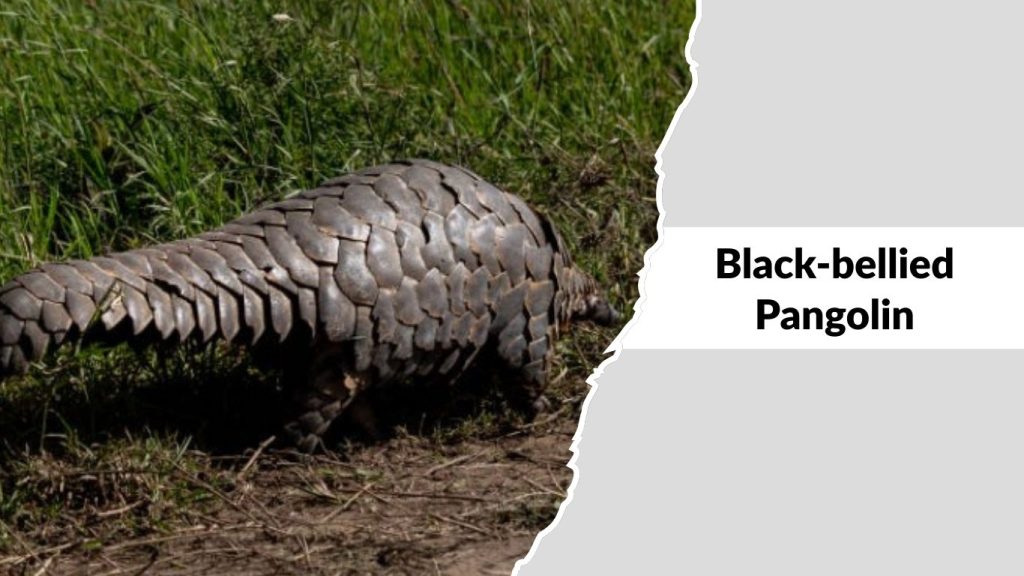
The black-bellied pangolin, also known as the long-tailed pangolin, is a small, highly arboreal pangolin native to central and western Africa. It is famous for its extremely long tail, which helps it balance and move quickly through trees. This species is more active during the day than most other pangolins.
Identification
- Small, slim body with very long, narrow tail
- Dark, almost black belly with relatively small scales
- Light to dark brown overlapping body scales
- Long limbs and curved claws adapted for climbing
- Narrow head with a pointed snout
Habitat
Black-bellied pangolins inhabit tropical rainforests, riverine forests, and swampy forest regions. They are closely associated with dense forest canopies and areas near water. Their range includes countries such as Nigeria, Cameroon, Equatorial Guinea, Gabon, and the Democratic Republic of Congo.
Behavior
Unlike most pangolins, this species is often diurnal, being active during daylight hours. It is an excellent climber and spends much of its time in trees, where it searches for ants in hollow branches and nests. When threatened, it may curl its body and cling tightly to branches.
Diet and Lifespan
Black-bellied pangolins mainly eat ants and termites, especially arboreal species. They use their long, sticky tongue to capture insects hidden under bark. Their lifespan in the wild is estimated to be about 10 to 15 years.
8. Temminck’s Ground Pangolin (Smutsia temminckii)
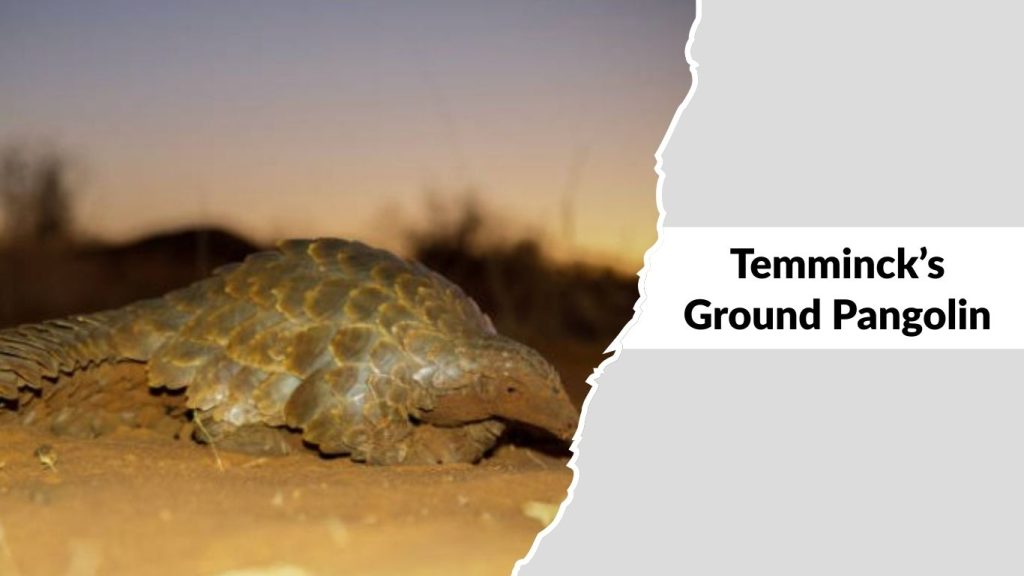
Temminck’s ground pangolin, also known as the Cape or steppe pangolin, is a medium-to-large African pangolin adapted to dry, open landscapes. It is a strong walker and digger, often traveling long distances at night in search of insect nests. This species is currently listed as vulnerable due to poaching and habitat pressures.
Identification
- Large, heavy scales colored dark brown to yellowish-brown
- Stocky body with powerful legs and strong curved claws
- Relatively short, thick tail compared to arboreal species
- Small, pointed head with a long snout
- Walks on hind legs at times, using tail for balance
Habitat
Temminck’s ground pangolins live mainly in savannas, grasslands, scrublands, and light woodlands. They prefer dry regions with sandy soils where burrowing is easier. Their range extends across southern and eastern Africa, including South Africa, Botswana, Zimbabwe, Namibia, Kenya, and Tanzania.
Behavior
This species is mostly nocturnal and solitary. During the day, it shelters in abandoned burrows or natural cavities. At night, it walks long distances to locate termite mounds and ant nests. When threatened, it curls into a tight ball and may release a strong-smelling secretion.
Diet and Lifespan
Temminck’s ground pangolin feeds mainly on termites and ants, using its long, sticky tongue to extract prey. It is estimated to live about 12 to 20 years in the wild under natural conditions.
9. Palawan Pangolin (Manis culionensis)
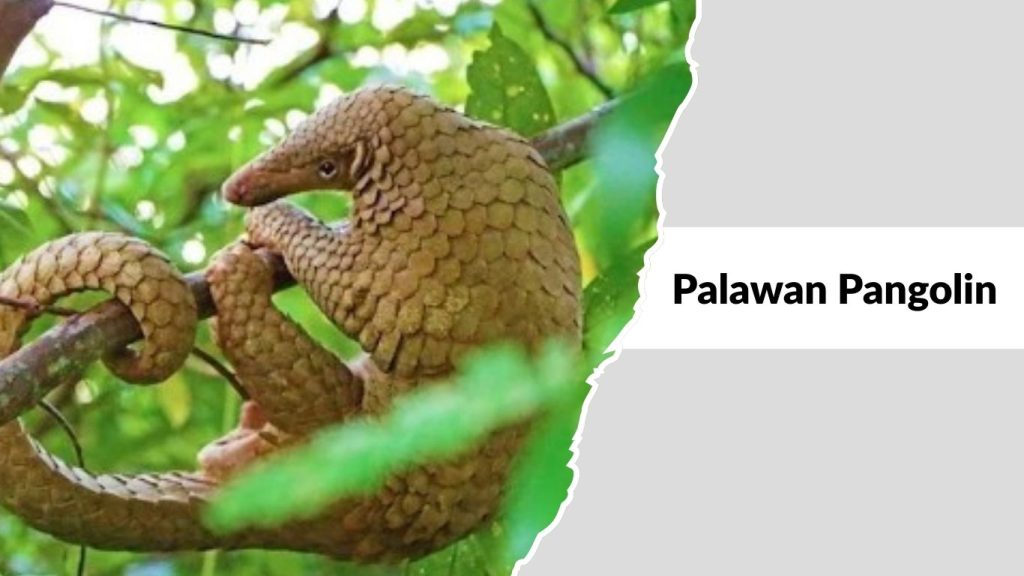
The Palawan pangolin is a small, rare pangolin species endemic to the Palawan faunal region of the Philippines. It is closely related to the Philippine pangolin and is well adapted for both climbing and digging. Because of its extremely limited range and heavy hunting pressure, this species is critically endangered.
Identification
- Small to medium body size with fine, overlapping brown scales
- Slender build with a long, prehensile tail
- Narrow head and pointed snout with no teeth
- Strong, curved front claws for digging and tearing nests
- Rolls into a tight protective ball when threatened
Habitat
Palawan pangolins inhabit lowland forests, secondary forests, and limestone forest areas. They are often found in dense vegetation and forest edges. Their entire natural range is restricted to Palawan and nearby islands, making them highly vulnerable to deforestation and illegal trade.
Behavior
This species is solitary and mostly nocturnal. It spends the daytime resting in burrows, hollow trees, or rock crevices. At night, it forages on the ground and in trees, relying on smell to locate ant and termite colonies.
Diet and Lifespan
Its diet consists mainly of ants, termites, and insect larvae. Using its long, sticky tongue, it can reach deep into narrow tunnels. Little precise data exists, but its lifespan is believed to be around 10 to 15 years in the wild.
10. Malayan Pangolin (Manis javanica)
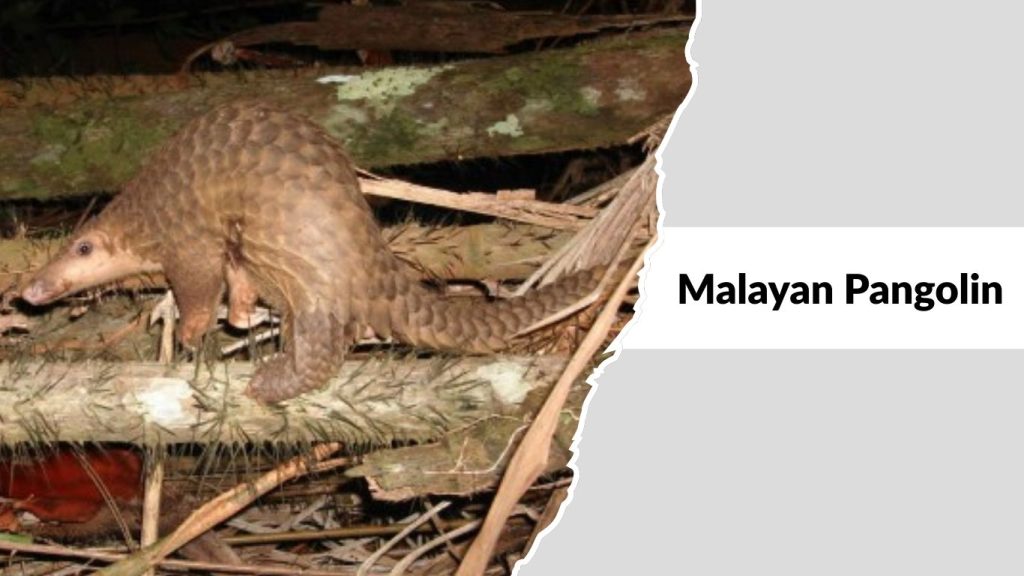
The Malayan pangolin, also widely known as the Sunda pangolin, is a small to medium-sized Asian pangolin found throughout Southeast Asia. It is one of the most heavily trafficked mammals in the world, targeted for its scales and meat. This shy, nocturnal species is an excellent climber and often searches for food both on the ground and in trees.
Identification
- Dark brown to olive overlapping keratin scales
- Slender body with a very long, prehensile tail
- Small head with a narrow, pointed snout
- Strong, curved claws adapted for climbing and digging
- Curls into a tight defensive ball when threatened
Habitat
Malayan pangolins inhabit tropical rainforests, secondary forests, mangroves, and plantations. They are often associated with dense vegetation and areas rich in ants and termites. Their range includes Malaysia, Indonesia, Thailand, Myanmar, Laos, Cambodia, Vietnam, and southern China.
Behavior
This species is solitary and mostly nocturnal. During the day, it hides in burrows or hollow trees. At night, it becomes active, climbing trees and moving along the forest floor to locate insect nests using its strong sense of smell.
Diet and Lifespan
Malayan pangolins feed mainly on ants and termites, which they capture using their long, sticky tongues. They may also eat larvae and small invertebrates. In the wild, they are believed to live around 10 to 15 years.