




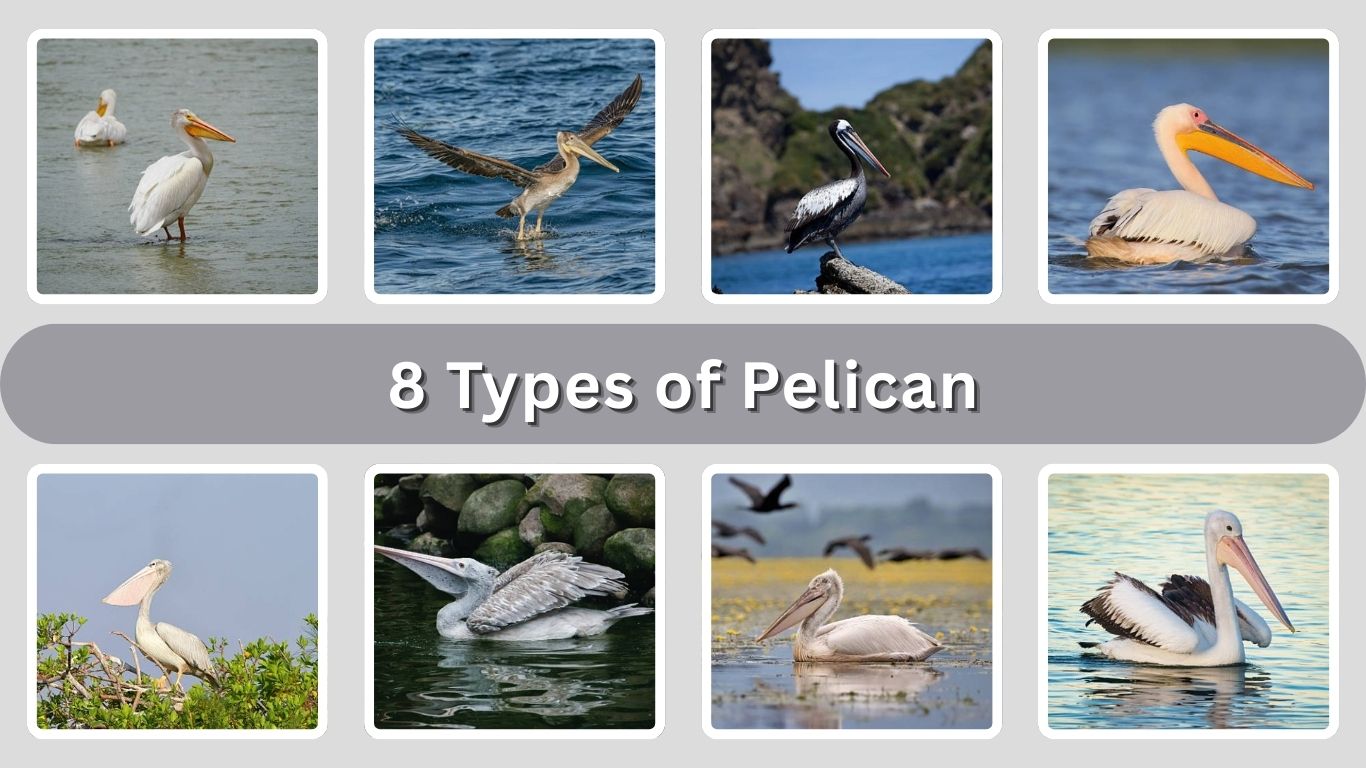
Pelicans are large, fish-eating water birds best known for their long bills and expandable throat pouches. They are found across much of the world, living around oceans, lakes, rivers, and wetlands where fish are abundant. Although all pelicans share a similar body shape, each species has unique features, behaviors, and habitat preferences. From powerful plunge-divers to cooperative surface feeders, pelicans display a wide range of fascinating adaptations that make them some of the most impressive birds of aquatic environments.
1. American White Pelican
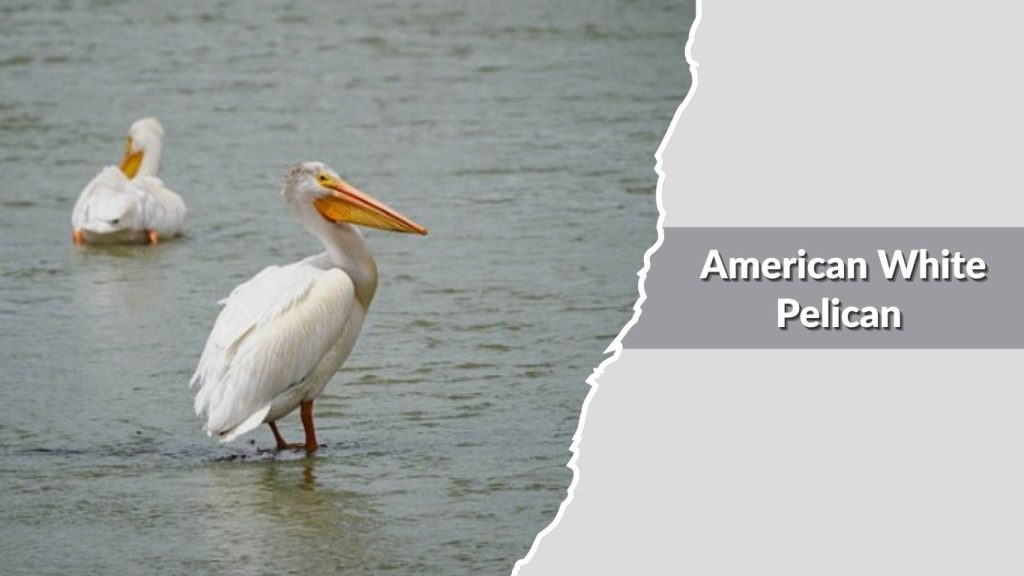
The American white pelican is one of the largest flying birds in North America. It is easily recognized by its bright white body, black wing tips, and long orange bill with a stretchy throat pouch. Unlike brown pelicans, it usually does not dive from the air. Instead, it feeds cooperatively on the water’s surface, making it a unique and impressive waterbird.
Identification
- Large white body with black primary feathers
- Long orange bill with expandable throat pouch
- Very wide wingspan, often over 9 feet
- Short legs with fully webbed feet
- Breeding adults develop a temporary horn-like bump on the bill
Habitat
American white pelicans mainly live around freshwater lakes, shallow marshes, slow rivers, and inland wetlands. During the breeding season, they prefer isolated islands in lakes, which protect nests from land predators. In winter, they migrate to warmer coastal regions, estuaries, and large inland waters in the southern United States and Central America.
Behavior
This species is extremely social and often forms large flocks. They are famous for group fishing, where several pelicans work together to herd fish into shallow water before scooping them up. They are powerful soarers, frequently seen gliding in circles on warm air currents. Nesting usually occurs in dense colonies.
Diet
Their diet mostly includes fish such as minnows, carp, and trout. They also eat crayfish and other small aquatic animals. Instead of swallowing water, they drain it from their pouch before lifting their head and swallowing prey.
Lifespan
American white pelicans usually live between 15 and 25 years in the wild. With fewer natural predators and stable food sources, some individuals can survive even longer.
2. Brown Pelican
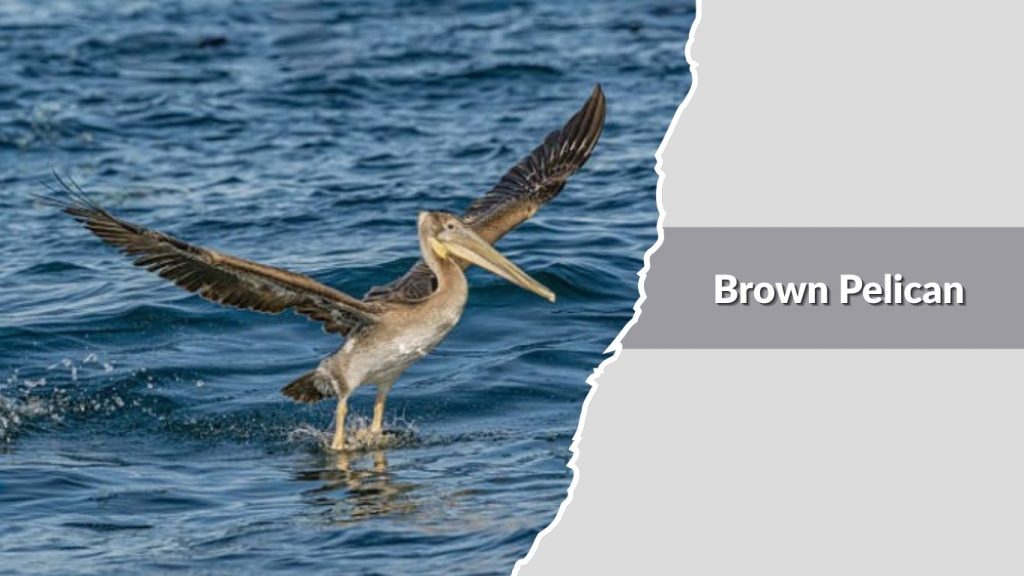
The brown pelican is a well-known coastal bird famous for its dramatic plunge-diving style of fishing. It has a darker body than most pelicans, with brown, gray, and white feathers, and a long bill equipped with a large throat pouch. This species is commonly seen flying low over ocean waves, gliding just above the water before diving headfirst to catch fish.
Identification
- Brown and gray body with white neck and pale yellow head
- Long bill with a large, stretchy throat pouch
- Medium to large size compared to other pelicans
- Long wings adapted for gliding over water
- Juveniles appear darker with more uniformly brown coloring
Habitat
Brown pelicans mainly live along warm ocean coastlines, bays, estuaries, and mangrove shores. They are rarely found far inland. They nest on coastal islands, mangrove trees, cliffs, and sometimes on the ground, choosing areas close to rich fishing waters.
Behavior
This species is famous for plunge-diving from heights of up to 60 feet. It folds its wings back and crashes into the water to stun fish before scooping them up. Brown pelicans are social birds and often roost in large groups on piers, sandbars, and rocks. They fly in graceful lines just above wave level.
Diet
Their diet mainly consists of small schooling fish such as sardines, anchovies, and menhaden. They may also eat shrimp and other small marine animals. After catching prey, they drain water from their pouch before swallowing.
Lifespan
In the wild, brown pelicans typically live 10 to 20 years. Some individuals can live longer in protected environments where food is plentiful and threats are limited.
3. Peruvian Pelican
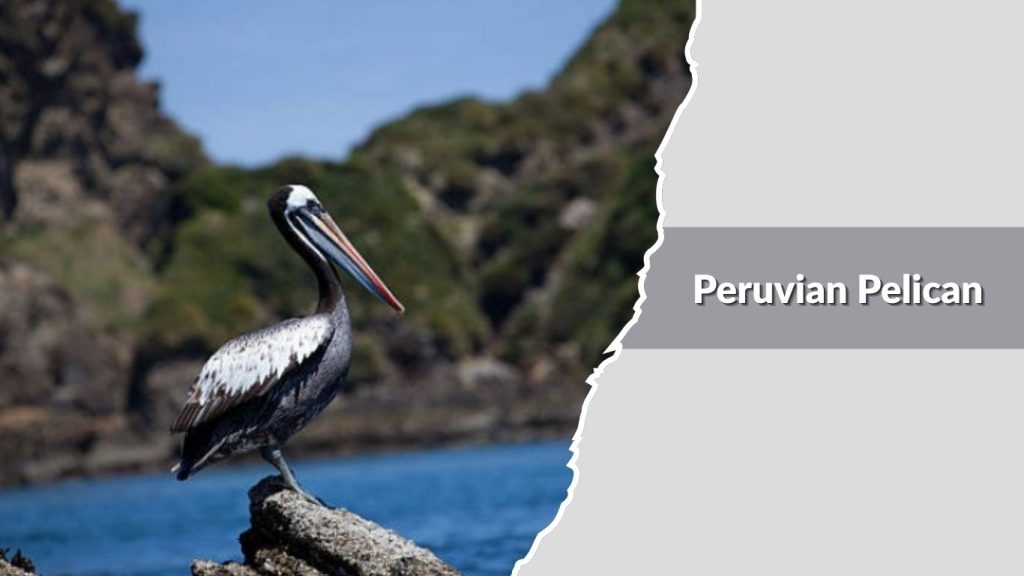
The Peruvian pelican is a large coastal pelican found mainly along the Pacific shores of South America. It closely resembles the brown pelican but is generally larger, heavier, and darker. With its long bill and powerful wings, this species is well adapted to life over cold, fish-rich ocean waters influenced by the Humboldt Current.
Identification
- Very large body with dark brown to grayish plumage
- Long, heavy bill with a wide throat pouch
- Pale yellow to whitish head and neck
- Long, broad wings built for strong coastal flight
- Stockier and heavier appearance than the brown pelican
Habitat
Peruvian pelicans live almost entirely along marine coastlines. They are commonly seen over rocky shores, offshore islands, sandy beaches, and productive upwelling zones. They rarely travel inland, depending on ocean environments where fish are abundant year-round.
Behavior
These pelicans are strong fliers and are often observed soaring over waves or resting in large groups on rocks and islands. Like brown pelicans, they plunge-dive from the air to catch fish. They are colonial nesters, breeding in dense groups where space is limited.
Diet
Their diet consists mostly of marine fish such as anchoveta, sardines, and other small schooling species. They hunt by diving from above the water’s surface and trapping prey inside their expandable pouch before swallowing.
Lifespan
The exact lifespan of Peruvian pelicans is not well documented, but it is estimated to be similar to other large pelicans, often reaching 15 to 25 years in the wild under favorable conditions.
4. Great White Pelican
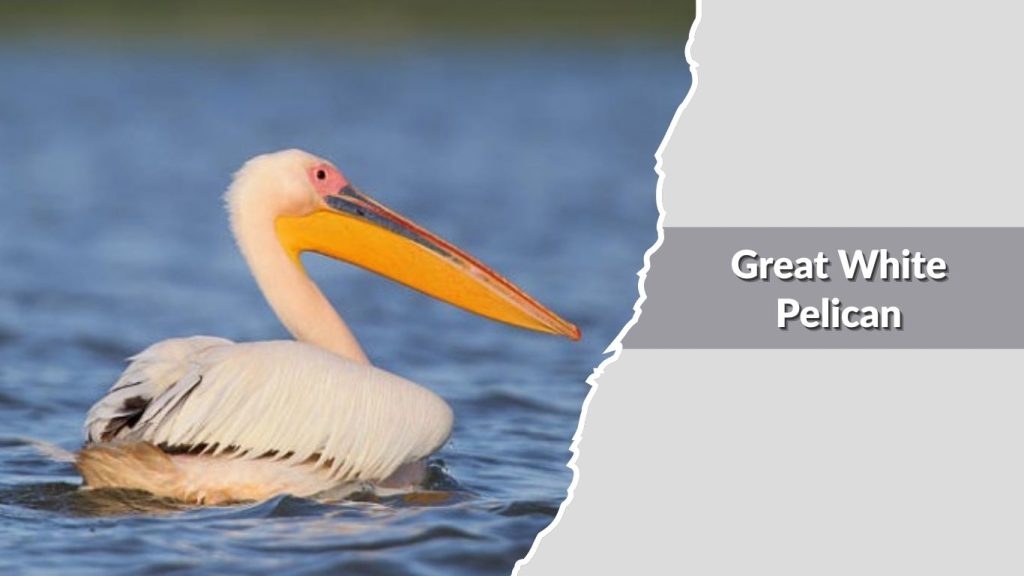
The great white pelican is one of the largest pelican species in the world, recognized by its massive size, snowy-white plumage, and long pinkish bill. It is widely distributed across parts of Africa, southeastern Europe, and Asia. This species is famous for its impressive wingspan and its habit of feeding cooperatively in large flocks.
Identification
- Very large white body with black flight feathers
- Long pink to orange bill with a huge throat pouch
- Extremely broad wings, often spanning over 11 feet
- Short, strong legs with fully webbed feet
- Breeding adults may show a pale yellow facial skin tone
Habitat
Great white pelicans prefer warm freshwater lakes, shallow wetlands, deltas, and slow-moving rivers. They also visit coastal lagoons and estuaries. Breeding usually occurs on isolated islands or remote shorelines, which provide safety from predators and human disturbance.
Behavior
This species is highly social and is rarely seen alone. Great white pelicans often fish in coordinated groups, forming lines or circles to herd fish into shallow water. They are powerful soarers, frequently gliding for long periods on rising air currents. Large colonies are formed during the breeding season.
Diet
Their diet mainly includes fish such as carp, tilapia, and catfish, along with occasional amphibians. They scoop prey from the water’s surface and drain the water from their pouch before swallowing.
Lifespan
Great white pelicans typically live between 15 and 30 years in the wild. With protection and stable habitats, some individuals can survive even longer.
5. Pink-backed Pelican
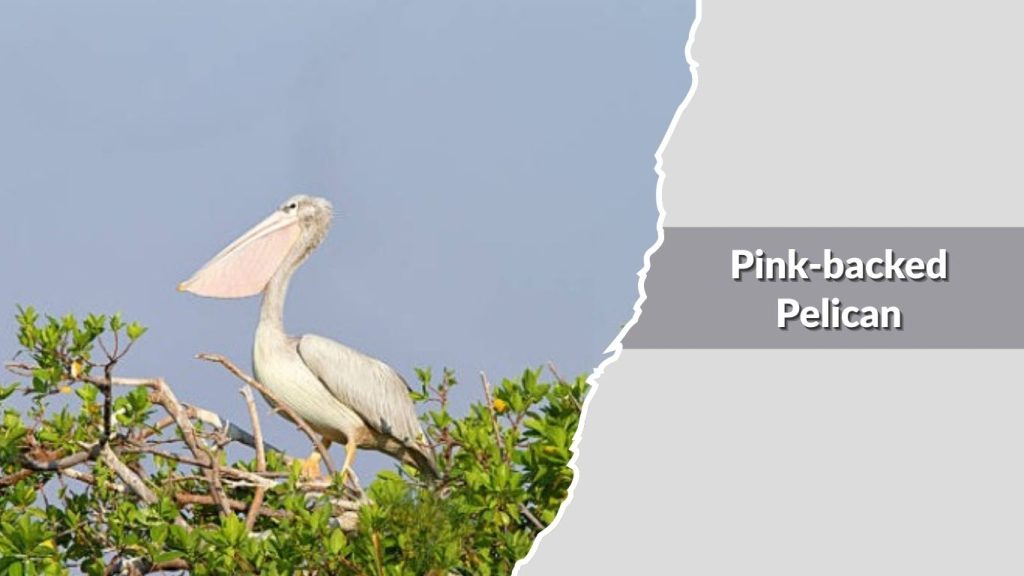
The pink-backed pelican is a medium-sized pelican species native mainly to sub-Saharan Africa and parts of southern Arabia. It is slimmer and smaller than the great white pelican, with softer grayish-white feathers and a noticeable pink wash across its back. This species often appears more delicate in flight, with long wings and a graceful profile.
Identification
- Pale grayish-white body with a light pink back
- Long, slender bill with a throat pouch
- Yellowish to horn-colored bill
- Dark flight feathers visible in flight
- More lightly built than the great white pelican
Habitat
Pink-backed pelicans inhabit freshwater lakes, slow rivers, swamps, and floodplains. They are also found in mangroves and sheltered coastal lagoons. Unlike some pelican species, they often nest in trees, especially mangroves, rather than only on the ground.
Behavior
This species is usually seen in small groups rather than massive flocks. They feed by swimming on the surface and scooping fish with their pouch. Pink-backed pelicans often roost and nest in trees, forming loose colonies. Their flight is smooth and steady, with deep, slow wingbeats.
Diet
Their diet mainly consists of small fish, but they may also eat amphibians and aquatic invertebrates. They catch prey by dipping their bills into the water while swimming and then draining excess water from the pouch.
Lifespan
Pink-backed pelicans generally live around 15 to 25 years in the wild, depending on habitat quality and food availability.
6. Spot-billed Pelican
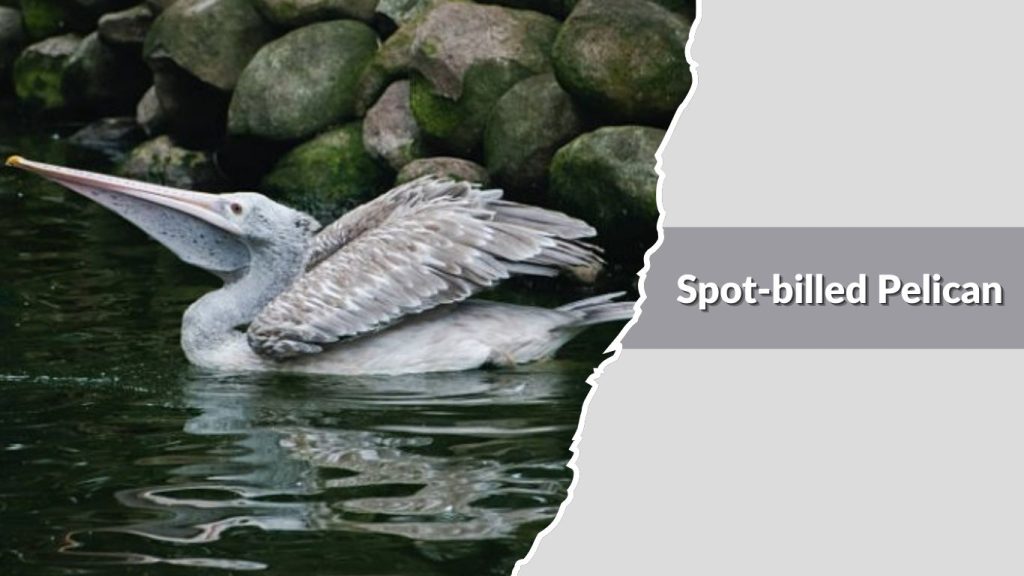
The spot-billed pelican is a distinctive Asian pelican species known for the dark spots along its upper bill and its generally grayish-white appearance. It is smaller than the great white pelican and is commonly found around inland wetlands and large lakes. This species has a gentle, social nature and is often seen resting in groups on sandbars and shallow shores.
Identification
- Grayish-white body with darker wings
- Yellow to orange bill marked with dark spots
- Large throat pouch, usually dull yellow
- Pale head with a short crest during breeding season
- Broad wings suited for soaring
Habitat
Spot-billed pelicans prefer warm freshwater environments such as lakes, reservoirs, marshes, and slow-moving rivers. They may also visit coastal lagoons and estuaries. Breeding often takes place in trees near water or on small islands within wetlands.
Behavior
This species is social and often forms small to medium-sized flocks. They usually feed by swimming and scooping fish rather than plunge-diving. Spot-billed pelicans are strong soarers and frequently glide in circles at great heights. During breeding season, they gather in colonies and become more vocal.
Diet
Their diet consists mainly of freshwater fish, including carp and other small to medium-sized species. They may also eat frogs and aquatic invertebrates. They catch prey by dipping their bills into the water and lifting their heads to swallow.
Lifespan
Spot-billed pelicans can live around 15 to 20 years in the wild. With safe nesting sites and abundant food, some individuals may live even longer.
7. Dalmatian Pelican
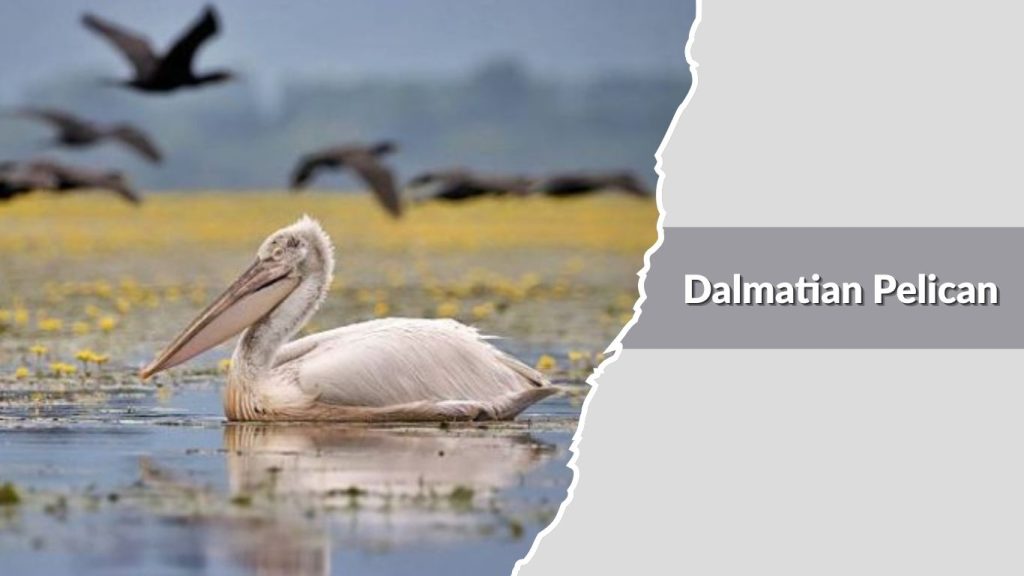
The Dalmatian pelican is one of the largest and heaviest flying birds in the world. It is easily recognized by its shaggy, curly white head feathers and massive orange bill. This impressive pelican is found across southeastern Europe and parts of Central and South Asia, where it lives around large wetlands and inland waters.
Identification
- Very large body with silvery-white plumage
- Shaggy, curly feathers on head and neck
- Massive orange bill with a huge throat pouch
- Black flight feathers visible in flight
- Thick neck and heavy overall appearance
Habitat
Dalmatian pelicans inhabit large freshwater lakes, deltas, lagoons, and slow-moving rivers. They prefer quiet wetlands with plenty of fish and isolated nesting sites such as reed beds or small islands.
Behavior
This species is social but often appears calmer and less noisy than other pelicans. Dalmatian pelicans usually feed by swimming and scooping fish, sometimes cooperating in groups. They are powerful fliers, soaring high on thermal currents. Breeding occurs in colonies, often in remote wetland areas.
Diet
Their diet mainly consists of fish such as carp, perch, and mullet. They may also eat amphibians and crustaceans. They scoop prey from the water and drain it from their pouch before swallowing.
Lifespan
Dalmatian pelicans commonly live between 15 and 25 years in the wild, with some individuals reaching even greater ages in protected habitats.
8. Australian Pelican
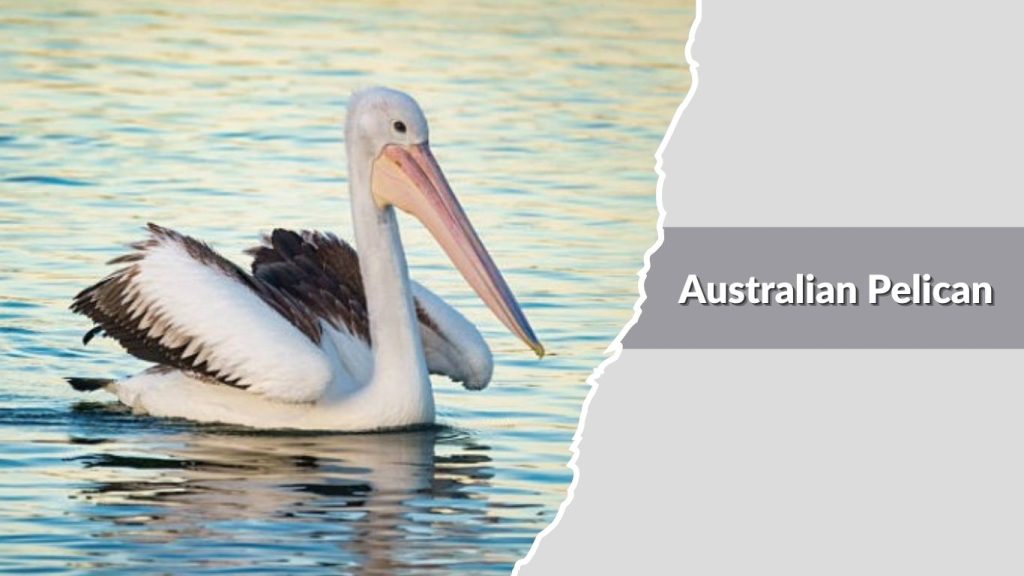
The Australian pelican is one of the most recognizable birds of Australia, famous for having the longest bill of any living bird. Its striking black-and-white body and enormous pale bill make it easy to identify. This adaptable species can live in both coastal and inland waters and is often seen soaring, swimming, or resting in large flocks.
Identification
- White body with black wings and back
- Extremely long, pale pink to yellow bill
- Very large throat pouch used for catching fish
- Long neck and broad wings
- One of the heaviest flying birds in Australia
Habitat
Australian pelicans inhabit coastal bays, estuaries, beaches, inland lakes, reservoirs, rivers, and even temporary desert waterholes. They are highly nomadic and may travel long distances to find suitable feeding and breeding sites after heavy rains.
Behavior
These pelicans are highly social and often gather in large groups. They usually feed by swimming and scooping fish, sometimes cooperating in lines or semicircles. Australian pelicans are strong soarers and frequently glide long distances. They breed in colonies on islands or remote shorelines.
Diet
Their diet mainly includes fish, but they may also eat crustaceans and amphibians. They catch prey at the surface and drain water from the pouch before swallowing.
Lifespan
Australian pelicans can live around 15 to 25 years in the wild. In safe environments with stable food sources, some individuals may live even longer.
FAQs
What is the largest species of pelican in the world?
The Dalmatian pelican is generally considered the largest pelican species by body mass and wingspan. It can weigh over 15 kilograms and has an enormous bill and throat pouch. The great white pelican is also extremely large, but the Dalmatian pelican is heavier on average.
How do pelicans catch fish with their pouch?
Pelicans use their long bills and expandable throat pouches like nets. They scoop up fish along with water, then tilt their heads forward to drain the water before swallowing the fish whole. Some species hunt alone, while others cooperate in groups to herd fish.
Do all pelicans dive into the water to hunt?
No, not all pelicans plunge-dive. Brown pelicans and Peruvian pelicans dive from the air, while species like the American white pelican and Dalmatian pelican usually stay on the water’s surface and scoop fish while swimming, often working together.
Where are pelicans commonly found?
Pelicans are found on every continent except Antarctica. They live around coastal oceans, estuaries, lakes, rivers, wetlands, and lagoons. Different species prefer different environments, ranging from marine coastlines to large inland freshwater systems.
How long do pelicans usually live?
Most pelican species live between 15 and 25 years in the wild. Lifespan depends on food availability, habitat safety, and human impact. In protected areas and zoos, some pelicans have been known to live even longer.