



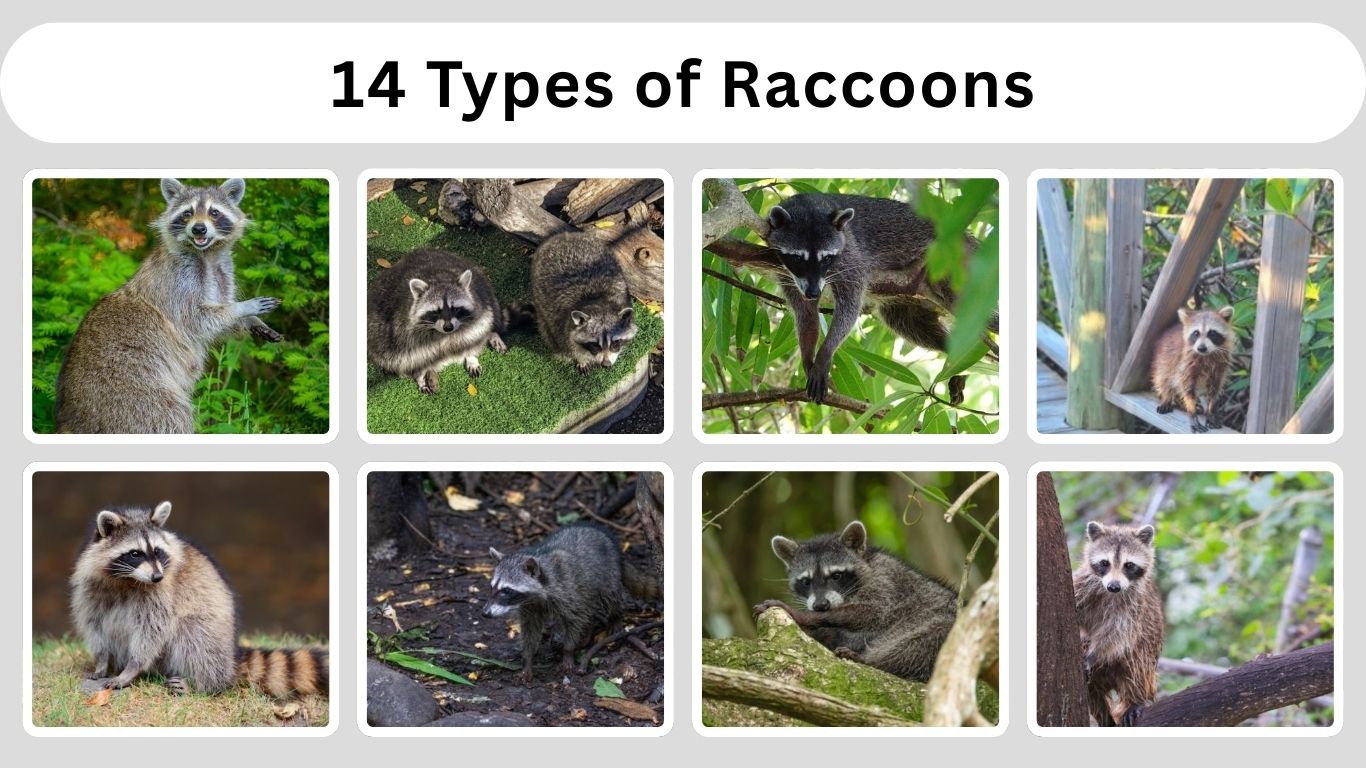
Raccoons are intelligent, adaptable mammals best known for their black facial masks, ringed tails, and remarkable problem-solving skills. While most people recognize the common raccoon, there are actually many different species and regional subspecies spread across North America, Central America, and island ecosystems. From tropical crab-eating raccoons to rare island forms found only in the Caribbean, each type has unique traits, habitats, and behaviors that set it apart from the others.
1. Common Raccoon (Procyon lotor)
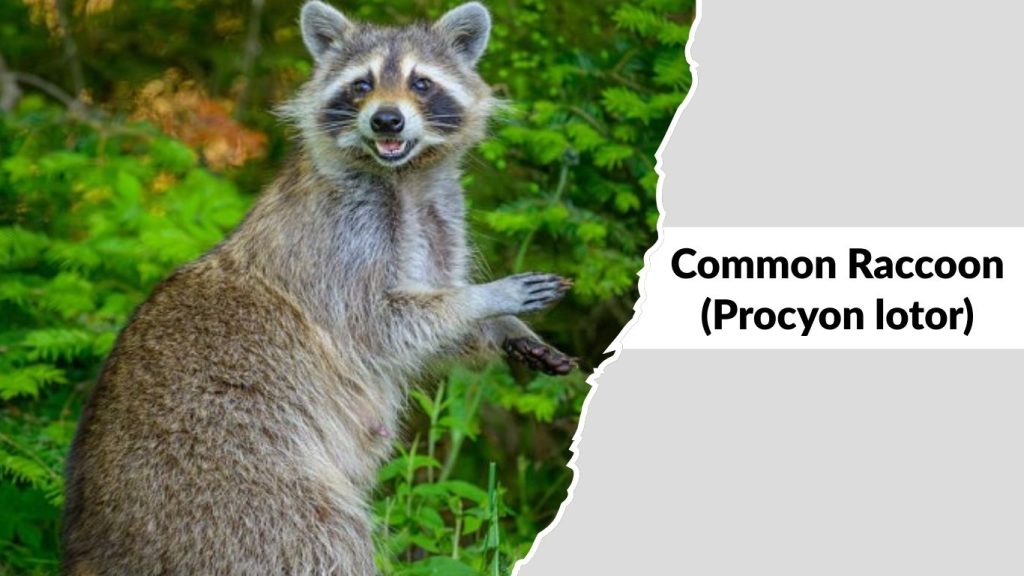
The common raccoon is the most widespread and recognizable raccoon species in the world. Native to North America, it has successfully adapted to forests, wetlands, farmlands, and even large cities. Its intelligence, dexterous front paws, and highly flexible diet allow it to survive in many environments, making it one of the most adaptable mammals on the continent.
Identification
- Medium-sized mammal with a stocky body and short legs
- Distinct black “mask” across the eyes and cheeks
- Thick grayish-brown fur with darker guard hairs
- Long, bushy tail with 5–7 dark rings
- Front paws resemble small human hands, very flexible
- Average body length: 40–70 cm (16–28 inches)
- Weight typically ranges from 4–9 kg (9–20 lb)
Habitat and Range
Common raccoons are found across most of the United States, southern Canada, and parts of Mexico. They thrive in deciduous and mixed forests, marshes, riverbanks, and coastal wetlands. Over time, they have become extremely successful urban animals, living in parks, suburbs, attics, and sewers. Access to water is an important habitat feature, as raccoons often forage along streams, lakes, and ponds.
Diet and Feeding Behavior
The common raccoon is an opportunistic omnivore. Its diet includes fruits, nuts, berries, insects, worms, frogs, fish, bird eggs, and small mammals. In urban areas, it frequently eats pet food, garbage, and garden crops. Raccoons are famous for their habit of manipulating and washing food in water, which helps them explore objects using their sensitive front paws.
Behavior and Lifestyle
Common raccoons are mostly nocturnal and are known for their high intelligence and problem-solving ability. They are excellent climbers and swimmers and often use tree hollows, rock crevices, or abandoned buildings as dens. While usually solitary, raccoons may share winter dens in cold regions. Females raise litters of two to five kits, teaching them to climb and forage before independence.
2. Cozumel Raccoon (Procyon pygmaeus)
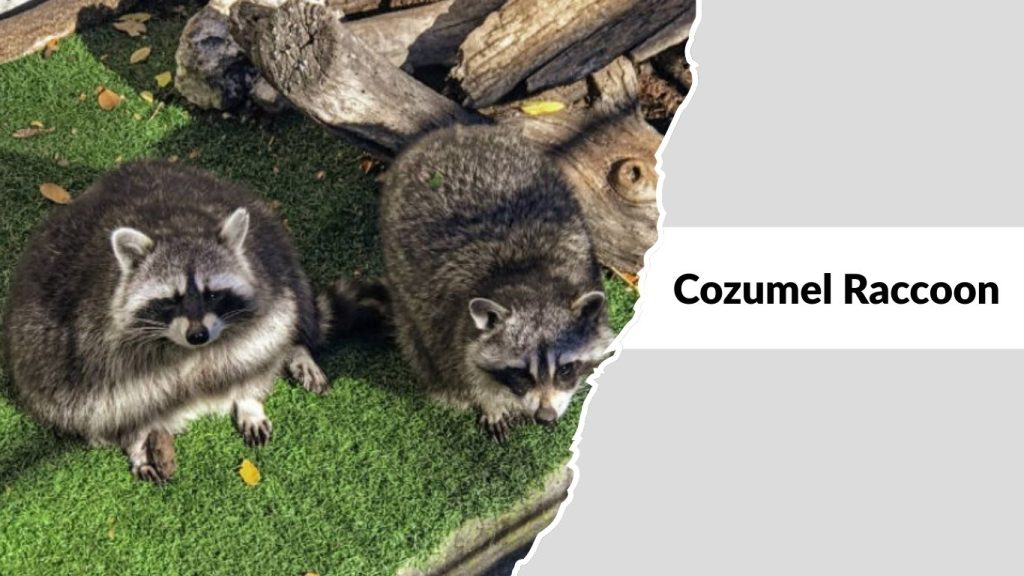
The Cozumel raccoon is a rare, dwarf raccoon found only on Cozumel Island off the coast of Mexico. It is significantly smaller than the common raccoon and is considered critically endangered. Habitat loss, road accidents, and disease have greatly reduced its population, making it one of the most threatened raccoon species in the world.
Identification
- Much smaller than the common raccoon
- Shorter body and tail with faint ring patterns
- Pale gray to light brown fur
- Distinct but lighter facial “mask”
- Slender snout and delicate build
- Body length usually under 60 cm (24 inches)
- Average weight around 3–4 kg (6–9 lb)
Habitat and Range
Cozumel raccoons live only on Cozumel Island in the Caribbean Sea. They mainly inhabit mangrove forests, coastal wetlands, and lowland tropical forests. They depend heavily on shoreline ecosystems, where food is abundant and fresh water is available. Their extremely limited range makes them very vulnerable to environmental changes.
Diet and Feeding Behavior
This species feeds on crabs, insects, fruits, frogs, and small reptiles. It often forages along beaches and mangroves, using its sensitive paws to feel for prey under leaves and in shallow water. Seasonal fruits and marine animals play an important role in its diet.
Behavior and Lifestyle
Cozumel raccoons are nocturnal and mostly solitary. They spend nights searching coastal areas and forests for food and rest during the day in hollow trees or dense vegetation. Breeding usually occurs once a year, with females raising small litters in hidden dens.
3. Crab-Eating Raccoon (Procyon cancrivorus)
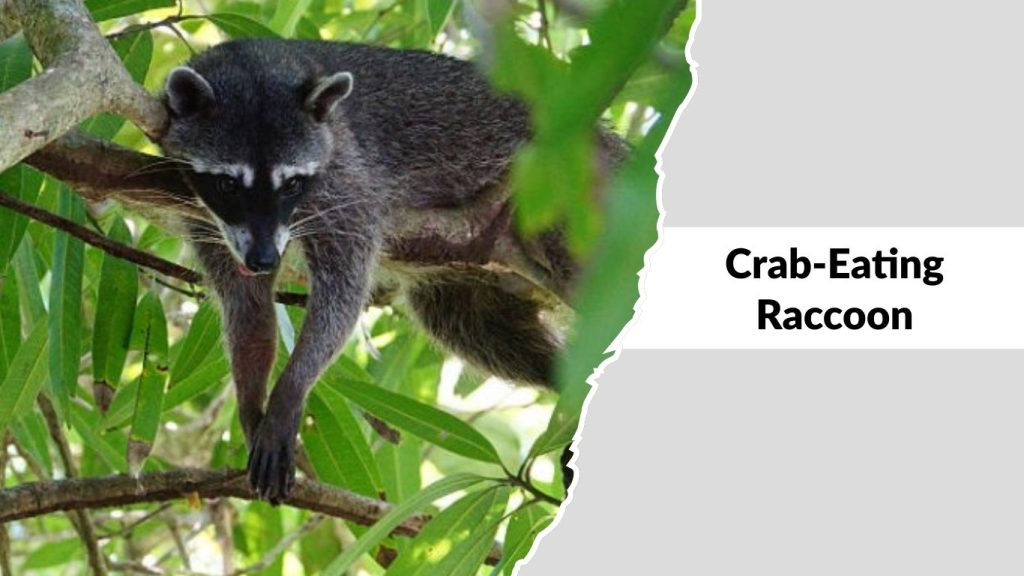
The crab-eating raccoon is a South and Central American raccoon species well adapted to wetlands and river systems. It is named for its strong preference for crabs and other aquatic animals. Compared to the common raccoon, it has shorter fur and a more streamlined body suited for humid, tropical climates.
Identification
- Slimmer body with shorter, coarser fur
- Dark facial mask, often narrower than in common raccoons
- Gray-brown to olive-brown coat
- Long tail with faint dark rings
- Longer snout and slightly webbed feet
- Body length around 54–65 cm (21–26 inches)
- Weight usually between 3–7 kg (6–15 lb)
Habitat and Range
Crab-eating raccoons are found from Costa Rica through much of South America, including Brazil, Paraguay, Uruguay, and northern Argentina. They prefer mangroves, swamps, rainforests, and riverbanks. Water-rich environments are essential, as much of their food comes from aquatic habitats.
Diet and Feeding Behavior
As the name suggests, crabs make up a large part of their diet, along with crayfish, frogs, fish, insects, and mollusks. They also eat fruits and seeds when available. They skillfully use their front paws to locate and capture prey in mud and shallow water.
Behavior and Lifestyle
This raccoon is mainly nocturnal and is an excellent swimmer. It often hunts along river edges at night and rests in trees or dense vegetation during the day. Crab-eating raccoons are usually solitary, except during mating season or when females are raising young.
4. Tres Marías Raccoon (Procyon insularis)
The Tres Marías raccoon is an island raccoon found only on the Tres Marías Islands off the west coast of Mexico. It is closely related to the common raccoon but is slightly smaller and darker. Because of its restricted island range, it is sensitive to habitat changes and human disturbance.
Identification
- Medium-sized raccoon, slightly smaller than common raccoon
- Darker gray-brown coat
- Well-defined black facial mask
- Thick fur and bushy, ringed tail
- Stocky body with short legs
- Body length about 45–65 cm (18–26 inches)
- Strong, curved claws for climbing
Habitat and Range
This raccoon lives only on the Tres Marías Islands. It inhabits tropical dry forests, coastal scrub, and mangrove edges. Freshwater sources, forest cover, and undisturbed areas are important for its survival. Island isolation has led to small population sizes.
Diet and Feeding Behavior
Tres Marías raccoons eat fruits, seeds, insects, crabs, bird eggs, and small vertebrates. They often forage along shorelines and forest floors, using their paws to explore under rocks, logs, and leaf litter.
Behavior and Lifestyle
They are mostly nocturnal and spend nights searching for food. During the day, they rest in tree hollows, rocky crevices, or dense vegetation. They are generally solitary, except during mating season or when females care for young.
5. Bahamian Raccoon (Procyon maynardi)

The Bahamian raccoon is native to the islands of the Bahamas and is considered a distinct island form of raccoon. It is smaller than mainland raccoons and shows adaptations to tropical island life, including lighter coloration and a strong association with coastal habitats.
Identification
- Smaller body size than common raccoon
- Lighter gray to sandy-brown fur
- Distinct but narrower facial mask
- Long, ringed tail
- Slimmer body and shorter fur
- Rounded ears with pale edges
- Weight usually under 6 kg (13 lb)
Habitat and Range
Bahamian raccoons are found only on islands of the Bahamas, especially in pine forests, coastal scrub, and mangrove systems. They often live close to shorelines, where food sources are abundant and varied.
Diet and Feeding Behavior
Their diet includes crabs, insects, fruits, seeds, bird eggs, and small reptiles. Coastal foraging is common, and they frequently search beaches and mangroves for shellfish and other marine life.
Behavior and Lifestyle
These raccoons are mainly nocturnal and solitary. They are agile climbers and swimmers, often moving between forested areas and coastal zones. Females raise their young in tree cavities or dense vegetation, protecting them from predators and heat.
6. Florida Keys Raccoon (Procyon lotor auspicatus)
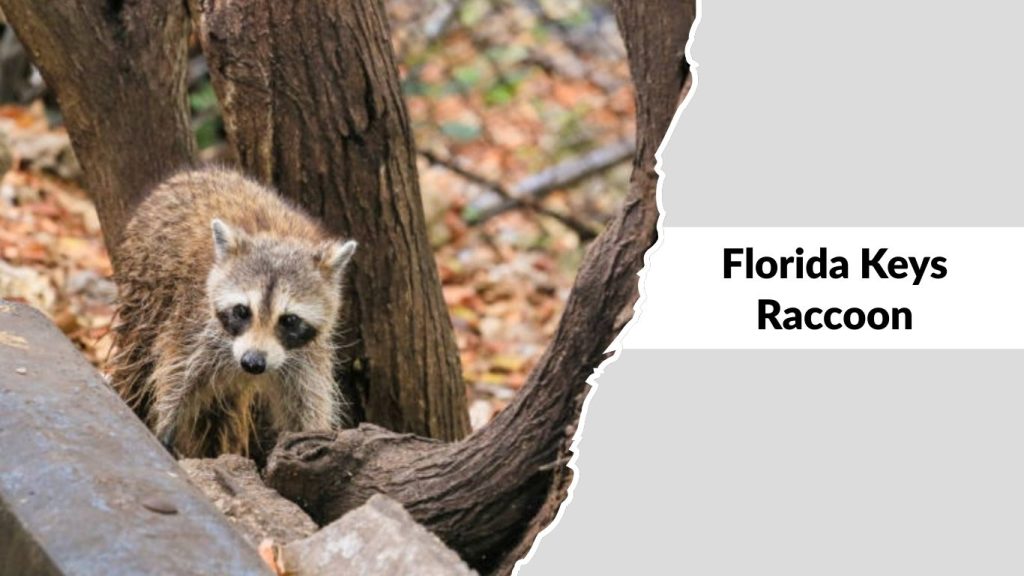
The Florida Keys raccoon is a smaller, paler subspecies of the common raccoon adapted to the warm, coastal environment of the Florida Keys. It shows strong ties to mangroves and shoreline habitats, where marine food sources play an important role in its survival.
Identification
- Smaller and lighter than mainland raccoons
- Pale gray to yellowish-brown fur
- Clear black facial mask
- Slim body with relatively long tail
- Bushy tail with distinct dark rings
- Short, dense coat adapted to warm climates
- Average weight around 3–5 kg (6–11 lb)
Habitat and Range
This raccoon is found only in the Florida Keys. It mainly inhabits mangrove forests, coastal hammocks, and shoreline thickets. Access to saltwater and freshwater areas is essential, as much of its food comes from tidal zones and wetlands.
Diet and Feeding Behavior
Florida Keys raccoons eat crabs, snails, fish, insects, fruits, and bird eggs. They often forage at low tide, using their sensitive paws to search mudflats, mangroves, and shallow pools.
Behavior and Lifestyle
They are nocturnal and excellent swimmers. These raccoons spend much of their time near water and frequently travel between islands. They usually live alone, except during breeding season or when females are raising kits.
7. Chesapeake Bay Raccoon (Procyon lotor marinus)
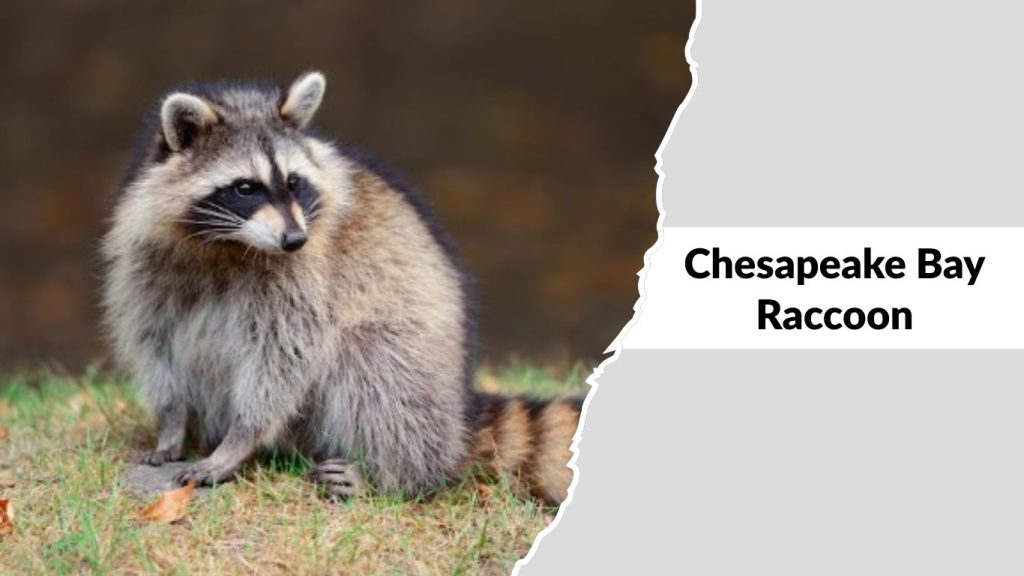
The Chesapeake Bay raccoon is a coastal subspecies of the common raccoon known for its large size and strong association with wetlands. It inhabits marshes and estuaries around the Chesapeake Bay, where seafood forms a major part of its diet.
Identification
- Larger and heavier than many raccoon subspecies
- Thick gray-brown fur
- Broad black facial mask
- Long, bushy tail with bold dark rings
- Stocky build and strong limbs
- Broad head with short, rounded ears
- Adapted feet for swimming and digging
Habitat and Range
This raccoon is found around the Chesapeake Bay region of the eastern United States. It lives mainly in salt marshes, tidal wetlands, forested swamps, and coastal woodlands. These environments provide abundant aquatic prey and shelter.
Diet and Feeding Behavior
Chesapeake Bay raccoons feed heavily on crabs, clams, fish, frogs, insects, and aquatic plants. They also eat fruits and nuts from nearby forests. Foraging often occurs along shorelines and mudflats, especially at night.
Behavior and Lifestyle
They are primarily nocturnal and are strong swimmers. These raccoons are skilled at opening shells and manipulating food. They usually live solitary lives but may gather where food is plentiful, particularly in rich wetland areas.
8. Eastern Raccoon (Procyon lotor lotor)
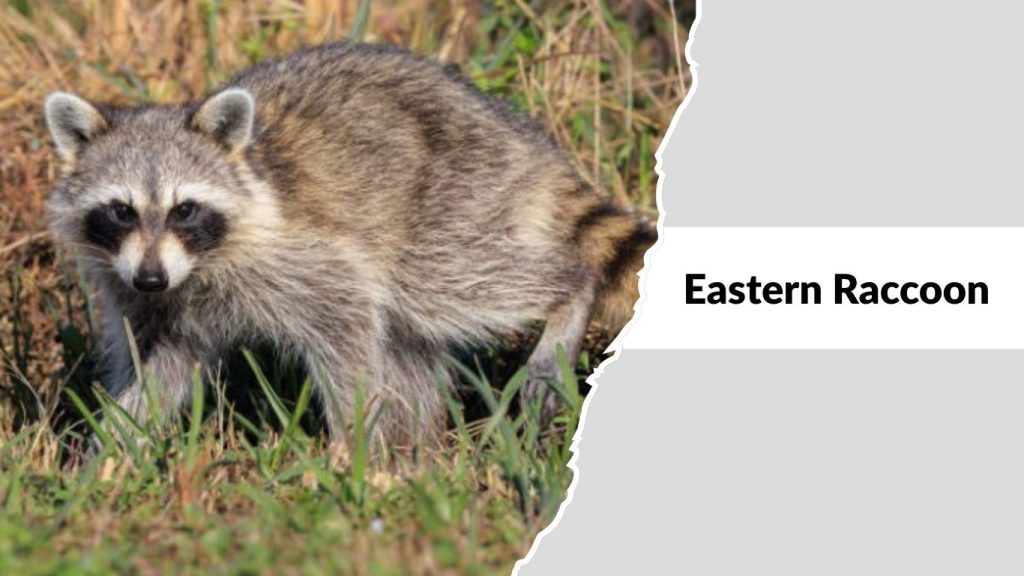
The eastern raccoon is the nominate subspecies of the common raccoon and one of the most widespread forms in eastern North America. It is highly adaptable and thrives in forests, farmland, wetlands, and large cities, often living very close to human settlements.
Identification
- Medium to large-sized raccoon
- Thick gray-brown fur with darker shading on the back
- Bold black facial mask bordered by white
- Bushy tail with 5–7 dark rings
- Rounded ears with pale edges
- Stocky body and short, strong legs
- Highly flexible, hand-like front paws
Habitat and Range
Eastern raccoons are found throughout the eastern United States and southeastern Canada. They inhabit deciduous forests, river valleys, swamps, and urban neighborhoods. They commonly den in hollow trees, barns, attics, and abandoned structures.
Diet and Feeding Behavior
They are omnivorous and eat fruits, nuts, corn, insects, frogs, fish, bird eggs, and small mammals. In towns and cities, they often scavenge from garbage bins and pet food dishes, making them one of the most familiar urban wildlife species.
Behavior and Lifestyle
Eastern raccoons are nocturnal, intelligent, and excellent climbers. They are usually solitary but may share winter dens in colder regions. Females raise their young alone, teaching them survival skills before they disperse.
9. Mexican Raccoon (Procyon lotor fuscipes)
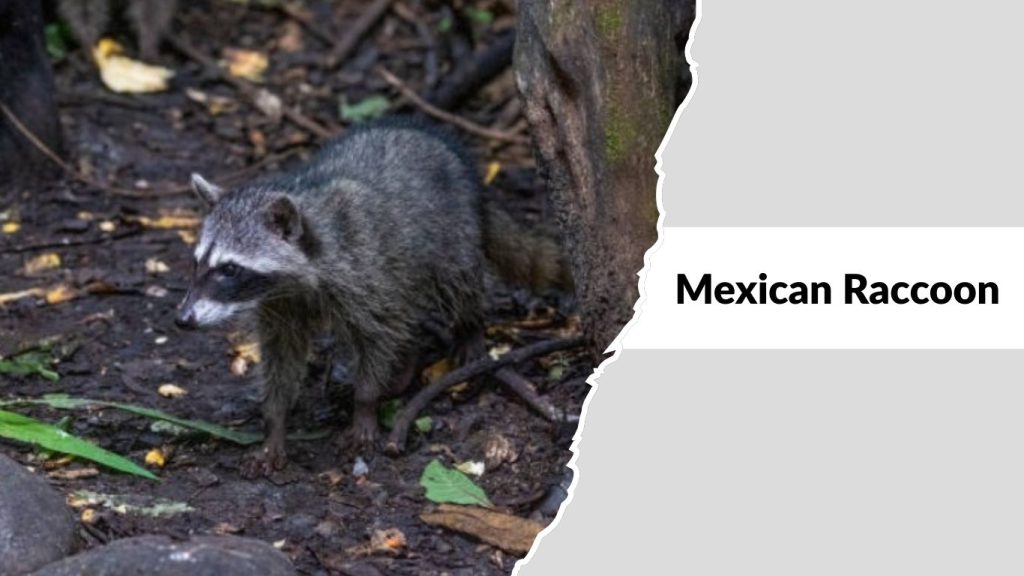
The Mexican raccoon is a southern subspecies of the common raccoon found mainly in Mexico and parts of the southwestern United States. It is generally smaller and darker than northern raccoons and is well adapted to warm climates.
Identification
- Slightly smaller and slimmer than northern raccoons
- Darker brown to gray-brown fur
- Narrow but distinct black facial mask
- Long, ringed tail with softer contrast
- More elongated body shape
- Shorter, less dense coat
- Agile build suited for climbing
Habitat and Range
Mexican raccoons occur across much of Mexico and into southern Texas and Arizona. They live in tropical forests, river corridors, mangroves, and agricultural areas. Water sources remain an important part of their habitat.
Diet and Feeding Behavior
Their diet includes fruits, insects, small reptiles, frogs, crustaceans, bird eggs, and human food waste near settlements. Seasonal fruits and agricultural crops are often important food sources.
Behavior and Lifestyle
Mexican raccoons are mostly nocturnal and solitary. They are good climbers and swimmers and often forage along rivers and coastal areas. Breeding usually occurs once a year, with females raising litters in tree hollows or dense cover.
10. Upper Mississippi Valley Raccoon (Procyon lotor hirtus)

The Upper Mississippi Valley raccoon is one of the largest raccoon subspecies in North America. It is well adapted to colder climates and is commonly found in northern forests and river systems, where it builds up fat reserves to survive harsh winters.
Identification
- Large, heavy-bodied raccoon
- Thick, long fur for cold weather
- Gray to dark brown coat
- Broad black facial mask
- Very bushy tail with bold dark rings
- Stocky body and powerful limbs
- Dense underfur for insulation
Habitat and Range
This raccoon occurs across the Upper Midwest of the United States, including areas around the Mississippi River basin. It inhabits hardwood forests, wetlands, farmland edges, and river corridors. Hollow trees and rock crevices are common den sites.
Diet and Feeding Behavior
Its diet includes acorns, corn, fruits, insects, frogs, fish, and small mammals. During late summer and fall, it feeds heavily to build fat for winter. In cold regions, it may remain inactive in dens for long periods.
Behavior and Lifestyle
Upper Mississippi Valley raccoons are mainly nocturnal and solitary. They are excellent climbers and swimmers. In winter, they may den communally for warmth, though they do not truly hibernate.
11. Costa Rican Raccoon (Procyon lotor pumilus)
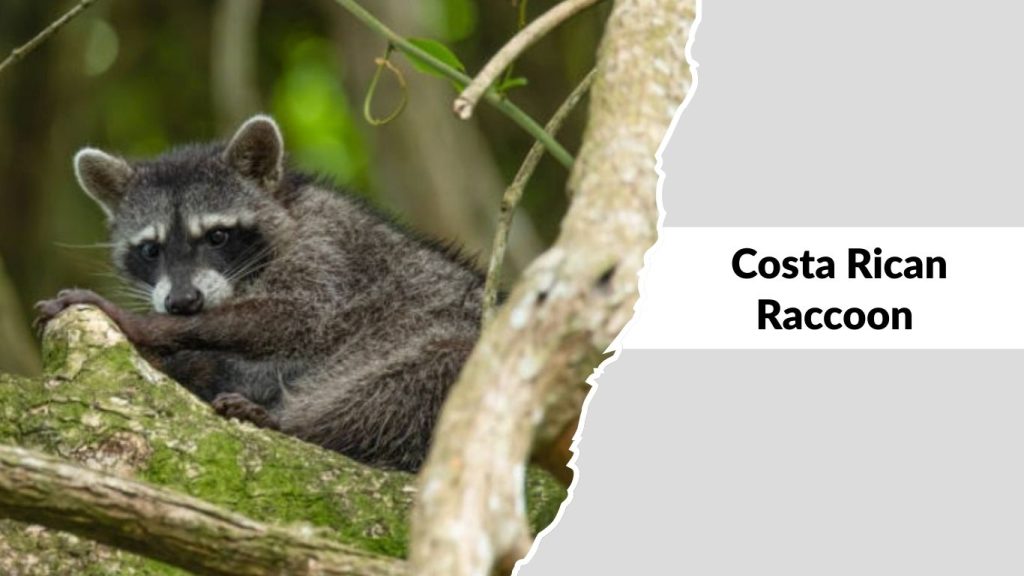
The Costa Rican raccoon is a smaller southern subspecies of the common raccoon found in parts of Central America. It shows adaptations to tropical environments and is often associated with rivers, wetlands, and forest edges.
Identification
- Smaller and lighter than northern raccoons
- Shorter, sleeker fur
- Pale gray to brown coat
- Narrow facial mask
- Long, slim tail with faint rings
- Slender build
- Pointed snout compared to northern forms
Habitat and Range
This raccoon is found mainly in Costa Rica and neighboring regions. It inhabits tropical rainforests, mangroves, riverbanks, and agricultural landscapes. Access to water and dense cover is essential.
Diet and Feeding Behavior
Costa Rican raccoons eat fruits, insects, crabs, frogs, fish, bird eggs, and small vertebrates. They often forage along streams and coastal zones, using their paws to search mud and leaf litter.
Behavior and Lifestyle
They are nocturnal and solitary, resting during the day in trees or dense vegetation. These raccoons are agile climbers and capable swimmers, moving easily between forest and wetland habitats.
12. Tres Marías Island Raccoon (Procyon insularis)
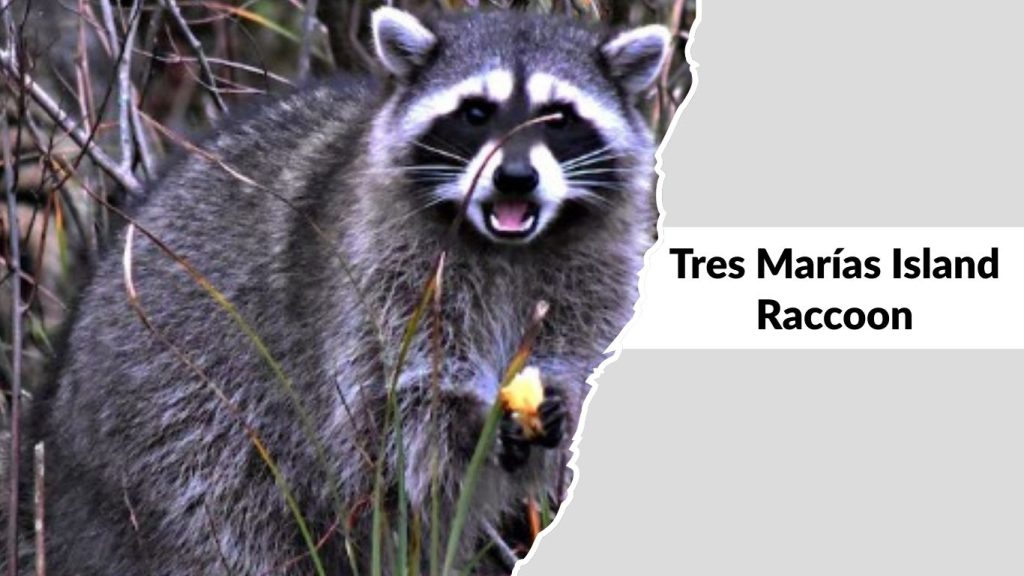
The Tres Marías Island raccoon is an insular raccoon native only to the Tres Marías archipelago off Mexico’s Pacific coast. Isolated from mainland populations, it has developed slight differences in size and coloration. Its limited range makes it especially sensitive to habitat loss and human activity.
Identification
- Medium-sized raccoon with compact build
- Dark gray to brown fur
- Well-defined black facial mask
- Bushy tail with dark rings
- Short, dense coat
- Strong claws for climbing
- Rounded ears with pale edges
Habitat and Range
This raccoon occurs exclusively on the Tres Marías Islands. It inhabits tropical forests, coastal thickets, and mangrove margins. Freshwater availability and undisturbed forest areas are critical to its survival.
Diet and Feeding Behavior
Its diet includes fruits, seeds, insects, crabs, bird eggs, and small vertebrates. Coastal foraging is common, and it often searches among rocks, driftwood, and leaf litter for food.
Behavior and Lifestyle
Tres Marías Island raccoons are nocturnal and usually solitary. They rest in hollow trees or dense vegetation during the day and forage at night. Breeding occurs seasonally, with females raising their young alone.
13. San Martín Raccoon (Procyon lotor hernandezii)
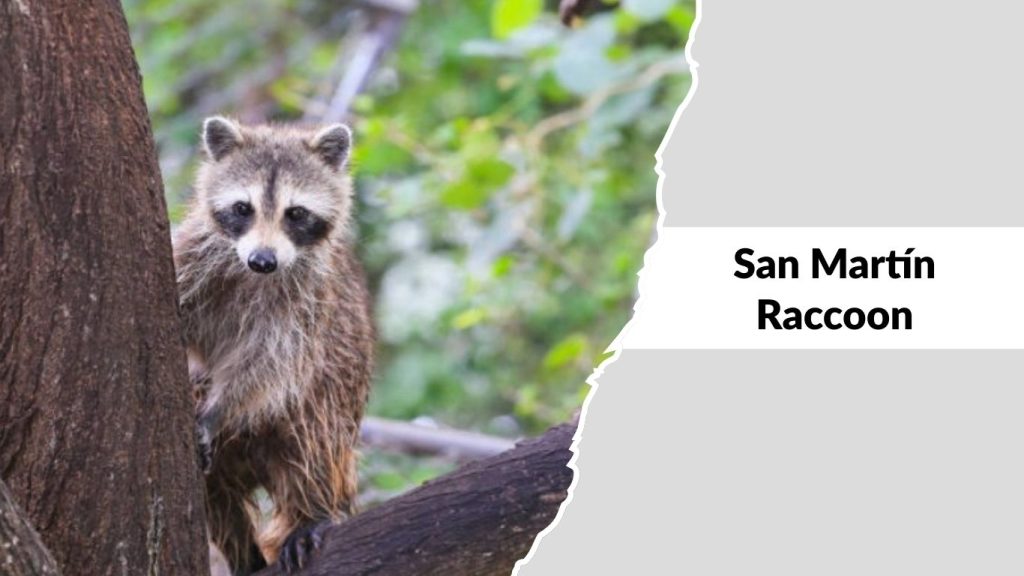
The San Martín raccoon is a localized subspecies of the common raccoon found in parts of Mexico. It is adapted to warm, forested environments and shows subtle differences in coat color and body size compared to northern raccoons.
Identification
- Medium-sized raccoon
- Gray-brown fur with darker back shading
- Distinct black facial mask
- Ringed, bushy tail
- Slimmer body than northern subspecies
- Shorter fur adapted to warm climates
- Pointed snout and alert ears
Habitat and Range
This raccoon is found mainly in central and southern Mexico. It lives in tropical forests, wooded lowlands, and river valleys. It often stays near water sources and dense cover.
Diet and Feeding Behavior
San Martín raccoons eat fruits, insects, small vertebrates, frogs, and bird eggs. They may also feed on crops and human food waste near settlements.
Behavior and Lifestyle
They are mostly nocturnal and solitary. These raccoons are agile climbers and frequently forage both on the ground and in trees. Females raise young in tree cavities or thick vegetation.
14. Florida Keys Raccoon (Procyon lotor auspicatus)
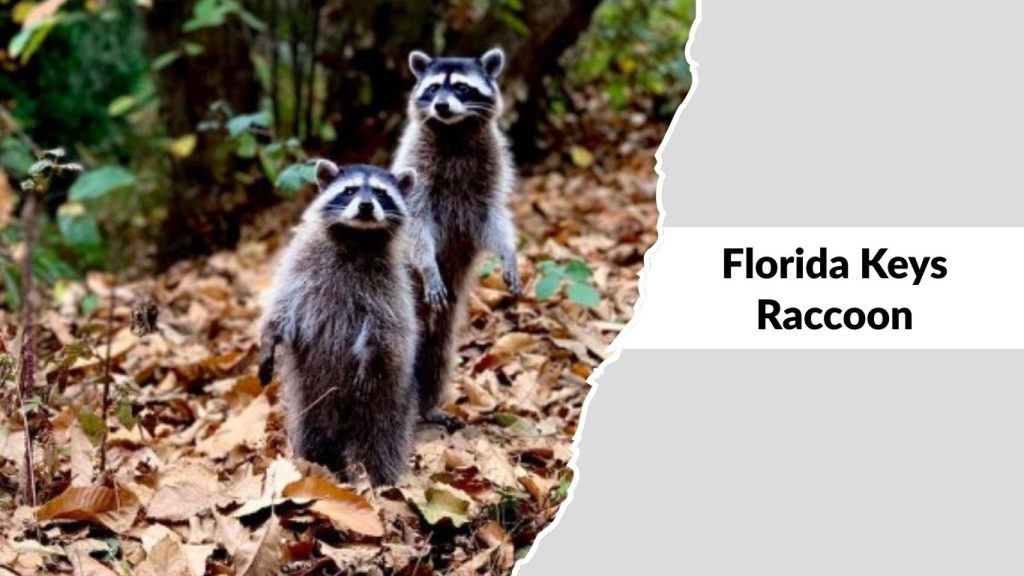
The Florida Keys raccoon is a small, pale subspecies of the common raccoon native to the island chain of southern Florida. Long isolation and a coastal lifestyle have shaped its appearance and behavior, making it well adapted to mangroves, shorelines, and warm, humid conditions.
Identification
- Smaller body size than most mainland raccoons
- Pale gray to yellowish-brown fur
- Clear black facial mask with white edging
- Bushy tail with distinct dark rings
- Slim build suited for coastal habitats
- Short, dense coat
- Agile front paws for catching aquatic prey
Habitat and Range
This raccoon is found only in the Florida Keys. It mainly inhabits mangrove forests, coastal hammocks, and shoreline vegetation. Freshwater pockets and tidal zones are important features of its environment.
Diet and Feeding Behavior
Florida Keys raccoons feed on crabs, snails, fish, insects, fruits, and bird eggs. They frequently forage along beaches and in mangroves, especially at low tide, using their sensitive paws to locate food.
Behavior and Lifestyle
They are nocturnal and excellent swimmers. These raccoons often move between small islands and coastal forests. They are usually solitary, except during breeding season or when females are caring for young.