
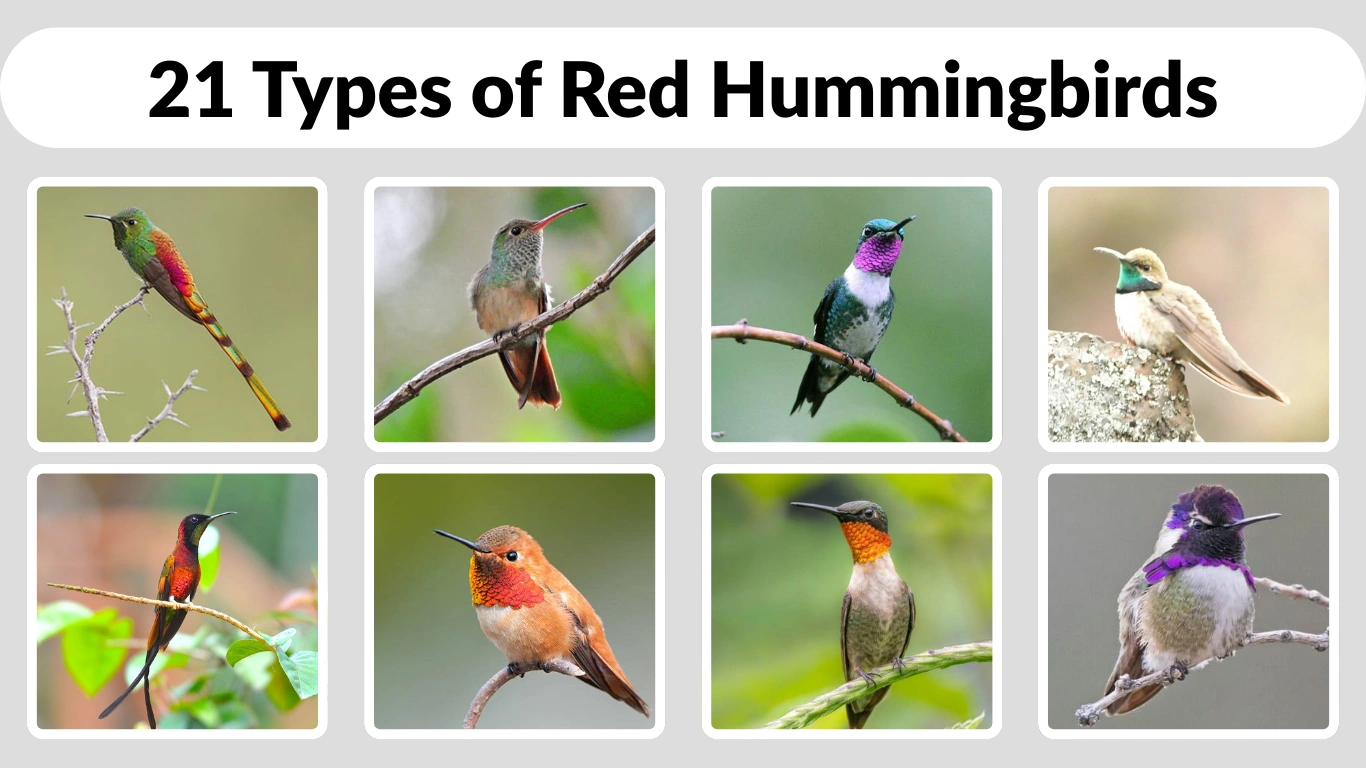
Red hummingbirds are among the most eye-catching birds in the world, admired for their fiery throats, crowns, and tails that shimmer brilliantly in sunlight. From tiny forest dwellers to high-altitude mountain specialists, these hummingbirds display stunning variations of red, ruby, garnet, and crimson tones. This collection highlights 21 types of red hummingbirds, focusing on species where red coloration plays a key role in identification, especially in males. Each profile explores their unique traits, habitats, diets, and color patterns in a clear, structured way.
1. Ruby-throated Hummingbird
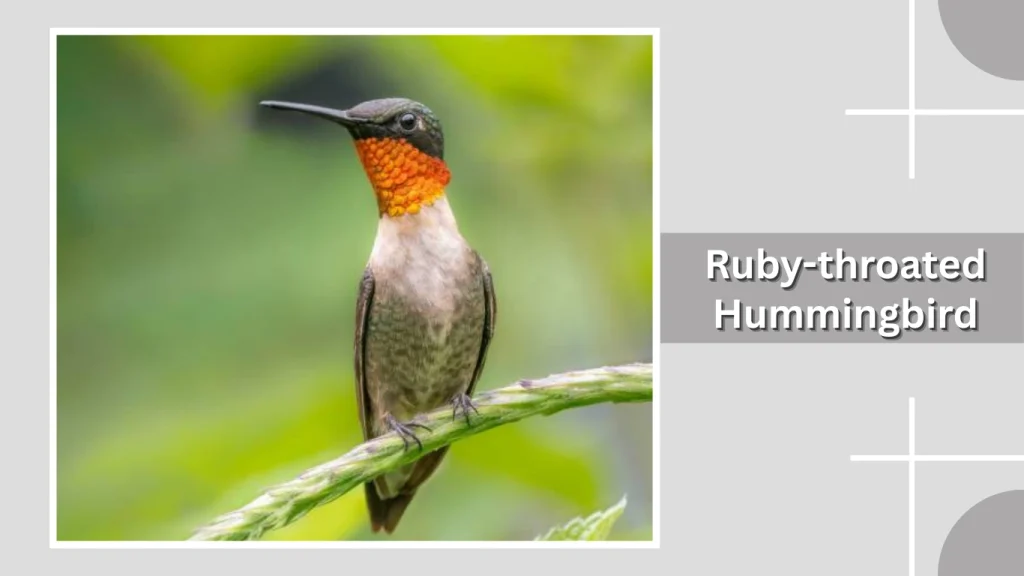
The Ruby-throated Hummingbird is one of the most recognizable hummingbirds in North America, famous for the male’s shimmering red throat. It is small, fast, and highly agile, often seen hovering around flowers or backyard feeders during the warmer months.
Identification
- Small hummingbird with a slender bill
- Adult male has a bright ruby-red throat (gorget)
- Female lacks red throat, has a plain white throat
- Green upperparts with a whitish to gray underside
Habitat
Ruby-throated Hummingbirds live in open woodlands, forest edges, meadows, gardens, and suburban areas. They breed across eastern North America and migrate to Central America for winter.
Diet
Their diet mainly consists of nectar from flowers, which provides energy. They also eat small insects and spiders, supplying essential protein and nutrients.
Color Pattern
The upper body is metallic green, while the underparts are pale gray to white. Males display a vivid red throat that can appear dark or black in low light, whereas females show softer, more muted coloring overall.
2. Rufous Hummingbird
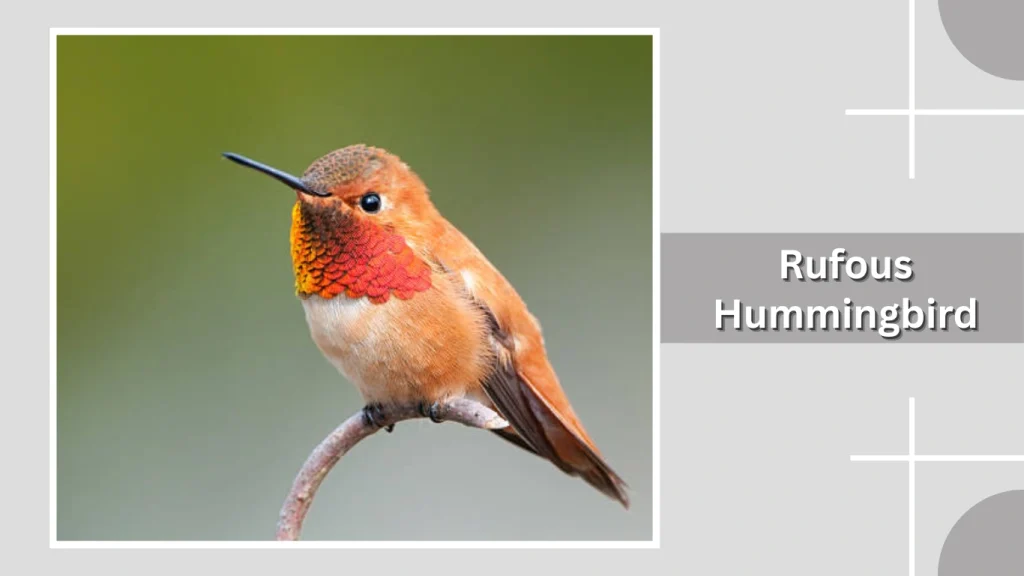
The Rufous Hummingbird is well known for its fiery coloration and long-distance migration. Despite its small size, it is highly territorial and aggressive, often chasing away larger birds from feeding areas.
Identification
- Small hummingbird with a straight, slender bill
- Adult male has a bright orange-red throat and body
- Female has green upperparts with rufous sides and tail
- White breast with variable reddish spotting
Habitat
Rufous Hummingbirds breed in open forests, forest edges, and mountain meadows of the Pacific Northwest and western Canada. During migration, they are commonly seen in gardens and coastal areas.
Diet
They primarily feed on nectar from tubular flowers and feeders. Insects and spiders are also an important part of their diet, especially during breeding season.
Color Pattern
Males are vivid rufous-orange across the back, flanks, and tail, with a bright red-orange throat. Females show a mix of green, white, and rufous, giving them a more mottled appearance.
3. Allen’s Hummingbird
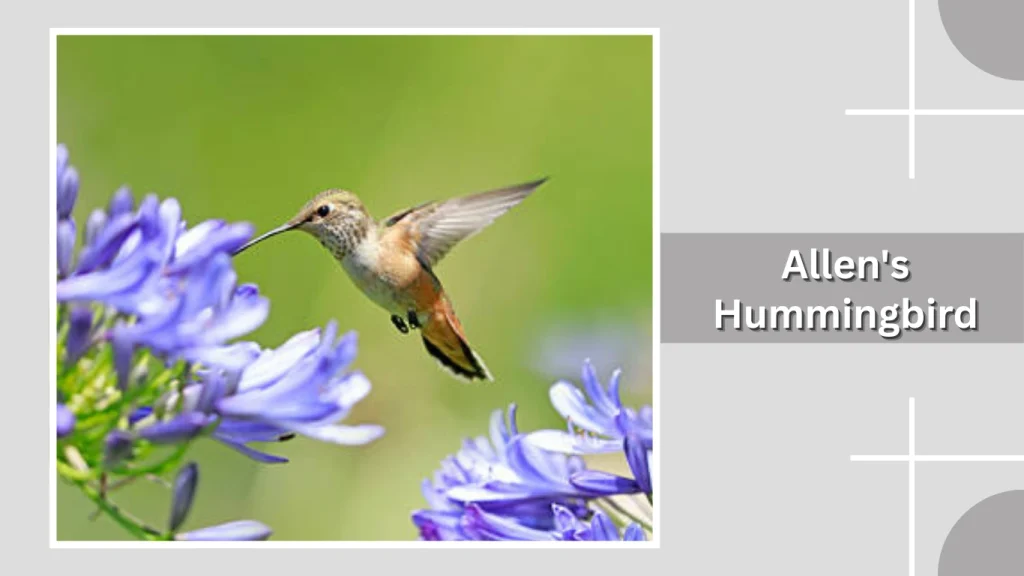
Allen’s Hummingbird closely resembles the Rufous Hummingbird but is more restricted in range. It is fast, energetic, and commonly seen hovering low over flowering shrubs.
Identification
- Small hummingbird with a straight, narrow bill
- Adult male has a red-orange throat
- Green back with rufous flanks and tail
- Females have pale underparts with light spotting on the throat
Habitat
Allen’s Hummingbird is found mainly along the coastal regions of California and southern Oregon. It prefers scrublands, gardens, eucalyptus groves, and forest edges.
Diet
Its diet consists mainly of flower nectar and sugar-rich feeders. Small insects and spiders are regularly consumed to meet protein needs.
Color Pattern
The back is green, contrasting with rufous sides and tail. The male’s throat shines red-orange in sunlight, while females show softer green, white, and light rufous tones.
4. Broad-tailed Hummingbird
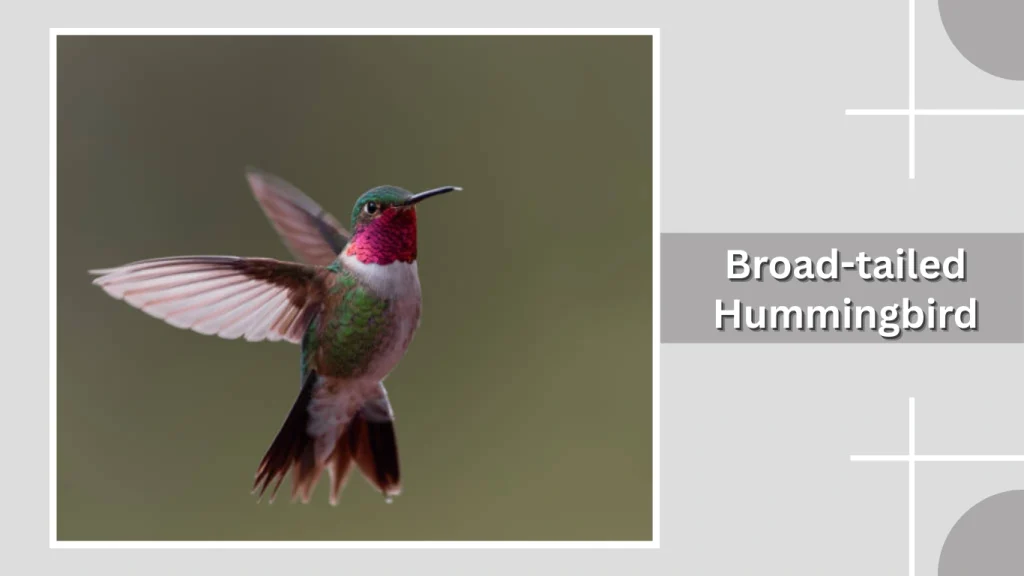
The Broad-tailed Hummingbird is a high-elevation species known for the distinctive trilling sound males make with their wings during flight. It is commonly seen in mountainous regions of the western United States.
Identification
- Medium-sized hummingbird with a straight bill
- Adult male has a rose-red throat
- Female has a pale throat with small dark spots
- Green upperparts with buffy to white underparts
Habitat
Broad-tailed Hummingbirds inhabit mountain meadows, open woodlands, and forest edges, especially in areas with abundant wildflowers. They are often found at higher elevations during the breeding season.
Diet
They feed mainly on nectar from flowering plants such as columbine and paintbrush. Small insects and spiders are also eaten for protein.
Color Pattern
The back and crown are metallic green. Males show a bright rose-red throat, while females are more muted, with soft green and cream tones.
5. Calliope Hummingbird
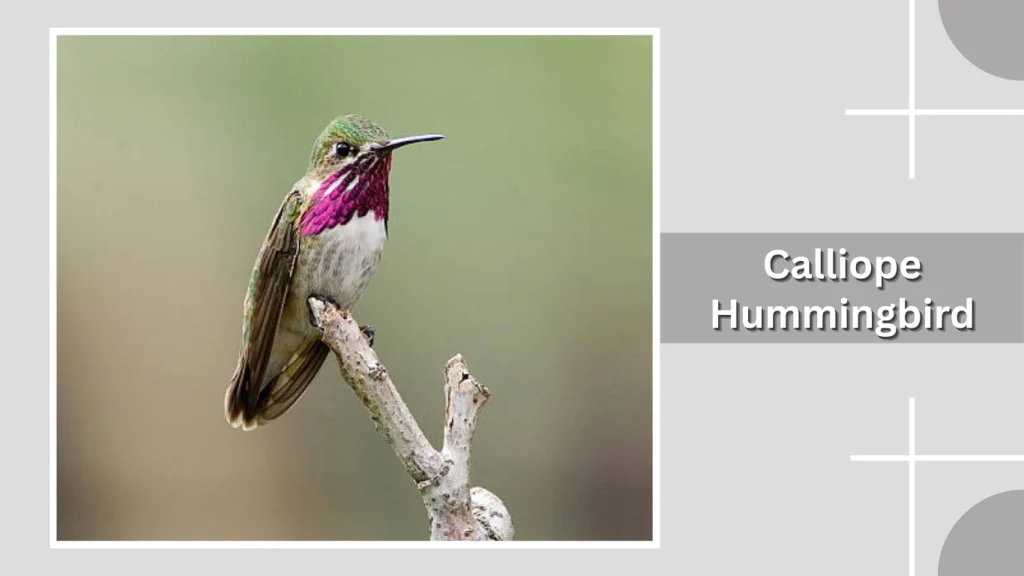
The Calliope Hummingbird is the smallest breeding bird in North America. Despite its tiny size, it is hardy and well adapted to cooler mountain climates.
Identification
- Very small hummingbird with a short bill
- Adult male has a streaked magenta throat
- Female has a plain white throat
- Compact body with short wings
Habitat
Calliope Hummingbirds breed in mountain forests, open slopes, and alpine meadows. During migration, they may appear in gardens, deserts, and lowland shrub areas.
Diet
Their diet consists primarily of nectar from small flowers. They also catch tiny insects and spiders while hovering or hawking in midair.
Color Pattern
The upperparts are metallic green, while the underparts are white to pale gray. Males have narrow magenta streaks on the throat, giving a striped appearance, while females lack bright throat coloring.
6. Costa’s Hummingbird
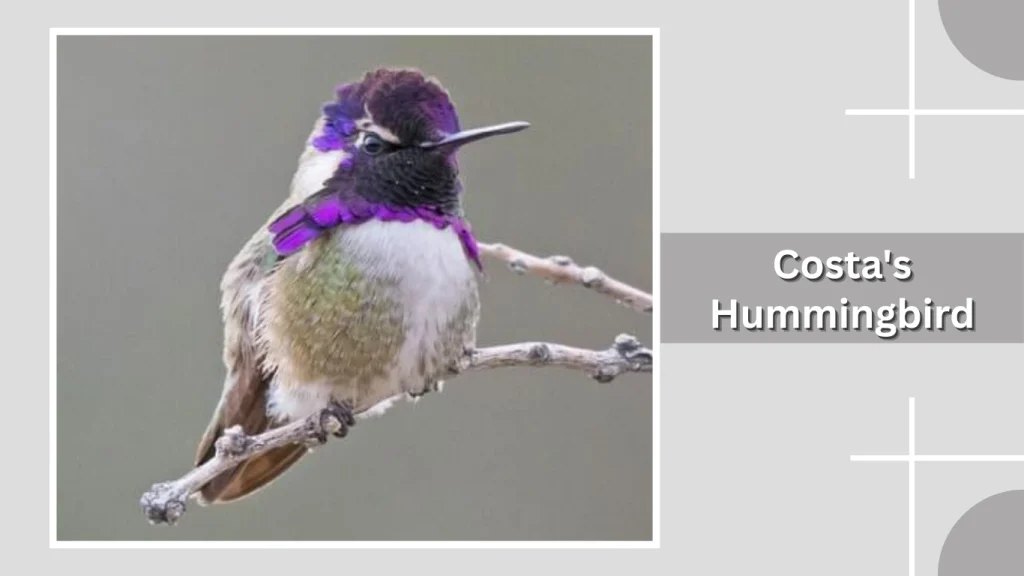
Costa’s Hummingbird is a desert-adapted species recognized for the male’s dramatic purple crown and flared throat feathers. It is small but bold, often perching conspicuously on exposed branches.
Identification
- Small hummingbird with a short, straight bill
- Adult male has a deep purple crown and elongated throat feathers
- Female has a pale throat without bright coloration
- Compact body with relatively short tail
Habitat
This species prefers arid and semi-arid environments such as desert scrub, cactus gardens, and dry washes. It is commonly found in the southwestern United States and northwestern Mexico.
Diet
Costa’s Hummingbirds feed mainly on nectar from desert flowers and flowering shrubs. They also consume small insects and spiders, especially during breeding season.
Color Pattern
The back is metallic green, contrasting with pale underparts. Males display striking violet-purple on the crown and throat, while females are mostly green and white with subtle markings.
7. Lucifer Hummingbird
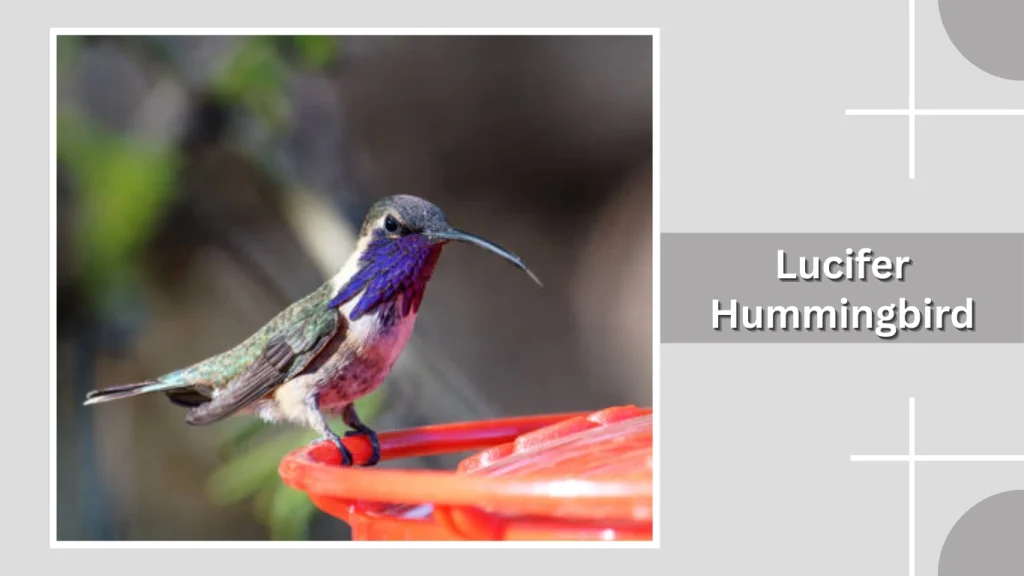
The Lucifer Hummingbird is a slender, elegant species named for the male’s long, curved bill and vivid throat. It is less commonly seen and has a more limited range.
Identification
- Slender hummingbird with a long, decurved bill
- Adult male has a brilliant purple throat
- Female has a pale throat and buffy underparts
- Narrow wings and tail
Habitat
Lucifer Hummingbirds inhabit rocky canyons, desert foothills, and thorn scrub areas. They are mainly found in the southwestern United States and parts of Mexico.
Diet
Their diet consists of nectar from tubular flowers, especially agave and ocotillo. Small insects and spiders are also taken to supplement nutrition.
Color Pattern
The upperparts are green, while the underparts are pale. Males show an intense purple throat that stands out sharply, whereas females have softer, earth-toned coloration.
8. Black-chinned Hummingbird
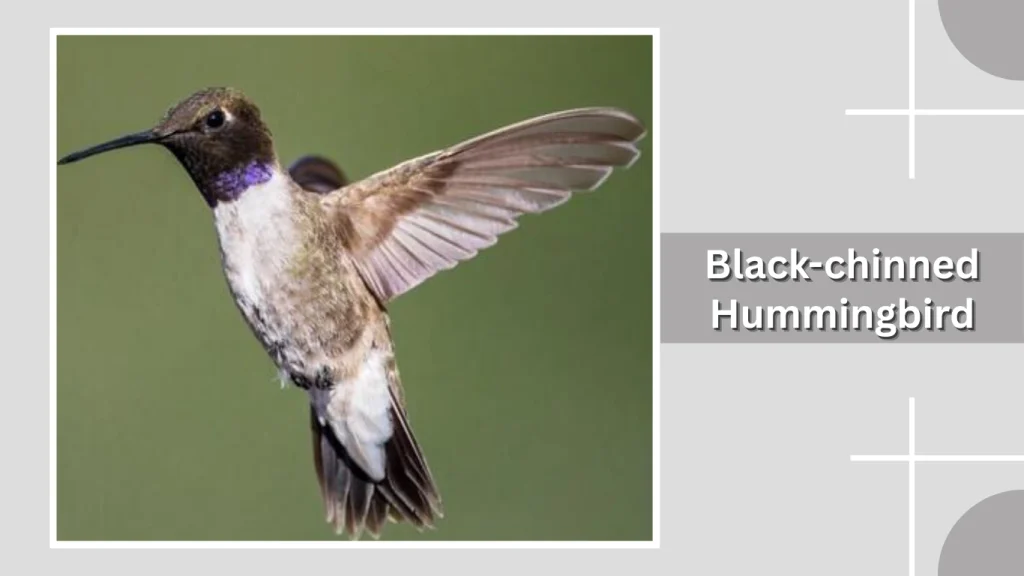
The Black-chinned Hummingbird is a widespread and adaptable species, often seen quietly perching near flowers or feeders. Its throat color can appear subtle unless viewed in the right light.
Identification
- Small hummingbird with a straight, slender bill
- Adult male has a black throat with a thin purple band at the base
- Female has a plain white throat
- Green upperparts with grayish underparts
Habitat
This species occupies a wide range of habitats including deserts, riparian corridors, open woodlands, parks, and residential areas. It breeds across much of the western United States and migrates south in winter.
Diet
Black-chinned Hummingbirds feed mainly on nectar from flowers and feeders. They also eat small insects and spiders, which are essential during nesting season.
Color Pattern
The back and head are metallic green. Males have a dark throat that flashes violet at certain angles, while females show soft green and gray tones without bright throat colors.
9. Crimson Topaz
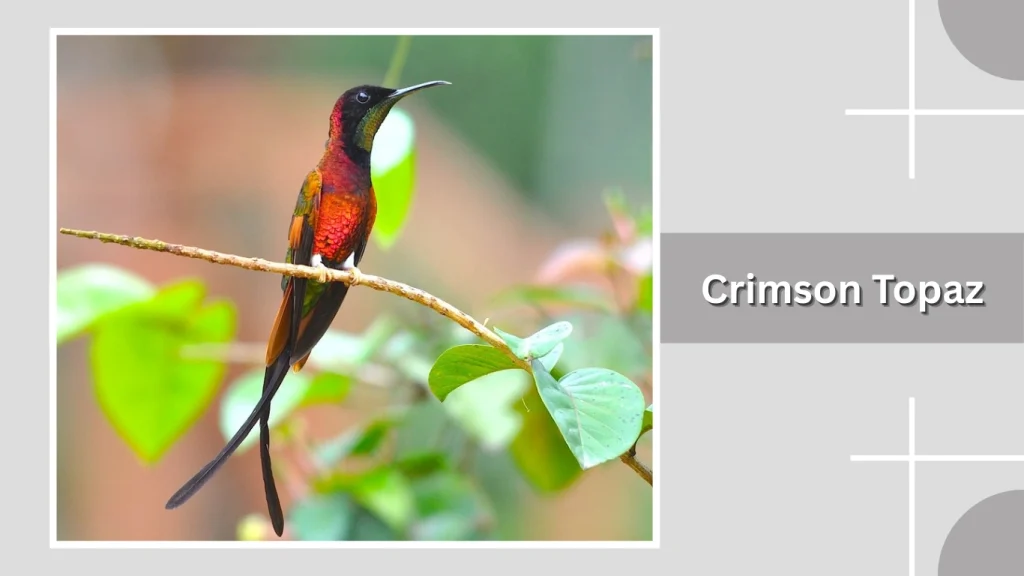
The Crimson Topaz is one of the most striking hummingbirds in the world, known for its large size and brilliant coloration. It is primarily found in tropical regions of South America.
Identification
- Large hummingbird with a strong, straight bill
- Adult male has a bright crimson-red body
- Female is mostly green with a reddish tail
- Long wings and tail compared to most hummingbirds
Habitat
Crimson Topaz hummingbirds inhabit tropical rainforests, forest edges, and riverine woodlands. They are often seen near flowering trees in lowland forests.
Diet
Their diet is dominated by nectar from large tropical flowers. They also capture insects in flight to meet their protein needs.
Color Pattern
Males are vivid crimson-red on the head and body with contrasting dark wings. Females are predominantly green with subtle red tones in the tail, giving them a less flamboyant appearance.
10. Fiery-throated Hummingbird
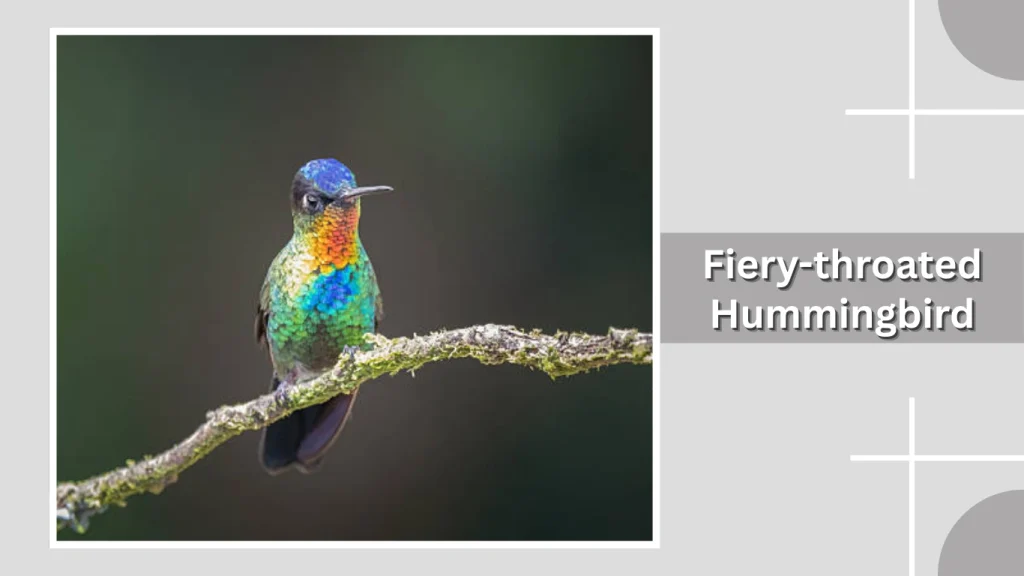
The Fiery-throated Hummingbird is a spectacular highland species, famous for its intense, multi-colored iridescence. Its throat can flash fiery red, gold, green, and blue depending on the light.
Identification
- Medium-sized hummingbird with a straight bill
- Adult male has a brilliantly iridescent throat and crown
- Female has a green throat with less intense coloration
- Sturdy body with strong wings
Habitat
This species lives in high-elevation cloud forests, forest edges, and mountain gardens of Central America. It is commonly found in cooler, misty environments.
Diet
Fiery-throated Hummingbirds feed mainly on nectar from flowering trees and shrubs. They also consume insects and spiders, especially during breeding season.
Color Pattern
The upperparts are metallic green. Males display a dazzling throat that shifts from fiery red to golden yellow and green, while females are mostly green with muted iridescence.
11. Ruby-topaz Hummingbird
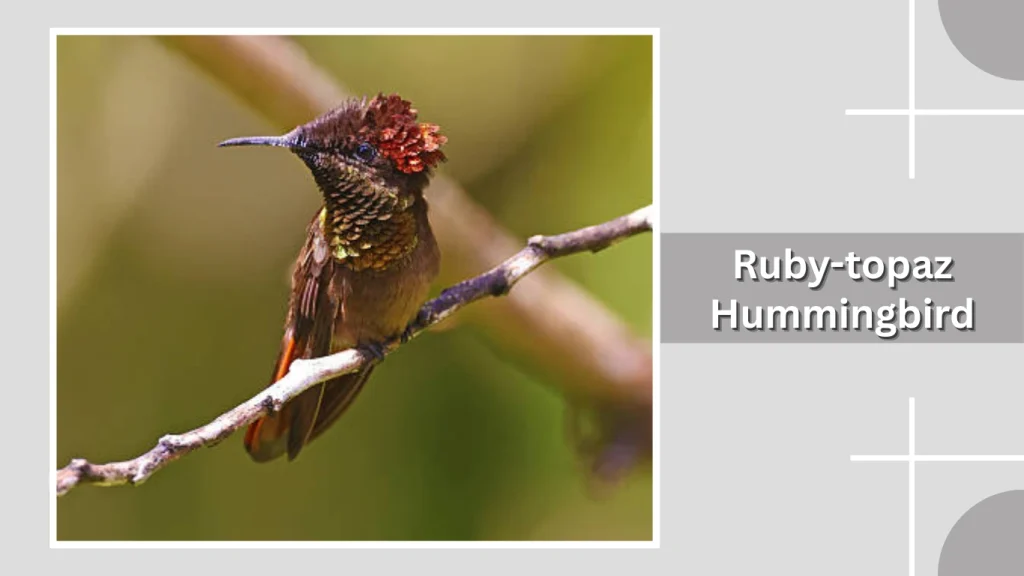
The Ruby-topaz Hummingbird is a tropical species known for its jewel-like colors and elegant flight. It is often seen darting rapidly between flowers in open habitats.
Identification
- Medium-sized hummingbird with a straight bill
- Adult male has a ruby-red head and golden-orange body
- Female is green above with pale underparts
- Slightly forked tail
Habitat
Ruby-topaz Hummingbirds inhabit savannas, open woodlands, forest edges, and gardens in northern South America and the Caribbean.
Diet
Their diet consists mainly of nectar from a variety of flowering plants. Small insects and spiders are also taken to supplement their nutrition.
Color Pattern
Males show a brilliant ruby-red head, glowing orange-gold body, and dark wings. Females are mostly green and white, lacking the intense red and gold tones.
12. Garnet-throated Hummingbird
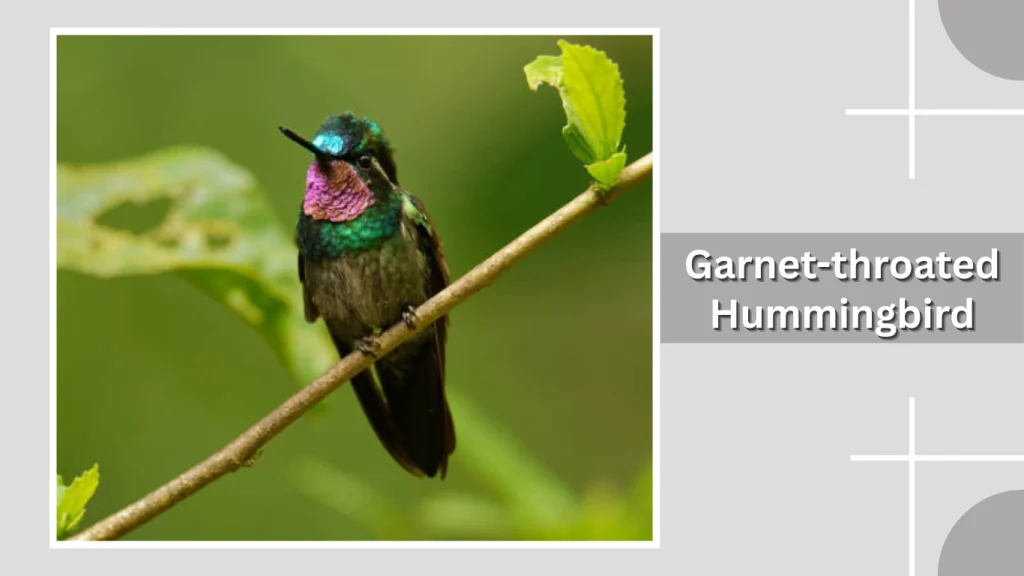
The Garnet-throated Hummingbird is a striking species of the Central American highlands, admired for the deep red coloration of the male’s throat. It is often seen quietly feeding in forest clearings.
Identification
- Medium-sized hummingbird with a straight bill
- Adult male has a rich garnet-red throat
- Female has a pale throat with light spotting
- Green upperparts with darker wings
Habitat
This species inhabits montane forests, forest edges, and shaded clearings at high elevations. It is most commonly found in Mexico and parts of Central America.
Diet
Garnet-throated Hummingbirds feed primarily on nectar from forest flowers. They also eat small insects and spiders to meet protein requirements.
Color Pattern
The body is mostly metallic green. Males show a deep red, garnet-colored throat, while females display softer green and gray tones with minimal red.
13. Ruby-throated Hillstar
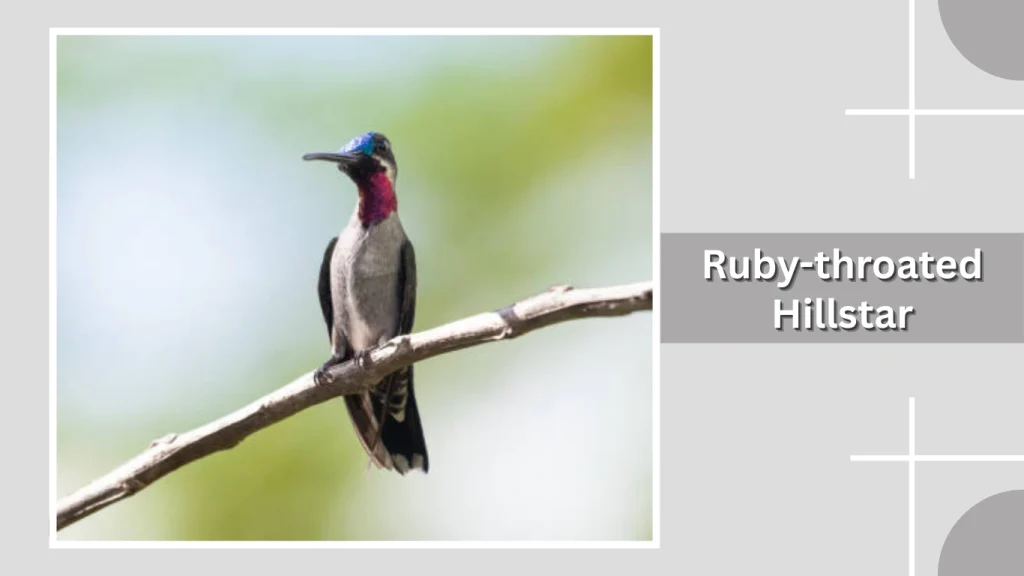
The Ruby-throated Hillstar is a high-altitude hummingbird adapted to cold Andean environments. It is resilient and often seen feeding among alpine flowers.
Identification
- Medium-sized hummingbird with a straight bill
- Adult male has a vivid ruby-red throat
- Female has a pale throat with subtle markings
- Stocky body suited for high elevations
Habitat
This species lives in alpine grasslands, paramo, and rocky slopes of the Andes. It is typically found at very high elevations where few other hummingbirds can survive.
Diet
Ruby-throated Hillstars feed on nectar from hardy alpine flowers. Insects are also consumed, especially during warmer parts of the day.
Color Pattern
The upperparts are green, while the underparts are pale. Males have a bright ruby-red throat that contrasts sharply with the surrounding plumage; females are more subdued in color.
14. Andean Hillstar
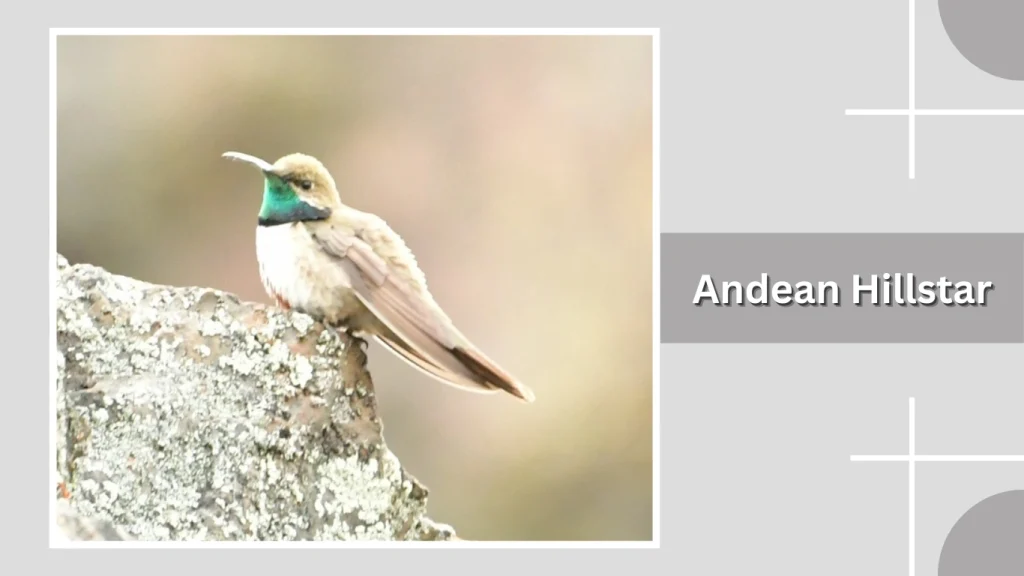
The Andean Hillstar is a hardy hummingbird adapted to extreme high-altitude conditions. It is commonly seen close to the ground, feeding among low alpine vegetation.
Identification
- Medium-sized hummingbird with a straight bill
- Adult male has a shimmering violet to reddish throat
- Female has a pale throat without bright color
- Compact, sturdy body
Habitat
This species inhabits high Andean grasslands, rocky slopes, and puna regions. It lives at very high elevations where temperatures are often cold and oxygen levels are low.
Diet
Andean Hillstars feed mainly on nectar from alpine flowers. They also consume small insects, which provide essential protein in harsh environments.
Color Pattern
The upperparts are metallic green to bronze. Males show an iridescent throat that can appear violet or reddish, while females display muted green and gray tones.
15. Chilean Woodstar
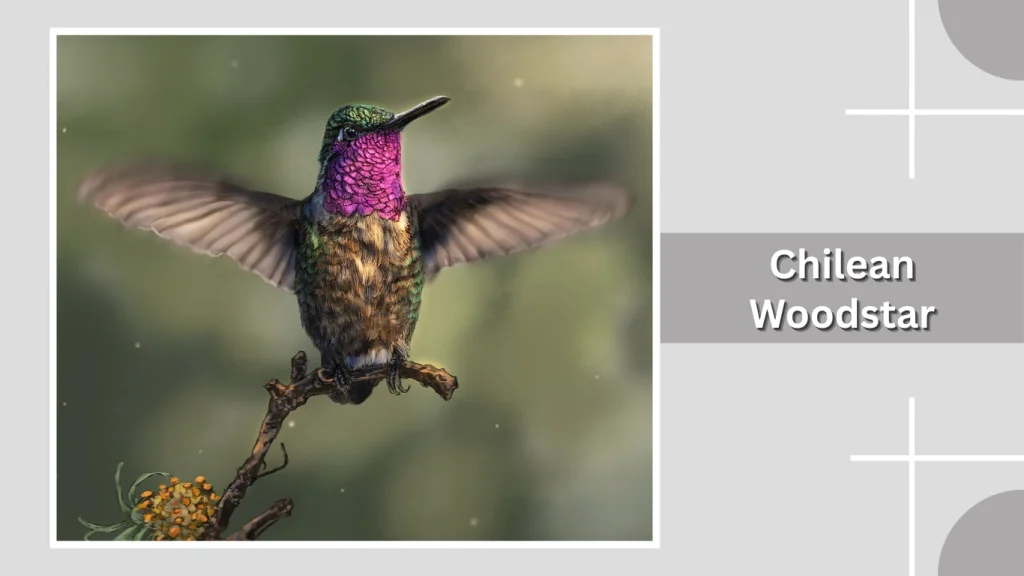
The Chilean Woodstar is a rare and delicate hummingbird, notable for its limited range and striking sexual differences in coloration.
Identification
- Small hummingbird with a short, straight bill
- Adult male has a bright red throat and crown
- Female has a white throat with dark spotting
- Slender body and narrow wings
Habitat
This species is found in arid river valleys, scrublands, and agricultural areas of northern Chile. It depends heavily on flowering plants along river systems.
Diet
Chilean Woodstars feed on nectar from native flowers and cultivated plants. They also eat small insects and spiders to supplement their diet.
Color Pattern
Males display a vivid red throat and crown contrasted with green upperparts. Females are mostly green and white with subtle spotting, lacking the bright red tones.
16. Bee Hummingbird
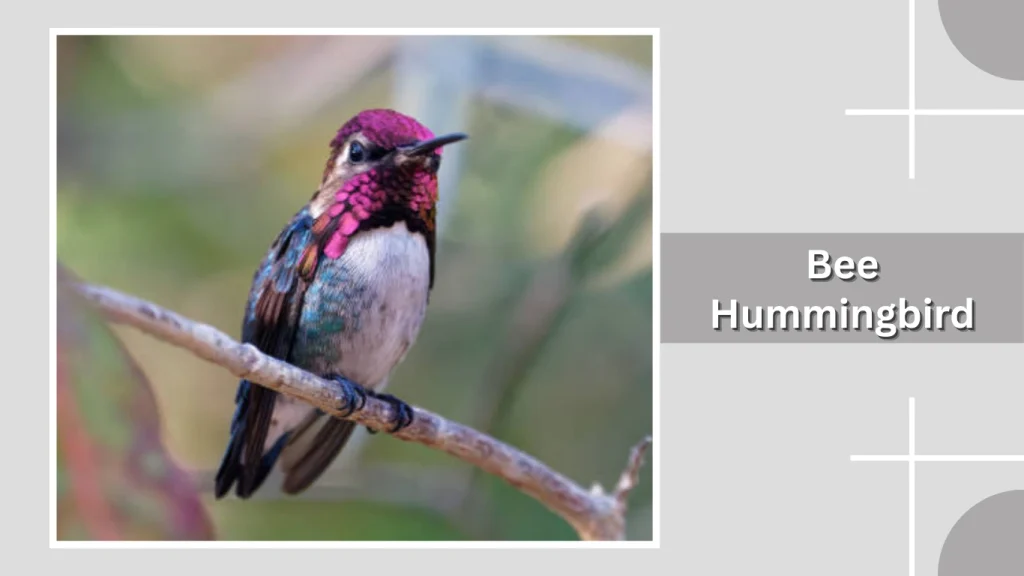
The Bee Hummingbird is the smallest bird in the world, native to Cuba. Despite its tiny size, it is highly active and capable of rapid, precise flight.
Identification
- Extremely small hummingbird with a short bill
- Adult male has a red to pink throat and head
- Female has a pale throat without bright color
- Very compact body and short tail
Habitat
This species inhabits forests, woodland edges, gardens, and shrublands. It is often found in areas with abundant flowering plants.
Diet
Bee Hummingbirds feed mainly on nectar from small flowers. They also consume tiny insects and spiders to obtain protein.
Color Pattern
The upperparts are metallic green, while the underparts are pale gray. Males show a vivid red-pink throat and head, whereas females have more subdued green and white coloring.
17. Red-billed Streamertail
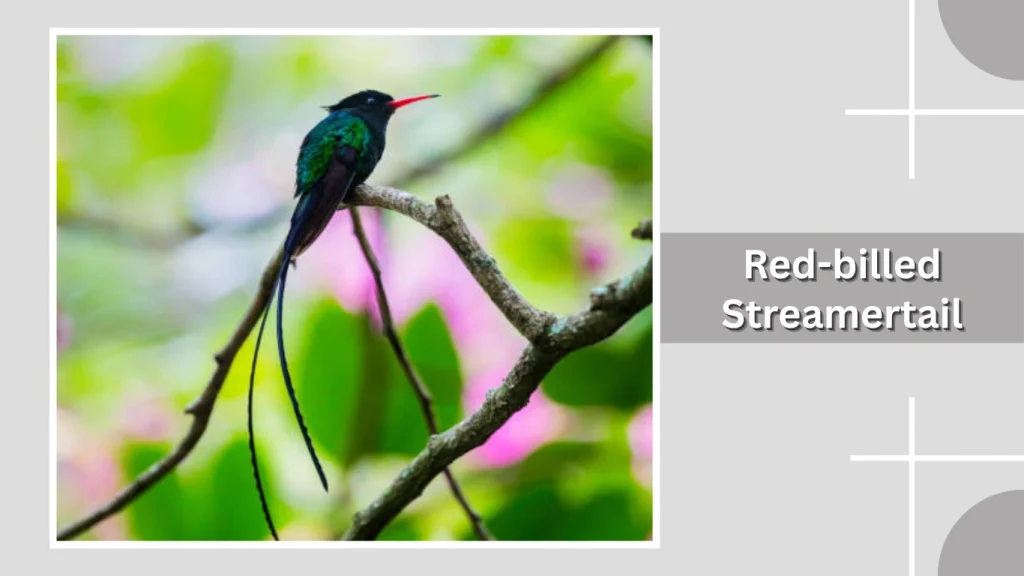
The Red-billed Streamertail, often called the national bird of Jamaica, is famous for its long, flowing tail feathers and elegant flight.
Identification
- Medium-sized hummingbird with a red bill
- Adult male has extremely long tail streamers
- Female has a shorter tail and darker bill
- Green body with black wings
Habitat
This species lives in forests, forest edges, plantations, and gardens across Jamaica. It adapts well to both natural and human-altered environments.
Diet
Red-billed Streamertails feed primarily on nectar from flowering trees and shrubs. They also eat insects and spiders, especially during breeding season.
Color Pattern
The body is metallic green with contrasting black wings. Males have a glossy green head and long black tail streamers, while females show duller green tones and lack streamers.
18. Amethyst Woodstar
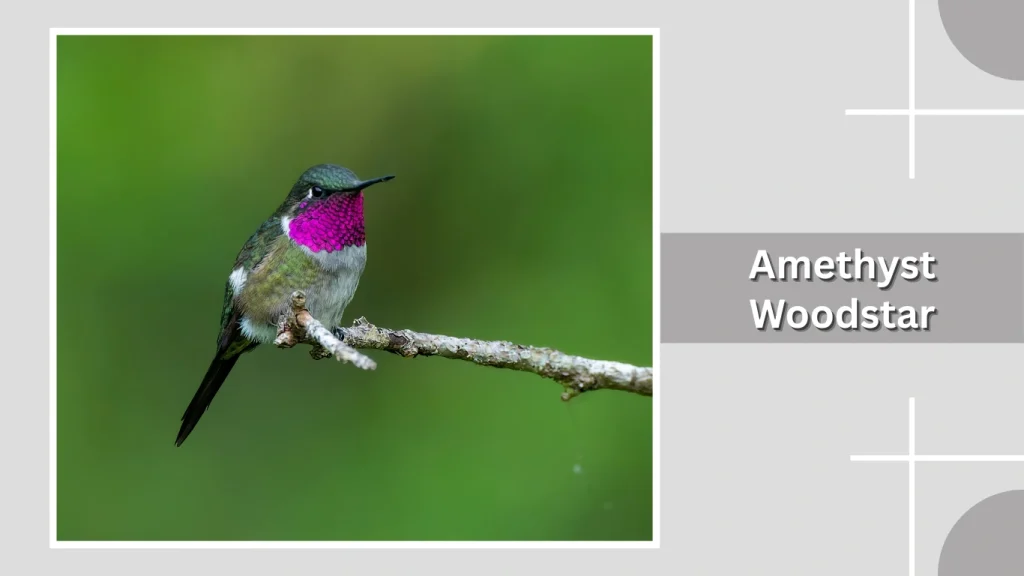
The Amethyst Woodstar is a small, elegant hummingbird known for the male’s vivid purple throat. It is active and fast-moving, often seen darting between flowers in open habitats.
Identification
- Small hummingbird with a straight, slender bill
- Adult male has a bright amethyst-purple throat
- Female has a pale throat with fine spotting
- Slim body with a slightly forked tail
Habitat
This species inhabits open woodlands, forest edges, savannas, and gardens across parts of South America. It favors areas with scattered trees and flowering plants.
Diet
Amethyst Woodstars feed mainly on nectar from small flowers. They also capture tiny insects and spiders while hovering or flying.
Color Pattern
The upperparts are metallic green. Males show a striking purple throat, while females are green above with whitish underparts and subtle markings.
19. White-bellied Woodstar
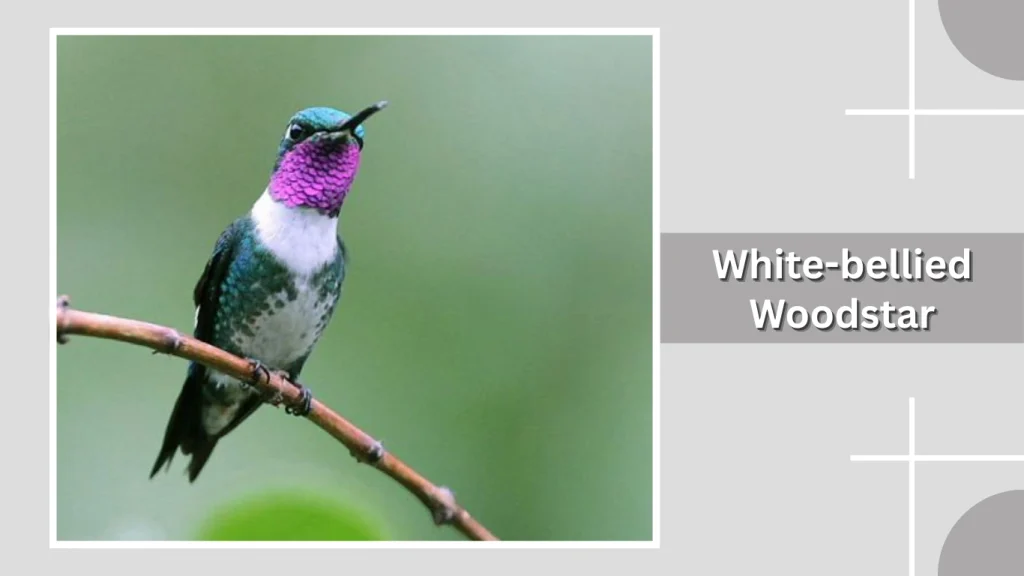
The White-bellied Woodstar is a delicate hummingbird distinguished by its clean white underside. It is quiet and unobtrusive, often feeding low among shrubs.
Identification
- Small hummingbird with a short, straight bill
- Adult male has a purple-violet throat
- Female has a plain pale throat
- Noticeably white belly
Habitat
This species is found in forest edges, secondary growth, scrublands, and gardens in parts of South America. It prefers semi-open environments.
Diet
White-bellied Woodstars feed primarily on nectar from flowering shrubs and small plants. Insects and spiders are also eaten for protein.
Color Pattern
The upperparts are green to bronze. Males display a violet-toned throat, while both sexes have a bright white belly that contrasts with the darker upper body.
20. Buff-bellied Hummingbird
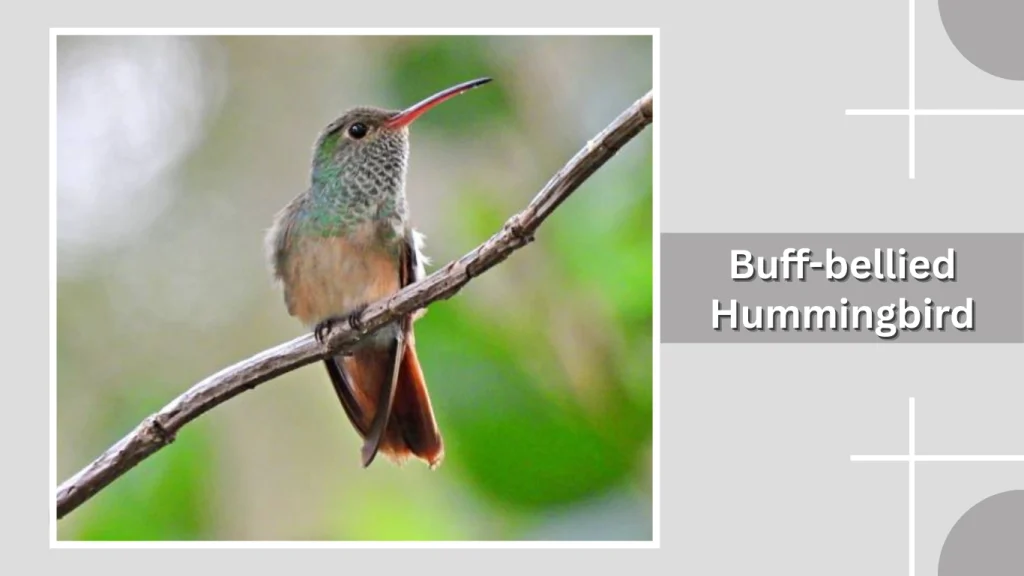
The Buff-bellied Hummingbird is a medium-sized species known for its warm-colored underside and adaptability to urban environments. It is often seen visiting feeders and flowering shrubs.
Identification
- Medium-sized hummingbird with a straight bill
- Adult has a reddish bill with a dark tip
- Both sexes look similar
- Rounded tail and sturdy body
Habitat
This species inhabits open woodlands, forest edges, scrub, gardens, and parks. It is found mainly in southern Texas, Mexico, and the Yucatán Peninsula.
Diet
Buff-bellied Hummingbirds feed on nectar from flowers and feeders. They also consume small insects and spiders, especially during breeding season.
Color Pattern
The upperparts are metallic green. The underparts are warm buff to cinnamon-colored, giving the species its name, with subtle reddish tones on the bill.
21. Red-tailed Comet
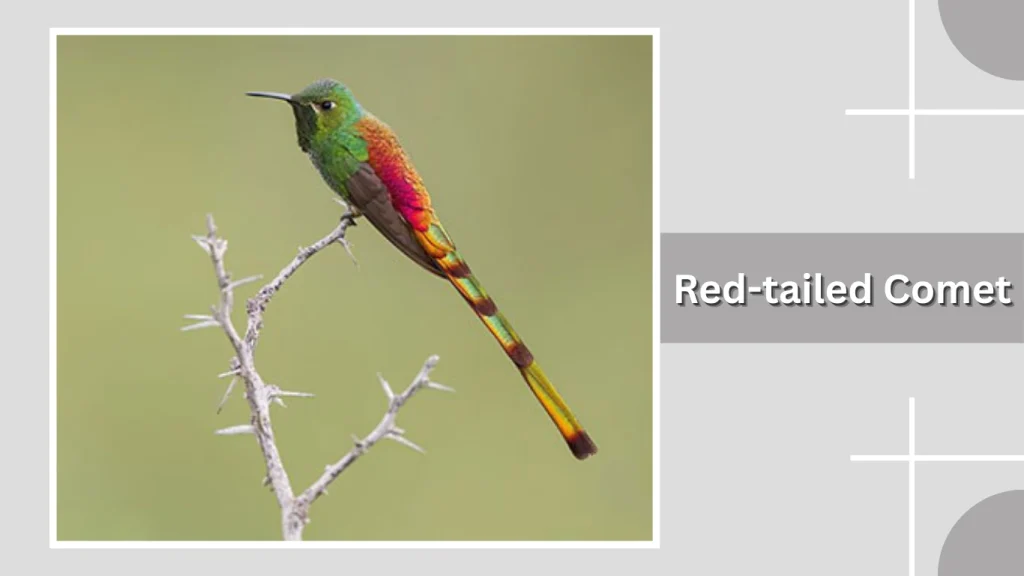
The Red-tailed Comet is a spectacular Andean hummingbird known for its long, fiery tail and dramatic flight display. It is one of the most visually striking hummingbirds of South America.
Identification
- Large hummingbird with a straight bill
- Adult male has an extremely long red tail
- Female has a shorter, darker tail
- Strong wings and elongated body
Habitat
This species lives in high-altitude valleys, mountain slopes, and open woodlands of the Andes. It is commonly found near flowering shrubs and streams.
Diet
Red-tailed Comets feed mainly on nectar from large flowers. They also eat insects, which provide essential nutrients.
Color Pattern
Males have a brilliant red tail contrasting with darker body tones. Females are more muted, with greenish upperparts and less vivid tail coloration.