


Seals are diverse and fascinating marine mammals found in oceans, seas, and even freshwater lakes around the world. Ranging from the tiny Baikal Seal of Siberia to the massive Southern Elephant Seal of the sub-Antarctic, these animals have adapted to various environments—from icy polar regions to warm tropical islands.
This article explores 23 unique types of seals, each with its own characteristics, habitat preferences, and behaviors. Whether you’re curious about the spotted elegance of the Ribbon Seal or the tropical isolation of the Hawaiian Monk Seal, this guide will help you identify and understand these incredible creatures, one species at a time.
1. Harbor Seal (Phoca vitulina)

The Harbor Seal, also known as the Common Seal, is one of the most widespread and well-known seal species. It is commonly seen lounging on beaches, rocks, and sandbanks along coastal waters in the Northern Hemisphere.
Identification
- Length: 5–6.5 feet
- Weight: 180–285 pounds
- Color: Varies from silver-gray to brown or tan, often with dark spots or rings
- Head: Rounded with large eyes and V-shaped nostrils
- Flippers: Short foreflippers and hind flippers that angle backward
Habitat and Range
Harbor Seals are found along temperate and Arctic coastlines of the North Atlantic and North Pacific Oceans. They frequent bays, estuaries, rocky shores, and even ice edges.
Diet and Feeding Habits
They feed on a wide range of prey including fish (such as herring and cod), squid, octopus, and crustaceans. Harbor Seals are opportunistic hunters and often dive to depths of 300–500 feet in search of food.
Behavior and Social Structure
Harbor Seals are generally solitary but may haul out in groups to rest and molt. They are shy around humans and usually slip into the water when approached. While not very vocal on land, they communicate through body posture and occasional grunts.
2. Gray Seal (Halichoerus grypus)

The Gray Seal is a large, robust seal species known for its long snout and expressive eyes. It is often seen along rocky coastlines and beaches in the North Atlantic.
Identification
- Length: 6.5–10 feet
- Weight: 550–880 pounds (males are significantly larger than females)
- Color: Mottled gray with darker patches; males are usually darker than females
- Head: Long and horse-like with wide-set nostrils
- Flippers: Strong and adapted for powerful swimming
Habitat and Range
Gray Seals are found on both sides of the North Atlantic Ocean, especially around the coasts of the UK, eastern Canada, northeastern U.S., and parts of northern Europe.
Diet and Feeding Habits
They feed on fish such as sand eels, cod, and herring, as well as squid and crustaceans. They dive to depths of up to 1,000 feet and can stay underwater for up to an hour.
Behavior and Social Structure
Gray Seals are social animals, especially during breeding season when large colonies gather on beaches. Males fight fiercely for access to females. Outside of breeding, they are often seen alone or in smaller groups.
3. Harp Seal (Pagophilus groenlandicus)

The Harp Seal is well known for its adorable white-furred pups and its affinity for ice-covered waters in the Arctic and North Atlantic.
Identification
- Length: 5–6.5 feet
- Weight: 260–310 pounds
- Color: Adults have a silvery-gray body with a distinctive black “harp” or saddle-shaped marking on the back
- Pups: Born with fluffy white coats
- Head: Small and rounded with large dark eyes
Habitat and Range
Harp Seals are native to the North Atlantic and Arctic Oceans, especially near Greenland, eastern Canada, and parts of Russia. They rely heavily on pack ice for breeding and resting.
Diet and Feeding Habits
They feed on fish (like capelin and herring), krill, and other small invertebrates. Harp Seals dive to depths of 200–1,000 feet, often staying underwater for 10–15 minutes.
Behavior and Social Structure
Highly social, Harp Seals form large herds during breeding and molting seasons. Pups are nursed for only 12 days before being weaned. Adults are strong swimmers and migrate long distances seasonally.
4. Hooded Seal (Cystophora cristata)

The Hooded Seal is named for the inflatable nasal sac found in adult males, which they display during mating season to attract females or intimidate rivals.
Identification
- Length: 7–10.5 feet
- Weight: 400–900 pounds (males larger)
- Color: Blue-gray body with dark irregular spots
- Males: Have an inflatable “hood” over the nose and a red nasal membrane that can be blown up like a balloon
- Head: Broad with large nostrils
Habitat and Range
Found in the North Atlantic and Arctic Oceans, especially around Greenland, Newfoundland, and the Norwegian Sea. They prefer pack ice for breeding and resting.
Diet and Feeding Habits
Feeds on deep-water fish (like Greenland halibut), squid, and crustaceans. They are capable of diving over 3,000 feet and can hold their breath for nearly an hour.
Behavior and Social Structure
Hooded Seals are mostly solitary outside of mating and molting seasons. Pups are known for their rich blue-gray fur and are weaned in just 4 days—one of the shortest lactation periods among mammals.
5. Ringed Seal (Pusa hispida)

The Ringed Seal is the smallest and most widespread Arctic seal, known for the small ring-like patterns scattered across its body.
Identification
- Length: 3.5–5 feet
- Weight: 110–150 pounds
- Color: Gray to dark silver body with light-colored rings
- Head: Small and rounded
- Flippers: Short, with strong claws on foreflippers for maintaining breathing holes in ice
Habitat and Range
Inhabits the Arctic Ocean and surrounding seas, including the Bering and Okhotsk. Prefers areas with sea ice and uses it year-round for resting, breeding, and protection.
Diet and Feeding Habits
Feeds on fish (like Arctic cod), crustaceans, and zooplankton. Often forages under ice, using breathing holes to surface between dives.
Behavior and Social Structure
Mostly solitary, Ringed Seals build snow lairs over breathing holes to give birth and protect pups from predators like polar bears. They are very dependent on stable sea ice for survival.
6. Bearded Seal (Erignathus barbatus)

The Bearded Seal gets its name from the long, thick whiskers on its muzzle, which it uses to detect prey along the ocean floor.
Identification
- Length: 7–8.5 feet
- Weight: 575–800 pounds
- Color: Gray to reddish-brown with lighter underside; whiskers are white and prominent
- Head: Broad with small eyes and large vibrissae (whiskers)
- Flippers: Large and robust for bottom-walking on sea floor
Habitat and Range
Found throughout the Arctic Ocean and adjacent seas, often near shallow coastal areas with sea ice. Common in the Bering, Chukchi, and Beaufort Seas.
Diet and Feeding Habits
Feeds on benthic (bottom-dwelling) invertebrates such as clams, crabs, shrimp, and small fish. Forages along the seafloor using its sensitive whiskers to locate prey in the sediment.
Behavior and Social Structure
Typically solitary or in pairs. Known for producing haunting underwater vocalizations that are used during mating season. Bearded Seals are excellent divers and climbers, often hauling out onto broken ice.
7. Ribbon Seal (Histriophoca fasciata)

The Ribbon Seal is easily identified by its striking black body marked with bold white ribbons across the neck, flippers, and tail.
Identification
- Length: 5–6.5 feet
- Weight: 200–375 pounds
- Color: Glossy black with 4 distinct white bands forming a ribbon-like pattern
- Head: Small and rounded with large dark eyes
- Flippers: Short with sharp claws
Habitat and Range
Found in the North Pacific Ocean, especially in the Bering and Okhotsk Seas. Prefers pack ice during breeding and molting seasons but spends much time in open water.
Diet and Feeding Habits
Feeds on pelagic fish (such as pollock and cod), squid, and crustaceans. Dives to moderate depths while hunting in mid-water zones.
Behavior and Social Structure
Ribbon Seals are solitary and elusive. They are strong swimmers and spend most of their time at sea, only coming onto sea ice to molt and breed. Their bold coloration makes them one of the most visually distinctive seal species.
8. Leopard Seal (Hydrurga leptonyx)

The Leopard Seal is one of the top predators of the Antarctic, known for its long, muscular body, large jaws, and fierce hunting skills.
Identification
- Length: 8–12 feet
- Weight: 600–1,300 pounds
- Color: Dark gray to black on the back, light gray below with distinctive dark spots (leopard-like)
- Head: Long and reptilian with powerful jaws
- Flippers: Large and strong, ideal for fast swimming
Habitat and Range
Found throughout the Antarctic and sub-Antarctic regions, especially along pack ice edges and open water near the Southern Ocean.
Diet and Feeding Habits
Apex predator that feeds on penguins, fish, squid, and even other seals (like crabeater pups). Uses stealth and speed to ambush prey, often shaking it violently once caught.
Behavior and Social Structure
Leopard Seals are solitary and highly territorial. They are fast, agile swimmers and known to be bold—even approaching boats. Their eerie vocalizations are often heard underwater in the Antarctic.
9. Weddell Seal (Leptonychotes weddellii)

The Weddell Seal is well-adapted to life in Antarctica, known for its calm temperament, large eyes, and impressive diving ability beneath thick sea ice.
Identification
- Length: 8–11.5 feet
- Weight: 880–1,300 pounds
- Color: Dark gray to brown with lighter belly and mottled patterns
- Head: Rounded with large, dark eyes
- Flippers: Broad and strong, suited for ice hauling
Habitat and Range
Inhabits fast ice (ice attached to land) around the Antarctic coastline. Often seen near breathing holes and cracks in the ice shelf.
Diet and Feeding Habits
Feeds on fish (like Antarctic silverfish), squid, and other invertebrates. Capable of diving over 1,500 feet and staying underwater for more than an hour while navigating through maze-like ice layers.
Behavior and Social Structure
Typically solitary but tolerant of close proximity to other seals. Known for maintaining breathing holes in sea ice using their teeth. Weddell Seals are vocal and produce a range of trills and whistles, especially during the breeding season.
10. Crabeater Seal (Lobodon carcinophaga)

Despite its name, the Crabeater Seal doesn’t eat crabs—instead, it specializes in feeding on Antarctic krill using uniquely adapted teeth that filter food from seawater.
Identification
- Length: 7.5–8.5 feet
- Weight: 400–600 pounds
- Color: Pale beige to silver-gray with faint spots or scars
- Head: Slender with a long snout and specialized multi-cusped teeth
- Flippers: Streamlined and powerful
Habitat and Range
Commonly found around the pack ice zone of Antarctica. They are the most abundant seal species in the world, with an estimated population in the millions.
Diet and Feeding Habits
Primarily feed on Antarctic krill by sucking in seawater and using their interlocking teeth to strain prey. They can dive up to 1,500 feet in search of food.
Behavior and Social Structure
Usually seen alone or in small groups. Crabeater Seals are strong swimmers and can travel long distances on ice floes. Pups are born on ice during the Antarctic spring and weaned after a few weeks.
11. Ross Seal (Ommatophoca rossii)
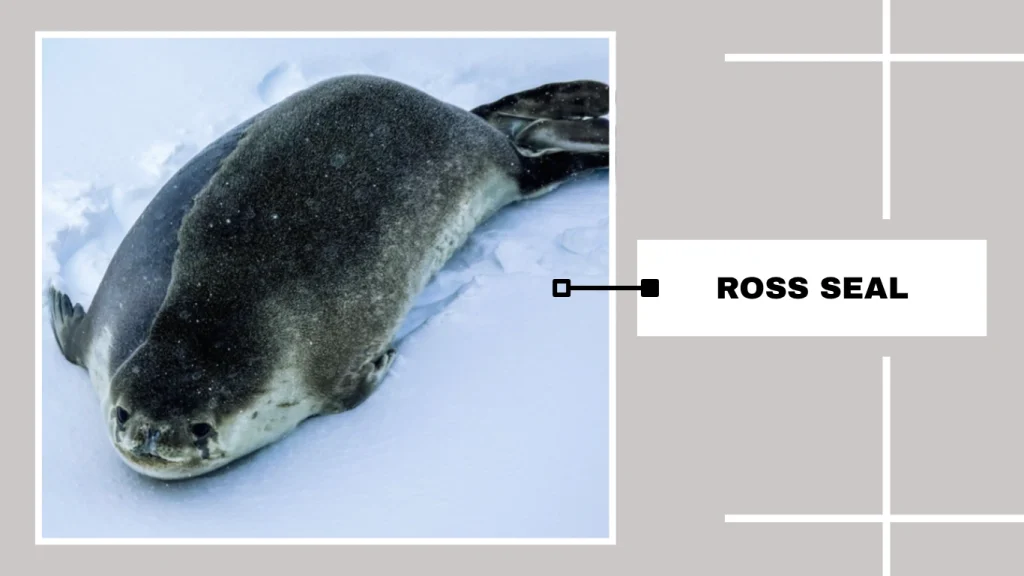
The Ross Seal is the rarest and least-studied seal of Antarctica, recognized by its short body, large eyes, and unusual vocalizations.
Identification
- Length: 5.5–7 feet
- Weight: 200–450 pounds
- Color: Dark dorsal side with silvery or lighter belly; often has streaks or striping around the neck
- Head: Small and broad with very large eyes
- Flippers: Short but strong
Habitat and Range
Exclusively found on Antarctic pack ice, often in remote and isolated areas. Rarely observed due to its elusive nature and inaccessible habitat.
Diet and Feeding Habits
Feeds on squid and fish. It uses deep diving and silent movement to hunt in dark, icy waters.
Behavior and Social Structure
Solitary by nature. Ross Seals are known for their bizarre, siren-like calls—produced both above and below water. Because they are rarely seen, much about their behavior remains a mystery.
12. Northern Elephant Seal (Mirounga angustirostris)
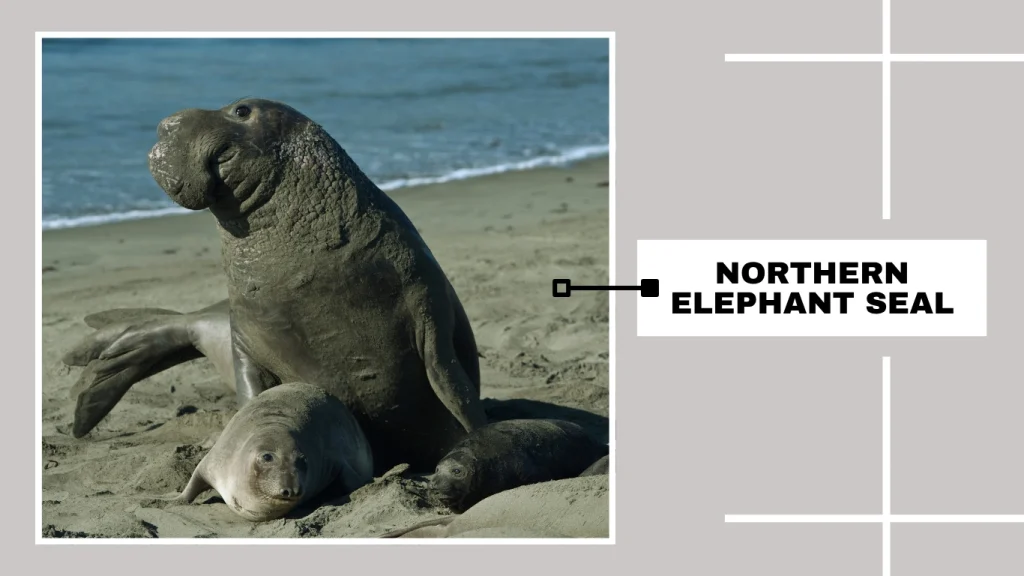
The Northern Elephant Seal is named for the male’s large, inflatable nose (proboscis), which resembles an elephant’s trunk and is used to produce loud roars during the breeding season.
Identification
- Length: Males 13–16 feet, Females 9–12 feet
- Weight: Males up to 5,000 pounds, Females up to 1,800 pounds
- Color: Grayish brown, often scarred from fights
- Head: Males have a large, drooping proboscis
- Flippers: Long and robust
Habitat and Range
Found along the Pacific coast of North America, from Baja California to the Gulf of Alaska. Breeds on offshore islands and sandy beaches.
Diet and Feeding Habits
Feeds on squid, octopus, rays, and deep-sea fish. Can dive over 5,000 feet and remain submerged for up to two hours.
Behavior and Social Structure
Males are extremely territorial during the breeding season, forming harems of females and engaging in intense fights. Outside of breeding, they spend most of the year at sea, traveling thousands of miles.
13. Southern Elephant Seal (Mirounga leonina)

The Southern Elephant Seal is the largest of all seals, with males often exceeding the size of small cars. They are true giants of the Southern Ocean.
Identification
- Length: Males up to 20 feet, Females 8–10 feet
- Weight: Males up to 8,800 pounds, Females around 2,000 pounds
- Color: Gray-brown, often scarred and wrinkled
- Head: Males have a prominent trunk-like nose
- Flippers: Thick and powerful
Habitat and Range
Found in sub-Antarctic and Antarctic regions, including South Georgia, Macquarie Island, and the Falklands. Haul out on remote beaches for breeding and molting.
Diet and Feeding Habits
Eats squid and deep-sea fish. Known for record-breaking dives—up to 7,800 feet deep—and spending months at sea without coming ashore.
Behavior and Social Structure
Breeds in massive colonies where dominant males control harems. Fights between bulls are intense and noisy. Pups are nursed for about 3–4 weeks before weaning.
14. Caspian Seal (Pusa caspica)

The Caspian Seal is one of the smallest and most endangered true seals, found exclusively in the landlocked Caspian Sea.
Identification
- Length: 4–5.5 feet
- Weight: 150–200 pounds
- Color: Silvery-gray with darker back and scattered dark spots
- Head: Small and rounded
- Flippers: Short and adapted for ice haul-out
Habitat and Range
Restricted to the Caspian Sea, bordered by Russia, Iran, Kazakhstan, Turkmenistan, and Azerbaijan. Breeds on winter ice and spends warmer months along the rocky coasts and islands.
Diet and Feeding Habits
Feeds primarily on fish such as gobies, herring, and sprats. Also consumes shrimp and other small aquatic animals. Typically dives to moderate depths.
Behavior and Social Structure
Forms large haul-out groups during breeding and molting seasons. Population has declined due to pollution, habitat degradation, disease, and bycatch. It is listed as endangered.
15. Baikal Seal (Pusa sibirica)

The Baikal Seal, or Nerpa, is the only seal species that lives entirely in freshwater. It is endemic to Lake Baikal in Siberia.
Identification
- Length: 4–4.5 feet
- Weight: 150–180 pounds
- Color: Uniform gray to silver with no obvious markings
- Head: Rounded with expressive eyes
- Flippers: Small but capable for both ice and water activity
Habitat and Range
Inhabits Lake Baikal in Russia—world’s deepest and oldest freshwater lake. It uses ice for breeding and often rests on ice floes or isolated shores.
Diet and Feeding Habits
Eats Baikal oilfish, sculpins, and amphipods. Dives deep and frequently under thick lake ice to catch prey.
Behavior and Social Structure
Generally solitary or found in small groups. Baikal Seals are shy and elusive but well adapted to the lake’s cold climate. Their population remains relatively stable despite environmental concerns.
16. Spotted Seal (Phoca largha)

The Spotted Seal is a medium-sized, ice-loving seal named for the distinctive dark spots scattered across its pale body.
Identification
- Length: 5–6.5 feet
- Weight: 170–250 pounds
- Color: Light silver-gray coat covered with dark, irregular spots
- Head: Small and round with large eyes
- Flippers: Short, designed for agility in icy waters
Habitat and Range
Native to the North Pacific Ocean and Bering Sea, especially along the coasts of Russia, Alaska, Korea, and Japan. Prefers areas with sea ice during breeding and pupping seasons.
Diet and Feeding Habits
Feeds on a variety of fish (e.g., pollock, herring), crustaceans, and squid. Typically forages in shallow coastal waters and around ice edges.
Behavior and Social Structure
Usually solitary or in small groups. Known for being cautious and sensitive to disturbance. Breeds and hauls out on sea ice, and pups are born with a soft white coat.
17. Mediterranean Monk Seal (Monachus monachus)
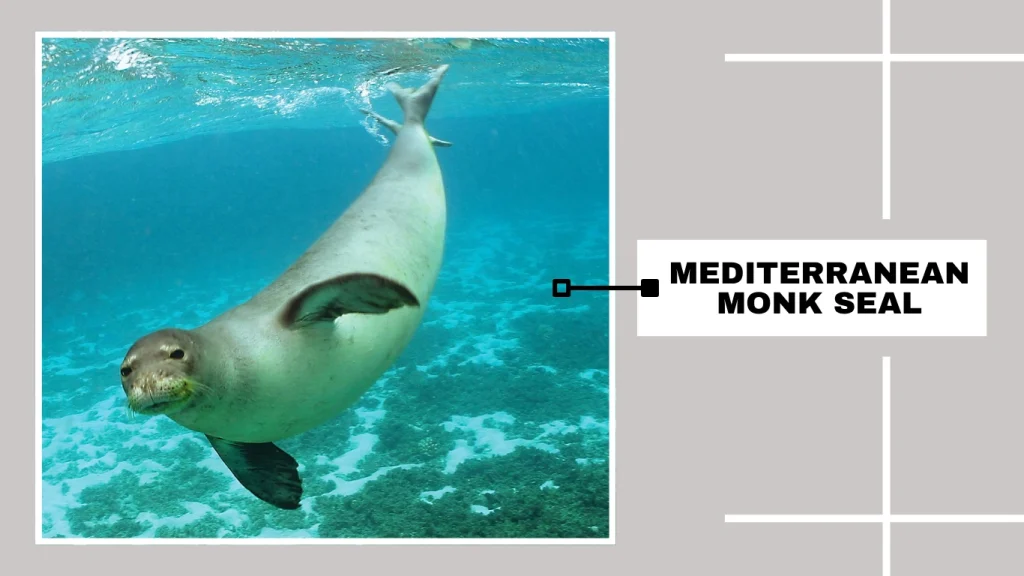
One of the most endangered seal species in the world, the Mediterranean Monk Seal is a shy and elusive animal known for using coastal caves for shelter and birthing.
Identification
- Length: 7–8 feet
- Weight: 530–650 pounds
- Color: Brownish or gray on the back with a lighter belly; newborns are black with white patches
- Head: Rounded with a dog-like appearance
- Flippers: Broad and dark
Habitat and Range
Found in the eastern Mediterranean Sea, including Greece, Turkey, and parts of North Africa. Prefers secluded caves with underwater entrances and sandy beaches inside.
Diet and Feeding Habits
Feeds on octopus, squid, and fish. Hunts in shallow coastal waters and is mostly nocturnal in its foraging behavior.
Behavior and Social Structure
Extremely shy and typically solitary or seen in very small groups. Conservation efforts are focused on protecting breeding habitats and reducing human disturbance. Population remains critically low.
18. Hawaiian Monk Seal (Neomonachus schauinslandi)

The Hawaiian Monk Seal is a critically endangered species found only in the Hawaiian Islands. It is one of the few tropical seal species and is closely related to the Mediterranean Monk Seal.
Identification
- Length: 7–7.5 feet
- Weight: 400–600 pounds
- Color: Gray to brown on the back with a lighter underside; may appear green due to algae
- Head: Rounded with large eyes and short whiskers
- Flippers: Smooth and dark
Habitat and Range
Endemic to the Northwestern Hawaiian Islands and, more rarely, the main islands. Prefers sandy beaches, coral reefs, and lava rock shorelines for hauling out and pupping.
Diet and Feeding Habits
Feeds on reef fish, crustaceans, octopus, and eels. Forages in coral reefs, sandy flats, and underwater caves. Typically dives 200–500 feet deep while hunting.
Behavior and Social Structure
Mostly solitary. Females haul out alone to give birth and nurse pups. Monk Seals are vulnerable to human disturbance, entanglement, and reduced food availability, and they are protected under U.S. law.
19. Antarctic Fur Seal (Arctocephalus gazella)
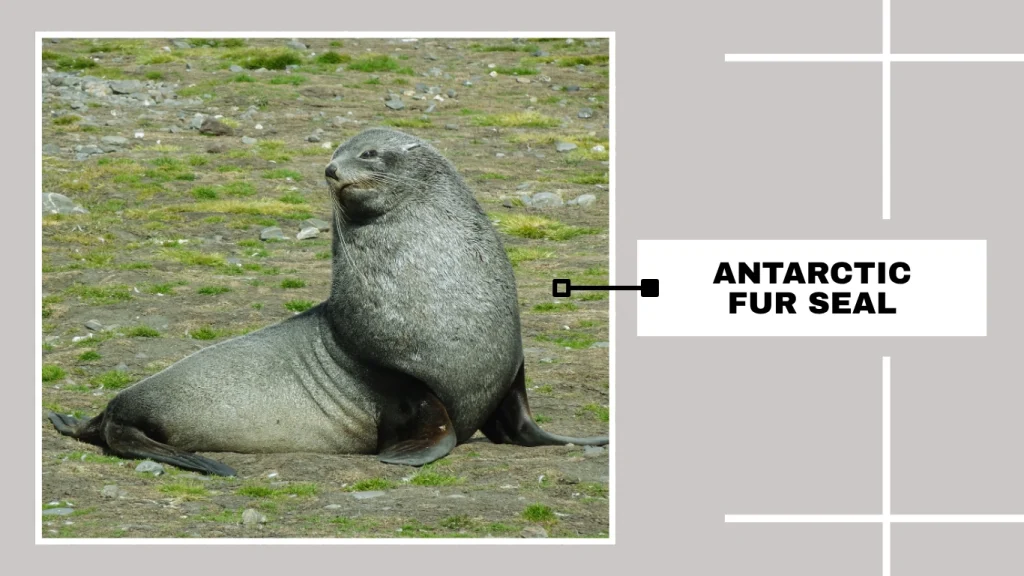
The Antarctic Fur Seal is a fast-swimming, eared seal known for its thick coat and aggressive territorial behavior during breeding.
Identification
- Length: Males 6.5–7.5 feet, Females 4.5–5.5 feet
- Weight: Males 400–500 pounds, Females 100–150 pounds
- Color: Males are dark brown; females and juveniles are silvery-gray
- Ears: External ear flaps (unlike true seals)
- Flippers: Long and hairless
Habitat and Range
Inhabits islands around the Antarctic Convergence, particularly South Georgia, South Shetlands, and Kerguelen Islands. Breeds on rocky, remote beaches.
Diet and Feeding Habits
Feeds primarily on krill and fish, especially during the summer. Outside the breeding season, they travel far north in search of food.
Behavior and Social Structure
Highly social during the breeding season when large harems form. Males are territorial and fight intensely for mating rights. Pups are born on land and nursed for 4 months. Fur Seals are known for their speed and agility both on land and in the water.
20. Guadalupe Fur Seal (Arctocephalus townsendi)

Once thought to be extinct, the Guadalupe Fur Seal is a conservation success story, with its population slowly recovering thanks to legal protection and monitoring.
Identification
- Length: Males 6–7 feet, Females 4.5–5 feet
- Weight: Males 300–400 pounds, Females 100–120 pounds
- Color: Dark brown to black with a lighter ruff around the neck
- Ears: Visible external ears
- Flippers: Long, slender, and dark
Habitat and Range
Primarily found on Guadalupe Island, off the Pacific coast of Mexico. Occasionally spotted along the coasts of California and Baja California.
Diet and Feeding Habits
Feeds on squid, mackerel, lanternfish, and other pelagic species. Often dives to moderate depths at night when prey is more accessible.
Behavior and Social Structure
Breeds in small colonies on rocky shores. Males establish territories during the breeding season. Outside of this period, individuals are solitary and pelagic, spending most of their time at sea.
21. Galápagos Fur Seal (Arctocephalus galapagoensis)
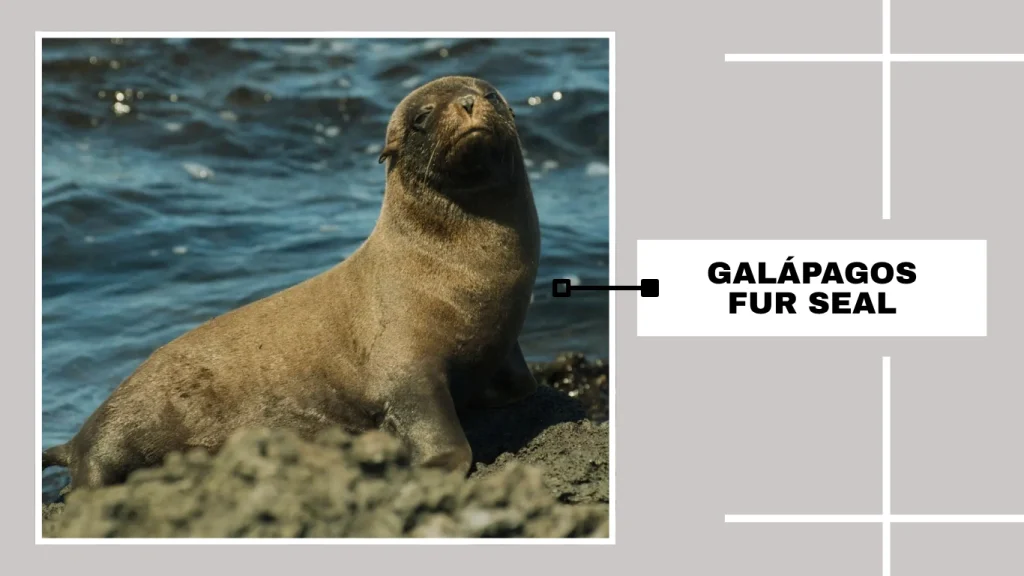
The smallest of all fur seals, the Galápagos Fur Seal lives exclusively on the Galápagos Islands and is well adapted to the region’s hot climate.
Identification
- Length: Males 4.5–5 feet, Females 3.5–4.5 feet
- Weight: Males up to 140 pounds, Females around 80 pounds
- Color: Brown or gray with a thick, plush coat
- Head: Short, broad snout with large eyes
- Flippers: Short but strong
Habitat and Range
Found only on the Galápagos Islands. Prefers shaded rocky shores, lava crevices, and coastal caves to escape the intense equatorial heat.
Diet and Feeding Habits
Eats squid, small fish, and other nocturnal prey. Forages at night and rests during the heat of the day.
Behavior and Social Structure
Breeds in small colonies. Known for extended maternal care—females nurse pups for up to two years. Due to El Niño events and human impact, populations have fluctuated, but they remain protected within the Galápagos National Park.
22. South American Fur Seal (Arctocephalus australis)

The South American Fur Seal is a robust and agile swimmer found along the coasts of South America. It is known for its thick fur and adaptability to rocky shorelines.
Identification
- Length: Males 5.5–6.5 feet, Females 4–5 feet
- Weight: Males up to 440 pounds, Females around 150 pounds
- Color: Dark brown to grayish, sometimes with a lighter chest
- Ears: Small external ears present
- Flippers: Long and slender
Habitat and Range
Found along the Atlantic and Pacific coasts of South America, particularly Uruguay, Argentina, Chile, and Peru. Breeds on rocky shores and islands.
Diet and Feeding Habits
Feeds on anchovies, squid, sardines, and other coastal fish. They dive at night and forage in productive coastal waters.
Behavior and Social Structure
Lives in colonies. During breeding season, dominant males gather harems of females and aggressively defend their territory. Outside this time, they are more solitary and spend time at sea.
23. New Zealand Fur Seal (Arctocephalus forsteri)

Also known as the Kekeno, the New Zealand Fur Seal is a playful, vocal species often seen resting on rocky coastlines or surfing in the surf.
Identification
- Length: Males up to 8 feet, Females 4–5.5 feet
- Weight: Males up to 330 pounds, Females 110–150 pounds
- Color: Dark gray to black with a lighter belly and long whiskers
- Head: Pointed with external ears and expressive eyes
- Flippers: Long and black
Habitat and Range
Found around the South Island of New Zealand and parts of southern Australia. Prefers rocky, wave-exposed shores and offshore islands.
Diet and Feeding Habits
Feeds on squid, lanternfish, octopus, and jack mackerel. Known for deep and long dives, often exceeding 300 feet.
Behavior and Social Structure
Breeds in colonies on rocky shores. Males establish and guard territories during the mating season. Outside breeding, they are often seen in the surf or resting on rocks in small groups. Population numbers have rebounded since legal protections were introduced.