





Skunks are small to medium-sized mammals best known for their strong defensive spray and bold black-and-white patterns. Native to the Americas, they are found in a wide variety of habitats, from forests and grasslands to deserts and even suburban neighborhoods. Although often misunderstood, skunks play an important ecological role by controlling insect and rodent populations. With different species showing unique markings, sizes, and behaviors, skunks are far more diverse and fascinating than many people realize.
1. Striped Skunk
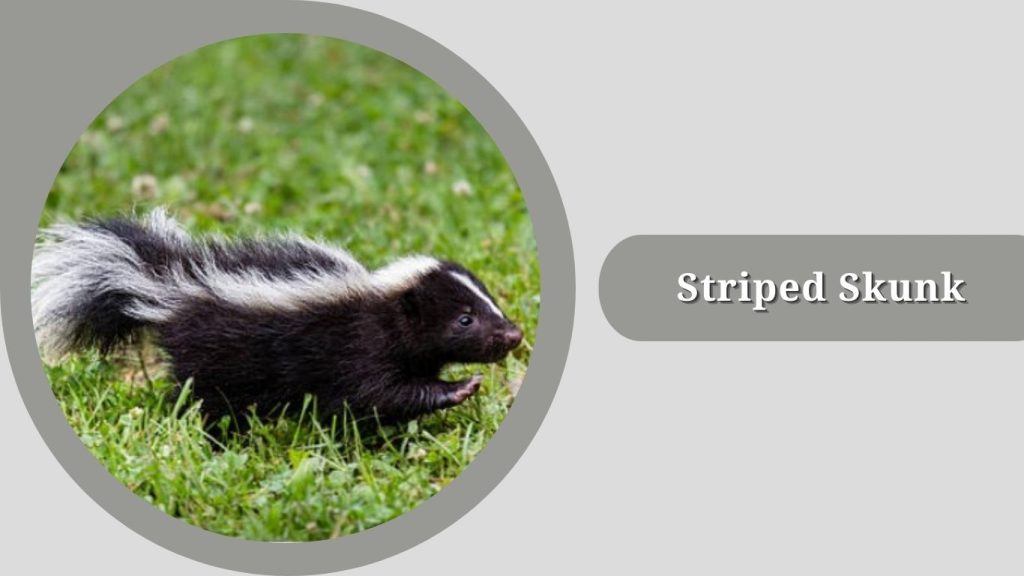
The striped skunk is the most well-known and widely distributed skunk species in North America. It is famous for its bold black-and-white coloration and powerful defensive spray. This adaptable mammal lives in forests, grasslands, farms, and even suburban areas, where it forages at night for insects, small animals, and plant matter.
Identification
- Medium-sized mammal with black fur and two bold white stripes running from head to tail
- Bushy black tail often mixed with white hairs
- Small head, short legs, and sharp curved claws for digging
- Adults usually measure 20–30 inches including the tail
- Weighs around 4–10 pounds on average
Habitat
Striped skunks are highly adaptable and can be found across most of North America. They live in woodlands, grasslands, deserts, and agricultural lands, and are very common near human settlements. They usually den in burrows, hollow logs, rock crevices, or under buildings.
Behavior
This species is mostly nocturnal and solitary. Striped skunks move slowly but are excellent diggers and climbers. When threatened, they stamp their feet, raise their tail, and give warning signals before spraying. They are not aggressive and prefer to escape rather than fight.
Diet
Striped skunks are omnivores and eat a wide variety of foods. Their diet includes insects, grubs, worms, small rodents, eggs, fruits, berries, roots, and even human food scraps. This flexible feeding habit helps them survive in many different environments.
2. Eastern Spotted Skunk
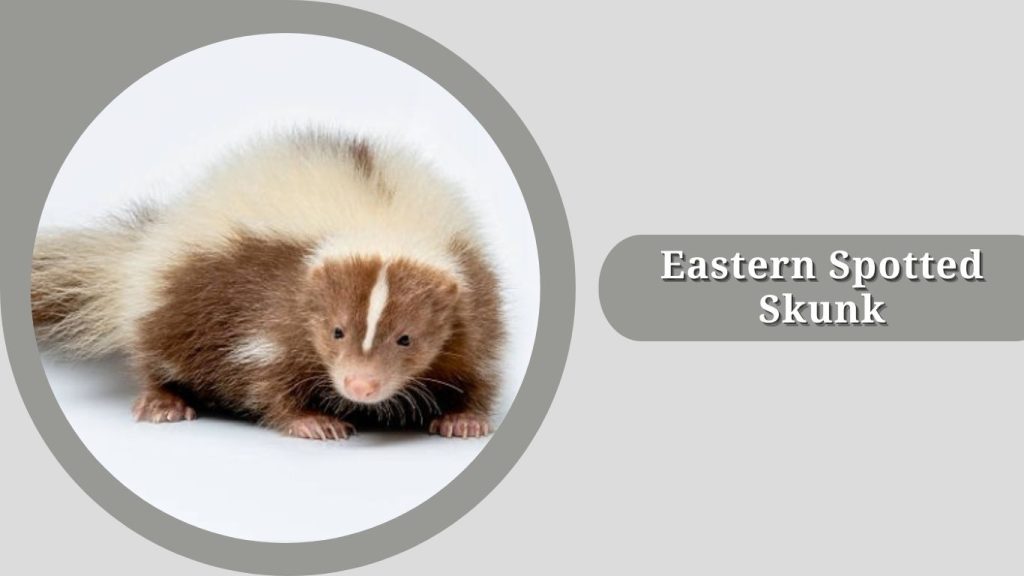
The eastern spotted skunk is a smaller, more agile skunk species known for its striking white spot patterns and energetic behavior. Unlike the striped skunk, it has broken stripes and spots across its body. This species is native to parts of the eastern and central United States and is especially active at night, hunting insects and small prey.
Identification
- Smaller and slimmer than the striped skunk
- Black body with white spots and broken stripes
- Distinct white patch on the forehead and behind the ears
- Bushy tail with noticeable white hairs
- Usually 14–24 inches long including the tail
Habitat
Eastern spotted skunks live in woodlands, prairies, rocky areas, and brushy fields. They often use hollow logs, abandoned burrows, rock piles, and even barns for shelter. They prefer areas with plenty of ground cover where they can hide and hunt easily.
Behavior
This species is quick, curious, and more active than larger skunks. When threatened, it may perform a handstand as a warning display before spraying. Eastern spotted skunks are excellent climbers and are more likely to escape danger by agility rather than confrontation.
Diet
Eastern spotted skunks are omnivorous and feed on insects, spiders, mice, birds, eggs, fruits, and roots. In warm seasons, insects make up a large part of their diet, while in colder months they rely more on small animals and plant material.
3. Western Spotted Skunk
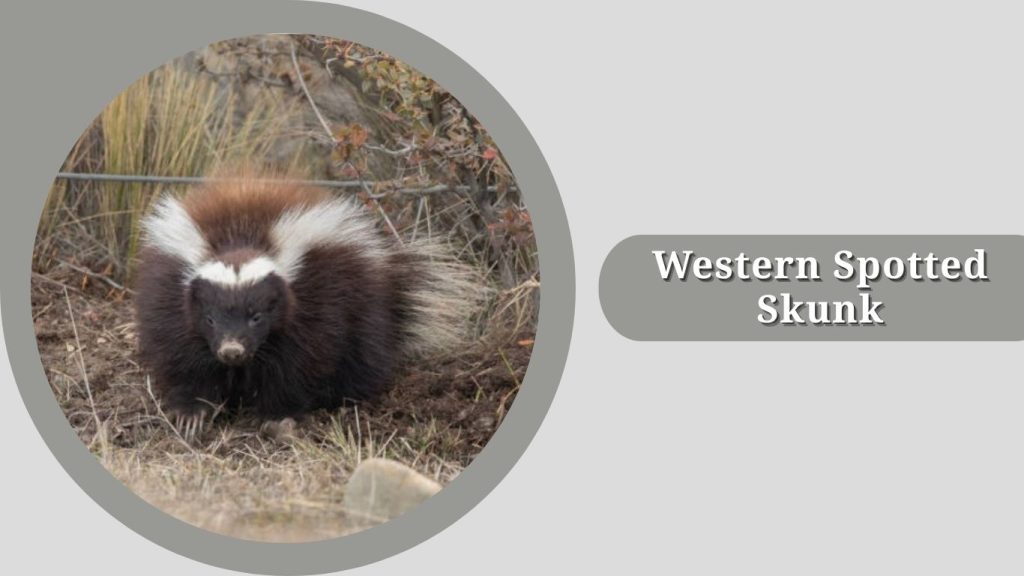
The western spotted skunk is a small but bold skunk species found mainly in the western and central regions of North America. It is recognized by its sharp white spots and broken stripes over a glossy black coat. More active and agile than larger skunks, it is an excellent climber and hunter of insects and small animals.
Identification
- Small, slender body compared to striped skunks
- Black fur marked with white spots and broken stripes
- Prominent white facial markings
- Long, bushy tail with mixed black and white fur
- Adults usually measure 14–24 inches including the tail
Habitat
Western spotted skunks live in deserts, chaparral, grasslands, open forests, and rocky canyons. They often shelter in rock crevices, hollow logs, abandoned burrows, and occasionally buildings. They prefer dry areas with good ground cover.
Behavior
This species is nocturnal and very agile. It can climb trees, squeeze into small spaces, and move quickly when hunting. When threatened, it may raise its front legs and perform a brief handstand as a warning before spraying.
Diet
Western spotted skunks eat insects, beetles, crickets, mice, lizards, small birds, eggs, fruits, and seeds. Their diet changes seasonally, but insects and other invertebrates are a major food source year-round.
4. Southern Spotted Skunk
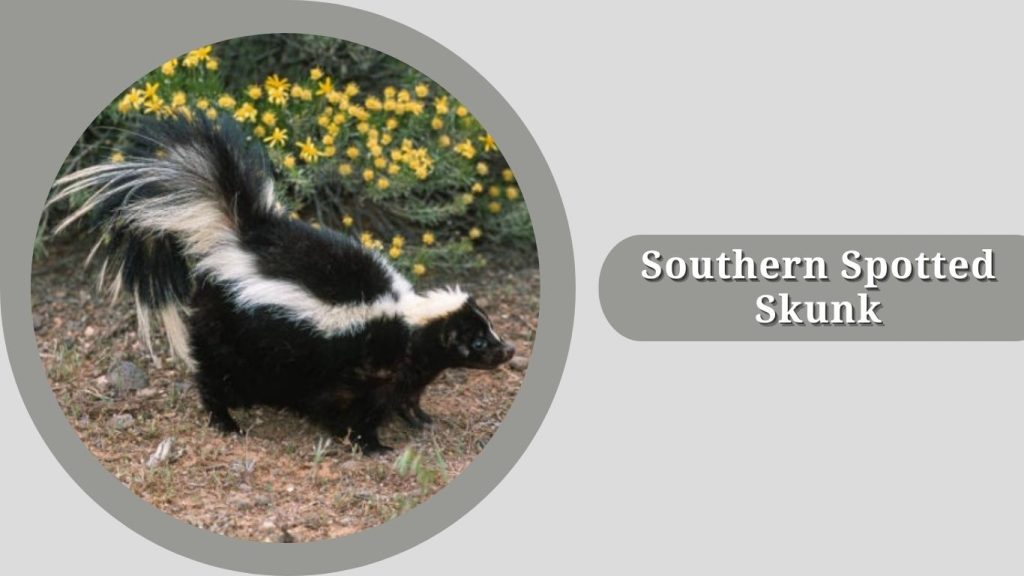
The southern spotted skunk is a small, energetic skunk species native to parts of Mexico and Central America. It is closely related to other spotted skunks but is distinguished by its finer spotting patterns and warmer-region range. This skunk is mostly nocturnal and is well adapted to forests, brushlands, and agricultural edges.
Identification
- Small body with sleek black fur and thin white spots and broken stripes
- Distinct white markings on the face and neck
- Bushy tail often tipped with white
- Short legs with sharp claws for climbing and digging
- Typically 14–22 inches long including the tail
Habitat
Southern spotted skunks inhabit tropical forests, dry woodlands, scrublands, and farmland margins. They often shelter in hollow trees, fallen logs, rock crevices, and old burrows. Dense vegetation provides protection and good hunting grounds.
Behavior
This species is active mainly at night and is very quick and curious. It is an excellent climber and often searches trees and shrubs for insects and small prey. When threatened, it may stamp, chatter, or briefly stand on its front legs before spraying.
Diet
Southern spotted skunks are omnivorous, feeding on insects, spiders, small rodents, reptiles, birds, eggs, fruits, and berries. Their flexible diet allows them to survive in both forested and semi-open environments.
5. Hooded Skunk

The hooded skunk is a distinctive species known for its long, flowing white “hood” of fur that extends from the head down the back and tail. Native to the southwestern United States, Mexico, and parts of Central America, this skunk is more slender than the striped skunk and is often seen in open, dry habitats.
Identification
- Slender body with a long, narrow snout
- Large white mantle or “hood” covering the head, neck, and back
- Black sides and underparts with a very bushy tail
- Longer fur than most other skunk species
- Usually 20–30 inches long including the tail
Habitat
Hooded skunks live in deserts, grasslands, open forests, and scrublands. They often choose rocky areas, abandoned burrows, hollow logs, or dense brush for shelter. This species is well adapted to warm, dry climates.
Behavior
Hooded skunks are nocturnal and mostly solitary. They rely heavily on their sense of smell to locate food and are strong diggers. When threatened, they raise their tail, stomp their feet, and may release a powerful spray if the danger continues.
Diet
Their diet consists largely of insects such as beetles, crickets, and larvae, along with small rodents, reptiles, eggs, fruits, and roots. Compared to many skunks, hooded skunks tend to eat a higher proportion of insects.
6. Hog-nosed Skunk
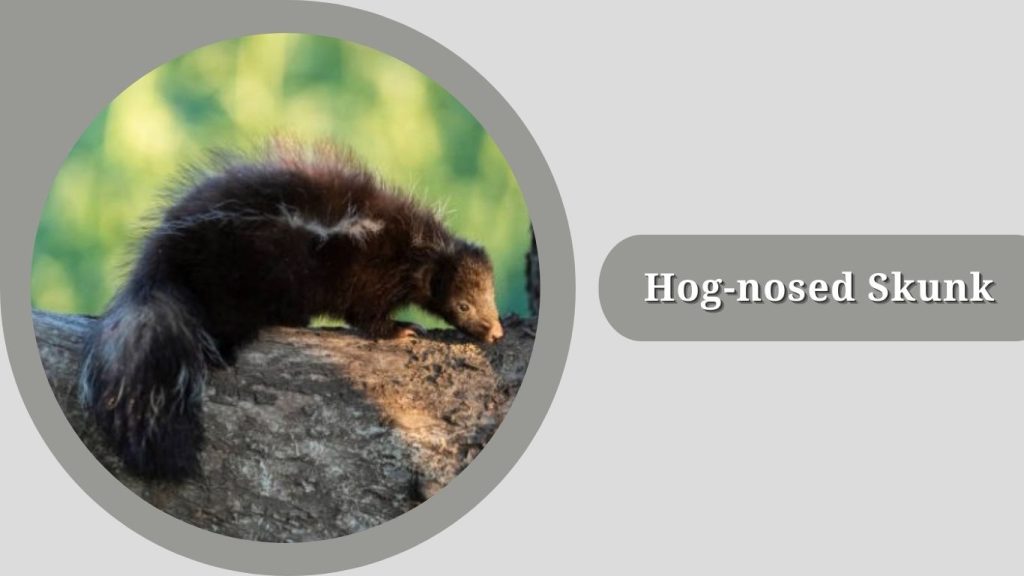
The hog-nosed skunk is named for its long, pig-like snout, which is perfectly adapted for digging in soil for food. This group of skunks is generally larger and more powerfully built than spotted skunks and is found mainly in Central and South America, with one species extending into the southern United States.
Identification
- Long, broad snout with a hairless nose pad
- Stocky body with strong shoulders
- Coarse black fur with wide white markings
- Large, bushy tail often held upright
- Adults can reach 24–32 inches including the tail
Habitat
Hog-nosed skunks live in grasslands, savannas, open forests, and agricultural areas. They prefer loose soils where they can easily dig for insects and roots. Dens are often made in abandoned burrows or self-dug tunnels.
Behavior
These skunks are strong diggers and spend much of their time rooting in the ground. They are mostly nocturnal but may also be active at dawn or dusk. When threatened, they are known to be more assertive than smaller skunks and will defend themselves if needed.
Diet
Their diet is heavily insect-based and includes beetle larvae, grubs, worms, and ants. They also eat small vertebrates, eggs, fruits, and underground plant parts, using their snout to plow through soil efficiently.
7. American Hog-nosed Skunk
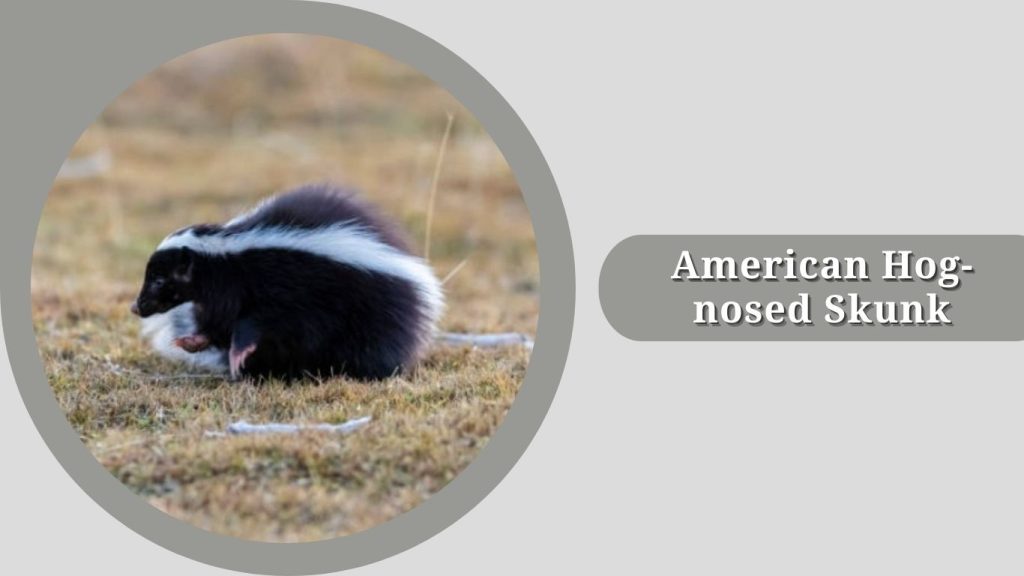
The American hog-nosed skunk is the northernmost member of the hog-nosed skunk group and is best known for its long, pig-like snout and powerful digging ability. It ranges from the southern United States through Mexico and into Central America, where it occupies open habitats with soft soil.
Identification
- Long, broad, upturned snout adapted for digging
- Stocky, muscular body with coarse fur
- Bold black-and-white coloration, often with a wide white back stripe
- Strong forelimbs with long, curved claws
- Typically 24–32 inches long including the tail
Habitat
American hog-nosed skunks live in grasslands, prairies, savannas, open forests, and agricultural areas. They prefer dry or semi-dry regions with loose soil, which allows them to dig easily for food and to create dens.
Behavior
This species is mostly nocturnal but may be active during cooler daylight hours. It spends much of its time rooting in the ground for insects. When threatened, it may hiss, stomp, and bluff-charge before using its spray as a last defense.
Diet
American hog-nosed skunks feed mainly on insects and their larvae, especially beetles and grubs. They also eat worms, small mammals, reptiles, eggs, fruits, and roots, making them opportunistic omnivores.
8. White-backed Hog-nosed Skunk

The white-backed hog-nosed skunk is a striking member of the hog-nosed skunk group, easily recognized by the broad white patch that covers most of its back. It is native to parts of South America, where it inhabits open landscapes and forest edges, spending much of its time foraging on the ground.
Identification
- Long, pig-like snout with a broad nose pad
- Stocky body built for digging
- Large white area covering most of the back
- Black sides and underside with a bushy tail
- Adults usually 24–31 inches long including the tail
Habitat
White-backed hog-nosed skunks live in grasslands, savannas, scrublands, and open forests. They often select areas with soft soil where insects are abundant and where burrows can be easily made or taken over from other animals.
Behavior
This skunk is mostly nocturnal and solitary. It relies heavily on its sense of smell to locate prey underground. When threatened, it may raise its tail, hiss, and stamp before resorting to its strong defensive spray.
Diet
Its diet is dominated by insects such as beetles, larvae, and ants. It also eats worms, small vertebrates, eggs, fruits, and roots, using its powerful snout and claws to uncover food beneath the soil.
9. Humboldt’s Hog-nosed Skunk

Humboldt’s hog-nosed skunk is a South American species named after the naturalist Alexander von Humboldt. It is adapted to open and semi-open environments, where it uses its strong snout and claws to dig for insects and other underground food sources.
Identification
- Long, flexible, pig-like snout
- Robust, muscular body with strong forelimbs
- Black fur with prominent white markings on the back
- Thick, bushy tail often carried upright
- Adults generally measure 24–32 inches including the tail
Habitat
This species is found in grasslands, pampas, scrublands, and open forests of South America. It favors areas with loose or sandy soil that make digging easier and provide abundant insect life.
Behavior
Humboldt’s hog-nosed skunk is mainly nocturnal and solitary. It spends much of its time foraging by rooting in the ground. When threatened, it may growl, stomp, and face predators boldly before spraying.
Diet
Its diet includes beetle larvae, grubs, worms, ants, and termites. It also consumes small mammals, reptiles, eggs, fruits, and roots, making it an adaptable omnivore.
10. Pygmy Spotted Skunk

The pygmy spotted skunk is the smallest and rarest skunk species in the world. It is endemic to the Pacific coastal forests of western Mexico and is known for its tiny size, delicate build, and beautifully patterned coat of white spots and broken lines.
Identification
- Very small body size compared to other skunks
- Black fur with fine white spots and short broken stripes
- Short face with distinct white markings
- Slim tail with mixed black and white hairs
- Adults usually only 11–16 inches long including the tail
Habitat
Pygmy spotted skunks live in tropical dry forests, thorn forests, and dense coastal vegetation. They prefer lowland areas with thick ground cover where they can hide easily and hunt insects.
Behavior
This species is nocturnal and extremely elusive. It is an agile climber and often forages in shrubs and low trees. When threatened, it may perform a brief handstand display before spraying, similar to other spotted skunks.
Diet
Their diet consists mainly of insects, spiders, and other invertebrates, along with small vertebrates, eggs, and seasonal fruits. Because of their small size, they rely heavily on insects as a primary food source.
11. Desert Spotted Skunk
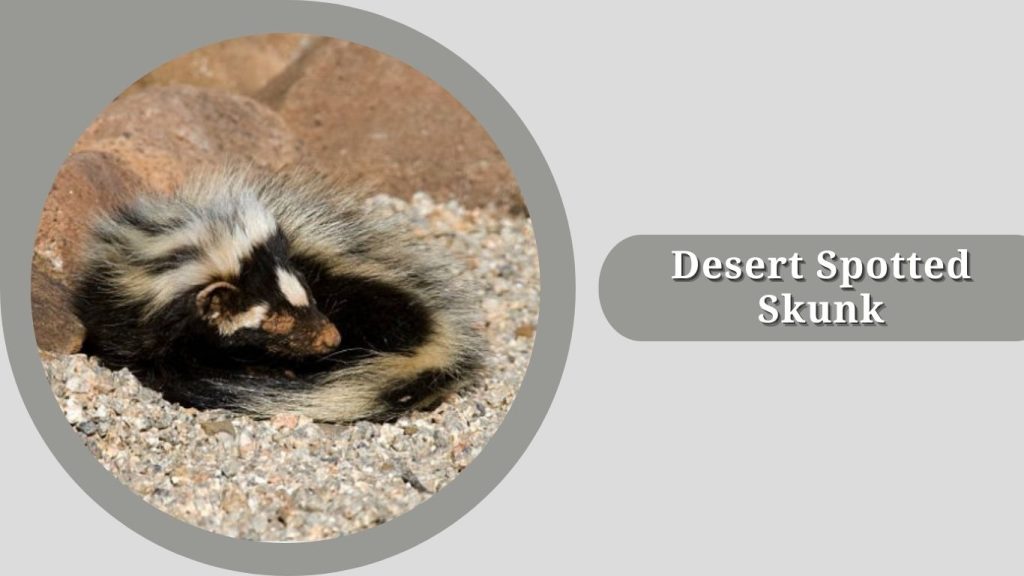
The desert spotted skunk is a small, agile skunk adapted to dry, open environments of the southwestern United States and northern Mexico. It is known for its broken white stripes and spots, which help distinguish it from larger striped skunks. Despite its small size, it is an energetic and bold forager.
Identification
- Small, slender body with short legs
- Black fur with broken white stripes and distinct spots
- White facial markings and a partially white tail tip
- Sharp claws adapted for digging and climbing
- Adults usually measure 14–22 inches including the tail
Habitat
Desert spotted skunks live in deserts, semi-arid scrublands, rocky canyons, and open woodlands. They often take shelter in rock crevices, abandoned burrows, hollow logs, and sometimes under buildings.
Behavior
This species is nocturnal and very agile. It is an excellent climber and can squeeze into narrow spaces. When threatened, it may stomp its feet, chatter, or perform a brief handstand before releasing its defensive spray.
Diet
Desert spotted skunks feed on insects such as beetles, grasshoppers, and crickets, as well as spiders, scorpions, small rodents, lizards, eggs, fruits, and seeds. Their diet changes with seasonal food availability.
12. Plains Hog-nosed Skunk
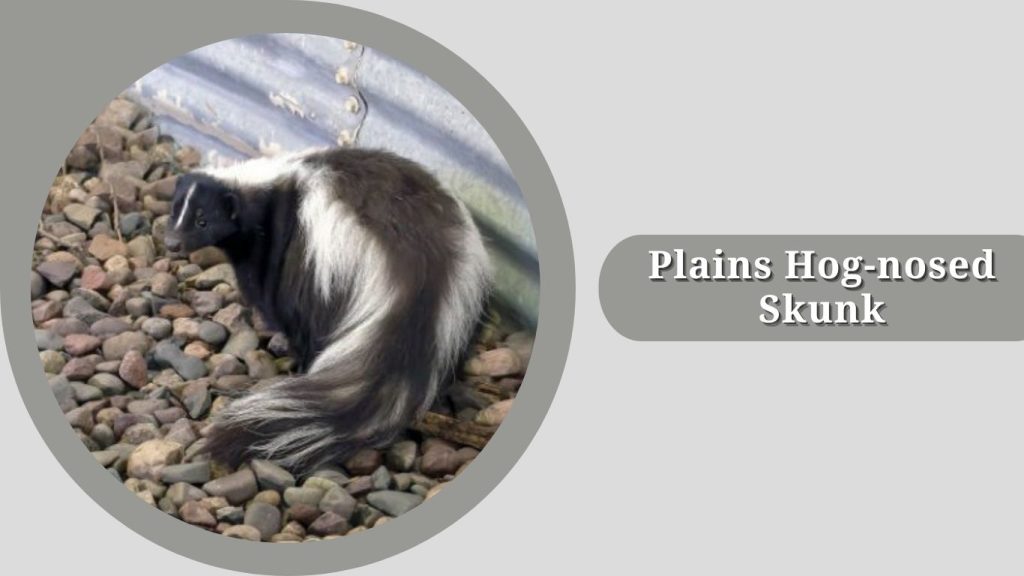
The plains hog-nosed skunk is a strong, ground-dwelling skunk found mainly in the grasslands and open regions of South America. It is well adapted for life in wide, open habitats where it spends much of its time digging in soil for insects and underground prey.
Identification
- Broad, pig-like snout adapted for rooting
- Stocky body with powerful shoulders
- Black fur with wide white markings along the back
- Thick, bushy tail often carried upright
- Adults generally 25–33 inches long including the tail
Habitat
Plains hog-nosed skunks inhabit pampas, savannas, open grasslands, and lightly wooded areas. They prefer loose soils that allow easy digging and provide abundant insects and larvae.
Behavior
This species is mostly nocturnal but may also be active during cooler parts of the day. It is a strong digger and forages by plowing through soil with its snout. When threatened, it may growl, stomp, and stand its ground before spraying.
Diet
Its diet is mainly composed of insects, grubs, worms, and ants. It also eats small vertebrates, eggs, roots, and fallen fruits, making it a flexible and opportunistic feeder.
13. Amazonian Hog-nosed Skunk
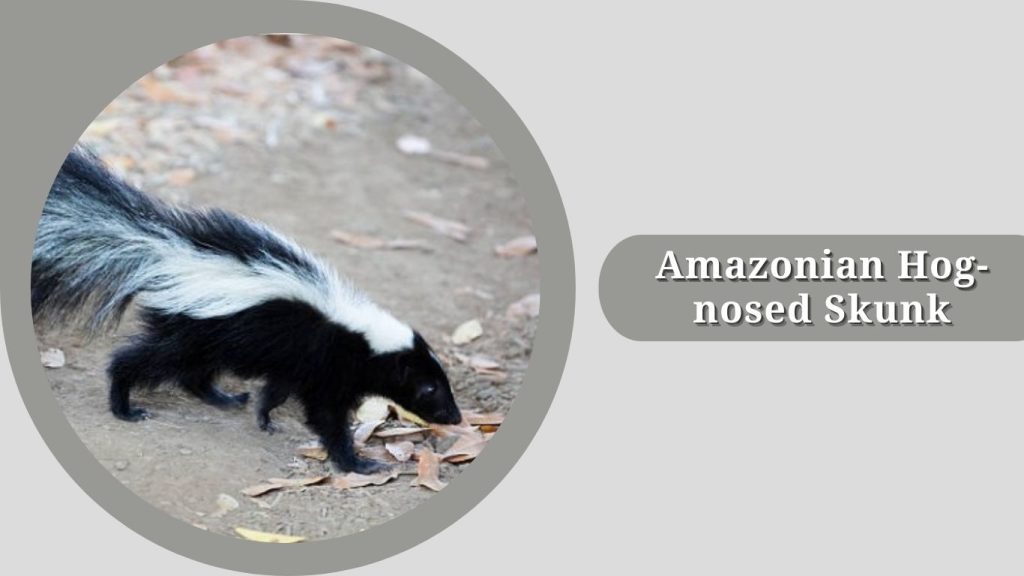
The Amazonian hog-nosed skunk is a lesser-known skunk species associated with parts of the Amazon Basin and surrounding regions. It is adapted to warm, humid environments where it uses its strong snout to dig through soft soil and leaf litter in search of food.
Identification
- Long, pig-like snout with a broad nose pad
- Muscular, stocky body built for digging
- Dark fur with contrasting white markings along the back
- Bushy tail often held upright
- Adults typically measure around 24–32 inches including the tail
Habitat
This species inhabits tropical forests, forest edges, and nearby open areas. It favors regions with soft, moist soil and dense ground cover where insects and other invertebrates are plentiful.
Behavior
Amazonian hog-nosed skunks are mostly nocturnal and solitary. They spend much of their time rooting through soil, leaf litter, and rotting logs. When threatened, they may hiss, stomp, and spray as a defensive response.
Diet
Their diet includes insects, beetle larvae, worms, ants, termites, small vertebrates, eggs, fruits, and roots. This varied diet supports survival in both forested and semi-open tropical habitats.
14. Patagonian Hog-nosed Skunk
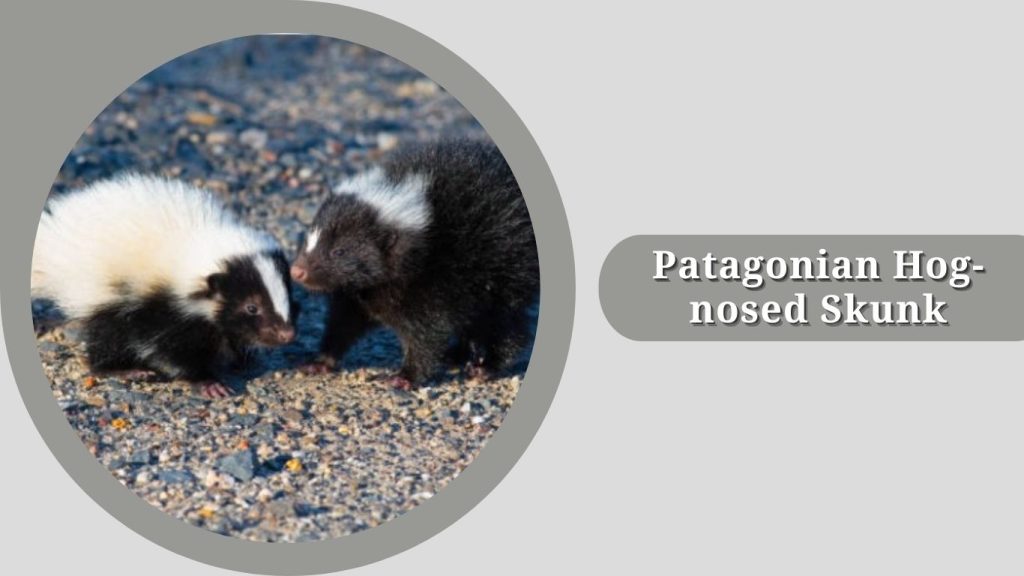
The Patagonian hog-nosed skunk is a southern South American species adapted to cooler and more open environments. It is commonly found in Patagonia and surrounding regions, where it forages across grasslands and shrublands using its powerful snout and claws.
Identification
- Long, upturned, pig-like snout
- Thick, sturdy body with coarse fur
- Black coat with bold white markings on the back
- Strong forelimbs with long digging claws
- Adults usually reach 25–34 inches including the tail
Habitat
Patagonian hog-nosed skunks live in open grasslands, Patagonian steppe, scrublands, and lightly wooded areas. They often choose areas with loose soil and abundant insects, using natural shelters or self-dug burrows.
Behavior
This species is mostly nocturnal and solitary, but may also be active during cooler daylight hours. It is a powerful digger and forages by rooting through soil. When threatened, it may growl, stomp, and stand its ground before spraying.
Diet
Its diet is dominated by insects, larvae, worms, and ants. It also consumes small mammals, reptiles, eggs, roots, and fruits, depending on seasonal availability.
15. Chilean Hog-nosed Skunk
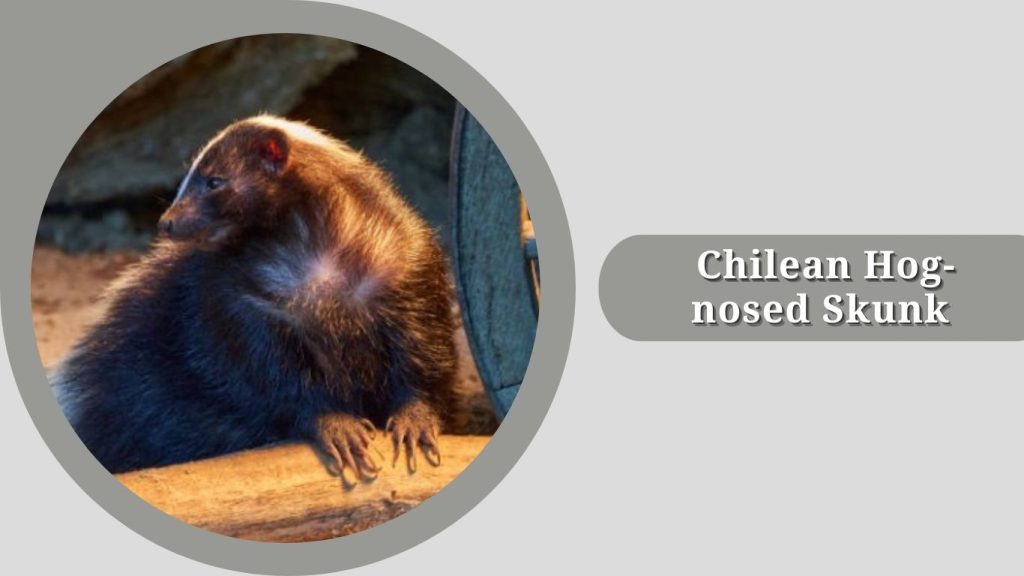
The Chilean hog-nosed skunk is a South American species primarily found in Chile and nearby regions of Argentina. It is well adapted to open landscapes and forest edges, where it spends much of its time searching the ground for insects and other food.
Identification
- Long, pig-like snout with a broad nose
- Stocky, muscular body built for digging
- Dark fur with noticeable white markings along the back
- Large, bushy tail often raised when alert
- Adults typically measure 24–32 inches including the tail
Habitat
Chilean hog-nosed skunks inhabit grasslands, shrublands, forest edges, and agricultural areas. They prefer regions with soft soils that support abundant insect life and allow easy digging.
Behavior
This species is mostly nocturnal and solitary. It relies heavily on smell to locate underground prey. When threatened, it may stomp, hiss, and spray as a strong defensive response.
Diet
Its diet mainly consists of insects such as beetles, grubs, and ants. It also feeds on worms, small mammals, reptiles, eggs, roots, and fruits, making it an adaptable omnivore.
FAQs
What are skunks best known for?
Skunks are best known for their powerful defensive spray, which has a strong, long-lasting odor used to deter predators. They usually give warning signs like stomping feet or raising their tail before spraying. This behavior helps them avoid fights and stay safe in the wild.
Where are skunks commonly found?
Skunks are mainly found across North, Central, and South America. They live in a wide range of habitats including forests, grasslands, deserts, farmland, and even suburban areas. Their adaptability allows them to survive in both wild and human-modified environments.
What do skunks usually eat?
Skunks are omnivores and eat a very varied diet. They commonly feed on insects, grubs, worms, small rodents, eggs, fruits, berries, and roots. This flexible diet helps skunks survive seasonal changes and makes them effective natural pest controllers.
Are skunks aggressive animals?
Skunks are not naturally aggressive and usually try to avoid conflict. They rely on warning displays and spraying as a last defense. Most skunk encounters happen at night, and they typically retreat if given space and not surprised or cornered.
Do all skunks look the same?
No, skunks vary greatly in size, color patterns, and markings. Some have bold stripes, others have spots, and hog-nosed skunks have longer snouts and heavier bodies. These differences help distinguish species adapted to different regions and habitats.