




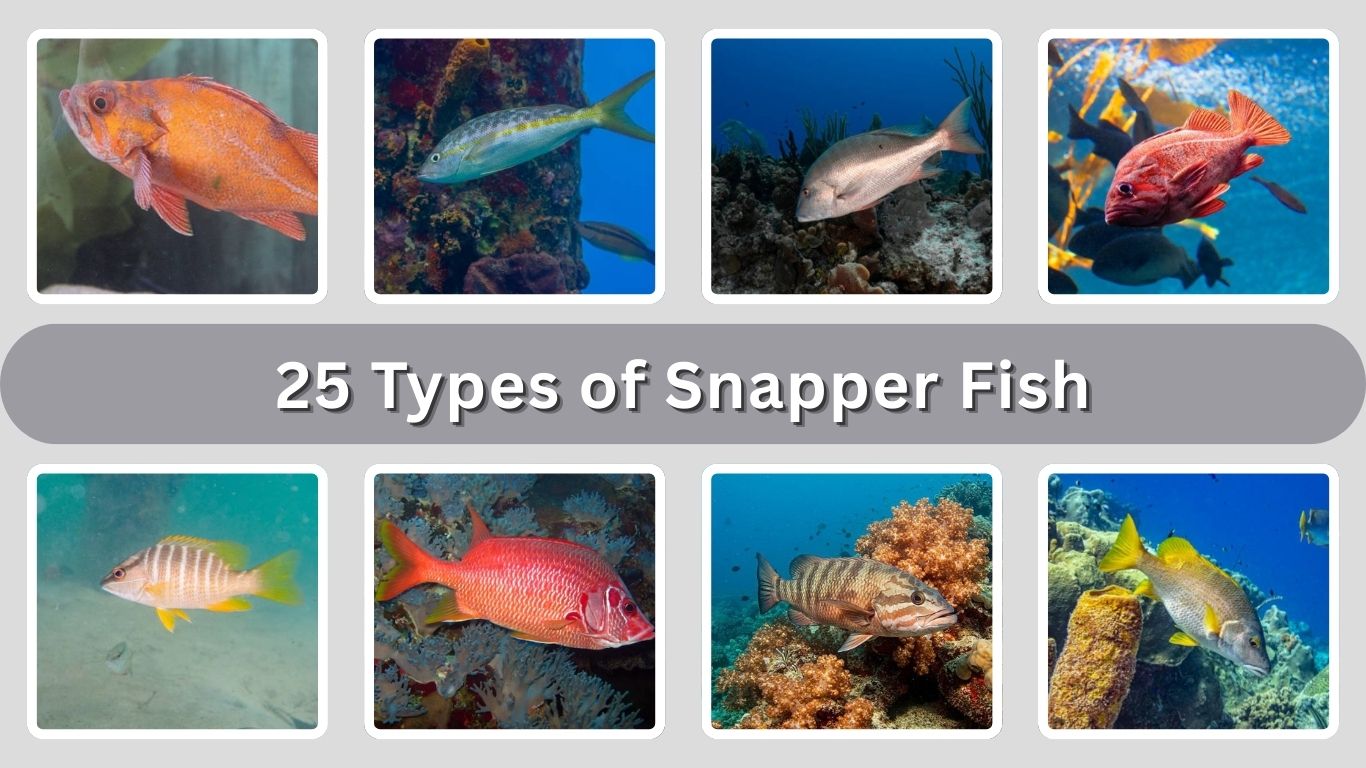
Snappers are a diverse group of marine fish known for their strong bodies, sharp teeth, and importance in both commercial and recreational fishing. Found mainly in tropical and subtropical oceans, snapper fish inhabit coral reefs, rocky bottoms, mangroves, and deep offshore waters. They are highly valued for their firm, mild-flavored meat and striking colors. With hundreds of species worldwide, snappers vary widely in size, habitat, and behavior, making them fascinating subjects for seafood lovers, anglers, and marine life enthusiasts alike.
1. Red Snapper
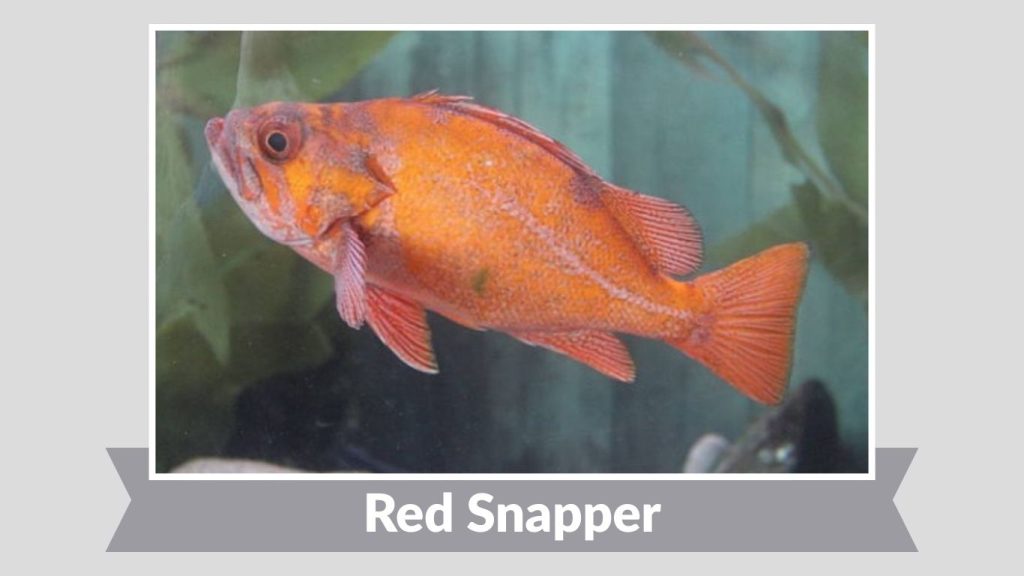
Red snapper is one of the most well-known snapper species, valued worldwide for its firm texture, mild flavor, and striking reddish-pink body. It lives mainly in warm Atlantic and Gulf waters and is popular in both commercial and recreational fishing. Because of its wide recognition, red snapper is often used as the reference species when people talk about snappers in general.
Identification
- Bright red to pinkish-red body color
- Streamlined, oval-shaped body
- Large eyes with a slightly sloped forehead
- Sharp canine teeth inside the mouth
- Spiny dorsal fin with a softer rear section
- Light-colored belly compared to the back
Habitat and Distribution
Red snapper is commonly found in the western Atlantic Ocean, especially in the Gulf of Mexico and along the southeastern coast of the United States. It prefers reefs, rocky bottoms, and offshore structures, where it can hide and hunt. Juveniles often stay in shallower waters, while adults move to deeper offshore habitats.
Diet and Feeding Behavior
Red snapper is a carnivorous fish that feeds mainly on shrimp, crabs, small fish, squid, and other marine invertebrates. It is an active predator, using its strong jaws and sharp teeth to capture prey. Feeding usually occurs near the seafloor, especially around reefs and submerged structures.
Size and Lifespan
Red snapper can grow quite large, often reaching 60–100 cm (24–40 inches) in length and weighing over 10 kg (22 lb). Some individuals live more than 50 years in the wild. They grow slowly, which is one reason fisheries carefully manage red snapper populations.
2. Yellowtail Snapper
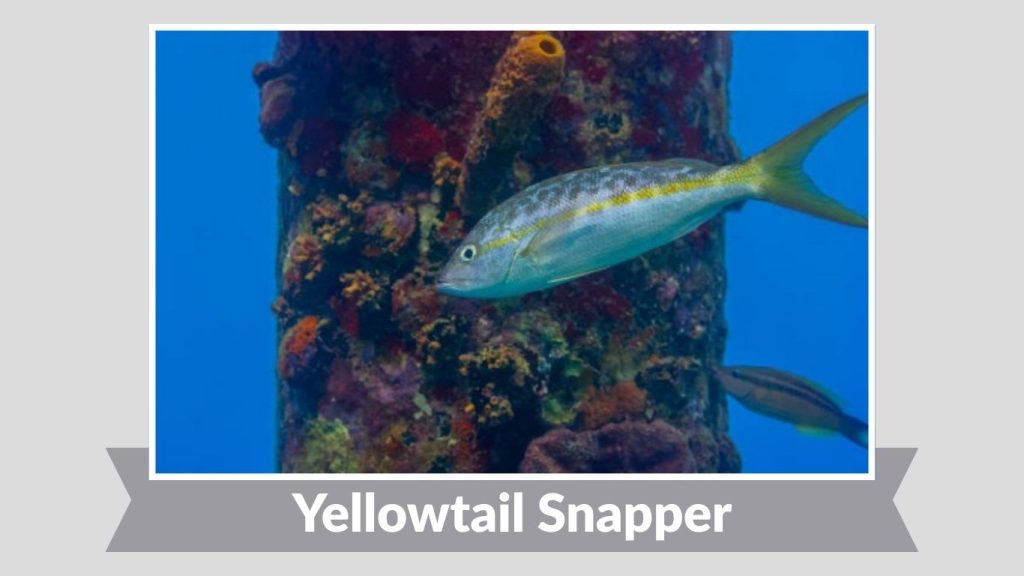
Yellowtail snapper is a brightly colored, reef-dwelling fish best known for the vivid yellow stripe that runs along its body and tail. It is highly popular in tropical coastal fisheries and seafood markets due to its mild, sweet taste and attractive appearance. This species is commonly seen around coral reefs, making it familiar to snorkelers and divers.
Identification
- Silvery body with a bright yellow horizontal stripe
- Deep yellow, forked tail fin
- Slender, streamlined body shape
- Slight pinkish or bluish tint along the back
- Large eyes adapted for clear reef waters
- Small mouth with fine, sharp teeth
Habitat and Distribution
Yellowtail snapper is mainly found in the western Atlantic Ocean, including Florida, the Gulf of Mexico, and the Caribbean Sea. It prefers coral reefs, rocky bottoms, mangroves, and seagrass areas. Adults usually stay near reefs, while juveniles are often seen in shallow coastal habitats.
Diet and Feeding Behavior
Yellowtail snapper feeds on small fish, shrimp, crabs, worms, and planktonic organisms. It is an active daytime feeder and often hunts just above reef structures. This species may feed alone or in loose groups, quickly darting out to capture prey in open water.
Size and Lifespan
Yellowtail snapper is smaller than red snapper, usually growing to about 30–45 cm (12–18 inches) long. Most individuals live around 10–15 years, though some can survive longer in healthy reef environments.
3. Mutton Snapper
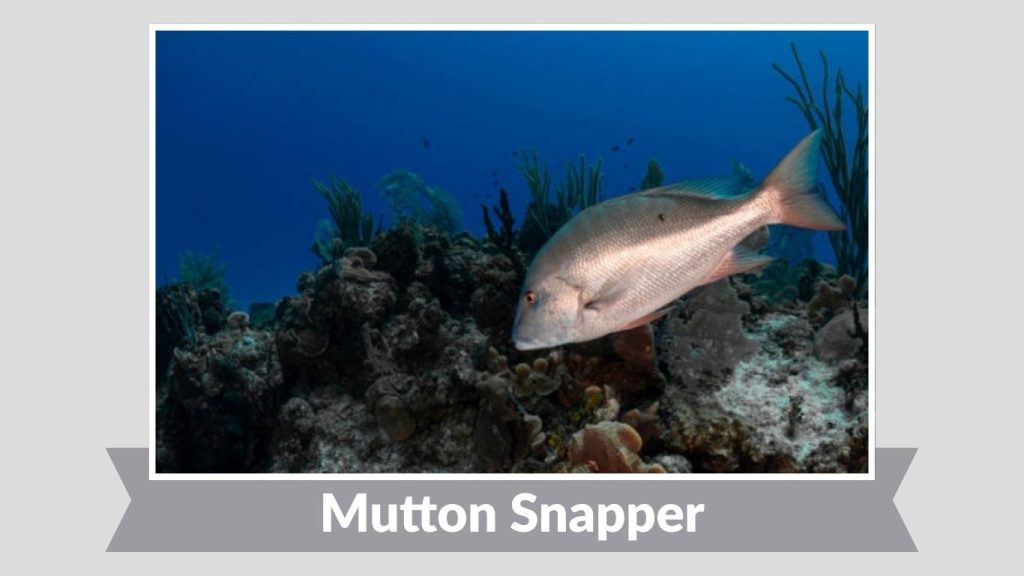
Mutton snapper is a large, powerful reef fish recognized for the dark spot near its upper side and its strong, thick body. It is prized by anglers and seafood lovers alike because of its firm flesh and rich flavor. This species is known for being cautious and intelligent, making it a challenging and respected catch.
Identification
- Reddish to pink body with a faint bluish sheen
- Distinct dark spot on the upper side below the dorsal fin
- Sloped forehead and pointed snout
- Strong jaws with noticeable canine teeth
- Deep, robust body shape
- Light-colored belly
Habitat and Distribution
Mutton snapper occurs throughout the western Atlantic, including Florida, the Gulf of Mexico, Bermuda, and the Caribbean Sea. It inhabits coral reefs, rocky ledges, and sandy areas near reefs. Juveniles often live in seagrass beds and mangroves before moving offshore as adults.
Diet and Feeding Behavior
Mutton snapper is a bottom-oriented predator that feeds on fish, shrimp, crabs, lobsters, and mollusks. It usually hunts at dawn and dusk, using stealth and sudden bursts of speed to capture prey. Its strong teeth allow it to crush hard-shelled animals.
Size and Lifespan
Mutton snapper can reach lengths of about 90 cm (35 inches) and may weigh over 15 kg (33 lb). It is a long-lived species, with some individuals surviving 30–40 years in the wild.
4. Cubera Snapper
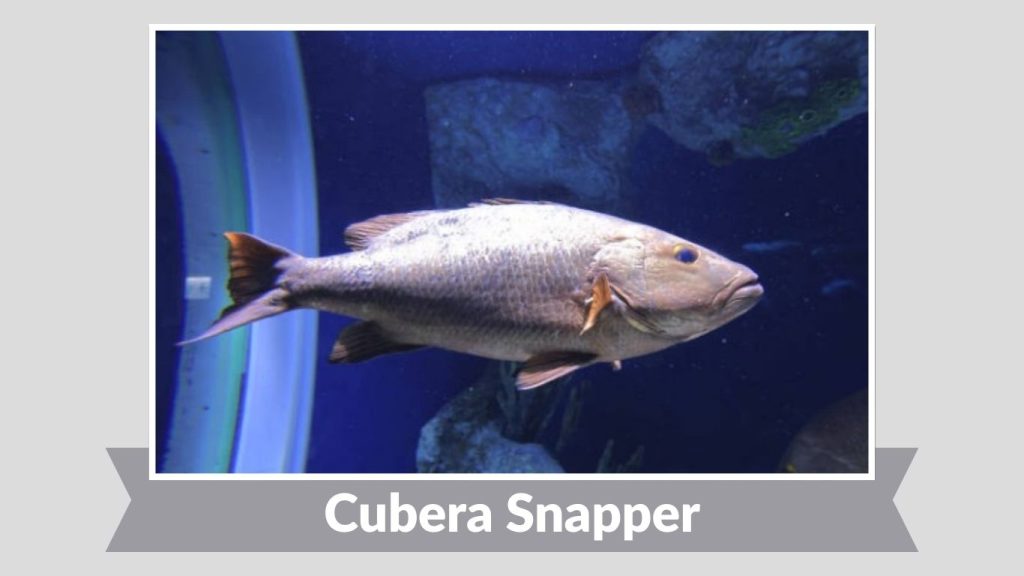
Cubera snapper is the largest of the Atlantic snappers and is well known for its massive head, thick lips, and powerful jaws. It is an apex reef predator and a dream catch for sport anglers because of its strength and size. This species is usually solitary and very territorial.
Identification
- Dark gray to reddish-brown body color
- Extremely large mouth with thick lips
- Heavy, square-shaped head
- Strong canine teeth visible even when mouth is closed
- Robust, muscular body
- Rounded tail in adults
Habitat and Distribution
Cubera snapper is found in the western Atlantic Ocean from Florida and the Gulf of Mexico through the Caribbean and down to Brazil. It inhabits coral reefs, rocky bottoms, wrecks, and sometimes mangroves. Adults usually live in deeper offshore waters, while juveniles stay in coastal lagoons and estuaries.
Diet and Feeding Behavior
Cubera snapper feeds mainly on fish, crabs, lobsters, and large crustaceans. It is a powerful ambush predator, often hiding near structures before lunging at prey. Its strong jaws allow it to crush shells and even bite through fishing gear.
Size and Lifespan
Cubera snapper can grow over 1.5 meters (5 feet) long and may weigh more than 60 kg (130 lb). It is a slow-growing, long-lived species, with some individuals believed to live over 40 years.
5. Lane Snapper
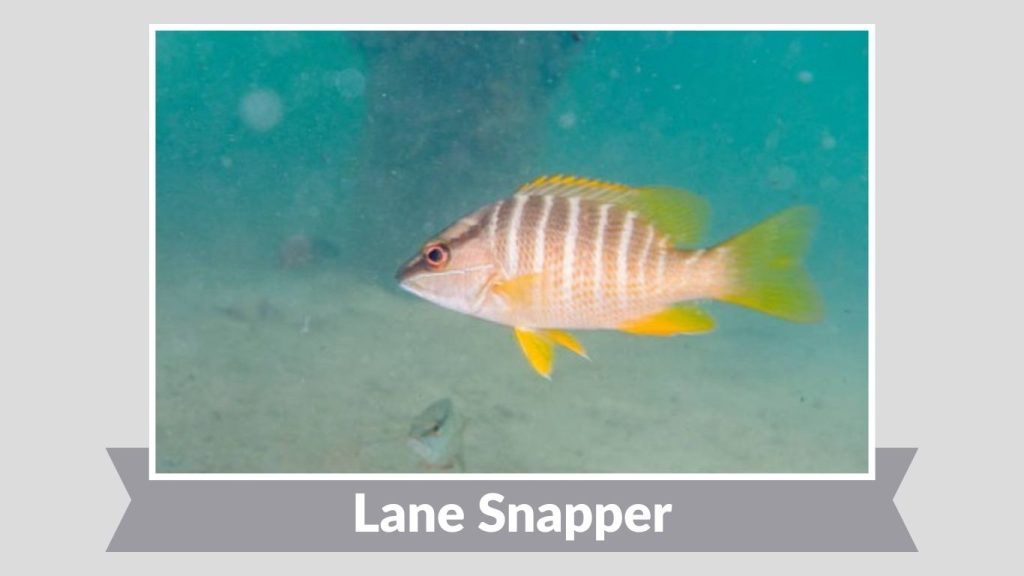
Lane snapper is a colorful reef fish known for its bright yellow stripes and the dark spot on its upper side. It is smaller than many other snapper species but is very common in tropical and subtropical waters. Because of its attractive appearance and good-tasting meat, it is popular with both divers and coastal fishers.
Identification
- Pinkish-red body with yellow horizontal stripes
- Distinct black spot on the upper side below the dorsal fin
- Slender, slightly elongated body
- Red eyes with a reflective sheen
- Forked tail with yellow highlights
- Pale underside
Habitat and Distribution
Lane snapper is widely distributed in the western Atlantic, including the Gulf of Mexico, Florida, the Caribbean Sea, and parts of South America. It prefers coral reefs, rocky areas, and sandy bottoms near reefs. Juveniles are often found in shallow coastal waters.
Diet and Feeding Behavior
Lane snapper feeds mainly on shrimp, crabs, small fish, and marine worms. It is an active feeder that searches along the seafloor and around reef structures. This species often feeds during the day but may also hunt at dusk.
Size and Lifespan
Lane snapper is relatively small, usually growing to about 25–40 cm (10–16 inches). Most individuals live around 8–12 years, depending on habitat quality and fishing pressure.
6. Gray Snapper (Mangrove Snapper)
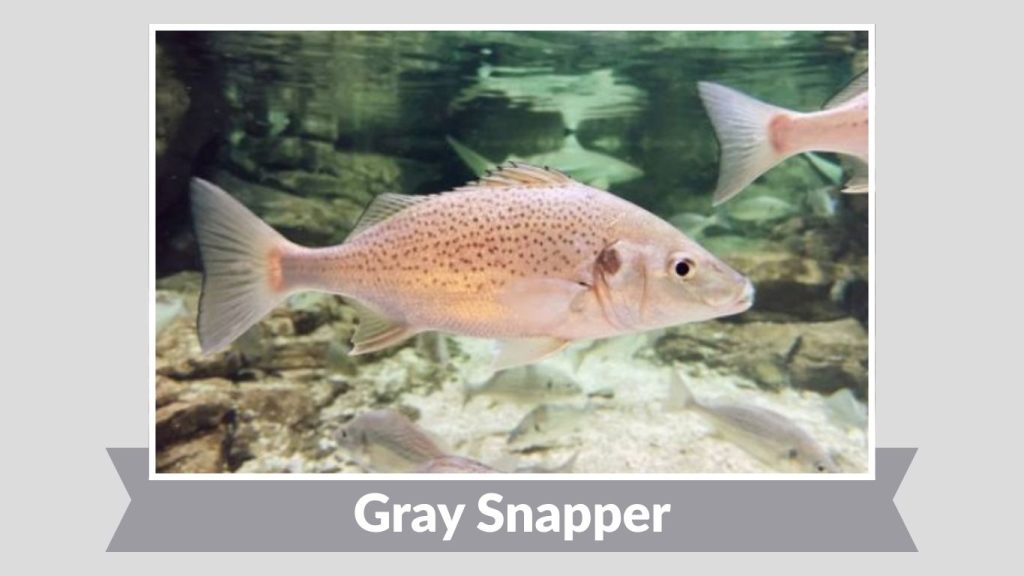
Gray snapper, also known as mangrove snapper, is a highly adaptable species that lives in both shallow coastal habitats and deeper offshore reefs. It is well known for its sharp teeth, cautious behavior, and excellent food quality. This snapper often changes color slightly to blend with its surroundings.
Identification
- Gray to olive body with a bronze or reddish tint
- Dark horizontal line through the eye
- Noticeable canine teeth in the front of the mouth
- Slightly forked tail
- Scales with faint darker edges giving a checkered look
- Lighter belly
Habitat and Distribution
Gray snapper is found throughout the western Atlantic Ocean, including Florida, the Gulf of Mexico, the Caribbean, and along the coast of South America. It inhabits mangroves, estuaries, docks, reefs, and wrecks. Juveniles prefer sheltered inshore areas, while adults often move offshore.
Diet and Feeding Behavior
Gray snapper feeds on fish, shrimp, crabs, and other crustaceans. It is mostly nocturnal, becoming more active at night to hunt. This species often ambushes prey from cover, using quick bursts of speed.
Size and Lifespan
Gray snapper typically grows to 30–50 cm (12–20 inches) but can reach larger sizes in offshore waters. It can live more than 20 years under favorable conditions.
7. Dog Snapper
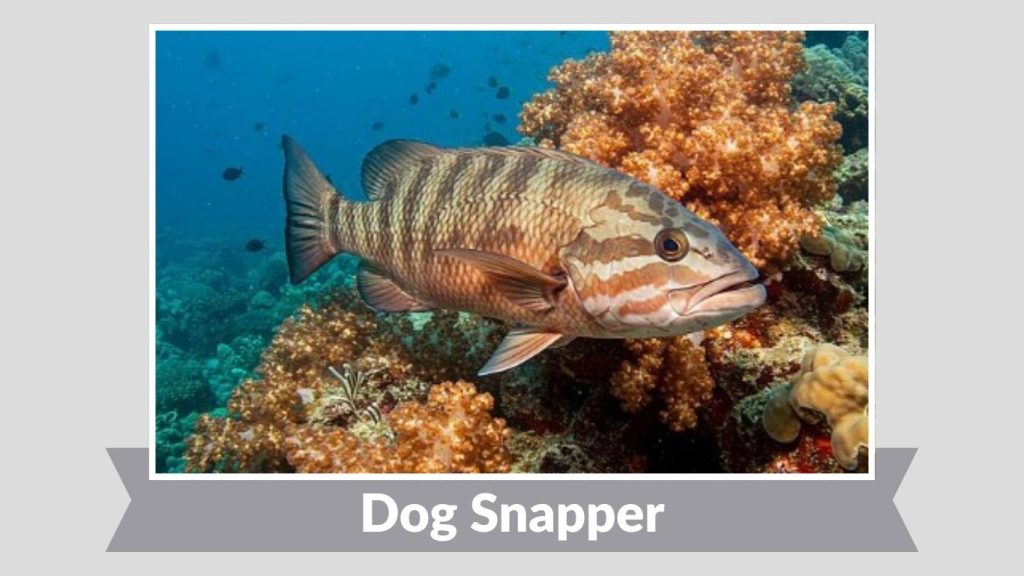
Dog snapper is a striking reef fish recognized by its large red eyes and sharp canine teeth. It is more common in deeper reef waters and is often confused with other red snapper species, though its eye size and tooth structure make it distinctive. This species is valued in both commercial and sport fisheries.
Identification
- Reddish to copper-colored body
- Very large, bright red eyes
- Prominent canine teeth at the front of the jaws
- Slender, elongated body shape
- Slightly forked tail
- Darker back with a paler underside
Habitat and Distribution
Dog snapper is found in the western Atlantic Ocean, including Florida, the Gulf of Mexico, the Caribbean Sea, and down to Brazil. It prefers deep coral reefs, rocky ledges, and drop-offs, usually at depths greater than many other snappers.
Diet and Feeding Behavior
Dog snapper feeds mainly on fish, shrimp, and crabs. It is mostly nocturnal and relies on its large eyes to hunt in low-light conditions. During the day, it often hides in reef crevices and under ledges.
Size and Lifespan
Dog snapper commonly reaches 50–75 cm (20–30 inches) in length. It is a slow-growing fish and may live 30 years or more in the wild.
8. Schoolmaster Snapper
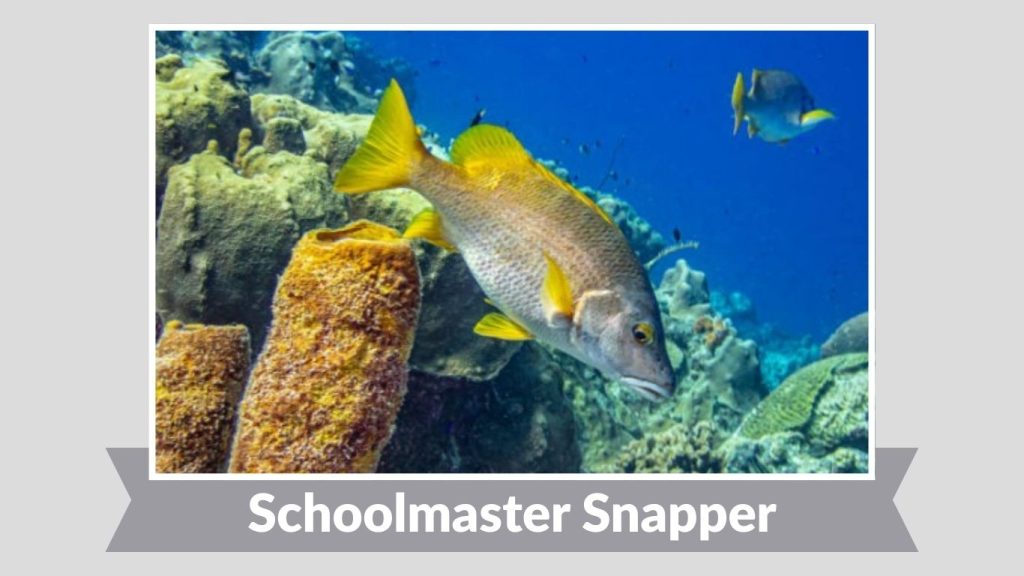
Schoolmaster snapper is a smaller, reef-associated snapper known for its yellow-tinted fins and the dark bar that often appears below its eye. It commonly forms small schools, especially when young, which is how it gets its name. This species is widespread and frequently seen by divers in tropical waters.
Identification
- Brownish to olive body with a faint reddish tone
- Distinct dark bar below the eye
- Yellowish fins, especially the pelvic and anal fins
- Slender, oval-shaped body
- Small mouth with fine teeth
- Pale underside
Habitat and Distribution
Schoolmaster snapper is found throughout the western Atlantic, including Florida, the Gulf of Mexico, Bermuda, and the Caribbean Sea. It inhabits coral reefs, rocky bottoms, mangroves, and seagrass beds. Juveniles prefer shallow, protected coastal waters.
Diet and Feeding Behavior
Schoolmaster snapper feeds on small fish, shrimp, crabs, and other invertebrates. It usually hunts at night, searching the reef and sandy areas for prey. During the day, it often rests near reef structures in loose groups.
Size and Lifespan
Schoolmaster snapper generally grows to about 30–40 cm (12–16 inches). Its lifespan is estimated at around 10–15 years.
9. Silk Snapper
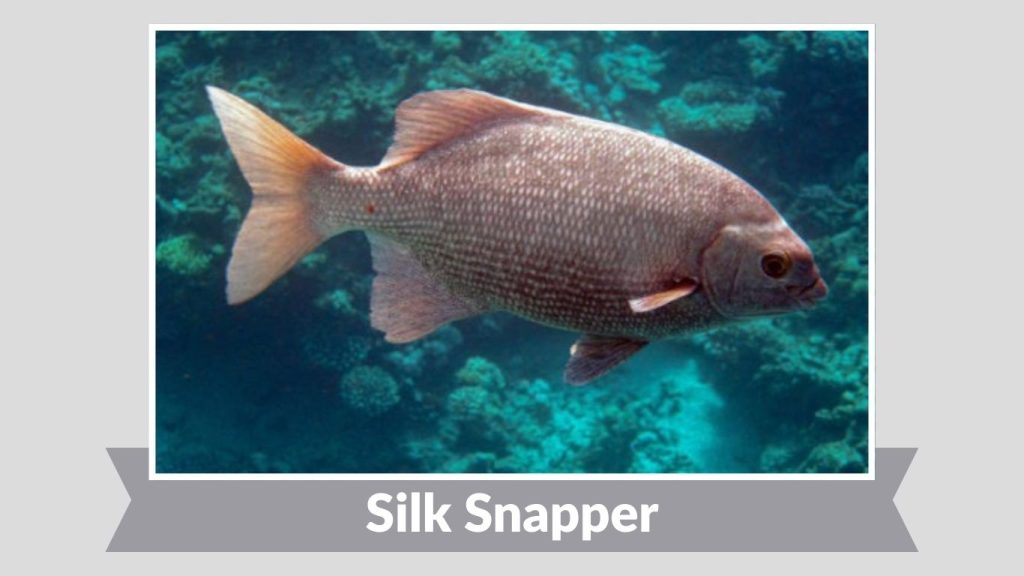
Silk snapper is a deep-water species named for its smooth, silky-looking skin and bright pink to red coloration. It is an important commercial fish in many tropical regions and is commonly caught from deeper reefs and offshore slopes. Its large eyes help it see in low-light environments.
Identification
- Bright pink to reddish body color
- Large eyes adapted for deep water
- Slender, streamlined body
- Slightly forked tail
- Fine, smooth-looking scales
- Pale underside
Habitat and Distribution
Silk snapper is found in the western Atlantic Ocean, including the Gulf of Mexico, Caribbean Sea, and along parts of Central and South America. It lives mainly in deep reef environments and continental shelf edges, often at depths of 100 meters or more.
Diet and Feeding Behavior
Silk snapper feeds on small fish, squid, shrimp, and other deep-water invertebrates. It is an active predator that hunts in dim light, often moving above the seafloor to capture prey drifting in the water column.
Size and Lifespan
Silk snapper usually reaches about 40–70 cm (16–28 inches) in length. It is a long-lived species, with individuals often living 20–30 years.
10. Queen Snapper
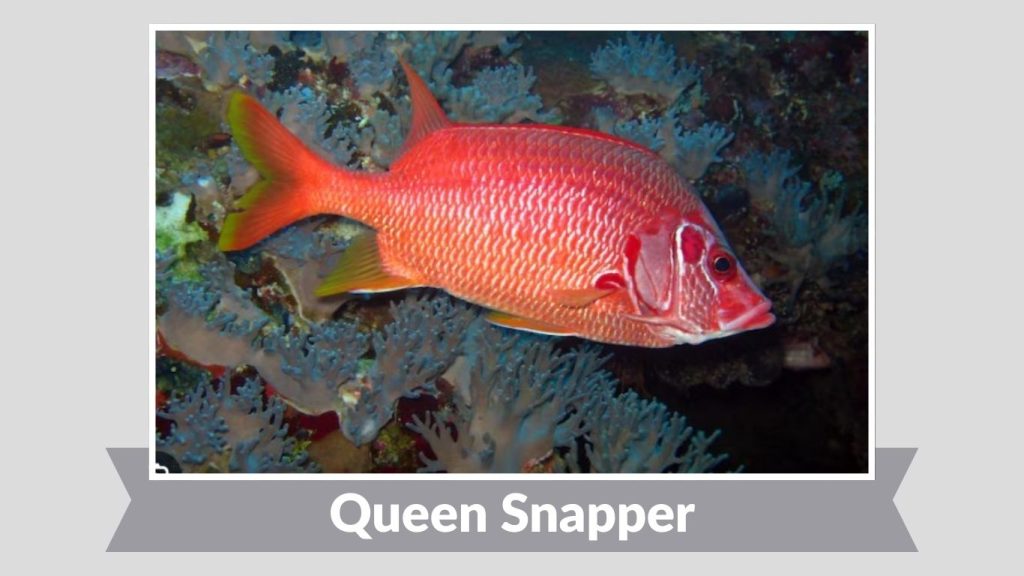
Queen snapper is a striking deep-water snapper known for its vivid red coloration, long pointed fins, and elegant body shape. It is highly valued as a food fish and is commonly harvested from offshore slopes and deep reef systems. Its appearance and habitat make it one of the more distinctive snapper species.
Identification
- Bright red to rose-colored body
- Elongated, graceful body shape
- Long, pointed dorsal and anal fins
- Large eyes suited for deep water
- Deeply forked tail
- Silvery to pale underside
Habitat and Distribution
Queen snapper is found in the western Atlantic, especially around the Caribbean, Gulf of Mexico, and parts of the southeastern United States. It inhabits deep reef slopes and rocky drop-offs, often at depths of 100–300 meters, where light levels are low.
Diet and Feeding Behavior
Queen snapper feeds mainly on small fish, squid, shrimp, and other deep-water organisms. It hunts above the seafloor, using speed and good vision to capture prey drifting in the water column.
Size and Lifespan
Queen snapper typically grows to about 50–80 cm (20–31 inches). It is a slow-growing species and can live more than 25 years in deep offshore environments.
11. Blackfin Snapper
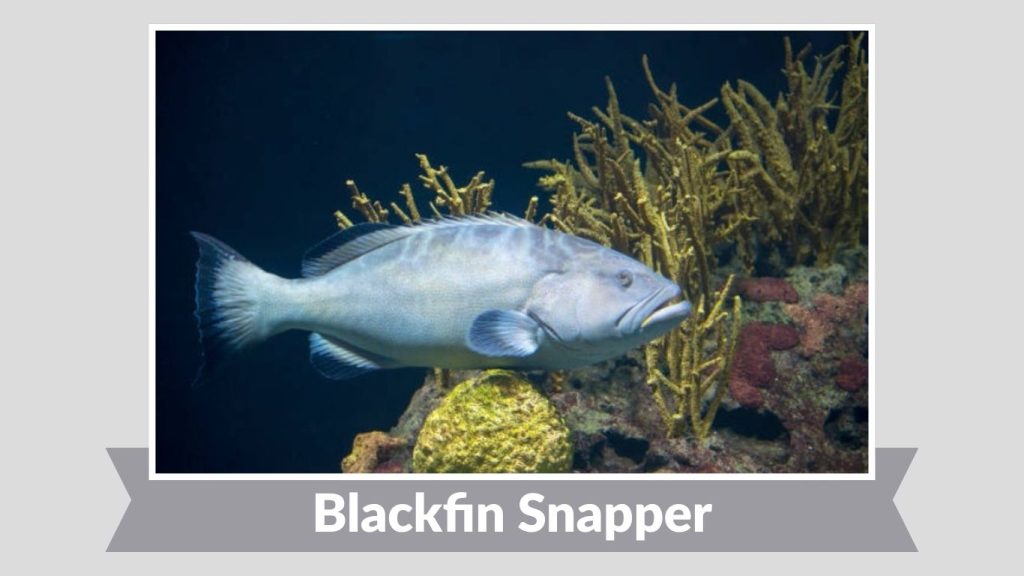
Blackfin snapper is a deep-water snapper recognized by the dark edges on its fins and its reddish to pink body. It is commonly caught in offshore fisheries and is appreciated for its mild, high-quality flesh. This species usually lives deeper than many coastal snappers.
Identification
- Reddish-pink to rosy body color
- Dark or black margins on the dorsal, tail, and anal fins
- Large eyes adapted for deep water
- Slender, elongated body
- Slightly forked tail
- Pale belly
Habitat and Distribution
Blackfin snapper occurs in the western Atlantic, including the Gulf of Mexico, Caribbean Sea, and along parts of Central and South America. It prefers deep reefs, rocky ledges, and continental slope areas, often at depths of 100–300 meters.
Diet and Feeding Behavior
Blackfin snapper feeds on small fish, squid, shrimp, and other marine invertebrates. It is mainly active in low-light conditions and often hunts above deep reef structures where prey is abundant.
Size and Lifespan
Blackfin snapper generally grows to about 40–60 cm (16–24 inches) in length. It is believed to live over 20 years in the wild.
12. Vermilion Snapper
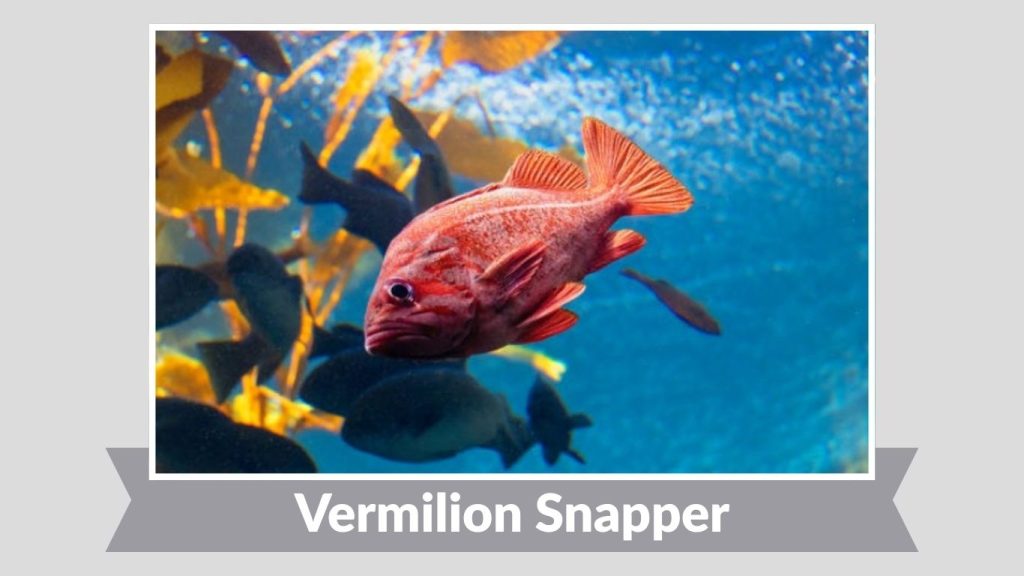
Vermilion snapper is a slender, bright red snapper known for its energetic behavior and schooling nature. It is extremely popular in offshore recreational fishing and is often found in large groups over reefs and hard bottoms. Because of its color, it is sometimes called the “beeliner.”
Identification
- Bright red to reddish-orange body
- Very slender, streamlined shape
- Large eyes
- Long, forked tail
- Pale underside
- Fins often slightly lighter than the body
Habitat and Distribution
Vermilion snapper is widely distributed in the western Atlantic Ocean, from the eastern United States through the Gulf of Mexico and Caribbean Sea. It inhabits offshore reefs, rocky ledges, and hard-bottom areas, commonly at depths of 20–200 meters.
Diet and Feeding Behavior
Vermilion snapper feeds mainly on small fish, squid, shrimp, and zooplankton. It often forms large schools in midwater and actively chases prey drifting above reefs.
Size and Lifespan
Vermilion snapper is smaller than many snappers, usually reaching 30–45 cm (12–18 inches). It can live up to 15–20 years in the wild.
13. Malabar Snapper
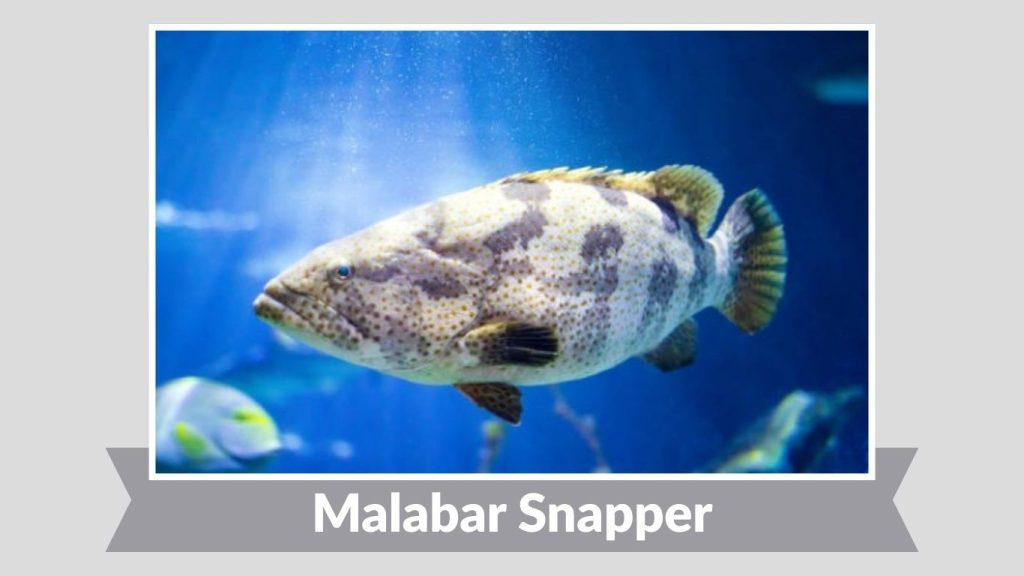
Malabar snapper is a large Indo-Pacific snapper recognized for its reddish body, sloping head, and strong build. It is an important commercial species in South and Southeast Asia and is often associated with coastal reefs and rocky bottoms. This snapper is sometimes called the Malabar blood snapper.
Identification
- Deep red to reddish-pink body
- Steep, sloping forehead
- Thick lips and strong jaws
- Robust, oval-shaped body
- Forked tail
- Lighter belly
Habitat and Distribution
Malabar snapper is found throughout the Indo-West Pacific region, including the Indian Ocean, Southeast Asia, and northern Australia. It inhabits coral reefs, rocky areas, and offshore slopes, generally from shallow coastal waters to deeper reef zones.
Diet and Feeding Behavior
Malabar snapper feeds on fish, crustaceans, squid, and other marine animals. It is a strong predator that hunts near reefs and rocky bottoms, often feeding at dusk and during the night.
Size and Lifespan
Malabar snapper can reach about 90 cm (35 inches) in length and may weigh over 10 kg (22 lb). It is a long-lived species, often surviving 30 years or more.
14. Blue-striped Snapper
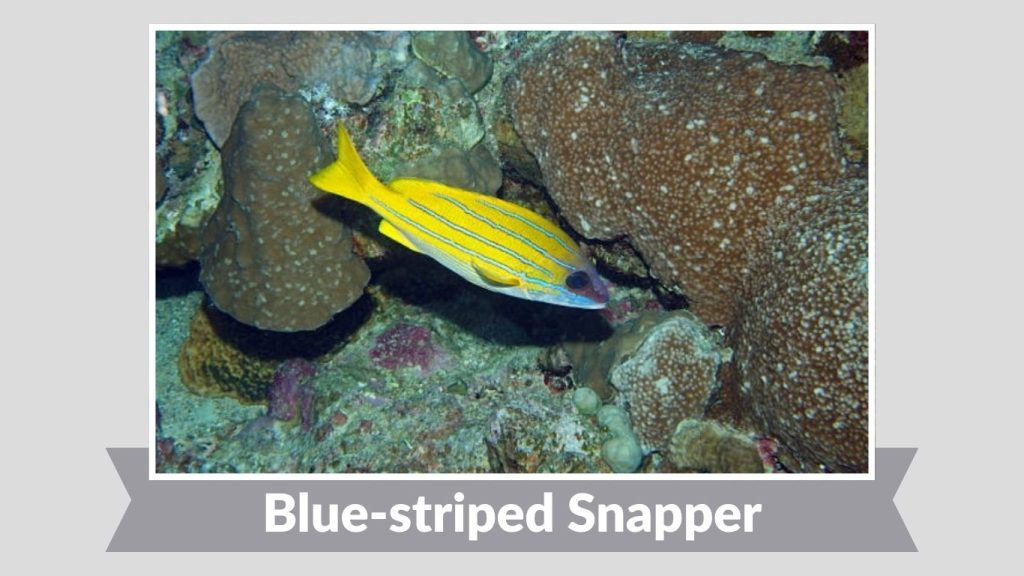
Blue-striped snapper is a brightly colored reef fish best known for its vivid electric-blue stripes running along a yellow body. Although often grouped with snappers, it is sometimes placed in a closely related family. It is extremely popular with divers and snorkelers because of its bold colors and schooling behavior.
Identification
- Bright yellow body with four to five electric-blue horizontal stripes
- Deeply forked yellow tail
- Slender, torpedo-shaped body
- Small mouth
- Large eyes
- Smooth, shiny appearance
Habitat and Distribution
Blue-striped snapper is widely distributed in the Indo-Pacific region, including the Red Sea, Indian Ocean, Southeast Asia, and Pacific islands. It lives around coral reefs, lagoons, and coastal drop-offs, usually forming large schools in clear tropical waters.
Diet and Feeding Behavior
Blue-striped snapper feeds mainly on small fish, shrimp, plankton, and other small invertebrates. It is an active daytime feeder and often hunts in groups, swimming above reefs to capture drifting prey.
Size and Lifespan
Blue-striped snapper usually grows to about 30–40 cm (12–16 inches). In healthy reef systems, it may live 15–20 years.
15. Midnight Snapper
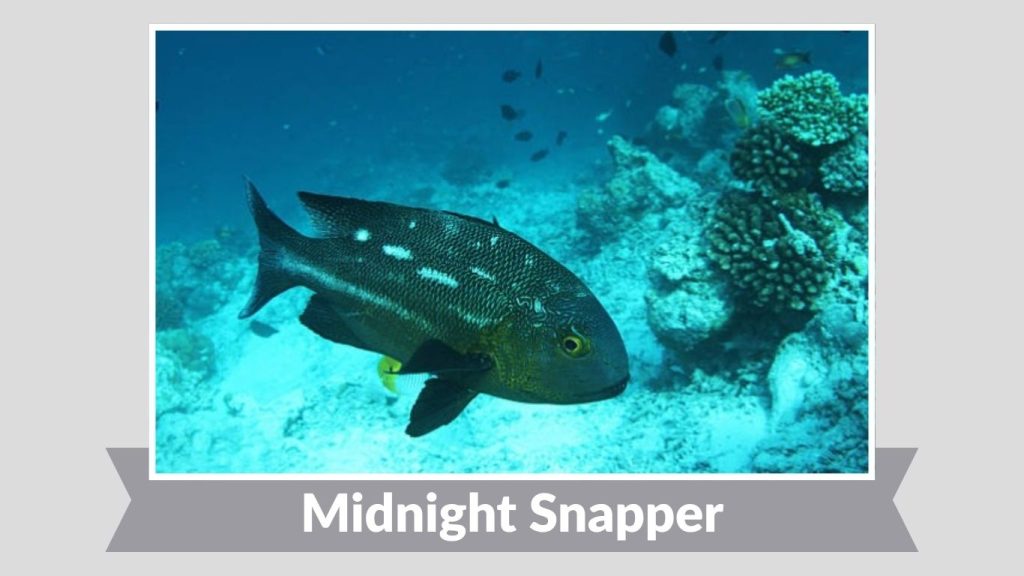
Midnight snapper is a deep-water species known for its dark reddish to purplish coloration and its preference for offshore reef slopes. It is an important commercial fish in many tropical regions and is often caught from deep reefs. Its name comes from its darker body tone compared to most red snappers.
Identification
- Dark red to purplish-brown body
- Large eyes adapted for low-light depths
- Slender but strong body shape
- Forked tail
- Smooth, fine scales
- Paler underside
Habitat and Distribution
Midnight snapper is found in tropical and subtropical waters of the Atlantic, Indian, and Pacific Oceans. It usually inhabits deep reef slopes, rocky drop-offs, and offshore ledges, commonly at depths of 100–400 meters.
Diet and Feeding Behavior
Midnight snapper feeds on small fish, squid, shrimp, and deep-water crustaceans. It is an active predator in low-light environments, often hunting above the seafloor and along reef edges where prey is abundant.
Size and Lifespan
Midnight snapper typically grows to about 50–80 cm (20–31 inches) in length. It is a slow-growing species and can live more than 25 years in deep offshore habitats.
16. Ruby Snapper
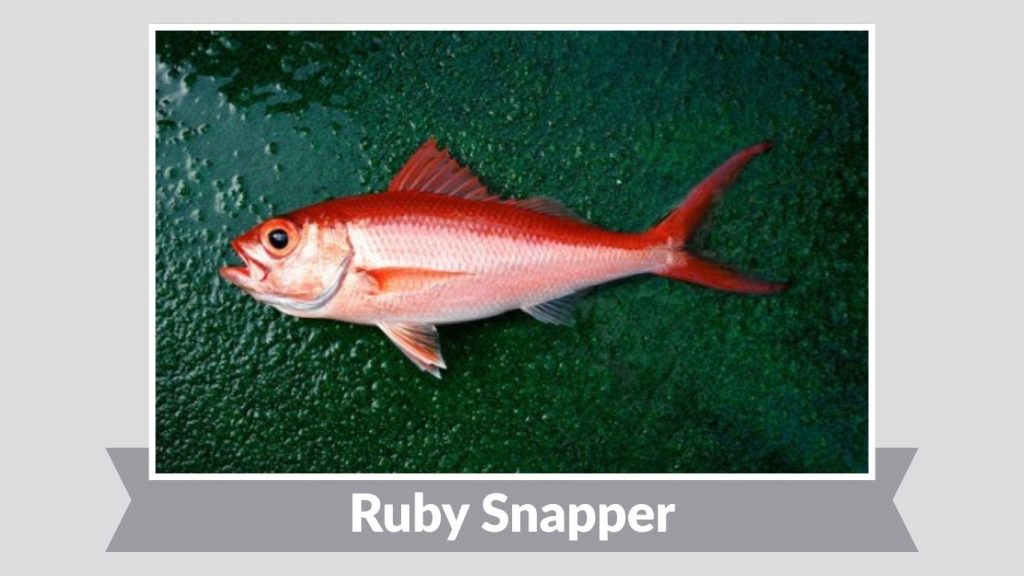
Ruby snapper is a brilliantly colored deep-water snapper known for its intense red, jewel-like appearance and large eyes. It is highly valued in commercial fisheries and is usually harvested from offshore reef slopes and deep continental shelf areas. Its vivid color fades quickly after being brought to the surface.
Identification
- Bright ruby-red body color
- Very large eyes adapted for deep water
- Slender, elongated body
- Deeply forked tail
- Smooth, fine scales
- Pale to silvery underside
Habitat and Distribution
Ruby snapper is found mainly in the Indo-Pacific region, including areas around Australia, Indonesia, and the western Pacific islands. It inhabits deep reef systems, rocky drop-offs, and continental slopes, commonly at depths of 150–400 meters.
Diet and Feeding Behavior
Ruby snapper feeds on small fish, squid, shrimp, and other deep-water invertebrates. It hunts in low-light conditions, often swimming above the seafloor and using quick bursts of speed to capture prey.
Size and Lifespan
Ruby snapper generally grows to about 40–70 cm (16–28 inches) long. It is considered a long-lived species, with some individuals estimated to survive more than 20–30 years.
17. Crimson Snapper
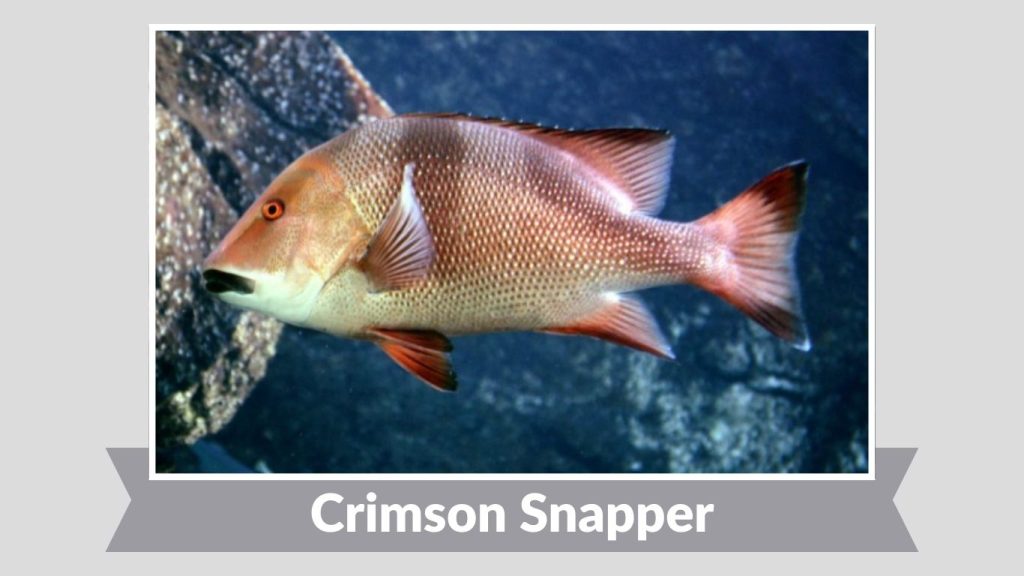
Crimson snapper is a bold-colored reef fish recognized for its deep red to crimson body and strong, compact shape. It is a popular food fish across the Indo-Pacific region and is commonly found around coastal reefs and offshore rocky bottoms. This species is also known as the red emperor in some regions.
Identification
- Deep red to crimson body color
- Thick, robust body shape
- Sloping forehead
- Strong jaws with noticeable teeth
- Forked tail
- Lighter belly
Habitat and Distribution
Crimson snapper is found throughout the Indo-Pacific, including the Indian Ocean, Southeast Asia, and northern Australia. It inhabits coral reefs, rocky outcrops, and offshore slopes, from shallow coastal waters to deeper reef environments.
Diet and Feeding Behavior
Crimson snapper feeds on fish, crabs, shrimp, mollusks, and squid. It is a powerful predator that hunts close to the reef and along the seafloor, often feeding at dawn, dusk, and during the night.
Size and Lifespan
Crimson snapper can grow quite large, often reaching 80–100 cm (31–39 inches). It is a slow-growing species and may live 30 years or longer in the wild.
18. Mangrove Snapper
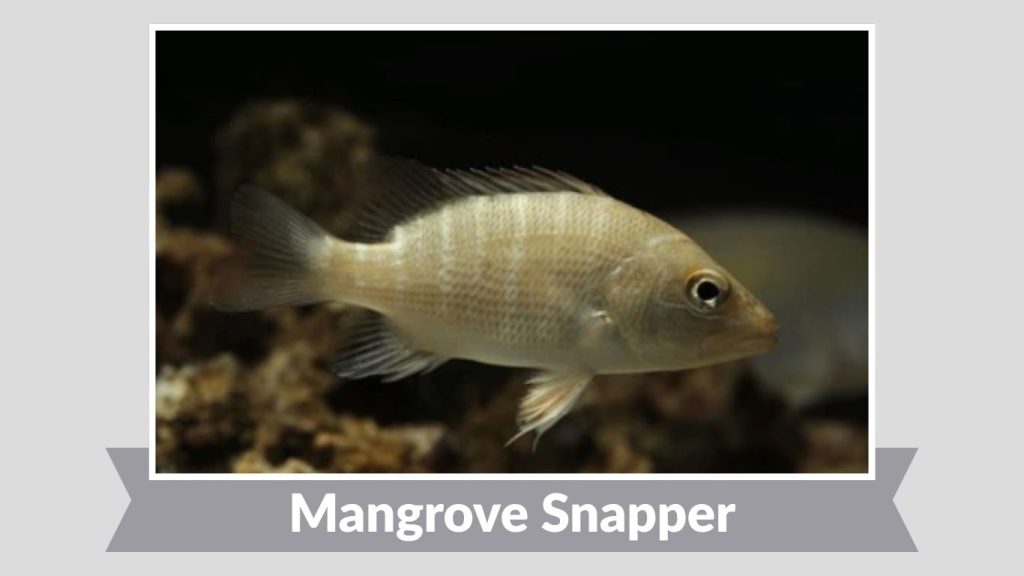
Mangrove snapper is a versatile coastal snapper well known for its ability to live in a wide range of habitats, from shallow mangroves to deep offshore reefs. It is highly valued for food and sport fishing because of its cautious behavior and strong fight. Its color can change depending on its surroundings.
Identification
- Gray to olive-green body with reddish or bronze tones
- Dark horizontal stripe through the eye
- Sharp canine teeth in the front of the mouth
- Slightly forked tail
- Checkered pattern from darker-edged scales
- Pale belly
Habitat and Distribution
Mangrove snapper is found in the western Atlantic, including Florida, the Gulf of Mexico, the Caribbean, and along the coast of South America. It inhabits mangroves, estuaries, docks, reefs, and shipwrecks. Juveniles prefer shallow inshore waters, while adults often move offshore.
Diet and Feeding Behavior
Mangrove snapper feeds on fish, shrimp, crabs, and other crustaceans. It is mostly nocturnal and hunts by ambushing prey from cover. This species is known for its intelligence and cautious feeding habits.
Size and Lifespan
Mangrove snapper usually grows to about 30–50 cm (12–20 inches) but can reach larger sizes offshore. It can live more than 20 years in the wild.
19. Caribbean Red Snapper
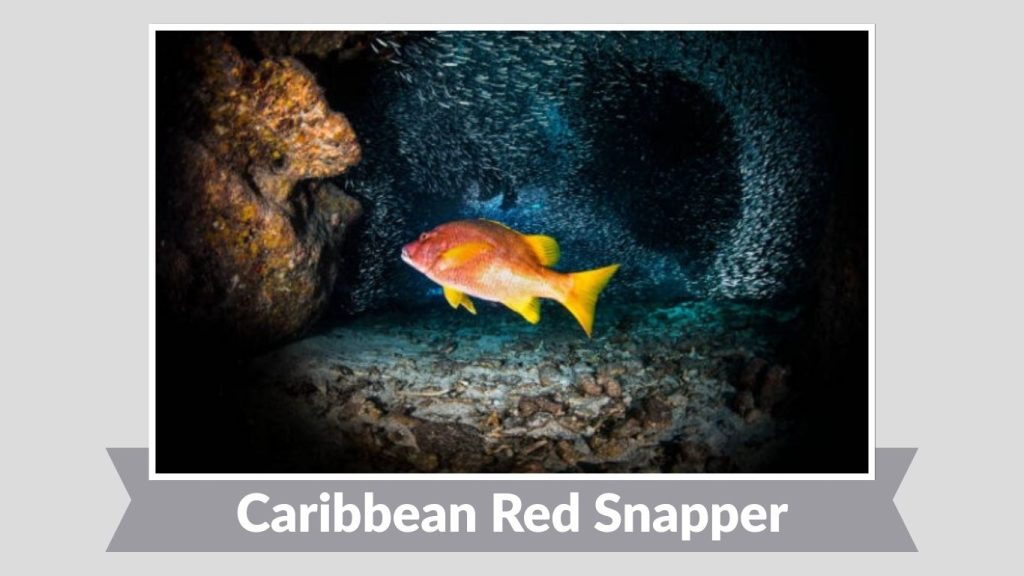
Caribbean red snapper is a reef-associated snapper known for its pinkish-red body, strong build, and importance in local fisheries. It is closely related to other red snapper species and is widely harvested throughout the Caribbean region for its firm, mild-flavored meat.
Identification
- Pink to reddish body color
- Moderately deep, robust body
- Sloping forehead and pointed snout
- Sharp canine teeth
- Forked tail
- Lighter belly than back
Habitat and Distribution
Caribbean red snapper is found mainly in the Caribbean Sea and nearby western Atlantic waters. It inhabits coral reefs, rocky bottoms, and offshore ledges. Juveniles often live in shallower reef areas, while adults are more common in deeper offshore habitats.
Diet and Feeding Behavior
Caribbean red snapper feeds on small fish, shrimp, crabs, and mollusks. It is an active predator around reefs, often hunting close to the bottom and near reef structures where prey is abundant.
Size and Lifespan
This species typically grows to about 40–70 cm (16–28 inches). It is considered a moderately long-lived snapper, with individuals capable of living over 20 years in the wild.
20. Longtail Red Snapper (Onaga)
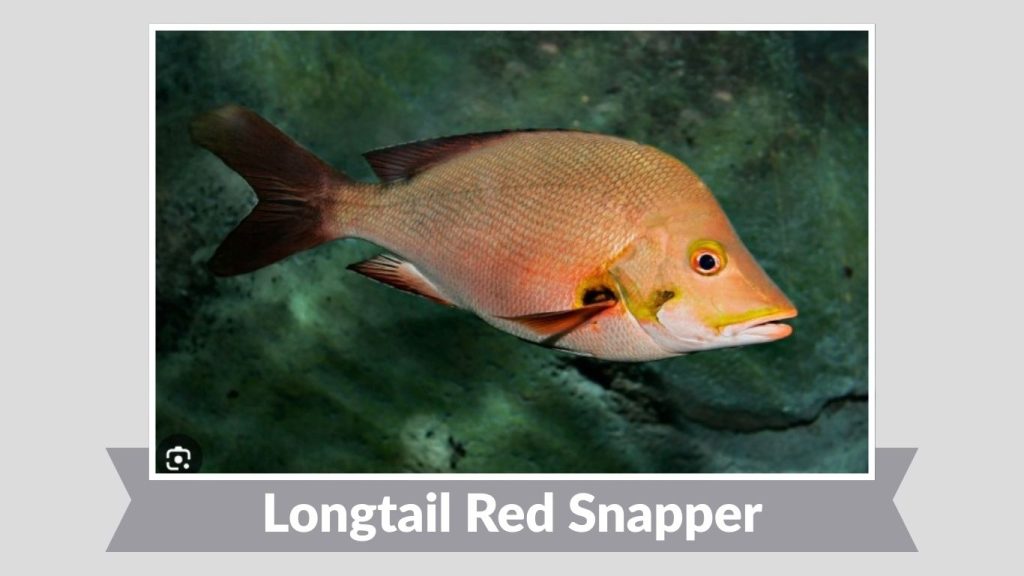
Longtail red snapper, commonly called Onaga in Hawaii, is a beautiful deep-water snapper recognized by its vivid red color and extremely long, trailing tail filaments. It is highly prized as a food fish and is often associated with Hawaiian deep-sea fisheries. Its elegant appearance makes it one of the most distinctive snappers.
Identification
- Bright red body coloration
- Very long, trailing filaments on the tail fin
- Large eyes adapted for deep water
- Slender, elongated body
- Pointed snout
- Pale underside
Habitat and Distribution
Longtail red snapper is found mainly in the Pacific Ocean, especially around Hawaii and other Pacific islands. It inhabits deep offshore reefs, slopes, and drop-offs, usually at depths of 150–400 meters.
Diet and Feeding Behavior
Onaga feeds on small fish, squid, shrimp, and deep-water crustaceans. It hunts in low-light conditions, often swimming above the seafloor and using speed and vision to capture prey.
Size and Lifespan
Longtail red snapper can grow to about 60–100 cm (24–39 inches) long, including its extended tail filaments. It is a slow-growing species and may live more than 30 years.
21. Opakapaka Snapper
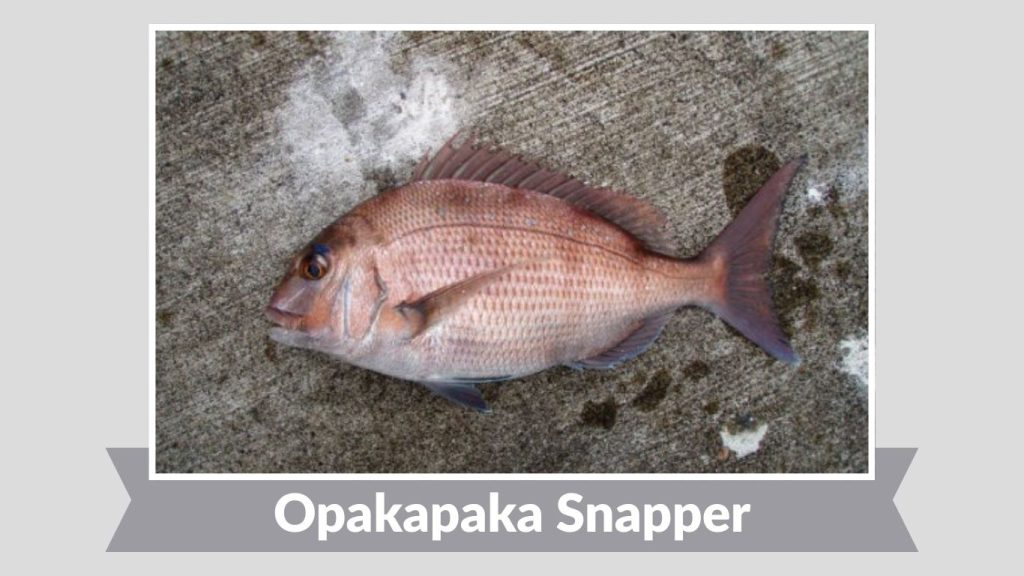
Opakapaka snapper is a well-known Hawaiian deep-water snapper valued for its delicate flavor and commercial importance. It has a pinkish-red body, large eyes, and a streamlined shape adapted for life in deeper ocean zones. It is one of the most commonly harvested snappers in Hawaii.
Identification
- Pink to rosy-red body color
- Very large eyes
- Slender, streamlined body
- Slightly forked tail
- Smooth, fine scales
- Pale underside
Habitat and Distribution
Opakapaka snapper is found mainly in the central Pacific, especially around the Hawaiian Islands. It inhabits deep offshore slopes, reefs, and rocky bottoms, usually at depths of 100–350 meters.
Diet and Feeding Behavior
Opakapaka feeds on small fish, shrimp, squid, and other deep-water organisms. It is an active predator in low-light conditions, often hunting above deep reef structures.
Size and Lifespan
Opakapaka snapper typically grows to about 40–70 cm (16–28 inches). It is a long-lived species, with some individuals estimated to live more than 20–25 years.
22. Golden Snapper
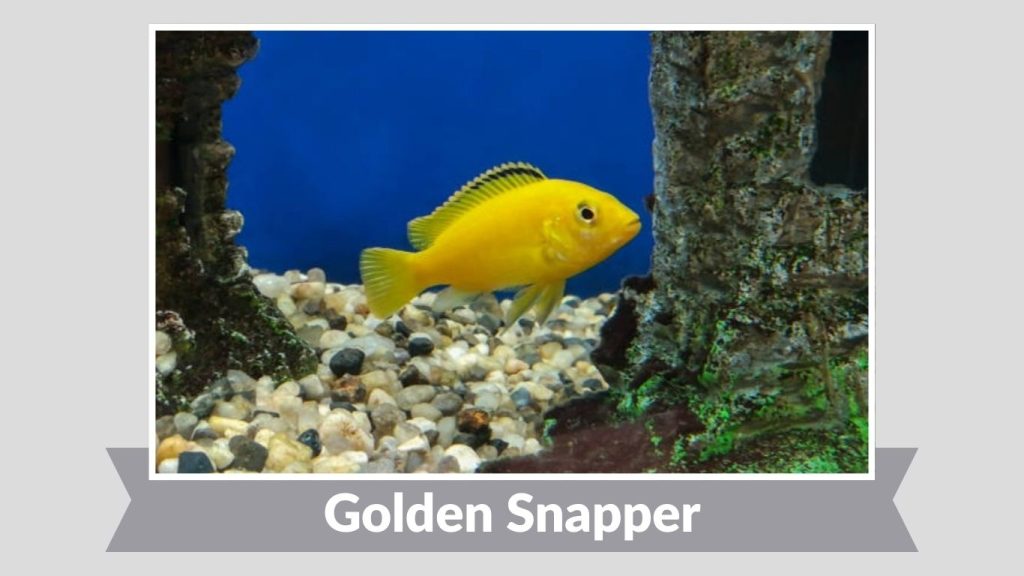
Golden snapper is a large, powerful snapper recognized for its yellow-gold body tone and thick, robust shape. It is widely distributed in the Indo-Pacific region and is highly valued in commercial and recreational fisheries. In some areas, it is also known as the fingermark bream.
Identification
- Golden-yellow to bronze body color
- Thick, robust body shape
- Steep, sloping forehead
- Strong jaws with sharp teeth
- Forked tail
- Lighter underside
Habitat and Distribution
Golden snapper is found throughout the Indo-West Pacific, including Southeast Asia, northern Australia, and parts of the Indian Ocean. It inhabits estuaries, mangroves, coastal reefs, and offshore rocky bottoms. Juveniles often live in rivers and inshore waters.
Diet and Feeding Behavior
Golden snapper feeds on fish, crustaceans, and mollusks. It is an aggressive predator that hunts near structures such as reefs, mangrove roots, and rocky ledges, often feeding at night.
Size and Lifespan
Golden snapper can grow to about 1 meter (39 inches) in length and may weigh over 15 kg (33 lb). It is a long-lived species, capable of surviving more than 25–30 years.
23. Brownstripe Red Snapper
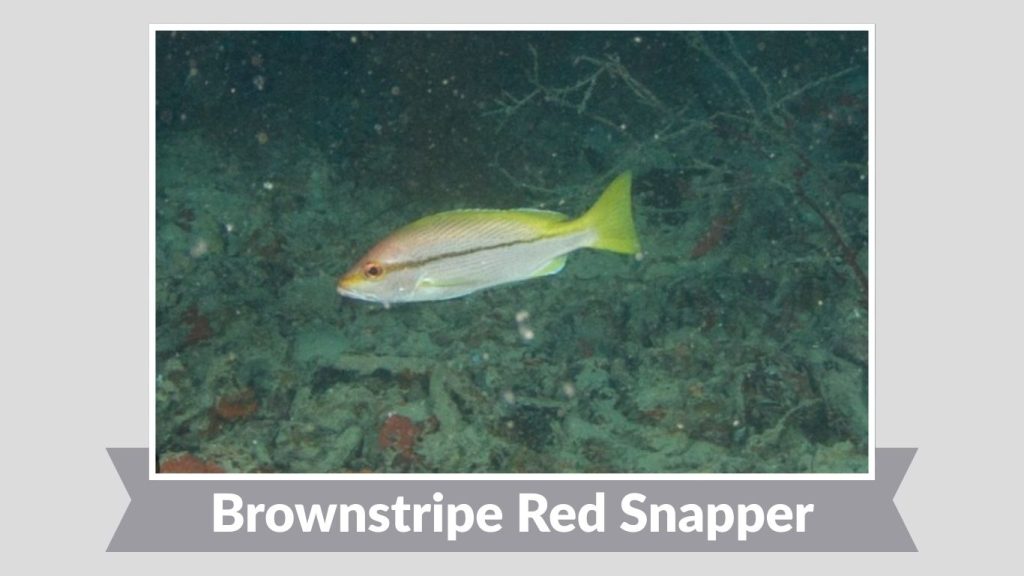
Brownstripe red snapper is a reef-associated snapper easily recognized by the brownish stripe that runs along its side and its pink to reddish body. It is an important food fish in many Indo-Pacific regions and is commonly caught around coastal reefs and offshore rocky areas.
Identification
- Pink to reddish body color
- Distinct brown stripe running along the side
- Slender, streamlined body
- Large eyes
- Forked tail
- Pale underside
Habitat and Distribution
Brownstripe red snapper is found throughout the Indo-Pacific, including the Indian Ocean, Southeast Asia, and the western Pacific islands. It inhabits coral reefs, rocky slopes, and offshore reef drop-offs, from moderate to deep waters.
Diet and Feeding Behavior
This snapper feeds on small fish, shrimp, crabs, squid, and other marine invertebrates. It is an active predator that hunts near reef edges and along the seafloor, often feeding at dawn and dusk.
Size and Lifespan
Brownstripe red snapper typically grows to about 40–60 cm (16–24 inches). It is a slow-growing species and may live more than 20 years in natural reef environments.
24. Five-lined Snapper

Five-lined snapper is a brightly patterned reef fish known for the multiple thin lines running lengthwise along its body. It is smaller than many commercial snappers but is very popular with divers because of its attractive appearance and active reef behavior. This species is often seen in shallow coral reef environments.
Identification
- Light yellow to pale body color
- Five thin bluish or brownish horizontal lines
- Slender, elongated body
- Small mouth
- Forked tail
- Clear to lightly tinted fins
Habitat and Distribution
Five-lined snapper is found mainly in the Indo-Pacific region, including the Red Sea, Indian Ocean, and tropical Pacific islands. It inhabits shallow coral reefs, lagoons, and reef flats, usually staying close to coral heads and rocky shelters.
Diet and Feeding Behavior
Five-lined snapper feeds on small crustaceans, worms, plankton, and tiny fish. It is an active daytime feeder, often picking prey from reef surfaces and swimming in small groups.
Size and Lifespan
Five-lined snapper is relatively small, usually reaching about 20–30 cm (8–12 inches). Its lifespan is estimated to be around 8–12 years.
25. Blacktail Snapper
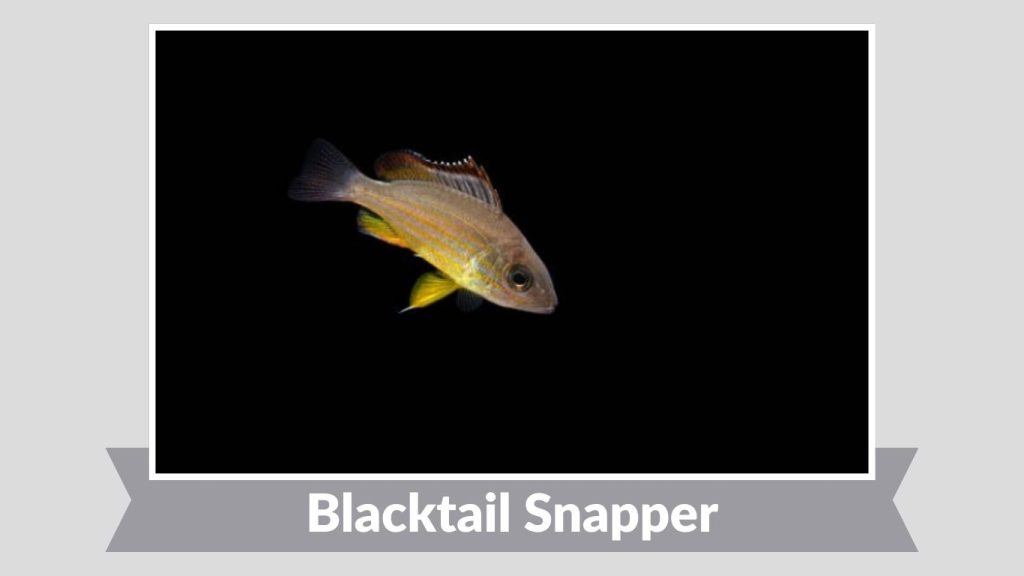
Blacktail snapper is a colorful reef fish easily recognized by the dark to black coloration on its tail fin. It is a common Indo-Pacific snapper that lives around coral reefs and rocky coastal areas. This species is important to local fisheries and is also popular with divers and snorkelers.
Identification
- Silvery to pinkish body color
- Distinct black or dark brown tail fin
- Yellowish tint on fins
- Slender, streamlined body
- Large eyes
- Pale underside
Habitat and Distribution
Blacktail snapper is widely distributed across the Indo-Pacific, including the Red Sea, Indian Ocean, Southeast Asia, and Pacific islands. It inhabits coral reefs, lagoons, and coastal rocky areas, often forming schools.
Diet and Feeding Behavior
Blacktail snapper feeds on small fish, shrimp, crabs, and other marine invertebrates. It is an active predator, often hunting in groups around reef edges and sandy bottoms.
Size and Lifespan
Blacktail snapper usually grows to about 30–50 cm (12–20 inches). In natural reef systems, it may live 15–20 years.
FAQs
What is a snapper fish?
Snapper fish are a large group of marine fish mostly belonging to the family Lutjanidae. They are found in tropical and subtropical oceans worldwide and are known for their strong bodies, sharp teeth, and excellent taste. Many species live around coral reefs and rocky seabeds.
Are all snapper fish good to eat?
Most snapper species are considered excellent food fish because of their firm texture and mild, slightly sweet flavor. However, some reef snappers in certain regions may carry ciguatera toxin. Because of this, it is important to know the local species and follow regional seafood safety guidelines.
Where do snapper fish usually live?
Snapper fish mainly live in warm ocean waters, especially around coral reefs, rocky bottoms, mangroves, and offshore drop-offs. Some species prefer shallow coastal habitats, while others live in deep waters hundreds of meters below the surface, depending on the species.
How big do snapper fish grow?
Snapper sizes vary widely by species. Smaller snappers may reach only 8–12 inches, while large species like cubera or crimson snapper can grow over 3 feet long and weigh more than 30 kilograms. Many snappers are slow-growing and long-lived fish.
What do snapper fish eat?
Snapper fish are carnivorous predators. They commonly feed on smaller fish, shrimp, crabs, squid, worms, and other marine invertebrates. Some species hunt during the day, while others are more active at night, using reefs and rocky structures as hunting grounds.