



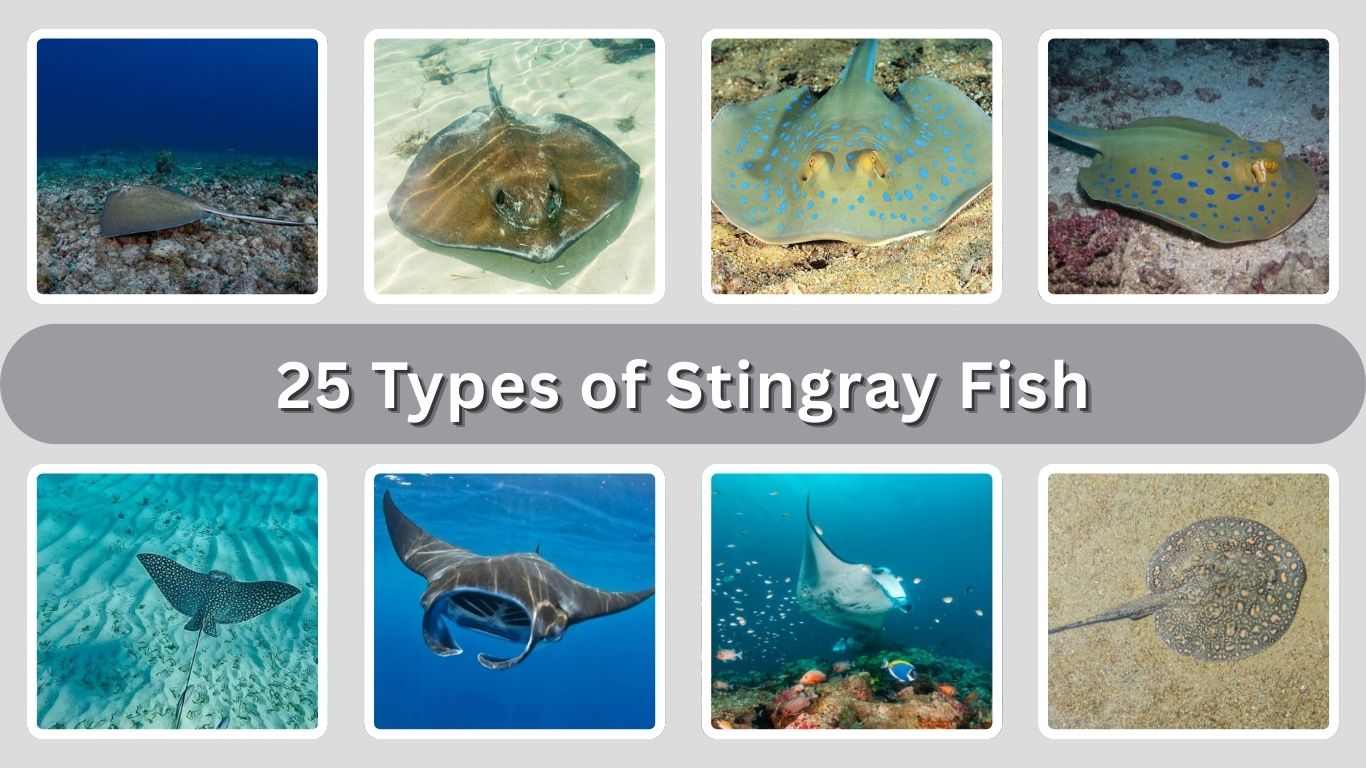
Stingrays are fascinating flat-bodied fish known for their graceful swimming style, wide wing-like fins, and long whip-shaped tails. They are found in oceans and rivers around the world, living mostly along sandy seabeds, coral reefs, and shallow coastal waters. With more than 200 recognized species, stingrays vary greatly in size, color, and behavior. Some are small and well camouflaged, while others, like manta rays, are among the largest fish in the sea.
1. Southern Stingray (Hypanus americanus)
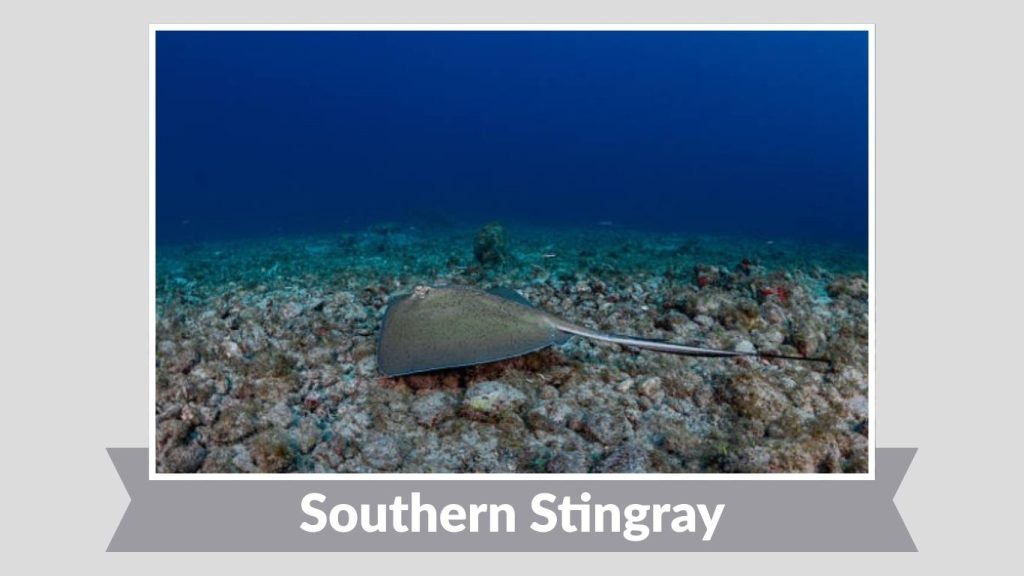
The Southern stingray is one of the most well-known stingray species found in warm coastal waters of the western Atlantic and Caribbean. It is famous for its broad, flat body, long whip-like tail, and calm behavior around humans. This species often rests on sandy seabeds, where it blends in almost perfectly, making it both fascinating and sometimes hard to spot.
Identification
- Broad, diamond-shaped disc with rounded corners
- Smooth, flat body with slightly raised eyes on top
- Color ranges from grayish-brown to olive on the upper side
- Pale or white underside
- Long, thin tail equipped with one or more venomous barbed spines
- Can grow up to 5 feet (1.5 m) across including fins
Habitat
Southern stingrays live mainly in shallow tropical and subtropical waters. They are commonly found in sandy flats, lagoons, seagrass beds, and coral reef edges. Although they prefer shallow zones, they can also move into deeper coastal waters when needed.
Behaviors
This species is mostly bottom-dwelling and spends much of its time partially buried in sand. Southern stingrays are gentle and non-aggressive, using their tail spine only in self-defense. They often glide gracefully along the seafloor and are sometimes seen in groups, especially during feeding.
Diet and Lifespan
Southern stingrays feed on clams, worms, small fish, crabs, and shrimp. They use their fins to uncover prey hidden in the sand before crushing it with strong, flat teeth. In the wild, they can live around 15 to 25 years, depending on environment and predation pressure.
2. Atlantic Stingray (Hypanus sabinus)
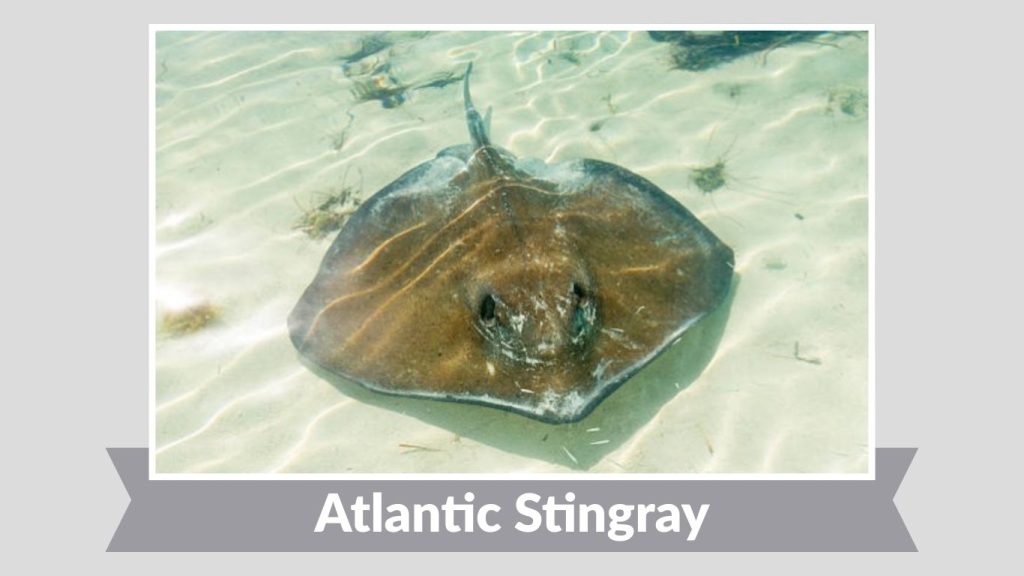
The Atlantic stingray is a smaller, slender-bodied stingray commonly found along the eastern coast of the United States and throughout parts of the Gulf of Mexico. Unlike many stingrays, this species can tolerate both saltwater and freshwater, which allows it to move into rivers, estuaries, and coastal lagoons. Its adaptability and shy nature make it an interesting and ecologically important ray.
Identification
- Small to medium-sized stingray with a rounded, diamond-shaped disc
- Upper body usually brown, gray, or olive
- Smooth skin with no prominent spines on the disc
- Long, whip-like tail with a venomous barb
- Typically grows 12–20 inches (30–50 cm) across
- Eyes and spiracles positioned on top of the body
Habitat
Atlantic stingrays inhabit shallow coastal waters, bays, estuaries, and even freshwater rivers and lakes. They prefer sandy or muddy bottoms where they can easily bury themselves. This species is often seen in warm, calm waters close to shore.
Behaviors
These stingrays are bottom-dwellers and spend much of their time hidden under sediment. They are generally solitary and non-aggressive. When disturbed, Atlantic stingrays usually swim away quickly rather than defend themselves.
Diet and Lifespan
Their diet mainly consists of small crustaceans, worms, insect larvae, and tiny fish. Atlantic stingrays use their pectoral fins to expose prey buried in the substrate. In natural habitats, they can live around 10 to 20 years.
3. Common Stingray (Dasyatis pastinaca)
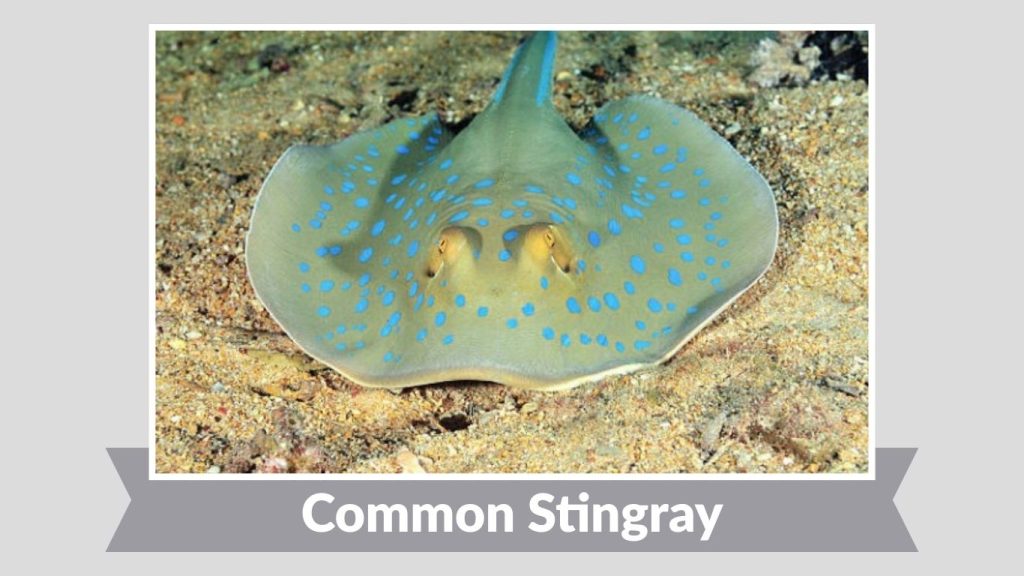
The common stingray is a well-known ray species native to European and Mediterranean waters. It has a broad, flat body and a long tail that gives it a classic stingray appearance. This species is often encountered in shallow coastal areas and is known for resting quietly on the seafloor during the day, making it a familiar sight to divers and fishermen.
Identification
- Large, diamond-shaped disc with pointed wing tips
- Upper surface brown, gray, or olive in color
- Smooth skin with no large dorsal spines
- Long, whip-like tail carrying a venomous sting
- Pale or white underside
- Disc width can reach up to 4.5 feet (1.4 m)
Habitat
Common stingrays are found in coastal waters, sandy bays, estuaries, and continental shelves. They prefer soft sandy or muddy bottoms where they can easily camouflage themselves. This species is commonly seen from shallow waters down to moderate depths.
Behaviors
These stingrays are mostly nocturnal, becoming more active at night when they hunt for food. During daylight hours, they often lie buried under sand with only their eyes visible. They are generally calm and avoid human interaction unless threatened.
Diet and Lifespan
The common stingray feeds on bottom-dwelling animals such as crabs, shrimp, worms, mollusks, and small fish. It uses its powerful jaws to crush hard-shelled prey. In the wild, it can live for approximately 15 to 20 years.
4. Blue-spotted Stingray (Taeniura lymma)
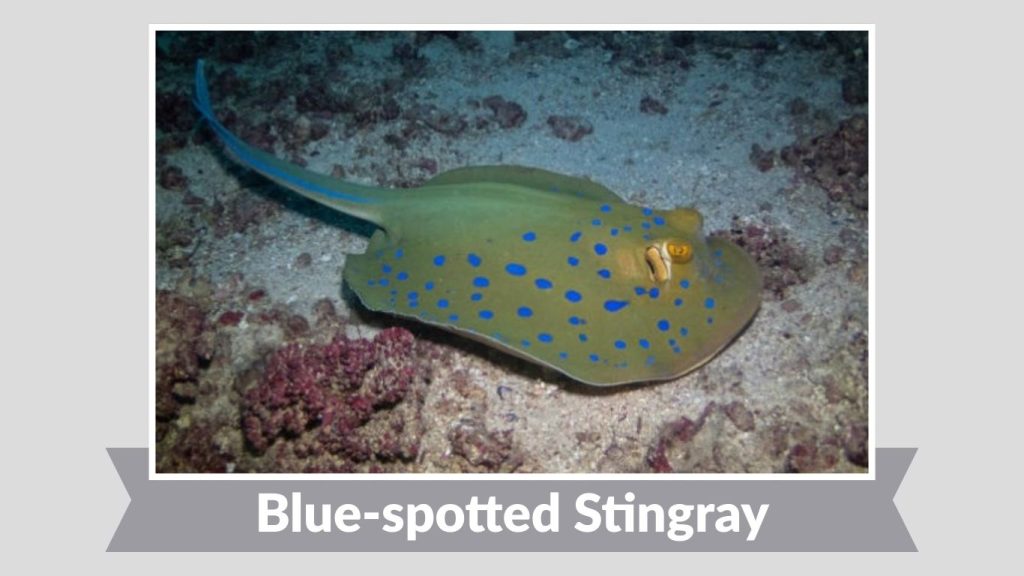
The blue-spotted stingray is one of the most visually striking stingray species, easily recognized by its bright blue spots scattered across a yellowish-brown body. It is a popular species among divers due to its vivid coloration and calm presence. This ray is typically found resting under coral ledges or gliding slowly over sandy reef flats.
Identification
- Rounded, oval-shaped body disc
- Yellowish to light brown upper surface
- Bright electric-blue spots and occasional stripes
- Thick, relatively short tail with two venomous spines
- White underside
- Disc width usually up to 14 inches (35 cm)
Habitat
Blue-spotted stingrays inhabit warm, shallow waters of the Indo-Pacific region. They are commonly found around coral reefs, sandy lagoons, reef flats, and seagrass beds, often hiding in reef crevices during the day.
Behaviors
This species is mostly nocturnal, becoming more active at night to search for food. During the day, it often rests under coral ledges or partially buried in sand. Blue-spotted stingrays are shy and will quickly swim away if approached too closely.
Diet and Lifespan
Their diet includes small fish, shrimp, worms, and crabs. They use electroreception to detect prey hidden beneath the sand. In the wild, blue-spotted stingrays can live around 15 to 20 years.
5. Spotted Eagle Ray (Aetobatus narinari)
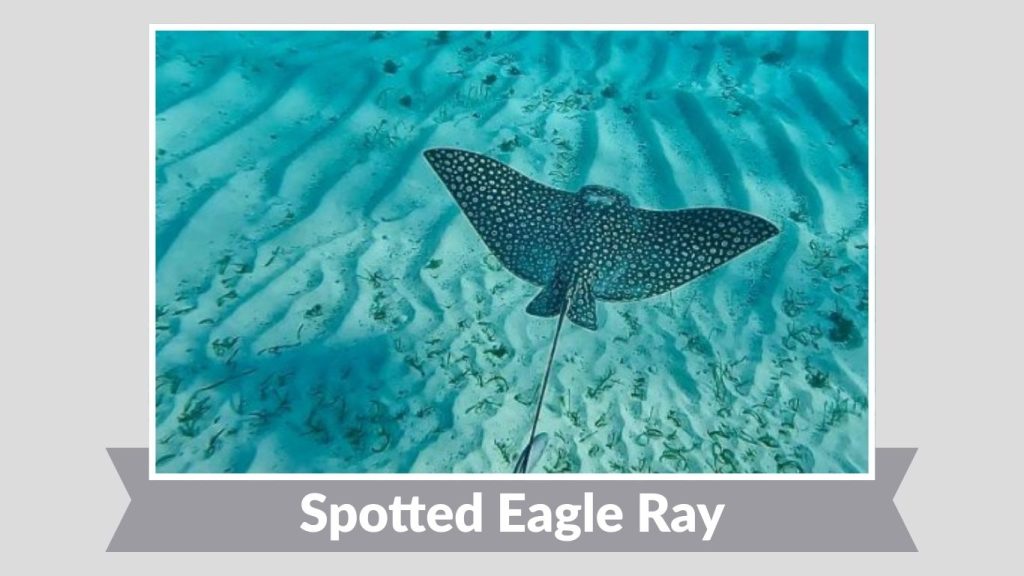
The spotted eagle ray is a graceful and powerful ray species known for its dark body covered with bright white spots. Unlike most stingrays, it is often seen swimming in open water rather than resting on the seafloor. With its wide “wings” and long tail, the spotted eagle ray is a spectacular sight in tropical oceans.
Identification
- Dark blue to black upper body with white spots
- Distinct white underside
- Broad, triangular pectoral fins forming a wing-like shape
- Long, thin tail with one or more venomous spines
- Duck-like snout used to dig for prey
- Wingspan can reach up to 10 feet (3 m)
Habitat
Spotted eagle rays are found in warm, tropical and subtropical waters worldwide. They inhabit coastal bays, coral reefs, lagoons, and sometimes the open ocean. They are often seen swimming near the surface or cruising above reefs.
Behaviors
Unlike many bottom-dwelling rays, this species frequently swims in midwater and may leap out of the ocean. They are usually solitary but can sometimes be seen in small groups. Spotted eagle rays are active hunters and strong swimmers.
Diet and Lifespan
They feed mainly on hard-shelled animals such as clams, oysters, snails, and crabs, crushing them with specialized tooth plates. Their lifespan is estimated to range from 20 to 25 years in the wild.
6. Giant Oceanic Manta Ray (Mobula birostris)
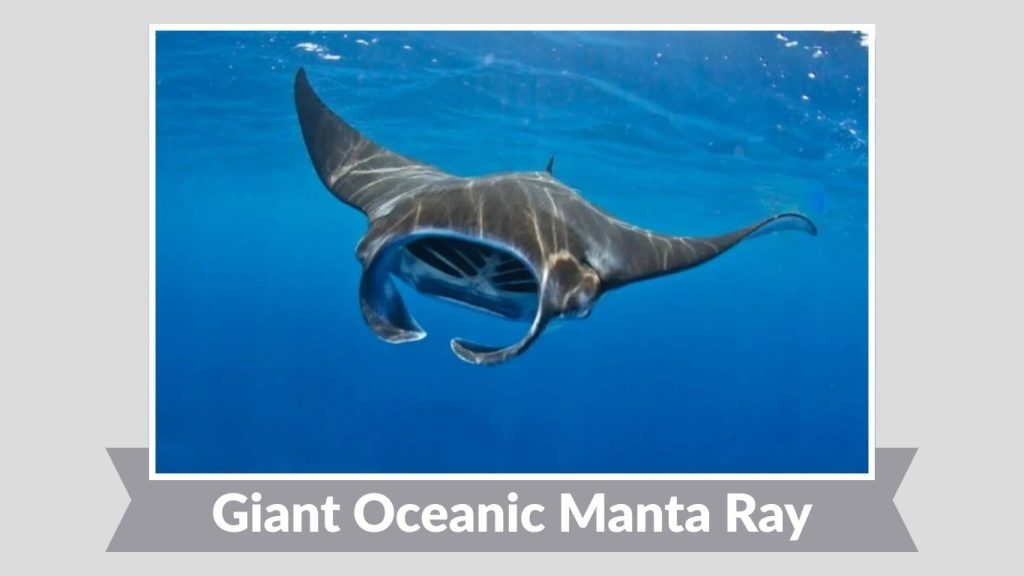
The giant oceanic manta ray is the largest ray species in the world and one of the most intelligent fish in the ocean. Unlike true stingrays, manta rays do not have a venomous tail spine, but they are closely related. They are famous for their enormous size, gentle nature, and graceful movement through open ocean waters.
Identification
- Extremely large, diamond-shaped body with long triangular fins
- Black upper surface with white shoulder markings
- White underside often with unique spot patterns
- Broad head with two horn-like cephalic fins
- Short, thick tail without a stinger
- Wingspan can exceed 23 feet (7 m)
Habitat
Giant oceanic manta rays are found in tropical and subtropical oceans worldwide. They prefer offshore waters, seamounts, and areas with strong currents where plankton is abundant. They also visit cleaning stations on coral reefs.
Behaviors
They are active swimmers that often cruise through open water and perform slow, elegant loops while feeding. Manta rays are known to leap out of the water and to visit cleaning fish regularly. They are highly curious and sometimes interact calmly with divers.
Diet and Lifespan
Manta rays feed primarily on plankton, krill, and tiny fish, filtering food from the water as they swim. Their lifespan is believed to be 40 years or more, making them one of the longest-living ray species.
7. Reef Manta Ray (Mobula alfredi)
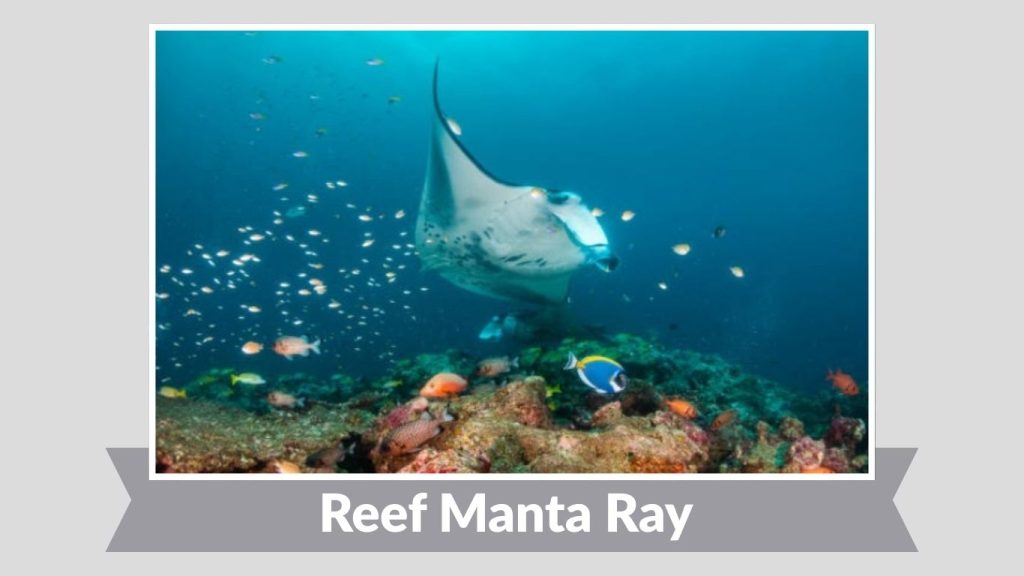
The reef manta ray is slightly smaller than the giant oceanic manta ray but is more commonly seen near coastlines and coral reef systems. It is famous for its friendly, curious behavior around divers and its impressive, wing-like fins. This species often returns to the same reef areas, making it one of the most studied manta rays.
Identification
- Broad, diamond-shaped body with long pectoral fins
- Dark upper surface, usually black or deep blue
- White underside with distinctive spot patterns
- Two forward-facing cephalic fins near the mouth
- Short tail without a venomous spine
- Wingspan can reach about 16–18 feet (5–5.5 m)
Habitat
Reef manta rays live mainly in tropical and subtropical coastal waters. They are commonly found around coral reefs, lagoons, and near islands, especially where plankton-rich currents flow.
Behaviors
This species often visits cleaning stations where small fish remove parasites from its skin. Reef manta rays are graceful swimmers and are known to form feeding groups when plankton is abundant. They are non-aggressive and highly curious.
Diet and Lifespan
They feed by filtering plankton, small crustaceans, and tiny fish from the water. Reef manta rays can live for 30 to 40 years, with some individuals possibly surviving even longer in protected environments.
8. Freshwater Stingray (Potamotrygon species)
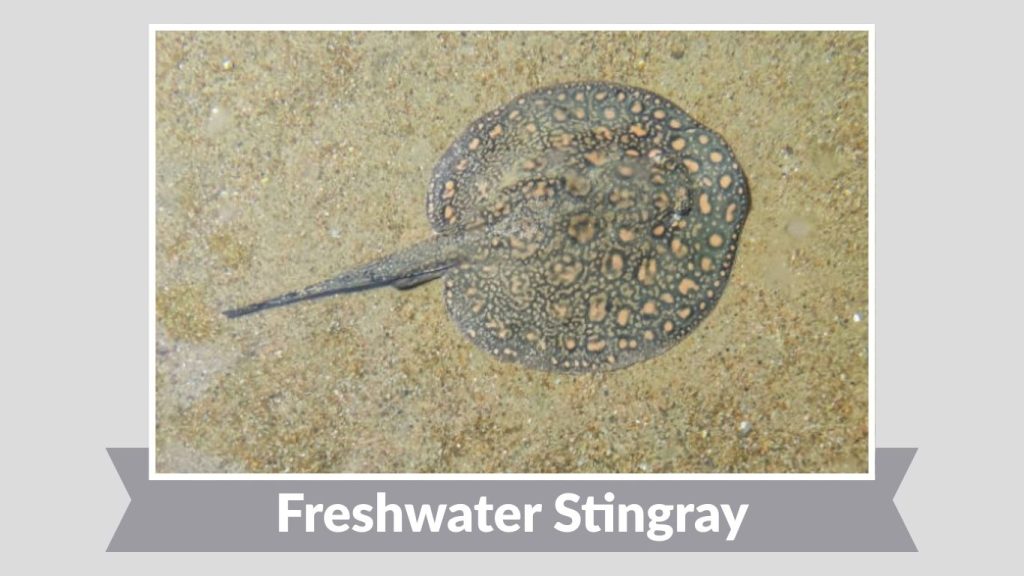
Freshwater stingrays are a unique group of stingrays that spend their entire lives in rivers rather than the ocean. Native mainly to South American river systems such as the Amazon, Orinoco, and Paraná basins, these rays are well known for their beautiful patterns and strong venom. They are among the most distinctive rays in the world.
Identification
- Round to oval-shaped flat body
- Upper surface patterned with spots, rings, or marbled designs
- Colors vary from brown and gray to yellow or orange
- Thick tail with one or more venomous spines
- Eyes positioned on top of the body
- Disc width varies widely by species, often 12–24 inches (30–60 cm)
Habitat
Freshwater stingrays inhabit slow-moving rivers, flooded forests, sandy riverbeds, and muddy bottoms. They prefer warm freshwater environments and are often found buried in sediment near riverbanks.
Behaviors
They are mostly bottom-dwellers and spend much of their time hidden under sand or mud. Freshwater stingrays are shy and avoid confrontation, using their tail spine only when threatened or stepped on.
Diet and Lifespan
Their diet includes small fish, insect larvae, snails, worms, and crustaceans. They locate prey using electroreception. Many freshwater stingray species can live between 15 and 25 years in the wild.
9. Short-tail Stingray (Bathytoshia brevicaudata)
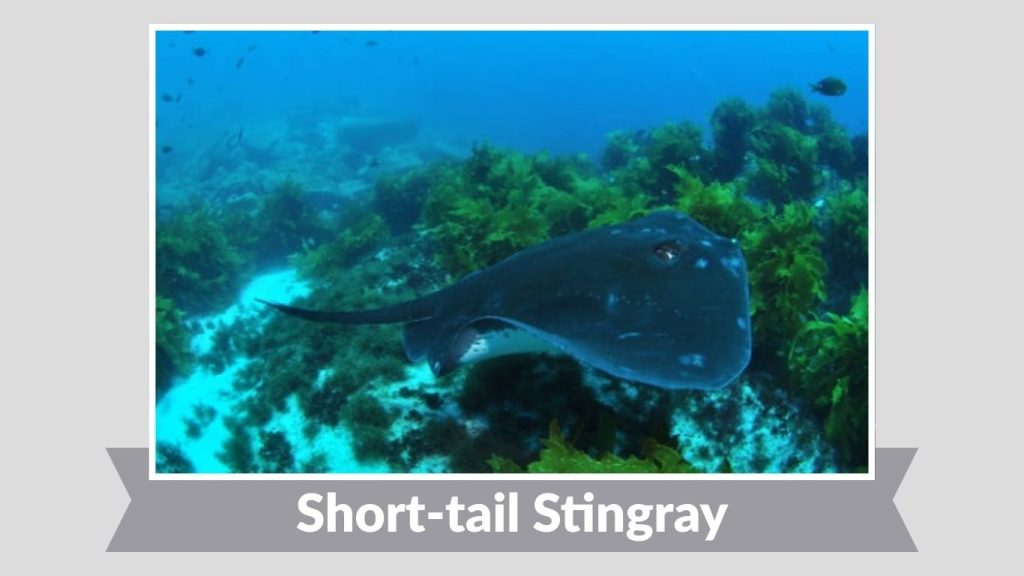
The short-tail stingray is one of the largest stingray species in the world, recognized for its massive, thick body and relatively short, powerful tail. It is commonly seen in temperate coastal waters and is sometimes called the smooth stingray. Despite its size, it is generally calm and slow-moving.
Identification
- Very large, broad, diamond-shaped disc
- Upper surface usually dark brown, gray, or olive
- Thick, muscular body with smooth skin
- Short, heavy tail compared to most stingrays
- One or more large venomous tail spines
- Disc width can exceed 14 feet (4.3 m)
Habitat
Short-tail stingrays are found in coastal waters of the southern oceans, including around Australia, New Zealand, and South Africa. They prefer sandy bays, rocky reefs, and continental shelf areas.
Behaviors
This species often rests on the seabed during the day and becomes more active at night. Short-tail stingrays are slow swimmers but powerful when disturbed. They are usually solitary but may gather in feeding areas.
Diet and Lifespan
They feed mainly on shellfish, crabs, squid, and bottom-dwelling fish. Their strong jaws allow them to crush hard shells easily. Short-tail stingrays can live 30 years or more in natural environments.
10. Long-tail Stingray (Hypanus longus)
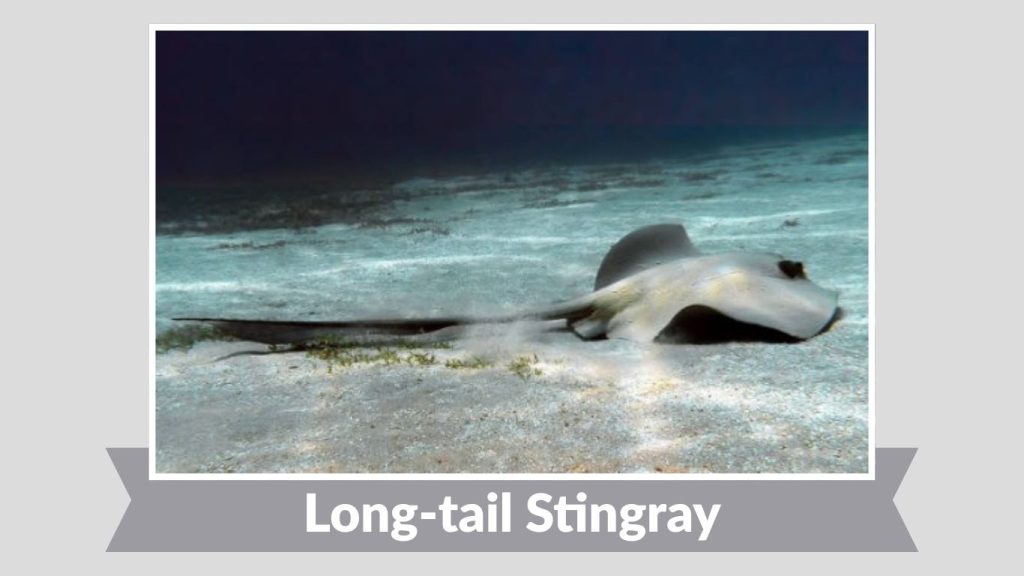
The long-tail stingray is named for its extremely long, whip-like tail, which can be several times longer than its body. It is a large coastal stingray commonly found in the eastern Pacific. This species is powerful yet typically calm, spending much of its time resting on sandy bottoms.
Identification
- Broad, diamond-shaped body disc
- Upper surface gray, brown, or olive
- Very long, thin tail much longer than the body
- One or more venomous barbed spines on the tail
- Smooth skin with slightly raised eyes
- Disc width can reach about 5 feet (1.5 m)
Habitat
Long-tail stingrays inhabit tropical and subtropical coastal waters, especially along the Pacific coasts of Central and South America. They are often found in sandy bays, estuaries, and near coral or rocky reefs.
Behaviors
They are bottom-dwellers that frequently bury themselves in sand. Long-tail stingrays are mostly solitary and avoid human contact. When startled, they can swim quickly using strong, wave-like fin movements.
Diet and Lifespan
Their diet consists of crabs, shrimp, worms, mollusks, and small fish. They locate prey hidden in sediment using electroreceptors. In the wild, they can live around 20 to 25 years.
11. Cowtail Stingray (Pastinachus sephen)
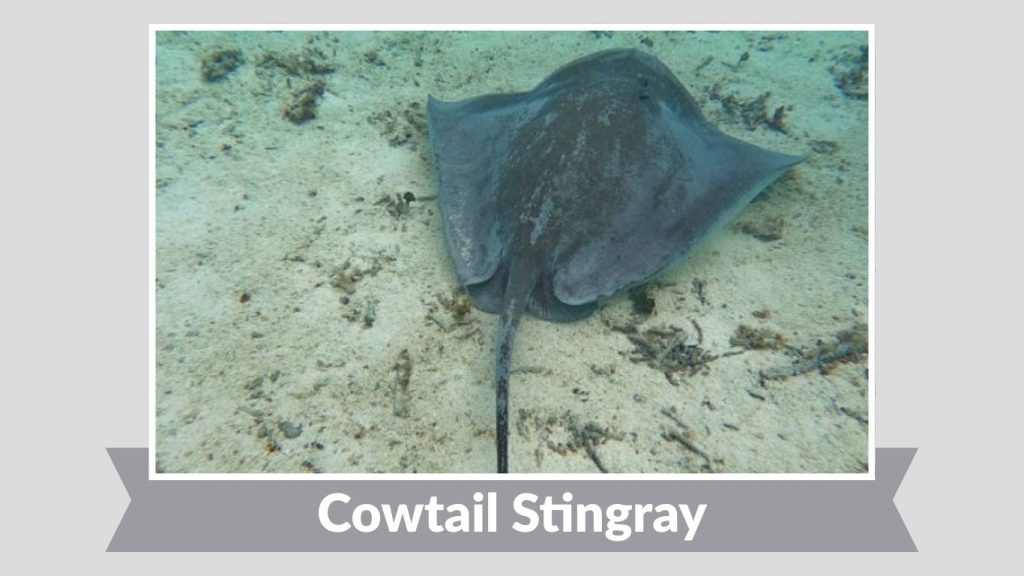
The cowtail stingray is a large, thick-bodied stingray named for its short, stout tail that resembles that of a cow. It is a common species in the Indo-Pacific region and is often seen in shallow coastal waters, lagoons, and reef flats. This stingray is powerful but generally slow-moving.
Identification
- Broad, flat, diamond-shaped disc
- Smooth, dark brown to olive upper surface
- Thick, muscular body
- Short, stocky tail with a venomous spine
- Pale or white underside
- Disc width can reach about 6 feet (1.8 m)
Habitat
Cowtail stingrays are found in warm coastal waters of the Indo-Pacific, from East Africa to the western Pacific islands. They inhabit sandy flats, seagrass beds, lagoons, and shallow reef areas.
Behaviors
They often lie motionless on the seabed, partially covered with sand. Cowtail stingrays are slow swimmers and prefer to rely on camouflage. They are generally solitary and only use their stinger in defense.
Diet and Lifespan
Their diet includes crustaceans, mollusks, worms, and small fish. They crush hard-shelled prey with strong jaws. Cowtail stingrays can live approximately 20 to 25 years in the wild.
12. Bluntnose Stingray (Dasyatis sayi)
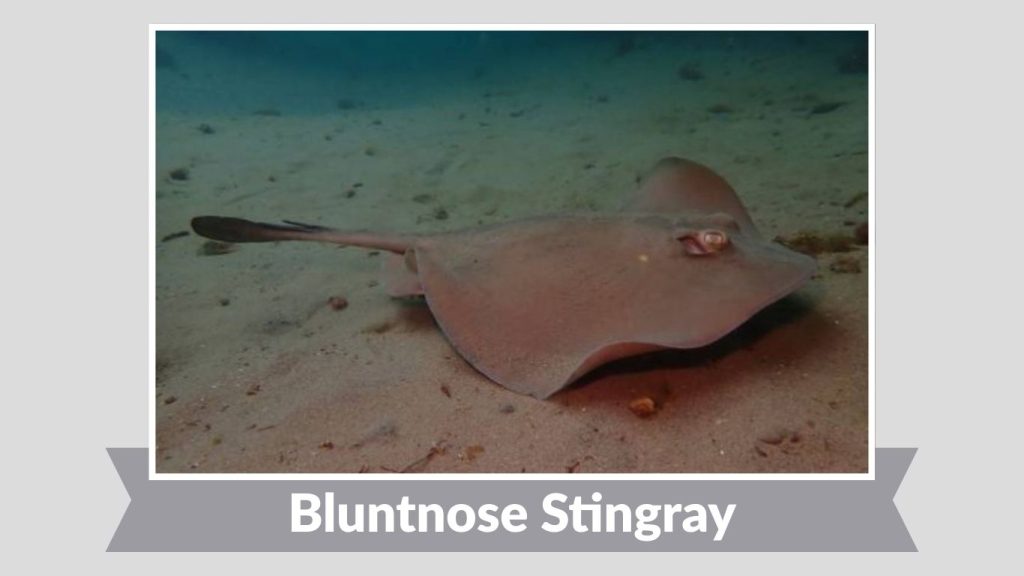
The bluntnose stingray is a medium to large coastal stingray commonly found along the western Atlantic Ocean, especially near the eastern United States and Gulf of Mexico. It gets its name from its rounded snout and broad disc. This species is frequently seen resting on sandy or muddy bottoms in shallow waters.
Identification
- Broad, diamond-shaped disc with a blunt, rounded snout
- Upper surface brown to gray
- Smooth skin without large thorns
- Long, whip-like tail with one or more venomous spines
- Pale underside
- Disc width can reach about 4 feet (1.2 m)
Habitat
Bluntnose stingrays live in shallow coastal waters, bays, estuaries, and over sandy or muddy seafloors. They can also move into brackish environments and are usually found close to shore.
Behaviors
They are bottom-dwelling rays that often bury themselves under sediment. Bluntnose stingrays are generally inactive during the day and more active at night. They are non-aggressive and usually swim away when disturbed.
Diet and Lifespan
Their diet consists mainly of crabs, shrimp, worms, clams, and small fish. They use their fins to uncover prey hidden in the bottom. In the wild, bluntnose stingrays can live about 15 to 20 years.
13. Round Stingray (Urobatis halleri)
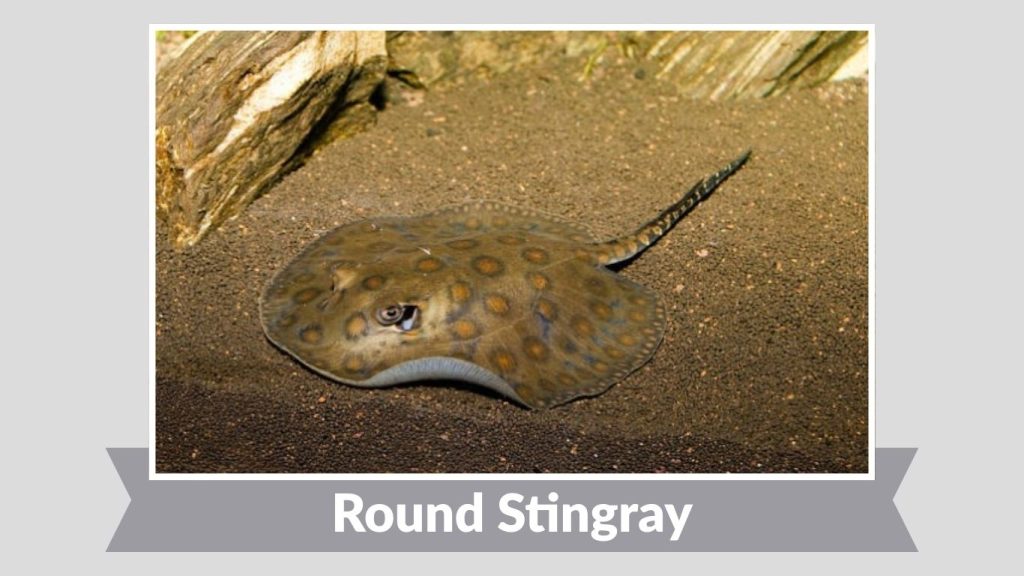
The round stingray is a small, compact stingray best known for its nearly circular body shape. It is commonly found along the eastern Pacific coast, especially around California and Mexico. Because it lives in very shallow waters, it is one of the stingray species most often encountered by beachgoers.
Identification
- Almost circular, rounded body disc
- Upper surface brown, gray, or olive
- Smooth skin with no prominent spines on the disc
- Short tail with a venomous barb
- Pale underside
- Disc width usually 12–14 inches (30–35 cm)
Habitat
Round stingrays inhabit shallow coastal waters, sandy beaches, estuaries, and bays. They prefer sandy or muddy bottoms where they can easily bury themselves and are often found very close to shore.
Behaviors
They spend much of their time hidden beneath sand with only their eyes exposed. Round stingrays are mostly nocturnal and become more active at night. Because they live in shallow surf zones, accidental stings can happen when people step on them.
Diet and Lifespan
Their diet includes small crabs, worms, shrimp, and tiny fish. They locate prey using electroreception and smell. In the wild, round stingrays usually live around 10 to 15 years.
14. Yellow Stingray (Urobatis jamaicensis)
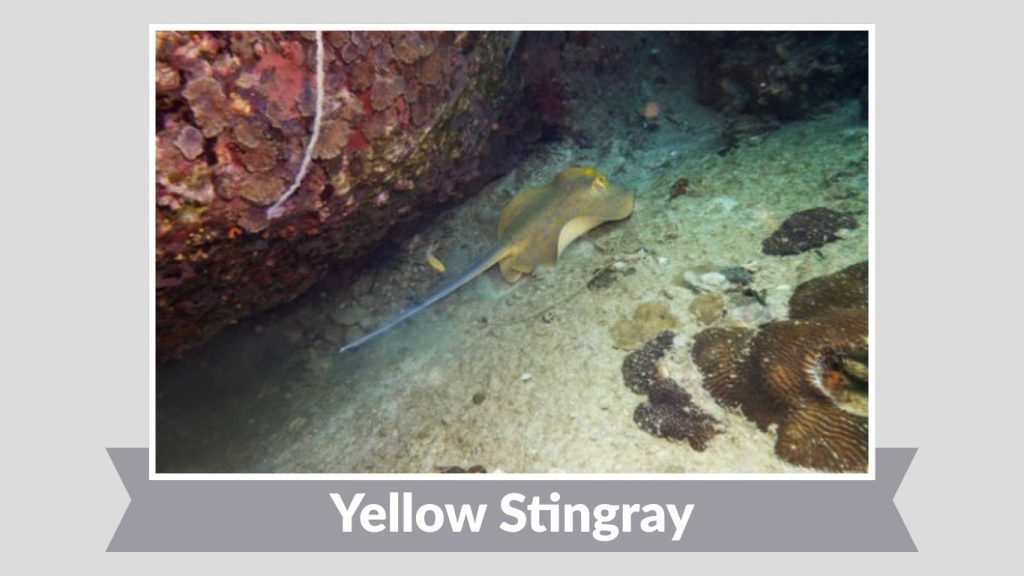
The yellow stingray is a small but beautifully patterned stingray found mainly in the Caribbean Sea and western Atlantic. It is well known for its bright yellow coloration and intricate dark markings, which help it blend into sandy and reef environments. This species is commonly observed by snorkelers and divers in shallow tropical waters.
Identification
- Small, rounded body disc
- Yellow to tan upper surface with dark brown or black patterns
- Smooth skin with fine texture
- Short tail with a venomous spine
- Pale yellow or white underside
- Disc width usually 14–16 inches (35–40 cm)
Habitat
Yellow stingrays live in warm, shallow waters around coral reefs, seagrass beds, and sandy flats. They are most common in the Caribbean, Gulf of Mexico, and along the Florida coast.
Behaviors
They are bottom-dwellers that often rest motionless on the seafloor or bury themselves under sand. Yellow stingrays are generally solitary and shy, swimming away quickly if disturbed.
Diet and Lifespan
Their diet includes small crustaceans, worms, mollusks, and tiny fish. They use their snouts and fins to uncover prey hidden in sediment. Yellow stingrays can live about 15 to 20 years in the wild.
15. Masked Stingray (Neotrygon kuhlii complex)
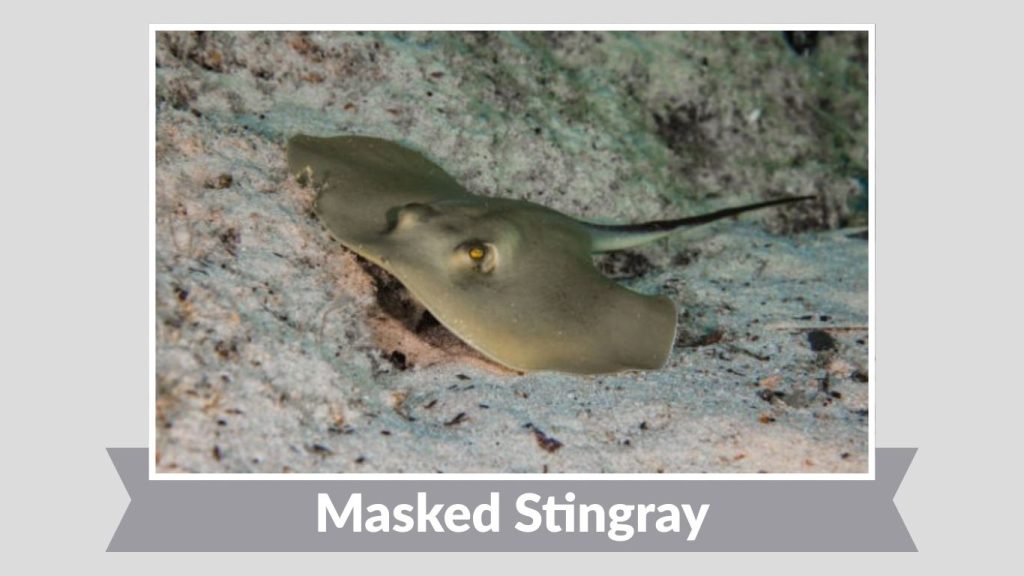
The masked stingray, often called the blue-spotted maskray, is known for the dark “mask-like” markings around its eyes and the scattered blue spots across its back. It is a small to medium-sized stingray commonly found in shallow Indo-Pacific waters. This species is usually seen resting on sandy reef flats or near coral reefs.
Identification
- Rounded, oval-shaped body disc
- Light brown to gray upper surface
- Distinct dark band or “mask” around the eyes
- Bright blue spots scattered across the back
- Thin tail with venomous spine
- Disc width usually up to 16 inches (40 cm)
Habitat
Masked stingrays inhabit shallow coastal waters of the Indo-Pacific region. They are most often found around coral reefs, sandy lagoons, seagrass beds, and sheltered reef flats.
Behaviors
They are shy and secretive stingrays that spend much of the day resting under sand or near coral structures. At night, they become more active and search for food across sandy bottoms.
Diet and Lifespan
Their diet includes small fish, shrimp, crabs, worms, and other bottom-dwelling animals. They locate prey using electroreception. Masked stingrays can live approximately 15 to 20 years.
16. Porcupine Ray (Urogymnus asperrimus)
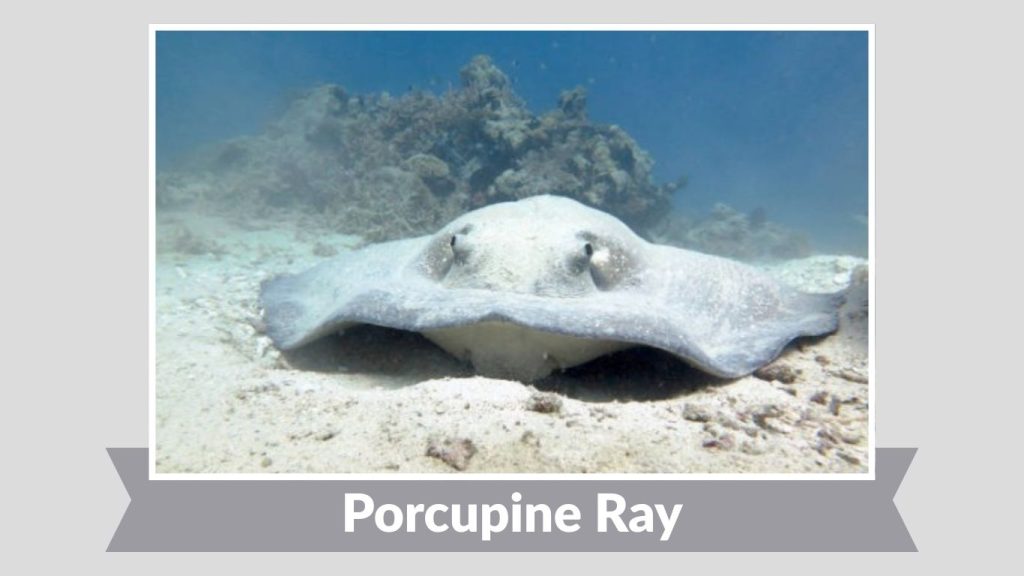
The porcupine ray is one of the most unusual-looking stingrays due to its extremely rough, spiny skin. Instead of a smooth body like most stingrays, this species is covered with large thorn-like denticles, giving it a rugged appearance. It is a rare but fascinating stingray found in Indo-Pacific coastal waters.
Identification
- Very large, broad body disc
- Upper surface covered with thick, thorny spines
- Color ranges from gray to dark brown
- Massive, flattened body
- Thick tail with venomous spine
- Disc width can exceed 10 feet (3 m)
Habitat
Porcupine rays are found in tropical Indo-Pacific waters, often near coral reefs, sandy seabeds, and continental shelf areas. They usually inhabit deeper coastal waters but can sometimes be seen in shallower reef zones.
Behaviors
This species is slow-moving and spends much of its time resting on the seafloor. Because of its tough, spiny skin, it relies more on armor than speed for protection. It is rarely aggressive and avoids human contact.
Diet and Lifespan
Porcupine rays feed on mollusks, crustaceans, worms, and bottom-dwelling fish. Their strong jaws are adapted to crushing hard shells. They are believed to live 30 years or more.
17. Marble Stingray (Dasyatis marmorata)
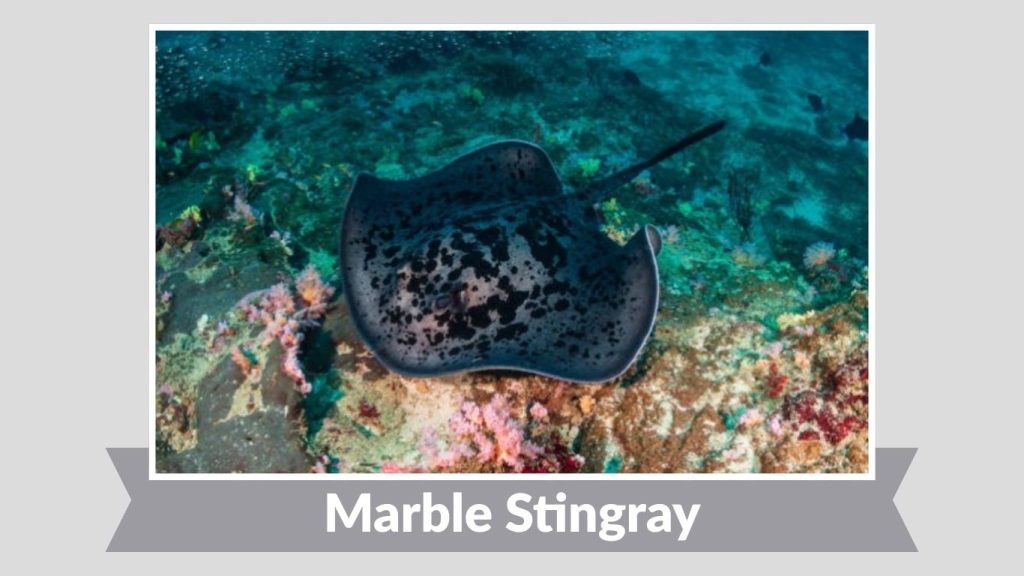
The marble stingray is a medium-sized stingray known for its beautifully patterned, marbled upper surface. It is native to the eastern Atlantic Ocean and Mediterranean Sea, where it inhabits shallow coastal waters. Its camouflage allows it to blend perfectly with sandy and muddy seafloors.
Identification
- Diamond-shaped, flat body disc
- Marbled brown, gray, and olive pattern on the upper side
- Smooth skin texture
- Long, whip-like tail with venomous spine
- Pale underside
- Disc width usually up to 2.5 feet (75 cm)
Habitat
Marble stingrays are found in coastal waters, bays, lagoons, and estuaries of the eastern Atlantic and Mediterranean regions. They prefer sandy or muddy bottoms where they can easily bury themselves.
Behaviors
They are mostly nocturnal, remaining hidden during the day and becoming active at night. Marble stingrays are shy and avoid disturbance, often swimming away quickly when approached.
Diet and Lifespan
Their diet includes small fish, crustaceans, worms, and mollusks. They hunt by uncovering prey in the sediment. In the wild, marble stingrays can live about 15 to 20 years.
18. Rosette Stingray (Fontitrygon margarita)
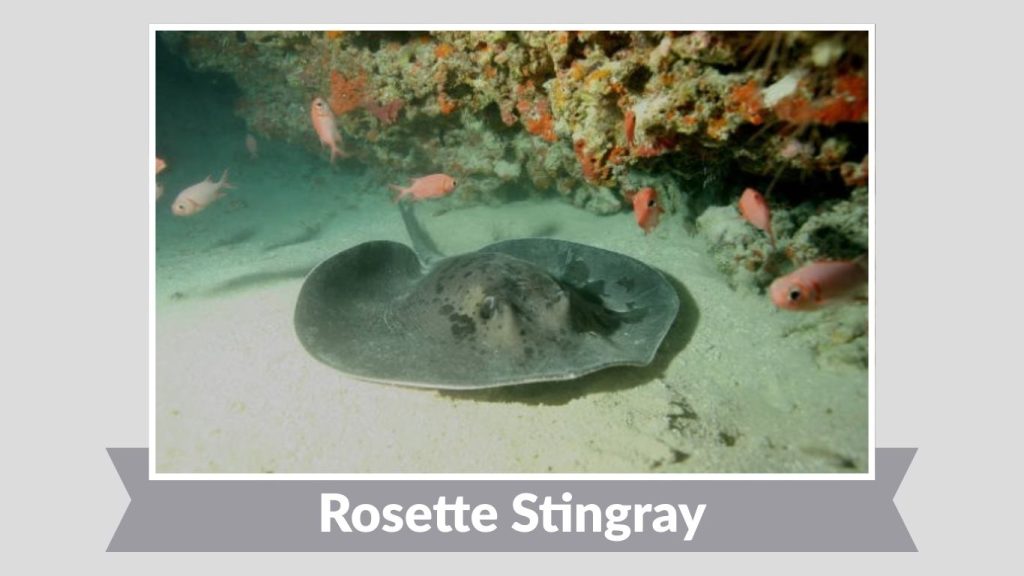
The rosette stingray is a lesser-known stingray species found mainly along the western coast of Africa. It gets its name from the subtle rosette-like markings sometimes visible on its back. This stingray is typically found in shallow coastal waters and soft-bottom habitats.
Identification
- Diamond-shaped, moderately broad disc
- Upper surface brown to gray with faint rosette patterns
- Smooth skin with fine texture
- Long, slender tail with a venomous spine
- Light-colored underside
- Disc width usually up to about 3 feet (90 cm)
Habitat
Rosette stingrays inhabit coastal waters, estuaries, and shallow continental shelves of western Africa. They prefer sandy and muddy bottoms where they can bury themselves easily.
Behaviors
They are bottom-dwelling stingrays that often remain partially buried in sediment. Rosette stingrays are generally solitary and become more active at night while foraging.
Diet and Lifespan
Their diet consists of crustaceans, worms, small fish, and mollusks. They use electroreception to detect hidden prey. In the wild, rosette stingrays are believed to live around 15 to 20 years.
19. Black Stingray (Hypanus atlanticus)
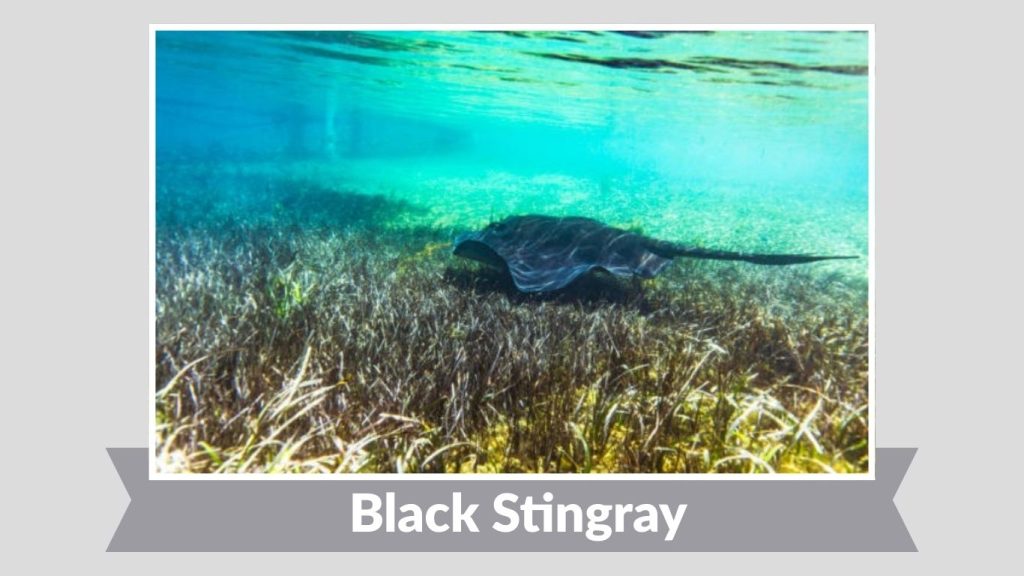
The black stingray is a dark-colored coastal stingray commonly found in the western Atlantic Ocean, especially in the Caribbean Sea and Gulf of Mexico. It is closely related to the southern stingray but is distinguished by its deeper, almost solid black coloration. This species is often seen resting on sandy flats and shallow reef areas.
Identification
- Broad, diamond-shaped disc
- Upper surface dark brown to nearly black
- Smooth, flat body
- Long, whip-like tail with venomous spine
- Pale to grayish underside
- Disc width can reach about 5 feet (1.5 m)
Habitat
Black stingrays live in warm coastal waters, shallow bays, sandy flats, and near coral reefs. They are most commonly found in the Caribbean region and surrounding Atlantic waters.
Behaviors
They are bottom-dwellers that spend much of their time resting or partially buried in sand. Black stingrays are calm and shy, swimming away when approached. They may be seen singly or in small groups.
Diet and Lifespan
Their diet consists of crabs, shrimp, worms, mollusks, and small fish. They uncover prey by flapping their fins. In natural conditions, black stingrays can live approximately 20 to 25 years.
20. Smooth Butterfly Ray (Gymnura micrura)
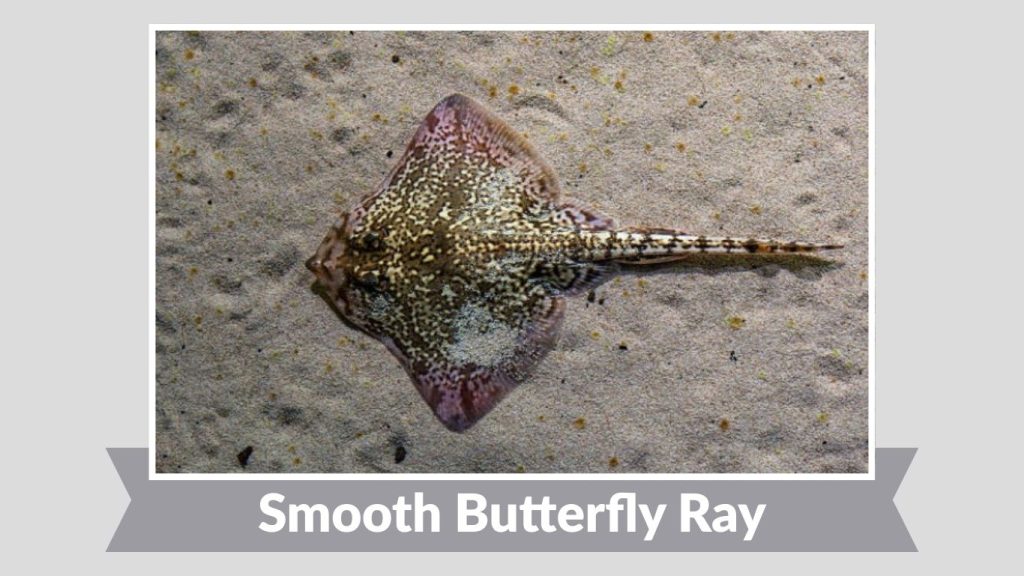
The smooth butterfly ray is easily recognized by its extremely wide, wing-like body that resembles a butterfly in flight. Unlike typical diamond-shaped stingrays, this species has a very short tail and a broad, rounded disc. It is commonly found in warm, shallow Atlantic coastal waters.
Identification
- Very wide, rounded body disc, much wider than long
- Smooth skin with no large spines
- Upper surface grayish-brown to olive
- Very short tail with a small venomous spine
- White underside
- Disc width can reach about 7 feet (2.1 m)
Habitat
Smooth butterfly rays live in shallow coastal waters, sandy bays, lagoons, and estuaries. They are commonly found near shorelines with soft bottoms where they can easily bury themselves.
Behaviors
They are slow-moving bottom-dwellers that often rest flat against the seabed. Smooth butterfly rays rely heavily on camouflage and usually remain motionless during the day, becoming more active at night.
Diet and Lifespan
Their diet includes small fish, crabs, shrimp, worms, and other bottom-dwelling animals. They trap prey under their wide bodies before consuming it. In the wild, they can live around 15 to 20 years.
21. Roughtail Stingray (Bathytoshia centroura)
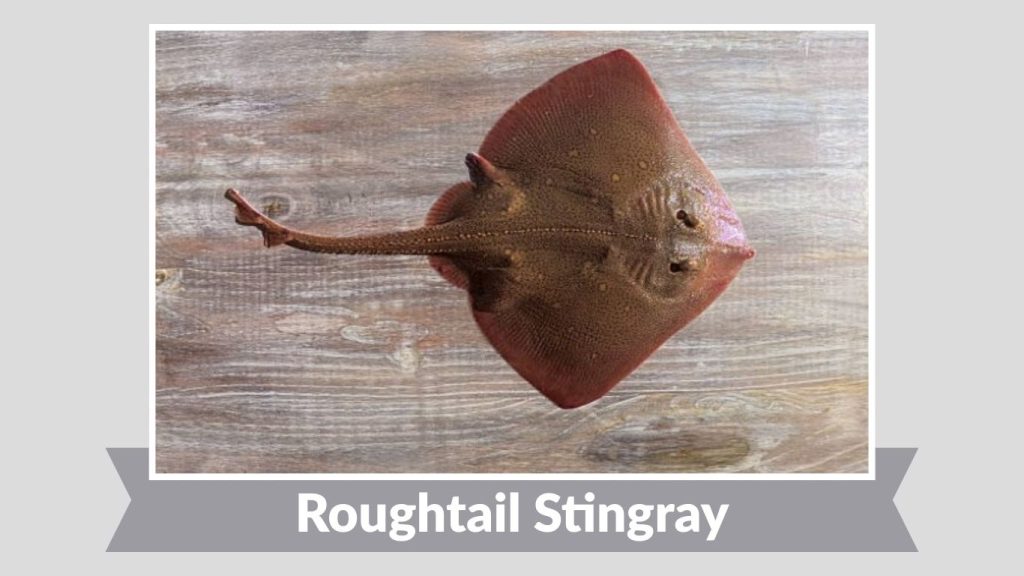
The roughtail stingray is a large and powerful stingray named for the rough, thorny texture along its tail and upper body. It is one of the biggest stingrays found in the Atlantic Ocean and is commonly seen in deeper coastal waters. This species is strong but generally slow-moving and non-aggressive.
Identification
- Large, diamond-shaped body disc
- Brown to gray upper surface
- Rough, thorn-like denticles along the tail and midline
- Long, thick tail with venomous spine
- Pale underside
- Disc width can exceed 7 feet (2.1 m)
Habitat
Roughtail stingrays inhabit coastal and offshore waters of the western Atlantic Ocean. They are found along continental shelves, sandy plains, and sometimes near reefs, from shallow zones to deeper waters.
Behaviors
They often rest on the seafloor during the day and become more active at night. Roughtail stingrays are usually solitary and prefer deeper habitats compared to many other stingray species.
Diet and Lifespan
Their diet includes fish, squid, crabs, and mollusks. They crush hard prey using strong jaws. Roughtail stingrays can live 25 to 30 years or more.
22. Pearl Stingray (Hypanus dipterurus)
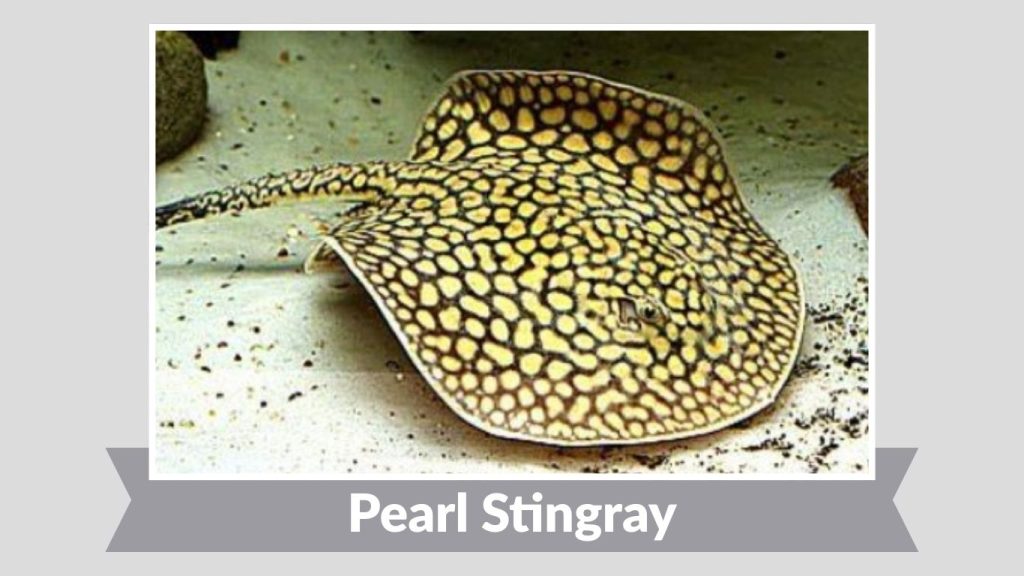
The pearl stingray, also known as the diamond stingray, is a medium to large stingray found along the eastern Pacific coast. It is named for its slightly iridescent, pearl-like sheen when seen underwater. This adaptable species is common in coastal waters and estuaries.
Identification
- Broad, diamond-shaped body disc
- Upper surface gray, brown, or olive with subtle sheen
- Smooth skin texture
- Long, whip-like tail with venomous spine
- Pale or white underside
- Disc width can reach about 5 feet (1.5 m)
Habitat
Pearl stingrays inhabit tropical and subtropical waters of the eastern Pacific, from California to South America. They are found in bays, estuaries, sandy flats, and near reefs.
Behaviors
They are bottom-dwellers that frequently bury themselves in sand. Pearl stingrays are generally calm and solitary but may gather where food is abundant.
Diet and Lifespan
Their diet consists of crustaceans, mollusks, worms, and small fish. They hunt mainly at night. In the wild, pearl stingrays can live around 20 to 25 years.
23. Giant Freshwater Stingray (Urogymnus polylepis)
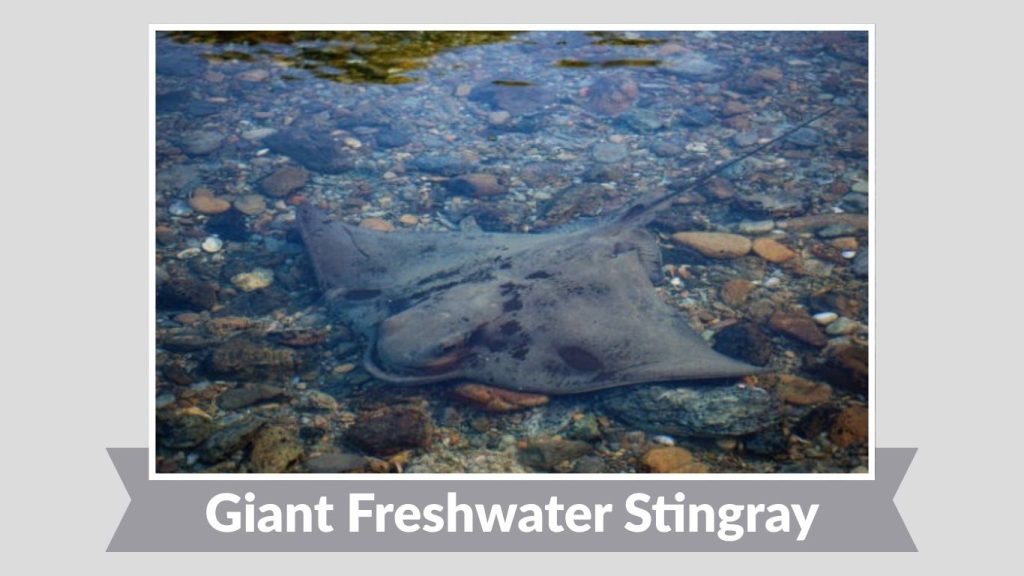
The giant freshwater stingray is one of the largest freshwater fish in the world. It lives in large rivers of Southeast Asia and is famous for its enormous size and powerful build. Despite its intimidating appearance, this species is generally shy and spends most of its time hidden on the river bottom.
Identification
- Massive, round to oval-shaped body disc
- Upper surface brown to gray, often plain in color
- Smooth skin with small denticles
- Thick tail with large venomous spine
- Pale underside
- Disc width can exceed 7 feet (2.1 m)
Habitat
Giant freshwater stingrays inhabit large rivers, estuaries, and occasionally brackish waters in Southeast Asia, including the Mekong, Chao Phraya, and Mae Klong river systems. They prefer deep pools and sandy riverbeds.
Behaviors
They are bottom-dwellers that remain buried in sand for long periods. Giant freshwater stingrays are solitary and move slowly, relying on camouflage for protection.
Diet and Lifespan
Their diet includes fish, crustaceans, mollusks, and other bottom-dwelling animals. They use electroreception to detect prey. These stingrays may live more than 30 years in the wild.
24. Cortez Stingray (Urobatis maculatus)
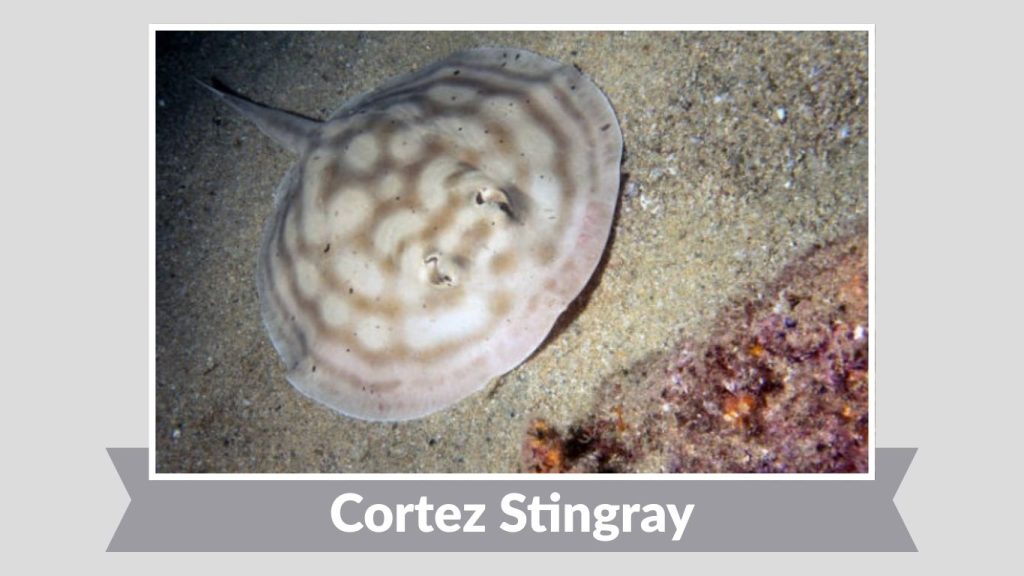
The Cortez stingray is a small stingray species native to the Gulf of California. It is known for its compact size and spotted pattern, which helps it blend into sandy and rocky seabeds. Because of its shallow-water habits, it is often encountered by snorkelers in warm coastal regions.
Identification
- Small, rounded body disc
- Light brown to tan upper surface with dark spots
- Smooth skin texture
- Short tail with venomous spine
- Pale underside
- Disc width usually 12–14 inches (30–35 cm)
Habitat
Cortez stingrays inhabit warm, shallow waters of the Gulf of California. They are commonly found around sandy bottoms, rocky reefs, and sheltered bays.
Behaviors
They spend much of their time resting on the seafloor or partially buried in sand. Cortez stingrays are shy and avoid confrontation, swimming away quickly when disturbed.
Diet and Lifespan
Their diet consists of small crustaceans, worms, and tiny fish. They forage mainly at night. In natural habitats, Cortez stingrays can live about 10 to 15 years.
25. Whitespotted Stingray (Himantura gerrardi)
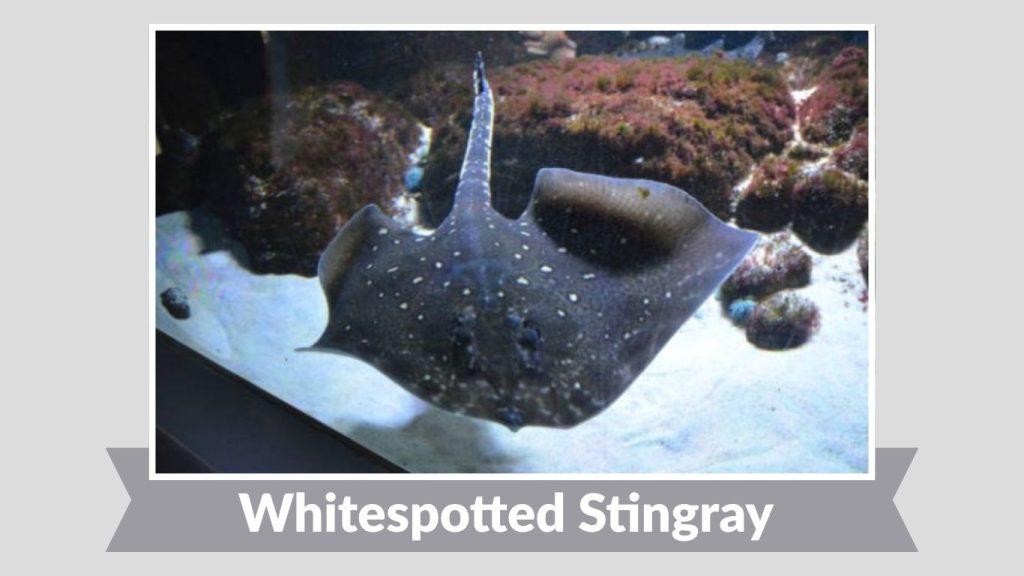
The whitespotted stingray is a large coastal stingray recognized by the small white spots scattered across its dark back. It is a common species in the Indo-West Pacific region and is often seen resting on sandy seabeds near coral reefs. Its broad disc and long tail give it a classic stingray appearance.
Identification
- Broad, diamond-shaped body disc
- Dark brown to gray upper surface with small white spots
- Smooth skin texture
- Long, whip-like tail with venomous spine
- White underside
- Disc width can reach about 4.5 feet (1.4 m)
Habitat
Whitespotted stingrays live in warm coastal waters of the Indo-West Pacific. They are commonly found around coral reefs, sandy flats, lagoons, and seagrass beds.
Behaviors
They are bottom-dwellers that often bury themselves under sand. Whitespotted stingrays are calm and non-aggressive, usually swimming away when approached.
Diet and Lifespan
Their diet includes crabs, shrimp, mollusks, worms, and small fish. They locate prey hidden in sediment using electroreception. In the wild, whitespotted stingrays can live around 20 to 25 years.
FAQs
Are all stingrays dangerous to humans?
Stingrays are not aggressive and do not actively attack humans. Most injuries happen when someone accidentally steps on a stingray, causing it to defend itself with its tail spine. When left undisturbed, stingrays are generally calm, shy, and prefer to swim away rather than confront people.
Do all stingrays have venomous stingers?
Not all rays have venomous stingers. Most true stingrays possess one or more venomous barbs on their tails used for defense. However, manta rays and some closely related rays lack stingers entirely and are completely harmless to humans despite their large size.
What do stingrays usually eat?
Stingrays mainly feed on bottom-dwelling animals such as crabs, shrimp, worms, clams, snails, and small fish. They use special electroreceptors to detect prey hidden under sand, then uncover it with their fins before crushing or swallowing it.
Where are stingrays commonly found?
Stingrays are found worldwide in tropical, subtropical, and temperate waters. Most live in shallow coastal areas such as sandy flats, bays, lagoons, and coral reefs. Some species inhabit deep oceans, while others are specially adapted to live entirely in freshwater rivers.
How long do stingrays live?
The lifespan of stingrays varies by species. Smaller coastal stingrays often live around 10 to 20 years, while larger species such as manta rays and giant freshwater stingrays may live 30 to 40 years or more under natural conditions.