


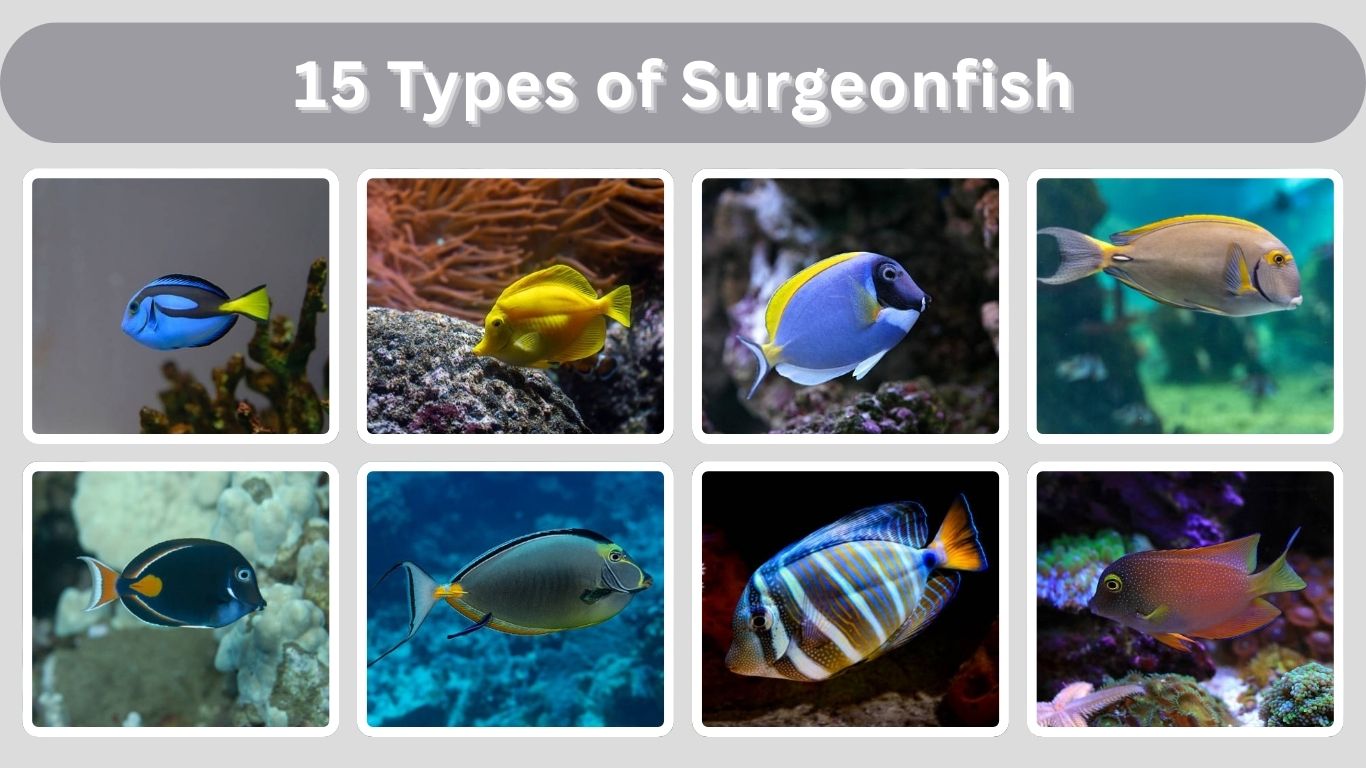
Surgeonfish are fast-swimming, algae-grazing reef fish best known for the sharp, blade-like spines near their tails that resemble a surgeon’s scalpel. Found mainly on tropical coral reefs, these colorful fish play a vital role in keeping reefs healthy by controlling algae growth. From the brilliant Blue Tang to the powerful Unicorn Tang, surgeonfish combine beauty, speed, and ecological importance, making them favorites among divers, marine biologists, and aquarium enthusiasts worldwide.
1. Blue Tang (Paracanthurus hepatus)
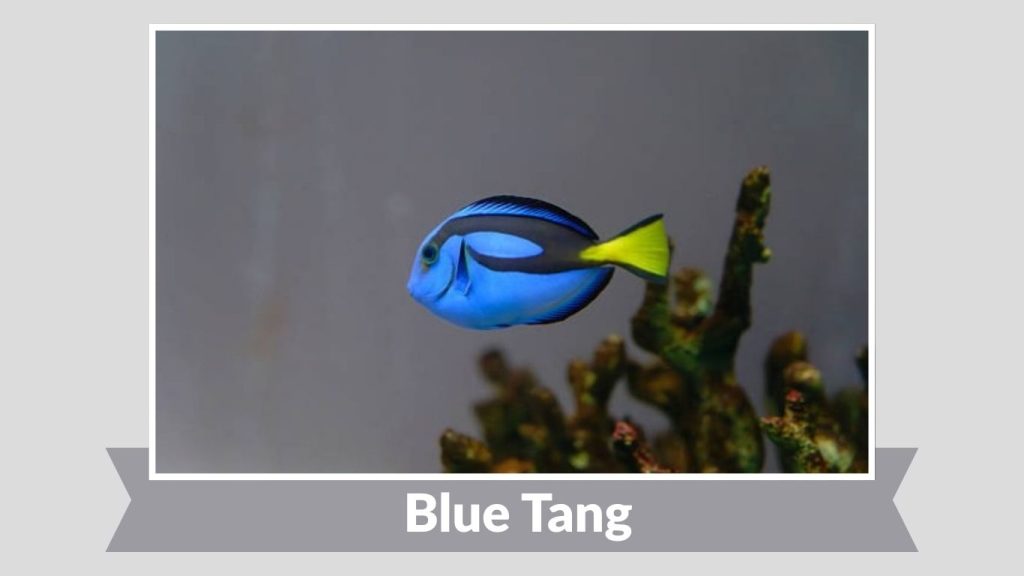
The Blue Tang is one of the most recognizable surgeonfish in the world, famous for its bright blue body, black palette-like pattern, and vivid yellow tail. Found on tropical coral reefs, this active swimmer plays an important role in reef ecosystems by grazing on algae and helping keep corals healthy.
Identification
- Bright royal blue body
- Black curved “palette” pattern along the sides
- Bright yellow tail fin
- Oval, laterally compressed body
- Grows up to about 12 inches (30 cm) long
- Sharp, retractable “scalpel” spine near the tail
Habitat
Blue Tangs are found throughout the Indo-Pacific, including the Red Sea, East Africa, Southeast Asia, and the Great Barrier Reef. They inhabit coral reefs, reef slopes, and lagoons, usually swimming along reef edges and open coral areas at depths of 2 to 40 meters.
Behaviors
This species is active and social, often seen swimming in small groups or loose schools. Blue Tangs constantly move across the reef, picking at algae-covered surfaces. When threatened, they may dart into coral crevices and use their sharp tail spine for defense.
Diet and Lifespan
In the wild, Blue Tangs mainly feed on algae and plankton. In aquariums, they require a diet rich in marine algae along with vegetable-based and protein foods. With proper care, their average lifespan ranges from 8 to 15 years.
2. Yellow Tang (Zebrasoma flavescens)
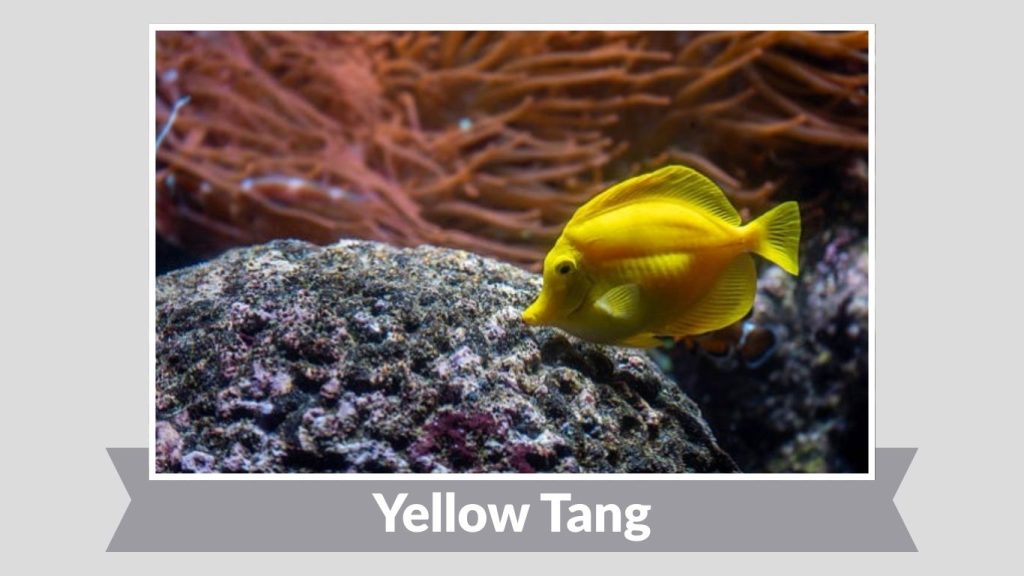
The Yellow Tang is one of the most popular and easily recognized surgeonfish, famous for its solid bright yellow body and constant activity on coral reefs. Native mainly to the Pacific Ocean, this species is valued for both its beauty and its important role in controlling algae growth on reefs.
Identification
- Solid bright yellow body
- Laterally compressed, disc-shaped body
- Long, pointed snout
- Grows up to about 8 inches (20 cm) long
- White, sharp “scalpel” spine at the base of the tail
- Continuous dorsal and anal fins
Habitat
Yellow Tangs are most commonly found around Hawaii and the central Pacific. They inhabit shallow coral reefs, lagoons, and reef slopes, usually at depths between 2 and 40 meters. They prefer reef flats and coral-rich areas with abundant algae.
Behaviors
This species is active, alert, and often seen swimming in loose schools, especially as juveniles. Yellow Tangs spend much of the day grazing on algae and defending small feeding territories. They are generally peaceful but may become territorial toward other tangs.
Diet and Lifespan
In the wild, Yellow Tangs primarily feed on filamentous algae. In aquariums, they require a vegetable-rich diet including seaweed and algae-based foods. With proper care, their typical lifespan ranges from 10 to 20 years.
3. Powder Blue Tang (Acanthurus leucosternon)
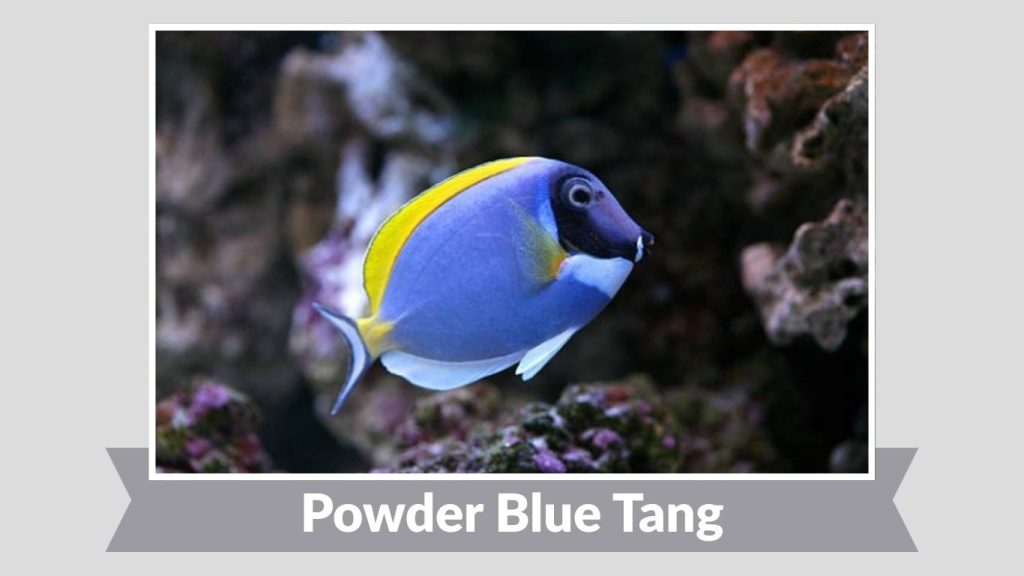
The Powder Blue Tang is a stunning and highly sought-after surgeonfish known for its sky-blue body, jet-black face, and bright yellow dorsal fin. Native to the Indian Ocean, this active reef swimmer is admired for its beauty but also respected for its sensitivity to water quality.
Identification
- Bright powder-blue body
- Deep black face and chest area
- Bright yellow dorsal fin
- White breast and lower body
- Grows up to about 9 inches (23 cm) long
- Sharp, retractable “scalpel” spine near the tail
Habitat
Powder Blue Tangs are found mainly in the Indian Ocean, including the Red Sea, East Africa, Sri Lanka, and the Maldives. They inhabit outer reef slopes, coral-rich reefs, and clear lagoons, usually at depths of 2 to 25 meters.
Behaviors
This species is fast-swimming, alert, and highly active. Powder Blue Tangs constantly graze along reef surfaces and are often territorial toward other surgeonfish. They rely on speed and their sharp tail spine for defense and usually retreat quickly into reef crevices when threatened.
Diet and Lifespan
In the wild, they feed mainly on filamentous algae and some zooplankton. In aquariums, they need a diet rich in marine algae along with high-quality vegetable and protein foods. With excellent care, their lifespan typically ranges from 8 to 15 years.
4. Powder Brown Tang (Acanthurus japonicus)
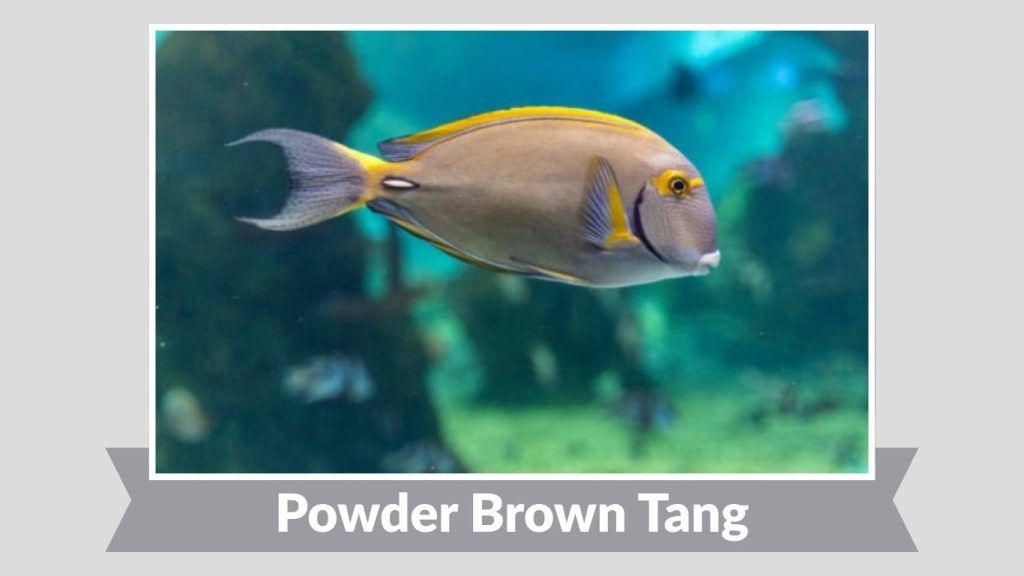
The Powder Brown Tang is an elegant surgeonfish recognized for its chocolate-brown body, white facial markings, and vivid yellow dorsal stripe. Native to the western Pacific, this active reef fish is admired for its graceful swimming style and striking color contrast.
Identification
- Chocolate-brown body color
- White face and snout markings
- Bright yellow dorsal stripe
- White band near the tail
- Grows up to about 8 inches (20 cm) long
- Sharp “scalpel” spine at the base of the tail
Habitat
Powder Brown Tangs are found mainly in the western Pacific, including Japan, Taiwan, and the Philippines. They inhabit coral reefs, reef slopes, and lagoons, typically at depths between 2 and 30 meters, favoring clear waters with strong currents.
Behaviors
This species is active and alert, spending much of the day swimming and grazing on reef surfaces. Powder Brown Tangs can be territorial, especially toward similar tang species. They often patrol a feeding area and may chase away intruders.
Diet and Lifespan
In the wild, they primarily feed on filamentous algae. In aquariums, they require a diet rich in marine algae, seaweed, and vegetable-based foods, along with some protein. With proper care, their typical lifespan ranges from 8 to 15 years.
5. Achilles Tang (Acanthurus achilles)
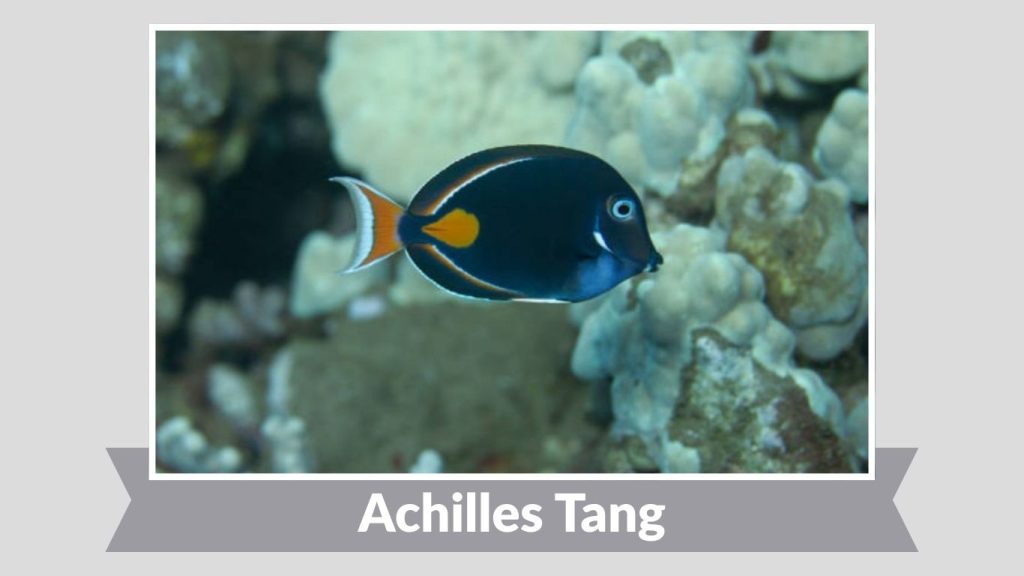
The Achilles Tang is one of the most striking and athletic surgeonfish, famous for its deep black body, fiery orange patch near the tail, and electric blue accents. Native mainly to the central Pacific, this fast-swimming species is admired for its beauty and power but is also known to be challenging to keep in captivity.
Identification
- Deep black to dark brown body
- Bright orange teardrop-shaped patch near the tail
- Thin electric blue lines along fins
- Oval, laterally compressed body
- Grows up to about 10 inches (25 cm) long
- Sharp white “scalpel” spine near the tail
Habitat
Achilles Tangs are found primarily around Hawaii and other central Pacific islands. They inhabit high-energy outer reef slopes and surge zones, usually at depths of 1 to 20 meters, where strong currents bring abundant oxygen and algae.
Behaviors
This species is extremely active and powerful, constantly swimming against currents and grazing on algae-covered rocks. Achilles Tangs are highly territorial toward other tangs and will aggressively defend their feeding areas.
Diet and Lifespan
In the wild, they feed mainly on filamentous algae. In aquariums, they require constant access to marine algae and excellent water quality. With expert care, their lifespan usually ranges from 8 to 15 years.
6. Naso Tang (Naso lituratus)
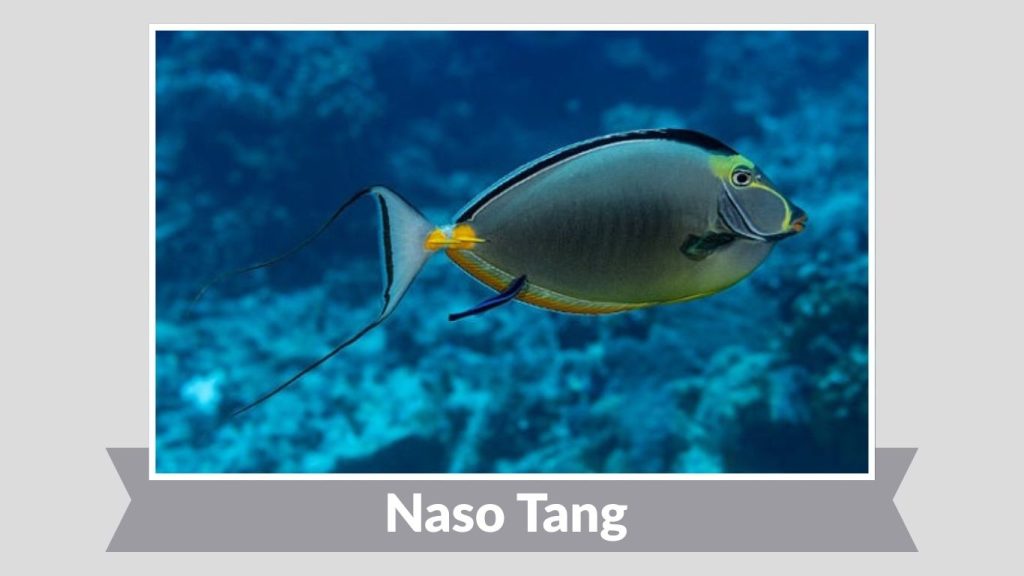
The Naso Tang, also called the Lipstick Tang or Orangespine Unicornfish, is a large and elegant surgeonfish known for its elongated snout, bold facial markings, and long trailing tail streamers. It is a popular reef species admired for both its size and graceful movement.
Identification
- Gray to bluish-gray body
- Bright orange lips and orange spines near the tail
- Distinct facial markings
- Long, pointed snout
- Can grow up to about 18 inches (45 cm) long
- Long tail streamers in adults
Habitat
Naso Tangs are found throughout the Indo-Pacific, including the Red Sea, East Africa, and the Great Barrier Reef. They inhabit outer reef slopes, lagoons, and reef drop-offs, usually at depths between 2 and 40 meters, often in areas with strong currents.
Behaviors
This species is generally peaceful and often seen swimming in pairs or small groups. Naso Tangs are constant grazers, moving long distances across reefs. Adults are strong swimmers and may roam widely in search of algae and plankton.
Diet and Lifespan
In the wild, Naso Tangs feed on both algae and zooplankton. In aquariums, they need a varied diet including marine algae, seaweed, and protein-rich foods. With proper care, they commonly live between 10 and 20 years.
7. Sailfin Tang (Zebrasoma veliferum)
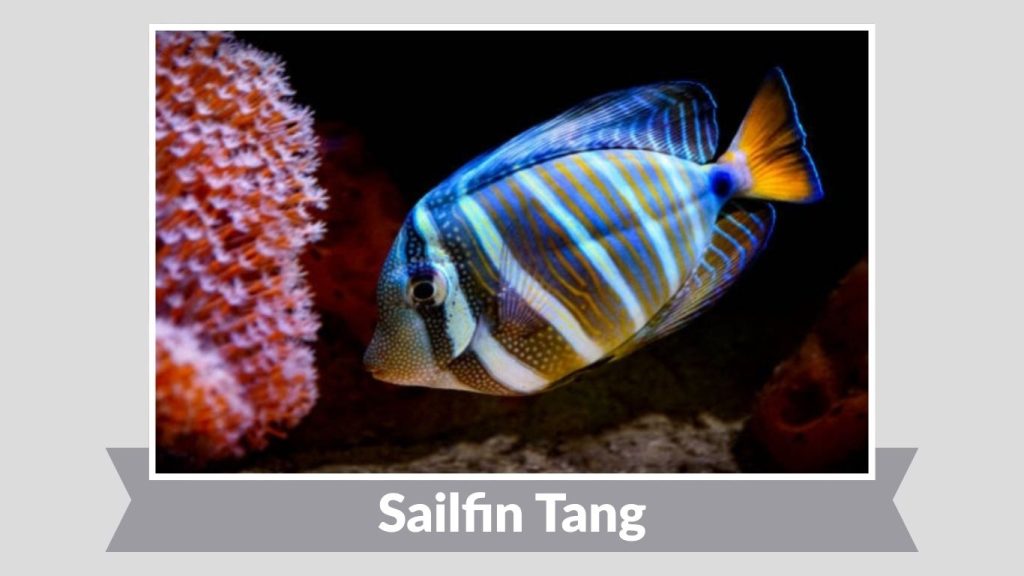
The Sailfin Tang is a large, eye-catching surgeonfish known for its extremely tall dorsal and anal fins that resemble a sail. With its striped body and impressive fin display, this species is one of the most visually dramatic tangs on coral reefs.
Identification
- Tall, sail-like dorsal and anal fins
- Brownish body with vertical yellow and white stripes
- Disc-shaped, laterally compressed body
- Grows up to about 15 inches (38 cm) long
- Sharp “scalpel” spine near the tail
- Broad, fan-shaped fins
Habitat
Sailfin Tangs are found throughout the Indo-Pacific, including the Red Sea, East Africa, and the western Pacific. They inhabit coral reefs, lagoons, and reef slopes, usually at depths between 1 and 30 meters, preferring calm reef flats and coral-rich zones.
Behaviors
This species is active and often seen grazing on algae throughout the day. Sailfin Tangs may swim alone or in loose groups and can become territorial, especially toward other tangs. When threatened, they may flare their fins to appear larger.
Diet and Lifespan
In the wild, Sailfin Tangs mainly feed on algae. In aquariums, they require a vegetable-rich diet with marine algae and seaweed. With good care, their lifespan typically ranges from 10 to 15 years.
8. Kole Tang (Ctenochaetus strigosus)
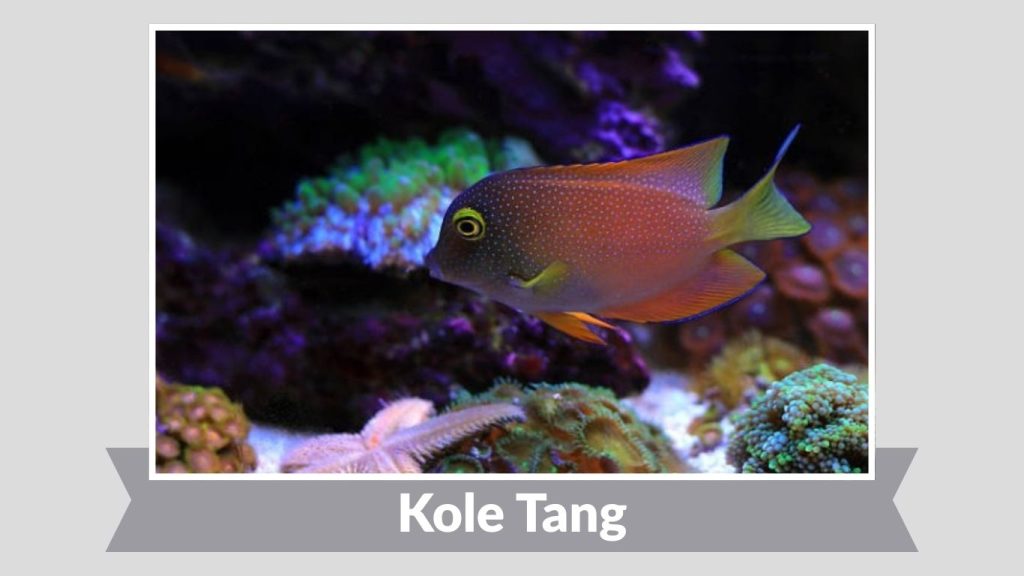
The Kole Tang, also known as the Yellow-eye Bristletooth Tang, is a smaller surgeonfish valued for its algae-cleaning ability and distinctive bristle-like teeth. Rather than grazing large algae, it specializes in scraping fine algae and detritus from reef surfaces, making it an important reef “janitor.”
Identification
- Brown to dark gray body with fine horizontal lines
- Bright yellow ring around the eyes
- Small, oval, laterally compressed body
- Grows up to about 7 inches (18 cm) long
- Fine, bristle-like teeth
- Sharp “scalpel” spine near the tail
Habitat
Kole Tangs are found mainly in the central Pacific, especially around Hawaii and nearby islands. They inhabit shallow coral reefs, rocky reef flats, and lagoon areas, usually at depths between 1 and 30 meters.
Behaviors
This species is active but generally more peaceful than many larger tangs. Kole Tangs spend most of the day scraping algae and organic film from rocks and coral surfaces. They may defend small feeding areas but are less aggressive than many other surgeonfish.
Diet and Lifespan
In the wild, they feed on microalgae, detritus, and diatoms. In aquariums, they require constant access to algae and benefit from seaweed and vegetable-based foods. With proper care, their lifespan usually ranges from 8 to 15 years.
9. Convict Tang (Acanthurus triostegus)
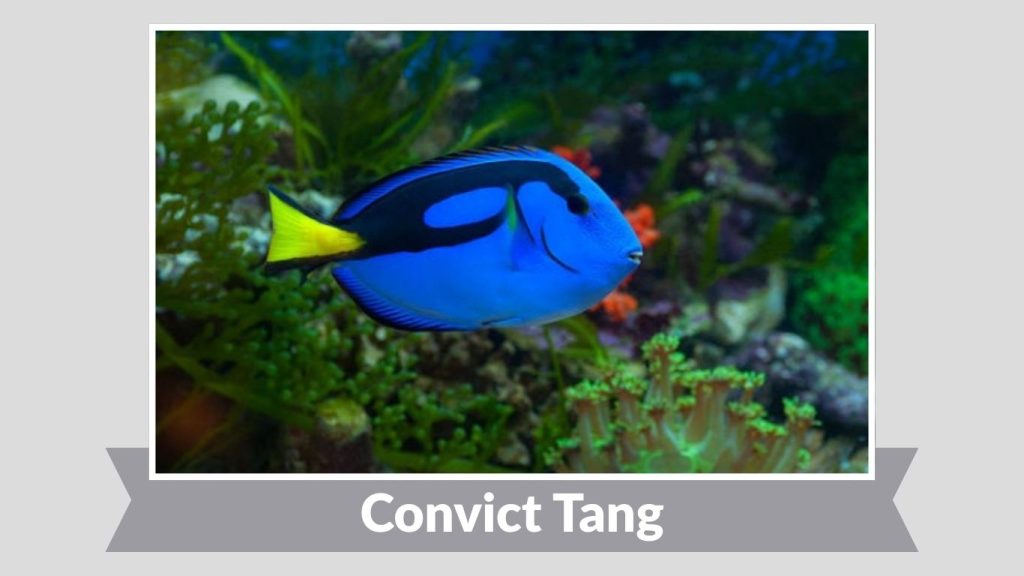
The Convict Tang is a highly social surgeonfish easily recognized by its bold black vertical stripes on a pale body. Often seen swimming in large schools, this species plays an important role in reef ecosystems by grazing algae and preventing overgrowth on coral reefs.
Identification
- White to pale yellow body
- Bold black vertical stripes across the body
- Oval, laterally compressed body
- Grows up to about 10 inches (25 cm) long
- Sharp white “scalpel” spine near the tail
- Rounded snout and small mouth
Habitat
Convict Tangs are found throughout the Indo-Pacific, including the Red Sea, East Africa, and the Pacific islands. They inhabit shallow coral reefs, reef flats, and lagoons, usually at depths between 1 and 30 meters, often in areas with abundant algae.
Behaviors
This species is well known for forming large schools, sometimes numbering in the hundreds. Convict Tangs graze constantly on algae-covered rocks and reef flats. They are generally peaceful and rely on schooling for protection rather than aggression.
Diet and Lifespan
In the wild, they mainly feed on filamentous algae. In aquariums, they need a steady supply of marine algae and vegetable-based foods. With proper care, their lifespan typically ranges from 8 to 15 years.
10. Chevron Tang (Ctenochaetus hawaiiensis)
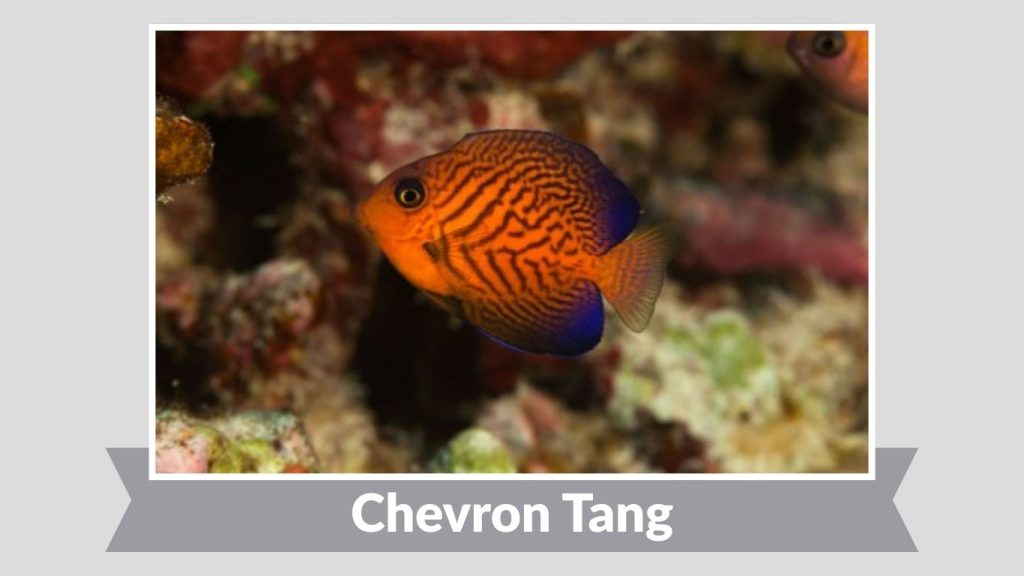
The Chevron Tang is a beautiful bristletooth surgeonfish known for its dramatic color change as it matures. Juveniles display bright orange and purple chevron patterns, while adults become darker with fine horizontal striping. This species is valued on reefs for its constant grazing and algae-cleaning behavior.
Identification
- Juveniles: bright orange body with purple chevron markings
- Adults: dark red-brown to black body with fine horizontal lines
- Oval, laterally compressed body
- Grows up to about 8 inches (20 cm) long
- Small mouth with bristle-like teeth
- Sharp “scalpel” spine near the tail
Habitat
Chevron Tangs are found mainly in the central and western Pacific, including Hawaii, Micronesia, and Polynesia. They inhabit coral reefs, reef slopes, and rocky reef flats, usually at depths between 2 and 40 meters, where fine algae are abundant.
Behaviors
This species is active but generally peaceful. Chevron Tangs spend most of the day scraping microalgae and detritus from rocks and reef surfaces. They may defend small feeding areas but are less aggressive than many larger tang species.
Diet and Lifespan
In the wild, they primarily feed on microalgae, diatoms, and organic film. In aquariums, they require frequent vegetable-based foods and marine algae. With proper care, their lifespan usually ranges from 8 to 15 years.
11. Mimic Tang (Acanthurus pyroferus)
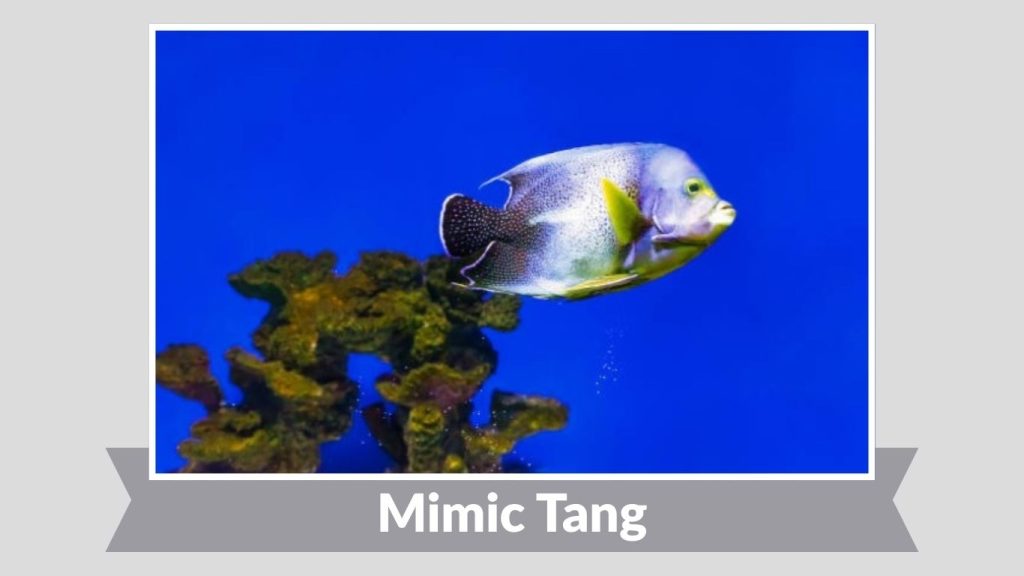
The Mimic Tang is a fascinating surgeonfish best known for its juvenile stage, where it mimics the color and pattern of dwarf angelfish to avoid predators. As it matures, it gradually transforms into a darker, more typical tang appearance. This unusual life-stage change makes it one of the most interesting surgeonfish species.
Identification
- Juveniles resemble dwarf angelfish (yellow or orange with dark markings)
- Adults become brown to gray with subtle patterning
- Oval, laterally compressed body
- Grows up to about 9 inches (23 cm) long
- Pointed snout
- Sharp “scalpel” spine near the tail
Habitat
Mimic Tangs are found throughout the Indo-Pacific, including Indonesia, the Philippines, and the Great Barrier Reef. They inhabit coral reefs, lagoons, and reef slopes, usually at depths between 3 and 40 meters, favoring coral-rich areas.
Behaviors
This species is active and constantly moving across reef surfaces. Mimic Tangs are usually solitary or found in small groups and can be mildly territorial. Juveniles rely on mimicry for protection, while adults use speed and agility to escape threats.
Diet and Lifespan
In the wild, they mainly feed on algae and some plankton. In aquariums, they need a vegetable-rich diet with marine algae and seaweed. With proper care, their lifespan typically ranges from 8 to 15 years.
12. Clown Tang (Acanthurus lineatus)
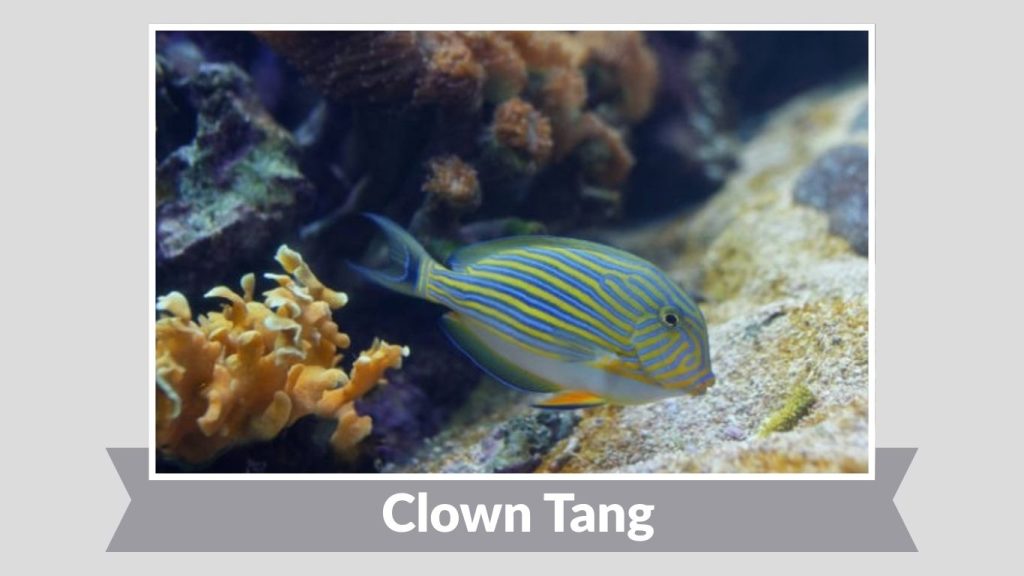
The Clown Tang is one of the most colorful and energetic surgeonfish, known for its vivid blue, yellow, and orange stripes. With its constant motion and bold appearance, this species is easily noticed on coral reefs and is admired by divers, though it is challenging to keep in aquariums.
Identification
- Bright blue body with bold yellow and orange horizontal stripes
- Distinctive black markings near the eyes
- Oval, laterally compressed body
- Grows up to about 15 inches (38 cm) long
- Sharp white “scalpel” spine near the tail
- Long, continuous dorsal and anal fins
Habitat
Clown Tangs are found throughout the Indo-Pacific, from the Red Sea to the Great Barrier Reef and Pacific islands. They inhabit outer reef slopes, reef fronts, and surge zones, usually at depths between 1 and 30 meters.
Behaviors
This species is extremely active, fast-swimming, and highly territorial. Clown Tangs patrol large reef areas and may aggressively chase other surgeonfish. They are strong swimmers and often seen darting through reef crests and open water.
Diet and Lifespan
In the wild, they mainly feed on filamentous algae. In captivity, they require constant access to marine algae and excellent water quality. With expert care, their lifespan usually ranges from 8 to 15 years.
13. Lavender Tang (Acanthurus nigrofuscus)
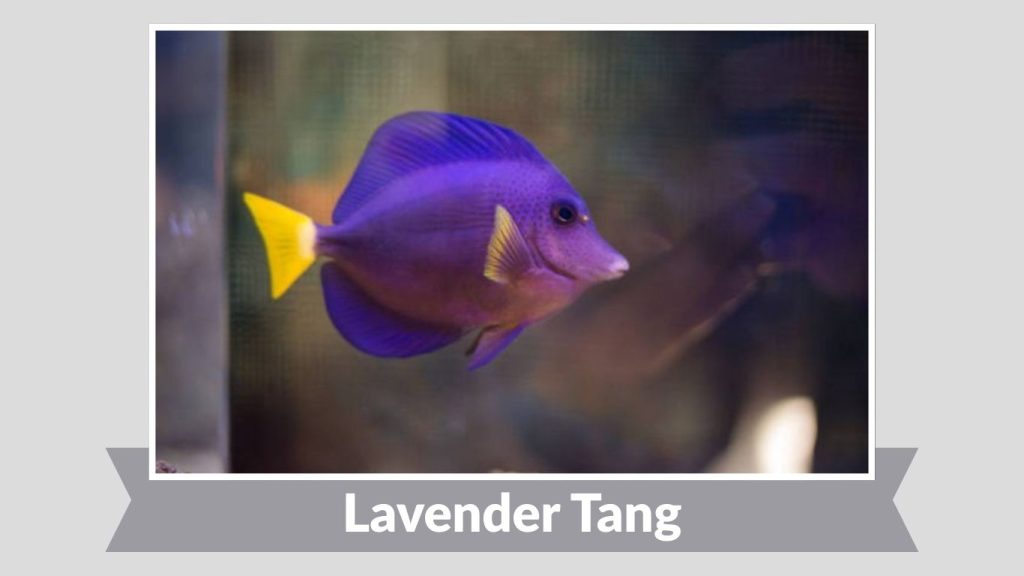
The Lavender Tang is a graceful and widely distributed surgeonfish known for its soft purplish-gray body and subtle yellow highlights. Although not as brightly colored as some tangs, it is a beautiful reef species admired for its smooth appearance and constant grazing behavior.
Identification
- Lavender to grayish-purple body color
- Subtle yellow edging on fins
- Oval, laterally compressed body
- Grows up to about 9 inches (23 cm) long
- Rounded snout
- Sharp “scalpel” spine near the tail
Habitat
Lavender Tangs are found throughout the Indo-Pacific, including the Red Sea, East Africa, and the Pacific islands. They inhabit coral reefs, reef flats, and lagoon areas, usually at depths between 1 and 30 meters.
Behaviors
This species is active and often seen grazing on algae-covered rocks. Lavender Tangs may be solitary or found in loose groups and can be mildly territorial. They are constant swimmers and rarely remain still.
Diet and Lifespan
In the wild, they mainly feed on algae. In aquariums, they need a diet rich in marine algae, seaweed, and vegetable matter. With proper care, their lifespan typically ranges from 8 to 15 years.
14. Whitecheek Tang (Acanthurus nigricans)
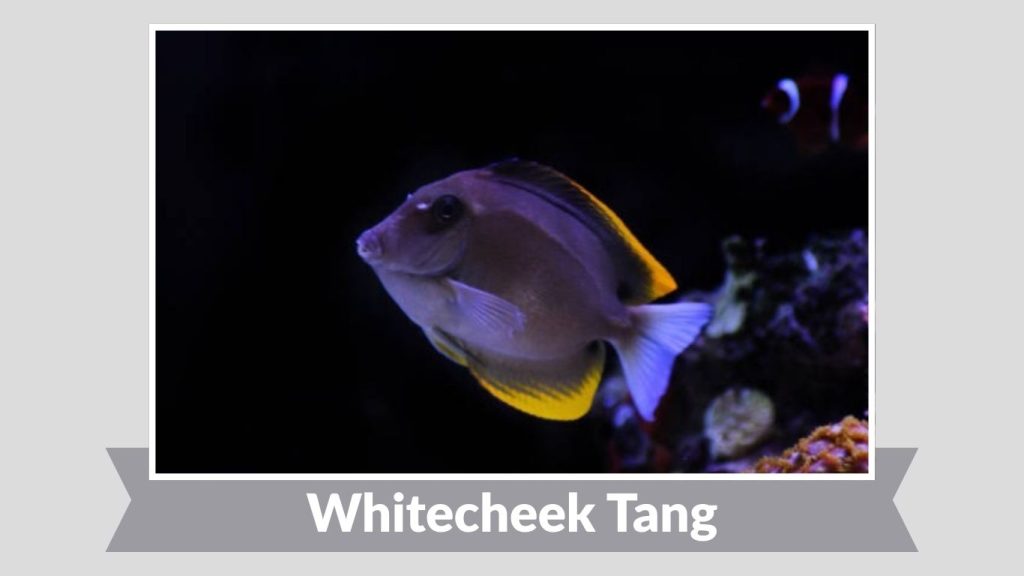
The Whitecheek Tang, also known as the Goldrim Tang, is a beautiful surgeonfish recognized for the pale white patch on its cheek and the bright white band near its tail. It is closely related to the Powder Blue Tang and shares a similarly active and alert nature.
Identification
- Dark brown to black body
- Distinct white patch on the cheek
- Bright white band at the base of the tail
- Oval, laterally compressed body
- Grows up to about 9 inches (23 cm) long
- Sharp “scalpel” spine near the tail
Habitat
Whitecheek Tangs are found throughout the Indo-Pacific, including East Africa, Indonesia, and the Great Barrier Reef. They inhabit outer reef slopes, reef fronts, and coral-rich reefs, usually at depths between 2 and 30 meters.
Behaviors
This species is fast-swimming and alert, often seen moving constantly across reef faces. Whitecheek Tangs can be territorial, especially toward other tangs, and will defend feeding areas. They are agile swimmers that quickly retreat into reef crevices when threatened.
Diet and Lifespan
In the wild, they mainly feed on filamentous algae. In aquariums, they require a vegetable-rich diet including marine algae and seaweed. With proper care, their typical lifespan ranges from 8 to 15 years.
15. Unicorn Tang (Naso unicornis)
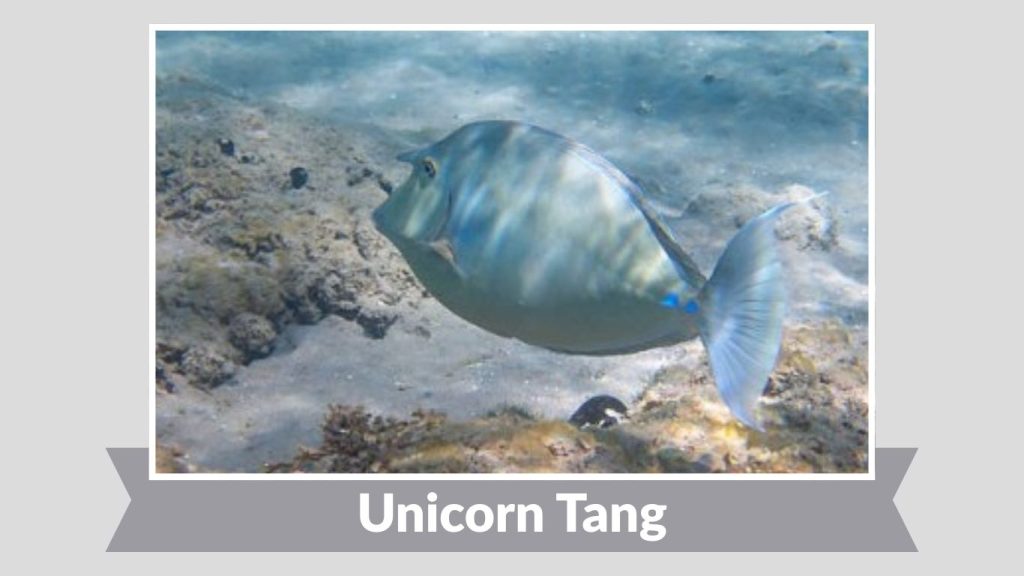
The Unicorn Tang is a large and impressive surgeonfish named for the horn-like bump that develops on its forehead as it matures. With its powerful body, long fins, and graceful swimming style, this species is one of the most iconic tangs on Indo-Pacific coral reefs.
Identification
- Gray to bluish-gray body
- Distinct horn-like protrusion on the forehead (in adults)
- Elongated, oval body shape
- Can grow up to about 28 inches (70 cm) long
- Sharp orange “scalpel” spines near the tail
- Long dorsal and anal fins
Habitat
Unicorn Tangs are found throughout the Indo-Pacific, including the Red Sea, East Africa, Hawaii, and Australia. They inhabit outer reef slopes, reef drop-offs, and clear lagoons, usually at depths between 2 and 60 meters, often cruising over open reef areas.
Behaviors
This species is generally peaceful and often seen swimming alone or in small groups. Unicorn Tangs are strong, steady swimmers that roam large areas of reef. They rely more on size and speed than aggression, though they can defend themselves with their sharp tail spines.
Diet and Lifespan
In the wild, Unicorn Tangs feed mainly on brown algae, macroalgae, and some zooplankton. In aquariums, they require large tanks and a diet rich in marine algae. With proper conditions, they can live 15 to 25 years or more.
FAQs
What makes surgeonfish different from other reef fish?
Surgeonfish are known for the sharp, blade-like spines located on each side of their tail, often called “scalpels.” These spines are used for defense and territory disputes. Combined with their laterally compressed bodies and strong swimming ability, these features make surgeonfish highly specialized reef grazers.
What do surgeonfish eat in the wild?
Most surgeonfish primarily feed on algae growing on coral reefs. Some species also consume plankton and detritus. By constantly grazing, surgeonfish help control algae growth, which supports coral health and maintains balance in reef ecosystems.
Are surgeonfish suitable for home aquariums?
Some surgeonfish can be kept in home aquariums, but they require large tanks, excellent water quality, and plenty of swimming space. They are active fish that need vegetable-rich diets and stable conditions. Larger species are best suited for experienced aquarium keepers.
How long do surgeonfish usually live?
The lifespan of surgeonfish varies by species, but many live between 8 and 15 years. Larger species, such as the Unicorn Tang, may live 20 years or longer under good conditions. Proper diet, low stress, and clean water greatly influence longevity.
Do surgeonfish get aggressive?
Surgeonfish can be territorial, especially toward other tangs or fish with similar shapes. While many species are peaceful grazers, some become aggressive when defending feeding areas. Providing adequate space and compatible tank mates reduces conflict.