





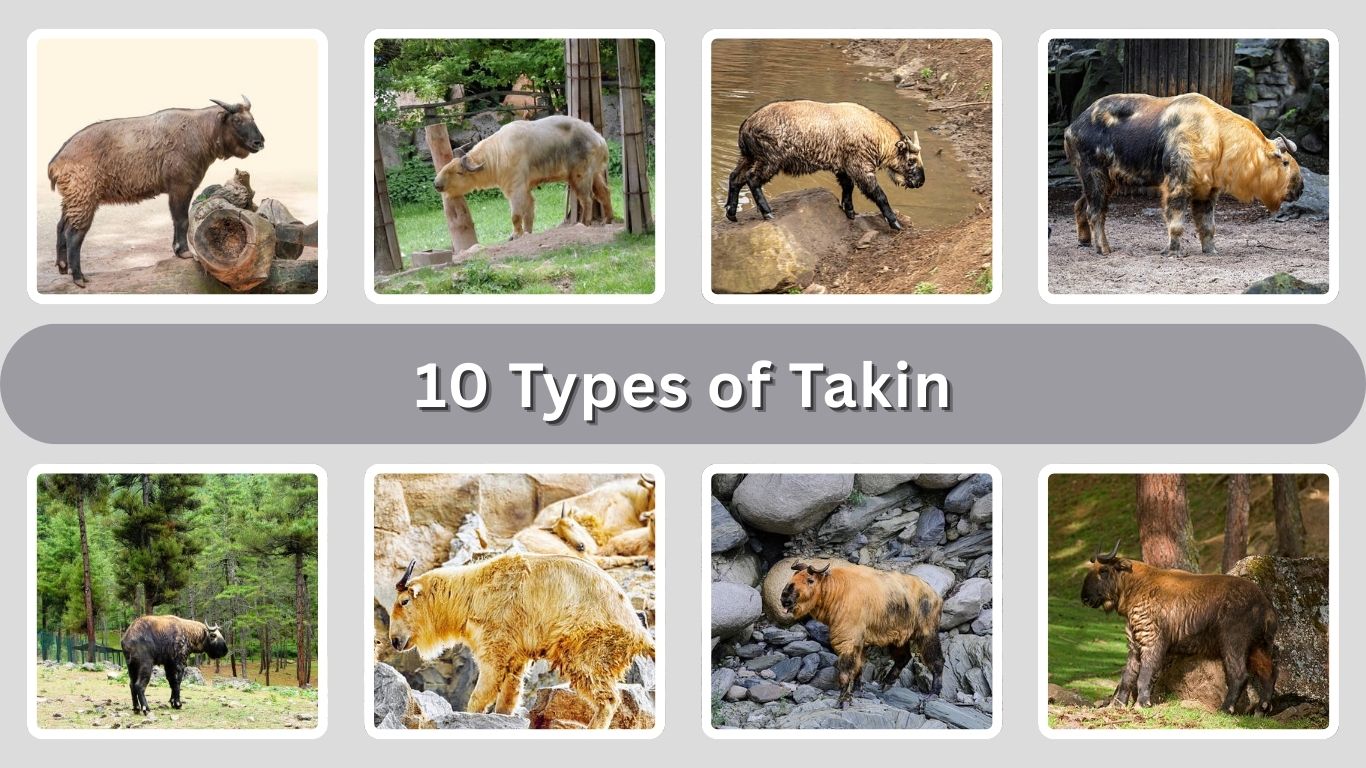
Takins are some of Asia’s most impressive high-mountain mammals, often described as a unique blend of goat, antelope, and ox. These powerful animals inhabit the cold, rugged slopes of the Himalayas and central Chinese ranges, where steep forests and alpine meadows dominate the landscape. With their thick coats, arched noses, and strong bodies, takins are specially adapted for life at high altitudes. Several distinct types are found across Asia, each shaped by its own mountain environment.
1. Mishmi Takin
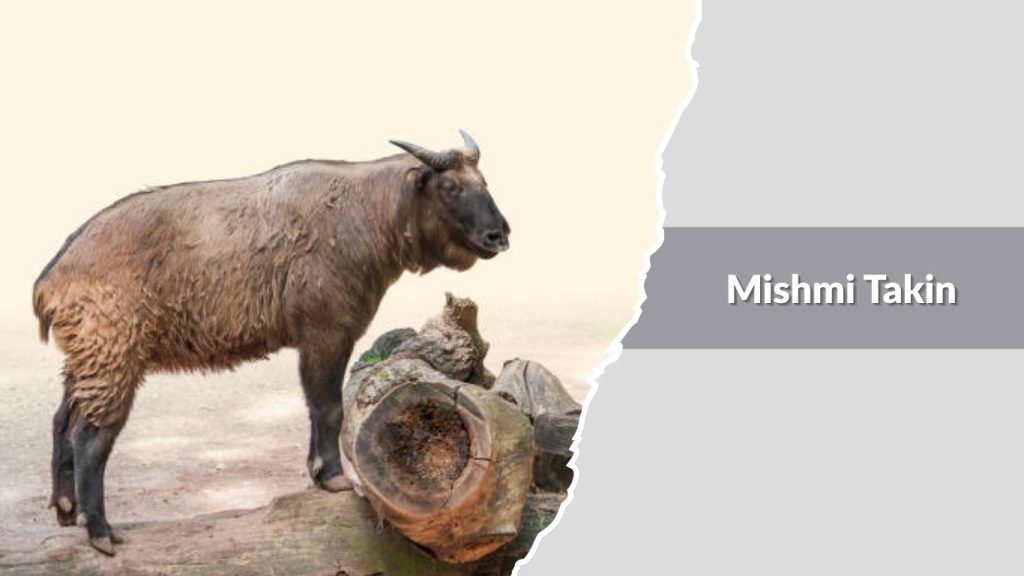
The Mishmi takin is a rare and impressive mountain ungulate found in the far eastern Himalayas, especially in the Mishmi Hills region of Arunachal Pradesh, India, and nearby parts of China and Myanmar. It thrives in steep, forested highlands and alpine zones, where cold temperatures, heavy rainfall, and rugged terrain shape its powerful body and thick coat. This takin is known for its strong build, sure-footed movement, and ability to survive in remote, high-altitude environments.
Identification
- Large, stocky body with short, powerful legs
- Thick, shaggy coat that helps retain heat in cold mountain climates
- Broad head with a strong, arched nose
- Both males and females have heavy, backward-curving horns
- Coat color ranges from dark brown to yellowish-brown, often darker on the legs and face
- Sturdy hooves adapted for climbing steep, rocky slopes
Habitat and Range
The Mishmi takin mainly inhabits the Mishmi Hills and surrounding eastern Himalayan regions. It prefers dense temperate forests, bamboo thickets, and subalpine zones, usually at elevations between 2,000 and 4,500 meters. Seasonal movement is common, with animals descending to lower forests in winter and returning to higher alpine meadows in summer.
Behavior and Lifestyle
Mishmi takins are generally social animals, often seen in small groups, though larger herds may form during certain seasons. They are mostly active during early morning and late afternoon, spending much of the day resting in sheltered forested areas. Their strong legs and wide hooves make them excellent climbers, capable of navigating narrow mountain paths with ease.
Diet and Feeding Habits
This takin feeds primarily on grasses, leaves, bamboo shoots, herbs, and shrubs. It uses its flexible lips and strong jaw muscles to pull tough vegetation from steep slopes and forest undergrowth. Seasonal changes influence diet, with more tender alpine plants eaten in summer and tougher woody plants consumed during winter months.
2. Golden Takin
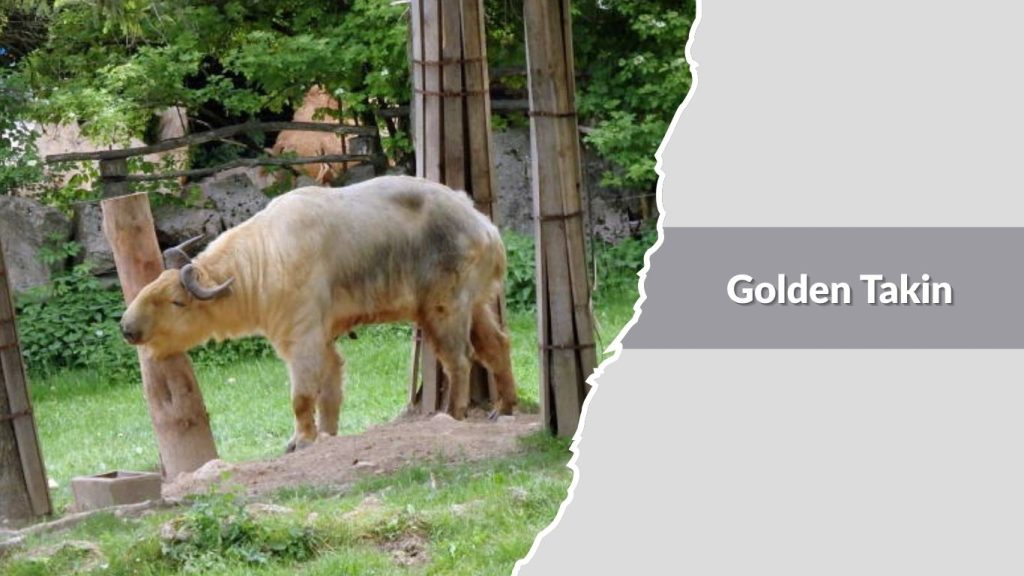
The golden takin is the most famous and visually striking takin subspecies, known for its bright golden-yellow coat and massive build. It lives mainly in the Qinling Mountains and parts of Sichuan in central China, where steep forests and misty highlands dominate the landscape. Because of its unique color and limited range, the golden takin is often considered a national treasure in China and a symbol of high-mountain wildlife.
Identification
- Very large, muscular body with a heavy chest and thick neck
- Distinctive golden-yellow to pale straw-colored coat
- Darker face, legs, and underside compared to the back
- Broad head with a strongly arched, moose-like nose
- Both sexes carry thick, ridged horns that sweep backward and outward
- Dense, oily fur that repels moisture and protects against cold
Habitat and Range
Golden takins are mainly found in the Qinling and Minshan mountain ranges of central China. They inhabit mixed forests, bamboo zones, and subalpine slopes at elevations between 1,500 and 4,400 meters. During summer, they often move upward to alpine meadows, while in winter they descend into lower, forested valleys where food is more accessible.
Behavior and Lifestyle
These takins are social and usually live in small herds, though groups can grow much larger during seasonal movements. Adult males may live alone outside the breeding season. Golden takins are strong climbers and swimmers, using established mountain trails to move between feeding and resting areas. They are generally calm but can be very defensive if threatened.
Diet and Feeding Habits
The golden takin feeds on a wide range of vegetation, including grasses, bamboo leaves, young shoots, herbs, and low shrubs. It also browses on tree bark and evergreen leaves during harsh winters. Its powerful jaw and flexible lips allow it to strip tough plant material from steep slopes and dense mountain forests.
3. Bhutan Takin

The Bhutan takin is the national animal of Bhutan and one of the most iconic large mammals of the eastern Himalayas. It is strongly associated with high, forested mountains where clouds, cold air, and steep slopes dominate the landscape. This takin is well adapted to rugged terrain and is often linked to alpine forests, sacred valleys, and remote mountain ecosystems where human presence is limited.
Identification
- Large, heavy-bodied animal with a thick neck and short, powerful legs
- Dense, shaggy coat that varies from creamy yellow to light brown
- Broad head with a high, arched nose and wide muzzle
- Both males and females possess thick, backward-curving horns
- Darker markings on the face, knees, and lower legs
- Strong, splayed hooves suited for gripping rocky mountain paths
Habitat and Range
The Bhutan takin is mainly found in Bhutan and adjacent parts of northeastern India and southern Tibet. It inhabits cool broadleaf forests, conifer forests, and subalpine meadows at elevations ranging from about 2,000 to 4,500 meters. Seasonal migration is common, with herds moving uphill in summer and descending into forested valleys during winter.
Behavior and Lifestyle
Bhutan takins are social and usually live in small to medium-sized herds, though larger groups may form during migration periods. They are most active in the early morning and late afternoon. These animals are excellent climbers and can travel along narrow cliff paths, resting in forest cover during the warmer parts of the day.
Diet and Feeding Habits
Their diet consists mainly of grasses, herbs, bamboo leaves, shoots, and a variety of shrubs. In winter, they often feed on evergreen leaves, twigs, and bark. Bhutan takins use their strong jaws and flexible lips to pull vegetation from rocky slopes and dense undergrowth.
4. Sichuan Takin

The Sichuan takin is a robust mountain-dwelling subspecies found primarily in southwestern China. It inhabits steep, forested slopes and cool alpine regions where dense vegetation and heavy mist are common. Known for its powerful frame and thick coat, this takin is well adapted to cold, wet environments and is often seen moving along traditional mountain paths carved into rugged terrain.
Identification
- Massive, stocky body with a deep chest and thick shoulders
- Dense, coarse coat ranging from light tan to dark brown
- Broad head with a pronounced arched nose
- Both males and females carry strong, ridged horns that curve backward
- Darker coloration on the face, legs, and underside
- Wide, tough hooves adapted for rocky, slippery slopes
Habitat and Range
Sichuan takins are mainly distributed across Sichuan Province and nearby mountainous regions of southwestern China. They occupy mixed temperate forests, bamboo belts, and subalpine zones, typically between 1,800 and 4,300 meters. Seasonal vertical migration is common, with animals moving higher in summer and descending into forested valleys in winter.
Behavior and Lifestyle
This subspecies is social, forming small herds for most of the year, though much larger groups may gather during migration. They are generally slow-moving grazers but can climb steep terrain with surprising agility. When disturbed, Sichuan takins may stand their ground, using their size and horns to deter predators.
Diet and Feeding Habits
The Sichuan takin feeds on grasses, herbs, bamboo, leaves, and young shoots. During colder months, it relies more on woody plants, bark, and evergreen foliage. Its strong jaws allow it to process tough plant material found in mountain forests and high-altitude meadows.
5. Tibetan Takin
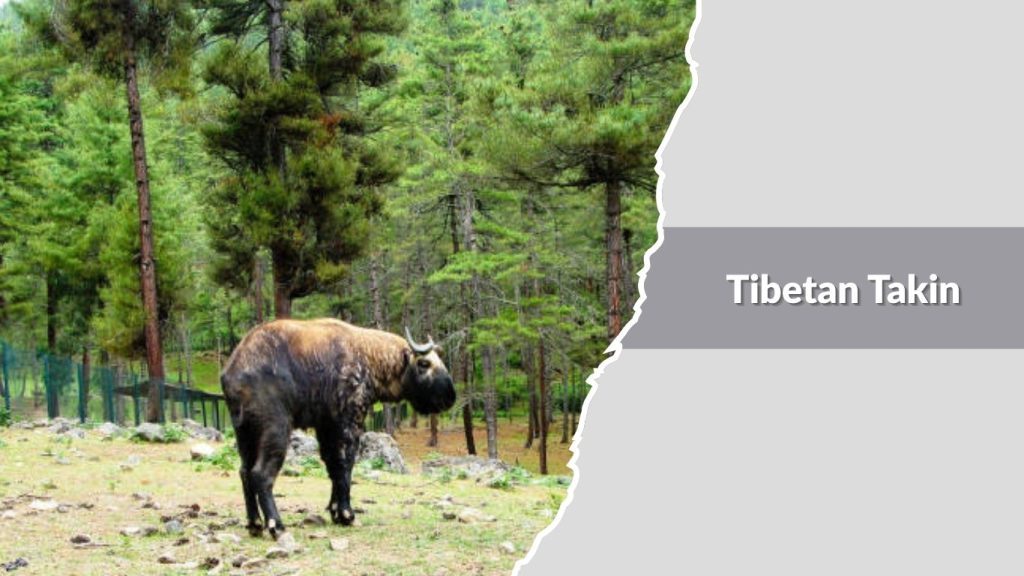
The Tibetan takin is a hardy high-altitude subspecies adapted to some of the coldest and most rugged environments in Asia. It is associated with the Tibetan Plateau and surrounding mountain systems, where thin air, long winters, and sparse vegetation dominate. Its thick coat and powerful build allow it to survive in alpine regions that few large mammals can tolerate.
Identification
- Very large, heavy-set body with a thick neck and muscular shoulders
- Long, dense coat that provides insulation against extreme cold
- Broad head with a high, arched nasal bridge
- Both sexes have thick, laterally spreading horns that curve backward
- Coat color usually pale yellowish-brown to grayish, darker on the face and legs
- Strong, wide hooves designed for stability on rocky and snowy slopes
Habitat and Range
Tibetan takins are found mainly on the eastern and southeastern edges of the Tibetan Plateau, including parts of Tibet and adjacent Chinese mountain regions. They inhabit alpine meadows, subalpine scrub, and high conifer forests, generally between 2,500 and 4,800 meters. Seasonal movement between elevations helps them find food and avoid the harshest conditions.
Behavior and Lifestyle
They typically live in small herds, though larger seasonal aggregations occur, especially during migration. Tibetan takins spend much of their time grazing and browsing, resting on sheltered slopes during the coldest or windiest periods. Their calm nature can quickly shift to defensive behavior if threatened.
Diet and Feeding Habits
Their diet includes alpine grasses, herbs, shrubs, and bamboo where available. In winter, they rely more on woody plants, lichens, and evergreen leaves. The Tibetan takin’s strong teeth and flexible lips enable it to exploit tough, fibrous mountain vegetation.
6. Shaanxi Takin
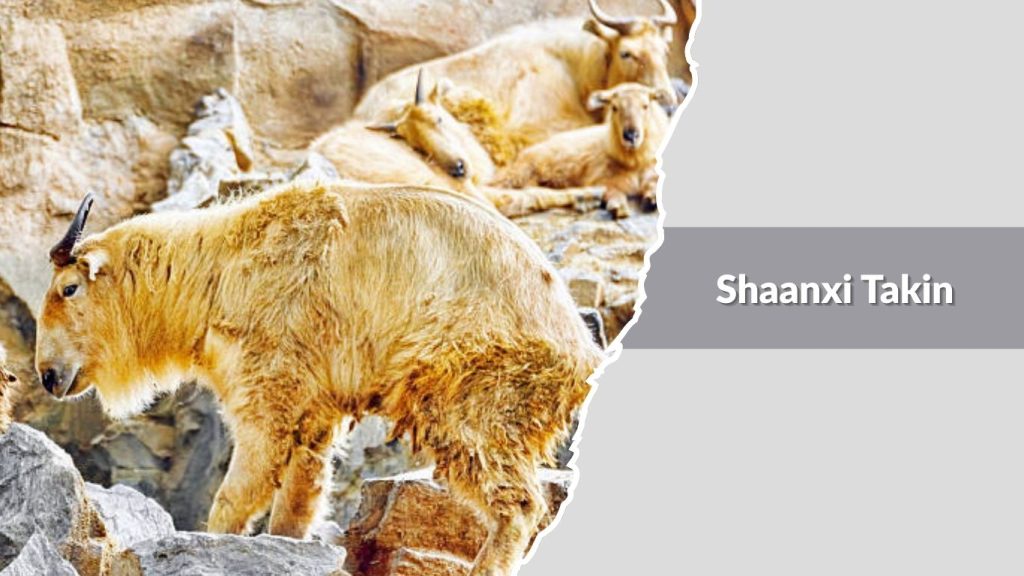
The Shaanxi takin is a distinctive mountain subspecies best known from China’s Qinling Mountains, a major natural boundary between northern and southern ecosystems. This takin thrives in cool, moist highland forests and rugged slopes, where thick vegetation and deep valleys provide both food and shelter. It is closely related to the famous golden takin but generally shows slightly darker tones and regional characteristics.
Identification
- Large, solidly built body with a deep chest and strong limbs
- Thick, shaggy coat, often golden-brown to darker straw tones
- Broad head with a pronounced arched nose
- Both males and females possess heavy, ridged horns curving backward and outward
- Darker hair around the face, knees, and lower legs
- Wide, tough hooves adapted for climbing and wet mountain terrain
Habitat and Range
Shaanxi takins are mainly found in the Qinling mountain range of Shaanxi Province, central China. They inhabit mixed broadleaf and conifer forests, bamboo zones, and subalpine areas, usually between 1,500 and 4,400 meters. Seasonal altitudinal migration occurs, with animals moving higher in summer and descending to forested valleys during winter.
Behavior and Lifestyle
They are social animals, typically forming small herds, though larger groups may gather during seasonal movements. Shaanxi takins follow established mountain trails and spend long periods feeding and resting in forest clearings. Adult males may become more solitary outside the breeding season but rejoin herds during mating periods.
Diet and Feeding Habits
Their diet is mainly composed of grasses, bamboo leaves, herbs, shoots, and shrubs. In colder months, they browse on bark, twigs, and evergreen foliage. The Shaanxi takin’s powerful jaws and flexible lips allow it to feed on a wide variety of tough mountain plants.
7. Himalayan Takin

The Himalayan takin is a powerful mountain-dwelling subspecies associated with the central and eastern Himalayas. It is well adapted to cold, steep environments where forests gradually give way to alpine meadows. With its thick coat, strong limbs, and sure-footed movement, this takin is built for life on rugged slopes and high mountain trails.
Identification
- Large, stocky body with a thick neck and heavy shoulders
- Dense, shaggy coat ranging from light tan to yellowish-brown
- Broad head with a high, arched nose and wide muzzle
- Both males and females have strong, backward-curving horns
- Darker coloration on the face, knees, and lower legs
- Strong, splayed hooves designed for stability on rocky terrain
Habitat and Range
Himalayan takins inhabit mountain forests and subalpine zones across parts of Nepal, Bhutan, northeastern India, and southern Tibet. They are typically found between 2,000 and 4,500 meters. Seasonal migration is common, with herds moving to higher alpine meadows in summer and descending into forested valleys during winter.
Behavior and Lifestyle
They usually live in small to medium-sized herds, becoming more solitary or forming bachelor groups outside the breeding season. Himalayan takins are most active in the early morning and late afternoon, resting in shaded forest cover at midday. Their strong build allows them to climb steep slopes and cross rocky ridges with ease.
Diet and Feeding Habits
Their diet includes grasses, herbs, bamboo shoots, leaves, and shrubs. In winter, they depend more on woody plants, bark, and evergreen foliage. Himalayan takins use their powerful jaws and flexible lips to graze and browse across a wide range of mountain vegetation.
8. Assam Takin
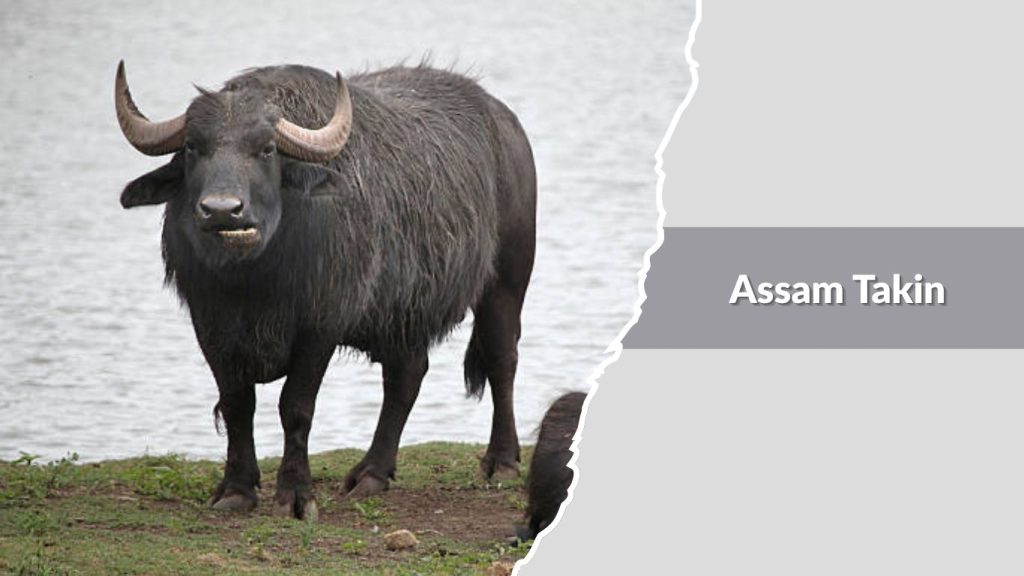
The Assam takin is associated with the eastern Himalayan foothills and adjoining mountain regions where dense forests, high rainfall, and rugged terrain dominate. It is considered one of the regional forms of takin adapted to moist subtropical and temperate mountain environments. Its strong body, thick coat, and steady movement allow it to survive in steep landscapes shaped by heavy monsoon seasons.
Identification
- Large, heavy-bodied animal with short, powerful legs
- Thick, coarse coat, usually yellowish-brown to dark brown
- Broad head with a distinctive arched nose
- Both males and females carry thick, backward-curving horns
- Darker shading on the face, neck, and lower legs
- Wide, tough hooves adapted for muddy and rocky slopes
Habitat and Range
Assam takins are found mainly in northeastern India, particularly in Assam and Arunachal Pradesh, and nearby border regions. They inhabit dense temperate forests, bamboo thickets, and subalpine zones, generally between 1,500 and 4,000 meters. Seasonal movement occurs as herds travel between forested valleys and higher mountain slopes.
Behavior and Lifestyle
They are social animals, often forming small herds, though larger groups may gather seasonally. Assam takins are mostly active in the early morning and late afternoon, resting in forest cover during warmer hours. They use established forest paths and are capable climbers despite their bulky appearance.
Diet and Feeding Habits
Their diet consists of grasses, bamboo leaves, herbs, shoots, and a variety of shrubs. During winter or dry periods, they also feed on bark, twigs, and evergreen leaves. Their strong jaws enable them to process tough, fibrous vegetation common in mountain forests.
9. White-faced Takin
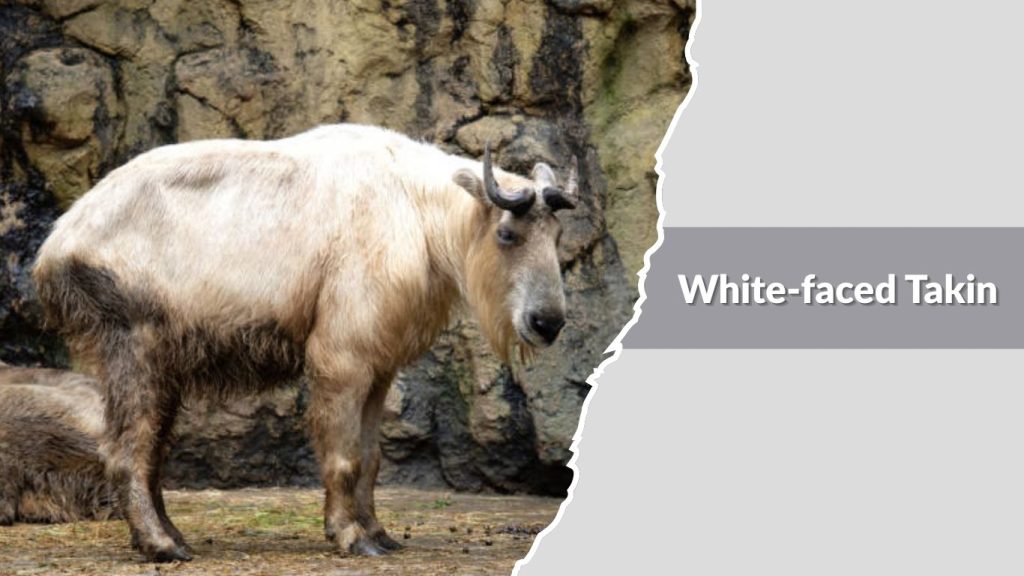
The white-faced takin is a regional mountain form recognized for its paler facial markings and lighter overall appearance compared to other takins. It inhabits high, forested mountain zones where mist, cold temperatures, and dense vegetation dominate. Its powerful frame and thick coat make it well suited to life in rugged, high-altitude terrain.
Identification
- Large, stocky body with a deep chest and strong shoulders
- Thick, shaggy coat, often light yellowish to pale brown
- Distinctly lighter or whitish facial area compared to the body
- Broad head with a pronounced arched nose
- Both males and females possess heavy, backward-curving horns
- Wide, tough hooves adapted for rocky, slippery slopes
Habitat and Range
White-faced takins are mainly associated with parts of western and central China’s high mountain forests. They inhabit mixed forests, bamboo belts, and subalpine zones, usually between 1,800 and 4,500 meters. Seasonal vertical movement allows them to track food availability and avoid the harshest winter conditions.
Behavior and Lifestyle
They are social animals, typically living in small herds, though larger groups may gather during migration periods. White-faced takins spend much of their time feeding and resting along forested slopes and ridgelines. When threatened, they may stand their ground, relying on size and horns for defense.
Diet and Feeding Habits
Their diet includes grasses, herbs, bamboo shoots, leaves, and shrubs. In colder months, they rely more on woody plants, bark, and evergreen foliage. Their flexible lips and strong teeth allow them to feed on a wide range of tough mountain plants.
10. Brown Takin

The brown takin is a darker-colored regional form found in remote Asian mountain regions where dense forests blend into alpine terrain. It is less visually striking than the golden takin but equally impressive in size and strength. Its deep brown coat provides natural camouflage in shadowed forests and rocky slopes, helping it remain concealed in rugged highland environments.
Identification
- Large, heavy-set body with a thick neck and powerful shoulders
- Dense, coarse coat that is dark brown to chocolate in color
- Broad head with a strongly arched nose
- Both males and females carry thick, backward-curving horns
- Dark face, legs, and underside blending with the overall coat
- Strong, wide hooves suited for rocky, uneven mountain ground
Habitat and Range
Brown takins are generally associated with forested mountain regions of southwestern China and nearby highland areas. They inhabit mixed temperate forests, bamboo zones, and subalpine slopes, commonly between 1,800 and 4,500 meters. Seasonal movement occurs between higher summer ranges and lower wintering grounds.
Behavior and Lifestyle
They usually live in small herds, though larger seasonal groups may form. Brown takins are mostly active in the early morning and late afternoon, resting in dense cover during the day. Despite their bulky size, they are capable climbers and can move steadily across steep, rocky terrain.
Diet and Feeding Habits
Their diet consists of grasses, herbs, bamboo leaves, young shoots, and shrubs. In winter, they browse on bark, twigs, and evergreen foliage. Their powerful jaws and flexible lips allow
FAQs
What is a takin and why is it unique among mountain animals?
The takin is a large, goat-antelope native to Asia’s high mountains. It looks like a mix of a goat, cow, and antelope, with a heavy body and arched nose. Its oily coat repels moisture, helping it survive cold, misty, and rugged high-altitude environments.
Where are takins mainly found in the wild?
Takins live in the eastern Himalayas, the Tibetan Plateau edges, and central and southwestern China. They inhabit temperate forests, bamboo zones, and alpine meadows, usually between 1,500 and 4,800 meters. Seasonal migration allows them to follow food and avoid extreme winter conditions.
What do takins eat in high-mountain habitats?
Takins are herbivores that feed on grasses, herbs, bamboo leaves, shoots, and shrubs. During winter, when fresh plants are scarce, they browse on bark, twigs, and evergreen foliage. Their strong jaws and flexible lips help them pull tough vegetation from steep slopes.
Are takins dangerous to humans?
Takins are generally calm and shy, preferring to avoid people. However, they are very large and powerful animals, and if threatened or cornered, they can become defensive. Their sharp horns and strong build mean they should always be observed from a safe distance.
Are takins endangered or protected?
Most takin populations are considered vulnerable due to habitat loss, fragmentation, and past hunting. They are protected by law in several countries, and many live inside national parks and reserves. Conservation programs focus on habitat protection and monitoring wild populations.