





Tuna are among the ocean’s fastest and most powerful fish, prized for their speed, strength, and delicious flesh. Found in tropical, subtropical, and temperate waters worldwide, they range from small coastal species to massive bluefin capable of crossing oceans. In this guide, we explore 25 types of tuna—both well-known and lesser-known species—detailing their identification, habitats, and unique traits, complete with pictures for easier recognition.
1. Albacore Tuna
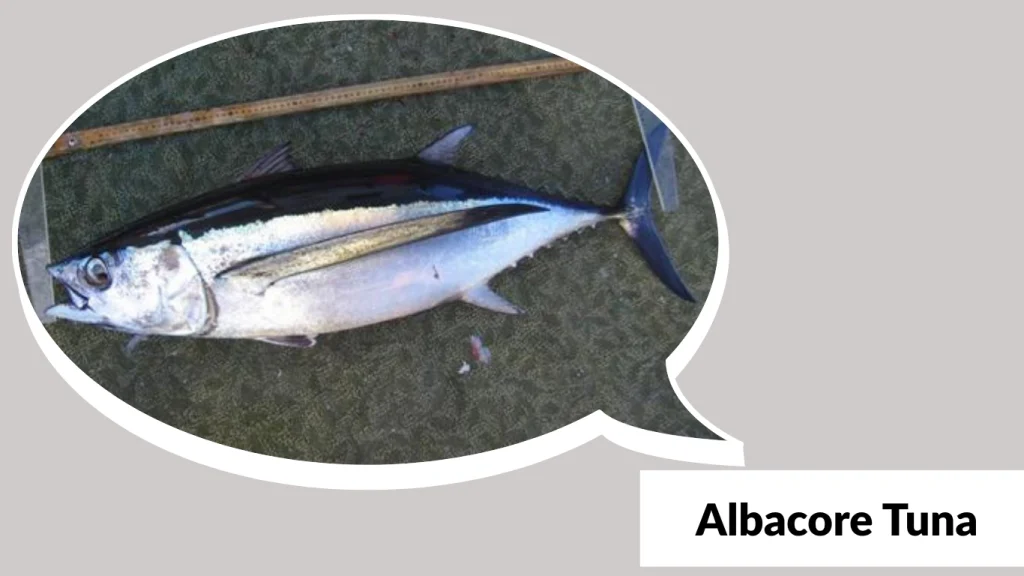
The albacore tuna is a highly prized species in the tuna family, known for its mild flavor, firm texture, and high value in the seafood industry. Often marketed as “white tuna,” it is a favorite for canned tuna products and fresh consumption. Its long pectoral fins and streamlined body make it a fast, powerful swimmer capable of covering vast distances in the open ocean.
Identification
- Scientific Name: Thunnus alalunga
- Average Length: 60–100 cm
- Average Weight: 10–20 kg
- Color: Metallic blue on top, silvery white on the underside
- Distinct Feature: Extra-long pectoral fins extending beyond the anal fin
Habitat and Distribution
Found in temperate and tropical waters worldwide, especially in the Pacific, Atlantic, and Indian Oceans. Prefers open-ocean environments far from shore.
Diet
Feeds mainly on small schooling fish, squid, and crustaceans, often hunting near the surface or in midwater zones.
Commercial Importance
Highly valued for both fresh and canned tuna markets, with sustainable fisheries being essential for maintaining healthy populations.
Fishing Methods
Caught using trolling, longlining, and pole-and-line fishing, with certain fisheries certified for sustainability.
2. Yellowfin Tuna
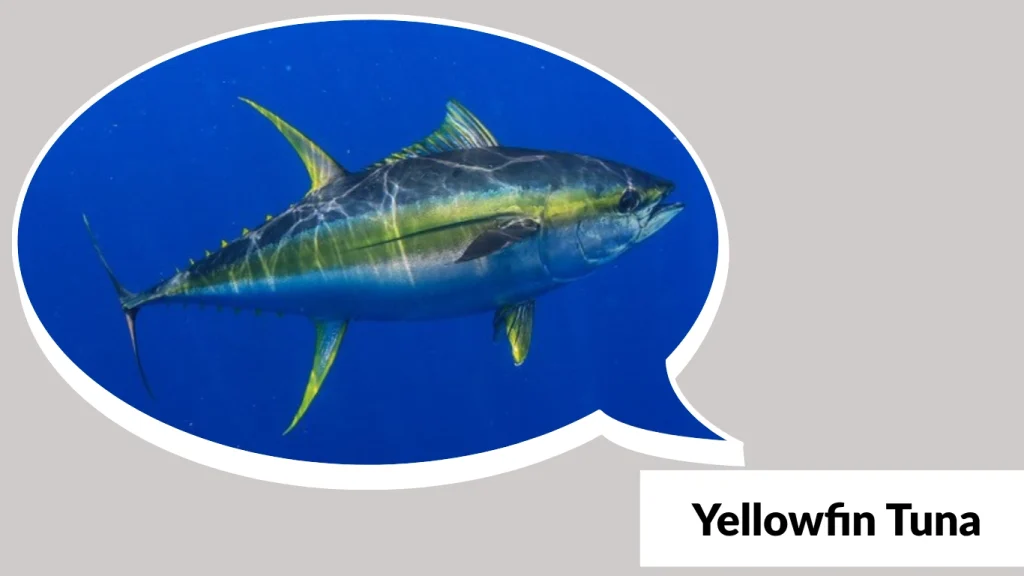
The yellowfin tuna is one of the most commercially important tuna species, recognized for its bright yellow fins and powerful, torpedo-shaped body. Highly sought after for sashimi, steaks, and canned products, it is known for its mild yet rich flavor and firm, deep-pink flesh. Its speed, strength, and schooling behavior make it a favorite target for both commercial and sport fishers.
Identification
- Scientific Name: Thunnus albacares
- Average Length: 100–150 cm (can reach over 200 cm)
- Average Weight: 40–60 kg (can exceed 180 kg)
- Color: Dark metallic blue on top, yellow sides, and a silver belly
- Distinct Feature: Bright yellow dorsal and anal fins with elongated finlets
Habitat and Distribution
Found in tropical and subtropical waters worldwide, including the Pacific, Atlantic, and Indian Oceans, often near the surface in warm waters.
Diet
Feeds on squid, mackerel, flying fish, and crustaceans, often hunting cooperatively in large schools alongside other tuna species and dolphins.
Commercial Importance
A major species in the global tuna trade, popular for fresh markets, sushi, and sashimi, as well as for premium canned tuna.
Fishing Methods
Caught primarily with purse seines, longlines, and pole-and-line gear, with ongoing efforts to improve sustainable harvest practices.
3. Bigeye Tuna
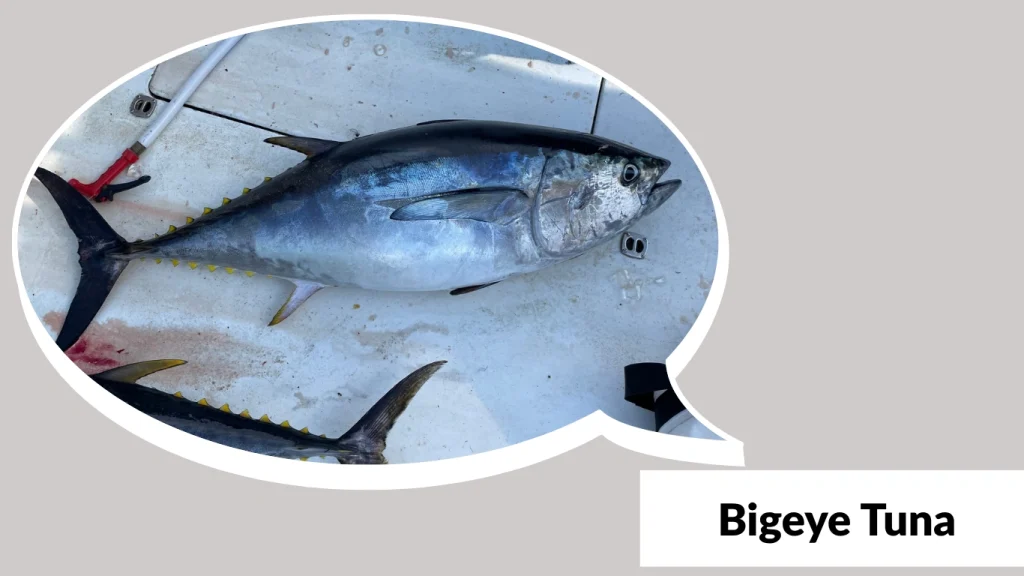
The bigeye tuna is a large, powerful species prized for its rich, high-fat flesh, making it especially popular for sashimi and sushi. It gets its name from its noticeably large eyes, an adaptation that helps it hunt in deeper and dimly lit waters compared to other tuna. Its meat is darker and more flavorful than yellowfin, with a higher oil content that enhances its taste and texture.
Identification
- Scientific Name: Thunnus obesus
- Average Length: 100–180 cm (can reach over 250 cm)
- Average Weight: 40–80 kg (can exceed 180 kg)
- Color: Deep metallic blue on top, silver underside, and a hint of yellow on finlets
- Distinct Feature: Large eyes adapted for low-light hunting
Habitat and Distribution
Found in tropical and subtropical oceans worldwide, from the surface to depths exceeding 500 meters, often in cooler thermocline layers.
Diet
Preys on squid, small fish, and crustaceans, frequently hunting deeper than most tuna species, especially during the day.
Commercial Importance
Highly valued for sushi and sashimi markets due to its marbled, fatty flesh. It is also sold fresh, frozen, and canned.
Fishing Methods
Caught with longlines, purse seines, and pole-and-line gear, with some fisheries implementing strict quotas for sustainability.
4. Skipjack Tuna

The skipjack tuna is one of the most abundant and widely caught tuna species in the world, forming the backbone of the canned tuna industry. Known for its streamlined body and strong swimming ability, it is smaller than many other tuna species but highly valued for its mild flavor and firm texture. Its dark horizontal stripes on the belly make it easy to recognize.
Identification
- Scientific Name: Katsuwonus pelamis
- Average Length: 40–80 cm (can reach up to 100 cm)
- Average Weight: 2–8 kg
- Color: Dark blue-purple on top, silver underside with 4–6 dark horizontal stripes on the belly
- Distinct Feature: Lacks scales except on the corselet and along the lateral line
Habitat and Distribution
Found in tropical and subtropical oceans worldwide, usually in large schools near the surface, often mixed with yellowfin tuna and dolphins.
Diet
Feeds on small fish, squid, and crustaceans, using speed and teamwork within schools to capture prey efficiently.
Commercial Importance
The most common tuna species used in canned “light tuna” products. Known for its sustainability when sourced from well-managed fisheries.
Fishing Methods
Primarily caught using purse seine nets, pole-and-line fishing, and trolling, with many fisheries adopting eco-friendly and dolphin-safe practices.
5. Atlantic Bluefin Tuna
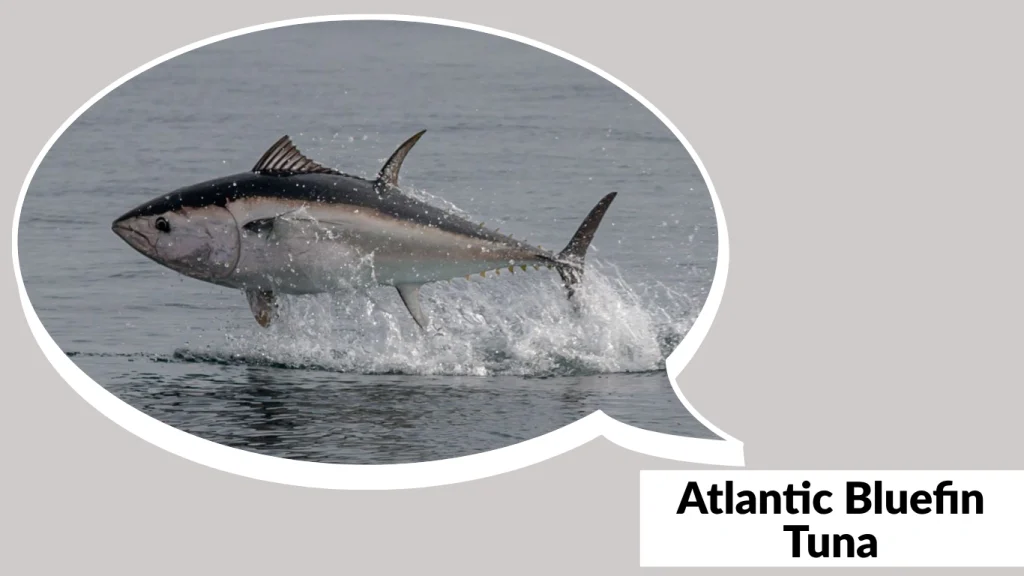
The Atlantic bluefin tuna is one of the largest and most powerful tuna species, renowned for its incredible speed, strength, and high market value. It is a top predator in the ocean and highly sought after for its rich, marbled flesh, especially in Japanese sushi and sashimi markets. Unfortunately, overfishing has made it one of the most regulated tuna species in the world.
Identification
- Scientific Name: Thunnus thynnus
- Average Length: 200–250 cm (can exceed 450 cm)
- Average Weight: 200–250 kg (record catches over 600 kg)
- Color: Dark blue to black on top, silvery white underside
- Distinct Feature: Extremely large size and robust, torpedo-shaped body
Habitat and Distribution
Found in the Atlantic Ocean and Mediterranean Sea, with seasonal migrations across vast distances. Prefers temperate waters but can enter colder seas during feeding migrations.
Diet
Feeds on herring, mackerel, squid, and other large prey, hunting both near the surface and in deeper waters.
Commercial Importance
Considered one of the most valuable fish in the world, with individual specimens selling for record-breaking prices in Japan.
Fishing Methods
Caught mainly by purse seines, longlines, and trolling, with strict international quotas and conservation measures in place.
6. Pacific Bluefin Tuna

The Pacific bluefin tuna is closely related to the Atlantic species but is found primarily in the Pacific Ocean. It is highly migratory, traveling from the waters off Japan to the coast of California and Mexico. Known for its rich, fatty meat, it is a premium choice for sushi lovers worldwide.
Identification
- Scientific Name: Thunnus orientalis
- Average Length: 150–250 cm (can exceed 300 cm)
- Average Weight: 150–250 kg (some over 450 kg)
- Color: Metallic blue on top, silvery underside
- Distinct Feature: Stocky, powerful body with slightly smaller head compared to Atlantic bluefin
Habitat and Distribution
Ranges across the Pacific Ocean, from East Asia to the west coast of North America, with juveniles often crossing the ocean during migration.
Diet
Feeds on sardines, anchovies, squid, and other pelagic fish, often hunting in schools to corral prey.
Commercial Importance
Highly prized in the sushi and sashimi trade, with premium specimens fetching extremely high prices.
Fishing Methods
Caught by purse seines, trolling, and longlines, with increasing focus on aquaculture and strict catch limits to ensure sustainability.
7. Southern Bluefin Tuna
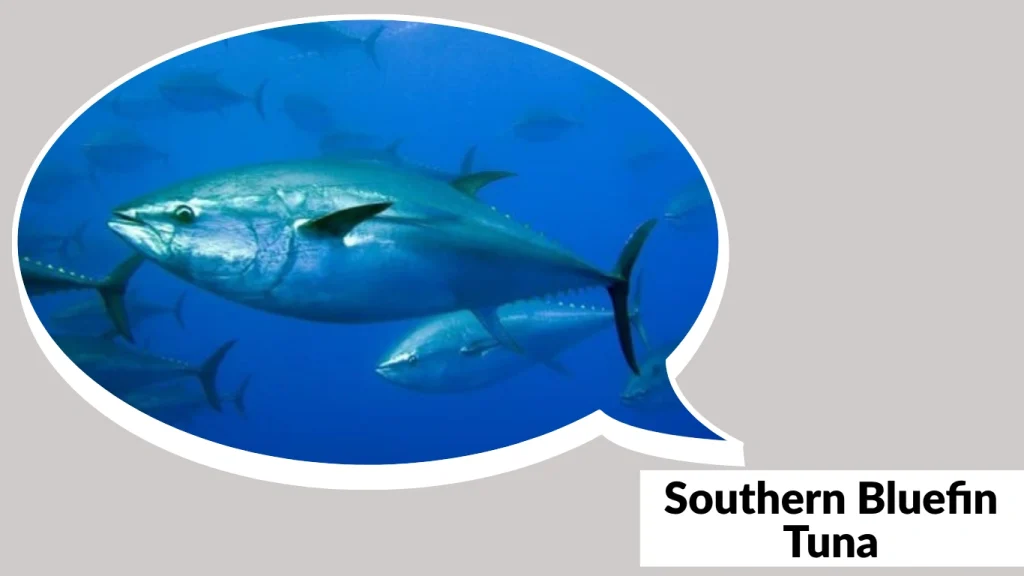
The southern bluefin tuna is a large, fast-swimming species valued for its exceptionally rich, fatty flesh, making it a luxury choice for sashimi and sushi. It is heavily targeted by commercial fisheries and is managed under strict international quotas due to historical overfishing.
Identification
- Scientific Name: Thunnus maccoyii
- Average Length: 180–220 cm (can exceed 245 cm)
- Average Weight: 150–200 kg (maximum over 260 kg)
- Color: Dark blue-black on top, silver-white underside
- Distinct Feature: Thick, robust body with high-fat marbling in flesh
Habitat and Distribution
Found mainly in the southern hemisphere’s temperate waters, particularly in the Indian, Atlantic, and Pacific Oceans, with key fishing areas near Australia, South Africa, and New Zealand.
Diet
Preys on squid, mackerel, sardines, and other pelagic fish, often diving deep to feed.
Commercial Importance
Highly prized in Japanese markets, with strict quotas managed by the Commission for the Conservation of Southern Bluefin Tuna (CCSBT).
Fishing Methods
Caught using purse seines, longlines, and ranching methods, where wild-caught juveniles are fattened in pens before harvest.
8. Blackfin Tuna
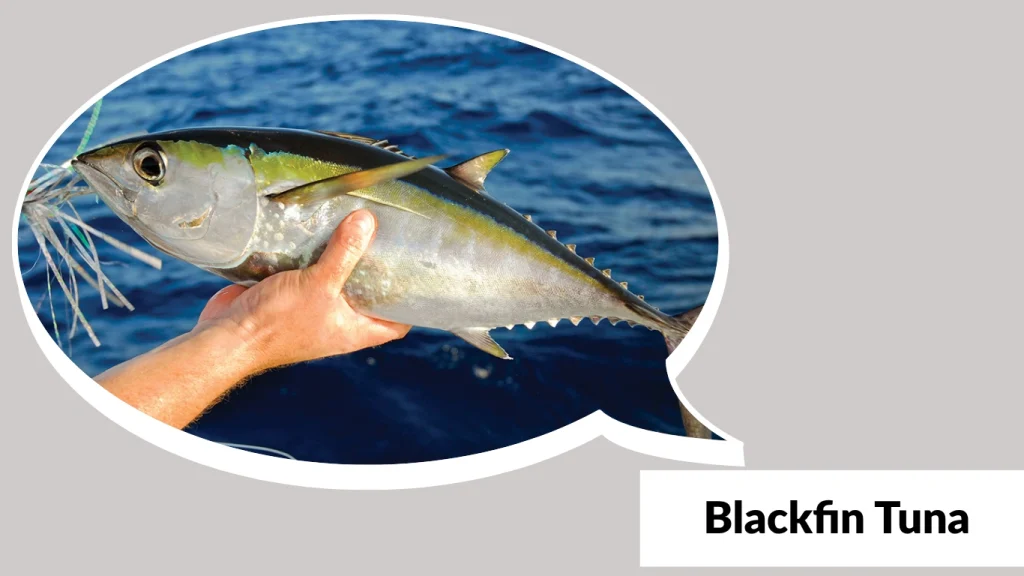
The blackfin tuna is the smallest of the true tuna species, but it is a favorite among sport fishers for its strong fight and delicious taste. It is abundant in the western Atlantic and Gulf of Mexico and is often consumed fresh, grilled, or seared.
Identification
- Scientific Name: Thunnus atlanticus
- Average Length: 40–80 cm
- Average Weight: 5–15 kg (maximum around 20 kg)
- Color: Dark metallic blue to black on top, silver underside with a bronze hue
- Distinct Feature: Small size with dark dorsal coloration and yellowish finlets
Habitat and Distribution
Found in the western Atlantic from Massachusetts to Brazil, including the Gulf of Mexico and the Caribbean Sea.
Diet
Feeds on squid, small fish, and crustaceans, often hunting in schools with other tunas and dolphins.
Commercial Importance
Not as commercially significant as larger tuna species but popular in local markets and sport fishing tournaments.
Fishing Methods
Caught mainly by trolling, live bait fishing, and small-scale purse seine operations.
9. Longtail Tuna

The longtail tuna is a medium-sized species known for its elongated, streamlined body and strong swimming ability. It is a popular catch in coastal fisheries and is often sold fresh in local markets, especially in Asia and Australia. While not as fatty as some other tuna species, its firm flesh makes it excellent for grilling, searing, or curries.
Identification
- Scientific Name: Thunnus tonggol
- Average Length: 70–120 cm
- Average Weight: 8–20 kg (can exceed 35 kg)
- Color: Metallic blue on top, silver-white underside
- Distinct Feature: Longer, more slender body compared to other tunas, with a relatively small head
Habitat and Distribution
Found mainly in coastal tropical and subtropical waters of the Indo-Pacific region, from the Persian Gulf to northern Australia and Southeast Asia.
Diet
Feeds on sardines, anchovies, squid, and other small pelagic fish, often near the surface.
Commercial Importance
Important for local commercial fisheries and sport fishing, but less common in global export markets compared to yellowfin or bluefin tuna.
Fishing Methods
Caught using purse seines, trolling, drift nets, and handlines, often in small-scale coastal operations.
10. Slender Tuna

The slender tuna is a lesser-known species, easily identified by its elongated, streamlined body that is narrower than most other tunas. It is a fast-swimming, open-ocean predator that is not as commercially significant as larger tuna species but is still caught in mixed pelagic fisheries. Its lean flesh is consumed fresh in local markets and is also suitable for canning.
Identification
- Scientific Name: Allothunnus fallai
- Average Length: 50–100 cm
- Average Weight: 5–12 kg
- Color: Dark bluish-black on the back, silver underside
- Distinct Feature: Very slender body with a pointed head and small eyes
Habitat and Distribution
Found mainly in temperate waters of the southern hemisphere, particularly around New Zealand, southern Australia, and South Africa, often in deeper offshore waters.
Diet
Feeds on small schooling fish, squid, and crustaceans, often hunting in cooler water layers.
Commercial Importance
Caught mostly as bycatch in pelagic longline and trolling fisheries, with limited targeted fishing.
Fishing Methods
Harvested with longlines, trolling lines, and purse seines, though in relatively small quantities compared to major tuna species.
11. Bullet Tuna

The bullet tuna is a small, fast-swimming species named for its torpedo-like shape. While not as well-known as larger commercial tunas, it is important in local fisheries and is often used fresh, dried, or canned. Its oily flesh is flavorful, making it popular in traditional dishes in Mediterranean and Asian regions.
Identification
- Scientific Name: Auxis rochei
- Average Length: 30–50 cm
- Average Weight: 1–2 kg
- Color: Dark blue to black on the back, silvery belly, with a scaled patch behind the head
- Distinct Feature: Short, compact body with no stripes on the belly (unlike some similar species)
Habitat and Distribution
Found in warm and temperate waters of the Atlantic, Indian, and Pacific Oceans, often near coasts but also offshore in open waters.
Diet
Feeds mainly on small fish, squid, and crustaceans, hunting near the surface in schools.
Commercial Importance
Harvested in small-scale fisheries, especially in the Mediterranean and Southeast Asia, for local consumption and regional export.
Fishing Methods
Caught using purse seines, gillnets, and trolling gear, often alongside other small pelagic species.
12. Frigate Tuna

The frigate tuna is a small, slender tuna species known for its speed and surface-feeding behavior. It is often seen chasing schools of baitfish, creating splashes on the water’s surface. Although not a major export species, it is valued locally for fresh consumption, drying, and canning, and is also used as bait in larger tuna fisheries.
Identification
- Scientific Name: Auxis thazard
- Average Length: 40–65 cm
- Average Weight: 1.5–3 kg
- Color: Dark blue to black on the back, silvery underside with several wavy, broken lines on the belly
- Distinct Feature: Slender body with distinct, irregular belly markings
Habitat and Distribution
Found in tropical and subtropical waters worldwide, both nearshore and offshore, often traveling in large, fast-moving schools.
Diet
Feeds on small pelagic fish, squid, and crustaceans, often hunting in coordination with seabirds and larger predators.
Commercial Importance
Popular in local markets for grilling, curries, and drying. Frequently used as live or dead bait for marlin, yellowfin, and other large tunas.
Fishing Methods
Caught using purse seines, drift gillnets, pole-and-line, and trolling, often in mixed catches with skipjack and other small tunas.
13. Dogtooth Tuna

The dogtooth tuna is a powerful, predatory tuna-like species famous among sport fishers for its strength and razor-sharp teeth. Unlike most open-ocean tunas, it is often found near reefs and drop-offs, making it a challenging catch for divers and anglers. Its flesh is firm and flavorful, though it is more commonly sought after for sport than large-scale commercial sale.
Identification
- Scientific Name: Gymnosarda unicolor
- Average Length: 80–200 cm (exceptional specimens over 230 cm)
- Average Weight: 30–130 kg (record catches exceed 130 kg)
- Color: Dark blue on the back, silvery white underside, no distinctive finlet markings
- Distinct Feature: Large conical teeth resembling those of a dog, unique among tunas
Habitat and Distribution
Found in tropical and subtropical Indo-Pacific waters, often near coral reefs, steep drop-offs, and offshore pinnacles.
Diet
Feeds on mackerel, squid, and reef fish, ambushing prey in reef channels and open-water edges.
Commercial Importance
Primarily targeted in recreational fishing, though it is also caught in artisanal fisheries for local consumption.
Fishing Methods
Caught using trolling, vertical jigging, spearfishing, and handlines, with anglers valuing it for its powerful fight and challenging capture.
14. Little Tunny
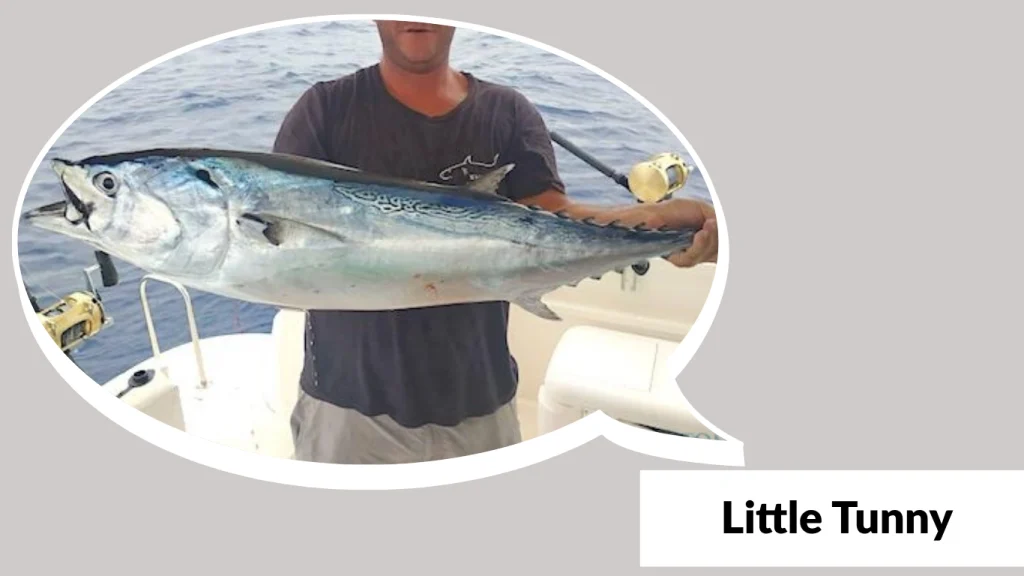
The little tunny, also known as false albacore, is a small but fast and strong member of the mackerel family. It is often mistaken for other small tuna species but can be identified by its distinctive “worm-like” markings on the back and dark spots between the pectoral and ventral fins. While not highly prized for table fare due to its strong flavor, it is a popular sport fish and bait species.
Identification
- Scientific Name: Euthynnus alletteratus
- Average Length: 60–90 cm
- Average Weight: 5–12 kg
- Color: Dark blue-green on the back with wavy markings, silver underside with several dark spots near the pectoral fins
- Distinct Feature: Irregular dorsal markings and dark ventral spots unique to the species
Habitat and Distribution
Found in warm waters of the Atlantic Ocean, Mediterranean Sea, and Black Sea, often close to shore and around baitfish schools.
Diet
Feeds heavily on sardines, anchovies, squid, and crustaceans, chasing prey in coordinated schools.
Commercial Importance
Not a major commercial tuna species but valued in recreational fishing and as high-quality bait for larger pelagic fish.
Fishing Methods
Caught using trolling, casting, drift nets, and live bait fishing, often targeted by anglers for its speed and fight.
15. Kawakawa Tuna
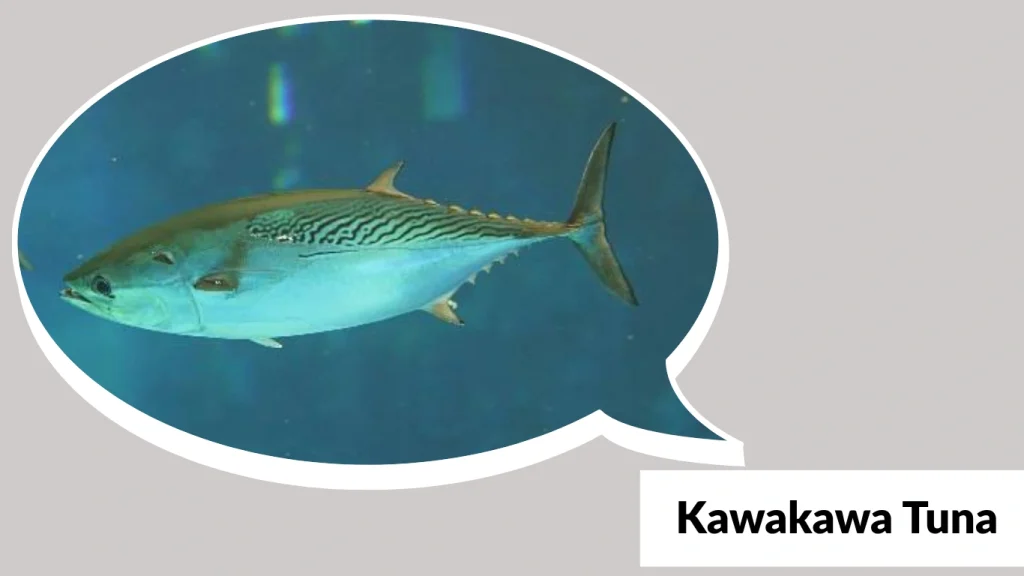
The kawakawa tuna, also known as mackerel tuna, is a small but energetic tuna species that is common in coastal tropical waters. It is easily recognized by its spotted belly and lack of markings on the back, distinguishing it from similar species like the little tunny. While not a major export fish, it is important in local fisheries and is often consumed fresh, dried, or smoked.
Identification
- Scientific Name: Euthynnus affinis
- Average Length: 50–80 cm
- Average Weight: 3–6 kg
- Color: Dark blue on the back, silver underside with several distinct dark spots between the pectoral and pelvic fins
- Distinct Feature: No wavy dorsal markings; belly spots are key identifiers
Habitat and Distribution
Found in tropical and subtropical Indo-Pacific waters, often near coastlines, coral reefs, and estuaries.
Diet
Feeds mainly on small schooling fish, squid, and crustaceans, often hunting in fast-moving groups.
Commercial Importance
Commonly caught by artisanal and small-scale fisheries for local consumption and regional trade.
Fishing Methods
Caught using trolling, gillnets, and pole-and-line fishing, and also widely used as bait for larger tuna and billfish species.
16. Black Skipjack Tuna
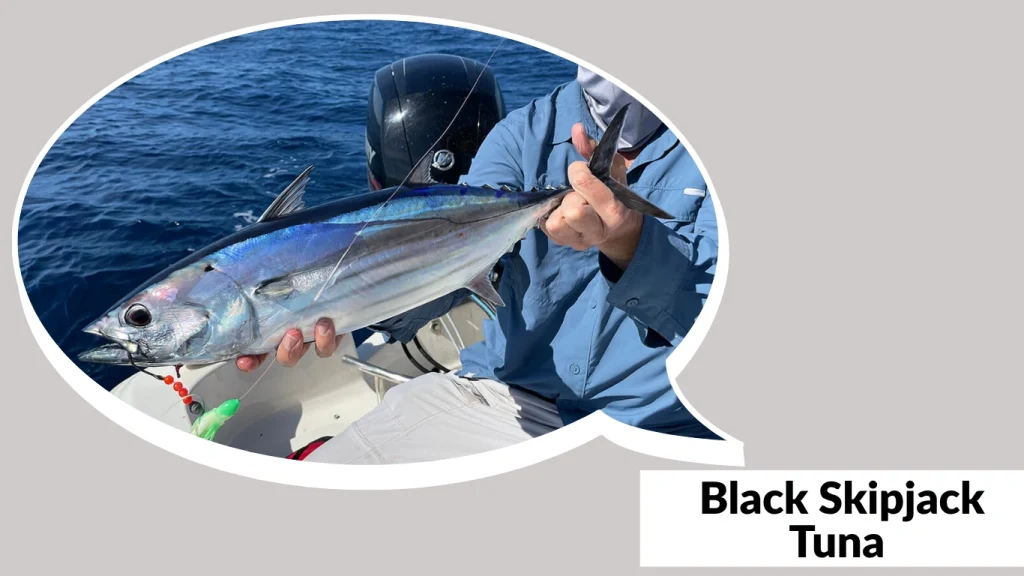
The black skipjack tuna is a small, fast-swimming species known for its dark, almost black back and distinctive striped belly. It is less commercially important than larger tuna but is caught in many tropical regions for local consumption. Its strong flavor makes it suitable for drying, smoking, or use in fish pastes rather than raw preparations like sashimi.
Identification
- Scientific Name: Euthynnus lineatus
- Average Length: 45–80 cm
- Average Weight: 2–5 kg
- Color: Very dark bluish-black on the back, silver underside with 4–6 prominent horizontal stripes on the belly
- Distinct Feature: Darker overall body coloration with bold belly stripes
Habitat and Distribution
Found mainly in the eastern tropical Pacific Ocean, from southern California to northern Peru, including the Galápagos Islands.
Diet
Feeds on small fish, squid, and crustaceans, often chasing baitfish schools near the surface.
Commercial Importance
Important for subsistence and artisanal fisheries in coastal communities but limited in large-scale commercial trade.
Fishing Methods
Caught using purse seines, pole-and-line, trolling, and small gillnets, often alongside skipjack and frigate tuna.
17. Mackerel Tuna

The mackerel tuna is a sleek, medium-sized tuna species known for its speed and distinctive body markings. It has a pattern of wavy, broken lines along the upper back and dark spots between the pectoral and pelvic fins. While not as fatty as bluefin or yellowfin, it has firm flesh and is popular in local markets, often eaten grilled, smoked, or curried.
Identification
- Scientific Name: Euthynnus spp. (commonly Euthynnus affinis in the Indo-Pacific)
- Average Length: 50–90 cm
- Average Weight: 4–8 kg
- Color: Dark blue to bluish-green back, silver underside with characteristic spots near pectoral fins
- Distinct Feature: Wavy upper body markings with a spotted belly area
Habitat and Distribution
Found in tropical and subtropical coastal waters worldwide, especially abundant in the Indo-Pacific and western Atlantic regions.
Diet
Feeds on anchovies, sardines, squid, and small crustaceans, often hunting in schools that drive prey to the surface.
Commercial Importance
Targeted mainly by small-scale fisheries for fresh local consumption, with limited presence in international markets.
Fishing Methods
Caught using trolling lines, purse seines, and gillnets, and also used as live or cut bait for larger predatory fish.
18. False Albacore
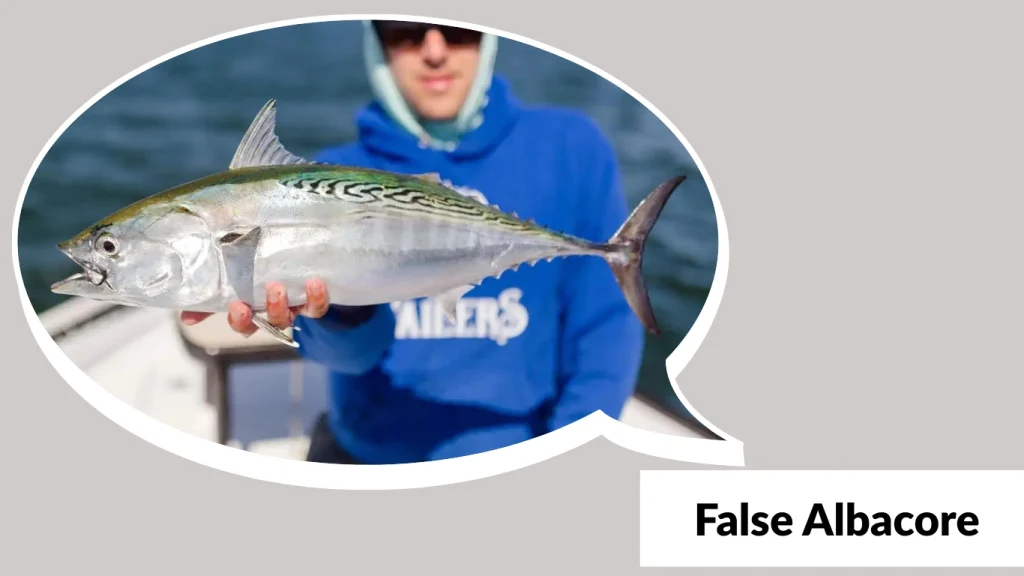
The false albacore, often confused with small tunas, is actually a member of the mackerel family closely related to the little tunny. It is a popular sport fish due to its speed and fighting strength but is less favored for eating because of its dark, strong-tasting flesh. Recognizable by its streamlined body and distinctive wavy dorsal markings, it is a common sight in coastal waters.
Identification
- Scientific Name: Euthynnus alletteratus
- Average Length: 60–90 cm
- Average Weight: 4–10 kg
- Color: Blue-green on the back with dark wavy lines, silver underside with several dark spots near the pectoral fins
- Distinct Feature: Distinctive dorsal markings and ventral spots; no scales except on a small corselet
Habitat and Distribution
Found in the Atlantic Ocean, Mediterranean Sea, and Black Sea, often in warm, nearshore waters.
Diet
Feeds on schooling fish like anchovies and sardines, as well as squid and crustaceans, often driving prey to the surface in feeding frenzies.
Commercial Importance
Valued mostly as a game fish and for bait, with limited use in food markets due to its strong flavor.
Fishing Methods
Caught by trolling, casting, and live bait fishing, especially by recreational anglers targeting high-speed pelagic fish.
19. Oriental Bonito
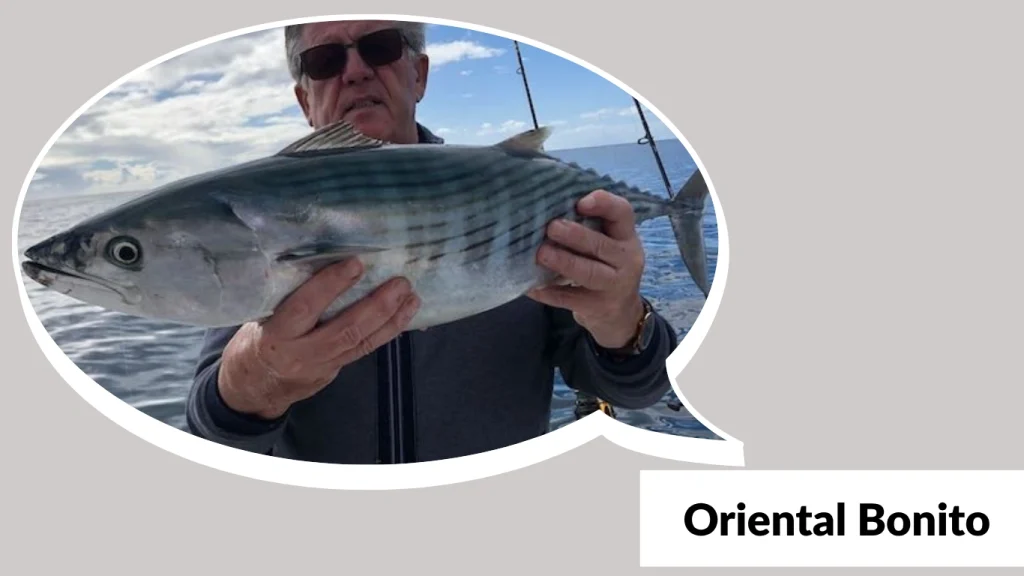
The oriental bonito is a smaller, fast-swimming member of the mackerel family, often mistaken for small tuna. It has a streamlined body with dark oblique stripes on its upper sides and is prized in many coastal regions for its strong, meaty flavor. It is typically consumed fresh, grilled, or dried.
Identification
- Scientific Name: Sarda orientalis
- Average Length: 40–80 cm
- Average Weight: 2–6 kg
- Color: Blue-green back with dark, slanted stripes; silver underside
- Distinct Feature: Prominent oblique stripes on upper body, fading towards the belly
Habitat and Distribution
Widely distributed in tropical and subtropical waters of the Indo-Pacific region, often found close to shore and around reefs.
Diet
Feeds on small fish, squid, and crustaceans, often hunting in schools that chase baitfish to the surface.
Commercial Importance
Important in small-scale coastal fisheries, particularly in Asia, for both fresh consumption and drying/smoking.
Fishing Methods
Caught using trolling, gillnets, and purse seines, often in association with other small pelagic species.
20. Australian Bonito

The Australian bonito is a fast, schooling fish known for its dark, diagonal stripes along the upper body and its strong, muscular build. While smaller than many true tunas, it is an important game and food fish in Australian waters, valued for its rich, oily flesh that is excellent for grilling or smoking.
Identification
- Scientific Name: Sarda australis
- Average Length: 40–80 cm
- Average Weight: 2–5 kg
- Color: Dark blue to blue-green back with slanted stripes; silver underside
- Distinct Feature: Sloping, diagonal stripes above the lateral line
Habitat and Distribution
Found mainly in coastal waters of eastern and southern Australia and occasionally in New Zealand waters, often near reefs and rocky shorelines.
Diet
Feeds on pilchards, anchovies, squid, and other small pelagic fish, frequently chasing schools to the surface.
Commercial Importance
Caught for both commercial and recreational purposes, sold fresh, smoked, or canned in local markets.
Fishing Methods
Caught using trolling, casting, and small purse seines, often by sport anglers targeting fast-moving coastal fish.
21. Plain Bonito

The plain bonito is a medium-sized pelagic fish closely related to tunas, distinguished by its lack of stripes or spots on the belly and sides, giving it a more uniform appearance compared to other bonito species. It is an active predator, valued in some regions for its firm flesh and bold flavor, which is suitable for grilling, smoking, or stewing.
Identification
- Scientific Name: Orcynopsis unicolor
- Average Length: 60–90 cm
- Average Weight: 5–10 kg
- Color: Dark blue to bluish-green back with a silvery, unmarked underside
- Distinct Feature: Absence of belly markings, giving it a clean, plain look
Habitat and Distribution
Found in the eastern Atlantic Ocean and Mediterranean Sea, often nearshore but also venturing offshore in search of prey.
Diet
Feeds on small fish, squid, and crustaceans, hunting both individually and in small groups.
Commercial Importance
Fished commercially in parts of Europe and North Africa, with moderate demand in local markets.
Fishing Methods
Caught using trolling, drift nets, and purse seines, often alongside other tunas and mackerels.
22. Eastern Little Tuna
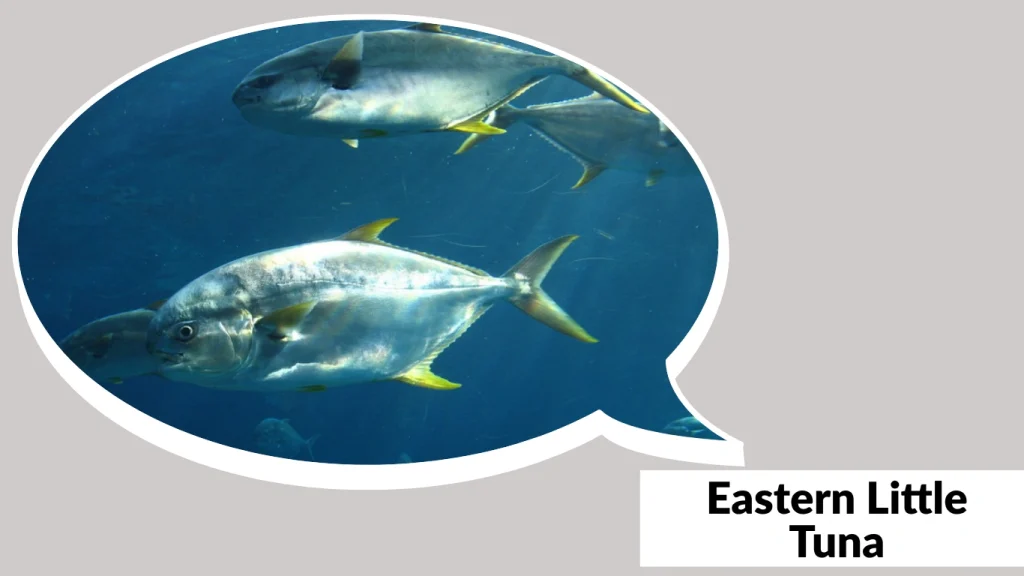
The eastern little tuna is a small, fast pelagic fish often confused with skipjack or kawakawa but can be identified by its unique combination of spots and faint broken lines on the belly. It is popular in local fisheries and is often eaten fresh, grilled, or dried, as well as used for bait in larger tuna fisheries.
Identification
- Scientific Name: Euthynnus affinis
- Average Length: 40–70 cm
- Average Weight: 2–5 kg
- Color: Dark blue to bluish-green back, silver underside with several dark spots between pectoral and pelvic fins and faint broken belly lines
- Distinct Feature: Combination of belly spots and faint horizontal broken lines
Habitat and Distribution
Widely distributed in tropical and subtropical Indo-Pacific waters, often in coastal zones, bays, and near reefs.
Diet
Feeds on anchovies, sardines, squid, and small crustaceans, often in schools that corral baitfish to the surface.
Commercial Importance
Locally important for small-scale fisheries, especially in Southeast Asia and the Pacific islands.
Fishing Methods
Caught with trolling lines, purse seines, gillnets, and pole-and-line, often in association with other small tunas.
23. Striped Bonito

The striped bonito is a strikingly patterned, fast-swimming fish recognized for its bold, horizontal dark stripes along the upper body. It is a member of the mackerel family and is known for its strong, oily flesh, making it suitable for grilling, smoking, or canning. While not as large as true tunas, it is a valued catch in some coastal fisheries.
Identification
- Scientific Name: Sarda sarda
- Average Length: 40–80 cm
- Average Weight: 2–6 kg
- Color: Dark blue to blue-green back with 7–11 dark horizontal stripes; silver underside
- Distinct Feature: Prominent, continuous horizontal striping on the upper body
Habitat and Distribution
Found in the Atlantic Ocean, Mediterranean Sea, and Black Sea, usually in temperate to warm waters near the surface.
Diet
Feeds on small schooling fish, squid, and crustaceans, often chasing prey in large, coordinated groups.
Commercial Importance
Fished commercially and recreationally, with its meat commonly consumed fresh, smoked, or preserved.
Fishing Methods
Caught using trolling, gillnets, and purse seines, often nearshore during seasonal migrations.
24. Wahoo Tuna (Misnomer)

The wahoo, often mistakenly called “wahoo tuna” in some markets, is not a true tuna but shares a similar streamlined, fast-swimming build. It is one of the fastest fish in the ocean, highly prized by sport fishers for its speed, fight, and excellent eating quality. Its flesh is mild and firm, making it popular for grilling, baking, and raw preparations like sashimi.
Identification
- Scientific Name: Acanthocybium solandri
- Average Length: 100–180 cm (can exceed 250 cm)
- Average Weight: 10–25 kg (record catches over 80 kg)
- Color: Iridescent blue on the back with vertical blue bars; silvery sides and belly
- Distinct Feature: Long, slender body with sharp teeth and vertical blue stripes
Habitat and Distribution
Found in tropical and subtropical waters worldwide, often offshore near reefs, drop-offs, and oceanic current lines.
Diet
Feeds on flying fish, mackerel, squid, and other pelagic species, often hunting alone or in small groups.
Commercial Importance
Valued for its premium-quality meat and as a major sport fishing target.
Fishing Methods
Caught by trolling high-speed lures, drift fishing, and occasionally by longlines.
25. White Tuna (Market Name)
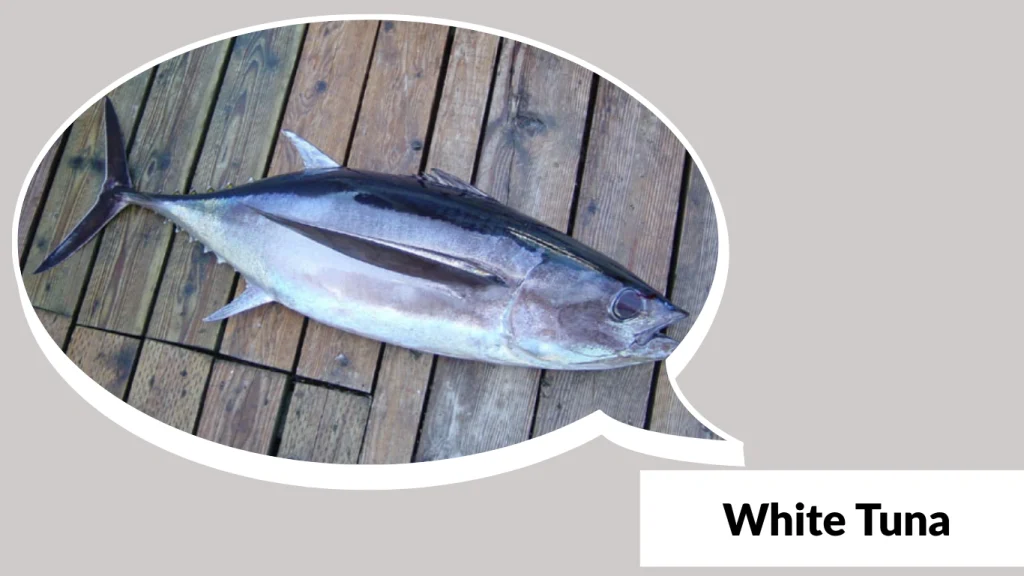
White tuna is a common market term that can refer to several species, most often albacore tuna (Thunnus alalunga) or, in some cases, escolar (Lepidocybium flavobrunneum)—a completely different species. True white tuna (albacore) is valued for its mild flavor and light-colored flesh, especially in canned tuna markets.
Identification
- Scientific Name: Commonly Thunnus alalunga (sometimes mislabeled escolar)
- Average Length: 60–100 cm (albacore)
- Average Weight: 10–20 kg (albacore)
- Color: Metallic blue back, silvery belly
- Distinct Feature: Long pectoral fins (true albacore) and light, flaky meat
Habitat and Distribution
Albacore is found in temperate and tropical oceans worldwide; escolar inhabits deep tropical and subtropical waters.
Diet
Feeds on squid, anchovies, and other small fish.
Commercial Importance
Highly valued in the canned tuna industry; escolar often sold under the same name but should be consumed in moderation due to digestive effects.
Fishing Methods
Caught using trolling, pole-and-line, and longlining, with albacore being a major target for sustainable tuna fisheries.