
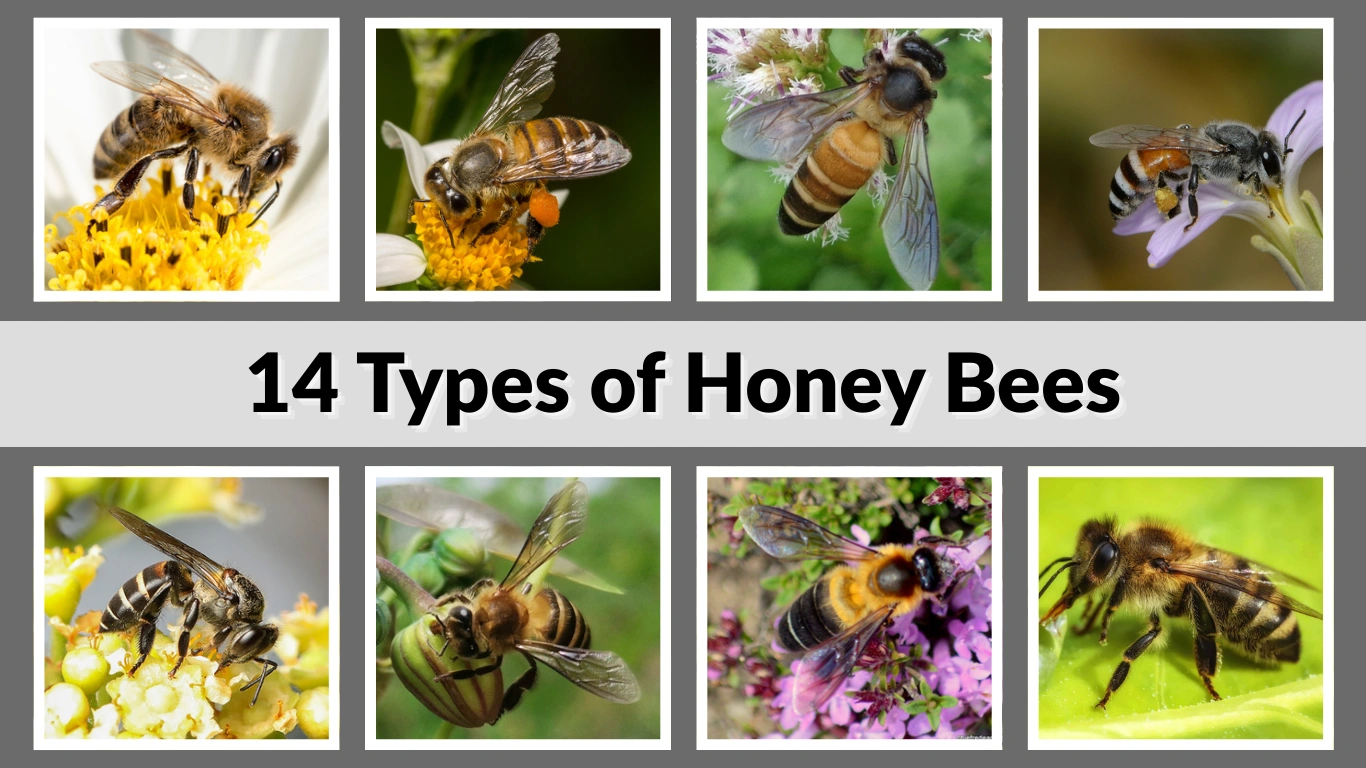
Honey bees are more than just the insects we see buzzing around flowers — they’re a diverse group with unique species spread across the globe, each adapted to its own environment. Inside every hive, bees also take on specific roles, from the egg-laying queen to the hardworking foragers and the drones whose sole job is to mate. Exploring both their species and their roles gives us a deeper appreciation for how these tiny creatures keep our ecosystems blooming and our food growing.
1. Apis mellifera – Western Honey Bee
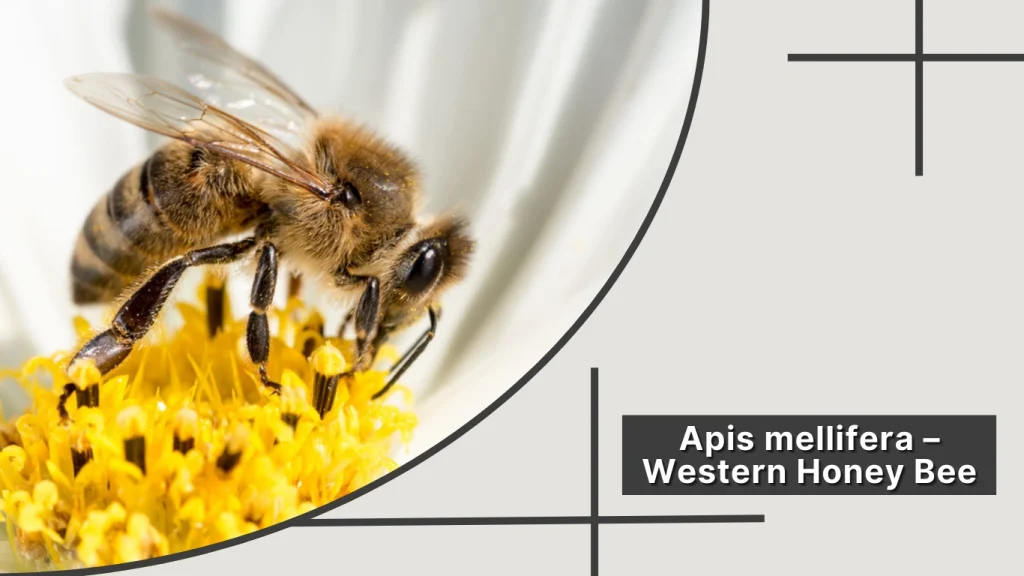
The Western honey bee is the most common and widely domesticated honey bee species in the world. Known for its exceptional adaptability, it thrives in a wide range of climates and is a vital pollinator for many crops. It is also the primary species used in commercial honey production.
Identification
- Medium-sized bee with a length of about 12–15 mm
- Distinct yellow and black striped abdomen
- Hairy thorax with golden-brown coloration
- Transparent wings with visible veins
- Black antennae and legs
Habitat & Distribution
Apis mellifera is native to Europe, Africa, and parts of the Middle East but has been introduced to every continent except Antarctica. It can live in natural cavities, man-made hives, and occasionally wild nests in trees or rock crevices.
Behavior & Ecology
This species is highly social, living in large colonies with a complex caste system. Colonies can reach tens of thousands of individuals, working together to forage, protect the hive, and care for the brood. They communicate primarily through pheromones and the famous waggle dance to share foraging locations.
Diet
The Western honey bee feeds mainly on nectar and pollen from flowers. Nectar is converted into honey for long-term storage, while pollen provides protein for brood rearing.
2. Apis cerana – Asian Honey Bee

The Asian honey bee is a smaller species native to South and Southeast Asia. It is well adapted to tropical and subtropical climates and is known for its strong resistance to certain pests and diseases that affect other honey bee species.
Identification
- Smaller than Apis mellifera, about 9–11 mm in length
- Dark brown or black abdomen with light yellow bands
- Dense hair on thorax
- Narrower wings compared to Western honey bees
- Slightly shorter tongue length
Habitat & Distribution
Apis cerana is widespread in countries like India, China, Japan, Indonesia, and the Philippines. It prefers nesting in small cavities such as tree hollows, wall crevices, and traditional wooden hives.
Behavior & Ecology
They are highly defensive and quick to abscond if disturbed. This species is known for its efficient use of limited floral resources and ability to forage in more challenging weather conditions.
Diet
Feeds primarily on nectar and pollen from native flowering plants. They store less honey than Apis mellifera, focusing more on immediate food needs.
3. Apis dorsata – Giant Honey Bee
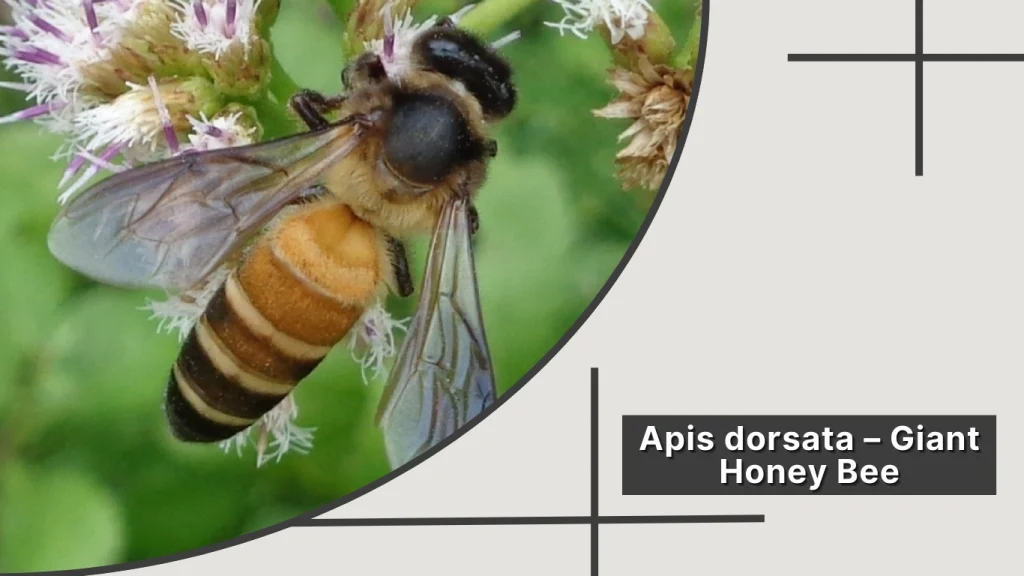
The giant honey bee is one of the largest species in the genus Apis. It is famous for building large, exposed combs high on tree branches, cliffs, and buildings, often in the open air.
Identification
- Large size, 17–20 mm in length
- Dark brown body with bold yellow bands on the abdomen
- Long legs and large wings
- Thick hair on the thorax
- Strong mandibles
Habitat & Distribution
Native to South and Southeast Asia, Apis dorsata prefers tropical forests and open landscapes. They often nest in high, inaccessible places for protection against predators.
Behavior & Ecology
Highly defensive and aggressive when threatened. Colonies can migrate seasonally in search of better forage and nesting locations. Known for their synchronized defensive “shimmering” behavior to deter predators.
Diet
They collect nectar and pollen from a wide range of flowering plants, often traveling long distances to find abundant sources.
4. Apis florea – Dwarf Honey Bee
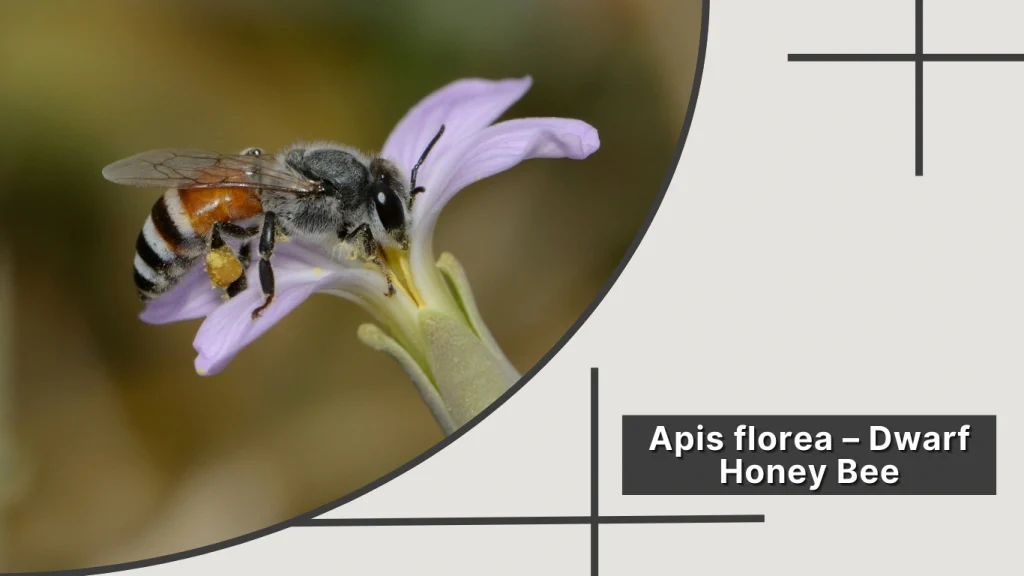
The dwarf honey bee is the smallest species of the genus Apis, known for its open-air nests and small colony size. It plays an important role in pollinating wild plants in its native range.
Identification
- Small body, about 7–10 mm in length
- Reddish-brown thorax and light yellow abdomen bands
- Single, exposed comb for nesting
- Short wings compared to body size
- Fine hair covering the body
Habitat & Distribution
Native to South and Southeast Asia, Apis florea thrives in warm climates. It often nests in bushes, small trees, and human-made structures in rural areas.
Behavior & Ecology
Non-aggressive compared to larger species. Colonies are small, with fewer than 5,000 bees, and they relocate frequently. Known for precise dance communication despite their small size.
Diet
Feeds on nectar and pollen from small flowers, often those less visited by larger bees.
5. Apis andreniformis – Black Dwarf Honey Bee
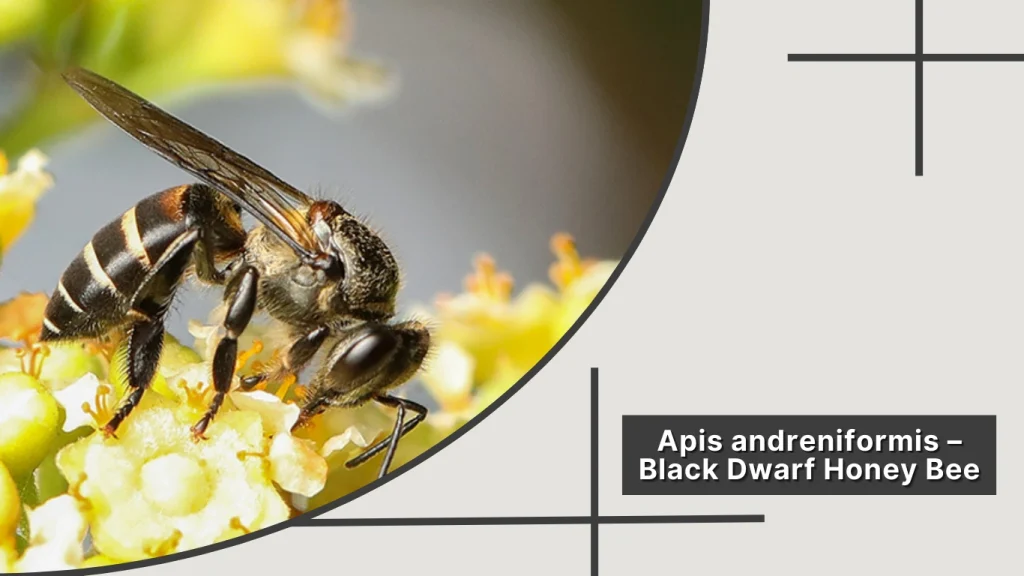
The black dwarf honey bee is closely related to Apis florea but is darker in color and slightly smaller. It is considered more elusive and less studied than other species.
Identification
- Very small, around 7–9 mm in length
- Predominantly black body with faint pale bands
- Single comb nest, often low in bushes or small trees
- Short wings and small eyes relative to head size
- Sparse body hair
Habitat & Distribution
Found mainly in Southeast Asia, including Thailand, Malaysia, and Indonesia. Prefers lowland tropical forests and rural vegetation areas.
Behavior & Ecology
Generally shy and quick to abandon the nest if disturbed. They are less commonly domesticated and are important pollinators for specific native plants.
Diet
Consumes nectar and pollen from a variety of wildflowers, often favoring small blooms hidden in dense vegetation.
6. Apis koschevnikovi – Koschevnikov’s Honey Bee
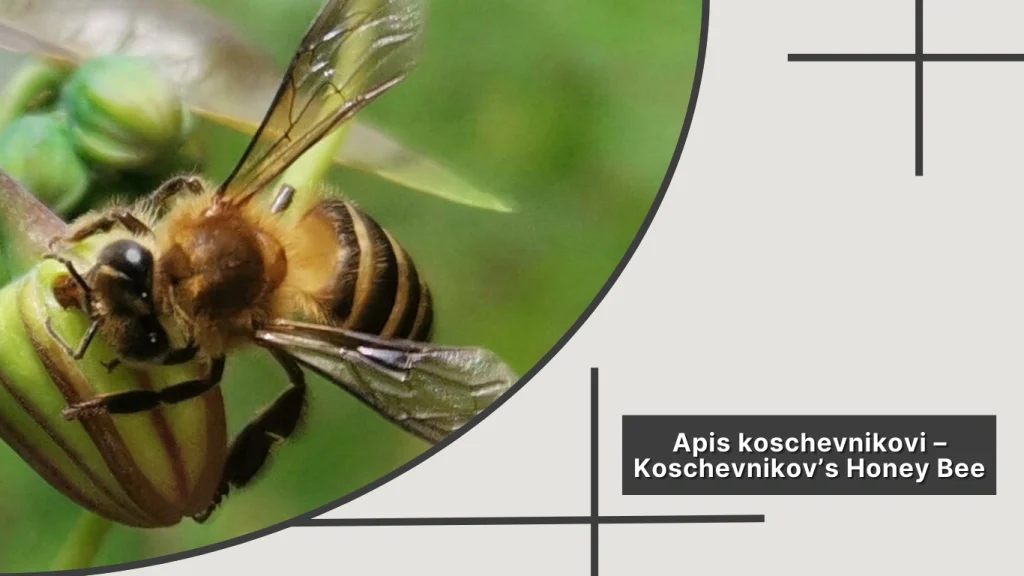
Apis koschevnikovi is a rare honey bee species native to Borneo and parts of Southeast Asia. It is adapted to humid, tropical forests and is considered vulnerable due to habitat loss.
Identification
- Medium-sized, about 10–11 mm in length
- Reddish-brown body with darker abdomen bands
- Dense hair on thorax
- Wings slightly darker than other honey bee species
- Shorter tongue compared to Apis mellifera
Habitat & Distribution
Found in the tropical forests of Borneo, Sumatra, and Malaysia. Prefers undisturbed forested areas with plenty of flowering plants.
Behavior & Ecology
Less aggressive than giant honey bees but will defend the colony if threatened. Known for foraging at shorter distances and focusing on local floral resources.
Diet
Feeds mainly on nectar and pollen from forest flowers, especially those blooming in shaded areas.
7. Apis laboriosa – Himalayan Giant Honey Bee
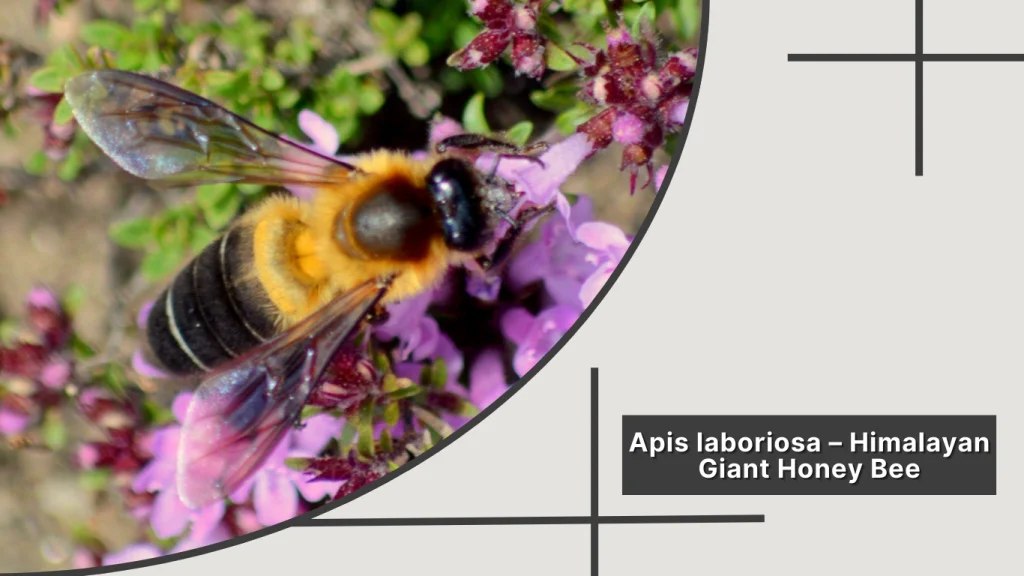
The Himalayan giant honey bee is the largest honey bee species in the world, renowned for producing a unique, psychoactive honey called “mad honey.”
Identification
- Very large, about 17–22 mm in length
- Dark brown body with pale yellow bands
- Thick hair covering thorax and abdomen
- Strong wings adapted for high-altitude flight
- Long legs and robust build
Habitat & Distribution
Inhabits mountainous regions of Nepal, Bhutan, northern India, and Tibet. Builds massive open-air nests on steep cliff faces at altitudes of 2,500–4,000 meters.
Behavior & Ecology
Extremely defensive and difficult to harvest due to nesting in inaccessible locations. Colonies migrate seasonally based on floral availability in high-altitude environments.
Diet
Forages on high-altitude flowering plants, with nectar from certain rhododendrons producing the distinctive “mad honey.”
8. Apis nigrocincta – Philippine Honey Bee
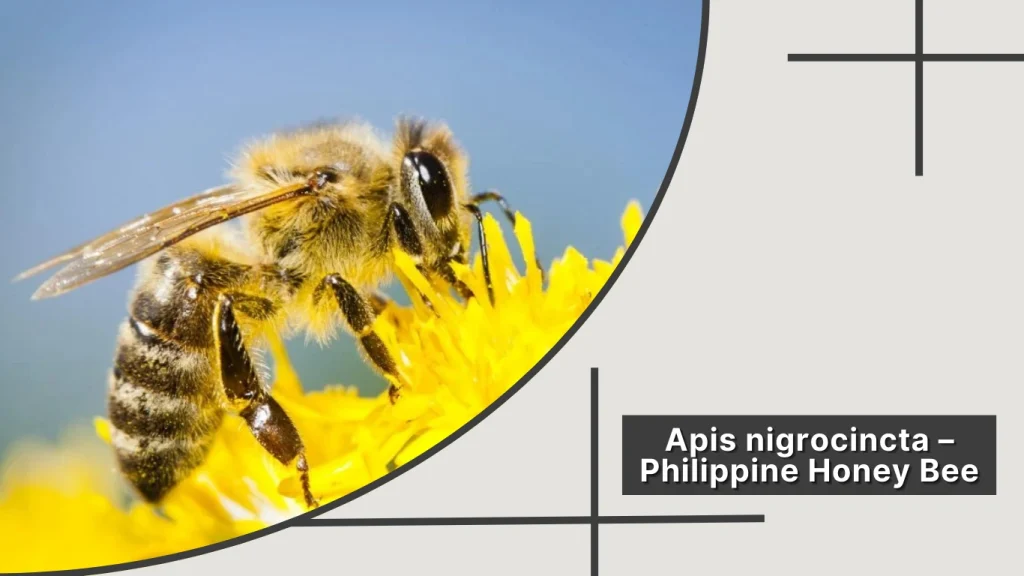
Apis nigrocincta is a tropical honey bee species native to parts of the Philippines and Sulawesi. It is larger than the Asian honey bee and is valued for its adaptability in humid climates.
Identification
- Medium to large size, about 11–13 mm in length
- Dark brown to black body with distinct pale yellow abdominal bands
- Dense hair on thorax
- Longer wings than Apis cerana
- Slightly elongated abdomen
Habitat & Distribution
Found mainly in the southern Philippines and Sulawesi. Prefers warm, humid lowland areas and forest edges with abundant floral resources.
Behavior & Ecology
Moderately defensive but not as aggressive as Apis dorsata. Known to forage over a wide range and adapt well to different floral seasons.
Diet
Consumes nectar and pollen from a diverse variety of tropical flowers, often visiting both cultivated and wild plants.
9. Apis nuluensis – Borneo Mountain Honey Bee
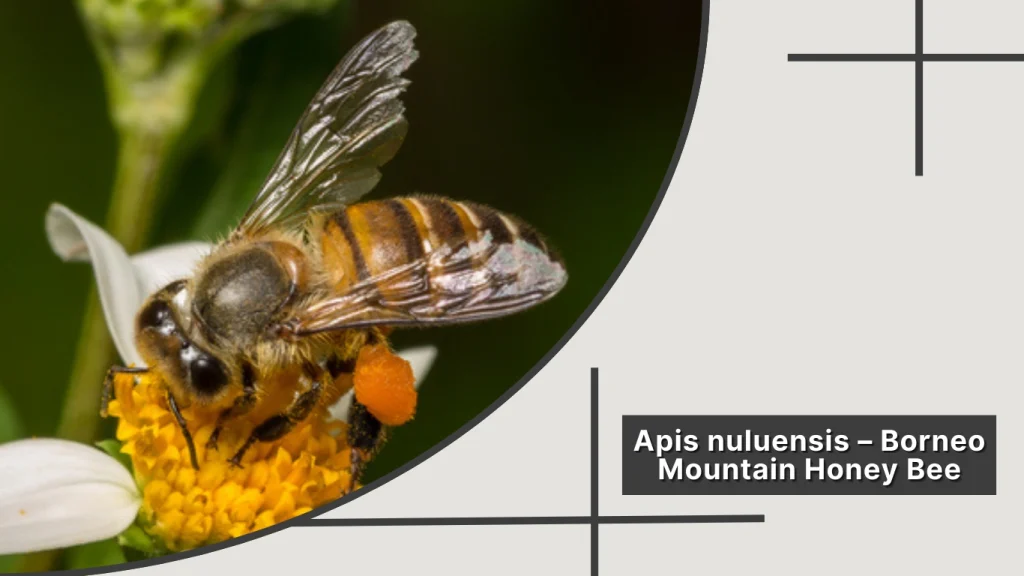
Apis nuluensis is a highland honey bee species native to the mountainous regions of Borneo. It is adapted to cooler temperatures compared to other Southeast Asian honey bees.
Identification
- Medium-sized, around 10–12 mm in length
- Dark brown thorax and abdomen with faint light bands
- Moderate body hair density
- Slightly shorter wings than Apis mellifera
- Compact and robust build
Habitat & Distribution
Occurs exclusively in high-altitude areas of Sabah, Malaysian Borneo, particularly around Mount Kinabalu. Prefers montane forests with cooler climates.
Behavior & Ecology
Less aggressive than lowland species and well adapted to highland floral cycles. Colonies are smaller and slower to expand compared to tropical lowland honey bees.
Diet
Feeds mainly on nectar from high-altitude flowering shrubs and trees, often timed with seasonal blooms in montane ecosystems.
10. Apis dorsata binghami – Indonesian Giant Honey Bee
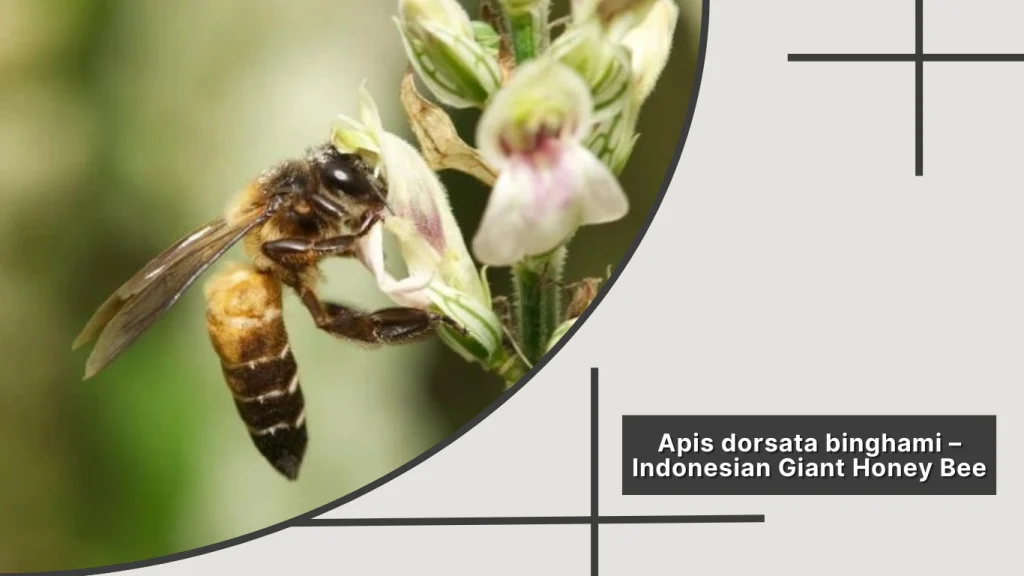
Apis dorsata binghami is a subspecies of the giant honey bee found primarily in parts of Indonesia. It shares many traits with Apis dorsata but has distinct regional adaptations.
Identification
- Large size, around 17–20 mm in length
- Dark brown body with bright yellow abdominal bands
- Long wings and legs suited for long-distance foraging
- Dense thoracic hair
- Strong mandibles for defense
Habitat & Distribution
Native to Indonesia, particularly Kalimantan, Sulawesi, and surrounding islands. Typically nests high in tall forest trees or cliff faces.
Behavior & Ecology
Highly defensive, with colonies quick to respond to threats. Known for seasonal migration patterns following nectar flows across islands.
Diet
Feeds on nectar and pollen from a wide range of tropical flowers, including both wild and cultivated plants.
11. Apis mellifera scutellata – Africanized Honey Bee
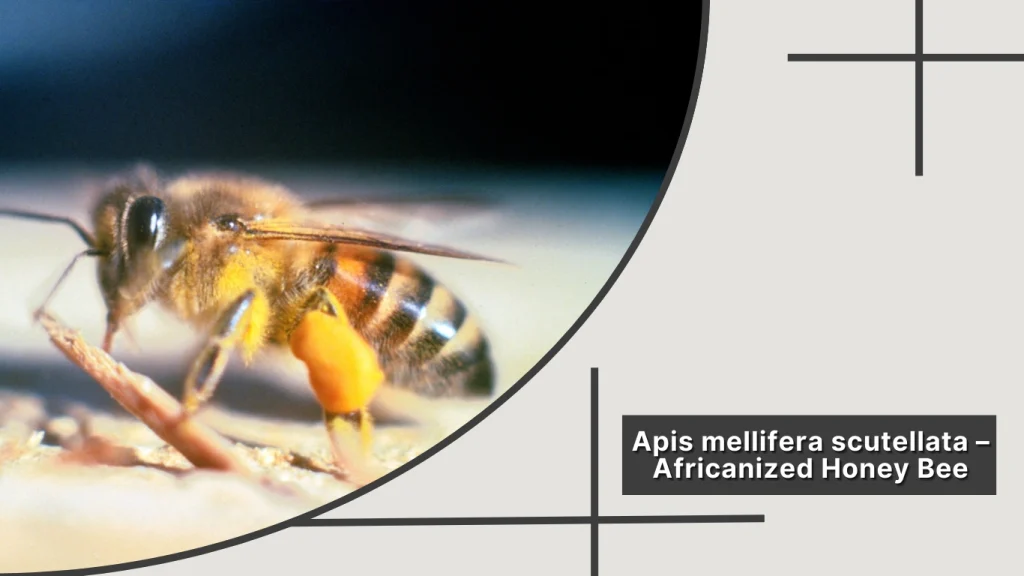
Also known as the “killer bee,” Apis mellifera scutellata is a hybrid between African and European honey bees, famous for its extreme defensiveness.
Identification
- Similar in size to European honey bees, around 12–15 mm
- Yellowish-brown body with dark brown bands
- Slightly more slender build than other Apis mellifera subspecies
- Strong wings and agile flight
- Sparse hair compared to other honey bee species
Habitat & Distribution
Originally from Africa but introduced to the Americas, where it spread rapidly through Brazil, Central America, and parts of the southern United States.
Behavior & Ecology
Extremely defensive and prone to chasing intruders long distances. However, they are efficient pollinators and highly adaptable to various climates.
Diet
Feeds on nectar and pollen from a wide range of plants, often dominating floral resources in its territory.
12. Queen Bee
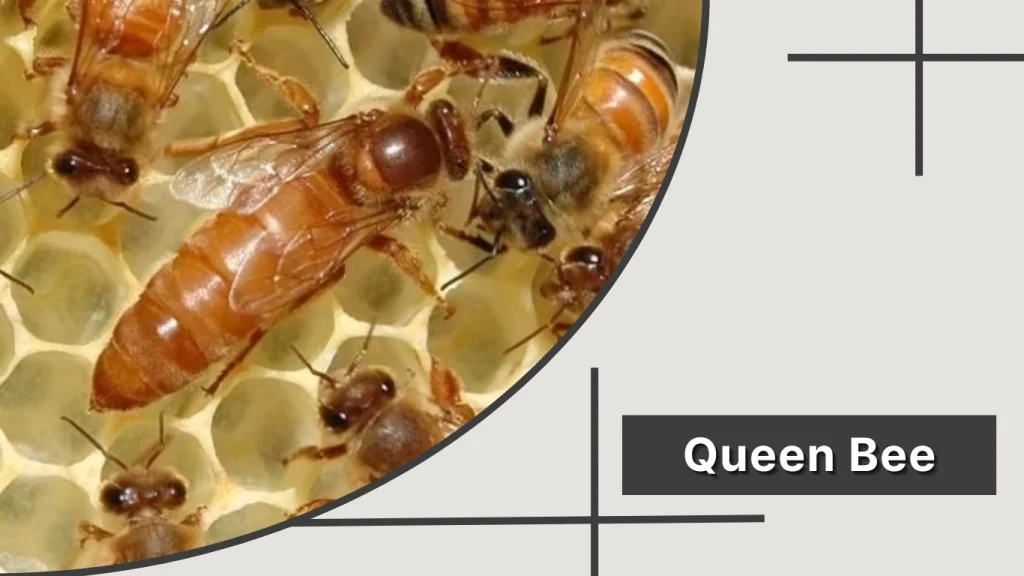
The queen bee is the sole reproductive female in a honey bee colony, responsible for producing all the offspring. Her presence is essential for colony stability and survival.
Identification
- Largest bee in the colony, around 18–22 mm in length
- Long, elongated abdomen extending beyond the wings
- Smooth, shiny thorax with less hair
- Reduced pollen baskets on hind legs
- Distinct pheromone scent detectable by worker bees
Habitat & Distribution
Found exclusively inside the hive except during mating flights or colony swarming. Present in all honey bee species worldwide.
Behavior & Ecology
Lays up to 2,000 eggs per day during peak season. The queen’s pheromones regulate colony behavior and suppress worker reproduction. She can live for 2–5 years, much longer than other bees in the hive.
Diet
Fed exclusively on royal jelly throughout her life, a nutrient-rich secretion produced by worker bees.
13. Worker Bees

Worker bees are non-reproductive females that make up the majority of a honey bee colony. They are responsible for all the essential tasks that keep the hive functioning.
Identification
- Medium-sized, about 12–15 mm in length
- Yellow and black striped abdomen
- Well-developed pollen baskets (corbiculae) on hind legs
- Hair-covered body for pollen collection
- Shorter abdomen compared to the queen
Habitat & Distribution
Present in every hive of all honey bee species worldwide. Adaptable to diverse habitats where their colony is established.
Behavior & Ecology
Perform various roles depending on age — cleaning cells, feeding brood, building comb, guarding the hive, and foraging for nectar and pollen. Lifespan varies from a few weeks in summer to several months in winter.
Diet
Feed on nectar, honey, and pollen, with occasional consumption of royal jelly when young.
14. Drone Bees

Drone bees are the male members of a honey bee colony, with the sole purpose of mating with a virgin queen.
Identification
- Larger and bulkier than worker bees, around 15–17 mm in length
- Big, round eyes that meet at the top of the head
- Thick body with no pollen baskets
- Shorter mouthparts compared to workers
- Lacks a stinger
Habitat & Distribution
Found in colonies of all honey bee species, primarily during the reproductive season.
Behavior & Ecology
Do not collect food or participate in hive work. They fly out in search of queens from other colonies. After mating, drones die immediately. Those that do not mate are expelled from the hive before winter.
Diet
Fed honey and nectar by worker bees within the colony.
FAQs About Honey Bee Types
1. How many species of honey bees exist?
There are currently 10 recognized species of honey bees in the genus Apis, along with several subspecies. Each species has unique traits, habitats, and behaviors.
2. Which honey bee species is most common worldwide?
The Western honey bee (Apis mellifera) is the most widespread species, found on every continent except Antarctica, and is widely used in beekeeping.
3. Are all honey bee species domesticated?
No. While Apis mellifera and Apis cerana are commonly managed by humans, many species, like Apis dorsata and Apis laboriosa, remain wild and are not suited for traditional beekeeping.
4. Do all honey bee species produce honey?
Yes, all species produce honey, but some make it in smaller quantities, and not all are harvested by humans due to their nesting habits or defensiveness.
5. What is the main difference between worker bees and drone bees?
Worker bees are females that handle all hive tasks except reproduction, while drone bees are males whose only purpose is to mate with a queen.
