

The Western honeybee (Apis mellifera) is one of nature’s most fascinating and hardworking insects. Known for producing golden honey and playing a vital role in pollination, these bees are essential to both agriculture and the environment. Found in gardens, fields, and forests across much of the world, they live in highly organized colonies where every member has a role to play. From their impressive communication dances to their incredible honey-making process, the Western honeybee’s life is a perfect balance of teamwork, survival, and natural beauty.
What is a Western Honeybee?
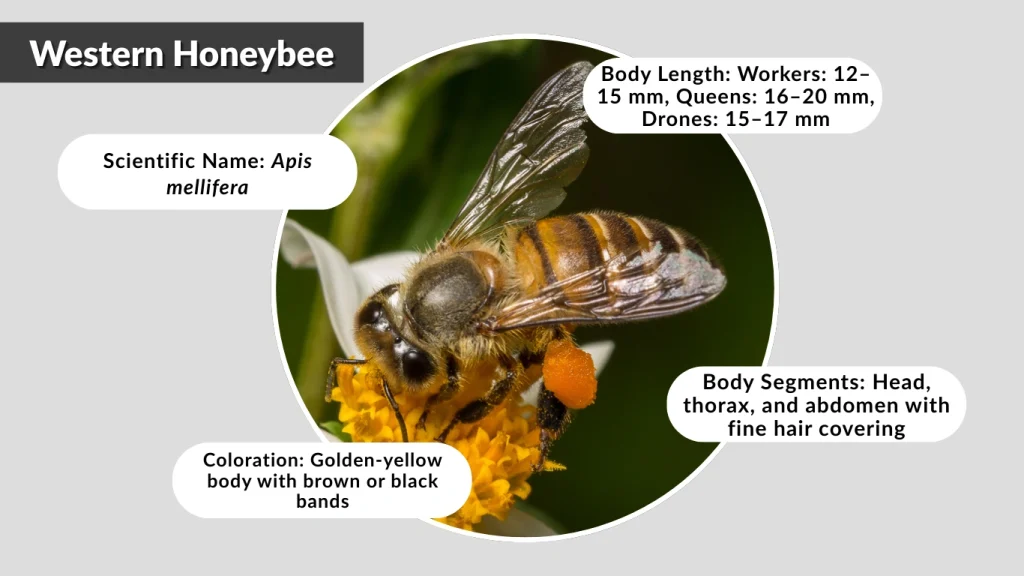
The Western honeybee (Apis mellifera) is a social insect native to Europe, Africa, and parts of Asia but now found on almost every continent due to human introduction. It’s the most widely domesticated bee species in the world, valued for its honey, beeswax, and unmatched pollination abilities. These bees live in large colonies that can contain tens of thousands of individuals, each working together to sustain the hive and ensure its survival.
Identification
- Scientific Name: Apis mellifera
- Common Name: Western honeybee
- Body Length: Workers: 12–15 mm, Queens: 16–20 mm, Drones: 15–17 mm
- Coloration: Golden-yellow body with brown or black bands
- Body Segments: Head, thorax, and abdomen with fine hair covering
- Eyes: Large compound eyes for wide vision
- Antennae: Used for smell, touch, and detecting vibrations
- Wings: Two pairs of transparent wings for quick, agile flight
- Pollen Baskets: Located on hind legs for carrying pollen back to the hive
Physical Characteristics and Size
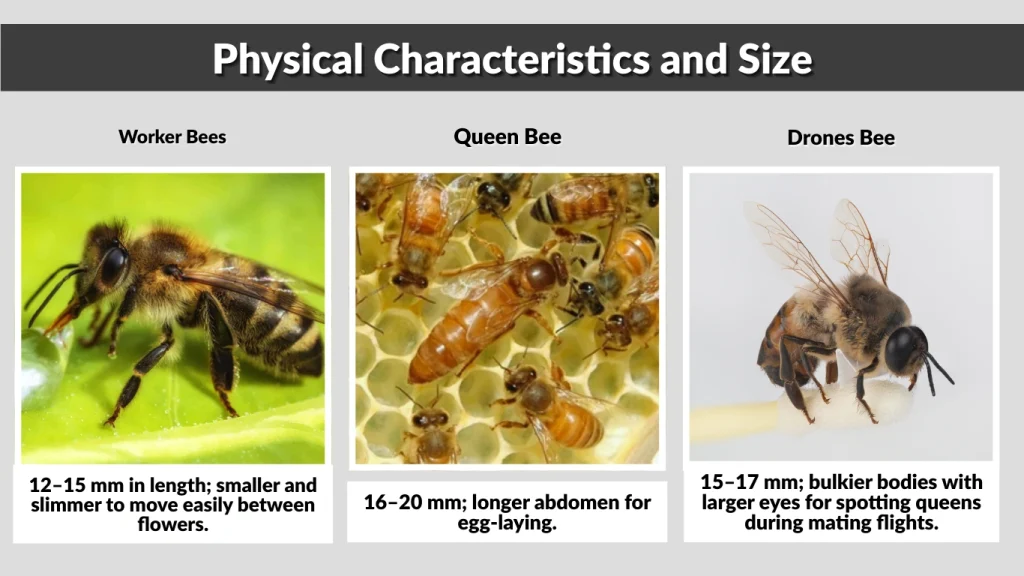
The Western honeybee is instantly recognizable for its golden-brown body and distinctive black bands. Its compact yet efficient design is perfectly adapted for collecting nectar, carrying pollen, and defending the hive. Each caste within the colony — queen, worker, and drone — has its own size, shape, and unique adaptations to fulfill specific roles.
General Appearance
Western honeybees have a three-part body structure (head, thorax, abdomen) covered in fine hairs that help trap pollen. Their coloring ranges from bright golden-yellow to darker brown tones, with clear banding patterns on the abdomen.
Size Variations
- Worker Bees: 12–15 mm in length; smaller and slimmer to move easily between flowers.
- Queen Bee: 16–20 mm; longer abdomen for egg-laying.
- Drones: 15–17 mm; bulkier bodies with larger eyes for spotting queens during mating flights.
Unique Adaptations
They possess pollen baskets (corbicula) on their hind legs, transparent wings for quick and agile flight, and compound eyes that detect patterns and movement. Their antennae are sensitive to scent, vibration, and temperature, aiding in communication and navigation.
Habitat and Geographic Distribution
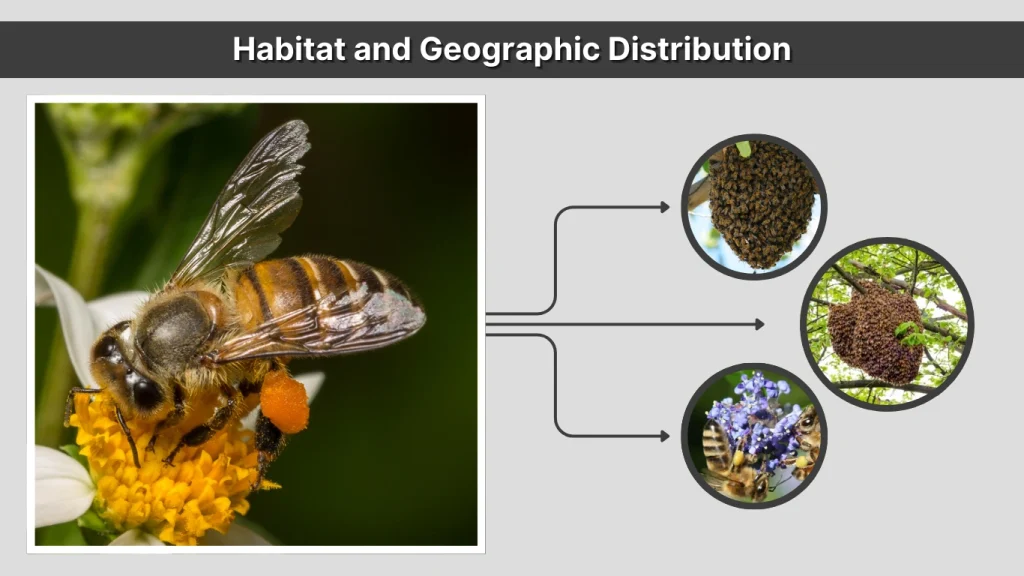
The Western honeybee is one of the most widely distributed insects in the world, thanks to centuries of domestication and human-assisted spread. Originally native to Europe, Africa, and parts of western Asia, it has now been introduced to every continent except Antarctica.
Native Range
The species evolved in diverse climates across Europe, the Middle East, and Africa, adapting to both temperate and tropical conditions.
Introduced Regions
Explorers and settlers carried Western honeybees to the Americas, Australia, and New Zealand, where they became vital for pollination in agriculture. Today, they thrive in rural farmlands, suburban gardens, and even some urban environments.
Preferred Habitats
Western honeybees prefer areas with abundant flowering plants, a mild climate, and safe nesting sites. They often build hives in hollow trees, rock crevices, or man-made beekeeping boxes, always staying close to reliable food and water sources.
Behavior and Social Structure
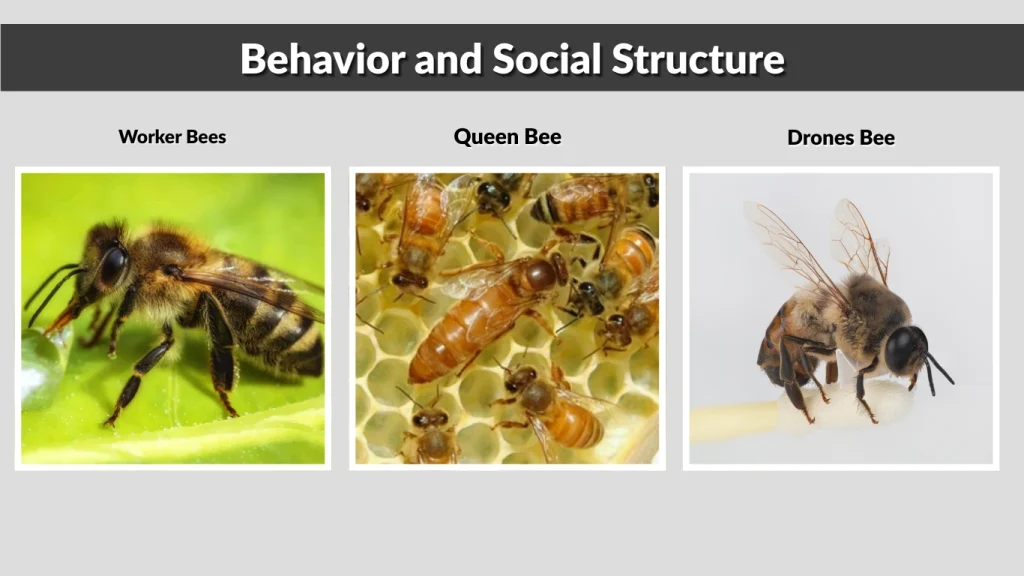
Western honeybees are highly social insects that live in complex, well-organized colonies. Their survival depends on cooperation, with each bee performing specific tasks that benefit the entire hive. This social system is one of the most sophisticated in the insect world, allowing them to thrive in diverse environments and adapt to changing conditions.
Colony Organization
A Western honeybee colony typically contains:
- Queen Bee – The sole reproductive female, responsible for laying eggs and producing pheromones that maintain colony unity.
- Worker Bees – Sterile females that handle most daily tasks, including foraging for nectar and pollen, feeding larvae, cleaning cells, guarding the hive, and regulating temperature.
- Drones – Males whose primary role is to mate with virgin queens during the mating season.
Communication Methods
Western honeybees use a remarkable communication system to share information about food sources and hive needs. The waggle dance is used to indicate the direction and distance of nectar-rich flowers. Pheromones, or chemical signals, convey messages about danger, swarming readiness, and queen health. Bees also use antennal contact and vibrations to coordinate activities.
Defense Mechanisms
To protect the hive, worker bees will sting intruders when threatened. The sting is barbed and can only be used once, resulting in the bee’s death, but this sacrifice helps defend the colony. Guard bees patrol the hive entrance, checking incoming bees for familiar scents to prevent intruders from entering.
Diet and Feeding Habits
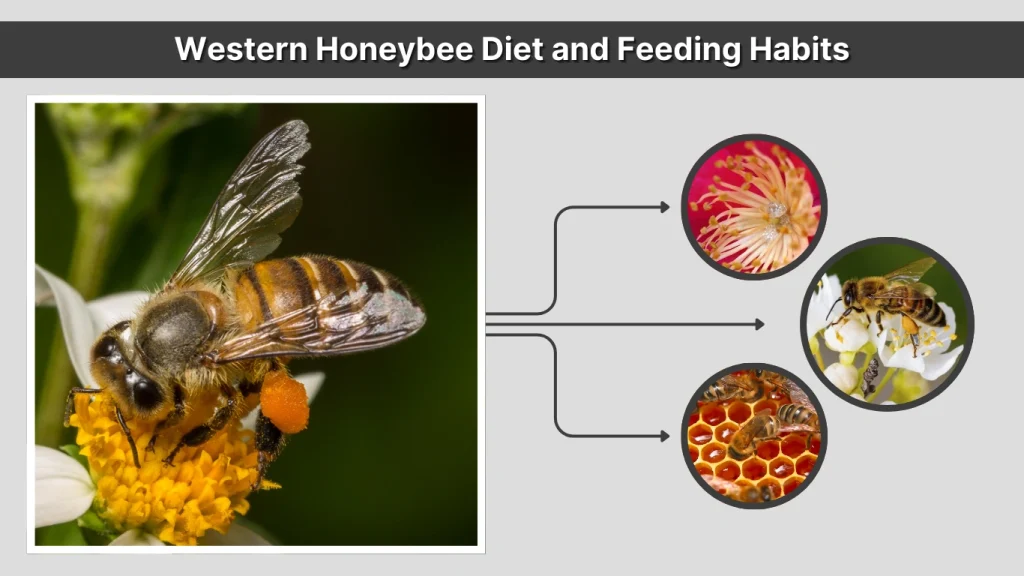
The Western honeybee’s diet is simple but highly specialized, designed to provide the energy and nutrients needed for their active lifestyle and colony growth. They rely entirely on plant-based resources, making them vital pollinators in natural and agricultural ecosystems.
Main Food Sources
- Nectar – A sugary liquid from flowers that bees convert into honey through enzymatic action and evaporation.
- Pollen – Rich in protein, vitamins, and minerals, pollen is essential for larval growth and overall colony health.
- Honey – Stored nectar transformed into a long-lasting food source, especially important during winter when fresh flowers are unavailable.
Role in Pollination
As bees collect nectar and pollen, they inadvertently transfer pollen grains from one flower to another, enabling plant fertilization. This process is critical for crop production and maintaining biodiversity in wild ecosystems.
Seasonal Changes in Diet
- Spring & Summer – Fresh nectar and pollen are abundant, fueling brood rearing and honey production.
- Autumn – Bees focus on storing honey and pollen reserves.
- Winter – The colony survives on stored honey and pollen while remaining inside the hive to conserve heat.
Life Span and Life Cycle
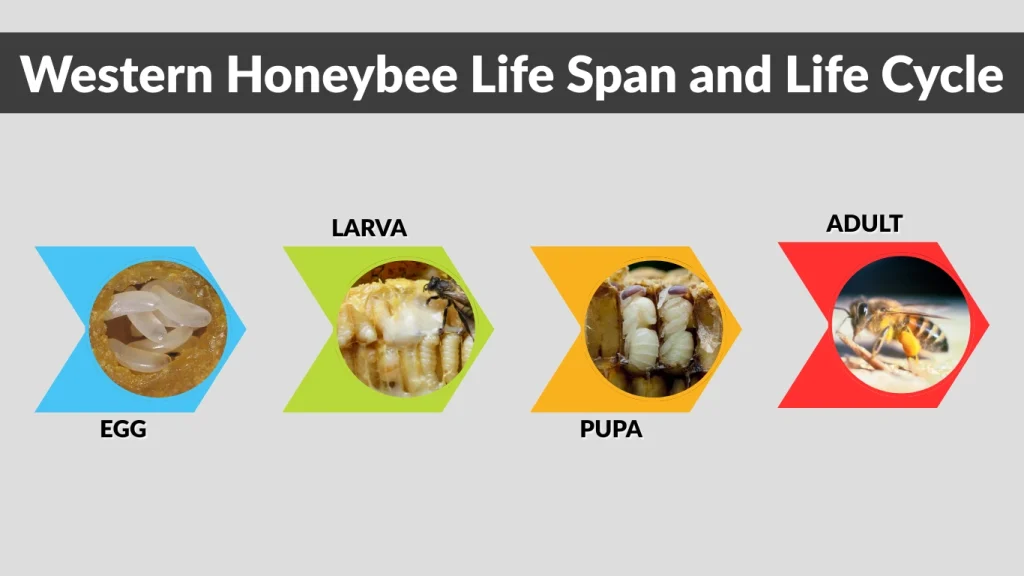
The Western honeybee’s life span varies greatly depending on its role within the colony, the season, and environmental conditions. Their life cycle is a complete metamorphosis, transitioning through four distinct stages.
Egg Stage
The queen lays eggs individually in hexagonal wax cells. Fertilized eggs develop into female worker bees or queens, while unfertilized eggs become male drones.
Larva and Pupa Stages
Larvae are fed by nurse bees with a protein-rich diet of royal jelly (for future queens) or a mixture of pollen and honey called bee bread (for workers and drones). After several days, the larva is sealed inside the cell to pupate, transforming into an adult bee.
Adult Stage and Longevity
- Worker Bees: 4–6 weeks during summer, up to several months in winter.
- Queen Bee: Can live 3–5 years, laying thousands of eggs daily during peak seasons.
- Drones: Live a few weeks and die after mating or are expelled from the hive in late autumn.
Reproduction and Mating
Western honeybee reproduction revolves around the queen and her mating process, which determines the genetic diversity and strength of the colony.
Mating Flight
Young virgin queens take one or several mating flights, often in drone congregation areas. They mate mid-air with multiple drones, storing sperm in a special organ called the spermatheca for use throughout their life.
Queen’s Egg-Laying Capacity
A healthy queen can lay between 1,500 and 2,000 eggs per day during peak season, adjusting production based on colony needs and environmental conditions.
Swarming Behavior
Swarming is a natural method of colony reproduction. When the hive becomes overcrowded or the queen ages, part of the colony, along with the old queen, leaves to find a new home. The remaining bees rear a new queen to continue the original hive’s survival.
Sting, Symptoms, and Treatment
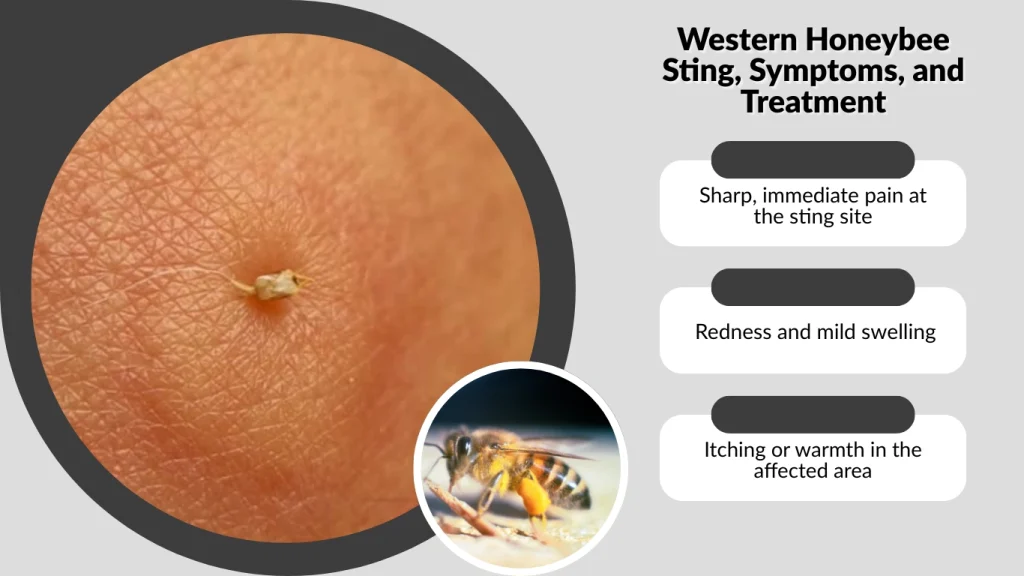
Western honeybees have a barbed sting that is used primarily for defense. While their sting can be painful, it is usually only dangerous to individuals with allergic reactions.
Sting Mechanism
When a worker bee stings, the barbed stinger lodges in the skin, tearing from the bee’s abdomen and resulting in the bee’s death. The stinger continues to pump venom for several seconds after detachment, so prompt removal is important.
Common Symptoms
- Sharp, immediate pain at the sting site
- Redness and mild swelling
- Itching or warmth in the affected area
- In some cases, a white spot at the sting entry point
Severe Allergic Reaction (Anaphylaxis) Symptoms:
- Difficulty breathing
- Swelling of the face, lips, or throat
- Dizziness or loss of consciousness
- Rapid heartbeat
Note: Severe reactions require urgent medical attention.
Treatment Steps
- Remove the Stinger Quickly – Scrape it out with a fingernail or card; avoid squeezing it, as that can release more venom.
- Clean the Area – Wash with soap and water to prevent infection.
- Reduce Swelling – Apply a cold pack for 10–15 minutes at a time.
- Relieve Pain and Itching – Use over-the-counter antihistamines, hydrocortisone cream, or pain relievers.
- Monitor for Allergic Reactions – If symptoms worsen, seek emergency medical care immediately.
Role in Ecosystem
The Western honeybee plays an irreplaceable role in maintaining ecological balance and supporting human agriculture. Beyond producing honey, their activities directly impact biodiversity, crop yields, and the survival of countless plant species.
Pollination Services
As bees collect nectar and pollen, they unintentionally transfer pollen grains between flowers, enabling fertilization. This process is essential for the reproduction of many plants, including fruits, vegetables, nuts, and wildflowers. Without honeybees, global food production would face significant declines.
Biodiversity Support
Western honeybees help sustain diverse plant communities by pollinating species that serve as food and shelter for other animals. This interconnected web of life ensures healthy ecosystems, from grasslands to forests.
Economic Importance
Their pollination services contribute billions of dollars to the global agricultural economy each year, supporting farmers, food industries, and rural communities worldwide.
FAQs
How many eggs can a queen bee lay in a day?
A healthy queen can lay between 1,500–2,000 eggs daily during peak season, adjusting output based on hive conditions and food availability.
Do Western honeybees sting humans?
Yes, but only worker bees sting, usually in defense of the hive. They die after stinging due to their barbed stinger.
How far can a honeybee travel for food?
A forager bee may travel up to 5 miles (8 km) from the hive in search of nectar and pollen.
Can Western honeybees survive without a queen?
No, without a queen to lay eggs, the colony cannot sustain its population and will eventually collapse.
What is the average honey yield per hive?
On average, a strong hive can produce 30–60 pounds (13–27 kg) of surplus honey per year, depending on climate, forage availability, and management.
