
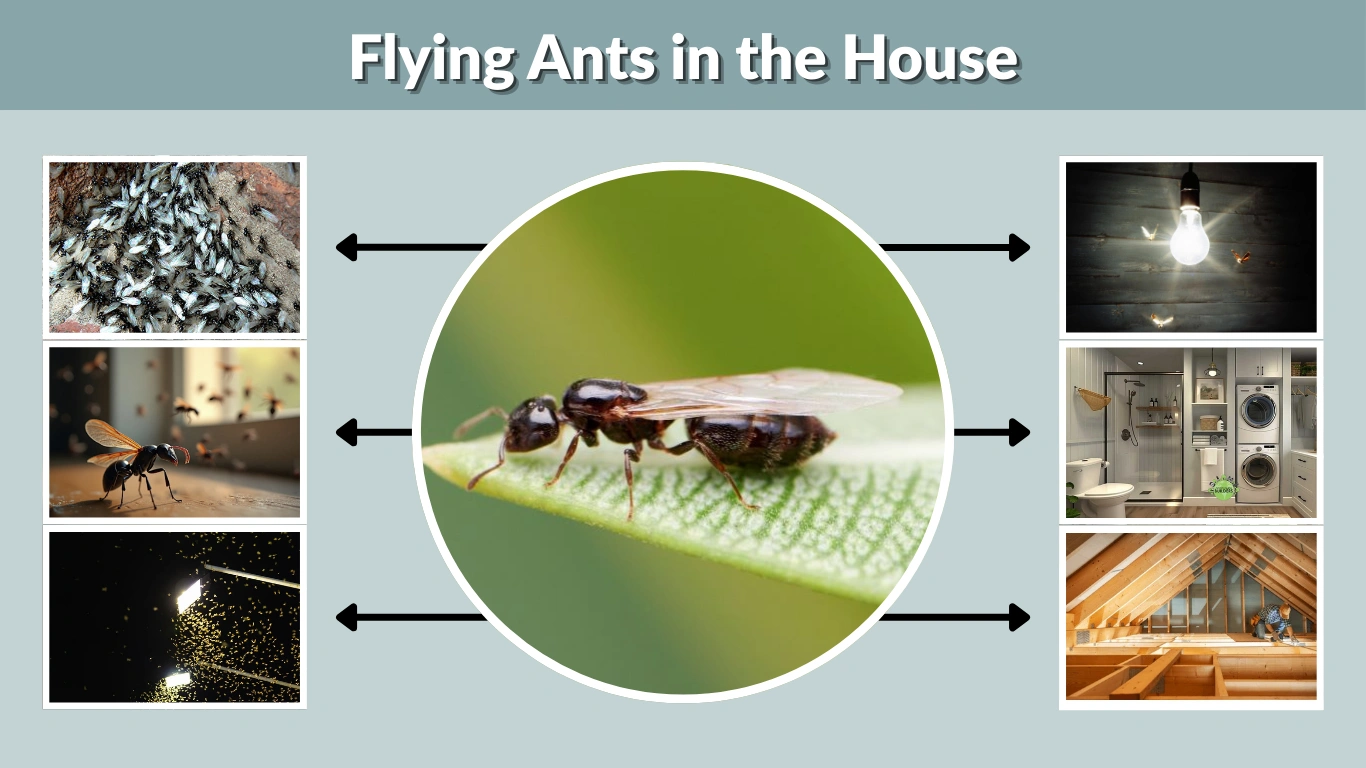
Flying ants in the house can be startling, especially when they appear in sudden swarms. These insects are not a different species but rather reproductive members of existing colonies, also called alates. Their presence indoors usually means either a mature colony nearby or favorable environmental conditions that triggered a swarming event. While flying ants are less destructive than termites, they can be a nuisance and, in some cases, a sign of hidden problems. Understanding why they appear, how to identify them, and the dangers they pose is key to effective control.
What Are Flying Ants?
Flying ants are simply ants in their reproductive stage. At certain times of the year, colonies produce winged males and females whose primary purpose is to mate and establish new colonies.
Flying Ants vs Regular Ants
- Appearance: Unlike worker ants, flying ants have two pairs of wings — the front pair is larger than the back pair.
- Behavior: Flying ants don’t forage for food like regular workers. They focus on mating and dispersal.
- Lifespan: Males die shortly after mating, while fertilized queens search for nesting sites.
Identification of Flying Ants in the House
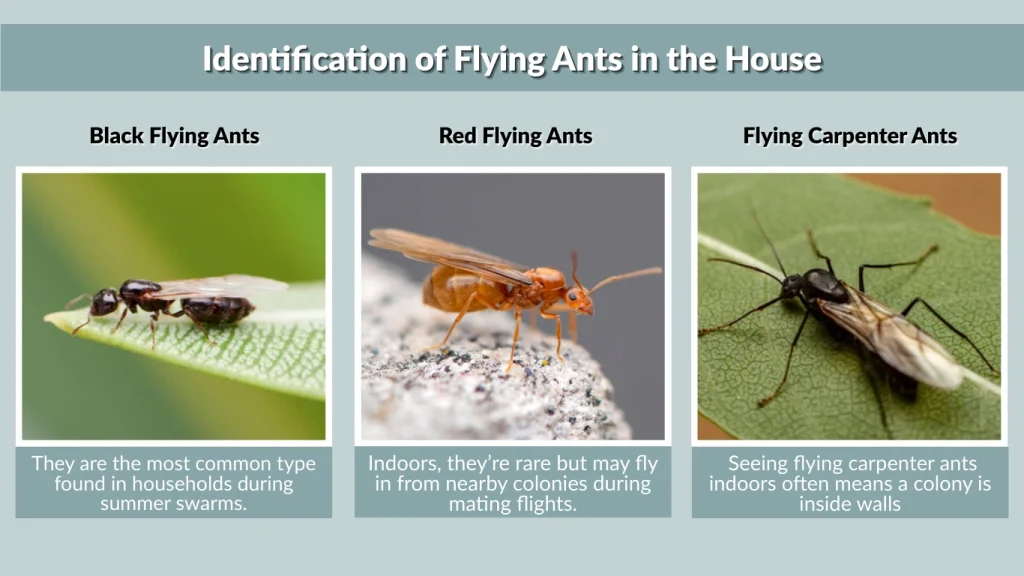
Flying ants vary in size, color, and species. Recognizing them helps determine the severity of the problem.
Small vs Large Flying Ants
- Small flying ants are often sugar ants, pharaoh ants, or ghost ants.
- Large flying ants are usually carpenter ants, which may indicate potential wood damage if nesting indoors.
Black Flying Ants
Most often pavement ants or carpenter ants. They are the most common type found in households during summer swarms.
Red Flying Ants
These can include fire ants, which are more aggressive. Indoors, they’re rare but may fly in from nearby colonies during mating flights.
Flying Carpenter Ants
Carpenter ants are particularly concerning since they excavate wood to build their nests. Seeing flying carpenter ants indoors often means a colony is inside walls or structural wood.
Why Do Flying Ants Appear in the House?
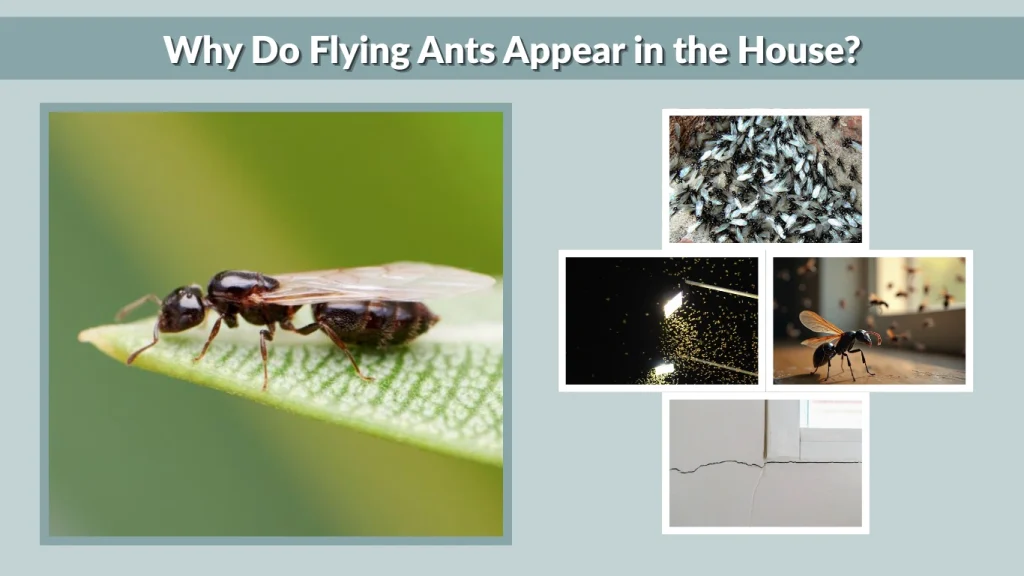
The sudden appearance of flying ants is not random. Several conditions lead to their presence indoors.
Swarming Season
Flying ants appear mainly in summer during swarming events, sometimes called “flying ant day.” Warm temperatures and high humidity trigger the release of winged males and queens for mating.
Indoor Nests
If you notice large numbers of flying ants indoors, it may mean there is a colony inside the house, hidden in walls, basements, or attics.
Entry Points
Sometimes outdoor swarms simply enter homes through open doors, windows, or small cracks in the foundation.
Light Attraction
Flying ants are strongly attracted to artificial light. Nighttime infestations often occur when they gather around lamps, TV screens, and windows.
Flying Ant Infestation Signs

Identifying whether you’re dealing with a minor event or a true infestation is crucial.
Swarms of Flying Ants in One Room
A large number of ants emerging from one area, such as a wall or ceiling crack, signals a nearby or indoor nest.
Dead Flying Ants in House
Finding many dead ants near windows or light sources suggests they swarmed while you were away, often at night.
Flying Ants After Rain
Moisture and humidity after rainfall stimulate mating flights. This is a natural occurrence but can still lead to nuisance swarms indoors.
Flying Ant Nest in House
If you consistently see flying ants inside, the colony is likely nesting within walls, floors, or wooden structures. This is especially concerning with carpenter ants.
Dangers of Flying Ants Indoors
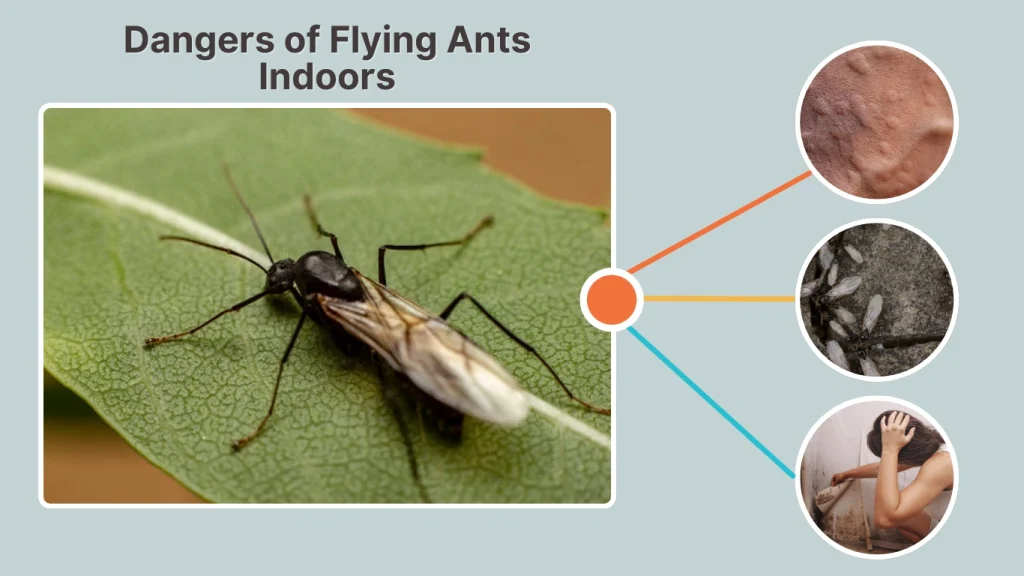
Flying ants are more of a nuisance than a major threat, but they still bring risks.
Do Flying Ants Bite?
Most flying ants do not bite or sting. However, red fire ants can sting, causing painful welts and allergic reactions in sensitive individuals.
Property Damage
The biggest risk comes from carpenter ants. They hollow out wood to create nesting galleries, which over time weakens wooden beams, flooring, and furniture. While not as destructive as termites, a carpenter ant infestation should never be ignored.
Health Concerns
Flying ants are not disease carriers, unlike cockroaches or flies. Their main impact on health is psychological stress and potential allergic reactions to bites or stings.
How to Get Rid of Flying Ants in the House
Eliminating flying ants requires both immediate action for visible swarms and long-term strategies to address their colonies.
Immediate Control Methods
- Vacuuming: The fastest way to remove a sudden swarm indoors. Dispose of the vacuum bag or empty the canister outside.
- Soapy Water Spray: A simple mixture of dish soap and water clogs ants’ airways, killing them quickly.
- Fly Swatter or Sticky Traps: Useful for dealing with a few stray ants rather than full swarms.
Natural Remedies
For homeowners preferring eco-friendly approaches, several natural repellents work effectively:
- Vinegar Solution: Wiping down surfaces with vinegar erases scent trails and deters new ants.
- Peppermint Oil Spray: A strong natural repellent that ants dislike.
- Lemon Juice: Its acidity masks pheromone trails and discourages swarming indoors.
- Cinnamon or Borax Mix: Works both as a repellent and slow-acting poison when mixed with sugar.
Chemical Solutions
When natural remedies aren’t enough, targeted insecticides may be necessary.
- Ant Baits: Workers carry poisoned food back to the colony, killing it from within.
- Residual Sprays: Applied to cracks, baseboards, and entry points to prevent re-entry.
- Gel Baits: Effective for species like carpenter ants that nest inside wood.
Professional Treatment
If infestations recur or you suspect carpenter ants nesting in structural wood, professional pest control is recommended. Experts can:
- Locate hidden colonies with specialized equipment.
- Apply stronger, regulated insecticides.
- Provide follow-up treatments to ensure full eradication.
Preventing Flying Ants in the House
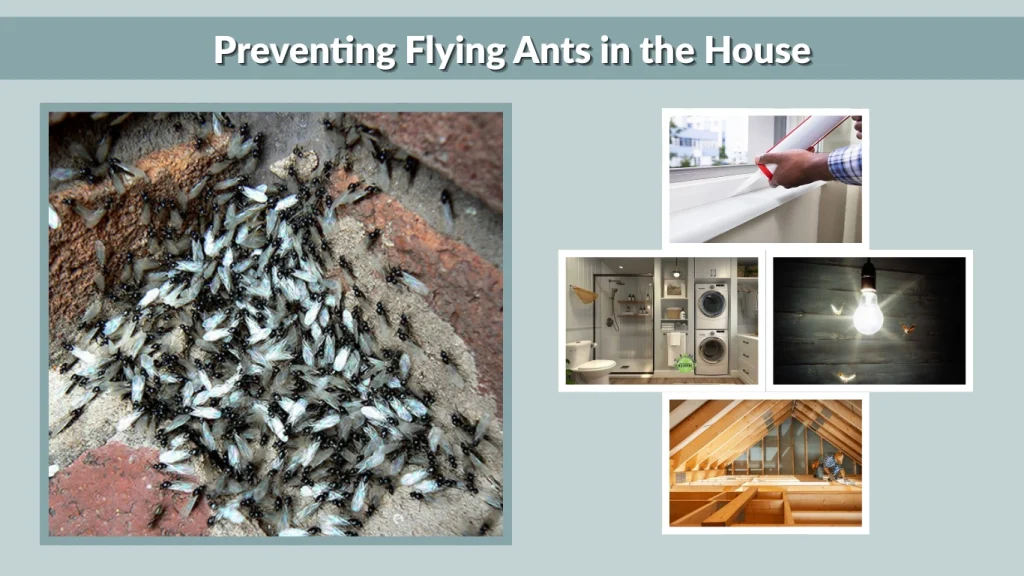
Prevention is the most effective long-term strategy.
Seal Entry Points
- Caulk cracks in windows, foundations, and door frames.
- Replace damaged window screens.
- Install door sweeps to block gaps.
Reduce Attractants
- Turn off unnecessary lights at night to avoid attracting swarmers.
- Keep food sealed in airtight containers.
- Clean kitchen counters, floors, and sinks daily.
Regular Inspections
- Check attics, basements, and wooden beams for signs of carpenter ants.
- Look for discarded wings near windowsills, which indicate recent swarming.
- Monitor high-moisture areas like bathrooms and laundry rooms.
Seasonal Behavior of Flying Ants
Flying ants follow predictable seasonal patterns that explain their sudden appearances.
Flying Ants in Summer
Most swarming occurs in warm, humid months, often after rain. This period is when colonies release winged ants to reproduce.
Flying Ants in Winter
Though rare, flying ants in winter indicate an indoor colony. Warmth from heating systems allows ants to remain active inside walls or basements.
Flying Ants at Night
Flying ants are strongly attracted to light sources. Nighttime infestations happen when they swarm toward lamps, windows, or television screens.
FAQs
Why do flying ants suddenly appear in my house?
Flying ants appear during swarming season, usually in summer after rain. If you see them indoors, it means they either entered from outside or there is a colony nesting inside your house.
Are flying ants harmful like termites?
No, flying ants do not eat wood like termites. However, carpenter ants can hollow out wood to create nests, which may cause structural damage over time.
How long do flying ant swarms last?
Most swarms last only a few hours, sometimes a couple of days. Once mating is complete, males die and queens search for new nesting sites.
How do flying ants get inside?
They enter through open windows, cracks, and foundation gaps. Indoor swarms usually mean the nest is inside walls or flooring.
What is the best way to get rid of flying ants naturally?
Vinegar spray, lemon juice, and peppermint oil are effective repellents. For infestations, a borax-sugar bait works well by targeting the colony.
