

Ants are among the most persistent household pests, and identifying them correctly is the first step to controlling an infestation. From tiny pharaoh ants in kitchens to large carpenter ants causing structural issues, different species invade homes for food, water, and shelter. In this guide, we’ll explore 13 common types of ants in houses, their behaviors, potential damage, and remedies so you can determine what type of ants are in your house and deal with them effectively.
1. Odorous House Ants

Odorous house ants are among the most common types of ants in houses across the US, UK, and even regions like Texas, Florida, and Oregon. Many people searching “what type of ants are in my house” often discover that they are dealing with this small but troublesome species. These ants are not only frequent invaders but also easily mistaken for other types of small ants in houses due to their size.
Identification
- Size: Small, about 1/16–1/8 inch.
- Color: Brown to black, often confused with types of black house ants.
- Unique trait: When crushed, they emit a foul, rotten coconut smell. This is why they’re commonly called odorous ants.
- Wings: Unlike types of flying ants in house, they don’t typically fly indoors unless during rare swarming events.
Behavior & Infestation Signs
These ants form long trails, usually leading from wall cracks or under flooring into kitchens and bathrooms. They are highly attracted to sugary foods, making them one of the different types of house ants most likely to contaminate pantries. If you notice ants around sinks, water pipes, or food cabinets, chances are you have odorous ants.
Damage to House
While they don’t cause types of damage that ants do to a house structurally like carpenter ants, their constant invasion of food sources makes them a nuisance. Left uncontrolled, colonies can grow massive and spread throughout walls, floors, and insulation.
Remedies
- Seal cracks and entry points.
- Keep food stored in airtight containers.
- Use ant bait stations since sprays often only kill surface foragers, not the colony.
- For persistent infestations, professional treatment may be needed.
2. Carpenter Ants
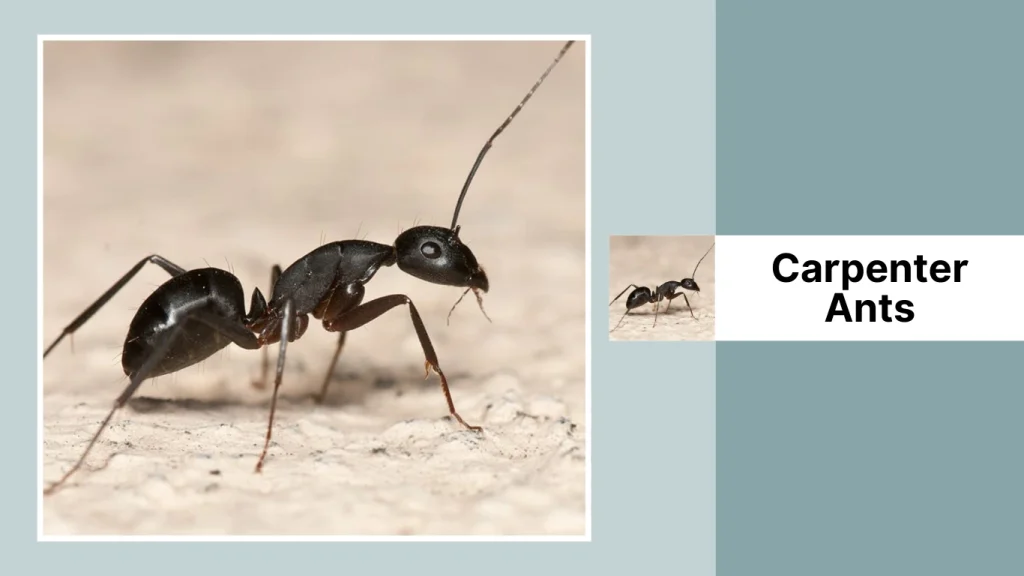
Carpenter ants are one of the most common types of house ants and often raise concern because they can cause real damage to houses. Many homeowners searching “large black ants in house” or “what type of black ant lives in houses” are usually dealing with this species. These ants are widespread in the US, including states like Texas, California, Pennsylvania, Michigan, and Oregon.
Identification
- Size: Large, ranging from 1/4 to 1/2 inch.
- Color: Most are black, but some may have reddish or dark brown tones.
- Traits: Workers have strong jaws for chewing wood.
- Wings: Winged carpenter ants (alates) are often confused with types of flying ants in houses, especially during spring and summer.
Behavior & Nesting
Carpenter ants do not eat wood but tunnel through it to create nests. This makes them a serious threat compared to other different types of ants in houses. They prefer damp or decayed wood, so you’ll often find them near windowsills, roof leaks, or basements. In places like Florida or humid areas in the UK, they thrive in moist conditions.
Damage to House
Unlike odorous ants that are mainly a nuisance, carpenter ants weaken wood structures. Over time, they can cause costly repairs by hollowing out beams, door frames, and flooring. This makes them one of the worst types of ants in houses when left unchecked.
Remedies
- Eliminate moisture problems and repair leaks.
- Replace decayed or water-damaged wood.
- Use carpenter ant baits and gels near trails.
- For severe infestations, professional extermination is recommended.
3. Pavement Ants
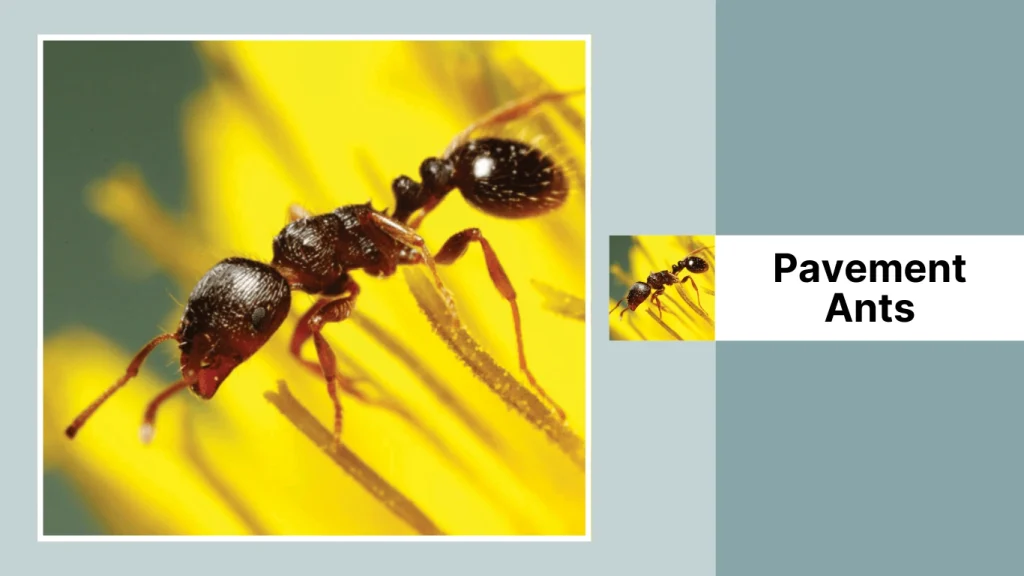
Pavement ants are another of the common types of house ants that frequently invade kitchens and basements. Homeowners often wonder “what type of ants are in my house” when they see small dark ants trailing indoors, which usually turn out to be pavement ants. They are widespread across the US, including Texas, New York, Pennsylvania, and Oregon, and are also found in parts of the UK and Canada.
Identification
- Size: Small, about 1/16–1/8 inch.
- Color: Dark brown to black, resembling types of black ants in houses.
- Traits: Have parallel lines or grooves on their head and thorax, best seen under magnification.
- Wings: Swarmers may appear as types of winged ants in houses during summer.
Behavior & Nesting
Pavement ants typically nest outdoors under sidewalks, driveways, or foundations but often enter homes in search of food. They prefer greasy and sugary foods, making them a nuisance in kitchens. In some regions like East Texas and New Jersey, they are among the different types of small ants in the house most commonly reported.
Damage to House
While they don’t cause structural harm like carpenter ants, their constant foraging indoors contaminates food sources. Colonies can also spread quickly, becoming one of the most frustrating types of ants in houses to deal with.
Remedies
- Keep floors and countertops free of food debris.
- Seal entry points around foundations and baseboards.
- Place bait traps along ant trails to eliminate colonies.
- Persistent cases may require targeted pest control treatments
4. Pharaoh Ants
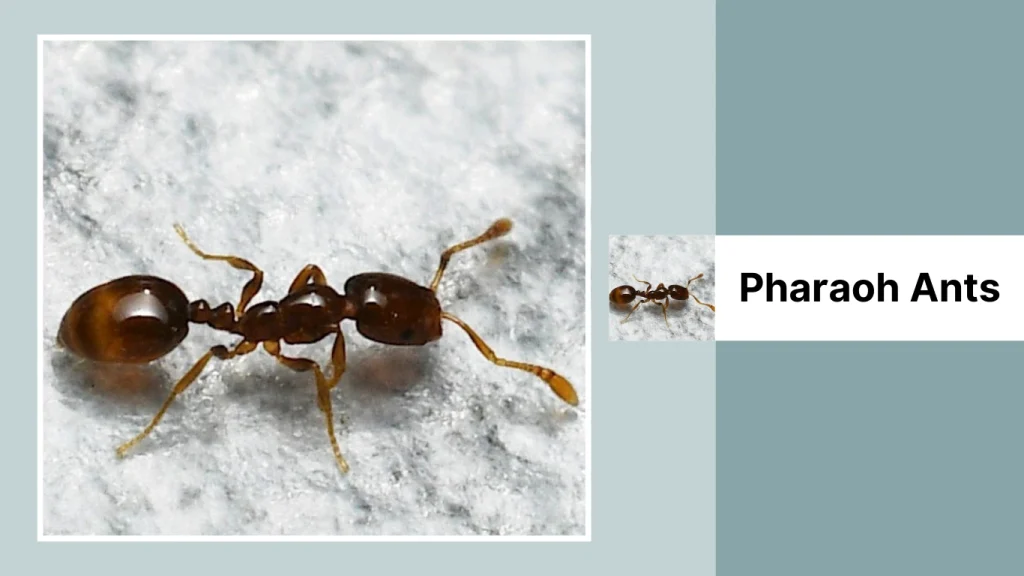
Pharaoh ants are among the different types of small ants in the house that cause serious problems, especially in apartments, hospitals, and restaurants. Many people asking “what type of tiny ants are in my house” or “types of small house ants” often discover they’re dealing with this species. These ants thrive in warm climates and are commonly reported in Florida, Texas, Malaysia, Singapore, and India, but they also infest buildings in colder regions like the UK and New York because they nest indoors year-round.
Identification
- Size: Very small, about 1/16 inch.
- Color: Light yellow to reddish-brown, with darker abdomens.
- Traits: Extremely tiny and often mistaken for grease or sugar ants.
- Wings: Rarely noticed indoors compared to other types of flying ants in houses.
Behavior & Nesting
Pharaoh ants are highly adaptable, nesting in wall voids, electrical outlets, and baseboards. They are known to create multiple colonies, making them harder to eliminate than other types of ants found in houses. They are especially attracted to sweets, fats, and proteins, making them persistent kitchen pests.
Damage to House
While they don’t damage wood or structures, Pharaoh ants contaminate food and surfaces. In hospitals, they are considered dangerous because they can spread pathogens. This makes them one of the worst types of ants in houses when it comes to health risks.
Remedies
- Baiting is the most effective method, as spraying causes colonies to scatter.
- Keep food sealed and clean spills immediately.
- Because they form multiple colonies, professional pest control may be required.
5. Ghost Ants

Ghost ants are another of the common types of house ants often confused with other different types of small ants in houses because of their pale color. People who ask “what type of ants are in my house in Florida” usually discover ghost ants, as they are very common in warm and humid regions. They are also frequently found in Texas, Hawaii, Malaysia, and Singapore, and sometimes reported indoors in the UK and Oregon.
Identification
- Size: Very tiny, about 1/16 inch.
- Color: Dark heads with pale, almost translucent legs and abdomens.
- Traits: Their pale bodies make them difficult to see on light-colored surfaces, which is why they are called “ghost ants.”
- Wings: Rare, but winged swarmers may occasionally appear as types of winged ants in houses.
Behavior & Nesting
Ghost ants prefer moist environments and are usually found in kitchens, bathrooms, and under sinks. They are sugar-loving ants, similar to odorous house ants, and often form long trails along walls and baseboards. In tropical areas, they are considered one of the most invasive types of house ants.
Damage to House
While they don’t cause structural damage to houses like carpenter ants, ghost ants are notorious for food contamination. Their tiny size allows them to access sealed packages and invade stored foods easily.
Remedies
- Keep counters and floors clean from spills.
- Store food in tightly sealed containers.
- Use sugar-based bait stations, as sprays often miss hidden colonies.
- In large infestations, especially in Florida homes, professional treatment is often necessary.
6. Argentine Ants
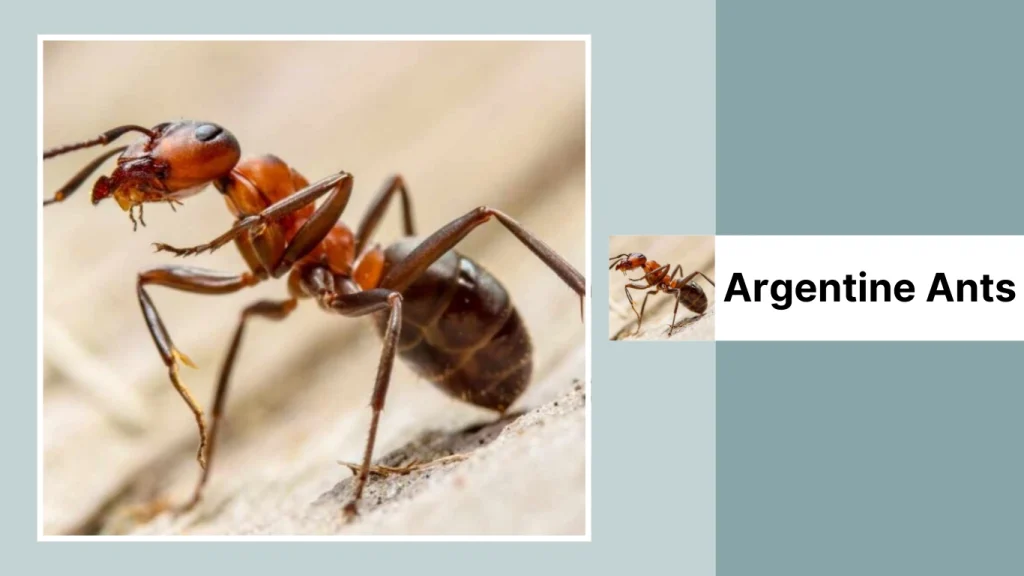
Argentine ants are one of the different types of house ants that form massive colonies, sometimes spreading across entire neighborhoods. Homeowners in California, Texas, Florida, and Oregon often ask “what types of ants are in my house” only to discover these persistent invaders. They are also common in Australia, the UK, and other warm regions where they outcompete native species.
Identification
- Size: Small, about 1/8 inch long.
- Color: Light to dark brown.
- Traits: Uniform body color with no stinger; form very long, visible trails.
- Wings: Swarmers appear less often indoors compared to other types of flying ants in houses.
Behavior & Nesting
Argentine ants are aggressive invaders and build supercolonies with multiple queens. They nest outdoors in soil, mulch, or under debris but frequently move indoors in search of water and sweet foods. In California homes, they are the most reported types of house ants because of their ability to survive year-round.
Damage to House
While they don’t cause structural damage to a house like carpenter ants, their sheer numbers make them overwhelming. They invade kitchens, pantries, and bathrooms, contaminating food and surfaces. They are considered one of the worst types of ants in houses when infestations get large.
Remedies
- Eliminate moisture sources and repair leaks.
- Keep food sealed and trash containers tightly closed.
- Use slow-acting baits, as killing surface ants alone won’t stop the colony.
- Professional pest control is often required in severe infestations due to their supercolony nature.
7. Crazy Ants
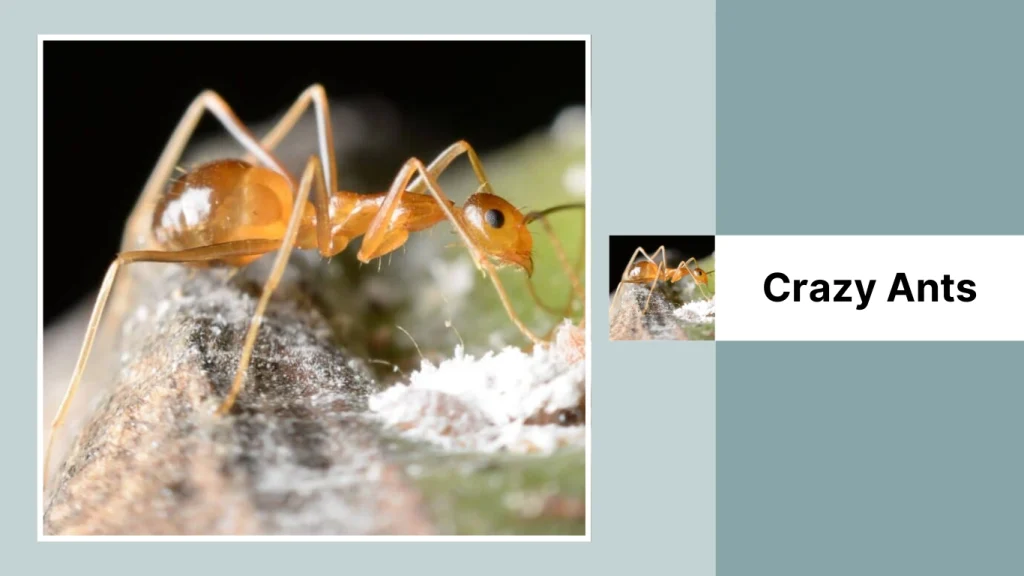
Crazy ants are unusual invaders among the types of house ants because of their erratic, fast-moving behavior. Many homeowners asking “what type of ants are in my house in Texas or Florida” often find they are dealing with crazy ants. They have become a serious problem in Texas, Florida, Mississippi, and Louisiana, but also appear indoors in New York, Pennsylvania, and even Oregon.
Identification
- Size: Small, about 1/16–1/8 inch long.
- Color: Black, dark brown, or reddish-brown.
- Traits: Long legs and antennae; known for running in irregular, “crazy” patterns.
- Wings: Reproductive ants may appear as types of winged ants in houses, though infestations are usually worker ants.
Behavior & Nesting
Crazy ants are opportunistic nesters. They build colonies in soil, potted plants, under floorboards, and inside electronics. Unlike many different types of house ants, they are highly adaptable and can nest almost anywhere. They are attracted to sweets, proteins, and grease.
Damage to House
While they don’t chew wood like carpenter ants, crazy ants can cause damage to houses in another way: they infest electrical wiring and appliances. This makes them one of the worst types of ants in houses, as their presence can lead to short circuits and expensive repairs.
Remedies
- Keep indoor areas dry and free of food crumbs.
- Use ant bait stations, although they can be tricky to control due to colony splitting.
- Seal cracks and gaps to prevent indoor nesting.
- Professional pest management is often required for large infestations, especially in Texas homes.
8. Fire Ants
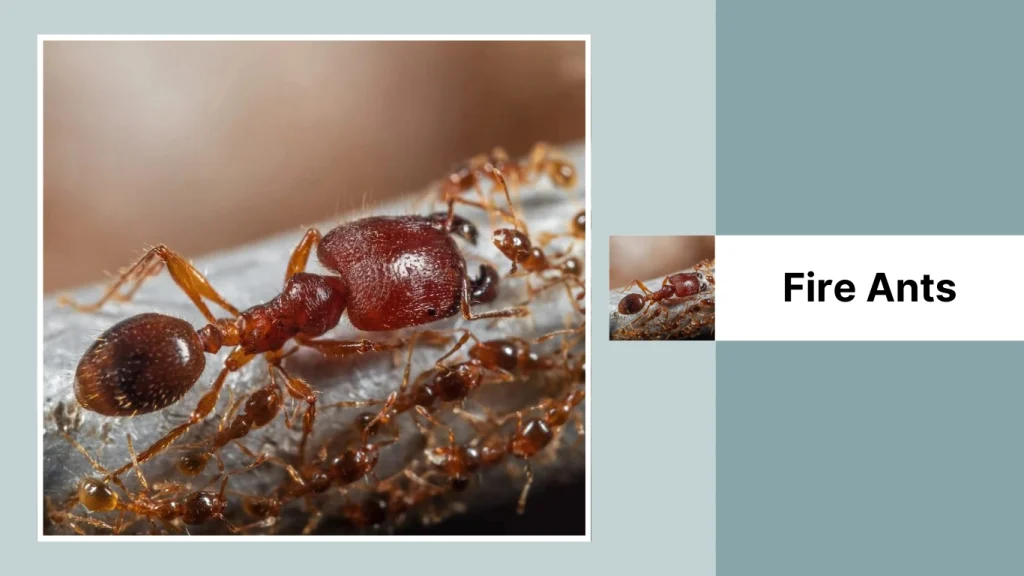
Fire ants are one of the most aggressive types of house ants that sometimes move indoors, especially in Texas, Florida, Alabama, and other southern states. Many people searching “what type of ants are in my house in Texas” or “worst type of ant in house” often end up identifying fire ants due to their painful stings and dangerous behavior.
Identification
- Size: Workers range from 1/16 to 1/4 inch.
- Color: Reddish-brown to dark red.
- Traits: Aggressive, with strong stingers that deliver painful, burning welts.
- Wings: Swarmers may appear indoors as types of winged ants in houses during mating flights.
Behavior & Nesting
Fire ants usually nest outdoors in large soil mounds but invade houses during extreme weather (floods, heavy rains, or droughts). Unlike many different types of house ants, fire ants pose both indoor and outdoor risks. Inside, they may nest in wall voids, electrical boxes, and under floors.
Damage to House
Fire ants don’t damage wood structures like carpenter ants, but they are considered one of the worst types of ants in houses because:
- Their stings can cause allergic reactions.
- They attack pets, children, and even livestock.
- They damage electrical equipment and wires.
Remedies
- Treat outdoor mounds before they spread indoors.
- Use granular ant baits around the house perimeter.
- Seal entry points such as doors, windows, and foundation cracks.
- For heavy infestations inside homes, professional extermination is highly recommended.
9. Acrobat Ants
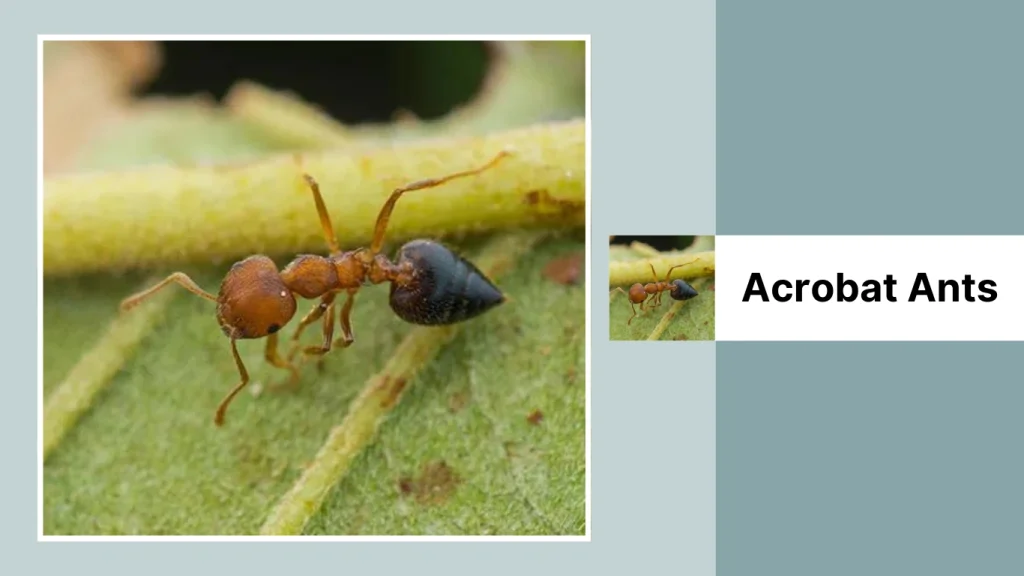
Acrobat ants are less common than carpenter or odorous ants but still appear among the different types of house ants. Homeowners searching “what type of black ants are in my house” sometimes discover they are dealing with acrobat ants, especially when they notice these ants raising their heart-shaped abdomens when disturbed. They are found across the US, including Pennsylvania, New Jersey, Texas, and Oregon, and occasionally reported in UK homes.
Identification
- Size: Small to medium, about 1/8 inch long.
- Color: Light brown to black.
- Traits: Distinctive heart-shaped abdomen that is often raised above their heads (hence the name “acrobat”).
- Wings: Reproductive ants may show up as types of flying ants in houses during summer swarms.
Behavior & Nesting
Acrobat ants often nest in moist wood, wall voids, and insulation. They are scavengers and will eat sweets, proteins, and dead insects. Compared to other types of ants in houses, they are more likely to take over abandoned carpenter ant or termite galleries.
Damage to House
While they don’t create major structural damage to houses like carpenter ants, acrobat ants can worsen existing wood damage. Their habit of nesting in damp or rotting wood can also contribute to long-term home maintenance issues.
Remedies
- Repair leaks and reduce indoor moisture.
- Seal cracks and gaps to limit entry.
- Use bait traps near ant trails.
- If colonies are inside walls, professional treatment may be needed to prevent spreading.
10. Little Black Ants
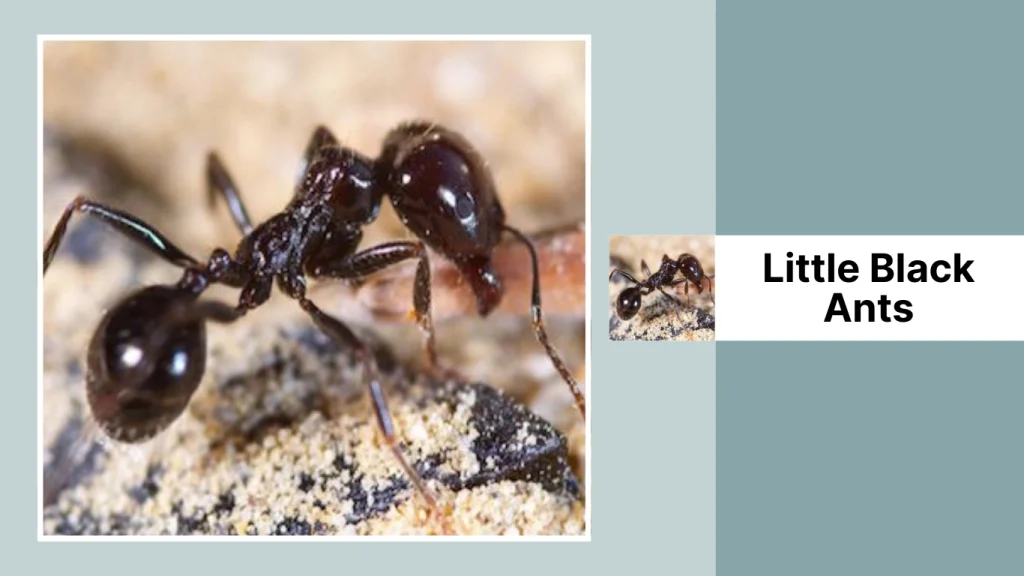
Little black ants are one of the common types of house ants that frequently trigger searches like “types of black ants in house” or “what type of ant is in my house”. They are found throughout the US, including Texas, New York, Illinois, and Pennsylvania, and also appear in UK homes and parts of India and Malaysia. Despite their small size, their colonies can grow very large, making them persistent invaders.
Identification
- Size: Very small, about 1/16 inch long.
- Color: Shiny black, which often causes confusion with other types of small house ants.
- Traits: Slow-moving, often seen in large groups around crumbs and sugary spills.
- Wings: Swarming males and queens may sometimes be mistaken for types of winged ants in houses.
Behavior & Nesting
Little black ants nest outdoors in soil, under rocks, and in decaying wood but often move indoors in search of food. Inside, they trail along baseboards, counters, and kitchen cabinets. Among the different types of small ants in houses, they are especially known for invading in large numbers.
Damage to House
They don’t cause structural damage to a house, but their sheer numbers make them one of the most annoying types of ants in houses. Food contamination is their primary issue, as they readily invade pantries and food storage areas.
Remedies
- Keep kitchens clean and food sealed tightly.
- Wipe trails with soapy water to remove pheromone paths.
- Use ant baits to target entire colonies.
- Professional treatment may be required if colonies are persistent indoors.
11. Rover Ants
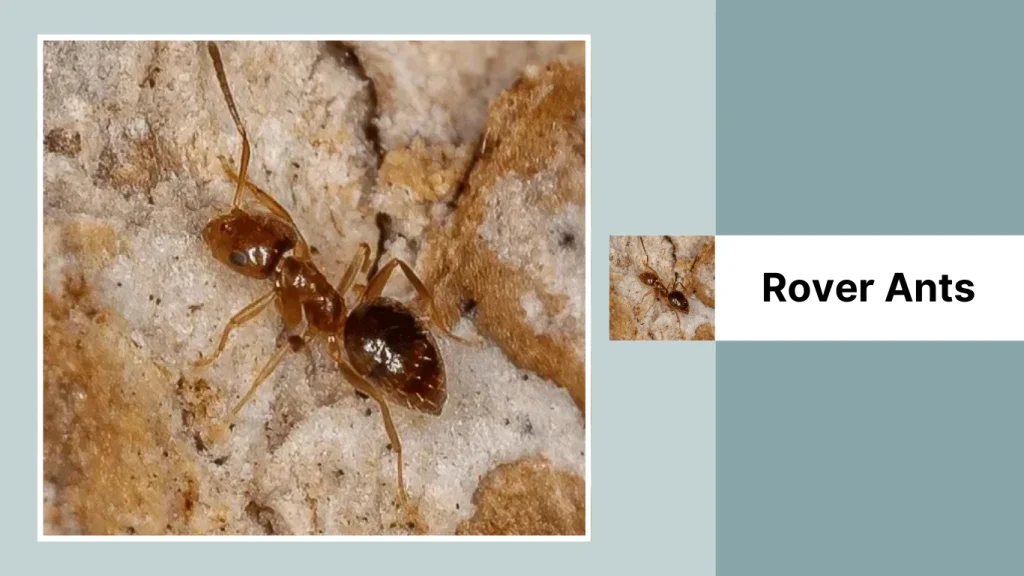
Rover ants are newer invaders among the types of ants found in houses, and they have become increasingly common in Texas, Florida, Alabama, and other southern states. Many homeowners asking “types of small ants in my house” or “what type of ants are in my house in East Texas” often end up identifying rover ants. They thrive in warm climates and are spreading rapidly across the US.
Identification
- Size: Very small, about 1/16 inch.
- Color: Light yellowish to dark brown, sometimes appearing almost black.
- Traits: Erratic movement, often seen in bathrooms and kitchens.
- Wings: Reproductive swarmers may appear, resembling tiny flying ants in houses during humid seasons.
Behavior & Nesting
Rover ants prefer nesting outdoors in mulch, soil, and potted plants but often move indoors through cracks and gaps. Unlike some different types of house ants, they don’t build large trails; instead, they scatter in small numbers, making them harder to spot until colonies grow. They are particularly drawn to moisture and sugary foods.
Damage to House
They don’t cause types of structural damage to a house like carpenter ants, but their presence in kitchens, bathrooms, and sinks makes them one of the more frustrating types of tiny ants in houses. Their ability to spread quickly indoors can turn a small nuisance into a big infestation.
Remedies
- Fix leaky pipes and reduce indoor moisture.
- Keep counters and sinks clean of food residues.
- Apply liquid or gel ant baits, as sprays are less effective.
- Professional extermination may be necessary if they spread throughout the house.
12. Thief Ants

Thief ants are tiny pests often mistaken for pharaoh ants and are among the different types of small house ants. Many people searching “what type of tiny ants are in my house” or “types of ants in my house in NJ or Pennsylvania” may discover they are dealing with thief ants. They are widespread across the US, including Texas, Florida, Illinois, and New York, and also occur in UK homes.
Identification
- Size: Very small, about 1/32–1/16 inch.
- Color: Pale yellow to light brown, similar to pharaoh ants.
- Traits: Named “thief ants” because they often nest near other ant colonies and steal food or larvae.
- Wings: Swarming queens and males may occasionally appear as types of winged ants in houses.
Behavior & Nesting
Thief ants nest in cracks, crevices, and wall voids, often close to kitchens. Unlike some common types of house ants that forage openly, thief ants prefer hidden trails. They feed on greasy foods, proteins, and even dead insects, making them harder to control.
Damage to House
Though they don’t cause structural damage to houses, thief ants are considered one of the worst types of ants in houses in terms of food contamination. Their tiny size allows them to infiltrate sealed containers, spreading bacteria to stored food.
Remedies
- Store food in tightly sealed containers.
- Use protein-based and grease-based baits for best results.
- Seal entry points, especially around kitchens and pantries.
- For widespread infestations, professional pest control is often necessary.
13. Big-Headed Ants

Big-headed ants are less common than odorous or carpenter ants but are still recognized among the different types of house ants. Many homeowners searching “types of small ants in house Florida” or “what type of ants are in my house in Texas” may encounter this species. They are found mostly in southern states like Florida, Texas, Alabama, and Hawaii, but also appear in Australia and Malaysia.
Identification
- Size: Workers range from 1/16 to 1/8 inch.
- Color: Light brown to reddish-brown.
- Traits: The species has two worker classes — minor workers and major workers, with the latter having disproportionately large heads, which gives them their name.
- Wings: Winged reproductives may sometimes be mistaken for other types of flying ants in houses.
Behavior & Nesting
Big-headed ants prefer sandy soils and often nest near foundations, under floors, or inside wall voids. Unlike some common types of ants in houses, they build loose colonies that can split easily, making them tricky to eliminate. Indoors, they forage for sweets, proteins, and greasy foods, often trailing along baseboards.
Damage to House
While they don’t cause structural damage to a house like carpenter ants, their large colonies can overwhelm pantries and kitchens. Outdoors, they may displace native ants and damage lawns with their nesting activity.
Remedies
- Keep food sealed and clean up crumbs quickly.
- Use bait stations, as sprays may only kill visible workers.
- Seal gaps around windows, doors, and baseboards.
- In areas like Florida and Texas, professional pest control may be required for recurring infestations.
How to Get Rid of House Ants
Ants are common household pests, but controlling them requires a step-by-step approach. Since different types of ants in houses behave differently, combining cleaning, baiting, and prevention works best. Here’s how to get rid of them effectively:
Step 1: Keep Your House Clean
Sanitation is the first defense against ants. Wipe spills immediately, sweep floors, and store food in airtight containers. Trash should be removed daily. Many common types of house ants, such as odorous house ants and pharaoh ants, are strongly attracted to sugary and greasy foods.
Step 2: Eliminate Moisture Sources
Fix leaky pipes, dry sinks, and improve ventilation. Ants like carpenter ants, ghost ants, and rover ants prefer damp areas such as bathrooms, basements, and kitchens. Reducing moisture makes your home less inviting to them.
Step 3: Use Ant Baits Instead of Sprays
Spraying kills only visible ants, while baits target the entire colony. Place sugar-based baits for species like odorous ants and protein-based baits for thief ants or pharaoh ants. Workers carry the poison back, ensuring long-term control.
Step 4: Seal Entry Points
Inspect cracks, gaps, and utility lines where ants enter. Seal with caulk or weather stripping. This step is especially effective against little black ants, pavement ants, and big-headed ants that trail along foundations and windows.
Step 5: Treat Nests and Call Professionals if Needed
Outdoor nests, like those of fire ants and pavement ants, should be treated with granular baits or mound treatments. For structural infestations caused by carpenter ants, professional pest control is often the safest and most effective option.
