
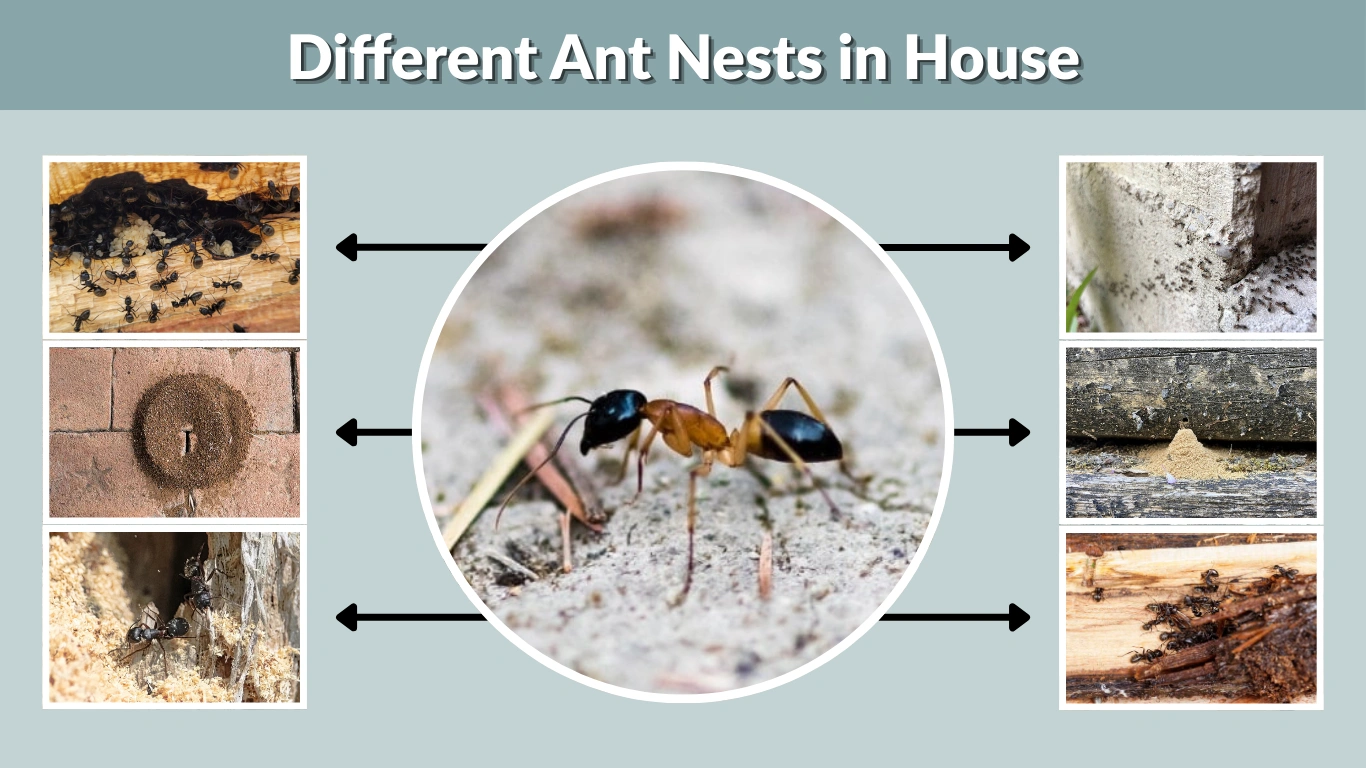
Ants are among the most common household pests, and while a few scouts on the kitchen counter may not seem alarming, a hidden nest inside your house can quickly become a serious problem. Ants are social insects, meaning they live in colonies that can number from hundreds to thousands of individuals. Once they find food, warmth, and shelter inside your home, they may decide to establish a nest. Understanding how ant nests form, where to find them, and the different types you may encounter indoors is the first step toward effective removal.
Understanding Ant Nests in Houses

Ants build nests as secure environments where the queen lays eggs and workers care for the colony. Outdoors, they often choose soil, logs, or under stones. Inside houses, ants may adapt to cracks in walls, insulation, wood beams, or even potted plants. The choice of nesting site depends on the species:
- Carpenter ants hollow out damp or decayed wood.
- Sugar ants seek tiny crevices near food sources.
- Black ants establish colonies in cracks and baseboards.
Indoor nests can be tricky to identify because they are often hidden within structural materials or furniture. That’s why homeowners often notice trails of ants long before they discover the actual nest.
Signs of an Ant Nest in Your House

Knowing the signs of an ant nest is crucial for early detection and control. Common indicators include:
- Ant trails: Lines of ants moving between food sources and their hidden nest.
- Sawdust or wood shavings: Carpenter ants push out frass (a mix of chewed wood and debris).
- Flying ants indoors: Indicates a mature nest with reproductive ants ready to form new colonies.
- Rustling sounds: In quiet settings, large carpenter ant colonies may make faint noises in walls or ceilings.
- Soil or dirt piles: Some ants bring soil inside to create chambers within walls or floors.
If you see multiple signs together, chances are high that ants are nesting inside your home rather than just foraging from outside.
Where Do Ants Nest in Houses?
The location of an ant nest depends on the species and the conditions available. Some of the most common nesting sites indoors include:
- Walls and wall voids – Ants often exploit insulation gaps, wall cracks, and electrical outlets.
- House plants – Moist soil in potted plants is attractive for small black or sugar ants.
- Wooden structures – Carpenter ants prefer damp wood in attics, basements, or under windows.
- Kitchens and pantries – Food availability makes these areas prime nesting grounds for sugar ants.
- Bathrooms and basements – Moisture-loving species take advantage of leaks and dampness.
Unlike termites, ants do not eat wood. However, carpenter ants can cause extensive structural damage by tunneling through it, making them one of the most concerning indoor nesters.
Types of Ant Nests Found Indoors

Not all ant species nest inside homes, but several do when conditions are right. Each type poses unique challenges.
Carpenter Ant Nests in Houses
Carpenter ants are among the most destructive indoor ants. They don’t consume wood like termites but carve galleries inside it to build their colonies. Nesting sites include damp beams, window frames, and basements. Signs include piles of sawdust, hollow-sounding wood, and large black ants seen at night.
Sugar Ant Nests
Sugar ants are tiny and often go unnoticed until they invade food supplies. Their nests are usually shallow, hidden inside wall cracks, baseboards, or near kitchens. Though not destructive, their colonies can spread rapidly.
Black Ant Nests
Black ants prefer small cavities indoors. They typically form colonies in gaps under flooring, in wall crevices, or behind tiles. Their nests are less harmful than carpenter ants but can be persistent.
Fire Ant Nests
Though less common indoors, fire ants may invade houses through cracks in foundations. Their nests can be dangerous, as fire ants are aggressive and deliver painful stings.
Flying Ant Nests
Flying ants inside a house usually mean the nest has matured. These winged ants are reproductive males and queens attempting to establish new colonies. Their presence indoors signals an established nest nearby.
Red & White Ant Nests
Red ants may occasionally nest indoors, particularly in damp environments. White ants are actually termites, often mistaken for ants. While not true ants, their presence inside walls is a serious structural threat.
What Does an Ant Nest Look Like in a House?
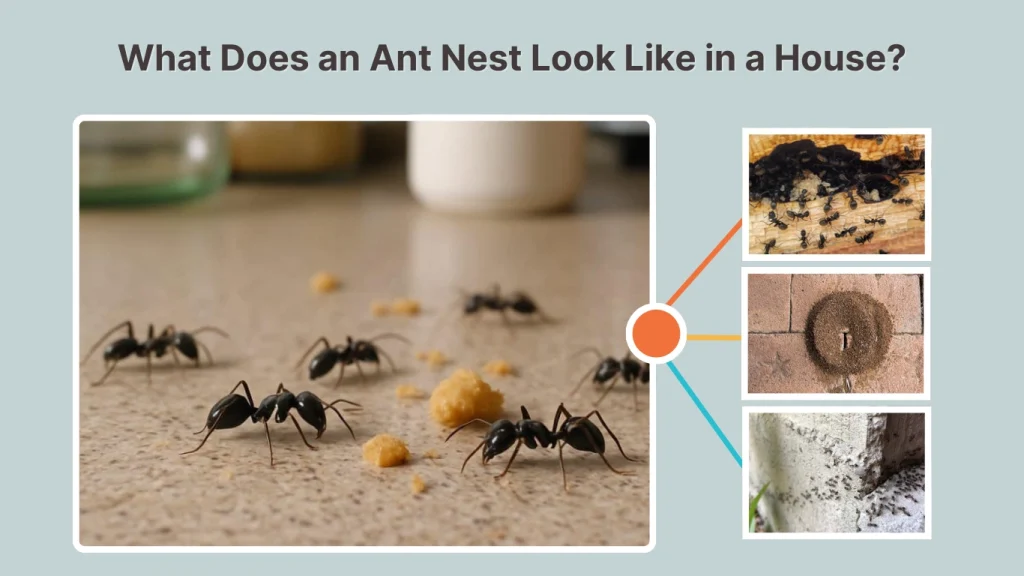
Ant nests vary depending on species and location, but some common visual signs include:
- Piles of soil or grit near skirting boards or cracks.
- Small exit holes in wooden beams or plaster.
- Chewed tunnels in wood, often hidden beneath the surface.
- Visible chambers in potted plants where ants protect eggs and larvae.
Unlike outdoor mounds, indoor nests are usually less obvious. They blend into the structure, making careful inspection necessary.
How to Find an Ant Nest in the House
Locating the nest is often the hardest part of ant control. Killing visible ants won’t eliminate the colony if the queen and brood remain hidden. Here are proven methods to find ant nests indoors:
- Follow the trail: Ants are consistent. Watch where they go after collecting food, and you’ll likely trace them back to the nest.
- Inspect walls and baseboards: Look for cracks, crevices, or dirt piles. Carpenter ants often leave sawdust.
- Check damp areas: Bathrooms, basements, and kitchens often harbor hidden colonies.
- Look behind appliances: Refrigerators, dishwashers, and ovens provide warm, hidden nesting spaces.
- Tap wooden beams: Hollow or soft-sounding wood may contain carpenter ant galleries.
In some cases, finding the nest may require professional pest control tools, such as moisture meters or infrared cameras, especially when ants hide deep in walls.
How to Get Rid of Ant Nests in House

Finding the nest is only half the battle. The real challenge comes in eliminating the colony completely. Simply spraying visible ants may kill a few workers, but the queen remains safe inside the nest, continuing to produce thousands of offspring. The following methods are the most effective for eradicating ant nests indoors.
DIY Remedies
- Boiling water – Pouring hot water into a visible nest can kill a large portion of ants instantly. However, this only works if you can access the nest directly.
- Vinegar solution – A 50/50 mix of vinegar and water disrupts ant pheromone trails and can be sprayed around entry points.
- Boric acid bait – Mixing boric acid with sugar or honey creates an irresistible poison. Worker ants carry it back to the nest, killing the colony from within.
- Diatomaceous earth – This natural powder damages ants’ exoskeletons, dehydrating them. Sprinkle around wall cracks and damp areas.
Chemical Options
- Ant bait stations – Store-bought bait traps are effective for hidden nests, as ants carry poison back to the colony.
- Insecticide sprays – Useful for direct nests in walls or plants but less effective against large colonies.
- Dust insecticides – Powders such as pyrethrin can be injected into wall voids, reaching hidden colonies.
Professional Extermination
If DIY methods fail, calling pest control is the best option. Exterminators use advanced tools like thermal imaging to locate nests inside walls and apply long-lasting treatments. This is especially recommended for carpenter ants, fire ants, or repeated infestations.
How to Kill an Ant Nest in Walls

Wall voids are one of the most common nesting places for household ants, particularly carpenter ants and black ants. Here’s how to tackle them:
- Identify the entry point – Look for tiny cracks, baseboard gaps, or electrical outlets where ants emerge.
- Use bait stations nearby – Place boric acid or store-bought bait along ant trails leading into walls.
- Apply dust insecticides – Products like diatomaceous earth or commercial powders can be puffed directly into cracks.
- Seal entry points – After the nest is eradicated, fill cracks with caulk or foam to prevent reinfestation.
Important: Never simply seal the wall without treatment first. This traps the colony inside, potentially worsening the problem.
Ant Nests in House Plants
Ants frequently use indoor plants as nesting sites because the soil is moist and protected. Signs include small soil mounds on the surface, ants moving in and out of drainage holes, and plant roots disturbed.
How to Remove Ants from Plants
- Flush the soil – Remove the plant from its pot and rinse the roots with water. Replace the old soil with fresh, pest-free potting mix.
- Natural deterrents – Sprinkle cinnamon, coffee grounds, or diatomaceous earth on the soil surface to repel ants.
- Bait nearby – Place sugar and boric acid bait near the plant so ants carry poison back to the nest.
This approach eliminates the colony without harming the plant.
Do Ants Really Nest in Houses?
Yes, many species adapt well to indoor environments. While some ants only forage inside, others establish permanent nests in walls, furniture, or potted plants. Carpenter ants are the most damaging, but sugar ants and black ants can be extremely persistent.
Ants typically enter houses during:
- Warm months – looking for food and shelter.
- Rainy seasons – when outdoor nests flood.
- Winter – to escape cold temperatures.
Recognizing that ants can indeed build nests inside helps homeowners take infestations seriously and act quickly.
Best Natural Remedies for Ant Nests in House
For those who prefer eco-friendly solutions, natural remedies can be surprisingly effective.
- Vinegar & lemon juice – Disrupt pheromone trails and make surfaces unattractive to ants.
- Diatomaceous earth – Safe for humans and pets but deadly to ants when applied around nests.
- Baking soda & sugar mix – The sugar attracts ants while the baking soda kills them internally.
- Essential oils – Peppermint, tea tree, and clove oils repel ants naturally. A few drops mixed with water make a strong spray.
These remedies work best for small to moderate infestations. For larger colonies, they may need to be combined with stronger methods.
When to Call a Professional
Some infestations go beyond DIY control. Call an exterminator if:
- You find carpenter ants damaging wooden beams.
- Ant nests are deep inside walls or under foundations.
- You’ve tried multiple methods but ants return.
- Fire ants or aggressive species are present indoors.
Professional pest control not only eliminates existing nests but also applies preventative treatments to stop re-infestation.
Preventing Ant Nests in Your House
Prevention is always easier than removal. By making your home less attractive, you reduce the risk of future ant nests.
- Seal food properly – Store sugar, cereals, and pet food in airtight containers.
- Clean regularly – Wipe counters, sweep floors, and remove crumbs.
- Fix leaks – Reduce moisture in bathrooms and kitchens.
- Seal cracks – Close gaps around doors, windows, and walls.
- Maintain plants – Avoid overwatering and inspect soil regularly.
Consistent habits create an environment where ants cannot easily thrive.
FAQs
How do I know if I have an ant nest in my wall?
Look for sawdust piles, faint rustling noises, or ants emerging from tiny cracks. Carpenter ants are most likely to nest inside walls.
Can carpenter ants destroy my house?
Yes. While they don’t eat wood, they tunnel through it, weakening beams, window frames, and structural supports over time.
What’s the difference between a flying ant nest and a termite nest?
Flying ants are reproductive ants from an established colony, while termites form entirely different colonies that consume wood. Termite nests are more destructive than ant nests.
Are ant nests dangerous to humans?
Most are nuisance pests, but fire ants can deliver painful stings, and carpenter ants can damage property. White ants (termites) are a structural threat.
What’s the fastest way to kill an ant nest?
Using boric acid bait is the most effective long-term method, as it kills the queen and entire colony rather than just surface ants.
