

Red and black stink bugs often confuse people because several true stink bug species share these colors, while others are look-alike insects from different families. Some are crop pests, others are beneficial predators, and a few simply wander into homes. Understanding the differences between red and black stink bugs and their imitators can help you identify them correctly and handle infestations safely.
Identifying Red and Black Stink Bugs

True stink bugs belong to the family Pentatomidae. They have a shield-shaped body, five-segmented antennae, and a triangular plate (scutellum) between their wings. Many species emit a foul odor when crushed — their well-known defense mechanism.
Common color patterns include:
- Black stink bug with red dots or stripes
- Red stink bug nymphs with black markings
- Red-shouldered or red-banded adults that may appear green or brown but with distinct red sections
These insects are often mistaken for boxelder bugs or milkweed bugs, which also feature red and black coloring but belong to entirely different insect families.
Color and Life Stage Differences

The bright red and black colors you often see are typical of stink bug nymphs (juveniles). Nymphs go through several molts before becoming adults, changing color with each stage.
- Young nymphs: Bright red or orange with black legs or spots.
- Older nymphs: Darker, often red and black mixed with hints of brown.
- Adults: Usually brown, green, or dark-colored with subtle red shoulders or borders.
So if you find a small red and black stink bug crawling on plants, it’s likely a juvenile, not a separate species.
Common Red and Black Stink Bug Species
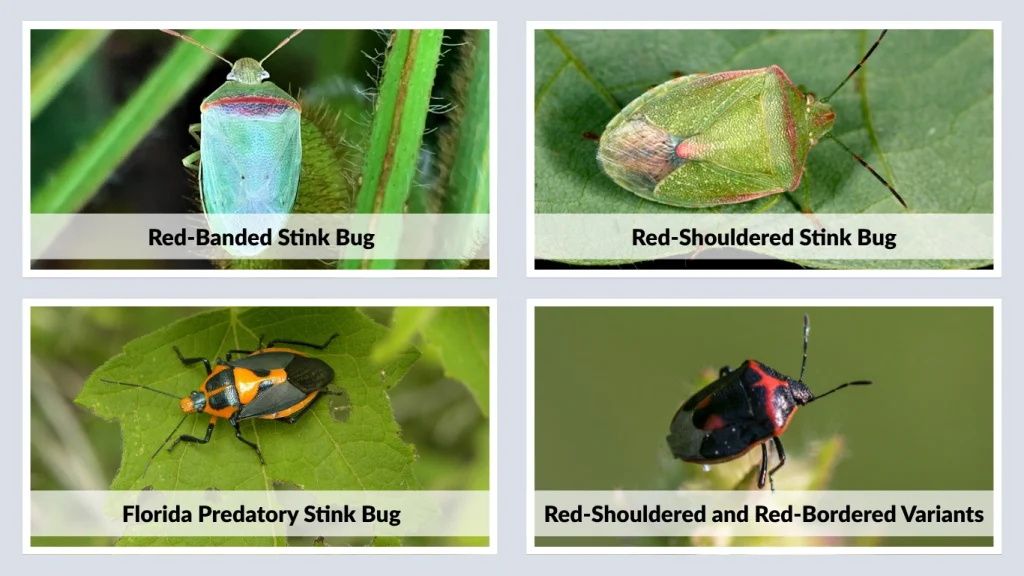
Several stink bug species feature red or black patterns. Here are the most notable ones:
Red-Banded Stink Bug (Piezodorus guildinii)
A serious pest of soybeans in the southern U.S., Central America, and South America. Adults are green with a distinct red band across their backs, while nymphs appear red and black. Farmers in states like Mississippi and Louisiana often report large infestations.
Red-Shouldered Stink Bug (Thyanta custator)
Sometimes called the “green stink bug,” adults are pale green with red shoulders, while the nymphs are reddish-black. They’re common in Florida, Texas, and California, often found on crops and ornamental plants.
Florida Predatory Stink Bug (Euthyrhynchus floridanus)
This striking species is black with red or orange spots and is beneficial — it feeds on harmful pests such as caterpillars and beetle larvae. Found throughout the southeastern U.S., it’s easily mistaken for a pest because of its bright red patterning.
Red-Shouldered and Red-Bordered Variants
Some regional species, like the red-bordered stink bug and red-bellied stink bug, feature distinctive red lines around their shell edges or underneath their bodies. These markings serve as warning colors to predators.
Common Lookalikes Mistaken for Stink Bugs

Not every red and black bug that looks like a stink bug actually belongs to the stink bug family. Here are the top mimics:
- Boxelder Bugs (Boisea trivittata): Flattened black bodies with bright red lines; often found near maple or boxelder trees. They do not stink or bite.
- Large Milkweed Bugs (Oncopeltus fasciatus): Long, narrow black and red insects commonly found on milkweed plants; they feed on seeds, not crops.
- Bordered Plant Bugs (Largus californicus): Found in the western U.S., especially California; black with red or orange margins and sometimes mistaken for “red-back stink bugs.”
- Assassin Bugs: Some predatory species are black and red but have elongated heads and bite painfully — not true stink bugs.
Distinguishing these from true stink bugs is important because lookalikes may require different management approaches.
Are Red and Black Stink Bugs Dangerous?
Most red and black stink bugs are not dangerous to humans or pets. They don’t bite, sting, or spread disease. Their primary defense is odor — a strong, unpleasant smell they release when threatened or crushed.
However, some species can cause:
- Skin irritation if handled directly.
- Crop damage by piercing fruits, seeds, and stems to suck plant juices.
- Allergic reactions in sensitive individuals exposed to their odor for long periods.
Predatory species, like the Florida predatory stink bug, are actually beneficial in gardens and should not be killed.
Do Stink Bugs Have Red Blood?
No. Stink bugs, like all insects, have hemolymph, a clear or pale greenish-yellow fluid instead of red blood. Their circulatory system is open, meaning it bathes internal organs directly rather than flowing through blood vessels. If you crush a stink bug and see a reddish stain, it’s likely pigment from their body, not blood.
How to Get Rid of Red and Black Stink Bugs
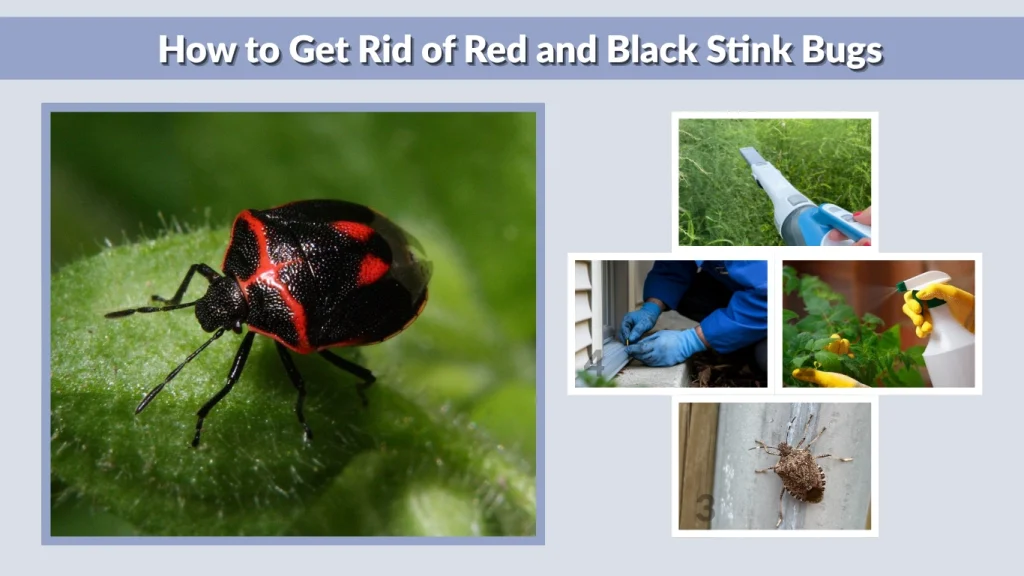
Getting rid of red and black stink bugs requires a mix of prevention, removal, and eco-friendly treatment. Since most stink bugs are outdoor insects that accidentally enter homes, your approach should focus on keeping them out and managing them naturally.
Indoor Removal
- Vacuum method: Use a handheld or hose vacuum to suck up stink bugs, then seal and discard the bag immediately. This prevents their odor from spreading indoors.
- Soapy water trap: Fill a bucket with warm water, add a few drops of dish soap, and flick bugs into it. The soap breaks surface tension, drowning them quickly.
- Avoid crushing: Squashing them releases their notorious smell, which can attract more stink bugs.
- Seal entry points: Caulk windows, vents, and door frames to prevent entry, especially in fall when they seek warmth.
Outdoor Control
- Check vegetation: Remove weeds, overripe fruit, and plant debris where stink bugs hide or lay eggs.
- Turn off lights: These bugs are attracted to light, so reduce outdoor lighting at night.
- Neem or garlic spray: Mix neem oil or crushed garlic with water and spray on garden plants to deter them naturally.
- Diatomaceous earth: Sprinkle around windows, doorways, or garden edges to kill stink bugs by dehydrating them.
Agricultural and Garden Tips
For gardeners and farmers, monitor crops regularly. The red-banded stink bug and red-shouldered stink bug can cause damage to beans, tomatoes, soybeans, and fruit trees. Using pheromone traps, planting repellent herbs like basil and mint, and encouraging beneficial insects such as spiders and predatory wasps can reduce infestations organically.
Regional and Seasonal Behavior
Red and black stink bugs thrive in warm, humid regions, particularly in the southern U.S., Central America, and parts of Australia. In Florida and Texas, they are most active from spring through early fall, coinciding with crop growth cycles.
In northern states and Canada (e.g., Ontario or Michigan), they appear during late summer and migrate indoors in autumn for shelter. In California and Arizona, you might spot Largus californicus, the black-and-red bordered plant bug often mistaken for a stink bug.
In Australia, the so-called “red stink bug” may refer to the cotton harlequin bug, which resembles true stink bugs but belongs to a related family (Scutelleridae).
Are Red and Black Stink Bugs Poisonous or Harmful?

Despite their intimidating colors, red and black stink bugs are not poisonous. The vivid coloration is a defense mechanism — warning predators of their bad taste and strong odor. They don’t carry toxins harmful to humans, pets, or wildlife.
However, there are a few cautions:
- Skin contact: Handling them may cause minor irritation. Wash hands after touching.
- Pet exposure: If dogs or cats eat stink bugs, they may drool or vomit due to the smell, but it isn’t toxic.
- Crop losses: Some species, like the red-banded stink bug, are major agricultural pests, reducing yields of soybeans and other crops.
So, while they aren’t poisonous, they can still be problematic in large numbers.
Red and Black Stink Bug Lookalikes in Homes
During fall, many homeowners mistake boxelder bugs and milkweed bugs for red stink bugs. These insects often gather on walls, windows, or siding. The easiest way to tell them apart is by body shape:
- Stink bugs: Shield-shaped, broad, and shorter.
- Boxelder/milkweed bugs: Long, narrow, and flat with distinct red outlines on their wings.
Both are harmless but can become annoying when they invade homes for warmth.
Do Red and Black Stink Bugs Bite?
Stink bugs do not bite or sting humans. Their mouthparts are designed for piercing plants and sucking sap, not skin. However, some predatory species, if mishandled, may probe the skin defensively, causing mild irritation. This is rare and not medically dangerous.
If you experience any reaction after handling one, wash the area and apply aloe vera or hydrocortisone cream for comfort.
Are Red and Black Stink Bugs Beneficial?
Not all stink bugs are pests. Some, like the Florida predatory stink bug, play an important ecological role. They prey on destructive insects, including caterpillars and beetle larvae, which helps maintain natural balance in gardens and farms.
When identifying red and black bugs, take care not to kill beneficial predators unnecessarily. If the insect is black with red spots and found hunting other bugs rather than feeding on plants, it’s likely helpful, not harmful.
Interesting Facts About Red and Black Stink Bugs
- Many red and black species are warning-colored, deterring predators.
- They can survive harsh weather by hiding under bark or debris.
- Nymphs are usually brighter in color than adults.
- The red-banded stink bug was first documented as a major pest by LSU researchers in the early 2000s.
- The Florida predatory stink bug is considered one of North America’s most beautiful beneficial insects.
FAQs
1. Are there red stink bugs?
Yes. Several true stink bug species — including the red-banded and red-shouldered stink bugs — have red coloration, especially as juveniles. Some lookalike species are also mistaken for red stink bugs due to similar patterns.
2. Are stink bugs with red markings poisonous?
No. Red markings are simply a visual defense against predators. These bugs are not toxic or venomous to humans or pets.
3. How can I get rid of black and red stink bugs naturally?
Seal entry points, reduce outdoor lighting, and use soapy water traps, neem oil spray, or diatomaceous earth. Avoid crushing them indoors to prevent odor release.
4. Do stink bugs have red blood?
No, they have a clear fluid called hemolymph. The red you might see when one is squished comes from internal pigments, not blood.
5. What’s the difference between a red stink bug and a red-shouldered bug?
The red stink bug is a true stink bug with a shield-shaped body, while the red-shouldered bug (often a boxelder bug) is slimmer and harmless. Both may appear similar but belong to different insect families.
