

Stink bugs are notorious pests in gardens and homes, recognized for their shield-shaped bodies and foul odor. However, it’s not the adult bugs alone that cause concern — their eggs are the starting point of large infestations. Understanding what stink bug eggs look like, where they’re found, and how to remove them can help prevent these pests from taking over your plants or property. Let’s explore everything you need to know about stink bug eggs and their life cycle.
What Do Stink Bug Eggs Look Like?
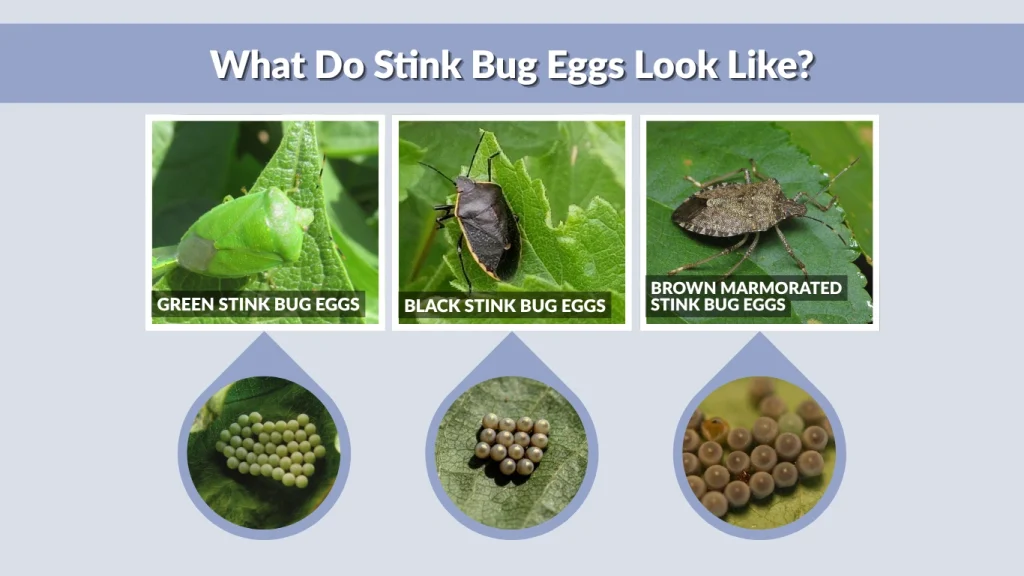
Stink bug eggs are small, rounded, and neatly arranged in clusters. Each egg measures about 1 millimeter in diameter and resembles tiny barrels or cylinders with flat tops. Their color can vary depending on the species — from pale green or yellow to gray or white — and they are often attached firmly to the underside of leaves.
The brown marmorated stink bug eggs, for example, are light green and laid in clusters of about 25. Green stink bug eggs tend to be yellowish-white, while black stink bug eggs appear darker gray as they mature. Under close inspection, these eggs may even show microscopic face-like markings, earning them the nickname “grumpy face eggs.”
When searching for stink bug eggs, check the undersides of plant leaves, especially in vegetable gardens and fruit patches. Their uniform arrangement and pearly color make them easy to spot if you look closely.
Where Do Stink Bugs Lay Their Eggs?
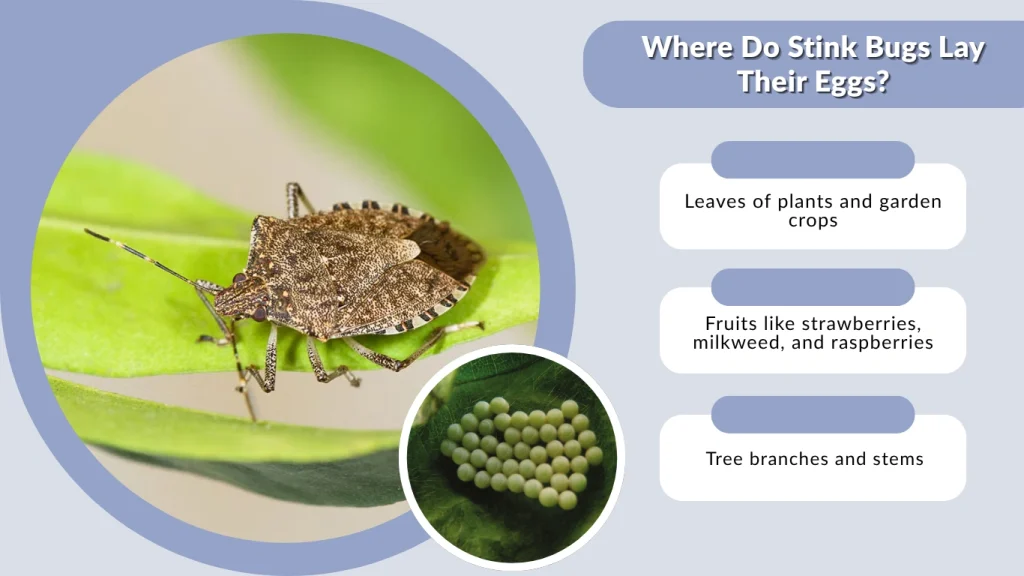
Female stink bugs prefer laying eggs outdoors on flat, smooth surfaces — most commonly the underside of leaves of garden plants, fruit trees, and shrubs. They’re particularly attracted to crops such as tomatoes, soybeans, peppers, and raspberries.
Key outdoor egg-laying spots include:
- Leaves of plants and garden crops
- Fruits like strawberries, milkweed, and raspberries
- Tree branches and stems
Occasionally, people may find stink bug eggs on window screens or windowsills, especially in spring when overwintering adults emerge from hiding. Indoors, eggs may appear on houseplants or window frames, though this is rare since stink bugs generally lay eggs outside.
Despite myths online, stink bugs do not lay eggs in your hair, clothes, or on human skin. They only reproduce on natural plant surfaces where their nymphs can feed immediately after hatching.
How Do Stink Bugs Lay Eggs?
The process is both quick and efficient. A female stink bug secretes a sticky substance that helps eggs adhere to leaves. She arranges them in tight clusters or egg masses that typically contain 20 to 30 eggs. These eggs stay protected on the underside of leaves until they hatch.
Most species lay eggs during warmer months, particularly from late spring through midsummer. A single female can lay up to 400 eggs throughout her lifespan. These clusters are the first step in the stink bug’s life cycle, which later progresses into nymph and adult stages.
If you notice small circular egg groups on leaves that are light green or cream-colored, chances are you’re looking at stink bug egg clusters — early warning signs of a potential infestation.
How Many Eggs Do Stink Bugs Lay?
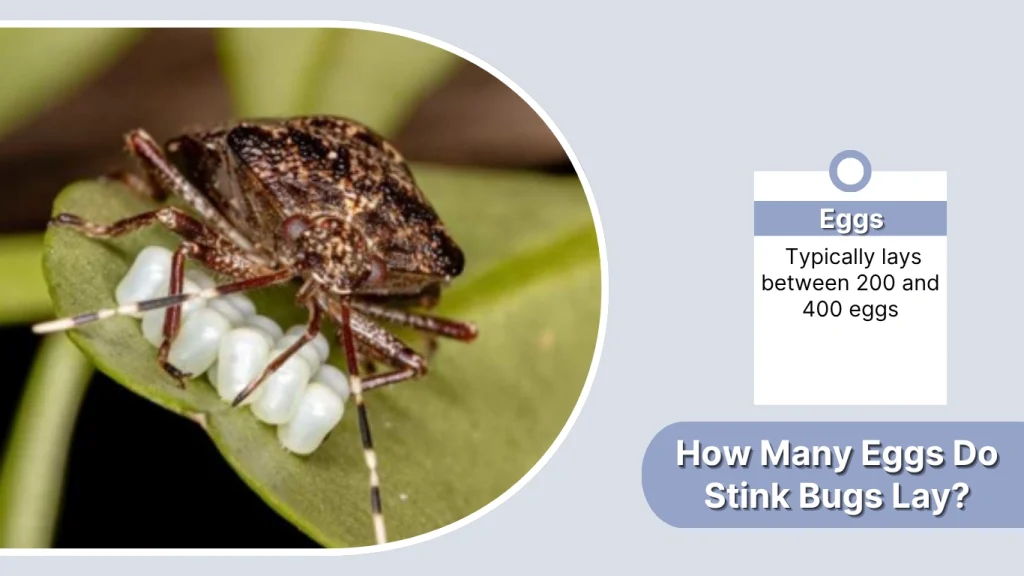
The number of eggs varies by species, but an adult female stink bug typically lays between 200 and 400 eggs in a single season. These are distributed in several batches, each containing 20–30 eggs.
The brown marmorated stink bug, one of the most invasive species, can reproduce rapidly under ideal conditions. In warm climates, like parts of the southern United States, this species may produce two generations per year, significantly increasing the number of eggs and nymphs.
When Do Stink Bugs Lay Eggs?
Stink bugs lay eggs primarily during late spring and summer, when temperatures rise and plants are actively growing. The exact timing depends on the region:
- In northern areas, egg-laying begins in late May or early June.
- In southern states, like Florida or Texas, females may start laying eggs as early as March.
Adult stink bugs that overwinter indoors during the colder months become active again in spring, seeking outdoor environments to reproduce.
Their reproductive cycle typically stops when temperatures drop below 60°F, as cold weather halts egg development. Knowing this seasonal pattern can help gardeners time their stink bug egg prevention and removal efforts for best results.
How Long Do Stink Bug Eggs Take to Hatch?

After being laid, stink bug eggs typically hatch within 4 to 7 days, depending on the temperature and humidity. In warmer weather, eggs may hatch faster. Once hatched, the tiny orange or red nymphs (first instar stage) remain close to the empty eggs for a short period before dispersing to feed on plant sap.
The newly hatched shells — known as hatched stink bug eggs — often remain attached to the leaf surface, appearing white and translucent. These remnants are a sign that young nymphs have already emerged and begun feeding nearby.
If you spot hatched egg clusters, it’s important to check surrounding plants for nymphs to prevent the next wave of adult stink bugs from developing.
Different Types of Stink Bug Eggs
Not all stink bug eggs look identical — their color, size, and texture vary slightly depending on the species. Here are the main types you might encounter:
- Brown Marmorated Stink Bug Eggs: Pale green and barrel-shaped, found on the undersides of leaves in neat clusters. These are among the most common in gardens across North America.
- Green Stink Bug Eggs: Usually light yellow or creamy-white, often appearing in rows of 20–30. They are smooth and slightly shiny.
- Black or Gray Stink Bug Eggs: Dark gray eggs that may belong to certain shield bug species. They blend easily with bark or shaded leaves.
- Southern Green Stink Bug Eggs: Whitish to yellow and often laid on soybean and tomato plants in Florida and southern states.
- Predatory Stink Bug Eggs: Cream-colored, smaller, and laid in fewer numbers. These are beneficial species that feed on crop pests instead of plants.
Recognizing these differences can help identify whether you’re dealing with a harmful pest or a beneficial insect.
Stink Bug Eggs Indoors
While stink bugs prefer outdoor environments for reproduction, it’s possible to find their eggs indoors — particularly if overwintering adults become trapped. You might notice small egg clusters on:
- Window screens or window frames
- Indoor potted plants
- Curtains or blinds near sunlight
These indoor egg sightings are relatively rare since stink bugs lay eggs only in environments where the nymphs can find food. However, if you do find eggs inside, remove them promptly using a tissue or vacuum to prevent hatching.
It’s also important to clarify that stink bugs do not lay eggs on humans, in hair, or on clothing. Such myths are common but untrue. Stink bugs reproduce exclusively on natural or smooth surfaces like leaves and glass.
How to Get Rid of Stink Bug Eggs

Removing stink bug eggs early is the best way to prevent an infestation. Here are safe and effective ways to eliminate them naturally:
Manual Removal
Gently scrape eggs off leaves using your fingers or a soft brush. You can also use duct tape to pick up clusters without damaging the plant. Dispose of the eggs in soapy water to ensure they don’t hatch.
Neem Oil Spray
Neem oil is a natural pesticide that disrupts insect growth. Mix two teaspoons of neem oil with a liter of water and spray it directly on affected leaves. This prevents eggs from developing and repels adult stink bugs.
Soapy Water Solution
Combine mild dish soap with warm water and spray it on plants or directly on eggs. The soap breaks the eggs’ protective coating, suffocating them before they hatch.
Introduce Beneficial Insects
Encourage natural predators like ladybugs, spiders, and parasitic wasps, which feed on stink bug eggs and nymphs. These insects help maintain long-term balance in your garden.
Inspect Regularly
Check the underside of leaves weekly during spring and summer. Remove any new clusters before they hatch. Consistency is key for effective stink bug egg control.
Stink Bug Egg Life Cycle
The stink bug’s life cycle progresses through three main stages: egg, nymph, and adult.
- Egg Stage (4–7 days): Females lay clusters of eggs, which hatch in under a week.
- Nymph Stage (30–40 days): Young nymphs molt five times, gradually developing wings and color.
- Adult Stage (up to 8 months): Fully developed stink bugs reproduce, completing the cycle.
Empty egg shells are often left behind on leaves, appearing white or transparent. Recognizing these helps gardeners locate areas where young nymphs have already emerged.
Preventing Stink Bug Egg Infestations
Preventing stink bugs from laying eggs in the first place is the most effective approach. Follow these tips to keep your home and garden safe:
- Inspect plants regularly for egg clusters under leaves.
- Trim overgrown vegetation where stink bugs hide and breed.
- Use row covers or fine mesh screens on vegetable gardens to block adults from laying eggs.
- Seal cracks and entry points around windows, doors, and vents to keep stink bugs out of your home.
- Use natural repellents like garlic spray or peppermint oil to deter adults.
If stink bugs are common in your area, early detection and natural deterrents can greatly reduce egg-laying activity.
FAQs
1. What do stink bug eggs look like?
They are small, round, and barrel-shaped, typically light green or yellow. Found in clusters of about 20–30 eggs, they’re often attached to the underside of leaves or smooth surfaces like window screens.
2. Where do stink bugs lay their eggs?
Most lay eggs outdoors on plant leaves, stems, and fruits such as tomatoes or raspberries. Occasionally, eggs appear indoors on window screens or houseplants if adult stink bugs overwinter inside.
3. How long do stink bug eggs take to hatch?
Eggs hatch within 4 to 7 days in warm conditions. After hatching, the tiny nymphs remain near the egg cluster before dispersing to feed on plant sap.
4. How can I remove stink bug eggs naturally?
Scrape them off with tape or a soft brush, or spray leaves with a soapy water or neem oil solution. Beneficial insects like ladybugs also help by feeding on the eggs.
5. Can stink bugs lay eggs inside my house or on people?
No. Stink bugs lay eggs only on natural surfaces like leaves. They do not lay eggs on humans, pets, or fabric. Indoor sightings are rare and usually occur on window screens or houseplants.
