

Carpenter bees are hardworking pollinators, but they can become an unexpected nuisance when they start nesting in your home’s wood. Their drilling may look harmless at first, yet repeated tunneling weakens structures over time. Understanding how carpenter bee damage develops, how to recognize it early, and how to fix it will help you protect your property while still respecting these essential insects.
What Is Carpenter Bee Damage?
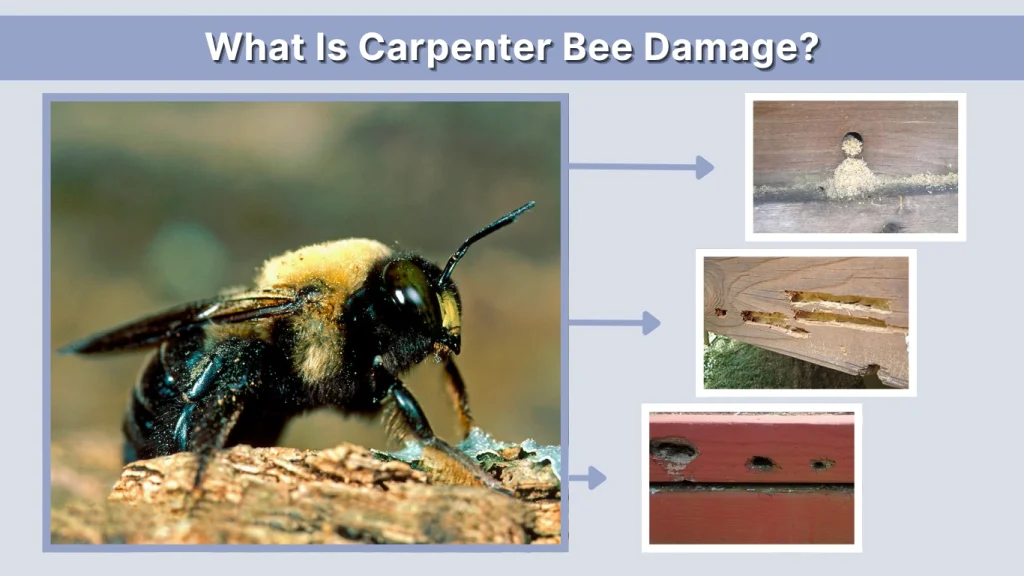
Carpenter bee damage occurs when female bees bore small, round holes into wood to create nesting tunnels. They do not eat the wood like termites — instead, they excavate it to lay eggs and store pollen for their larvae. The bees’ strong jaws chew through untreated or weathered wood with ease, forming clean, circular entry points about ½ inch wide.
At first, the damage seems minor, but over the years, new generations reuse the same tunnels, expanding them deeper into beams and boards. This continuous boring can eventually weaken decks, railings, and roof eaves.
Carpenter bee activity typically peaks in spring and early summer, when females prepare nests. Once the young hatch, the bees remain nearby, returning season after season if the holes remain unsealed.
How to Identify Carpenter Bee Damage
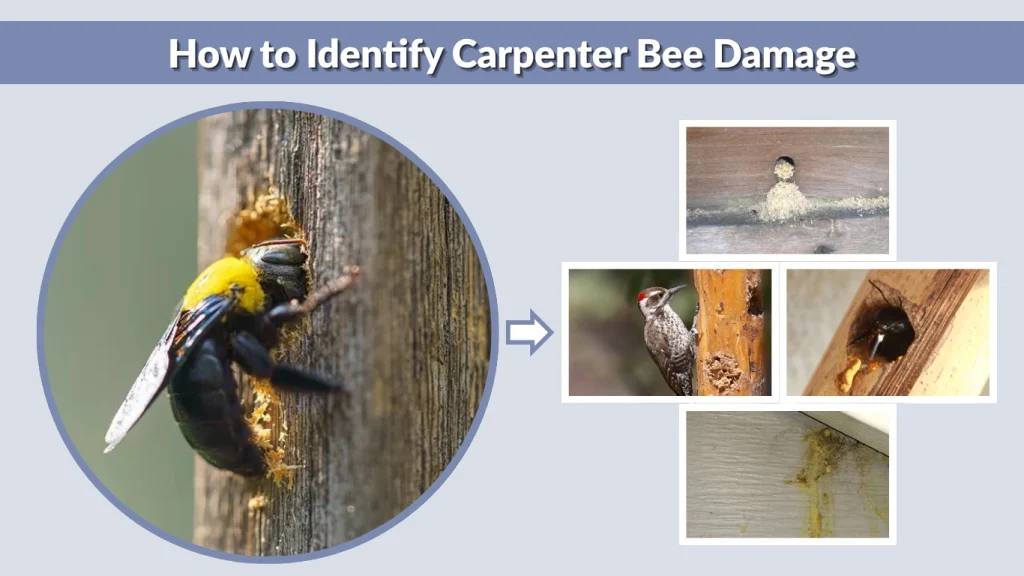
Carpenter bee damage is distinctive once you know what to look for. Unlike termites or other wood pests, their handiwork leaves visible clues that make identification straightforward.
Key signs include:
- Perfectly round entry holes about the size of your little finger.
- Sawdust piles (called frass) collecting directly beneath the holes.
- Buzzing sounds coming from inside wooden beams on warm days.
- Yellow or brown stains caused by bee droppings near openings.
- Woodpecker activity, since birds often peck at the wood to feed on larvae inside.
If you notice these symptoms, it’s a clear indication of nesting activity, not random surface damage. Early recognition allows faster repairs before structural weakening occurs.
Pictures of Carpenter Bee Damage (Visual Description)
Carpenter bee damage pictures often show a clean, circular hole drilled into untreated or painted wood. The surrounding area is usually smooth, not splintered, which distinguishes it from weather damage or rot. When wood is cut open, you can see tunnels running along the grain — neat, cylindrical chambers that extend several inches deep.
These tunnels may branch into multiple chambers if reused across generations. Beneath decks or eaves, you’ll often spot trails of sawdust and small stains where bees enter and exit.
If comparing carpenter bee damage vs. termite damage, remember this: carpenter bees leave visible holes and fine sawdust, while termites leave no external openings and fill tunnels with mud or debris.
Carpenter Bee Damage vs. Termite Damage
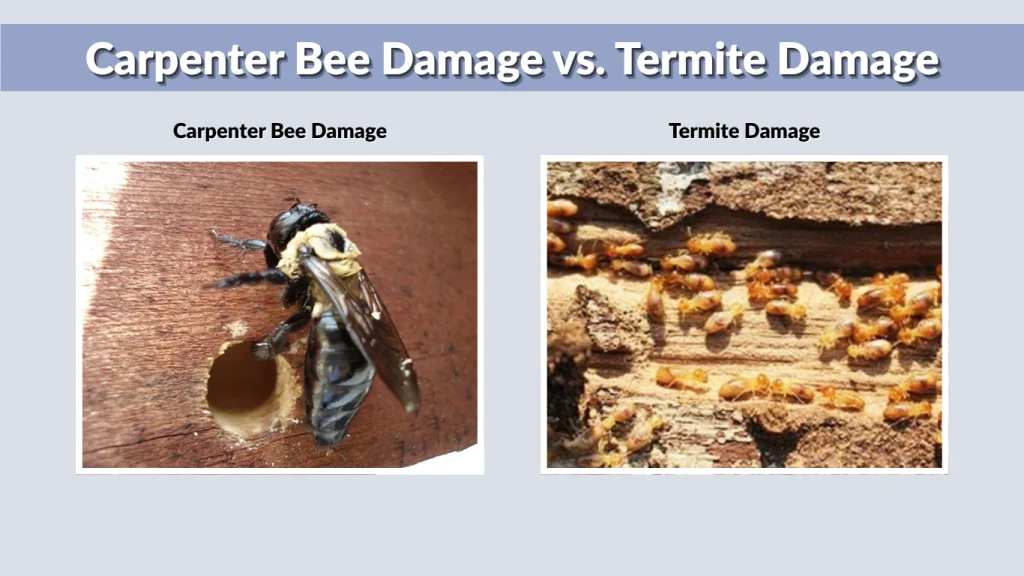
Many homeowners confuse the two because both involve wood destruction. However, the differences are quite distinct:
| Feature | Carpenter Bee | Termite |
| Hole Shape | Round, clean-cut on the surface | Hidden, irregular tunnels inside wood |
| Wood Appearance | Smooth entry holes, visible frass | Hollow or crumbly texture |
| Damage Visibility | Clearly visible from outside | Hidden until wood collapses |
| Speed of Damage | Gradual | Rapid and extensive |
| Preferred Wood | Dry, untreated wood | Moist or decayed wood |
Carpenter bees cause superficial but accumulative damage, while termites destroy the internal structure quickly. Knowing the difference helps you choose the right repair and prevention strategy.
Where Carpenter Bees Cause Damage
Carpenter bees prefer dry, exposed, and unpainted wood. Their nesting choice often depends on sunlight, warmth, and shelter from rain.
Common damage locations include:
- Roof eaves and soffits
- Deck railings, fences, and pergolas
- Porch ceilings and siding boards
- Wooden furniture and benches
- Window frames and shutters
- Dead tree trunks or branches
They avoid metal, composite, or heavily painted surfaces. If your home features untreated pine, cedar, or redwood, it’s a potential nesting site. Over time, multiple holes clustered together indicate an active infestation that needs attention.
Can Carpenter Bees Cause Structural Damage?

Although carpenter bees don’t consume wood, they can still cause significant structural damage through repeated tunneling. A single hole might not matter, but when dozens of bees return yearly, the cumulative effect becomes serious.
Each female bee can create a tunnel stretching 6–12 inches long, divided into several brood chambers. Over time, reused tunnels expand deeper and wider, forming interconnected galleries. This can lead to:
- Weakening of deck boards and beams
- Splitting or cracking wood under pressure
- Sagging railings or porch supports
- Noise and vibration as bees burrow inside
In older wooden homes, unsealed carpenter bee holes may even allow moisture to seep in, accelerating rot and decay. While they aren’t as destructive as termites, ignoring them can still result in costly repairs later.
Signs of Carpenter Bee Damage Around Homes
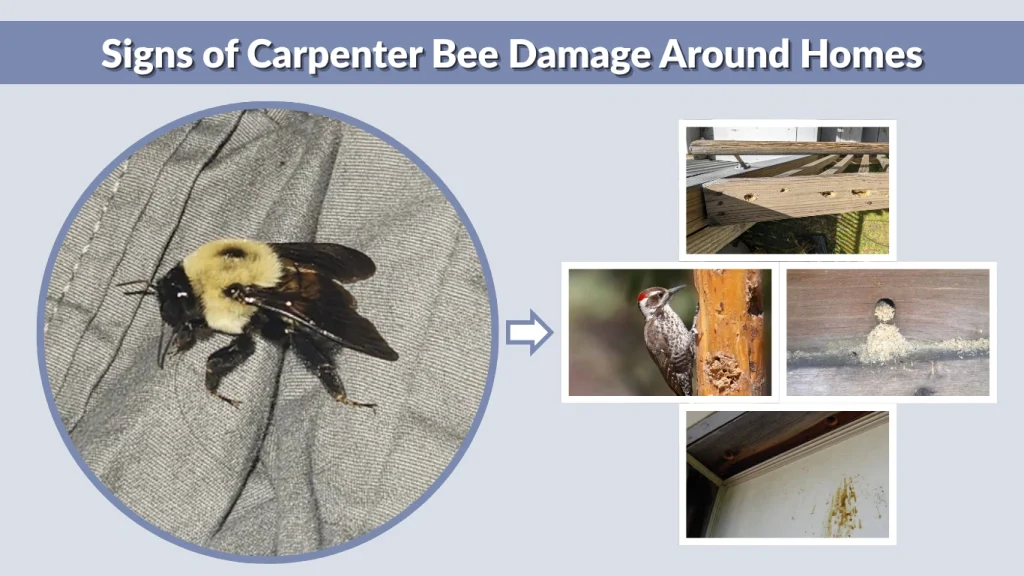
Before you see the bees, you’ll likely notice their work. Watch for these visible warning signs:
- Multiple round holes aligned under rooflines or deck rails.
- Small sawdust piles accumulating beneath the holes.
- Dark stains or streaks from excrement near the entry points.
- Increased bird activity, especially woodpeckers pecking at boards.
- Buzzing or tapping sounds inside wood during sunny days.
These indicators confirm that carpenter bees are actively nesting nearby. Addressing them early prevents deeper tunneling and secondary damage.
How Much Damage Can Carpenter Bees Do?
The level of damage depends on how long they’ve been nesting and how many generations return. A few bees cause minimal cosmetic damage, but a long-term colony can hollow out entire beams.
Estimated impact:
- Year 1: Small holes with minor sawdust — easy to fix.
- Year 2–3: Expanded tunnels and visible weakening of boards.
- After 5+ years: Significant structural risk requiring partial replacement.
Professional repair costs typically range from $200–$1,000, depending on location and severity. The longer infestations persist, the more extensive and expensive the restoration becomes.
One of the most frustrating side effects of carpenter bee infestations is secondary damage from woodpeckers. These birds feed on carpenter bee larvae by pecking open the tunnels, creating larger holes and further weakening wood.
To stop woodpecker damage:
- Repair and seal all bee holes promptly.
- Hang reflective tape, wind chimes, or scare balloons to frighten birds away.
- Cover affected areas with fine metal mesh or wire cloth.
By removing the bee larvae and sealing tunnels quickly, you eliminate the food source that attracts woodpeckers in the first place.
Cost to Repair Carpenter Bee Damage
The cost of repairs varies depending on the extent of tunneling and wood type. Small DIY repairs are affordable, but structural damage can be expensive if neglected.
Average repair costs:
- Minor damage (1–3 holes): $50–$150 (wood filler and paint)
- Moderate damage: $200–$500 (multiple boards repaired)
- Severe infestation: $600–$1,000+ (board or beam replacement)
Professionals may also apply protective coatings or insecticides to prevent recurrence, adding long-term value.
Is Carpenter Bee Damage Covered by Homeowners Insurance?
Unfortunately, most homeowners’ insurance policies do not cover carpenter bee damage. Insurers consider it a form of “preventable pest damage,” which falls under home maintenance responsibilities.
To avoid costly out-of-pocket repairs:
- Conduct spring inspections each year.
- Paint and seal vulnerable wooden areas regularly.
- Keep a record of preventive maintenance, especially if you plan to sell your home.
If the damage leads to a major structural failure due to neglect, insurance claims are typically denied. Prevention is always cheaper than repair.
How to Stop Carpenter Bee Damage Permanently
Completely eliminating carpenter bees isn’t realistic — they’re vital pollinators. However, you can redirect their activity away from your home.
Long-term prevention strategies:
- Eliminate untreated wood surfaces: Replace or paint exposed boards.
- Use decoy nests: Bees are territorial and avoid nesting near other colonies.
- Install sound deterrents: Ultrasonic or vibration devices discourage nesting.
- Maintain yard cleanliness: Reduce wood piles and debris that attract bees.
- Seal before spring: Fill all old holes before March, when bees start nesting.
These efforts ensure your home remains safe while allowing carpenter bees to continue their ecological work elsewhere.
FAQs
What does carpenter bee damage look like?
Carpenter bee damage appears as smooth, round holes about ½ inch wide, often surrounded by sawdust or yellow stains. The holes may align beneath decks, fences, or eaves.
Do carpenter bees cause structural damage?
Yes. While they don’t eat wood, their repeated boring can weaken beams and decking, especially when the same tunnels are reused each year.
How can I repair wood damaged by carpenter bees?
Clean out tunnels, treat them with insecticidal dust, fill holes with wood putty or dowels, and repaint. For major infestations, replace weakened boards.
How do I prevent carpenter bee damage?
Keep wood painted or sealed, apply citrus oil sprays, and block all old holes before spring. You can also use decoy traps to lure bees away.
Is carpenter bee damage covered by insurance?
No. Homeowners’ insurance usually excludes insect-related damage, labeling it as preventable through routine maintenance.
