
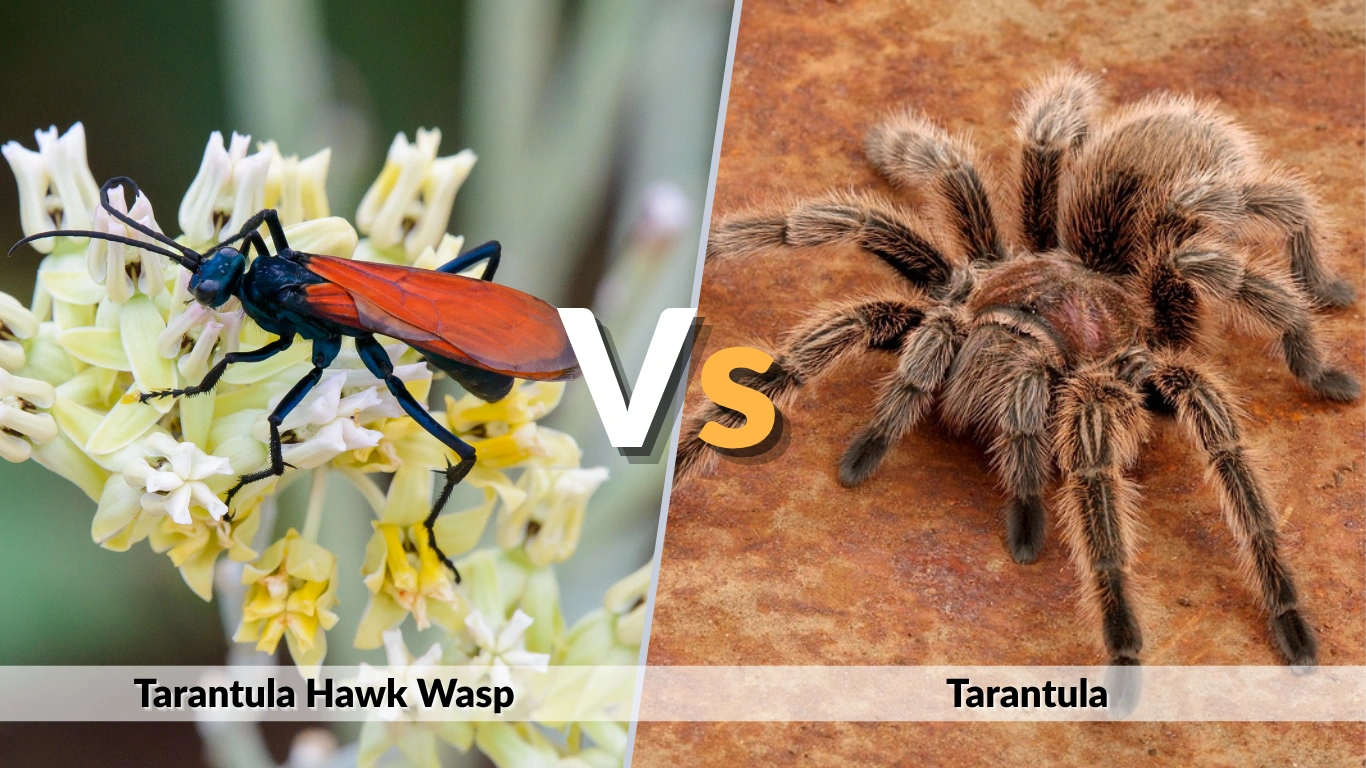
The tarantula hawk wasp and the tarantula are among nature’s most astonishing combatants. Their encounters reveal one of the most fascinating predator-prey relationships in the insect world. Known for its fiery orange wings and a sting ranked among the most painful on Earth, the tarantula hawk wasp hunts the much larger tarantula with deadly precision. This battle of strength, venom, and instinct defines survival in the wild deserts of the Americas.
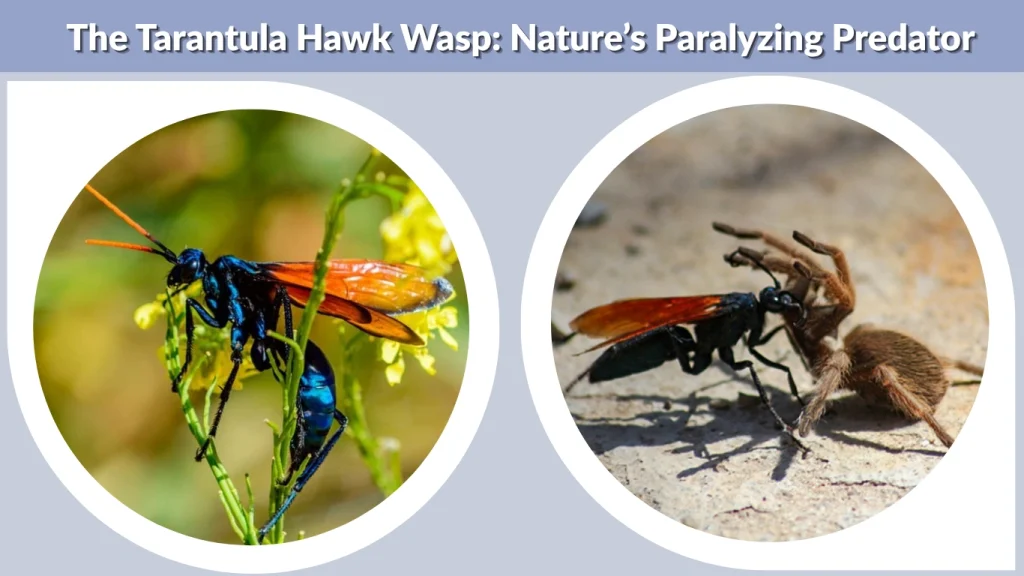
The Tarantula Hawk Wasp: Nature’s Paralyzing Predator
Appearance and Identification
The tarantula hawk wasp is a striking insect, easily recognized by its metallic blue-black body and vivid orange wings. Measuring up to 2 inches long, it is one of the largest wasps in the world. Males and females appear similar, but only females possess the venomous sting used for hunting. Males instead feed on nectar and play no role in capturing prey.
Sting Power and Venom Effect
Ranked 4.0 on the Schmidt Pain Index, the tarantula hawk’s sting is nearly unmatched in intensity, second only to the bullet ant. The venom contains neurotoxins that paralyze its victim almost instantly. Despite this potency, the venom isn’t lethal to humans, though the pain can be excruciating for several minutes. Its sting allows it to immobilize large tarantulas effortlessly before dragging them into its burrow.
Behavior and Hunting Tactics
When hunting, the wasp patrols dry terrain searching for tarantula burrows. Once located, it tempts or forces the spider out and strikes with precision. The paralyzed tarantula remains alive as the female wasp lays a single egg on its abdomen. When the larva hatches, it feeds on the still-living spider, avoiding vital organs to keep its food fresh until maturity.
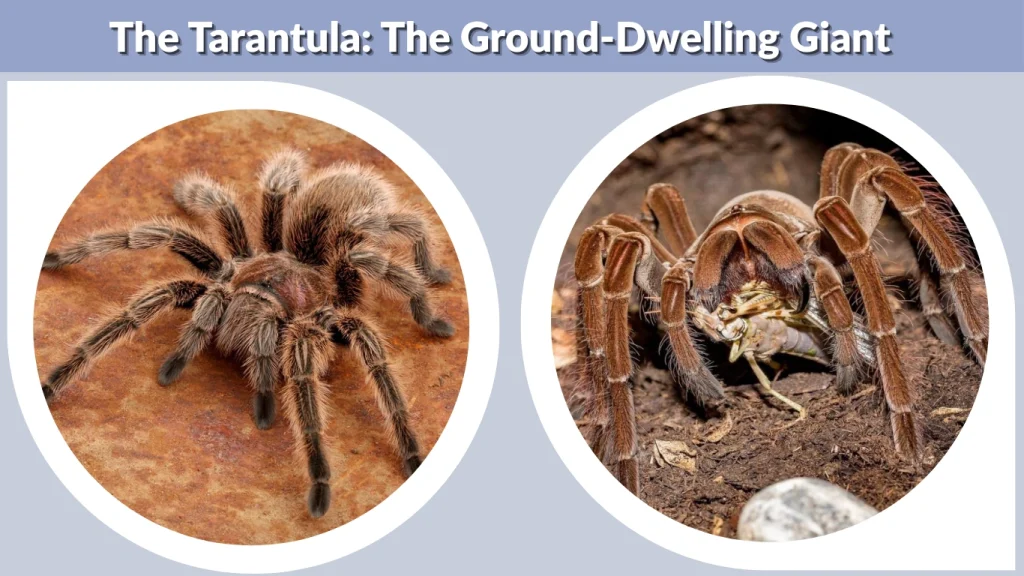
The Tarantula: The Ground-Dwelling Giant
Physical Traits and Defense
Tarantulas are large, hairy spiders reaching 5 to 6 inches in leg span. They rely on their fangs and venom for defense and ambush tactics to capture prey. While their venom isn’t deadly to humans, it can incapacitate insects and small vertebrates. When threatened, tarantulas rear up, expose their fangs, or kick irritating hairs to deter predators like the tarantula hawk.
Common Tarantula Species Targeted
The tarantula hawk primarily preys on species found in the southwestern United States and Central America. The Arizona blonde tarantula and desert tarantulas are the most common victims. These burrowing spiders are ideal hosts because they are large, slow-moving, and provide ample nourishment for the developing wasp larva.
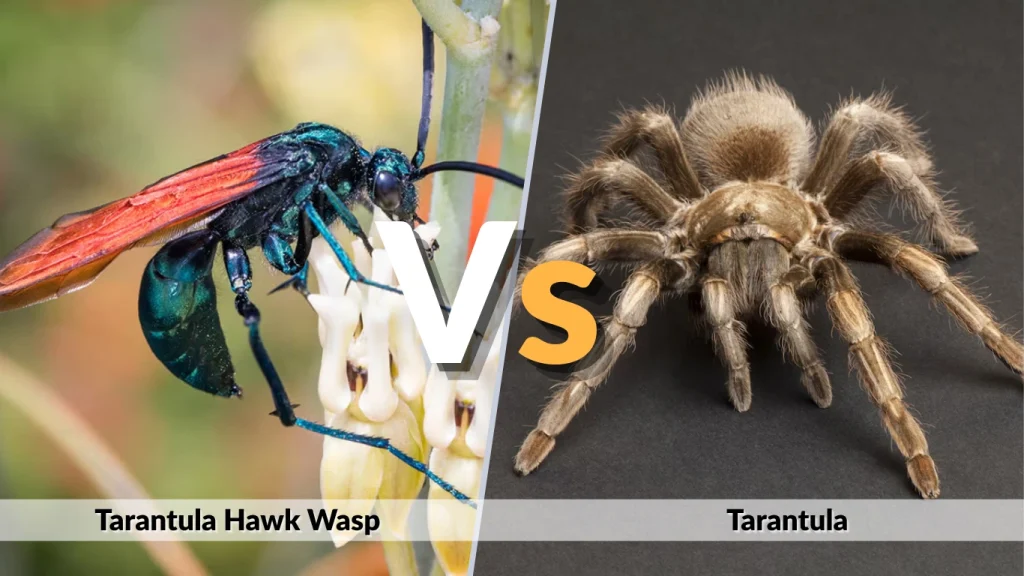
The Showdown: Tarantula Hawk Wasp vs Tarantula
First Contact
The battle begins when the wasp detects the faint vibrations of a tarantula inside its burrow. It carefully approaches, waiting for the spider to emerge. Once in striking distance, the wasp uses its agility to avoid the tarantula’s fangs and delivers a quick, precise sting to a nerve center, causing immediate paralysis.
Strengths and Weaknesses
| Feature | Tarantula Hawk Wasp | Tarantula |
| Size | Up to 2 inches | 5–6 inches |
| Venom Purpose | Paralysis | Defense |
| Offense Style | Sting and drag | Fangs and ambush |
| Survival Outcome | High (if sting lands) | Low (if caught off guard) |
Outcome: Who Wins and Why
In nearly all encounters, the tarantula hawk wasp emerges victorious. Its speed and precision make the difference — a single sting determines the battle. Once paralyzed, the tarantula is helpless as the wasp prepares it for its offspring. Rarely, a tarantula may fend off the wasp if it strikes first or the wasp misses its sting, but such cases are uncommon.
Comparing the Tarantula Hawk Wasp to Other Deadly Insects
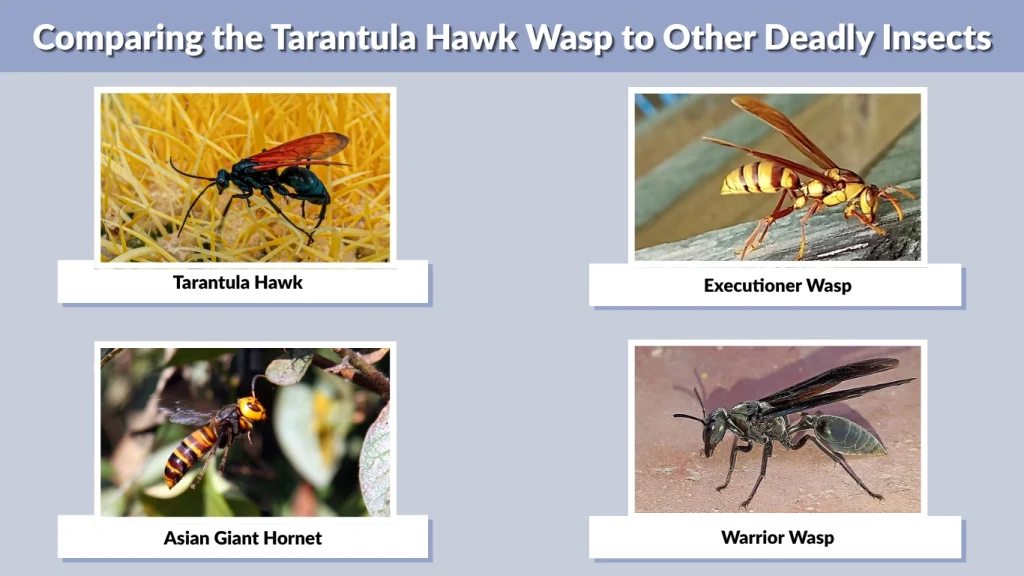
Tarantula Hawk vs Executioner Wasp
The executioner wasp is equally feared for its excruciating sting. However, the tarantula hawk’s venom is more specialized—it paralyzes rather than kills. The executioner wasp is more aggressive and territorial, while the tarantula hawk remains calm unless hunting or threatened. In a direct confrontation, the tarantula hawk’s speed and accuracy would likely secure the victory.
Tarantula Hawk vs Asian Giant Hornet
The Asian giant hornet, also called the “murder hornet,” is larger and more armored, making it a formidable opponent. Yet, the tarantula hawk’s sting delivers faster paralysis. The hornet’s strength lies in its powerful mandibles, but in an open-air encounter, the wasp’s venom would likely overpower the hornet’s defenses.
Tarantula Hawk vs Warrior Wasp
The warrior wasp ranks similarly high on the Schmidt Pain Index, but its sting is designed for defense, not hunting. The tarantula hawk’s venom has evolved for predation, giving it an edge in purpose and precision. While the warrior wasp’s colony attacks are fierce, the tarantula hawk dominates one-on-one battles.
Tarantula Hawk vs Great Black Wasp & Cicada Killer
The great black wasp and cicada killer share similarities with the tarantula hawk but target smaller prey like grasshoppers and cicadas. Though all are solitary hunters, the tarantula hawk stands out for its ability to subdue spiders several times its size—an evolutionary marvel among wasps.
Tarantula Hawk vs Scorpion & Giant Centipede
In desert ecosystems, scorpions and giant centipedes occasionally encounter tarantula hawks. While both possess potent venom and agility, the wasp’s sting often lands first. These encounters are rare but showcase how the tarantula hawk can dominate even other venomous predators.
Male vs Female Tarantula Hawk Wasp

Physical and Behavioral Differences
Male tarantula hawks are slightly smaller and lack stingers. They feed exclusively on nectar and are often seen hovering around flowers. Females, on the other hand, are equipped with long, curved stingers and serve as hunters and reproducers. Only females seek out tarantulas to provide nourishment for their larvae.
Lifecycle and Reproduction
After paralyzing a tarantula, the female drags it to a burrow and lays one egg on its abdomen. When the larva hatches, it burrows into the spider, consuming it gradually while keeping it alive. Once mature, the adult wasp emerges, leaving behind the hollowed remains of its host—a chilling yet efficient natural process.
The Sting: Why It’s One of the Most Painful on Earth
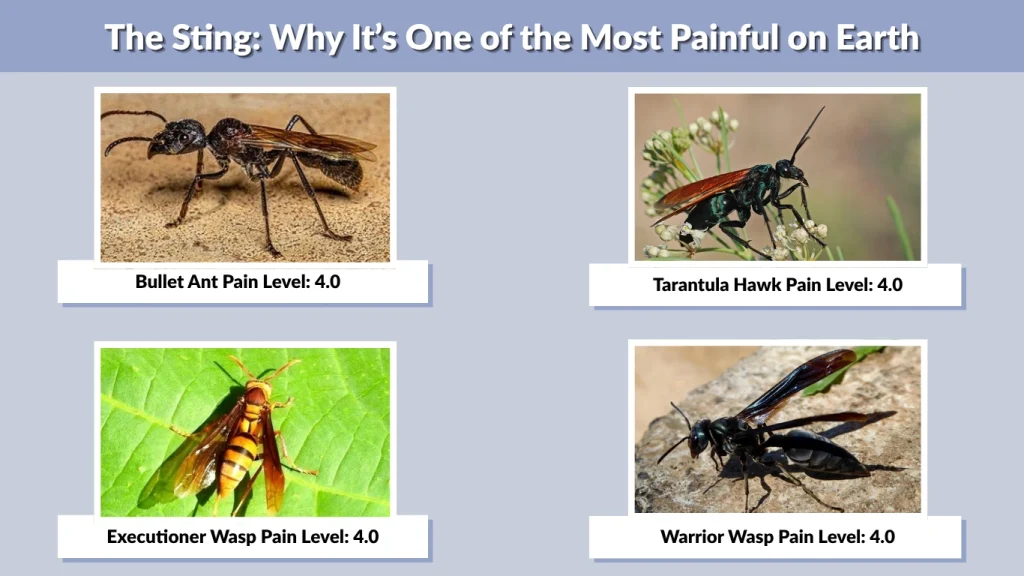
Pain Scale Comparison
| Insect | Pain Level (Schmidt Index) | Duration |
| Bullet Ant | 4.0 | 10+ minutes |
| Tarantula Hawk | 4.0 | 3–5 minutes |
| Executioner Wasp | 4.0 | 8+ minutes |
| Warrior Wasp | 4.0 | 10 minutes |
The tarantula hawk’s sting pain is described as “blinding, fierce, and electric.” While intense, it is mercifully brief—subsiding within minutes. The wasp rarely stings humans intentionally; it reserves its venom for hunting. Encounters with hikers or researchers often end with a sting only when handled or stepped on.
Human Encounters
In regions like Arizona and New Mexico, hikers frequently report sightings of these wasps. Their intimidating size often causes alarm, but they are generally non-aggressive. Experts advise staying calm—swatting or running may provoke them. Despite the pain, no medical treatment is usually required beyond ice and rest.
Ecological Role and Importance
Tarantula hawk wasps play a vital role in maintaining desert balance. By preying on tarantulas, they help regulate spider populations and prevent ecological overgrowth. Both species contribute to biodiversity—tarantulas as ambush predators controlling insects, and wasps as regulators of tarantula numbers. Their coexistence ensures ecosystem stability in arid environments.
FAQs
What happens when a tarantula hawk wasp stings a tarantula?
The wasp’s sting paralyzes the tarantula instantly. It then drags the spider to a burrow, lays an egg on its abdomen, and seals the entrance. The larva consumes the tarantula slowly while keeping it alive until maturity, ensuring a fresh food source.
Is the tarantula hawk wasp dangerous to humans?
While incredibly painful, the sting poses no serious threat to humans. Pain lasts only a few minutes, and the wasp rarely stings unless provoked. Most people recover quickly without medical care, though avoiding contact is always best.
Who would win: a tarantula hawk wasp or an executioner wasp?
Both possess painful stings, but the tarantula hawk’s venom is paralyzing, giving it a clear advantage in precision hunting. The executioner wasp is aggressive, yet the tarantula hawk’s agility and strategy would likely make it the victor in a direct battle.
Can a tarantula kill a tarantula hawk wasp?
It’s rare, but possible. A tarantula could overpower the wasp if it strikes first with its fangs. However, the wasp’s speed and accuracy usually prevail, making such outcomes exceptional.
Where can you find tarantula hawk wasps?
These wasps inhabit deserts and tropical zones of the Americas, including the southwestern United States, Mexico, and Central America. They thrive in hot climates and are most active during summer, easily spotted by their metallic blue bodies and orange wings.
