

The red wasp is one of the most recognizable stinging insects in Texas, known for its reddish-brown body and umbrella-shaped paper nests. These wasps are especially common during the warm months in Fort Worth, Austin, Houston, and Central Texas. Although they play an important role in pollination and pest control, red wasps can become dangerous when their nests are built near homes or outdoor areas.
Types and Identification of Red Wasps in Texas

Common Species
Texas is home to several types of red wasps, each varying slightly in color and size:
- Texas Red Paper Wasp (Polistes carolina) – The most common species, recognized by its solid reddish-brown body and black-tipped wings.
- Fine-Backed Red Paper Wasp (Polistes rubiginosus) – Slightly brighter orange-red color with fine ridges on its back.
- Red and Black Mason Wasp (Pachodynerus erynnis) – Has a shiny red abdomen and black wings, often mistaken for a small hornet.
- Red Spider Wasp (Pepsis grossa) – Much larger and more vibrant, known for hunting tarantulas.
Each species helps maintain the local ecosystem, but their stings can be painful and provoke allergic reactions in some people.
Physical Traits
Red wasps are slender with narrow waists, long legs, and smooth bodies. Their wings may appear dark brown or black. Adult red wasps typically measure 1 to 1.5 inches long, though some species, like the giant red wasp, can exceed this size. They are often confused with hornets or yellow jackets, but their reddish hue and papery nests distinguish them easily.
Habitat and Distribution in Texas
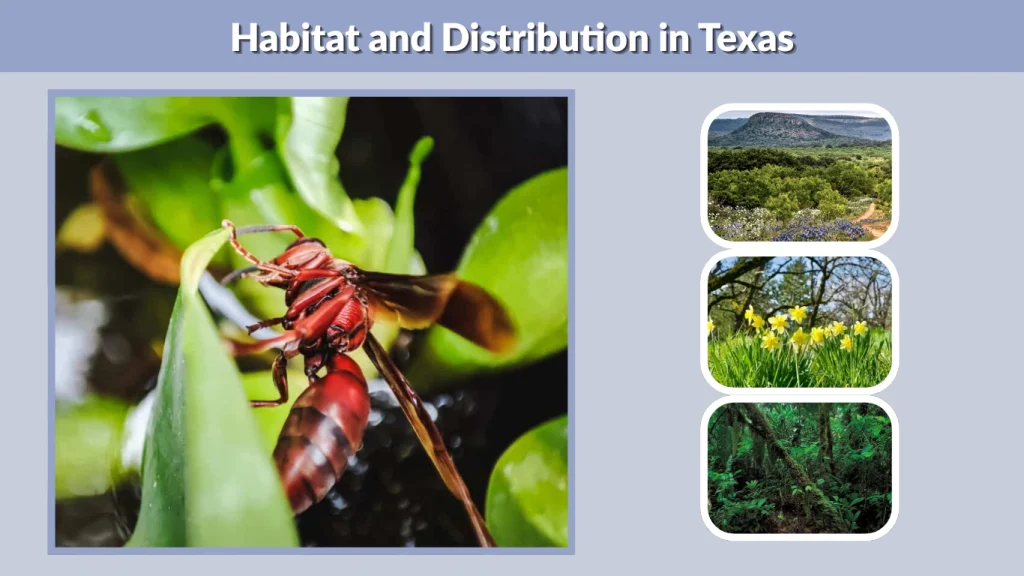
Regional Presence
Red wasps thrive in nearly all parts of Texas, especially where the weather is hot and humid:
- North Texas: Common in Fort Worth, Dallas, and surrounding suburban areas.
- Central Texas: Abundant around Austin, Waco, and the Hill Country, often near fields and gardens.
- East Texas: Found in wooded and humid regions where vegetation offers good nesting spots.
- South Texas: Populations remain active year-round due to the warm climate and ample nesting sites.
These wasps prefer areas with both shelter and food sources, making human structures ideal nesting locations.
Preferred Nesting Areas
Red wasps build open paper nests using chewed wood fibers mixed with saliva. Their nests often resemble an upside-down umbrella and are commonly found:
- Under roof eaves or porch ceilings
- Inside barns, sheds, and garages
- On tree branches or fence posts
- Beneath decks or outdoor furniture
Each nest can house 20 to 40 adult wasps during the summer peak. Queens begin nest building in early spring, and colonies grow rapidly through the warmer months.
Behavior and Aggression
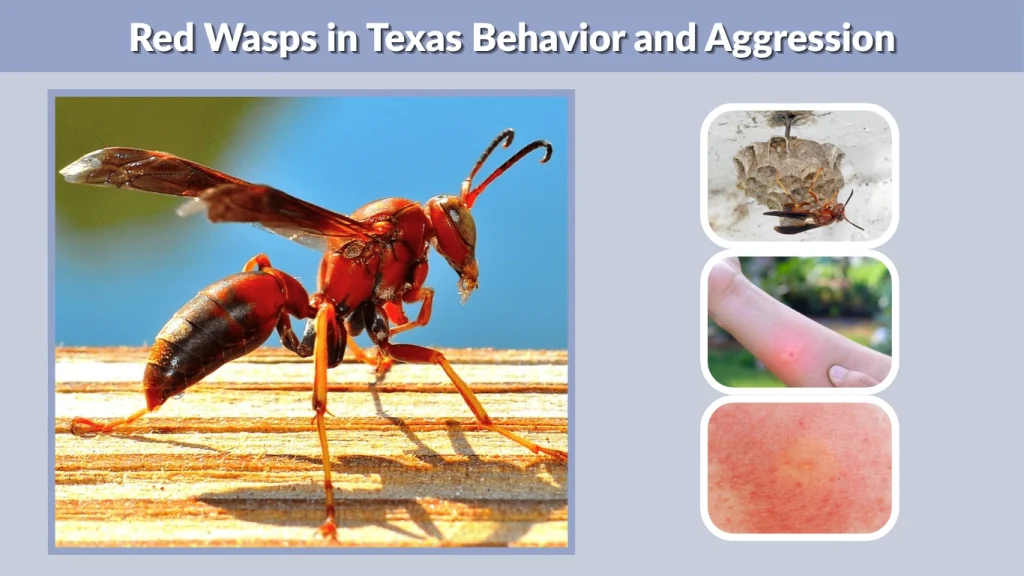
Despite their intimidating appearance, red wasps are not naturally aggressive. They usually sting only when defending their nest or if provoked. However, during late summer, when colonies reach their maximum size, wasps become more protective and likely to attack perceived threats.
Red wasps can sting multiple times, unlike honeybees, which lose their stinger after one sting. Their venom contains enzymes that trigger pain, redness, and swelling. While most reactions are mild, individuals allergic to insect venom should exercise extreme caution around nests.
Wasps are also drawn to bright clothing, perfumes, and sugary foods or drinks, which can increase the chance of accidental encounters outdoors.
Texas Red Wasp Sting and Pain Level
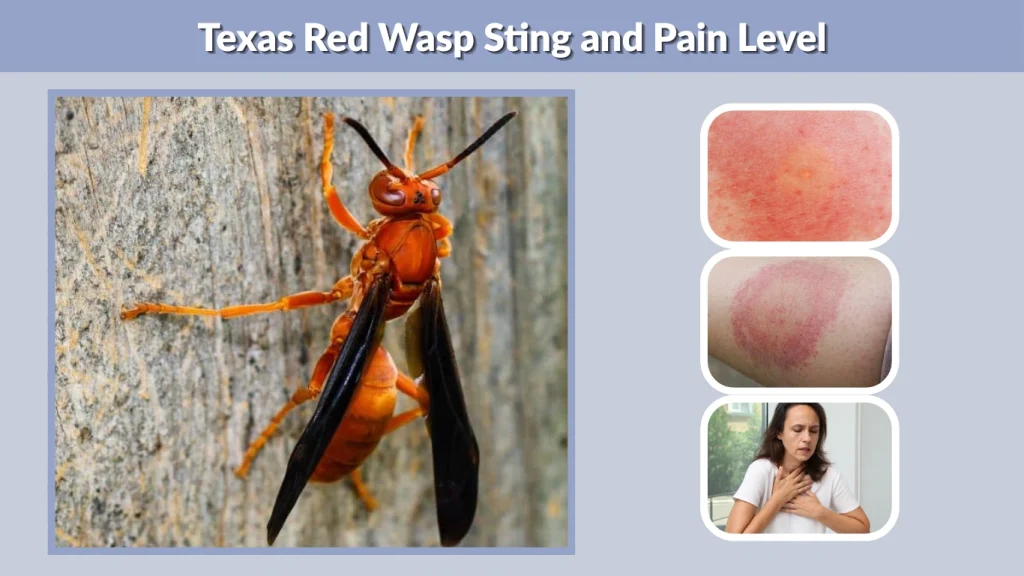
Sting Sensation
A red wasp sting ranks around 3.0 on the Schmidt Pain Index, similar in pain level to a yellow jacket sting. Victims describe it as a hot, sharp, burning sensation that can last from several minutes to an hour. The sting site often becomes red, swollen, and itchy shortly afterward.
Typical Reaction
- Mild reactions: Pain, redness, and slight swelling
- Moderate reactions: Warm, firm swelling spreading beyond the sting site
- Severe (allergic) reactions: Difficulty breathing, dizziness, and swelling of the face or throat — signs of anaphylaxis, a medical emergency
People stung multiple times or those with allergies should seek medical attention immediately.
First Aid and Treatment
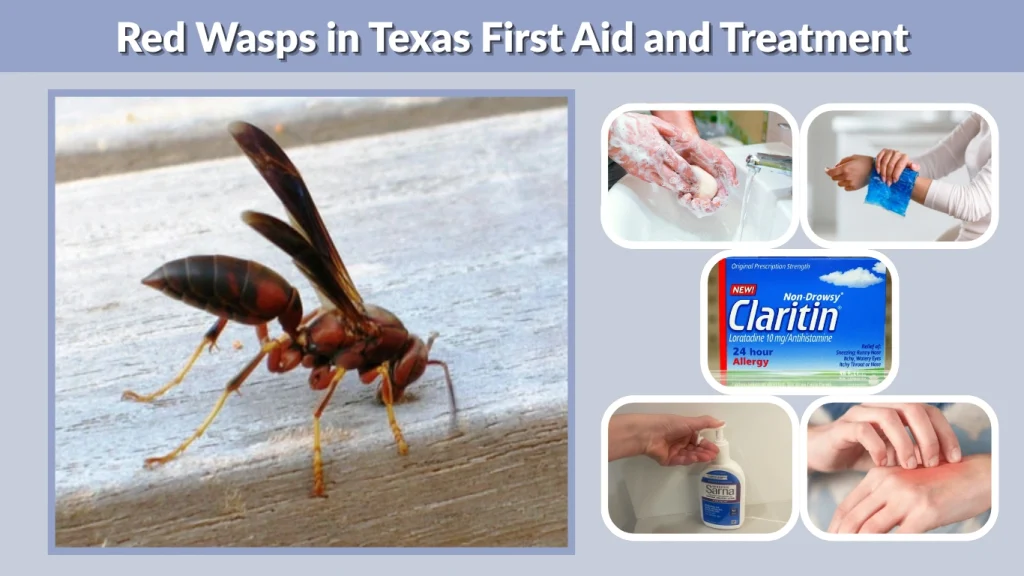
If you’re stung by a red wasp in Texas, follow these steps:
- Move away from the nest area to prevent more stings.
- Wash the area thoroughly with soap and water to remove venom residue.
- Apply an ice pack or cold compress to reduce pain and swelling.
- Use antihistamines or hydrocortisone cream to ease itching.
- Avoid scratching — it can worsen swelling and risk infection.
For severe pain or allergic reactions, over-the-counter pain relievers and medical supervision may be necessary.
Prevention and Control of Red Wasps in Texas
How to Get Rid of Red Wasps
Dealing with red wasps in Texas requires caution and timing. The safest time to remove nests is early morning or late evening when wasps are less active. Use a pressurized wasp spray designed for flying insects, aiming directly at the nest from a safe distance. Always wear long sleeves, gloves, and goggles for protection.
For a more eco-friendly approach, mix peppermint oil and water in a spray bottle—wasps dislike the scent and avoid sprayed areas. Vinegar and dish soap can also serve as mild natural repellents.
If you spot a large nest or one located high above the ground, it’s best to contact professional pest control services for safe removal.
Prevention Tips
Keeping red wasps away is easier than removing an active colony. Try these methods to reduce infestation risks:
- Seal entry points: Close small openings around eaves, vents, and siding.
- Eliminate attractants: Keep food, drinks, and trash sealed outdoors.
- Avoid bright colors and floral scents: These attract foraging wasps.
- Hang decoy nests: Red wasps are territorial and won’t build near other colonies.
- Regular inspections: Check porches, sheds, and barns in early spring before nests grow large.
Simple seasonal maintenance can prevent red wasps from nesting close to your home.
Predators and Ecological Role
Despite their sting, red wasps are vital in the Texas ecosystem. They help control pest populations by feeding on caterpillars, flies, and other soft-bodied insects. They also aid in pollination by drinking nectar from flowers.
Their main natural enemies include birds, mantises, and spiders, which feed on larvae or adult wasps. Humans pose the greatest threat through nest destruction, often reducing local populations around residential areas.
Comparison Table: Red Wasps vs. Other Texas Wasps
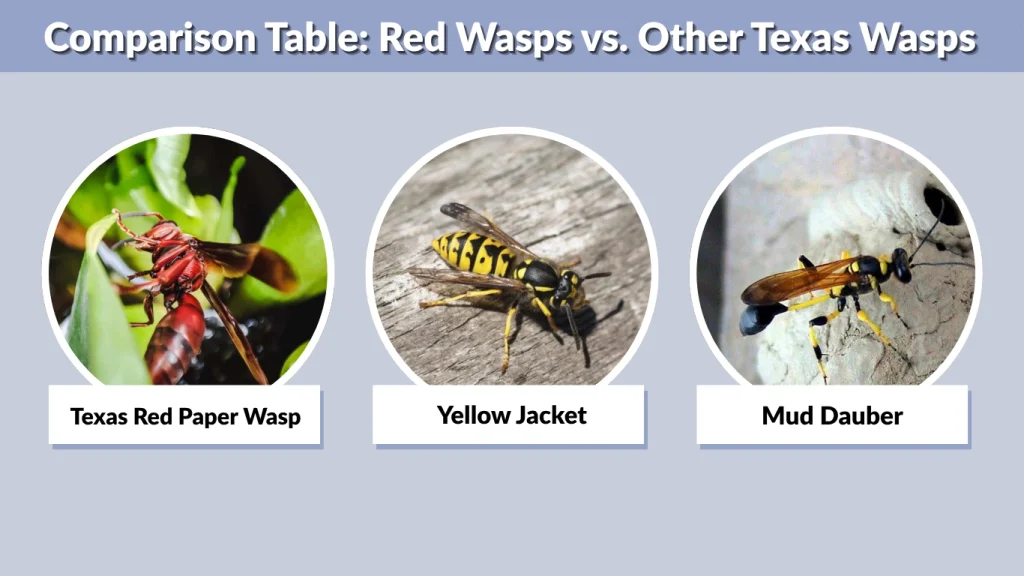
| Feature | Texas Red Paper Wasp | Yellow Jacket | Mud Dauber |
| Color | Reddish-brown or orange-red | Yellow and black | Metallic black or blue |
| Aggression | Moderate | Very high | Low |
| Nest Type | Open, paper-like, umbrella-shaped | Enclosed, underground | Mud tubes |
| Sting Pain Index | 3.0 / 4 | 2.5 / 4 | 1.5 / 4 |
| Habitat | Roofs, barns, trees | Ground and walls | Sheds and attics |
| Stinger Type | Smooth (can sting repeatedly) | Smooth (can sting repeatedly) | Smooth, rarely used |
This table highlights how the Texas red wasp is less aggressive than yellow jackets but still capable of multiple stings when disturbed.
Red Wasp Nests in Texas
A red wasp nest starts small in spring but grows quickly as more workers emerge. Each nest is made from chewed wood fibers mixed with saliva, forming a durable paper-like texture. Colonies usually contain 20–40 adult wasps, but larger nests may host up to 100 individuals by late summer.
Nests are typically found under eaves, porch roofs, barns, and tree limbs, often in sunny but sheltered locations. Removing old nests in winter helps discourage new colonies in the following season.
Are Red Wasps in Texas Dangerous?
Red wasps are moderately aggressive and sting only when provoked. Their venom causes pain, redness, and swelling, but stings are rarely life-threatening. However, those with wasp allergies or multiple stings should seek medical care immediately.
Texas residents often report increased encounters during hot, dry periods when wasps seek moisture. Staying alert outdoors and using repellents can significantly lower sting risks.
Interesting Facts about Texas Red Wasps
- Red wasps are part of the Vespidae family, related to hornets and yellow jackets.
- Queens survive winter and start new nests in early spring.
- Males (drones) die soon after mating in late summer.
- Their nests are never reused after winter—new queens always start fresh.
- Red wasps contribute to natural pest control and reduce crop damage.
FAQs
What are the big red wasps seen in Texas?
They are mostly Polistes carolina, the Texas red paper wasp. These wasps can grow up to 1.5 inches long and have a reddish-brown body with black-tinted wings. They are commonly found under roofs, barns, and porches.
Are red wasps dangerous in Texas?
Yes, their sting is painful and can cause allergic reactions in sensitive individuals. While most stings only result in redness and swelling, those allergic to venom should seek medical attention immediately after being stung.
How can I get rid of red wasps in Texas?
Use wasp sprays at night or natural repellents like peppermint oil. Remove old nests during winter, seal entry points, and hang decoy nests to deter colony formation. For large nests, call pest control professionals.
Where are red wasps most common in Texas?
They are widespread across Central, North, and East Texas, especially in areas with warm weather and plenty of vegetation. Cities like Fort Worth, Houston, and Austin see the highest populations in summer.
What do Texas red wasps eat?
Adult red wasps feed on nectar and sweet plant juices, while their larvae are fed caterpillars and flies. This dual diet makes them both pollinators and pest controllers, contributing to healthy local ecosystems.
