

A red wasp sting can cause sudden, intense pain followed by redness, itching, and swelling. These wasps, often seen in the southern United States, are known for their defensive nature and potent sting. While most stings are not dangerous, understanding the symptoms, pain level, and proper treatment methods helps reduce discomfort and prevent allergic reactions.
Understanding the Red Wasp and Its Sting

What Is a Red Wasp?
The red wasp, commonly from the Polistes carolina species, belongs to the paper wasp family. It has a reddish-brown body, long legs that dangle during flight, and a narrow waist. Red wasps are social insects that build papery umbrella-shaped nests under eaves, decks, and trees. They’re common in Texas, Florida, and Alabama.
Why Do Red Wasps Sting?
Red wasps use their stinger purely for defense, not hunting. They sting when:
- Their nest is disturbed
- A human or animal moves too close
- They feel threatened by sudden motion or loud noise
Unlike honeybees, red wasps can sting multiple times, as their smooth stinger doesn’t detach after stinging.
Red Wasp Sting Pain and Index Rating

Pain Level
A red wasp sting ranks around 3.0 on the Schmidt Pain Index, meaning it’s highly painful but short-lived. Victims describe it as burning, sharp, and electric, lasting from a few minutes to several hours. The sting injects venom containing peptides and histamines, which irritate skin tissue and trigger inflammation.
Comparison: Red Wasp vs. Other Wasps
| Species | Pain Index | Duration | Aggression Level | Reaction |
| Red Wasp | 3.0 | Moderate | Defensive | Burning pain, swelling |
| Yellow Jacket | 2.5 | Long | Highly Aggressive | Itchy and sore |
| Hornet | 2.0 | Short | Very Aggressive | Sharp, short sting |
Red wasps are less aggressive than hornets or yellow jackets but will defend their nests persistently.
Symptoms of a Red Wasp Sting

Common Reactions
After being stung, you’ll likely notice:
- Immediate pain and redness
- Swelling around the sting site
- Itching or warmth in the affected area
- Localized burning sensation lasting 30 minutes to 2 hours
These are normal reactions and usually resolve within a few days.
Severe or Allergic Reactions
Some individuals may develop allergic symptoms, such as:
- Large red swelling spreading several inches from the sting
- Hives, nausea, or dizziness
- Difficulty breathing or tightness in the chest
- Rapid heartbeat or fainting
If these occur, the person may be experiencing anaphylaxis, a life-threatening allergic reaction requiring immediate emergency care.
How to Treat a Red Wasp Sting

Immediate First Aid Steps
- Move away from the area — wasps may sting repeatedly.
- Clean the sting site with soap and cool water to remove venom traces.
- Apply ice or a cold compress for 10–15 minutes to reduce swelling.
- Take an oral antihistamine (like Benadryl) for itching or redness.
- Apply hydrocortisone cream or a calamine lotion to soothe irritation.
- Avoid scratching — this can worsen inflammation or lead to infection.
Home Remedies for Relief
- Baking soda paste: Mix baking soda with water to neutralize venom.
- Apple cider vinegar or lemon juice: Breaks down venom enzymes and eases pain.
- Aloe vera gel: Cools and moisturizes inflamed skin.
- Honey: Works as a natural antiseptic and anti-inflammatory treatment.
When to Seek Medical Help
Seek medical attention if:
- Swelling continues to increase after 24 hours
- The redness spreads far beyond the sting area
- Signs of infection appear (pus, heat, or severe pain)
- The person has a known wasp allergy
- There are multiple stings, especially on children or the elderly
Medical treatment may involve epinephrine injections, steroids, or antihistamines to manage severe allergic responses.
Red Wasp Stinger Facts
How the Stinger Works
Unlike bees, red wasps do not lose their stinger after attacking. Their stingers are smooth and can penetrate the skin multiple times. The stinger delivers venom containing enzymes and peptides that cause pain, swelling, and redness. This ability to sting repeatedly makes red wasps more dangerous during nest defense.
Venom Composition
- Hyaluronidase: Spreads venom through tissue
- Phospholipase A: Causes pain and swelling
- Histamine: Triggers itching and redness
- Mastoparan peptide: Contributes to the burning sensation
These components trigger the body’s immune response, resulting in visible redness, warmth, and discomfort around the sting area.
Duration and Healing Process
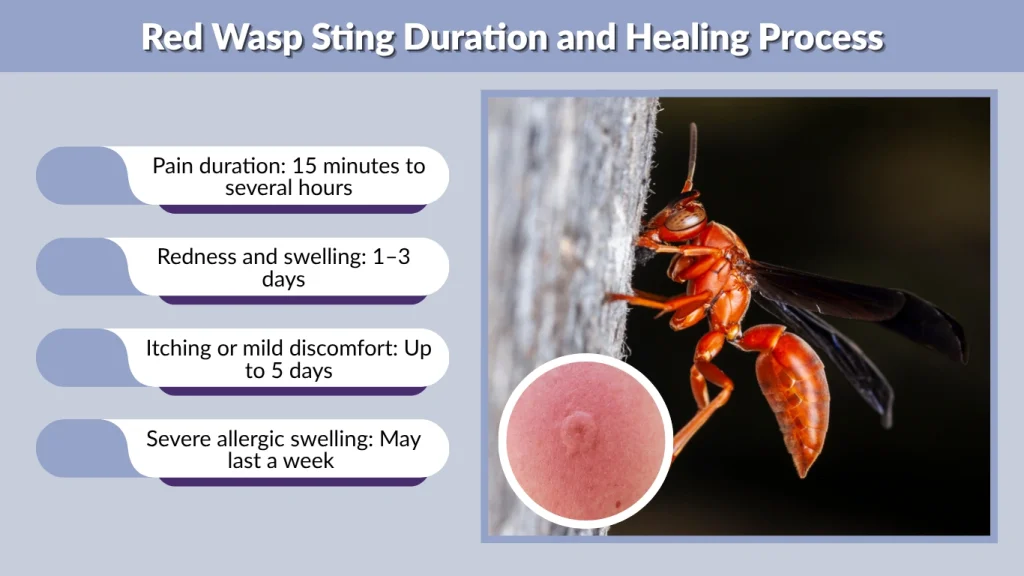
The effects of a red wasp sting depend on individual sensitivity and the number of stings received.
- Pain duration: 15 minutes to several hours
- Redness and swelling: 1–3 days
- Itching or mild discomfort: Up to 5 days
- Severe allergic swelling: May last a week or longer without treatment
Keeping the area clean and avoiding scratching promotes faster healing. Applying an antibacterial ointment after 24 hours reduces infection risk.
Prevention and Protection Tips
Avoiding Red Wasp Stings
- Stay alert around trees, eaves, and roof corners where nests form.
- Avoid floral perfumes or bright colors, which attract wasps.
- Keep food and drinks covered during outdoor activities.
- Seal cracks and entry points around doors, vents, and attics.
During summer, inspect outdoor spaces regularly to spot early nest activity. Smaller nests are easier and safer to remove.
Safe Nest Removal
- Remove nests early in the morning or at dusk, when wasps are inactive.
- Wear protective clothing such as long sleeves, gloves, and goggles.
- Use wasp spray from a safe distance, following label instructions.
- For large or hard-to-reach nests, hire a licensed pest control service.
Red Wasp Sting vs. Other Insect Stings
| Feature | Red Wasp Sting | Yellow Jacket Sting | Bee Sting |
| Pain Index | 3.0 (intense, sharp) | 2.5 (hot, prolonged) | 2.0 (short, burning) |
| Stinger | Smooth, reusable | Smooth, reusable | Barbed, detaches |
| Aggression Level | Moderate | High | Low |
| Venom Type | Neurotoxic and enzymatic | Alkaline, painful | Acidic, inflammatory |
| Repeat Stinging | Yes | Yes | No |
This table highlights that red wasps can sting repeatedly, delivering painful venom but usually only in defense of their nests.
Emergency Response for Severe Reactions
If someone shows signs of anaphylaxis, act quickly:
- Call emergency services immediately.
- Use an epinephrine auto-injector (EpiPen) if available.
- Lay the person flat and elevate their legs slightly.
- Keep them calm and monitor breathing until help arrives.
Prompt response can prevent serious outcomes, especially for those with venom allergies.
When Redness and Swelling Spread
Redness that spreads or forms a large circular area is usually due to a local allergic reaction, not infection. However, if the area becomes warm, painful, or produces pus, it may indicate infection. Applying warm compresses and topical antibiotics helps, but medical advice is recommended if symptoms persist beyond three days.
Home Remedies That Actually Work
Cold Compresses
Ice reduces inflammation and numbs pain naturally. Apply for 10–15 minutes every hour for the first few hours.
Baking Soda Paste
A 1:3 mix of baking soda and water neutralizes venom acidity and soothes the skin.
Honey and Aloe Vera
Both have antibacterial and anti-inflammatory properties that calm redness and itching.
Cucumber or Potato Slices
Placing cool slices on the sting draws out heat and provides natural cooling relief.
FAQs
How long does a red wasp sting last?
A typical sting lasts several hours, but redness or swelling can persist for up to three days. Applying ice and topical creams speeds healing. If swelling worsens after 48 hours, consult a doctor to rule out infection or allergic complications.
What’s the best way to treat a red wasp sting?
Clean the sting area with soap and water, then apply ice and hydrocortisone cream. Baking soda paste or aloe vera can relieve itching and burning. For allergic individuals, taking an antihistamine like Benadryl can reduce swelling.
Can a red wasp sting be fatal?
While most stings are harmless, allergic individuals can suffer anaphylactic shock, which is life-threatening without immediate care. Multiple stings can also pose risks due to venom buildup, particularly for children or elderly victims.
Do red wasps die after stinging?
No. Unlike honeybees, red wasps have smooth stingers that allow them to sting repeatedly. They can attack multiple times when defending their nest, especially in summer when colonies are largest.
What should I do if the redness keeps spreading?
If the red area grows larger or feels hot and painful, apply warm compresses and topical antibiotics. Persistent spreading redness may indicate infection or an allergic reaction — seek medical attention promptly.
