

Damselfly larvae are fascinating aquatic insects that play a vital role in freshwater ecosystems. Before transforming into graceful adult damselflies, they live underwater as fierce hunters, feeding on smaller aquatic creatures. Found in ponds, lakes, and streams around the world, these larvae are key indicators of water quality and ecosystem health, making them a subject of scientific and ecological interest.
Understanding Damselfly Larvae
Damselfly larvae, also known as nymphs or naiads, represent the immature stage of damselflies belonging to the order Odonata and suborder Zygoptera. Unlike their delicate adult forms, the larvae are aquatic predators with sturdy bodies and extendable jaws designed for hunting. They spend most of their lives underwater, developing through several molts before emerging as adults. Their presence helps control mosquito populations and contributes to aquatic biodiversity.
Scientific Classification and Identification

Damselfly larvae belong to a diverse group of aquatic insects within the order Odonata and suborder Zygoptera. Below is a concise overview and list-style summary to make classification and identification clear.
Overview
Damselfly larvae, also known as naiads, are slender aquatic predators with three leaf-like tails used for breathing and swimming. They share a close relationship with dragonflies but differ in body shape, gill structure, and eye placement. Their presence in freshwater habitats helps scientists assess water quality and biodiversity.
Scientific Classification
- Kingdom: Animalia
- Phylum: Arthropoda
- Class: Insecta
- Order: Odonata
- Suborder: Zygoptera
- Families:
- Coenagrionidae (Narrow-winged damselflies)
- Lestidae (Spreadwings)
- Calopterygidae (Broad-winged damselflies)
- Coenagrionidae (Narrow-winged damselflies)
Key Identification Features
- Body Shape: Slender and elongated with a segmented abdomen.
- Gills: Three external, leaf-like appendages (caudal lamellae) at the abdomen tip.
- Eyes: Prominent and widely separated on the head.
- Legs: Adapted for grasping and holding prey.
- Mouthparts: Extendable lower jaw (labium) used to capture prey.
- Habitat Preference: Found in clean, slow-moving, or still freshwater environments.
- Coloration: Brown, green, or translucent for camouflage among vegetation.
Life Cycle and Development
Stages of Growth
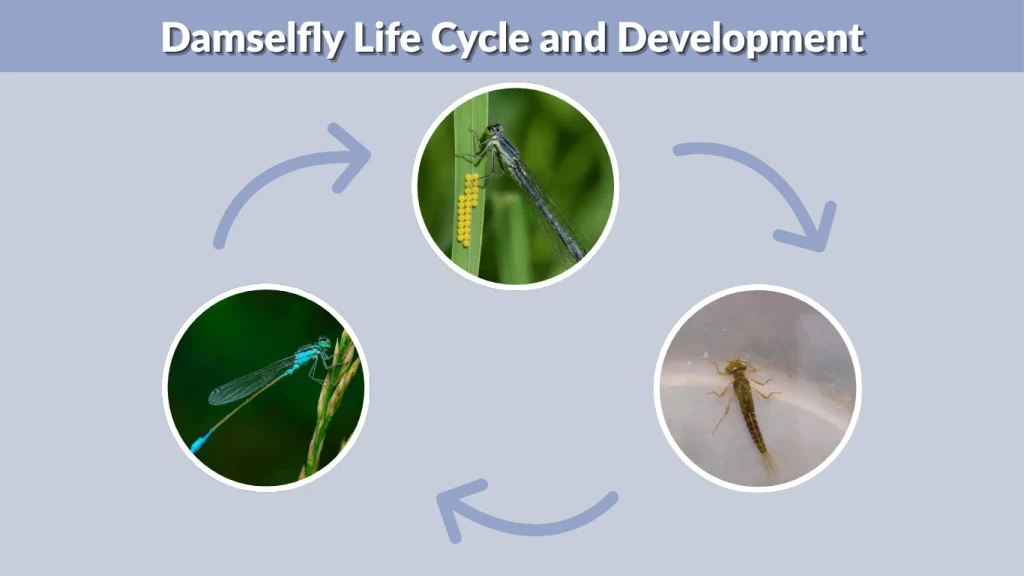
The life cycle of a damselfly begins when a female lays eggs in or near water. After hatching, the larvae live underwater for several months to two years, depending on species and environmental conditions. During this stage, they undergo 10–12 molts as they grow. Each molt marks a developmental stage known as an instar, gradually preparing the larva for emergence as an adult damselfly.
Metamorphosis Process
When fully grown, the larva climbs out of the water onto vegetation or rocks to begin metamorphosis. Its outer skin splits, allowing the adult damselfly to emerge, expand its wings, and take its first flight. This transformation, called emergence, is a remarkable process that signals the end of the aquatic phase and the beginning of a brief yet vibrant aerial life.
Habitat and Environmental Conditions

Preferred Habitat
Damselfly larvae thrive in freshwater habitats like ponds, lakes, marshes, and slow-moving streams. They prefer environments rich in vegetation, which provides shelter and hunting grounds. The larvae attach themselves to submerged plants or debris, waiting patiently for unsuspecting prey. Still or gently flowing waters are ideal since strong currents can dislodge them.
Water Quality and Conditions
Damselfly larvae are highly sensitive to environmental changes. They require clean, oxygen-rich water with balanced pH and low turbidity. Ideal dissolved oxygen levels range from 5 to 9 mg/L, allowing efficient respiration through their gills. Their presence in a body of water often indicates good ecological health, while their absence can suggest pollution or habitat disturbance. This sensitivity makes them valuable bioindicators in freshwater studies.
Geographical Range
Damselfly larvae are found worldwide, from tropical wetlands to temperate lakes. In the United Kingdom, species like the Common Blue Damselfly (Enallagma cyathigerum) and Blue-Tailed Damselfly (Ischnura elegans) are common in still waters. In North America, the American Rubyspot (Hetaerina americana) inhabits clear streams and rivers. Each species adapts to local conditions, demonstrating the larvae’s remarkable environmental flexibility.
Behavior and Adaptations
Locomotion and Movement
Damselfly larvae are agile swimmers. They propel themselves by undulating their tails or flexing their abdomen, using the leaf-like gills as both fins and respiratory organs. This movement is smooth and controlled, unlike the jet propulsion used by dragonfly larvae. When threatened, they dart quickly to safety among aquatic plants or sediment.
Survival Adaptations
The larvae possess remarkable survival adaptations. Their body coloration often blends perfectly with their surroundings, providing camouflage against predators. They can regenerate lost gill filaments and tolerate slight fluctuations in temperature or oxygen levels. Their predatory mask — an extendable jaw — gives them a deadly advantage when capturing prey such as mosquito larvae or small crustaceans.
Diet and Feeding Habits

What Damselfly Larvae Eat
Damselfly larvae are voracious predators. Their diet consists of small aquatic organisms, including mosquito larvae, copepods, worms, tadpoles, and even tiny fish fry. They hunt mostly at night or in dim light, relying on stealth and speed to ambush prey. Their hunting efficiency helps control mosquito populations, providing a natural form of pest management in wetland ecosystems.
Feeding Strategy
The larvae use an extendable lower lip called a labium or “mask” to capture prey. This structure acts like a spring-loaded arm, shooting forward to snatch passing prey with surprising accuracy. Once caught, the prey is held by hooked tips and drawn toward the larva’s mouth. This efficient feeding mechanism allows the larvae to dominate their microhabitat as top invertebrate predators.
Predators and Threats
Despite being skilled hunters, damselfly larvae face many predators. Fish, frogs, newts, and aquatic birds feed on them regularly. Larger insects, including dragonfly larvae, also pose a threat. To survive, damselfly nymphs rely on camouflage, hiding within plants or sediment. Habitat loss, pollution, and reduced oxygen levels caused by human activities further endanger their populations. Because they are sensitive to contaminants, their decline often signals deteriorating water quality in local ecosystems.
Damselfly Larvae in Aquariums

Presence in Fish Tanks
It’s not uncommon for damselfly larvae to appear in aquariums or ponds, often introduced accidentally through live plants or outdoor water sources. Once inside, they become stealthy residents, hiding among roots and decorations. Their appearance can surprise fish keepers because of their predatory nature — they may attack small fish fry, shrimp, or other tiny aquatic life.
Control and Removal
If unwanted, removing damselfly larvae should be done carefully to avoid harming other tank inhabitants. Manual removal with a net is usually effective. Avoid chemical treatments, as they can disrupt the aquarium’s balance. Maintaining clean water and inspecting new plants before adding them to the tank helps prevent larvae infestations in the first place.
Keeping Damselfly Larvae Intentionally
Some aquarists and researchers choose to keep damselfly larvae intentionally for educational observation or ecosystem studies. They require well-oxygenated freshwater and live prey such as mosquito larvae or daphnia. Providing plants and stones for molting and perching is essential. Under proper care, they can grow into adults, completing their metamorphosis within controlled environments.
Damselfly vs. Dragonfly Larvae

Although closely related, damselfly and dragonfly larvae have clear differences in form and behavior. The table below outlines their key distinctions:
| Feature | Damselfly Larvae | Dragonfly Larvae |
| Body Shape | Slender and elongated | Short and bulky |
| Gills | External (three tail-like lamellae) | Internal (rectal gills) |
| Swimming Method | Swims gracefully using tail | Uses jet propulsion |
| Habitat Preference | Still or slow-moving water | Both still and flowing water |
| Eyes | Separated, smaller | Large and nearly touching |
These differences are useful for identification, especially for students or researchers studying aquatic insect diversity. Damselflies appear more delicate, while dragonflies are bulkier and stronger swimmers.
Regional and Species Examples
Common Blue Damselfly (Enallagma cyathigerum)
A widespread species found across Europe and the UK, the Common Blue Damselfly prefers calm waters. Its larvae are slender, light brown, and can be found attached to submerged plants. They take nearly a year to mature, emerging as adults during the warm months of late spring and summer.
American Rubyspot (Hetaerina americana)
This North American species thrives in clear, slow-moving streams. The larvae are darker and slightly larger than their European relatives. Their habitat preference for clean water makes them useful indicators of ecosystem health in U.S. freshwater systems.
Blue-Tailed Damselfly (Ischnura elegans)
One of the most tolerant damselfly species, the Blue-Tailed Damselfly larvae can survive in slightly polluted waters. Their adaptability makes them common in ponds and canals, even near urban areas.
Ecological Importance
Damselfly larvae play a crucial role in maintaining aquatic ecosystems. As mid-level predators, they keep populations of mosquitoes and other small invertebrates in check, reducing disease vectors naturally. In turn, they serve as an essential food source for fish, amphibians, and birds. Their sensitivity to pollutants, dissolved oxygen levels, and water chemistry also makes them valuable biological indicators for scientists monitoring environmental changes. The loss of damselfly populations often signals habitat imbalance or pollution, emphasizing their ecological value.
Human Interaction
Aquarium Trade and Research
While not as common as ornamental species, damselfly larvae are sometimes sold for biological studies, environmental education, or ecosystem modeling. They help researchers understand aquatic predator-prey relationships and are occasionally used in natural mosquito control experiments. Ethical collection and habitat conservation are encouraged to prevent overharvesting from wild populations.
Use in Fly Fishing
In fly fishing, artificial lures designed to mimic damselfly larvae are popular for catching trout and other freshwater fish. Their slender shape and subtle swimming motion make them irresistible to fish. Anglers often refer to these imitations as “nymph patterns,” which closely resemble the larvae’s natural appearance and movement in the water.
FAQs
What is the scientific name for damselfly larvae?
Damselfly larvae belong to the suborder Zygoptera under the order Odonata. Each species has its own scientific name; for example, the Common Blue Damselfly is Enallagma cyathigerum. The term “larvae” refers broadly to their aquatic nymph stage before metamorphosis.
How long do damselfly larvae live underwater?
Depending on environmental conditions and species, damselfly larvae remain underwater for six months to two years. Colder climates tend to extend their larval period, while warmer conditions speed up development, leading to earlier emergence as adults.
What do damselfly larvae eat?
They are active predators that feed on mosquito larvae, small crustaceans, tadpoles, and other tiny aquatic organisms. Using a spring-loaded jaw called a labium, they can snatch prey within milliseconds, playing an important role in regulating insect populations.
How do damselfly larvae breathe?
Damselfly larvae breathe through three external gills located at the tip of their abdomen. These leaf-like appendages absorb dissolved oxygen from the water and also help with swimming. Clean, well-oxygenated water is essential for their survival.
Are damselfly larvae harmful to aquariums?
They are not harmful to water chemistry but can prey on smaller fish fry or shrimp. If their presence is unwanted, gently remove them using a net rather than chemicals. Alternatively, relocating them to a natural pond is a humane solution.
