

Dragonflies are among the most fascinating insects in nature, admired for their brilliant colors and graceful flight. Yet, one question often pops up whenever someone spots one hovering nearby — do dragonflies bite or sting humans? Despite their intimidating appearance, dragonflies are peaceful creatures that play an essential role in controlling insect populations. Let’s uncover the truth behind the myths about dragonfly bites and stings.
Understanding Dragonflies
Dragonflies belong to the order Odonata, sharing ancestry with damselflies. They are known for their powerful wings, excellent eyesight, and incredible hunting skills. Far from being dangerous, dragonflies are beneficial to humans — they feed on mosquitoes, gnats, and other pests that can spread disease.
However, their large size and strong mandibles sometimes make people wonder if they can bite or sting. The truth is simple: dragonflies do not sting, and while they can bite, it’s extremely rare and harmless to humans.
Dragonfly Anatomy and Behavior
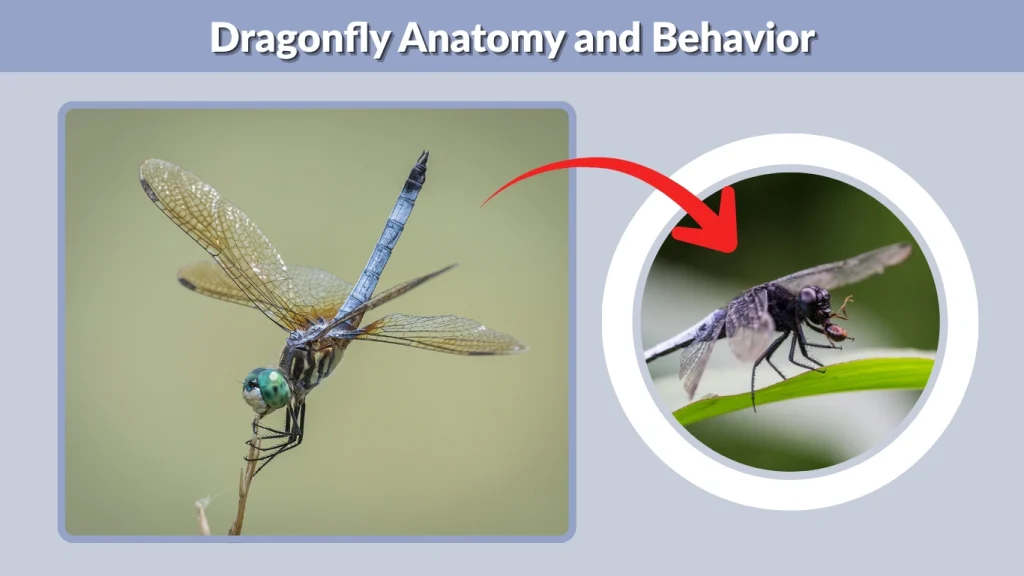
Physical Features Relevant to Biting
Dragonflies have strong mandibles (jaw-like mouthparts) designed for catching and chewing prey. These mandibles are powerful enough to crush small insects but not to break human skin easily. Unlike bees or wasps, dragonflies lack a stinger or venom gland, which means they cannot inject venom or poison. Their primary tools — jaws and legs — are used for hunting, gripping prey, and self-defense, not for attacking humans.
Behavioral Traits
Dragonflies are not aggressive creatures. They prefer to fly away from danger rather than confront it. When approached or handled roughly, they may try to bite as a defensive reaction. In normal circumstances, they pose no threat at all and often continue feeding or flying peacefully near people. Their behavior in nature is purely instinctive — survival, feeding, and reproduction — not aggression.
Do Dragonflies Bite Humans?

Dragonflies rarely, if ever, bite humans deliberately. Their instinct is to flee, not fight. However, a bite can occur when a person handles or traps a dragonfly, especially larger species such as the Emperor Dragonfly or Green Darner.
When Bites Can Occur
- When people try to catch or hold dragonflies by hand
- During scientific handling or photography sessions
- If the insect feels cornered or threatened
- Occasionally, while removing them from nets or tanks
These bites are not venomous or dangerous — at most, they might feel like a mild pinch.
Are Dragonfly Bites Dangerous?
Absolutely not. Dragonfly bites are harmless to humans. Their jaws are meant to crush small prey, not puncture thick human skin. A large species may cause a slight pinch or tiny mark, but it fades within minutes. There’s no venom, no allergic reaction, and no infection risk.
In rare cases of sensitive skin, washing the area with soap and applying antiseptic is enough. For most people, a dragonfly bite leaves no noticeable effect at all.
Do Dragonflies Sting?

The Stinging Myth
A common misconception is that dragonflies sting like bees or wasps. This myth has existed for centuries, often fueled by folklore. Some cultures even referred to dragonflies as “devil’s darning needles,” suggesting they could sew people’s lips shut — an entirely false belief.
The truth: dragonflies do not possess a stinger. Their bodies lack the anatomical structure for stinging, and they do not produce venom of any kind.
Scientific Explanation
Dragonflies are predators, not stingers. Their weapon is their mouth, not a sting. Their biting mechanism evolved for catching insects midair, not defending against large creatures like humans. Even when frightened, a dragonfly’s natural response is to escape — not attack. In scientific terms, their mouthparts are called mandibulate, adapted for chewing, not piercing.
What Do Dragonfly Bites Feel Like?

Pain Level and Sensation
For the rare person who has been bitten by a dragonfly, the sensation is mild and brief. Most describe it as feeling like a gentle pinch or pressure — not painful enough to break skin. Larger species might deliver a slightly stronger nip, but still far from harmful. Unlike bee stings, dragonfly bites do not inject venom, swell, or cause any lingering discomfort.
What To Do If a Dragonfly Bites You
If bitten, there’s no cause for alarm.
Follow these simple steps:
- Wash the affected area with mild soap and water.
- Apply antiseptic cream if slight redness occurs.
- Avoid scratching, as it may irritate the skin.
- Release the dragonfly gently back into the wild — it was only acting out of defense.
Dragonflies bite only when they feel trapped; respecting their space prevents such rare encounters altogether.
Why Do Dragonflies Bite?
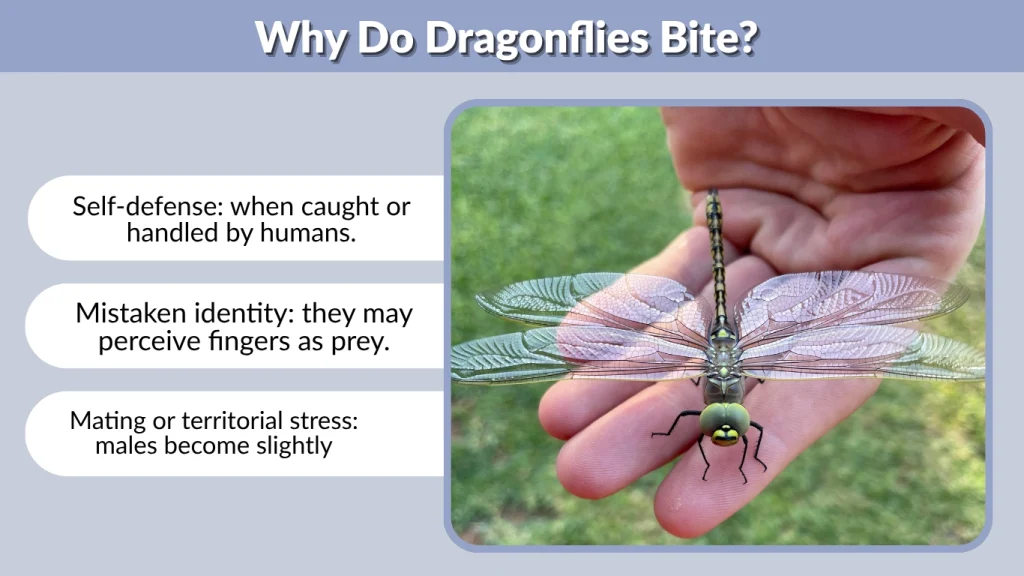
Main Reasons for Biting Behavior
While dragonflies are gentle, there are specific situations when they might bite:
- Self-defense: when caught or handled by humans.
- Mistaken identity: they may perceive fingers as prey.
- Mating or territorial stress: males become slightly more defensive during breeding season.
In all cases, biting is a defensive reflex, not an attack. Dragonflies have no reason to bite humans for food or aggression.
When They Don’t Bite
When left undisturbed, dragonflies are completely harmless. They can even land on your hand or clothes out of curiosity without biting. Observers often notice dragonflies perching nearby during fishing or gardening — this is a sign of comfort, not hostility. In nature, they prefer to fly freely and avoid confrontation.
Dragonfly Larvae and Biting Habits

Do Dragonfly Nymphs Bite?
Before becoming winged adults, dragonflies spend most of their lives underwater as nymphs (larvae). These aquatic stages are fascinating predators that feed on mosquito larvae, tadpoles, and other small creatures. Their lower jaw, called a labium, acts like a mechanical arm that shoots out to snatch prey in a fraction of a second.
Although dragonfly nymphs are efficient hunters, they rarely bite humans. A nymph may try to nip if picked up or handled, but it cannot pierce skin deeply. Like adults, their bite is not venomous and poses no risk to people. They simply defend themselves when disturbed — a natural reflex of all living creatures.
Role in Aquatic Ecosystems
Dragonfly larvae are vital to freshwater ecosystems. They help regulate insect populations and serve as a food source for fish and amphibians. Their presence also signals good water quality, as they only thrive in clean, oxygen-rich environments. So, spotting dragonfly nymphs in ponds or streams is usually a positive sign of ecological health.
Do Different Dragonfly Species Bite?

Common Species and Their Behavior
Not all dragonflies are the same in size or temperament, but their behavior toward humans is remarkably similar. Some of the most common species include:
- Emperor Dragonfly (Anax imperator) – One of Europe’s largest dragonflies, impressive in size but non-aggressive.
- Common Whitetail (Plathemis lydia) – Common in North America; may deliver a light pinch if mishandled.
- Green Darner (Anax junius) – A widespread species that prefers open lakes and ponds; rarely bites.
- Blue Dasher (Pachydiplax longipennis) – Small, colorful, and completely harmless.
Even giant dragonflies with strong jaws are not dangerous to humans. Their bites are used only in self-defense or when confused.
Regional Behavior Differences
Dragonflies from different parts of the world — whether British, Australian, Alaskan, or Floridian — all share the same peaceful nature.
Larger individuals, like those found in tropical regions, may have stronger mandibles, but they almost never use them on humans. Environmental conditions or regional behavior do not make any species more “aggressive.”
Dragonfly Bites and Animals
Interaction with Pets
Dragonflies can occasionally interact with pets, but their impact is negligible. Curious dogs or cats might try to catch them midair, and the dragonfly might nip in response. However, these bites are too weak to harm animals. There are no toxins, venom, or stingers in dragonflies, so they cannot poison or irritate pets’ skin.
Impact on Other Animals
In natural ecosystems, dragonflies are part of a balanced food web. Birds, frogs, and fish often prey upon them. Even when caught, dragonflies do not sting or harm predators — they simply try to escape.
Their harmless nature extends to all creatures, reinforcing that dragonflies are neither dangerous nor harmful to animals or humans.
Common Myths and Misconceptions
Folklore and Old Beliefs
Dragonflies have long been surrounded by myths. In old European folklore, they were nicknamed “devil’s darning needles”, believed to sew shut the lips of sleeping children or liars — a purely fictional tale. In Japan and Native American cultures, however, dragonflies symbolize courage, purity, and transformation.
Modern Misunderstandings
On the internet, questions like “Do dragonflies sting?” or “Are dragonflies dangerous?” continue to appear on forums and Q&A sites. These misconceptions arise from their large size and fast movements, which make them appear intimidating. In truth, dragonflies cannot sting, inject venom, or harm people in any way. They are one of the safest and most beneficial insects around.
Benefits of Dragonflies to Humans
Natural Pest Control
Dragonflies are remarkable mosquito hunters. Both adults and larvae feed on mosquito eggs, larvae, and adults, helping reduce the spread of mosquito-borne diseases like malaria and dengue. A single dragonfly can eat hundreds of mosquitoes in a day, making them natural allies in pest management.
Ecological Importance
Beyond pest control, dragonflies serve as indicators of healthy water systems. Their presence means the water has good oxygen levels and minimal pollution. Ecologists often use dragonfly populations to gauge the condition of wetlands and rivers.
Cultural Significance
In many cultures, dragonflies are admired as symbols of strength, transformation, and adaptability. Their short but dynamic life cycle — from aquatic larvae to agile aerial hunters — reflects nature’s resilience and beauty. Observing them can be a reminder of balance and change in the natural world.
FAQs
Do dragonflies actually bite humans?
Yes, but only in self-defense. Dragonflies may bite if caught or handled roughly, though it’s rare. The bite feels like a small pinch and is completely harmless. They do not attack humans intentionally.
Do dragonflies have stingers?
No, dragonflies do not have stingers. Their bodies lack venom glands or stinging organs. The myth that they sting likely comes from their sharp appearance and fast movements.
What should I do if a dragonfly bites me?
Simply wash the area with soap and water. If there’s slight redness, apply antiseptic. There’s no risk of infection or allergic reaction, and the discomfort fades quickly.
Can dragonfly larvae bite underwater?
Dragonfly larvae use their jaws to catch mosquito larvae and tadpoles. While they can bite if handled, their bite cannot harm humans. It’s more of a reflexive defense than aggression.
Which dragonfly species are most likely to bite?
Larger species, such as the Emperor or Green Darner, can deliver a stronger pinch, but even these bites are harmless. They rarely bite unless restrained or provoked.
