

Many people search for “carpet beetle bites” after noticing itchy red spots on their skin, often assuming they have been bitten by an insect. In reality, carpet beetles do not bite humans. Instead, the tiny hairs on carpet beetle larvae can cause skin irritation that closely resembles insect bites or allergic rashes. These reactions commonly occur after contact with infested carpets, clothing, or bedding. Understanding what causes these bite-like marks is essential for proper treatment and long-term relief.
What Are Carpet Beetle Bites
Do Carpet Beetles Actually Bite Humans
Carpet beetles do not bite, sting, or feed on human skin. Their mouthparts are designed for consuming plant pollen or organic fibers, not for piercing skin. The confusion comes from the itchy bumps and rashes people develop after exposure to carpet beetle larvae. Because the symptoms resemble mosquito or bed bug bites, many assume they have been bitten.
The real cause is indirect contact. Carpet beetle larvae are covered in tiny, spear-shaped hairs. When these hairs come into contact with human skin, they can become embedded or trigger an immune response. The result is redness, itching, and inflammation that feels similar to insect bites, even though no actual biting has occurred.
Why Carpet Beetles Cause Skin Irritation
The hairs on carpet beetle larvae are called setae. These microscopic bristles easily detach and stick to clothing, furniture, carpets, and bedding. When they touch the skin, they can cause mechanical irritation or an allergic reaction. Some people experience only mild itching, while others develop pronounced rashes.
This reaction is known as contact dermatitis. It happens when the immune system identifies the hairs as foreign and releases histamines. This leads to redness, swelling, itching, and sometimes blister-like bumps. People with allergies, asthma, or sensitive skin are more likely to experience stronger symptoms.
What Causes Carpet Beetle Bite-Like Rashes
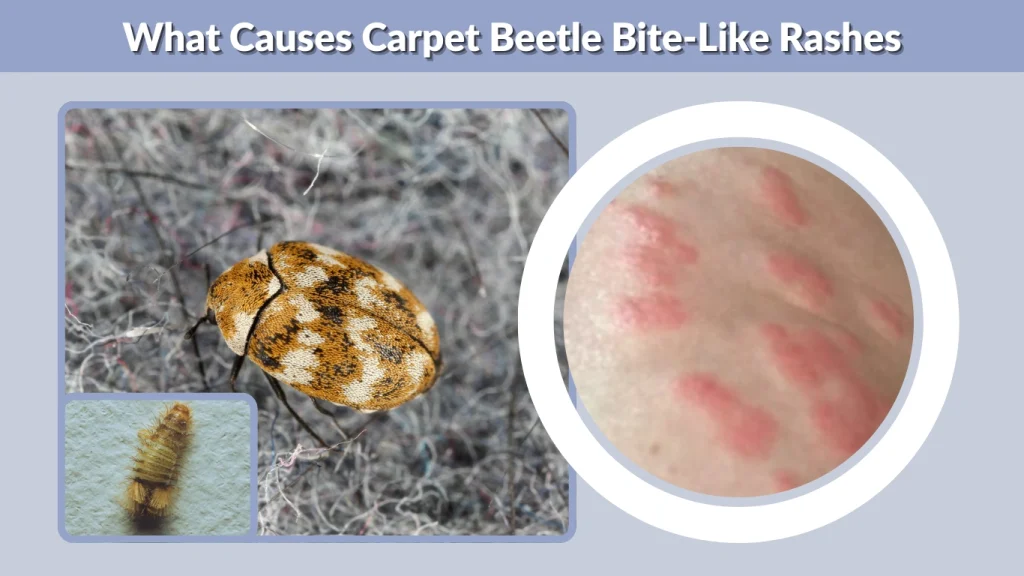
Larvae and Their Microscopic Hairs
The larval stage is responsible for nearly all carpet beetle-related skin problems. Larvae crawl through carpets, closets, and furniture in search of food such as natural fibers, pet hair, and lint. As they move, they shed hairs and skins, contaminating the environment.
Direct contact with larvae is not always necessary. Hairs can transfer onto sofas, pillows, clothing, and even the air as dust. When these hairs come into contact with exposed skin, they can penetrate the outer layer or lodge in pores, leading to itching and irritation. Reactions often appear hours after exposure, making the cause difficult to identify.
Infested Fabrics and Indoor Exposure
Most people develop symptoms after wearing infested clothing or sleeping in contaminated bedding. Closets, drawers, carpets, and upholstered furniture are common sources. Because larvae prefer dark, undisturbed areas, clothing stored for long periods is especially likely to carry larval hairs.
Prolonged exposure increases the risk. Sitting on an infested couch or lying on a contaminated mattress can allow hairs to build up on the skin. This explains why rashes often appear on the neck, arms, waist, and legs—areas that commonly touch fabrics.
Carpet Beetle Bite Symptoms
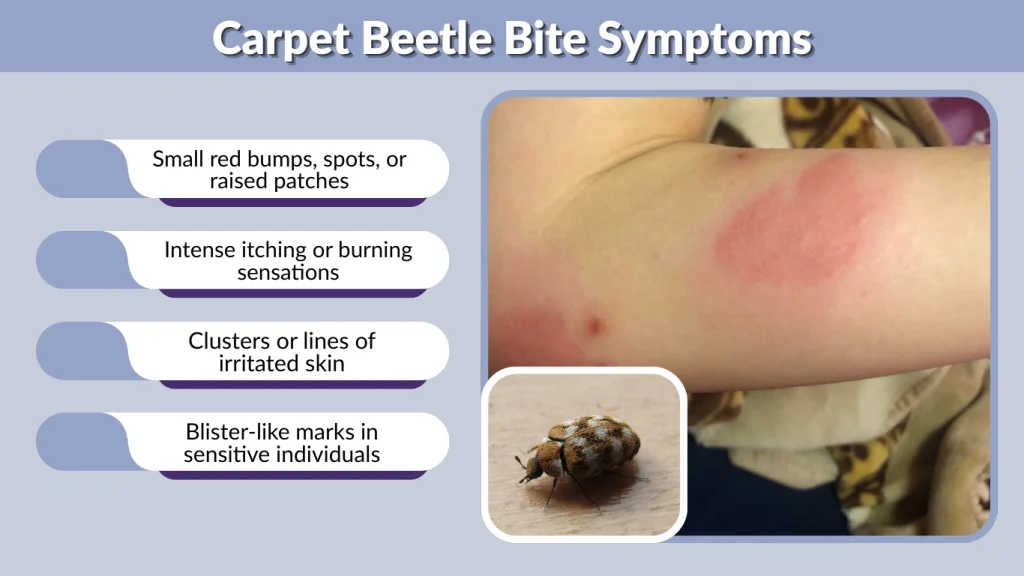
Short overview: Carpet beetle reactions vary but often closely resemble insect bites or allergic skin rashes.
- Small red bumps, spots, or raised patches
- Intense itching or burning sensations
- Clusters or lines of irritated skin
- Blister-like marks in sensitive individuals
- Dry, inflamed, or scaly areas
What Do Carpet Beetle Bites Look Like
Appearance of the Rash
Carpet beetle reactions usually appear as small red or pink bumps that may be flat or slightly raised. In some cases, the rash looks like hives or welts. The skin may become dry, rough, or flaky around the affected area. Unlike mosquito bites, there is often no central puncture mark.
The rash may spread if more hairs contact the skin or if scratching transfers hairs to other areas. Severe reactions can include swelling or fluid-filled blisters, although this is less common.
Common Body Areas Affected
Carpet beetle rashes most often appear on parts of the body that touch fabrics. The neck and shoulders are frequent sites due to contact with pillows and clothing. Arms and hands are exposed when handling infested items. The waistline, thighs, and legs are also common, especially after sitting on contaminated furniture or carpets.
Carpet Beetle Bites vs Bed Bug Bites
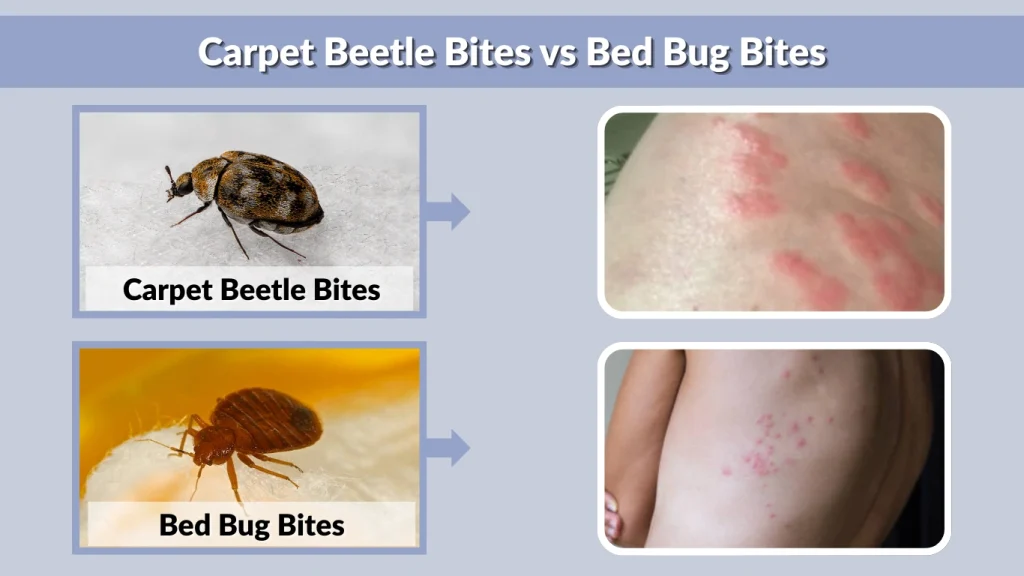
Carpet beetle reactions are often mistaken for bed bug bites, but there are key differences. Bed bug bites typically appear in straight lines or tight clusters and often occur overnight. Carpet beetle rashes are more random, may look like patches, and can develop at any time after contact with contaminated fabrics.
Bed bugs leave clear signs such as blood spots, shed skins, and live insects near mattresses. Carpet beetles, on the other hand, are usually found in closets, carpets, and storage areas, along with fuzzy larvae and shed skins.
Are Carpet Beetle Bites Dangerous
Carpet beetle reactions are generally not dangerous, but they can be uncomfortable. The irritation is not caused by venom or toxins, and carpet beetles do not transmit diseases. However, intense itching can lead to excessive scratching, which may break the skin and create a risk of secondary infection.
Some individuals experience stronger allergic reactions, including widespread rashes or swelling. People with asthma or allergies may notice respiratory irritation if larval hairs become airborne. While serious complications are rare, persistent or worsening symptoms should be taken seriously.
How to Treat Carpet Beetle Bites
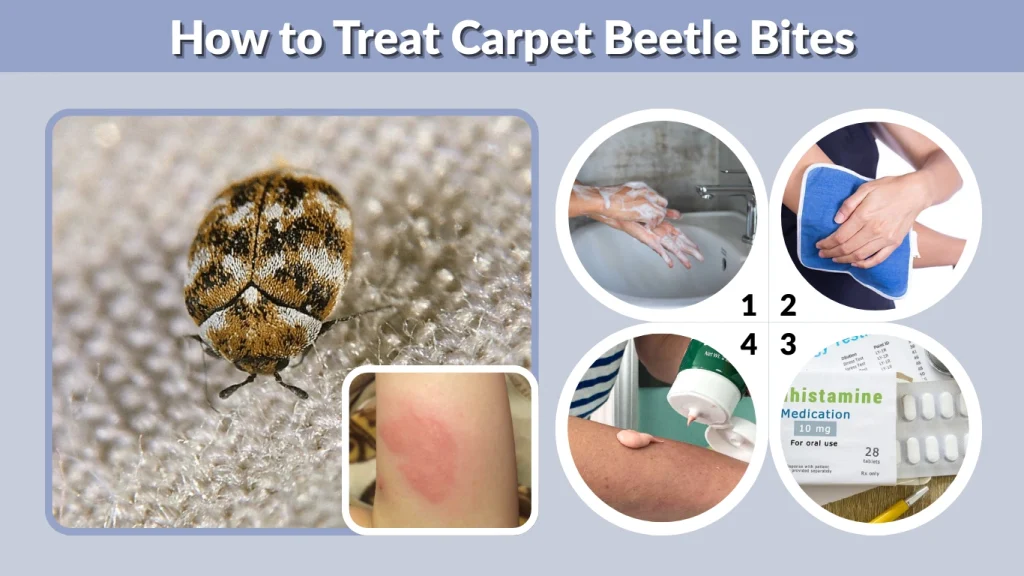
Short overview: Treatment focuses on calming skin irritation and preventing continued exposure to larval hairs.
- Wash the affected area gently with soap and warm water to remove remaining hairs and allergens
- Apply a cold compress to reduce swelling and itching
- Use antihistamine creams or lotions to control allergic reactions
- Apply hydrocortisone cream to relieve redness and inflammation
- Take oral antihistamines if itching is severe or widespread
Home Remedies for Carpet Beetle Rash
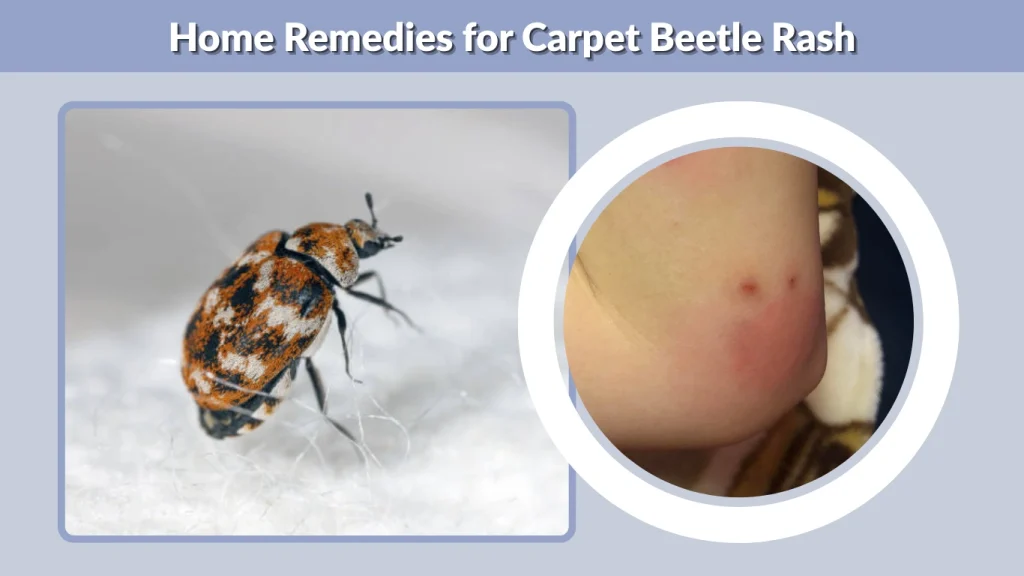
Natural Relief Options
Several home remedies can soothe mild carpet beetle reactions. Aloe vera gel helps cool the skin and reduce redness. A baking soda paste, made by mixing baking soda with a small amount of water, can calm itching and absorb moisture from irritated areas.
Oatmeal baths are another effective option. Colloidal oatmeal added to lukewarm bathwater coats the skin and reduces inflammation. After bathing, gently pat the skin dry and apply a fragrance-free moisturizer to support healing.
When Medical Treatment Is Necessary
Medical treatment is recommended if symptoms last longer than a week, worsen, or show signs of infection such as pus, increasing redness, warmth, or pain. Doctors may prescribe stronger corticosteroid creams, oral antihistamines, or antibiotics if scratching has caused open wounds.
People who experience facial swelling, breathing difficulty, or widespread hives should seek immediate medical care, as these may indicate a serious allergic reaction.
How to Get Rid of Carpet Beetles to Stop Skin Reactions
Short overview: Skin problems will continue unless the infestation and larval hairs are completely removed.
- Deep vacuum carpets, rugs, furniture seams, closets, and baseboards
- Wash all clothing, bedding, and fabrics in hot water and dry on high heat
- Steam clean carpets, mattresses, and upholstered furniture
- Apply diatomaceous earth or boric acid in cracks, corners, and hidden areas
- Discard heavily infested items that cannot be cleaned
How to Prevent Carpet Beetle Bites
Preventing future reactions requires keeping both beetles and their hairs out of living spaces. Regular cleaning is essential. Vacuuming carpets, rugs, and furniture weekly removes larvae, shed skins, and food sources. Special attention should be given to closets, storage areas, and under furniture.
Clothing and fabrics should always be washed before long-term storage. Airtight containers, garment bags, and sealed boxes prevent beetles from accessing natural fibers. Closets should be aired out and inspected periodically to catch early signs of infestation.
Sealing cracks, repairing window screens, and closing gaps around doors reduces the chances of adult beetles entering the home. Removing bird nests, dead insects, and pollen buildup around windows and roofs also limits outdoor sources that can lead to reinfestation.
Who Is Most Sensitive to Carpet Beetle Reactions
High-Risk Groups
Children, people with allergies, and those with sensitive skin tend to react more strongly to carpet beetle hairs. Their immune systems may produce more intense itching, redness, or swelling after exposure.
Why Reactions Vary
Not everyone reacts the same way. Sensitivity depends on immune response, length of exposure, and the concentration of larval hairs. Some people may have no symptoms at all, while others develop noticeable rashes after brief contact.
When to See a Doctor
A doctor should be consulted if a rash lasts longer than one to two weeks, becomes painful, or shows signs of infection. Medical advice is also important if swelling spreads, symptoms interfere with sleep, or allergic reactions worsen.
Immediate care is necessary if there is facial swelling, breathing difficulty, or widespread hives, as these may indicate a severe allergic response requiring urgent treatment.
FAQs
Do carpet beetles really bite humans?
Carpet beetles do not bite or feed on human skin. The red, itchy marks people call “bites” are actually allergic skin reactions caused by contact with microscopic hairs from carpet beetle larvae that irritate the skin.
What causes carpet beetle bite-like marks?
The bite-like marks are caused by tiny hairs shed by carpet beetle larvae. These hairs stick to fabrics and skin, triggering contact dermatitis or allergic reactions that appear as itchy bumps, rashes, or welts.
How long do carpet beetle rashes last?
Mild rashes often improve within a few days once exposure stops. More severe reactions may last one to two weeks. Continued contact with infested items can prolong symptoms significantly.
How can I tell carpet beetle bites from bed bugs?
Bed bug bites usually appear in lines or tight clusters and often occur overnight. Carpet beetle rashes are more random, patchy, and linked to contact with clothing, carpets, or furniture rather than sleeping alone.
What is the fastest way to stop carpet beetle skin reactions?
The fastest way is to wash the skin, treat the rash with antihistamines or hydrocortisone, and immediately remove the infestation through deep cleaning, fabric washing, and vacuuming to stop further exposure.
