
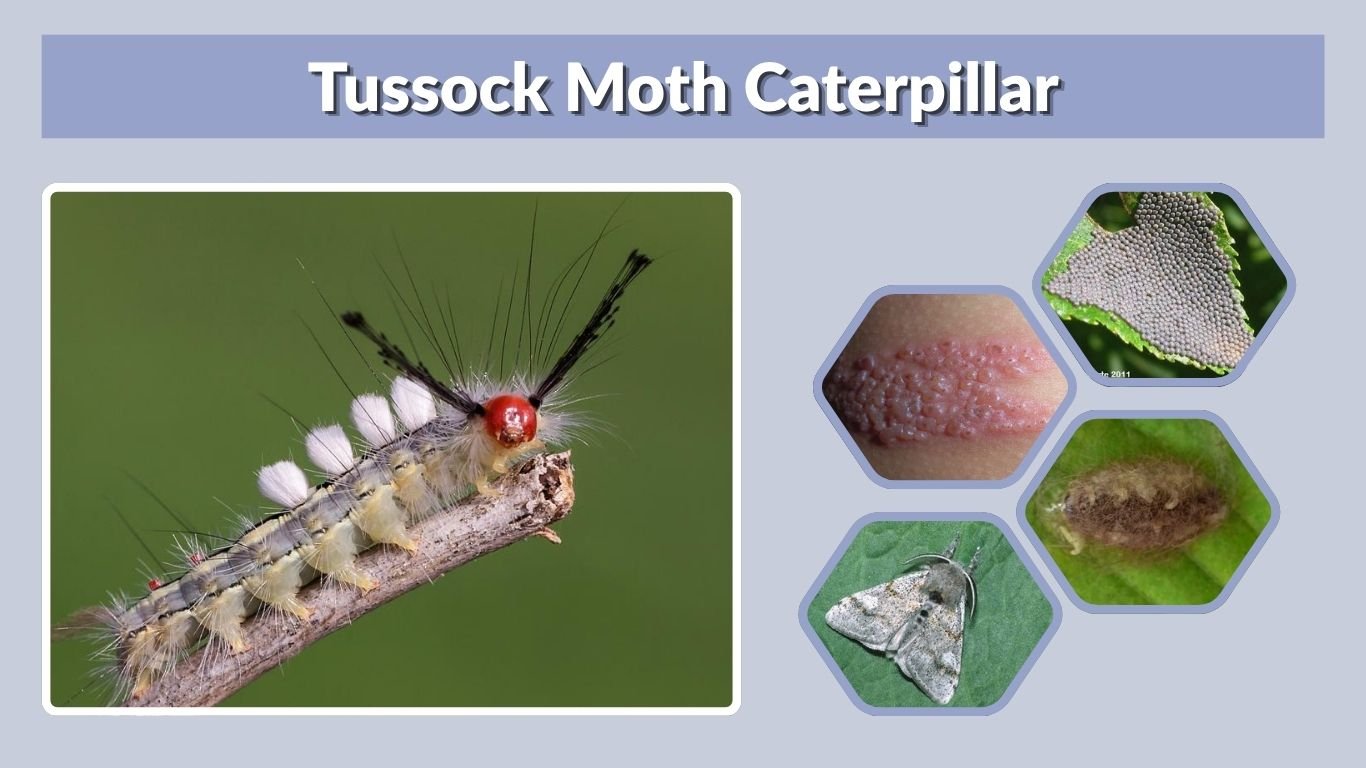
Tussock moth caterpillars are fuzzy, colorful larvae known for their hair-like tufts, bold markings, and sometimes irritating hairs. Many people notice them on trees, shrubs, sidewalks, fences, and house walls, especially when caterpillars leave their host plants to find a place to pupate. Some species are harmless if left alone, while others can cause an itchy rash when their hairs touch the skin. This guide explains how to identify tussock moth caterpillars, whether they are poisonous, what to do if you get a rash, and how to manage them safely.
What Is a Tussock Moth Caterpillar?
Tussock moth caterpillars are the larval stage of tussock moths, a group of moths with many species found across North America. They are often easy to notice because of their fuzzy bodies, brush-like tufts, long hair pencils, and bright color patterns.
Many tussock moth caterpillars feed on trees and shrubs. Some are seen in yards, forests, parks, and gardens. The word “tussock” refers to a tuft or clump, which fits these caterpillars because many species have raised hair tufts along the body.
Common Identification Features
You can often recognize a tussock moth caterpillar by looking for:
- Dense fuzzy hairs or bristles
- Brush-like tufts on the back
- Long black or white hair pencils near the head or rear
- Bright colors such as white, yellow, orange, black, or red
- A crawling habit on leaves, bark, walls, or outdoor furniture
The white-marked tussock moth caterpillar, for example, is known for its pale tufts on the back, colorful head, and long hair pencils. Mississippi State Extension describes mature white-marked tussock moth caterpillars as about 1.5 inches long, with yellow stripes and noticeable tufts of hair.
Where They Are Found
Tussock moth caterpillars may appear on oak, hickory, maple, birch, willow, apple, sycamore, milkweed, and many other plants. Some species are regional, while others are widespread. In Florida, tussock moth caterpillars are commonly noticed around oak trees in spring, especially when they crawl away from trees and onto buildings or outdoor surfaces.
Common Types of Tussock Moth Caterpillars
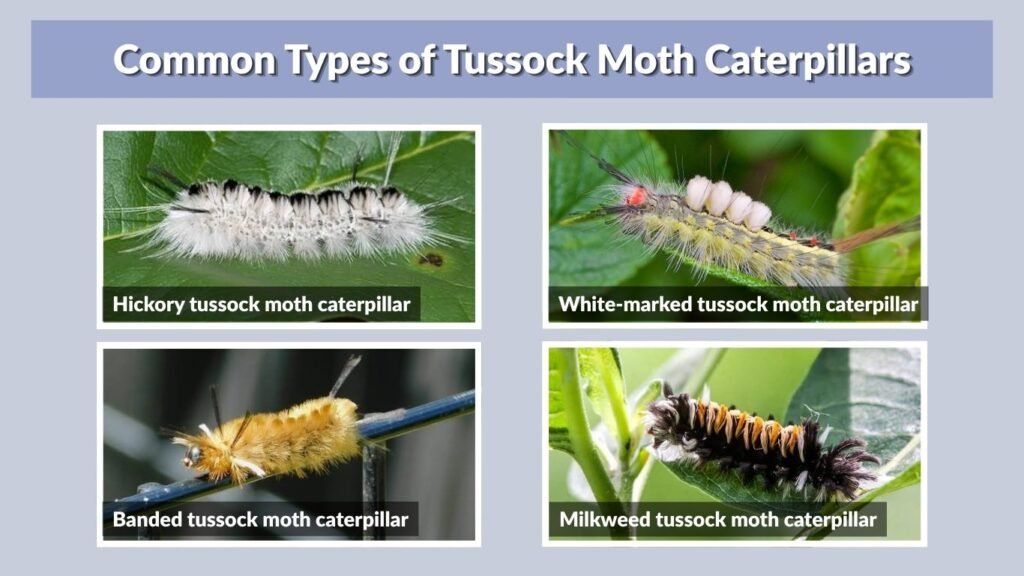
There are many species, and not all look the same. Some are white and fluffy, while others are yellow, black, orange, or gray.
| Type | Common Look | Main Concern |
| Hickory tussock moth caterpillar | White and fuzzy with black markings | Can cause itchy rash |
| White-marked tussock moth caterpillar | Yellow, black, red, and white tufts | Skin irritation from hairs |
| Banded tussock moth caterpillar | Pale yellow or tan with long hairs | Mild irritation possible |
| Milkweed tussock moth caterpillar | Orange, black, and white hairy body | Feeds on milkweed |
| Sycamore tussock moth caterpillar | Pale yellow to white fuzzy body | Can irritate skin |
| Douglas-fir tussock moth caterpillar | Hairy caterpillar on conifers | Rash risk and tree damage |
Hickory Tussock Moth Caterpillar
The hickory tussock moth caterpillar is one of the most searched types. It is usually white and fuzzy with black markings. Many people find it attractive, but it should not be handled. Penn State Extension notes that exposure to its hairs can generally cause a localized rash and itching.
This caterpillar is often found on hickory, walnut, ash, oak, and other hardwood trees. It is most noticeable in late summer and fall when mature larvae wander away from trees.
White-Marked Tussock Moth Caterpillar
The white-marked tussock moth caterpillar is one of the most distinctive species. It may have a red or pinkish head, yellow stripes, dark markings, and four pale brush-like tufts on the back. It also has long hair pencils near the front and rear.
This species often becomes noticeable when caterpillars move across sidewalks, patios, and walls. NC State Extension explains that by the time many people notice them, they may already be done feeding and looking for a place to spin cocoons.
Banded Tussock Moth Caterpillar
The banded tussock moth caterpillar is usually pale yellow, cream, or tan with long soft-looking hairs. It may appear less dramatic than the white-marked tussock moth caterpillar, but it should still be left alone. University of Maine lists banded and hickory tussock caterpillars among examples whose hairs may cause an itchy rash.
Are Tussock Moth Caterpillars Poisonous?
Many people search “tussock moth caterpillar poisonous” or “is the tussock moth caterpillar poisonous” after seeing a fuzzy caterpillar in the yard. The answer depends on what you mean by poisonous.
Most tussock moth caterpillars are not poisonous in the way a toxic plant or venomous snake is poisonous. The bigger issue is their tiny hairs. These hairs can break off and irritate the skin, causing itching, redness, swelling, or a burning feeling. University of Florida notes that some tussock moth caterpillars do not produce stinging venom, but their hairs can trigger allergic reactions in some people.
Poisonous vs. Venomous vs. Irritating
| Term | Meaning | Applies to Tussock Caterpillars? |
| Poisonous | Harmful if eaten or absorbed | Not the main concern |
| Venomous | Injects venom through a sting/spine | Usually not accurate for many tussock species |
| Irritating | Hairs trigger skin reaction | Yes, this is the common issue |
| Allergenic | Causes reaction in sensitive people | Yes, some people react strongly |
Some caterpillars have true venomous spines, but tussock moth caterpillars are more often discussed because of irritating hairs. Still, the reaction can be uncomfortable, especially for children or people with sensitive skin.
Tussock Moth Caterpillar Rash and Sting Symptoms
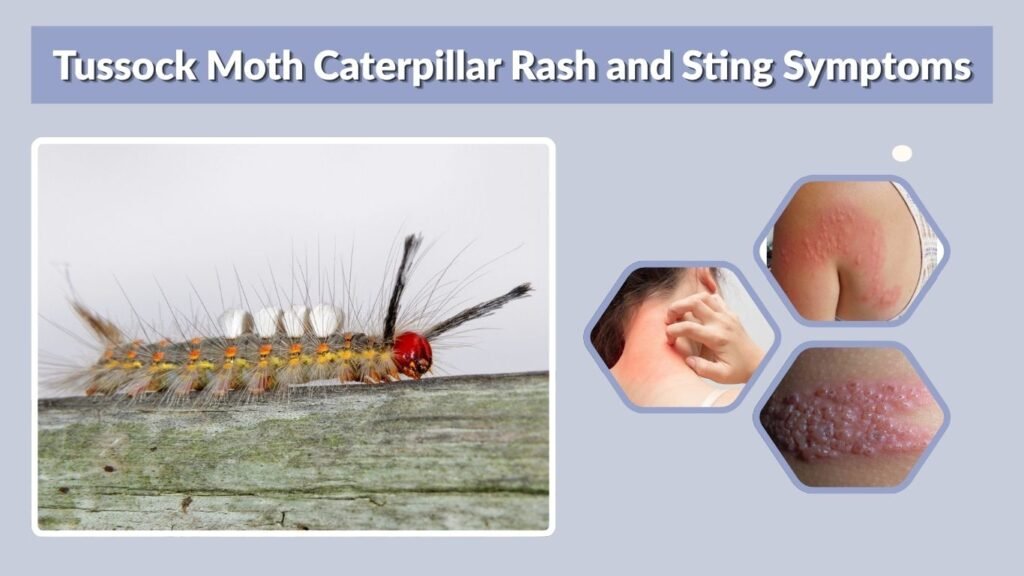
A tussock moth caterpillar rash usually happens after direct contact with the caterpillar, its hairs, or sometimes its cocoon. The rash may appear quickly or after a short delay.
Common symptoms include:
- Redness
- Itching
- Burning or stinging feeling
- Small bumps
- Swelling
- Tender skin
- Watery eyes or sneezing if hairs become airborne
The CDC reported that contact with hairs from white-marked tussock moth caterpillars and their cocoons can cause skin irritation. Colorado State University Extension also notes that Douglas-fir tussock moth caterpillar hairs can produce a painful rash, with reactions varying from person to person.
What to Do If You Touch One
If you touch a tussock moth caterpillar, avoid rubbing or scratching the area. Scratching can push hairs deeper into the skin.
A simple first-aid approach:
- Use tape to lift tiny hairs from the skin
- Wash the area gently with soap and water
- Apply a cold compress for burning or swelling
- Use an over-the-counter anti-itch cream if needed
- Wash clothing that may have touched the caterpillar
- Seek medical help if symptoms are severe, near the eyes, or involve breathing trouble
Children should be watched closely because they may touch their face or eyes after handling caterpillars.
Should You Kill Tussock Moth Caterpillars?
Many people ask, “Should I kill tussock moth caterpillars?” In most cases, you do not need to kill them. They are part of the natural food web and become moths that play a role in the environment.
However, removal may be needed if many caterpillars are crawling on a porch, school area, playground, doorway, or outdoor furniture. The safest approach is usually to avoid direct contact and move them away with a tool.
When to Leave Them Alone
Leave them alone if:
- They are on trees away from people
- There are only a few caterpillars
- They are not causing major plant damage
- Children and pets are not likely to touch them
Natural predators, parasites, and diseases often reduce populations. NC State Extension notes that white-marked tussock moth caterpillars are affected by diseases, parasites, and predators, which helps explain why they are not always widespread pests.
When Control May Be Needed
Control may be useful if:
- Caterpillars are covering walls or patios
- They are near schools, playgrounds, or pets
- They are causing heavy defoliation
- People in the home are getting rashes
- Cocoons are attached to outdoor furniture or buildings
How to Get Rid of Tussock Moth Caterpillars Safely
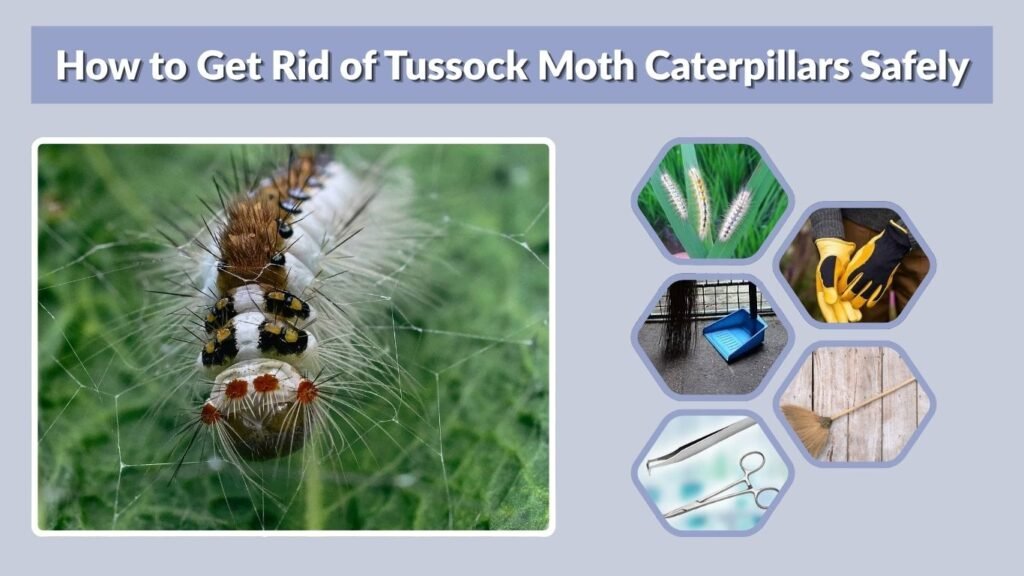
The best control method depends on where they are and how many you see. Avoid touching them with bare hands.
Manual Removal
For small numbers, manual removal is often enough.
Use:
- Gloves
- Long sleeves
- A broom
- A dustpan
- A container
- Tweezers or forceps
- A hose for outdoor surfaces
Move caterpillars away from high-contact areas. Do not crush them with bare hands because hairs can remain irritating.
Tree and Garden Control
If caterpillars are feeding heavily on trees or shrubs, early action works best. Michigan State University Extension recommends early detection because control is more effective before larvae are full grown.
For larger infestations, consider contacting a local extension office or licensed pest control professional. Spraying mature wandering caterpillars is often less useful because they may have already finished feeding. NC State Extension says applying pesticide to mature, migrating caterpillars is usually a waste of time, and the best timing is when young caterpillars are actively feeding.
Cleaning Cocoons and Hairs
Cocoons may also contain irritating hairs. Wear gloves when removing them from walls, outdoor furniture, porch railings, play equipment, or tree bark. Place them in a sealed bag and wash the area afterward if people may touch it.
Tussock Moth Caterpillar Life Cycle
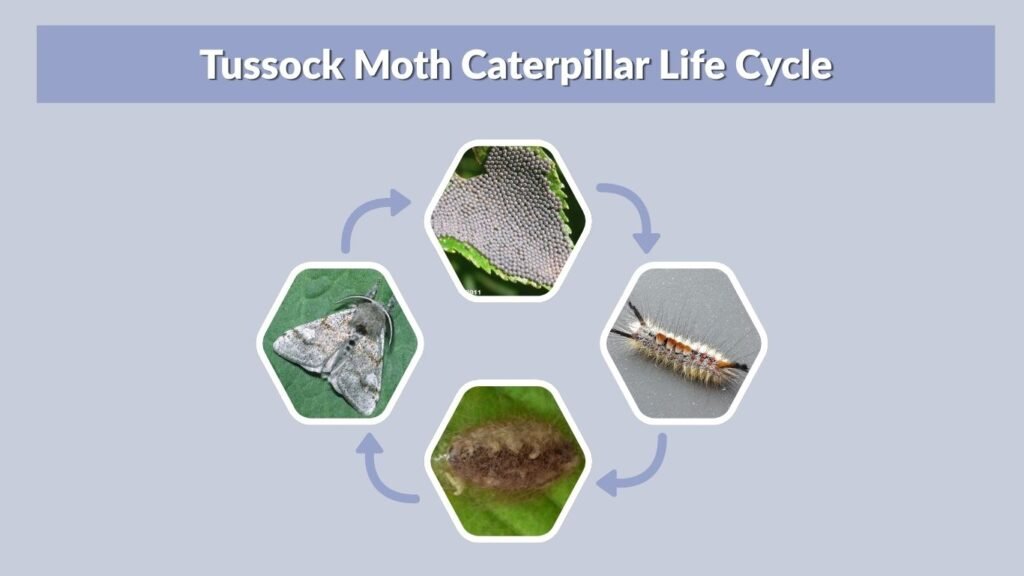
Tussock moths go through complete metamorphosis: egg, larva, pupa, and adult moth. The caterpillar is the feeding stage and the stage people notice most.
Females lay eggs on or near old cocoons, tree bark, or host plants depending on the species. Eggs hatch into small caterpillars that feed on leaves. As they grow, they molt several times. Mature larvae eventually leave the host plant to find a protected place to spin a cocoon.
The adult moths may look much less noticeable than the caterpillars. In some tussock moth species, females have reduced wings or may not fly well, while males are stronger fliers.
How to Prevent Tussock Moth Caterpillar Problems
Prevention is mostly about reducing contact and monitoring plants early.
Practical steps include:
- Teach children not to touch fuzzy caterpillars
- Wear gloves when gardening
- Check outdoor furniture before sitting
- Remove cocoons from high-contact areas
- Inspect trees and shrubs during caterpillar season
- Keep caterpillars away from pets
- Avoid brushing caterpillars off with bare hands
If you live in an area where tussock moth caterpillars appear every year, check oak, hickory, sycamore, maple, and other host trees during the active season.
FAQs
Are tussock moth caterpillars dangerous?
Tussock moth caterpillars are usually not dangerous if left alone, but their hairs can irritate skin. Some people develop itching, redness, swelling, or a rash after contact. Children and sensitive individuals may react more strongly.
Can a tussock moth caterpillar sting you?
Many people call it a sting, but with many tussock moth caterpillars the reaction comes from irritating hairs rather than a true venomous sting. The feeling can still burn, itch, or hurt.
Is the hickory tussock moth caterpillar poisonous?
The hickory tussock moth caterpillar is best treated as a “do not touch” caterpillar. Its hairs can cause a localized rash and itching in many people. It is not something to handle with bare hands.
How long does a tussock moth caterpillar rash last?
A mild rash may improve within a few hours to a few days, but reactions vary. If the rash spreads, becomes severe, involves the eyes, or causes breathing symptoms, medical advice is recommended.
What kills tussock moth caterpillars?
Young feeding caterpillars are easier to manage than mature wandering ones. Manual removal works for small numbers, while larger outbreaks may need professional or extension-guided treatment. Spraying mature caterpillars after they stop feeding is often not effective.
